⚙️ 1. What Is a Flower Vaporizer?
🔍 A flower vaporizer is a device designed to heat loose botanical material at controlled temperatures inside a chamber or oven. Instead of relying on prefilled liquid cartridges, it directly processes dry material through a built-in heating system.
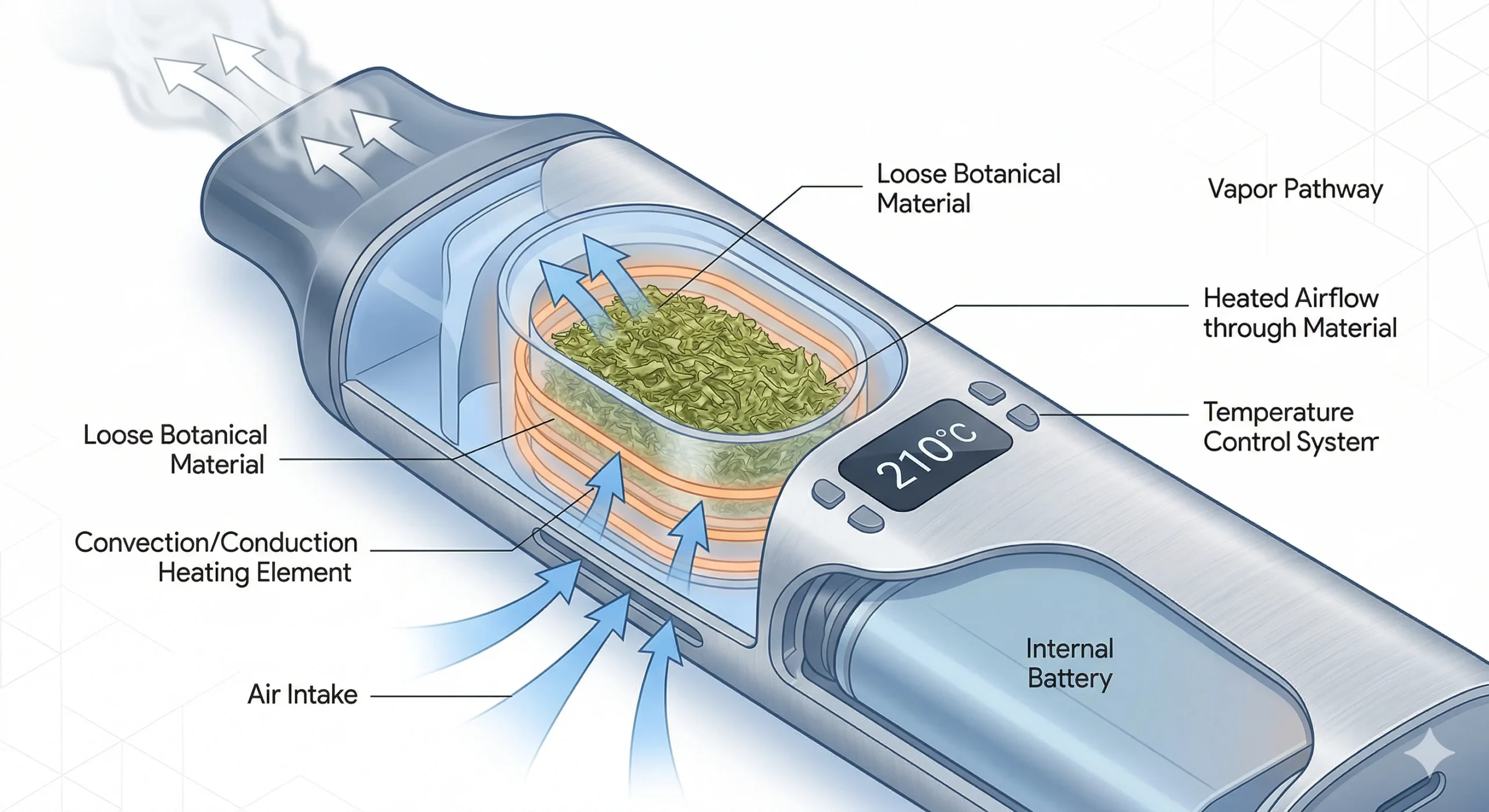
That makes this category more complex than it may first appear. A flower vaporizer must balance:
- 🧱 Chamber size and chamber material
- 🔥 Thermal transfer and heating control
- 💨 Airflow routing through the device
- 🔋 Battery support for repeated heating cycles
- 🧼 Cleaning access and residue management
In other words, a flower vaporizer is not just a small heated container. It is a coordinated system in which material choice, thermal behavior, and airflow design all affect the final experience.
🔬 2. How a Flower Vaporizer Works
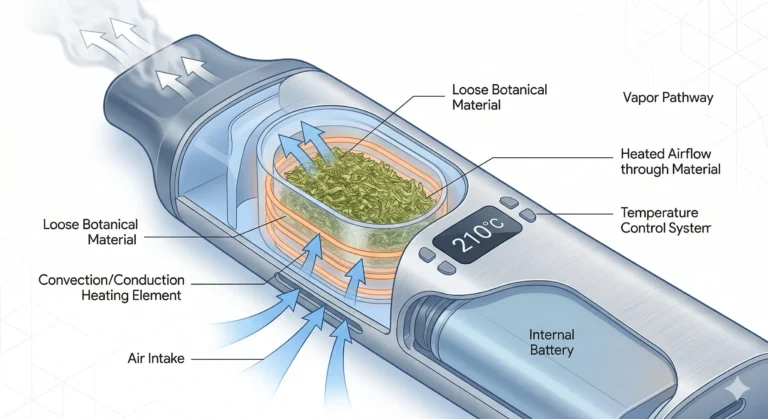
A typical flower vaporizer includes a chamber, a heating source, an airflow path, a mouthpiece, and a control system. The device heats the material to a selected temperature range, while airflow carries the resulting vapor through the air path toward the mouthpiece.
Although the operating idea sounds simple, the engineering challenge is much greater in practice. Compact devices must heat efficiently without overheating, maintain airflow without creating excessive resistance, and deliver stable battery output without becoming too large or too heavy.
📌 This is one reason why portable flower vaporizer hardware remains such an important category in modern device design. Readers who want a broader category reference can compare the full vaporizer lineup with the more focused dry herb section.
🌡️ 3. Main Heating Methods
Heating technology is one of the most important factors in flower vaporizer design. Different systems affect heat-up speed, chamber consistency, battery demand, and internal complexity.
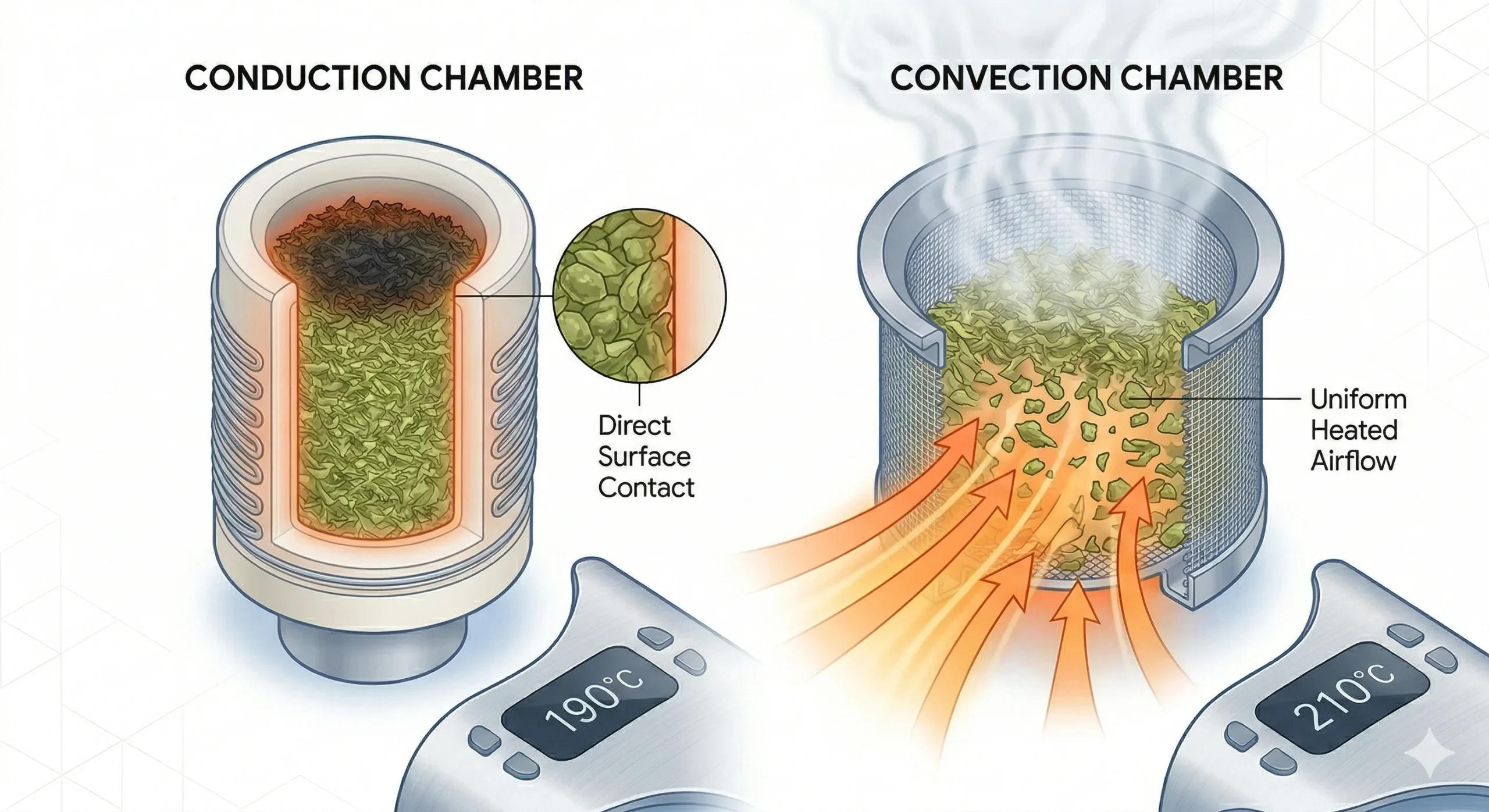
🔥 Conduction Heating
In a conduction system, the material comes into direct contact with heated chamber surfaces. This method is common in smaller portable devices because it is relatively easy to integrate into a compact body.
- Fast heat-up times
- Simpler internal structure
- Often easier to miniaturize
The main trade-off is that conduction designs may require more careful chamber tuning to maintain even thermal behavior.
🌬️ Convection Heating
In convection systems, heated air passes through the material instead of relying mainly on direct surface contact. This can support more even thermal behavior, but it usually requires more sophisticated airflow and power management.
- More airflow-driven heat transfer
- Potentially more even chamber response
- Higher internal engineering complexity
⚡ Hybrid Heating
Hybrid systems combine elements of both conduction and convection. In real product design, this is often the most practical compromise because it helps balance size, power demand, and more consistent chamber performance.
Many readers looking for technical comparisons can also explore additional category context through the AOVAPE blog, where broader vaporizer topics can be organized more clearly over time.
🧱 4. Chamber Design and Material Selection
The chamber is one of the most critical parts of a flower vaporizer. Its geometry, internal layout, wall thickness, and material all directly influence heating consistency, residue behavior, and airflow efficiency.
Common chamber materials include:
- Ceramic
- Stainless steel
- Composite structures
- Layered internal assemblies
| Material | Typical Advantages | Typical Considerations |
|---|---|---|
| Ceramic | Heat stability, clean thermal profile, premium perception | Can be more fragile depending on design execution |
| Stainless Steel | Durability, industrial reliability, practical chamber construction | May feel less premium in some product positioning |
| Composite Structures | Flexible engineering possibilities | Performance depends heavily on execution quality |
🧠 Material names alone do not determine final quality. Chamber insulation, airflow entry points, heating layout, and temperature logic all matter just as much. That is why a broader look across the portable vaporizer category often helps readers better understand how different device structures are positioned.
💨 5. Why Airflow Design Matters
Airflow is one of the least visible but most important parts of any flower vaporizer. Even devices with impressive specifications can feel restrictive or inconsistent if the airflow system is poorly designed.
Key airflow factors include:
- Air intake placement
- Draw resistance
- Path length from chamber to mouthpiece
- Heat exposure along the air path
- Residue accumulation points
If the airflow path is too narrow, the draw may feel tight. If it is too open, thermal efficiency can suffer. If it traps residue too easily, long-term consistency may decline.
🚀 In many cases, the difference between average hardware and better hardware is not just the chamber or heating element. It is how the full airflow system performs over time. For more general category references, readers can also browse the blog archive.
🔋 6. Battery Systems and Power Management
Compared with simpler cartridge-based systems, flower vaporizers usually place heavier demands on the battery and control platform. Chamber heating requires more sustained energy, especially when the device must repeatedly reach and maintain selected temperature ranges.
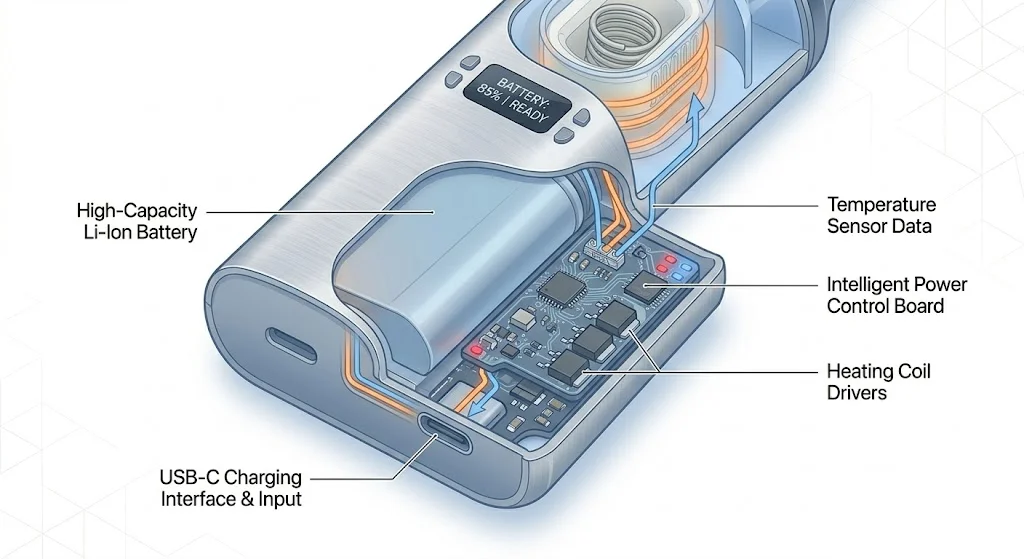
A well-designed power system often considers:
- Battery capacity relative to device size
- Heat-up demand
- Charging speed
- USB-C or other modern charging interfaces
- Protection-board stability
- Consistent output across repeated heating cycles
In compact hardware, battery limits often define the practical ceiling of performance. This is why portable device design always involves compromise between chamber size, thermal ambition, and body dimensions. The main vaporizer page is a useful supporting reference for understanding this wider product logic.
📐 7. Portable Design Trade-Offs
Portable flower vaporizer devices are shaped by trade-offs. A slimmer body may improve portability, but it can also limit chamber size, reduce battery capacity, and constrain airflow routing.
Common trade-offs include:
- Slimmer body vs battery endurance
- Smaller chamber vs usable session capacity
- Compact mouthpiece vs cooling distance
- Tighter internal layout vs easier cleaning
- Faster heat-up vs more stable thermal behavior
✨ That is why not every sleek-looking device performs equally well. Good industrial design matters, but it must be supported by realistic engineering underneath. Readers who want neutral company information can also review the homepage and contact page.
🧼 8. Maintenance and Cleaning Considerations
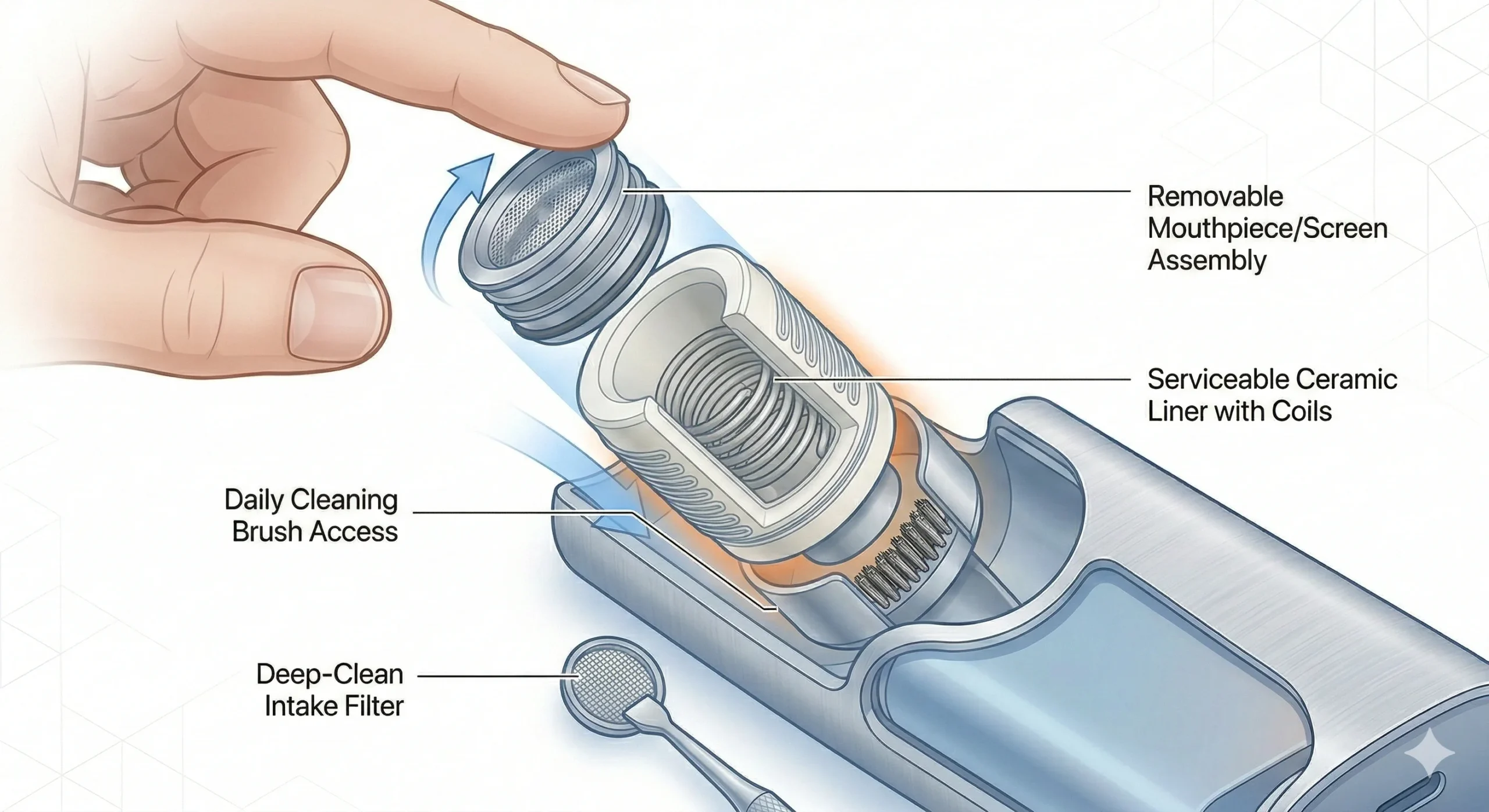
Maintenance is not a small detail in this category. Because plant-based material naturally leaves residue, the chamber, screens, mouthpiece, and airflow path all require periodic attention if performance consistency is important.
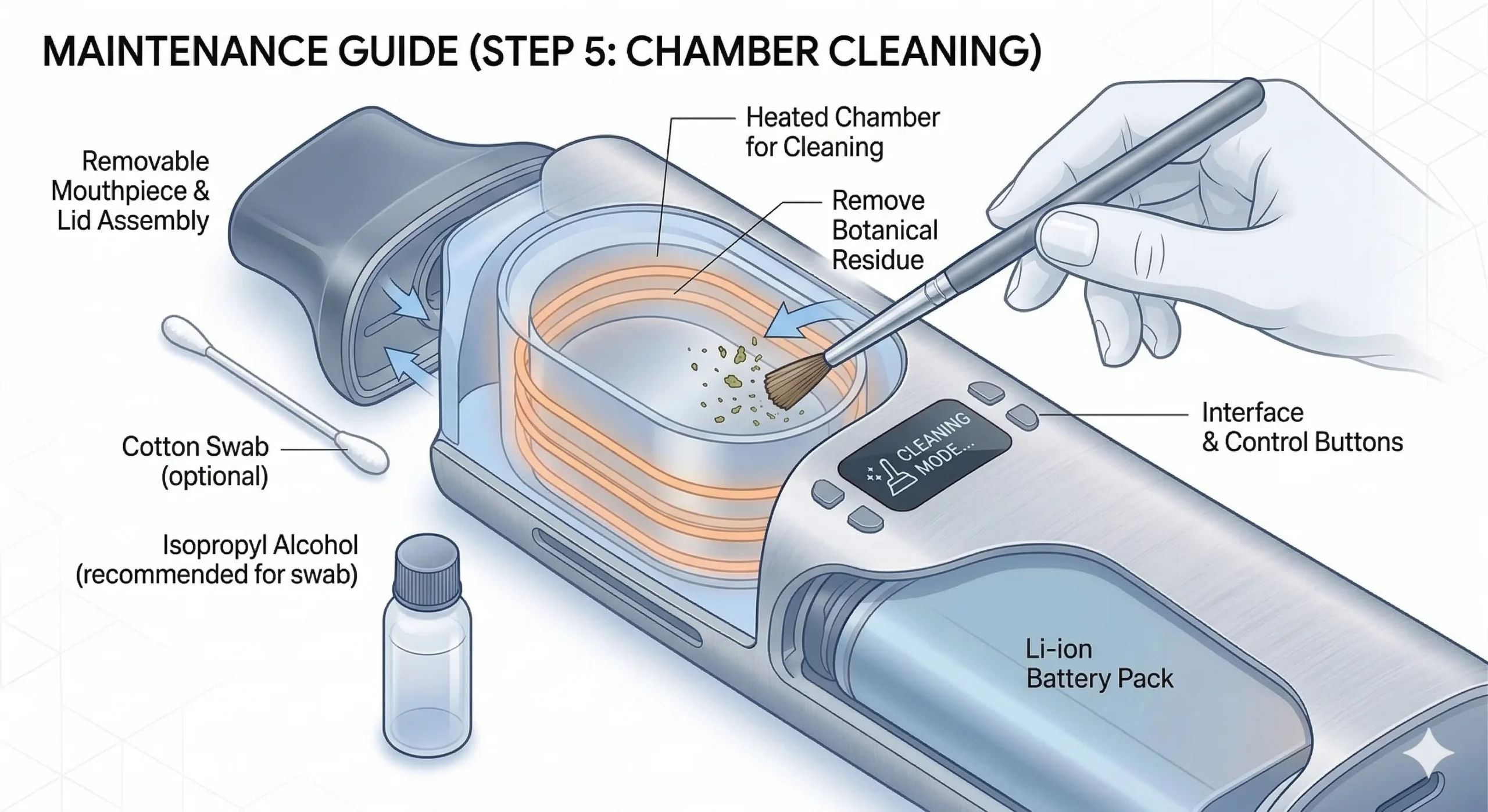
Better maintenance-oriented design often includes:
- Easy chamber access
- Serviceable screens
- Removable mouthpiece components
- Interior surfaces that reduce buildup points
- Air paths that are less prone to clogging
😅 A device that looks elegant in product photos but becomes difficult to clean after repeated use is basically volunteering its future owner for an unwanted side job.
🏭 9. Why the Category Matters for Product Development
For product researchers and hardware teams, the flower vaporizer category is valuable because it combines several difficult design questions into one compact format:
- How should heat be transferred?
- How should airflow be routed?
- Which chamber materials make the most sense?
- How much battery support is realistic in a portable body?
- How can the device remain maintainable over time?
As a result, flower vaporizer design offers a strong example of how portability, airflow behavior, temperature control, and long-term serviceability all interact. Supporting information and broader navigation can be found across the blog, the vaporizer page, and the contact page.
❓ FAQ: Flower Vaporizer Technology
What is a flower vaporizer?
A flower vaporizer is a device designed to heat loose botanical material inside a chamber using a controlled heating system.
What is the difference between conduction and convection?
Conduction relies on direct contact with heated chamber surfaces, while convection uses heated air passing through the material.
Why is chamber design important?
Chamber design affects thermal distribution, material contact, airflow behavior, and maintenance accessibility.
Why does airflow matter so much?
Airflow affects draw resistance, temperature behavior, consistency, and how easily residue builds up over time.
Why are portable flower vaporizers harder to engineer than they look?
Because compact bodies must still support stable heating, battery capacity, airflow routing, and cleaning access at the same time.
📌 Final Thoughts
The flower vaporizer category remains important because it shows how much engineering is required to make a compact thermal device function consistently. Heating method, chamber material, airflow structure, battery planning, and maintenance access all help define the final result.
For readers approaching the category from a neutral product and technology perspective, flower vaporizer hardware provides a strong example of how portable-device design depends on real trade-offs rather than surface-level specifications alone. For broader supporting context, readers can review the homepage, the portable vaporizer page, the dry herb vaporizer section, the blog archive, and the contact page.