For broader category context, readers can also review AOVAPE’s 510 thread battery page, the wider portable vaporizer section, the full vaporizer category, and related technical articles on the AOVAPE blog.
⚙️ 1. What Are Pen Vapes for Weed?
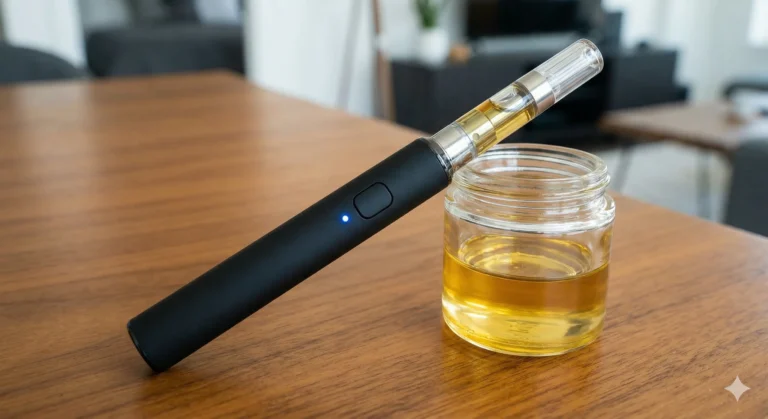
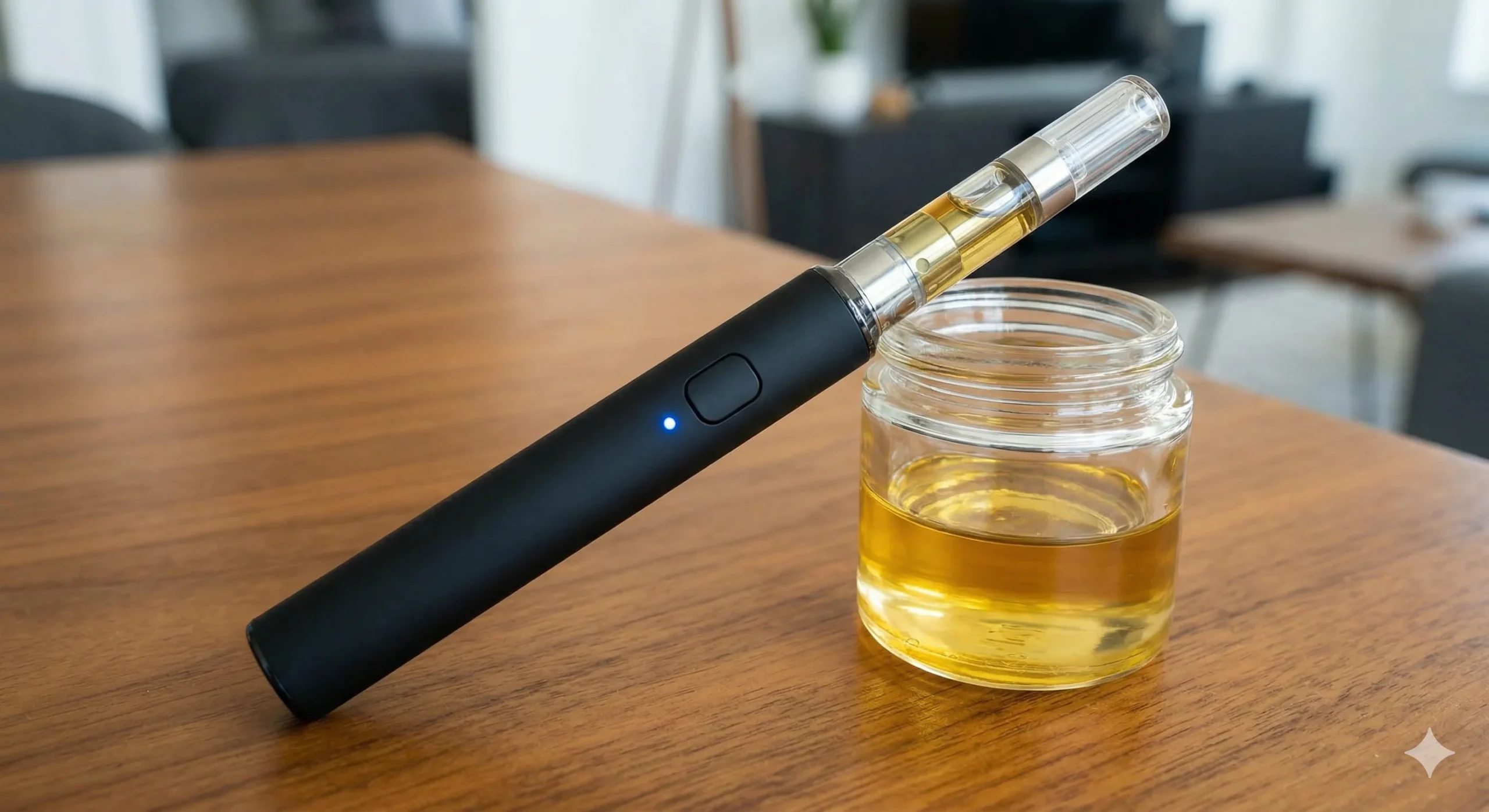
🔍 A pen vape for weed is a rechargeable vaporizer built around the standardized 510-threaded connector. It is specifically engineered for cannabis concentrates and delivers smooth, discreet vapor with minimal odor.
- 🔩 Standard 510-threaded connector for broad cartridge compatibility
- 🔋 Rechargeable lithium battery with variable voltage or preset modes
- ⚡ Button or draw-activated firing
- 🔌 USB-C charging in modern designs
Although the outer concept is simple, pen vapes for weed vary widely in internal architecture. Some are basic stick-style batteries; others include variable voltage, preheat modes, digital indicators, or advanced protection circuitry.
📌 In other words, “pen vape for weed” is not one single product type. It is a hardware category built around the shared 510 connection standard and optimized for cannabis concentrates.
🔬 2. Core Components Inside a Pen Vape for Weed
Even compact devices usually contain several internal systems that determine performance and consistency. The specific layout varies by manufacturer and form factor, but the core functions are broadly similar.
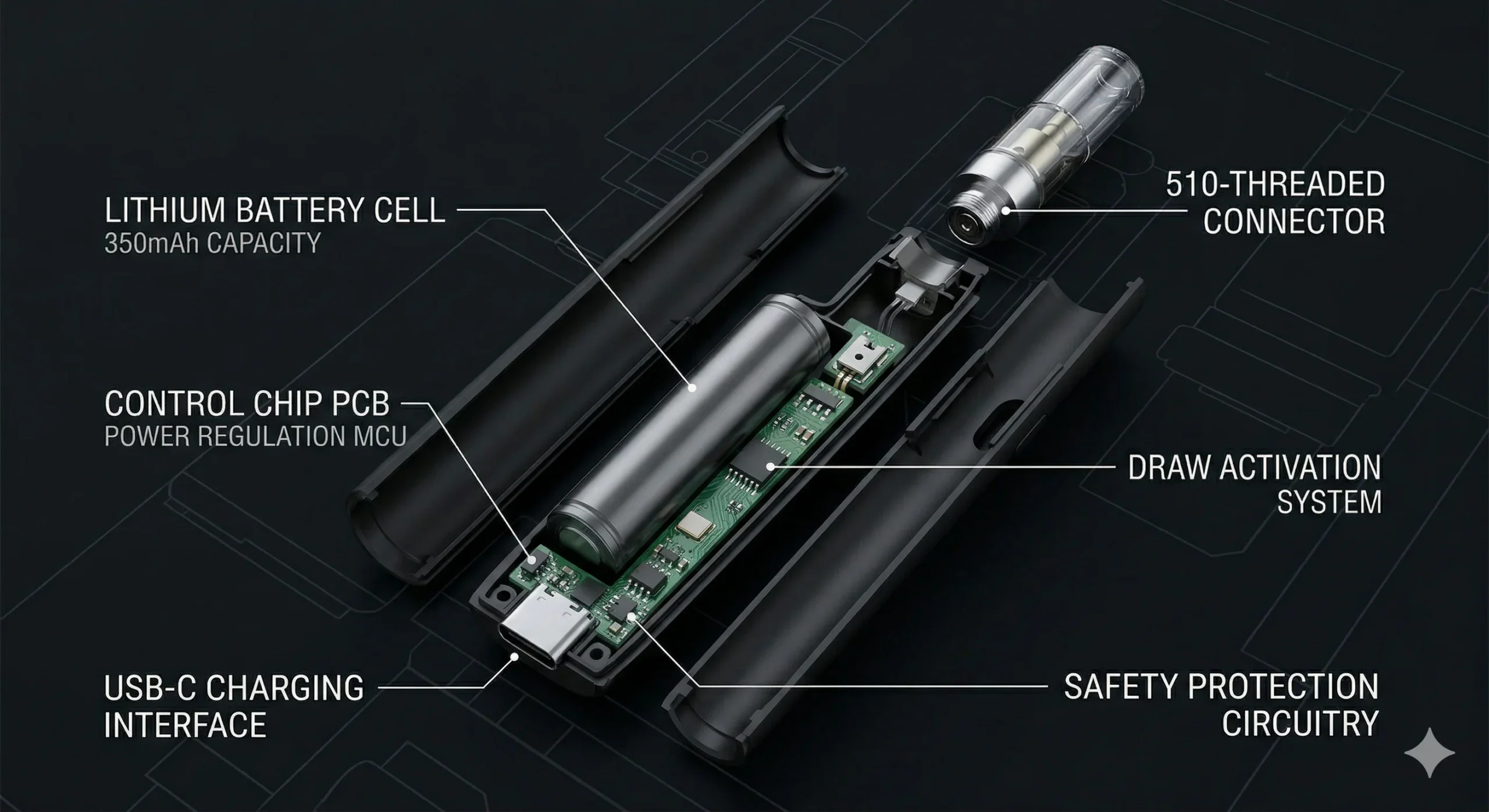
🔋 2.1 Lithium Battery Cell
The battery cell stores the device’s electrical energy. Common capacity groupings range from 300–500 mAh (ultra-portable) to 500–900 mAh+ (all-day runtime). Capacity directly influences session length but also affects body size and weight.
⚡ 2.2 Power Regulation Chip
The control chip manages output voltage, ensures stable heating, and works together with the protection circuit. This component is critical for consistent vapor production with thick cannabis oils.
🔘 2.3 Activation System
Most pen vapes for weed use one of two activation styles:
- Button-activated firing — offers more direct user control
- Draw-activated (auto-draw) — prioritizes simplicity and minimal exterior
🔌 2.4 Charging Interface
Modern designs use USB-C charging for faster recharges and better power delivery. The charging interface affects daily convenience and overall power-management quality.
🛡️ 2.5 Protection Circuitry
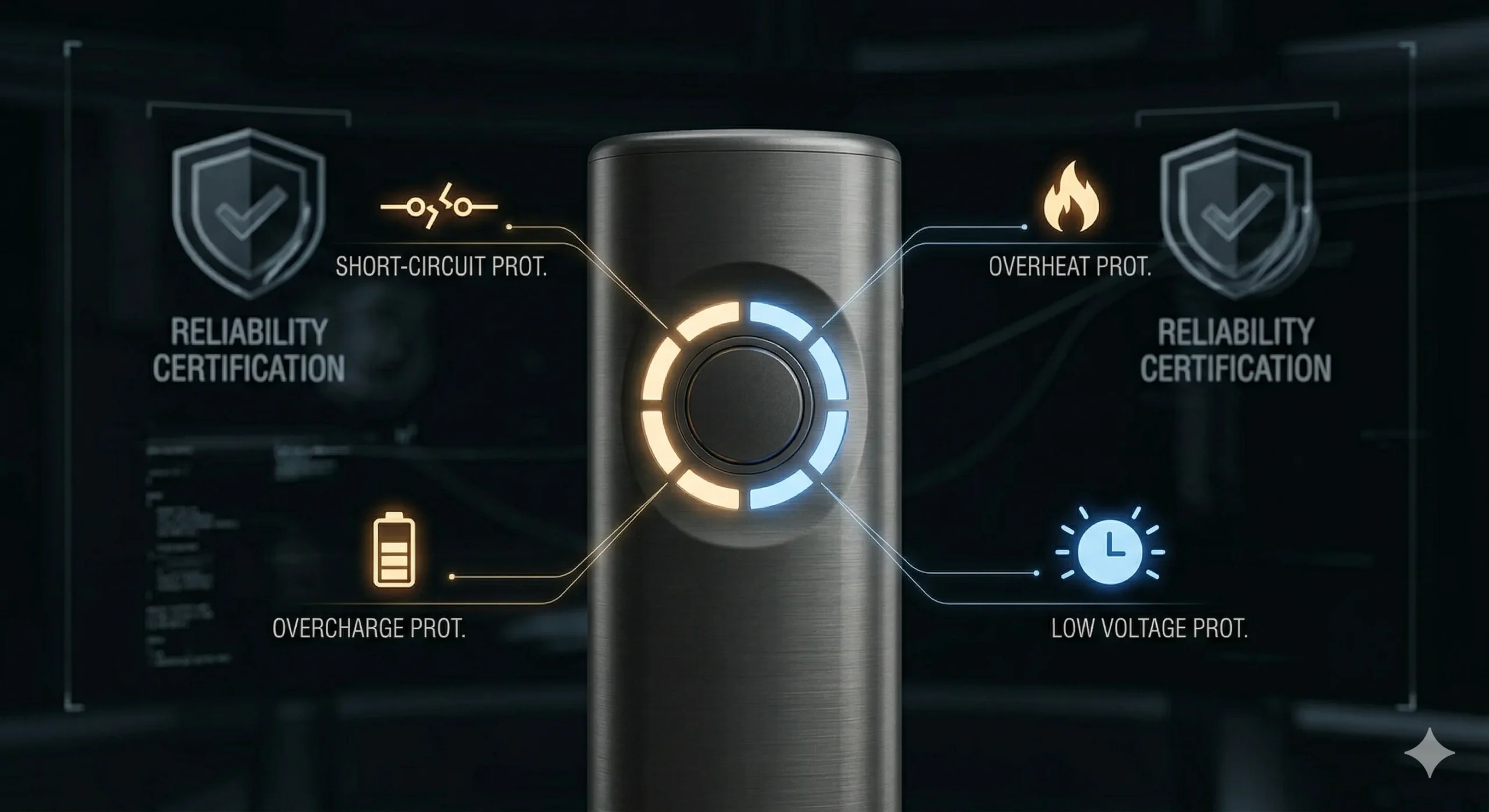
Safety protections are essential. Common examples include short-circuit protection, overcharge protection, low-voltage protection, overheat protection, and auto shut-off timers.
🌡️ 3. Voltage Control and Output Behavior
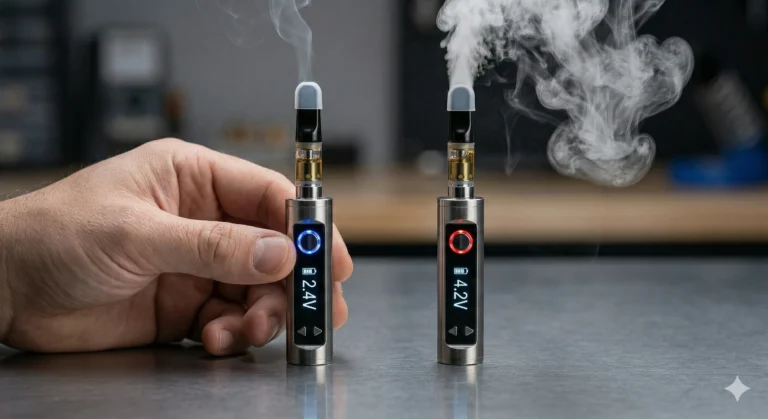
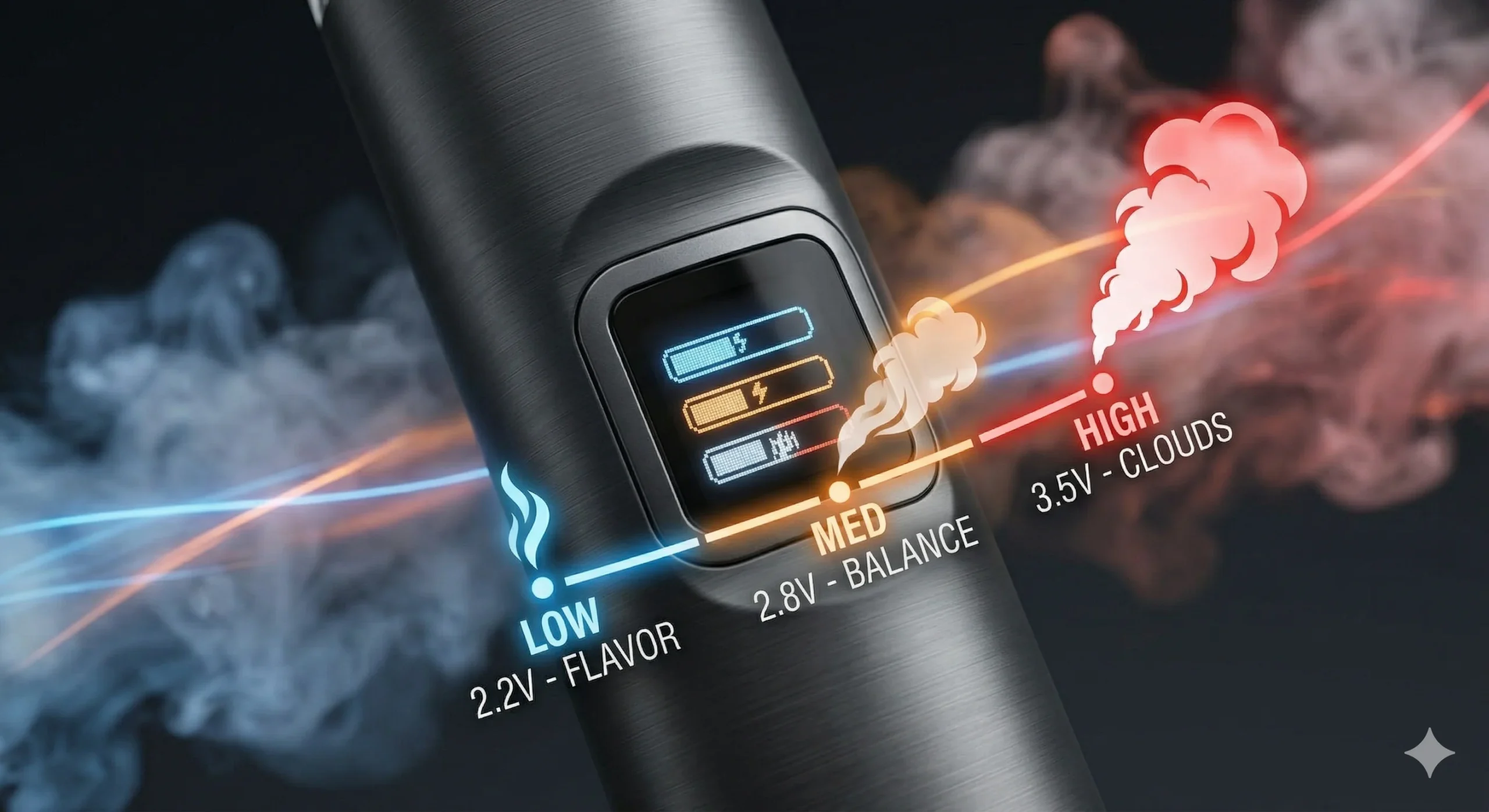
Voltage control is one of the most important variables in pen vape for weed design. Output level changes how strongly and how quickly the connected cartridge receives power, directly affecting flavor, vapor density, and cartridge lifespan.
A useful way to understand voltage behavior is to group it into three practical ranges:
Low Voltage Range (2.0–2.5V)
- Gentle, flavorful hits with minimal risk of burning terpenes
- Preferred for smooth sessions and longer cartridge life
- Excellent for first-time or flavor-focused users
Medium Voltage Range (2.5–3.0V)
- Balanced output for everyday use
- Common all-purpose setting for most THC cartridges
- Good compromise between flavor and vapor production
High Voltage Range (3.0–3.8V)
- Dense clouds and stronger effects
- Requires careful compatibility awareness
- Use sparingly to avoid burning oil or damaging coils
💡 The important takeaway is that voltage is not just a number on a product page. It is part of how the battery and the connected cartridge behave as a complete system.
🧩 4. Types of Pen Vapes for Weed and Cartridge Compatibility
Pen vapes for weed fall into three main categories, each offering different levels of convenience and customization:
- 510-Thread Rechargeable Batteries — Most popular. Pair with any 510 cartridge (pre-filled, refillable, distillate, or live resin). Highly customizable. Browse our full 510 thread battery collection.
- Disposable Weed Pens — All-in-one, pre-filled, ready-to-use. No charging or refilling — ideal for beginners or travel.
- Dab / Wax Pens — Designed for concentrates like wax, shatter, or rosin (some also accept 510 carts).
The 510-thread standard ensures near-universal compatibility, but real-world performance still depends on matching voltage output to cartridge resistance and oil thickness.
📐 5. Form Factors and Battery Design Styles
Although all share the 510 thread, pen vapes for weed come in varied physical formats that affect portability, runtime, and user experience.
🖊️ Pen-Style Batteries
Slim, cylindrical, and pocket-friendly. Ideal for discreet daily use.
- 📏 Slim and compact body structure
- 🧳 Extremely portable
- ⚙️ Often simpler controls
- 🔋 More limited battery capacity
🧱 Box or Pod-Style Batteries
Slightly larger, offering higher capacity and more features.
- 🔋 Room for higher battery capacity
- 🖥️ Support for digital displays or multiple presets
- 🛡️ More robust body structure
👜 Compact Pocket Designs
Balanced portability with added protection and runtime.
- 🎯 Pocket-friendly yet more substantial than pen-style
- 🧩 Integrated outer shell for better durability
- 🔒 Often conceals the cartridge inside the body
✨ Form factor is not just about appearance — it influences usability, battery life, and how well the device handles thick cannabis oils.
🔋 6. Battery Capacity, Runtime, and Charging Logic
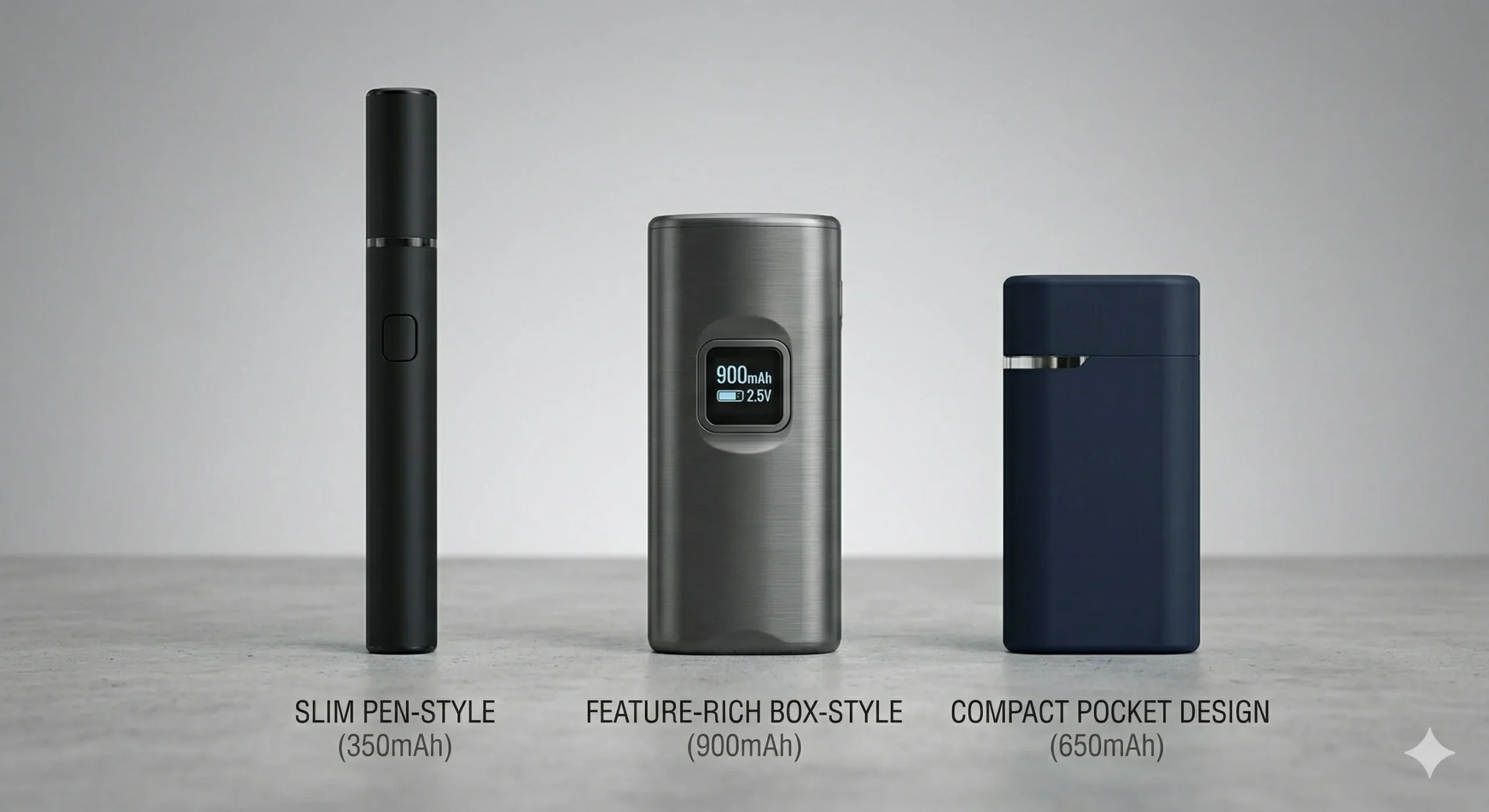
Battery capacity (mAh) is a key specification, but it should not be read in isolation. Actual runtime depends on voltage settings, preheat usage, activation frequency, and overall efficiency.
When reviewing pen vapes for weed from a neutral product perspective, consider these trade-offs:
- Higher capacity usually means a larger body
- Smaller devices are more portable but require more frequent charging
- Advanced features (variable voltage, preheat) increase energy demand
- USB-C charging has become the modern standard for convenience and speed
🔌 Charging interface choice affects daily convenience but is only one part of overall battery quality.
🛡️ 7. Safety Features and Reliability Standards
Safety design is one of the most important areas in pen vape for weed hardware. Good safety features may not be flashy on a product page, but they are essential for stable, worry-free operation.
Common safety and reliability protections include:
- Short-circuit protection
- Overcharge protection
- Low-voltage protection
- Overheat protection
- Auto shut-off timing
These protections matter because the device is not just about vapor production — it is about safe, consistent performance over time.
🏭 8. Manufacturing and OEM Design Considerations
From a manufacturing perspective, pen vapes for weed are interesting because they combine the universal 510 standard with wide variation in body design, interface style, and internal electronics.
Common design variables include:
- Exterior shell material and finish (matte, metallic, ergonomic grips)
- Indicator LED behavior or digital displays
- Button/draw activation tuning and preheat duration
- Battery-capacity and voltage-range options
- Form factor customization for OEM/branding
The challenge for manufacturers is maintaining the universal 510 standard while delivering unique user experiences and reliable performance with cannabis concentrates.
📊 9. Practical Evaluation Checklist
When evaluating a pen vape for weed in a grounded, non-promotional way, focus on the fundamentals:
| Evaluation Area | Why It Matters | What to Check |
|---|---|---|
| 510 Thread Quality | Ensures perfect cartridge fit | Machining precision, no wobble or leaks |
| Voltage Control | Flavor & cloud customization | Adjustable 2.0–3.8V or preset modes + preheat |
| Activation Method | Ease of use | Button vs draw-activated |
| Battery Capacity | Runtime & portability | mAh rating and real-world session length |
| Charging Interface | Daily convenience | USB-C preferred |
| Safety Protections | Reliable, worry-free vaping | Full circuit protections (short, overcharge, heat, low-voltage) |
| Form Factor | Discretion & comfort | Pen-style vs box-style for your lifestyle |
✅ This checklist is less flashy than marketing hype, but far more useful for understanding real hardware quality.
❓ FAQ: Pen Vape for Weed
What is the best voltage for a pen vape for weed?
Start at 2.4–2.8V for most THC cartridges. Lower for better flavor, higher for denser clouds.
Are disposable pen vapes for weed better than rechargeable ones?
Disposables are more convenient; rechargeable 510-thread batteries save money long-term and offer better control and customization.
How do I prevent clogs in my weed vape pen?
Use preheat mode, store upright, and clean the 510 threads regularly with isopropyl alcohol.
Can I use any cartridge with a pen vape for weed?
Yes — as long as it has a 510 thread. Always match voltage to cartridge specifications.
Is a pen vape for weed safer than smoking?
Vaporizing produces fewer combustion by-products than smoking when used correctly with quality hardware and lab-tested oil.
What safety features should a modern pen vape for weed have?
Look for short-circuit protection, overcharge protection, low-voltage protection, overheat protection, and auto shut-off.
📌 Final Thoughts
The pen vape for weed remains one of the most popular and practical formats in cannabis consumption because it combines simplicity, portability, and advanced hardware into a single device. Understanding the 510-thread standard, voltage behavior, activation methods, battery capacity, and protection systems explains why two seemingly similar pens can deliver very different real-world experiences.
Whether you choose a basic 510-thread battery or a feature-packed variable-voltage model, the internal design decisions are what truly determine flavor, vapor quality, reliability, and safety.
For broader supporting context, readers can also review the AOVAPE homepage, the 510 thread battery page, the complete portable vaporizer collection, the blog archive, and the contact page.
*Related posts:*
• 510 Batteries: Thread Standard, Voltage Control & Hardware Design
• Best Dry Herb Vape Guide 2026