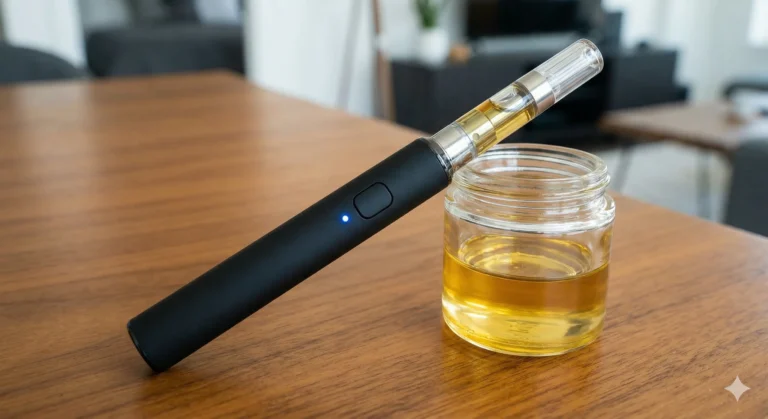
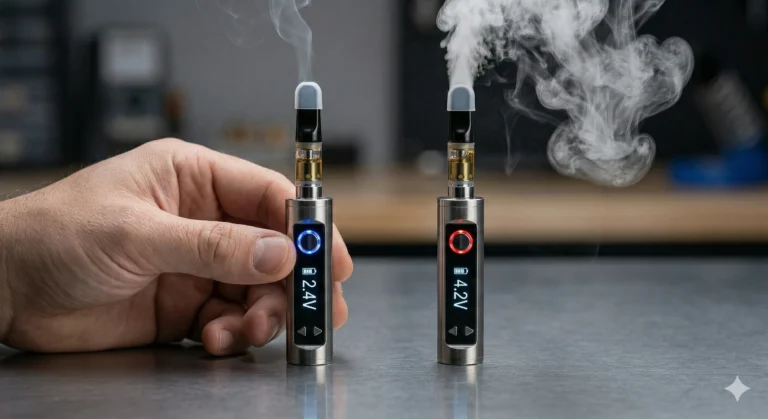
This guide covers what a dab pen battery is, how it works, voltage and power basics, 510 compatibility, common problems, and what to look for when sourcing for retail or OEM. It’s written to help end users make smarter choices and help businesses pick reliable SKUs that earn repeat customers.
🔥 1. What Is a Dab Pen Battery?
⚡ A dab pen battery is the rechargeable power unit that drives a heating element (atomizer) or a cartridge. For concentrates and thicker oils, the battery has to deliver stable output, handle higher power demands, and include protection features to keep performance consistent.
In plain terms, the battery controls three big things:
- Heat intensity (how fast the coil or chamber warms up)
- Consistency (whether each hit feels the same)
- Safety & reliability (protection against shorts, overheating, overcharge)
If the battery is underpowered, you’ll get weak vapor and clog-prone performance. If it’s overpowered without good regulation, you risk burnt taste and shortened cartridge life. A well-designed dab pen battery sits in the sweet spot: steady, predictable, and compatible.
⚙️ 2. How a Dab Pen Battery Works
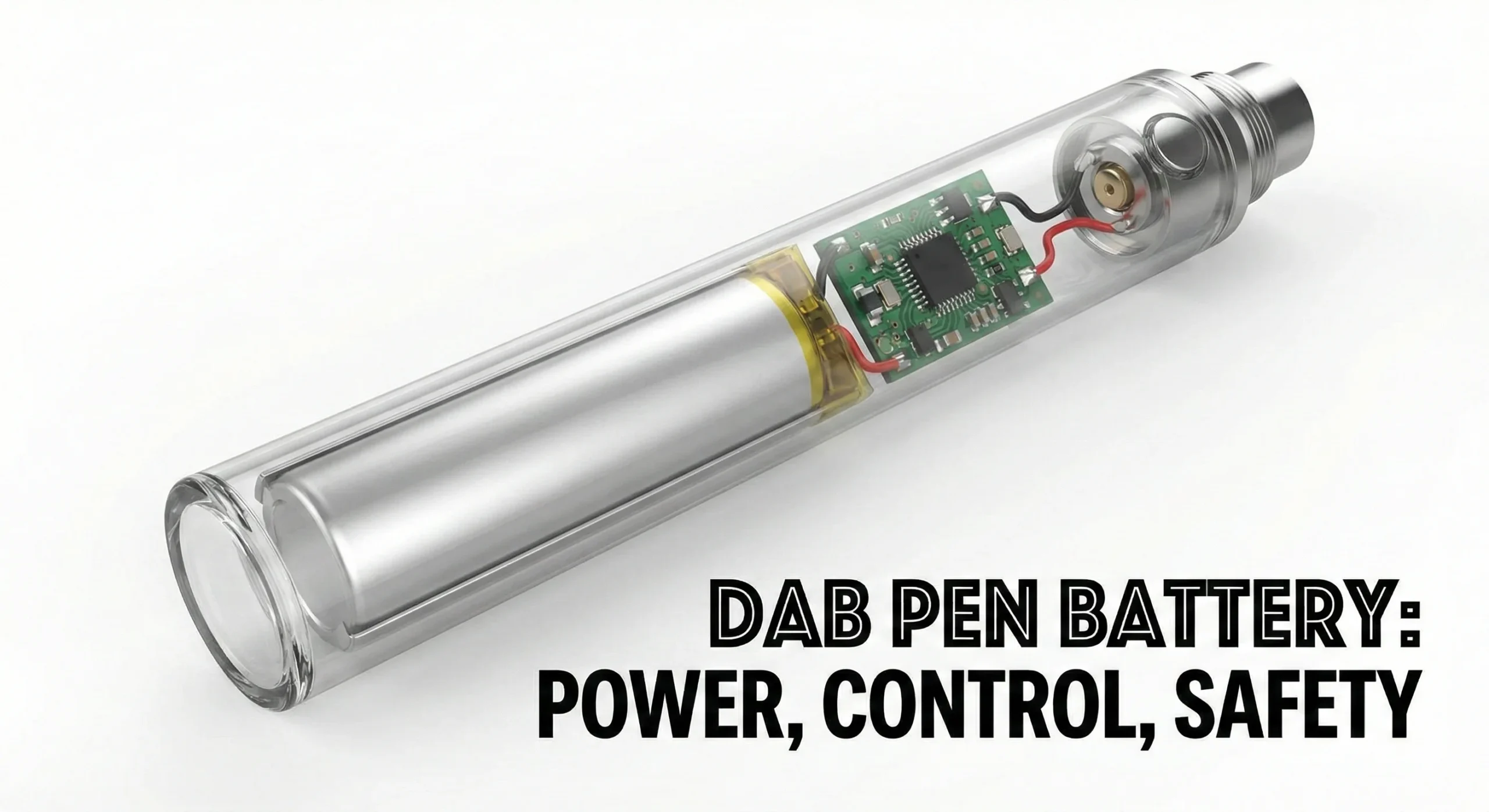
🔌 Inside most modern devices is a lithium-ion cell paired with a control board (chipset). When you activate the device (button press or inhale), the control board sends regulated power to the cartridge/atomizer. That regulation is the “brain” of the battery—without it, output can spike, coils can run too hot, and performance can fluctuate from hit to hit.
Key internal systems often include:
- Voltage regulation to keep output stable
- Current limiting to prevent overload
- Protection circuits for shorts, low voltage, and overcharge
- Indicator logic (LED patterns for status and errors)
In 2026 hardware, the best experience usually comes from batteries that manage power smoothly instead of “maxing out” heat. That’s especially important for thick oils, where too much heat can degrade flavor quickly.
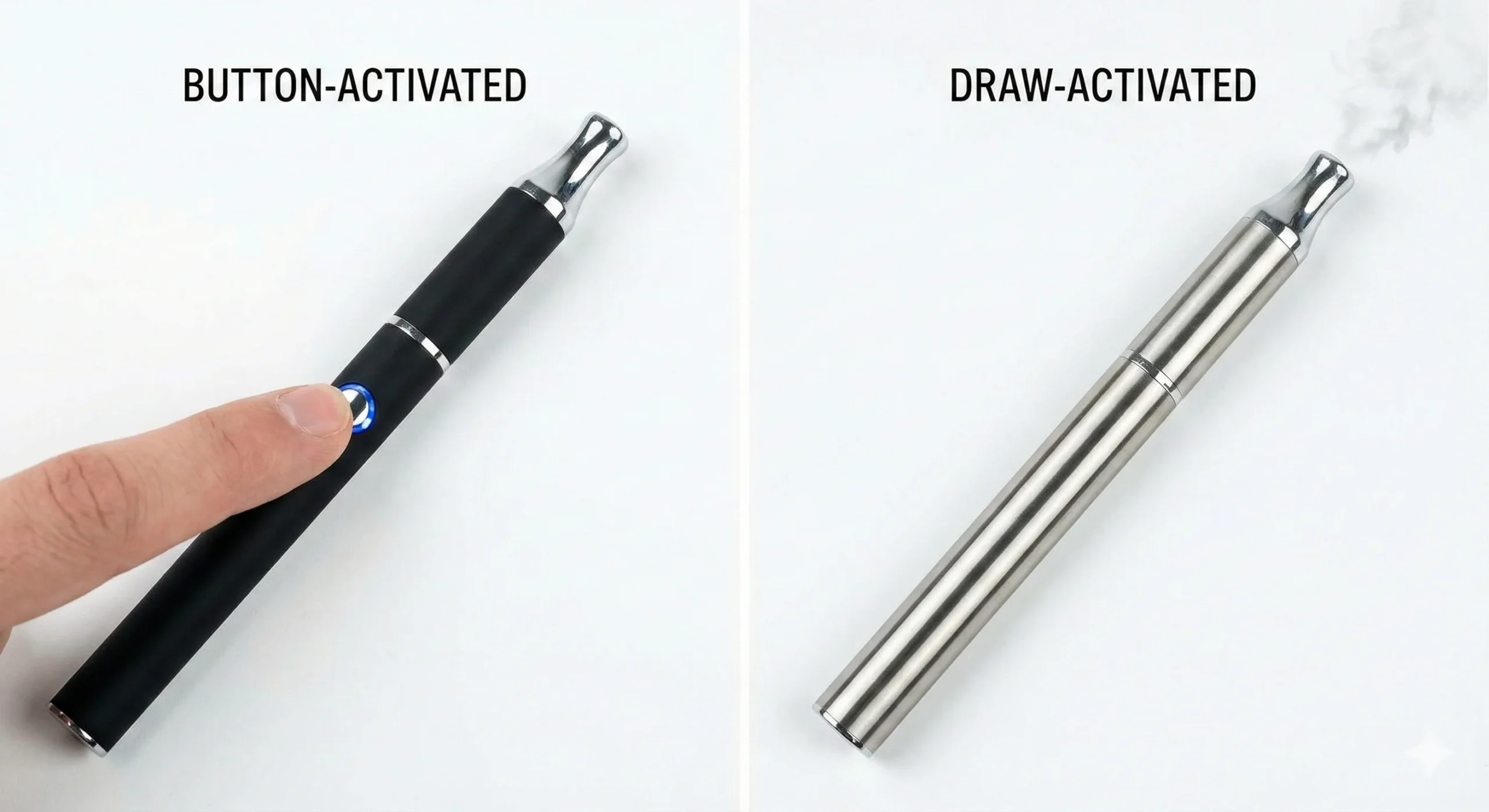
🧩 3. Activation Styles: Button vs Draw
🔘 3.1 Button-Activated Batteries
👆 Button-activated dab pen batteries are popular because they offer control. Many include preheat, voltage steps, and better support for a wider range of cartridges. If your customer base includes experienced users, button activation is often the safer “universal fit.”
Why people choose it:
- More consistent heating on demand
- Easier to use preheat for thick oil
- Better compatibility across resistance ranges
💨 3.2 Draw-Activated Batteries
💨 Draw-activated batteries fire automatically when the user inhales. They feel simple and clean—no buttons, no learning curve. The tradeoff is less precision: airflow sensitivity can affect firing, and some carts may feel inconsistent if oil viscosity changes with temperature.
Why people choose it:
- Beginner-friendly
- Minimal design
- Quick “grab and go” use
📊 4. Voltage, Power & “Why My Cart Tastes Burnt”
🌡️ Voltage is the most practical setting users notice. Higher voltage generally means more heat and denser vapor, but it can also reduce flavor and shorten cartridge life. For SEO and real-world usability, this is one of the most searched topics around dab pen batteries.
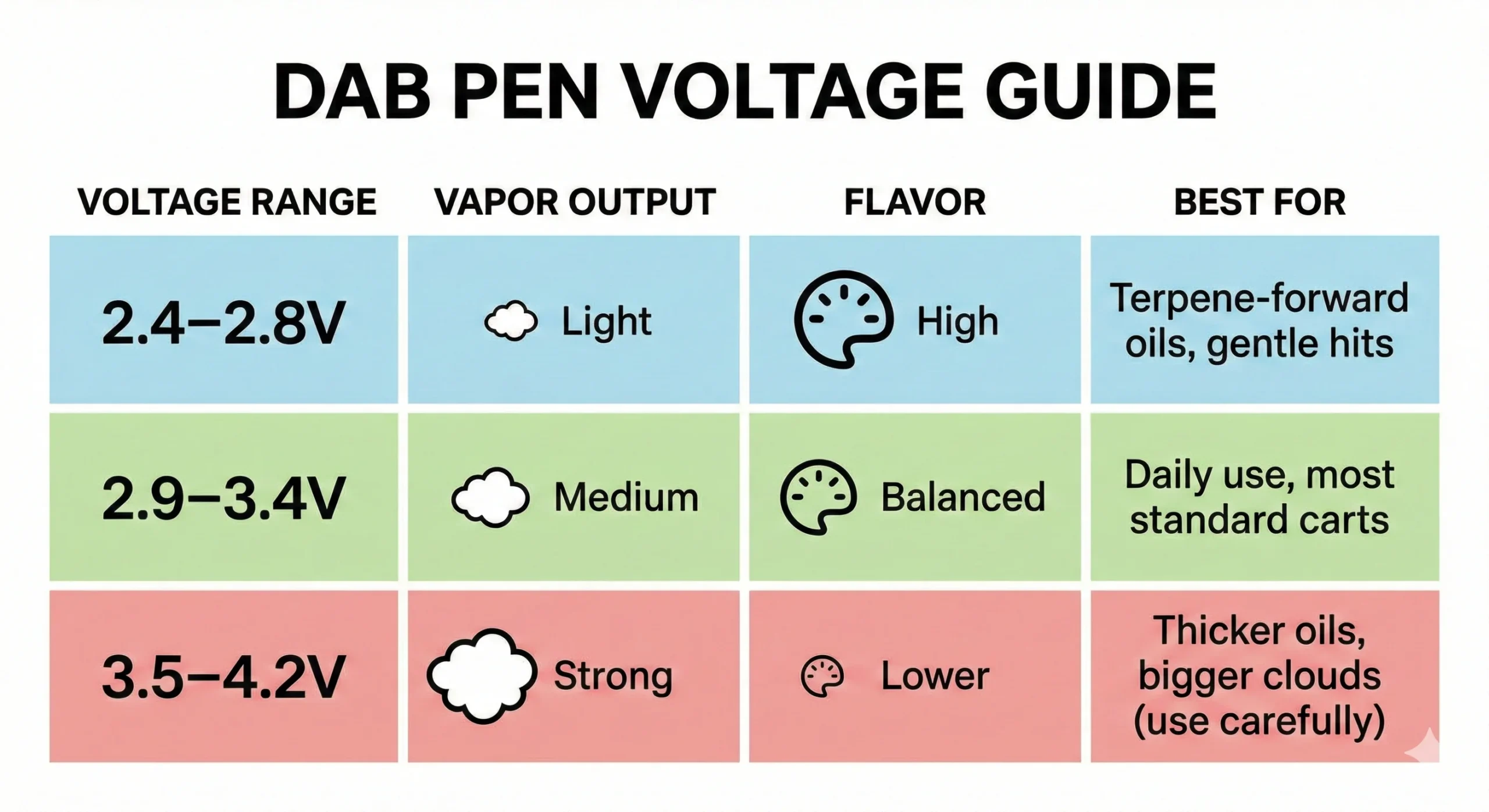
Here’s a simple reference that works for many 510 carts:
| Voltage Range | Vapor Output | Flavor | Best For |
|---|---|---|---|
| 2.4–2.8V | Light | High | Terpene-forward oils, gentle hits |
| 2.9–3.4V | Medium | Balanced | Daily use, most standard carts |
| 3.5–4.2V | Strong | Lower | Thicker oils, bigger clouds (use carefully) |
Pro tip: If users complain about harshness or burnt taste, the first fix is usually lowering voltage and taking slower draws. If they complain about weak vapor or clogs, a short preheat (if available) often helps more than simply cranking voltage.
🏆 5. Recommended Cart Battery Picks
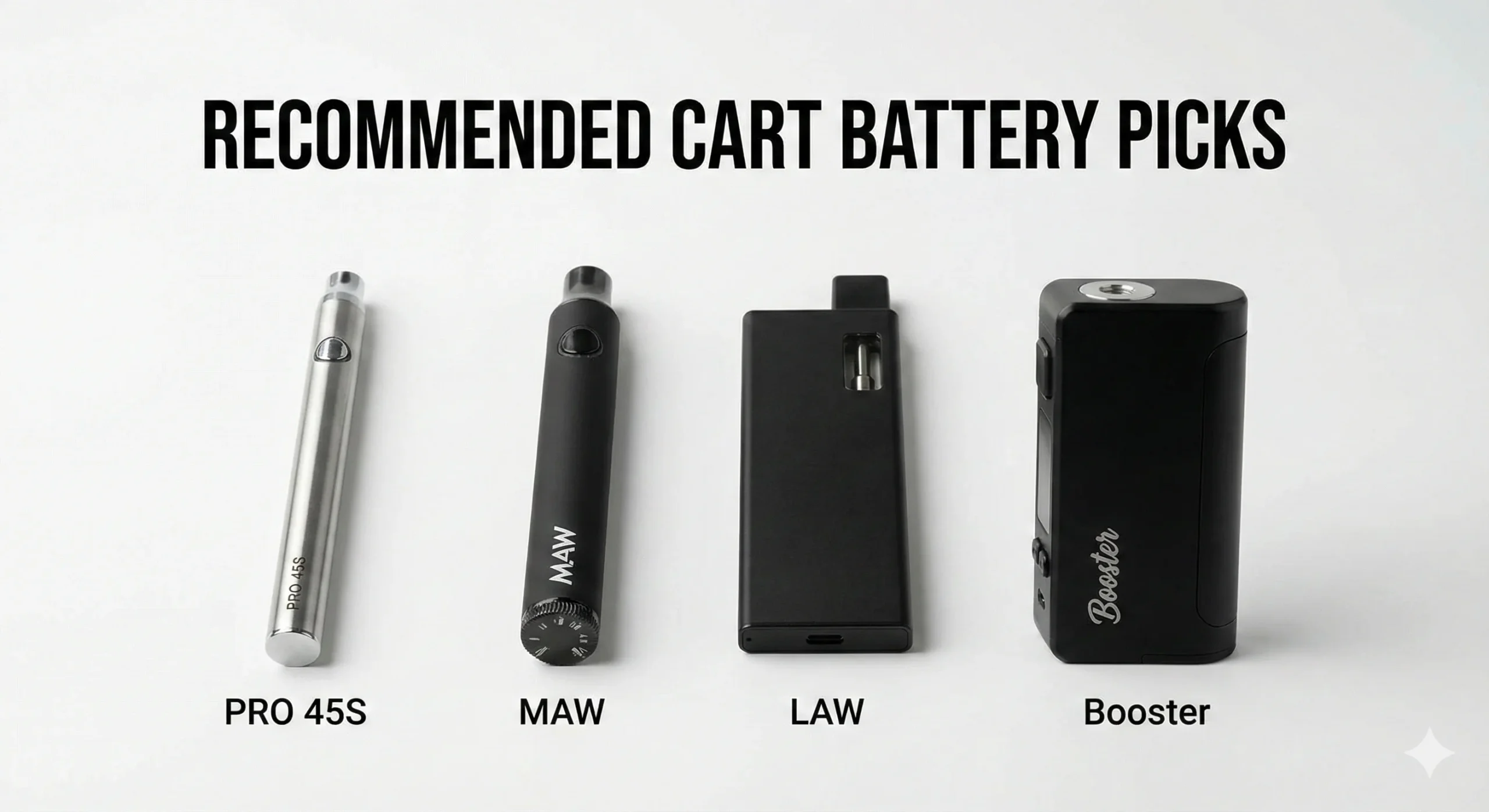
- Full 510 Battery Collection
- PRO 45S – Slim & Budget Friendly
- MAW – Adjustable Voltage
- LAW – Concealed Style
- Booster – High Power Option
🔩 6. Compatibility: 510 Thread Isn’t the Whole Story
🔗 Most cart setups use 510 threading, which is great because it standardizes physical connection. But “it screws in” doesn’t always mean “it performs well.” Compatibility also depends on electrical and heating behavior.
When matching a dab pen battery with cartridges/atomizers, pay attention to:
- Resistance range (some carts prefer lower voltage because resistance is low)
- Oil viscosity (thick oils often benefit from preheat rather than high voltage)
- Airflow design (tight airflow can feel harsh at high voltage)
- Connector depth (rare, but some carts sit differently)
For retail, a safe approach is to stock batteries with adjustable voltage and reliable regulation. For brands, it’s smart to test across multiple cart types before finalizing a dab pen battery SKU.
🔋 7. Battery Capacity (mAh), Runtime & Charging
🔋 Capacity is measured in mAh. Higher mAh generally means longer runtime, but also often means a larger device. For end users, it’s about convenience. For retail, it’s about matching buyer habits (discreet vs all-day use).
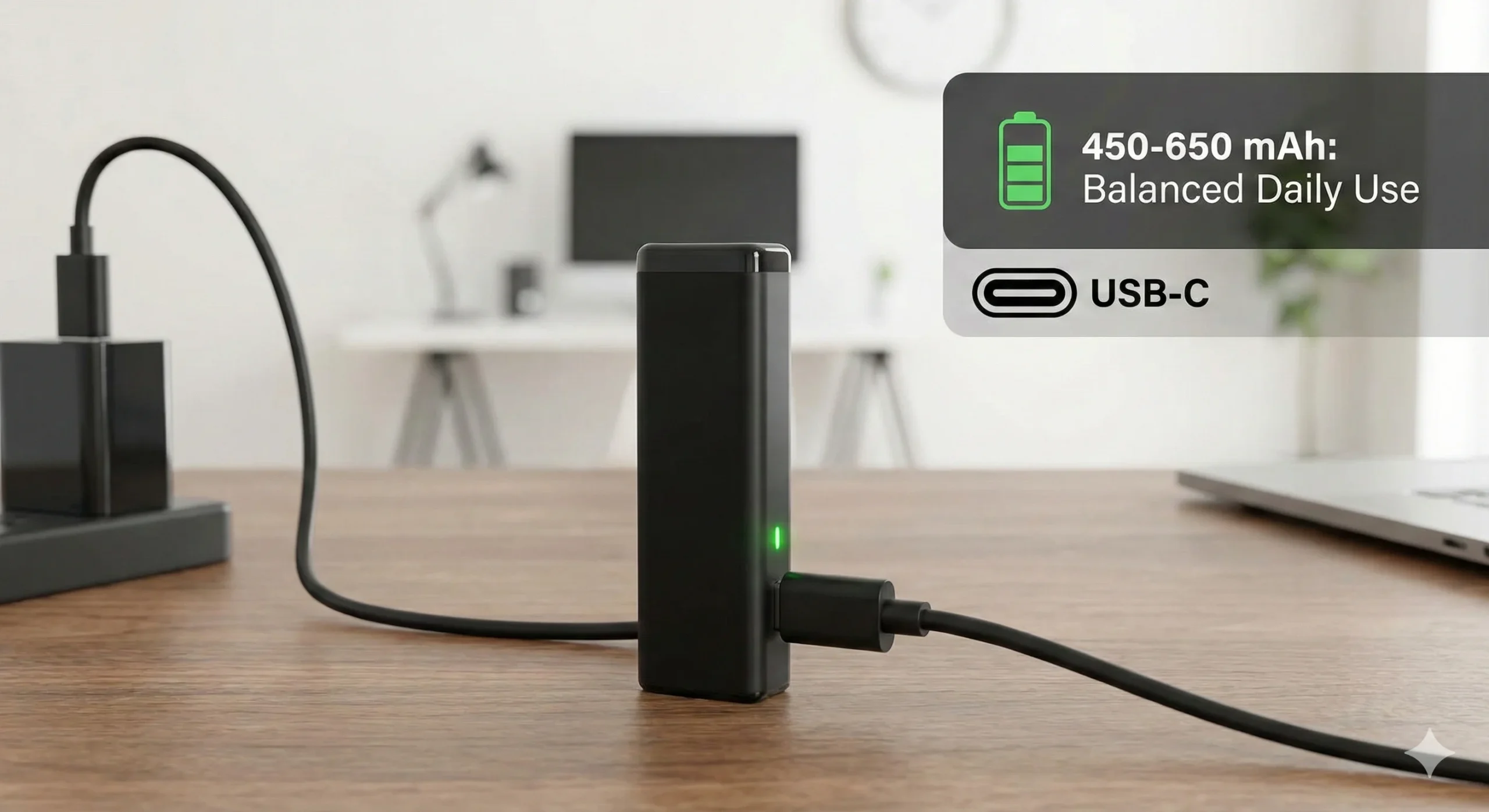
Typical mAh ranges:
- 280–400 mAh: ultra-compact, best for light sessions
- 450–650 mAh: balanced daily-use category
- 700–1000+ mAh: long runtime, heavier-duty feel
Charging in 2026: USB-C is now a major preference because it’s durable, convenient, and widely compatible. Micro-USB still exists in some budget models, but many buyers see USB-C as a “modern baseline.”
For general lithium-ion care, Battery University has practical guidance on charging habits and battery lifespan: Battery University.
🛡️ 8. Safety Features Buyers Should Expect
🛑 Safety is not just a checkbox—it’s what prevents returns, complaints, and worst-case incidents. A quality dab pen battery should include multiple protections that work quietly in the background.
Look for these common protections:
- Short-circuit protection: stops output if a short is detected
- Overcharge protection: prevents charging past safe limits
- Over-discharge protection: avoids deep draining that damages cells
- Auto cutoff: stops continuous firing after a set time
- Over-temperature monitoring: helps reduce heat stress
Retail tip: Devices with predictable protections often generate fewer “my device died” support messages, because the battery is preventing damage instead of letting it happen.
🧠 9. How to Choose the Right Dab Pen Battery
🧭 If you want a simple decision framework that fits both end users and B2B buyers, use this checklist:
- Compatibility: 510 thread + tested performance across popular carts
- Voltage control: at least 3 settings, ideally adjustable voltage
- Preheat option: useful for thick oils and cold weather performance
- Capacity: choose mAh based on “pocketable” vs “all-day” needs
- Charging port: USB-C preferred for modern buyers
- Build quality: connector durability and stable output regulation
- Branding potential: finish, colorways, packaging, and consistency
For many customers, the best dab pen battery is the one that feels predictable: it works the same way every day, doesn’t scorch oil, and doesn’t turn troubleshooting into a hobby.
🔧 10. Troubleshooting: Fix the Most Common Issues Fast
🧰 This section is a traffic magnet for SEO because users search these exact problems. Keep it simple, practical, and safe.
💡 10.1 The Battery Blinks
✨ Blinking usually indicates one of these: low battery, connection issue, or protection mode.
- Charge the battery fully
- Remove the cart and gently clean the connector
- Reattach the cart snugly (don’t overtighten)
- If it still blinks, try a different cartridge to rule out cart issues
🔌 10.2 The Battery Won’t Charge
🔋 Common causes include a worn cable, debris in the port, or charging with an unstable power source.
- Try a different cable and a reliable USB power adapter
- Inspect the port for lint or residue (keep cleaning gentle)
- Confirm the charger is low-output and stable
😮💨 10.3 Weak Vapor or No Vapor
📉 Weak vapor is often a settings issue, not a “dead battery” issue.
- Increase voltage one step at a time (don’t jump straight to max)
- Use preheat if the oil is thick
- Check for clogged airflow in the cartridge
🔥 10.4 Harsh or Burnt Taste
🚫 Burnt taste usually happens when heat is too high or the coil is stressed.
- Lower voltage
- Take shorter draws
- Allow time between hits for the coil to re-saturate
🧼 11. Maintenance Tips That Keep Batteries Performing
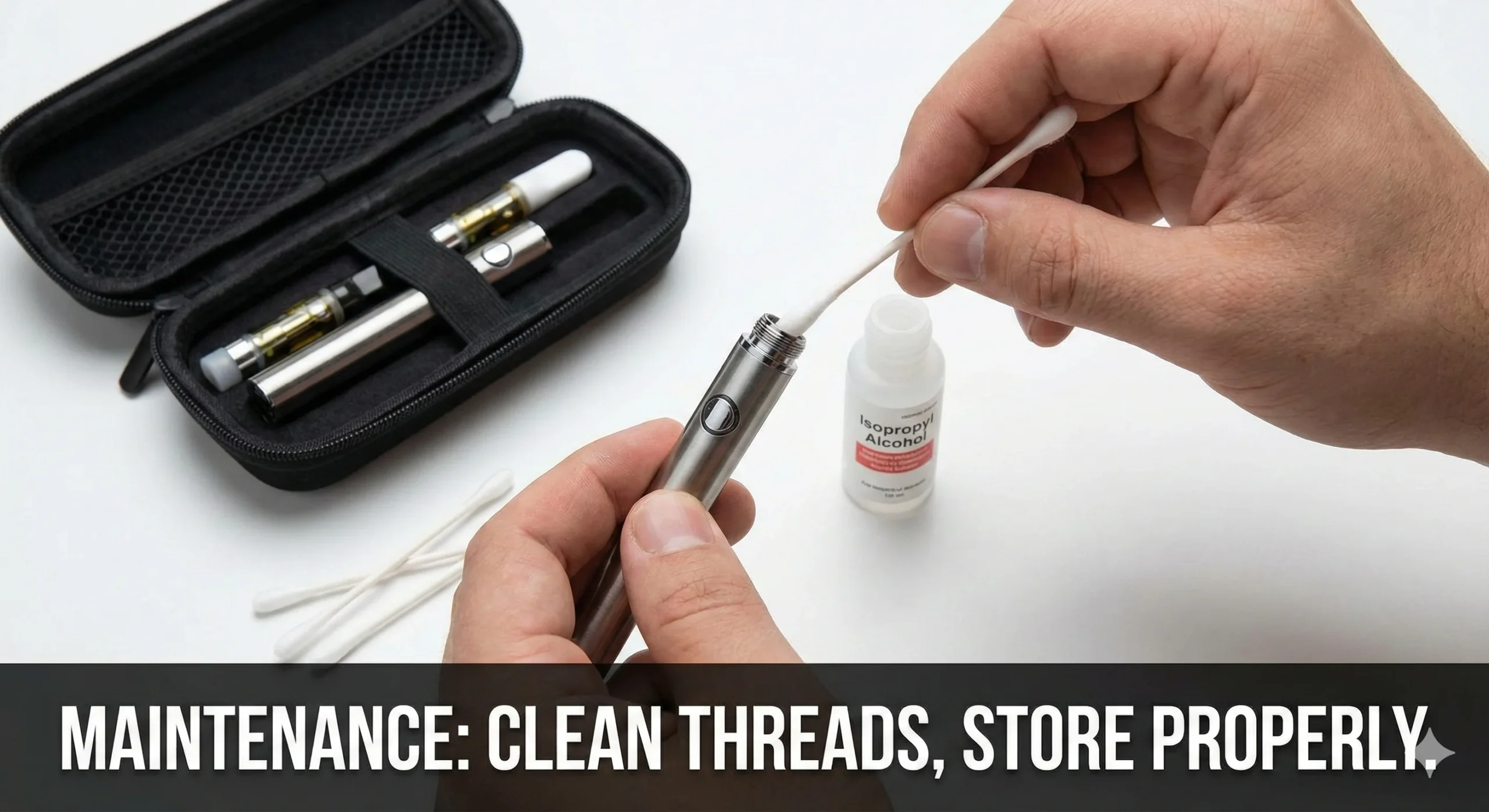
🧽 Maintenance is boring… until it saves you money and reduces returns.
- Clean the threads: wipe 510 connection areas to reduce misfires
- Store properly: keep away from heat and moisture
- Avoid over-tightening: it can damage connectors over time
- Don’t overuse max voltage: higher heat can shorten cart life
- Charge smart: unplug after full charge when possible
For brands, recommending simple care steps in packaging inserts can reduce after-sales complaints and improve product reviews.
🏭 12. OEM/ODM Notes: What Matters for Private Label Buyers
🏗️ If you’re sourcing dab pen batteries for retail, your priorities should extend beyond “looks good.” Consistency is everything—one batch that performs differently can create a wave of negative feedback.
OEM buyers should evaluate:
- Output stability: does the device maintain steady performance as the battery drains?
- Voltage accuracy: are the voltage steps true and repeatable?
- Defect rate control: what’s the QC process and acceptable AQL?
- Material & finish: coating durability, scratch resistance, and feel
- Packaging system: retail-ready layouts that reduce damage and returns
For a streamlined selection process, it’s often easiest to start with a proven 510 lineup and then choose a hero SKU with adjustable voltage for broader compatibility. The collection link above is useful for browsing battery form factors and matching the right style to your market.
❓ FAQ
1️⃣ What’s the difference between a cart battery and a dab pen battery?
Many people use the terms interchangeably. Generally, a dab pen battery may support higher power needs for concentrates, while cart batteries often focus on 510 cartridges and everyday convenience.
2️⃣ Are all 510 batteries compatible with all 510 cartridges?
Most are physically compatible, but performance depends on voltage range, resistance, and oil viscosity. Adjustable voltage helps cover more cartridges smoothly.
3️⃣ What voltage is best for flavor?
Lower voltage (often around 2.4–3.0V) is usually better for flavor, especially for terpene-rich oils.
4️⃣ Why does my battery blink but still won’t hit?
It often indicates a connection issue or protection mode. Clean the connector, reseat the cartridge, and test with a different cart if possible.
5️⃣ Is USB-C necessary?
Not strictly necessary, but it’s increasingly expected in modern devices because it’s durable and convenient.
6️⃣ How do I make my battery last longer?
Clean threads regularly, avoid constant max voltage use, store it away from heat, and charge with stable power.
7️⃣ What capacity (mAh) should I choose?
Pick 280–400 mAh for compact portability, 450–650 mAh for daily balance, and 700–1000+ mAh for long runtime.
8️⃣ Can I do OEM branding for dab pen batteries?
Yes—common options include logo printing/engraving, custom colors, finishes, voltage tuning, and retail packaging.
🚀 Final Thoughts
A dependable dab pen battery is the foundation of a good vaping experience and a stable retail product line. When voltage regulation is smooth, compatibility is broad, and safety protections are reliable, users get consistent results—and brands earn trust. Whether you’re shopping for daily use or building a private-label lineup, prioritize output stability, smart voltage control, and proven 510 compatibility to keep both performance and customer satisfaction high.