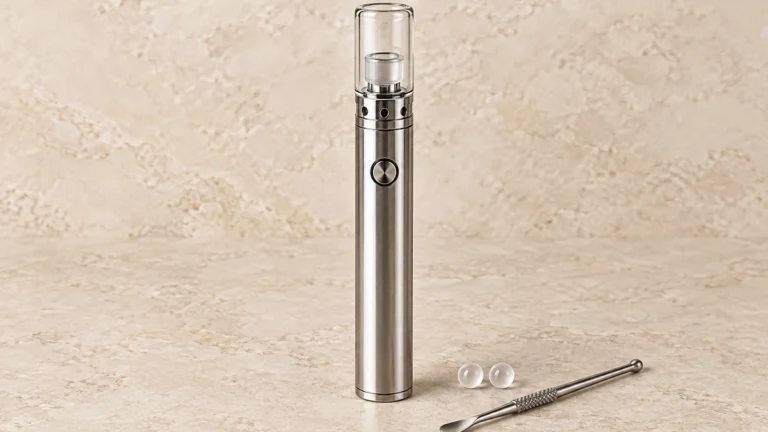
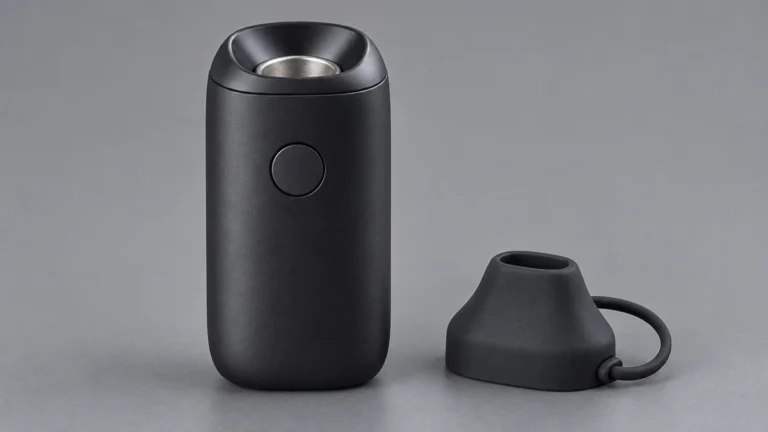
The phrase Yocan Orbit vaporizer pen refers to a portable concentrate device built around a quartz cup and a small pair of quartz balls, not a conventional oil cartridge. Yocan’s original Orbit product page describes a coil-less quartz cup, top airflow, and two quartz balls. It also publishes specifications for the original model. Those manufacturer terms provide a clear starting point for separating the Orbit’s chamber architecture from other wax pens that use a coil, exposed heated tip, or cartridge.
This article concerns the original Orbit, not Orbit 2.0. The products have separate official pages and manuals, and names or appearance should not be used to transfer parts or screen behavior between them. The original Orbit is described as a simple pen-style device; this guide makes no claim that it has an OLED display. This is a neutral parts explainer, not a purchase recommendation or operating guide.
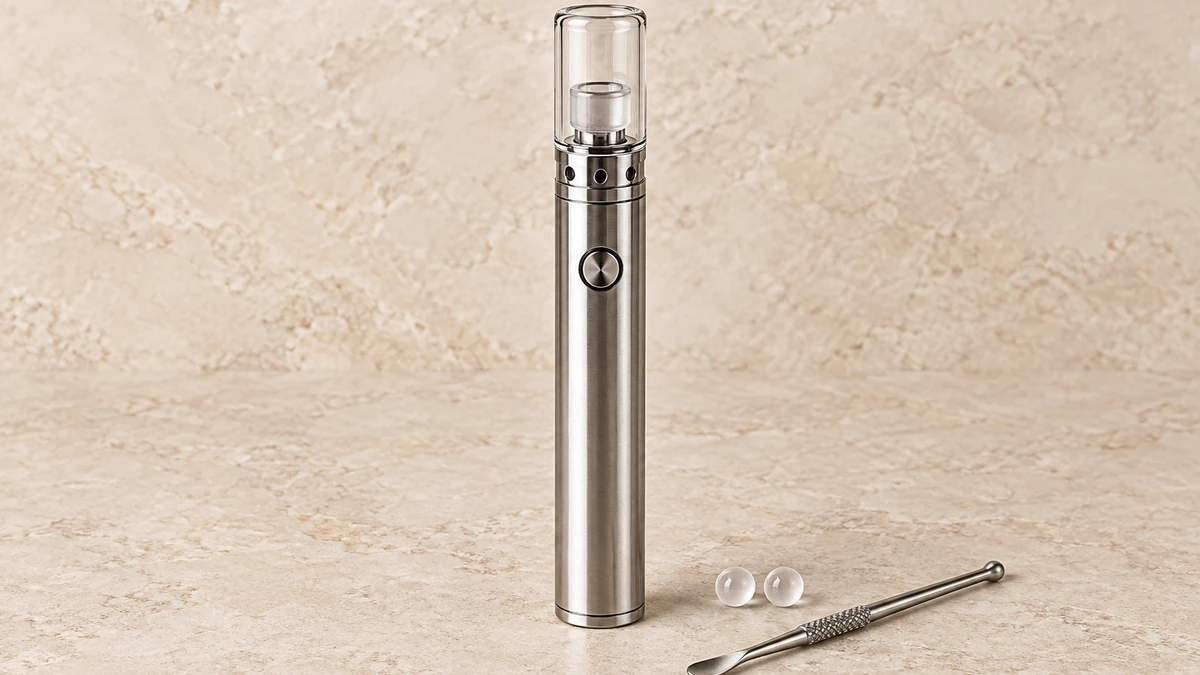
🧭 1. Orbit is a chamber-style concentrate pen
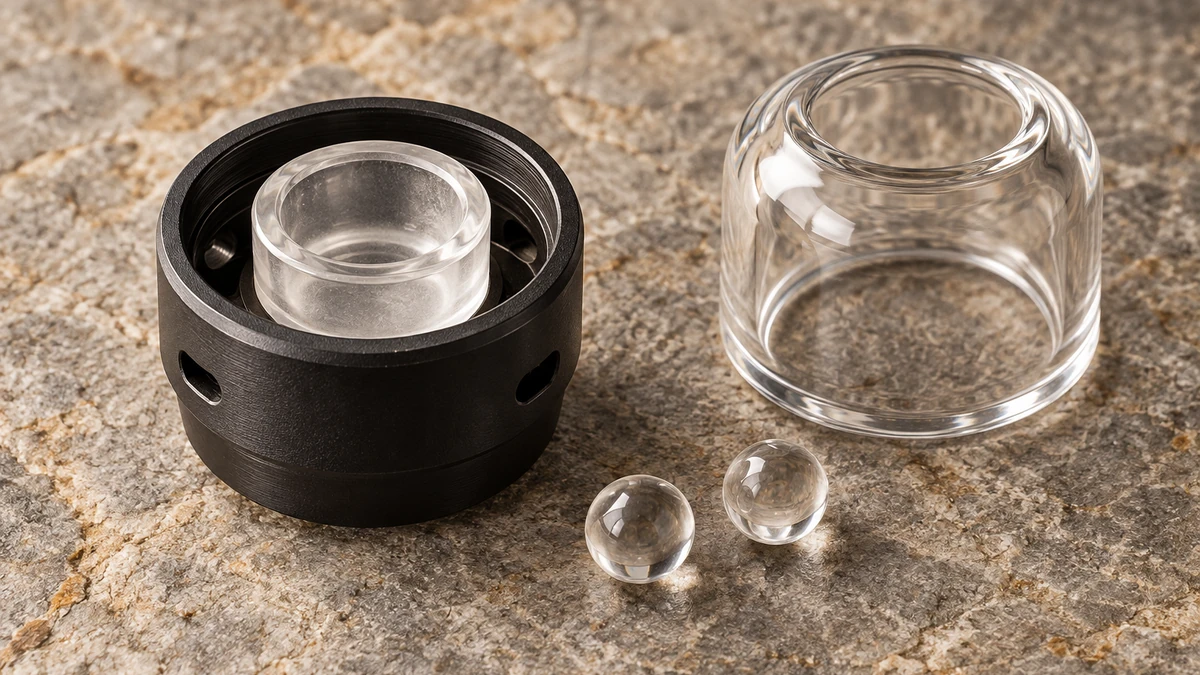
Yocan calls the Orbit a wax vaporizer pen and describes its atomizer as a coil-less quartz cup with two quartz balls. That distinguishes it from a cartridge-based oil pen: the cup is a chamber, and the balls are small moving components inside the heating assembly rather than liquid in a tank. Yocan’s page also describes a top vertex airflow system and a glass cover. Those are the maker’s names; we use them as manufacturer terminology rather than inventing dimensions or internal cross-sections.
It also differs from an exposed-tip nectar collector. A nectar-collector design places a heated tip at the contact end, while the Orbit’s load area is described as a cup-shaped atomizer under a cover. This is a broad architectural contrast, not a compatibility comparison. See our separate Seahorse dab pen guide for how a heated-tip format is named.
🔎 1.1 Why “coil-less” can still appear beside “Quartz Balls Coil”
Yocan’s official Orbit page uses both descriptions: it calls the cup coil-less and lists a resistance specification labeled “Quartz Balls Coil.” Those phrases can seem inconsistent if “coil” is read as a simple synonym for a visible wire wrapped around the cup. Product copy may use “coil” to name the assembly or electrical heating component, while “coil-less cup” describes the cup’s visible construction. Without a published cross-section, avoid claiming how the hidden heater is built.
A careful explanation preserves both statements with attribution: the maker describes a coil-less quartz cup, two quartz balls, and also lists a “Quartz Balls Coil” resistance. The terminology is not enough to infer exact wiring, heater material, or location. Users seeking a replacement should use the original Orbit manual and an exact part reference rather than selecting a visually similar chamber.
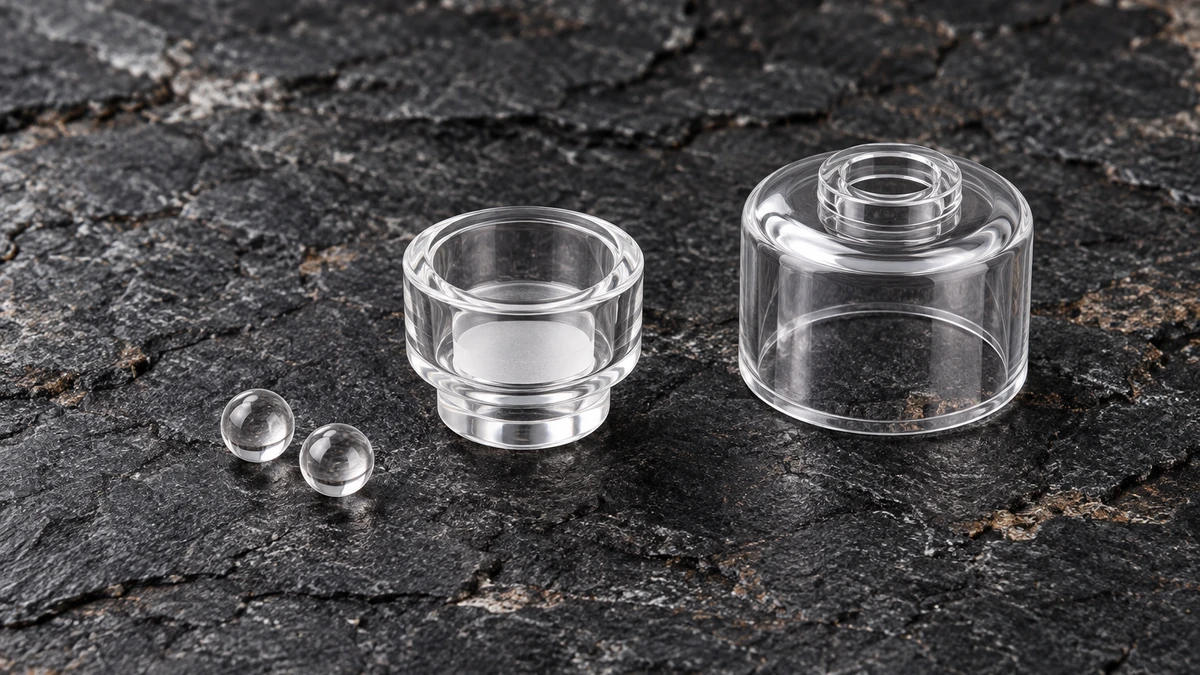
🧩 2. Quartz cup and balls: visible parts, limited claims
The quartz cup is the receptacle in the named atomizer assembly. The two quartz balls are described by Yocan as part of its Orbit design. The manufacturer says the top airflow drives the balls to move and describes that motion as part of how its system operates. That is an attributed product explanation; this article does not independently measure the motion, temperature, or aerosol output.
Quartz is a material label, not a complete performance specification. It does not, by itself, establish a temperature range, heating uniformity, durability, or flavor result. Those depend on the overall design and operating conditions. Statements like “even heating” or “better flavor” in product copy should remain attributed to the company or be identified as subjective user impressions.
⚙️ 2.1 What the airflow cover contributes to the architecture
Yocan describes the Orbit as having a top airflow system and a glass cover. The cover sits above the cup in the maker’s product presentation. Together, the cup, cover, and balls form a chamber assembly that differs from a disposable oil cartridge and from an open heated-tip design. A product photograph can show these outside parts, but cannot establish the hidden air passage dimensions or the exact pressure behavior.
The word “vertex” is Yocan’s terminology. Avoid treating it as a standardized engineering term used across all vaporizer designs. It identifies the feature in the manufacturer’s copy; it is not proof of a particular airflow rate or of a universal outcome. That distinction keeps product-specific language from being mistaken for a technical standard.
🔋 3. The body and specifications belong to the original model
For the original Orbit, Yocan lists a 1700 mAh battery, stainless-steel and quartz materials, three voltage levels, USB Type-C charging, a 0.4-ohm resistance value labeled for the quartz-balls coil, and dimensions of 131 by 22 millimeters. These are the company’s published specifications, not independent measurements. Product revisions and regional package versions may differ, so the original product page and original manual should be consulted when a specific value matters.
Voltage levels are not the same thing as an independently measured chamber temperature. A voltage setting describes an electrical output selection; it does not prove the temperature at every point in a quartz cup. The resistance figure likewise applies to the heater assembly as Yocan labels it and should not be generalized to unrelated Orbit 2.0 parts.
🧾 3.1 Original Orbit is not Orbit 2.0
Yocan has a separate Orbit 2.0 product/manual section. A newer model may change controls, appearance, accessory names, or specifications. Search results can mix manuals and product pages because they share the Orbit name. Before relying on a voltage value, part image, or instruction, confirm that the source explicitly says “original Orbit” or “Orbit 2.0.”
The word “vaporizer pen” alone is not enough to identify the generation. Check the product title, model marking, manual cover, and component image. Do not infer that a newer model’s screen or control layout exists on the original device. The original documentation consulted for this article does not establish an OLED display, and the image set intentionally contains no fabricated screen content.
🆚 4. How Orbit differs from other concentrate hardware
Owners often compare the Orbit with other wax pens, including exposed-tip devices such as a Seahorse format. The central difference is where material meets the heater: a cup-style atomizer provides an enclosed chamber, while a nectar collector presents a heated tip. That architectural distinction can be explained without ranking the devices or claiming one has better performance.
Community questions can also blur “Orbit” and “Orbit 2.0” or compare aftermarket glass and chamber pieces. Those threads help identify real areas of confusion—especially what the balls do, whether a part is replaceable, or how a different model differs. They are not a specification source. Use the official Yocan model page and matching manual to confirm technical details.
- Orbit: Yocan describes a quartz cup, two quartz balls, and top airflow.
- Exposed-tip nectar collector: the heated tip is the defining interface; the device architecture differs.
- Oil cartridge battery: uses a cartridge format and should not be illustrated as a cup atomizer.
- Orbit 2.0: a separate model; verify the manual before applying any control or part detail.
🧼 5. Care and replacement questions are part-specific
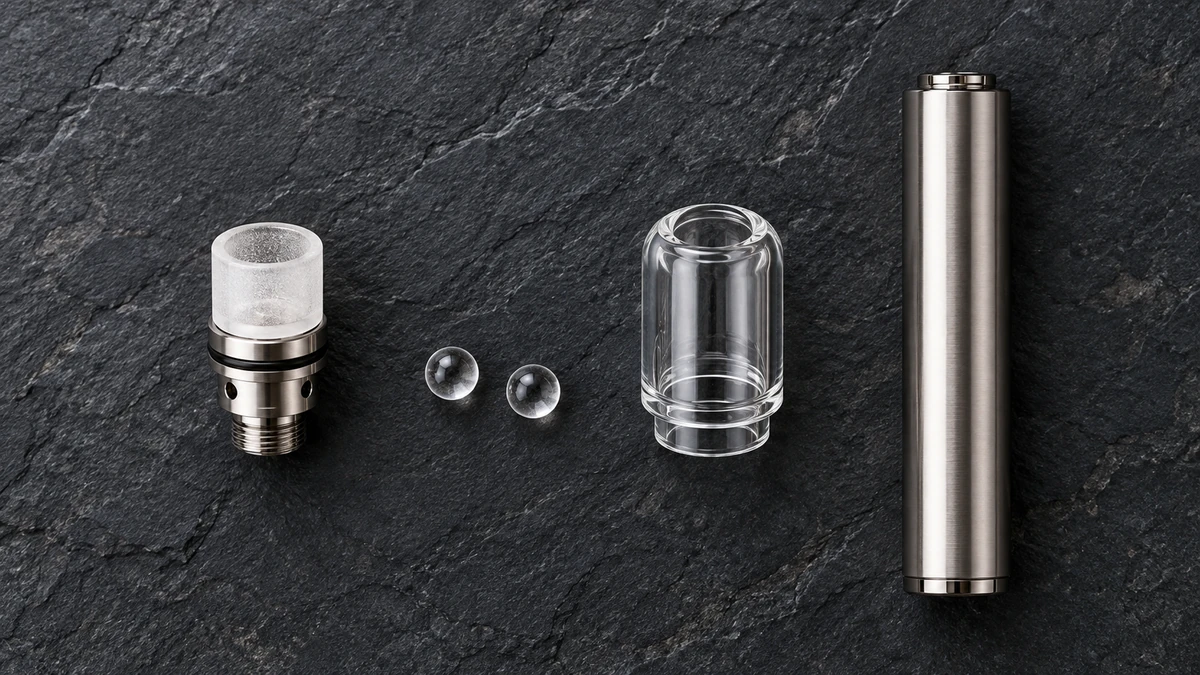
Because the Orbit assembly includes a quartz cup, balls, a glass cover, and a powered body, “clean the pen” is too broad to be useful. The manufacturer’s manual should govern care for each component. Do not assume that a method suitable for a removable glass cover is appropriate for the electronic body or heater. We avoid providing an operating or maintenance procedure here; the goal is to help readers name the parts before consulting the correct instructions.
Replacement questions should likewise identify the exact model and piece. A listing for an Orbit 2.0 chamber is not automatically compatible with original Orbit, and a generic quartz cup may differ in fit or electrical characteristics. An image can show the part’s shape but not its dimensions, material grade, or electrical behavior. Seek explicit model compatibility rather than relying on visual resemblance.
🗂️ 5.1 A useful question format
When asking about the device, state whether it is the original Orbit or Orbit 2.0, name the component (cup, balls, cover, or body), and describe what is visible. If a piece is aftermarket or its origin is unknown, say so. This gives other readers a clear question without turning an anecdote into a product specification.
For example, “I have the original Orbit and want to identify the clear top shown in this manual” is clearer than “Does this vape top fit?” Likewise, “the quartz balls are absent from this used kit” describes an inventory question, while “it will not heat because the balls are missing” is a technical diagnosis that needs evidence. Separate observations from explanations.
✅ 6. The short answer
The original Yocan Orbit is a chamber-style concentrate pen described by Yocan with a coil-less quartz cup, two quartz balls, a glass cover, and top airflow. The company publishes model-specific battery, voltage, resistance, and size specifications. Those values should be attributed to the maker, and they should not be transferred to Orbit 2.0 without checking its separate documentation.
For a broader look at related hardware, read our guides to Seahorse-style heated-tip pens, mini nectar collectors, and Puffco Peak atomizer terminology. They describe other architectures and do not imply part compatibility.
Manufacturer references
🧠 7. How to read the two-ball design without overclaiming
Yocan’s language connects the two quartz balls with the airflow inside the covered cup. That provides a manufacturer explanation of why those parts are present. It does not give a measured rotational speed, a thermal map, or an independent comparison with another atomizer. A neutral description can say that Yocan designed the airflow and balls to work together, then stop before asserting a quantified outcome.
That distinction prevents a common drift in product writing: a visible part is named, a brand claim is paraphrased, and the paraphrase gradually becomes a promise. Phrases such as “improves efficiency” or “retains flavor” should remain explicitly attributed to the company if included at all. User impressions can be reported as impressions, with no implication that every device or material behaves identically.
It is also important not to mistake the quartz balls for loose loading media, a separate accessory set, or a universal component. They are described as part of the Orbit atomizer design. If someone asks whether another ball size fits, the official material available here does not establish a universal compatibility rule; the exact manual or manufacturer support should answer that question.
🧾 8. Make the article useful without turning it into an instruction manual
Readers searching this phrase may want to know what the Orbit is, how its chamber differs from other wax pens, whether it has a screen, or whether a post about Orbit 2.0 applies. The useful answer is a clear component map and a precise source boundary. The original product page documents the cup, balls, airflow feature, and published specifications. The manuals index helps distinguish original and newer model documents. The rest—long-term reliability, subjective draw, or comparison outcomes—needs direct testing or clearly labeled owner experience.
That is why this piece avoids step-by-step operating advice. A component explainer can answer nomenclature questions without instructing readers to load, heat, or use the device. If a reader needs an operating or care procedure, the model-matched manufacturer manual is the correct reference, especially because Orbit 2.0 content may appear beside original-model search results.
For people sorting used hardware, ask for the exact model, visible chamber parts, and a manual or packaging reference. A clear photograph can help distinguish a cup-style assembly from an oil cartridge or exposed-tip pen. It cannot confirm internal condition, authenticity, or electrical compatibility. Those limits should be stated plainly rather than hidden behind a confident-sounding image caption.