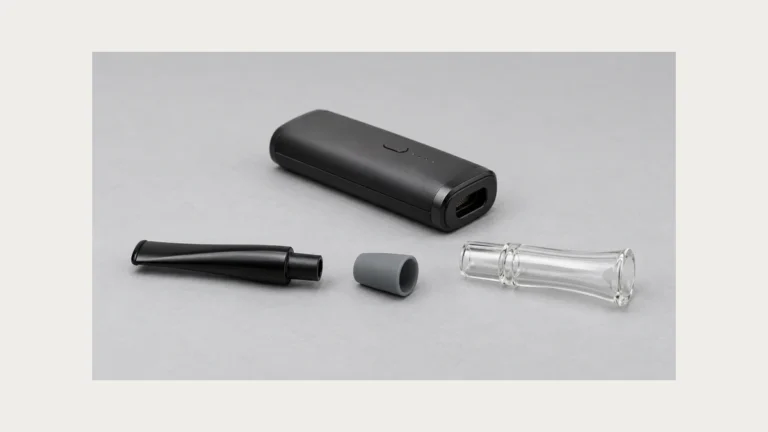
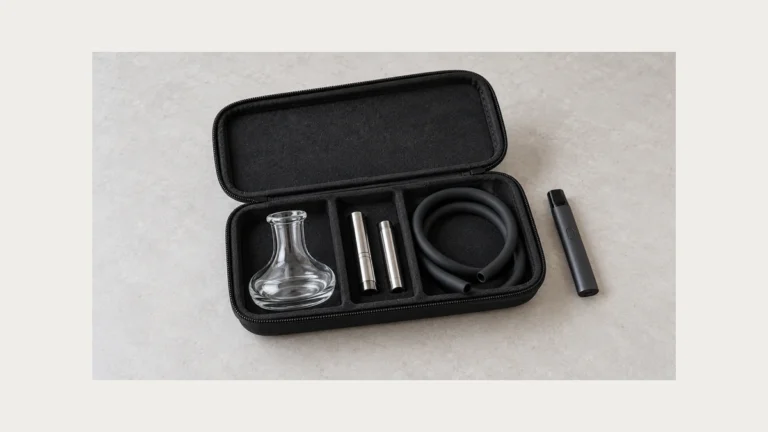
The Puffco Peak atomizer is the ceramic bowl assembly Puffco documents for the original, or OG, Peak. It is not a universal name for every removable chamber used across the Peak family. Puffco’s current product page limits that atomizer’s compatibility to the OG Peak; the company’s support page separately describes the newer Peak as using a 3D Chamber and distinguishes Peak Pro as its own model. Those generation labels are the useful starting point whenever a product page simply says “Peak.”
That distinction sounds small until a reader is comparing photos, part names, and support pages. A bowl-shaped insert, a complete device base, and a later chamber can all be discussed casually as “the atomizer,” even though the manufacturer does not use the terms as interchangeable compatibility labels. The safest explanation is also the simplest: identify the exact device generation first, then read the official part name and compatibility note together.
🧩 1. What “Puffco Peak Atomizer” Names
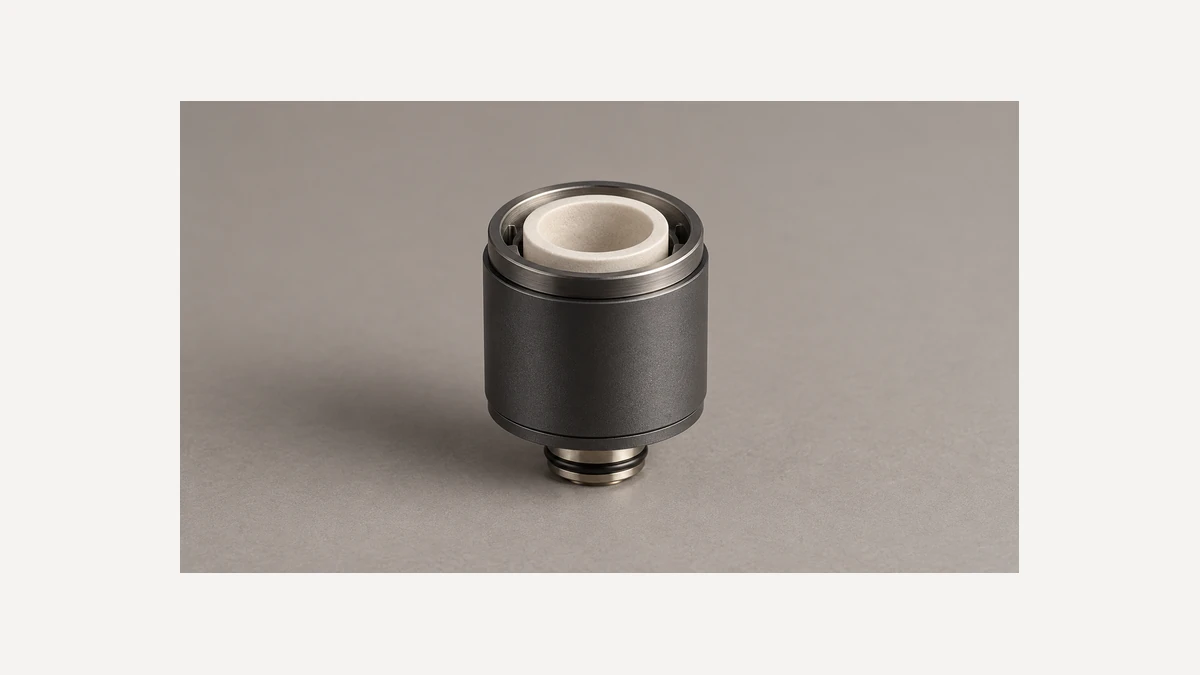
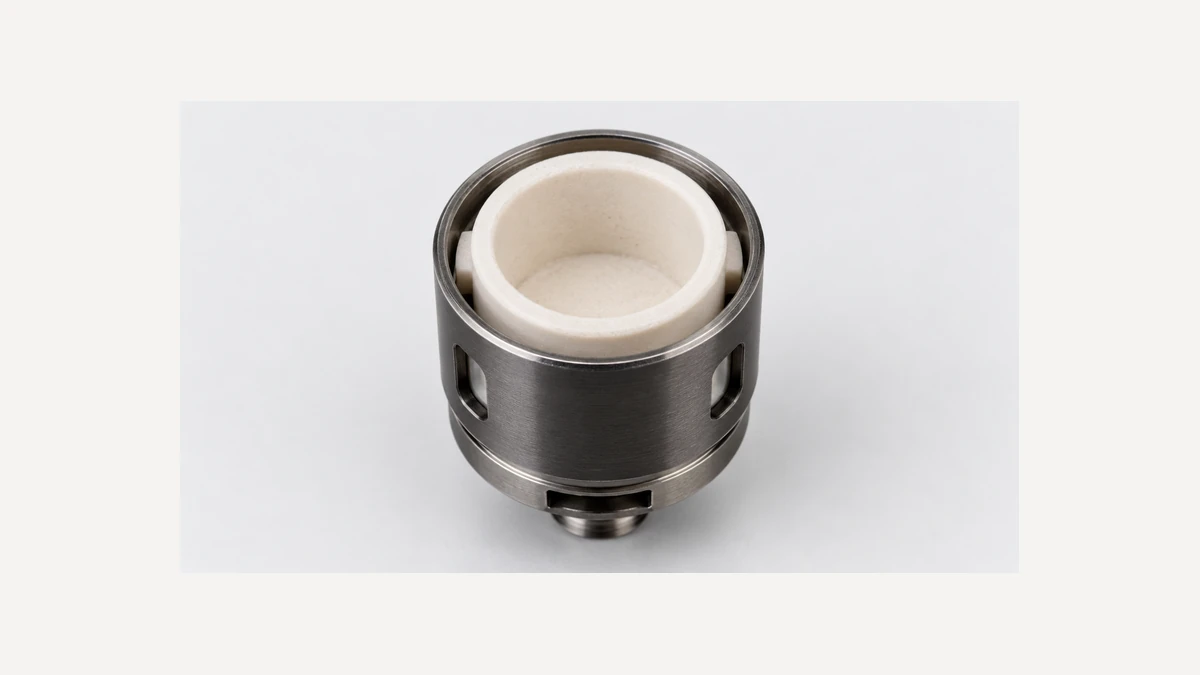
In Puffco’s product listing, the Peak Atomizer is a particular removable ceramic bowl assembly. The product page describes it as a ceramic bowl and says its construction is made without coils, glues, plastics, or fibers. Those are manufacturer statements about the named OG Peak part—not a general specification for every chamber, every Peak generation, or every ceramic component on the market.
The distinction between an assembly and the complete device matters. The device base is the larger body; the atomizer is the named component that the product page identifies separately. Calling the entire unit “the atomizer” may be understandable in casual conversation, but it blurs the part boundary that product listings and compatibility notes rely on.
It is useful to treat the product name like a model-specific label rather than a generic category. A listing that says “Peak atomizer” does not, by itself, establish that the component fits any device whose name contains “Peak.” The manufacturer’s compatibility line is more specific than the family name.
🔎 2. Atomizer, Base, and 3D Chamber Are Different Terms
Three labels appear in discussions of the Peak family, and they answer different questions:
- Base: the main body of the electronic device.
- Peak Atomizer: Puffco’s name for the OG Peak ceramic bowl assembly described on its product page.
- 3D Chamber: a separate term in Puffco’s support material, which associates it with the newer Peak.
The official support page also distinguishes Peak Pro from the other Peak models. That does not mean a reader can infer every detail of Peak Pro chamber design from the OG atomizer listing. It means the pages treat the generations and named components separately, so an explanation should do the same.
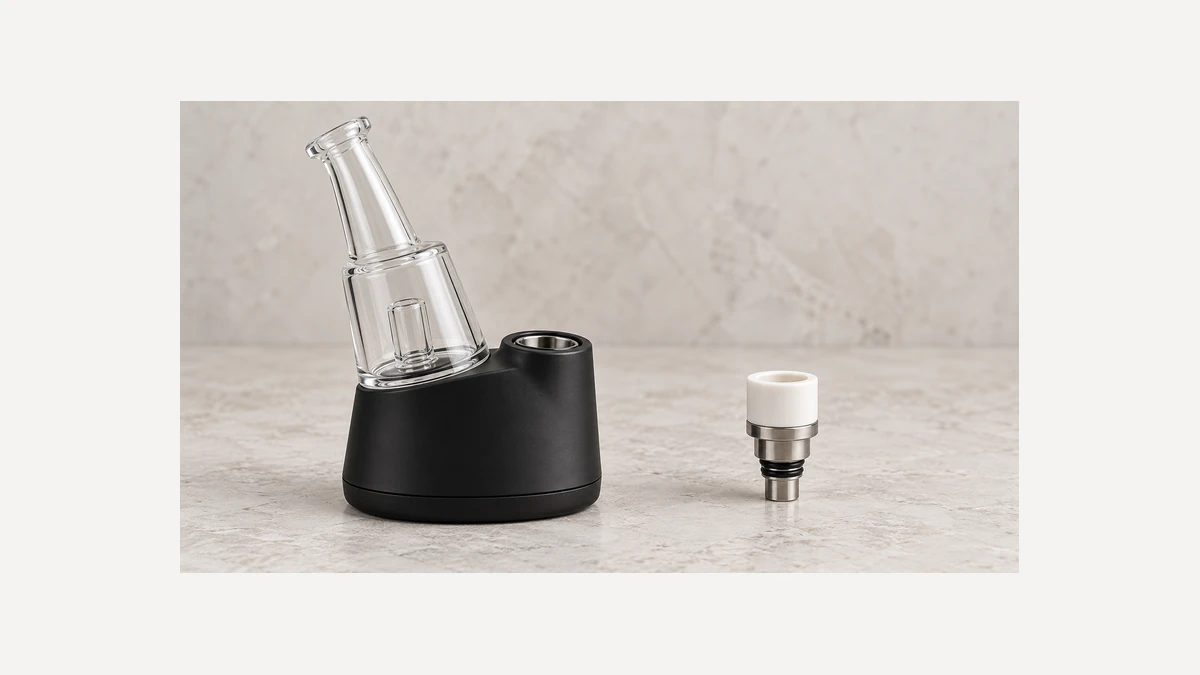
A simple analogy helps: “base” names the larger host device, while “atomizer” or “chamber” names a separate part category. But even that shorthand should not be stretched into a compatibility rule. Two removable components can serve a similar broad role yet still be different named parts for different models.
🧭 3. Why OG Peak, Peak Pro, and Newer Peak Should Not Be Bundled Together
“Peak” is a product-family word, not a complete model number. Puffco’s atomizer page explicitly scopes the ceramic bowl part to the OG Peak. Its support page separates Peak and Peak Pro and identifies a 3D Chamber with the newer Peak. If a search result or marketplace title shortens those details to “Peak atomizer,” some of the information needed to identify the part may have disappeared.
That is why product photos alone are not a reliable shortcut. A small dark module may resemble another small dark module in a thumbnail, but appearance does not prove fit. Nor does a listing’s use of “replacement chamber” show that it refers to the same generation as Puffco’s OG Peak Atomizer page. The compatibility statement attached to the exact item is the relevant evidence.
The official pages answer a narrow question, not every possible hardware question: Puffco names the ceramic bowl assembly and its OG Peak fit; the support article names the newer Peak’s 3D Chamber and distinguishes Peak Pro. They do not authorize broad assumptions about undocumented revisions, third-party components, or the physical condition of an individual device.
🧩 3.1 Generation names narrow the question
“OG Peak,” “Peak Pro,” and “newer Peak” are more useful identifiers than the family word by itself because they point to different product descriptions. Puffco’s own pages use those distinctions rather than treating every Peak-family chamber as one part. When a reader starts with only “Peak atomizer,” the first task is therefore not to guess from a picture; it is to determine which device generation the listing or owner means.
This is not a claim that every part within a generation is interchangeable. It is simply a way to keep the question at the right level. A model name identifies the device being discussed; an atomizer or chamber name identifies the component; a compatibility statement connects the two. If a source supplies only two of those three pieces, the missing relationship remains unverified.
📖 3.2 “3D Chamber” should stay attached to Puffco’s wording
The phrase “3D Chamber” is important here because it is the terminology Puffco uses for the newer Peak in its support material. It helps distinguish that named design from the OG Peak atomizer page. But the phrase should not be stretched into a universal technical category, nor does it reveal every construction detail of a chamber. Use it as a product term attached to the model page that documents it.
That source-specific approach avoids a common shortcut: assuming that two parts are equivalent because both occupy a chamber-like space. Product names often describe assemblies at different levels. One source may name a bowl; another may name a chamber; neither label alone proves identical design, electrical interface, or fit.
📋 4. A Better Way to Read an Atomizer Listing
When a listing uses a shortened product name, look for the complete model generation and the manufacturer’s own compatibility wording. For this particular component, Puffco’s product page says OG Peak. The support page is useful for separating Peak Pro and the newer Peak’s 3D Chamber from that OG listing.
Keep four pieces of information together when comparing descriptions:
- The full device name, including generation where stated.
- The part name used by the manufacturer.
- The exact compatibility statement on the product or support page.
- Whether the page is describing a base, a ceramic bowl atomizer, or a 3D Chamber.
If one of those details is missing, the honest answer is that the listing does not establish compatibility on its own. Avoid filling the gap with a guess based on the word “Peak,” a product photo, or a forum reply. For an individual fit or connection problem, the relevant manufacturer support page is a better reference than a general article that cannot inspect that specific unit.
🔍 4.1 Separate title language from the actual compatibility line
A short title is optimized to identify a product quickly, and it may omit the detail that matters most to an owner. The body of the listing, the manufacturer’s product page, and a support article may each provide a different piece of context. Read the compatibility sentence itself rather than relying on a page title, URL slug, or a phrase repeated across third-party listings.
For the part discussed here, the relevant manufacturer language is narrow: Puffco describes the Peak Atomizer as compatible with the OG Peak. That statement is more informative than a broad retailer phrase such as “Peak atomizer,” because it attaches the part to a specific generation. It still does not extend the fit to a Peak Pro, the newer Peak, or an unrelated third-party chamber.
🧭 4.2 Photographs are useful for recognition, weak for fit
Photos help a reader recognize whether a listing shows a bowl assembly, a base, a glass accessory, or a different kind of chamber. They rarely show enough to establish the complete interface between a removable part and a device. Scale can be deceptive in a standalone product image, and camera angle may hide a connector or base contact. A similar silhouette is therefore a prompt to look for documentation, not proof of compatibility.
This matters most when one listing uses a shared photo for multiple variants. The thumbnail may represent the product family while a written selector or compatibility note identifies the actual generation. If the page does not make that relationship clear, the image cannot fill the gap. Treat the missing detail as missing.
📚 4.3 Keep a simple evidence trail
When comparing product descriptions, note the device generation, the exact component name, and the source that explicitly links them. A manufacturer product page is usually the strongest source for the maker’s named part; a support page can clarify how the maker distinguishes models. A retailer may help with its own inventory labels, while a community thread may reveal the words owners use when they are uncertain.
Those sources answer different questions. A retailer title is not automatically a manufacturer compatibility statement, and an owner’s experience does not define a whole generation. Keeping the source beside the claim prevents a broad phrase from being repeated as if it were official documentation.
💬 5. The Questions Owners Ask—and What They Do Not Prove
Individual Reddit posts illustrate why the terminology deserves a direct explanation: one owner asks about a newly purchased atomizer that does not seem to fit their expectations; another describes a connection-related concern; a third asks how to distinguish an atomizer from a 3D Chamber. These are examples of questions from particular users, not a survey, a verified fault pattern, or technical evidence about the product.
That distinction is important. A community thread can show the language a reader may use—“new atomizer,” “connection,” or “3D chamber”—but it cannot establish compatibility for every generation. The authoritative boundaries in this guide come from Puffco’s own product and support pages. Reddit is included only as context for the questions people bring to the topic.
🧩 5.1 “Connection issue” needs a more precise noun
In an owner question, “connection” may refer to a part seating against the base, an electrical contact, or a visible piece that appears to move. Those are different observations. A short post may not include the model generation, the exact part name, or enough context to tell which interface is involved. Repeating the word “connection” does not make the uncertainty more specific.
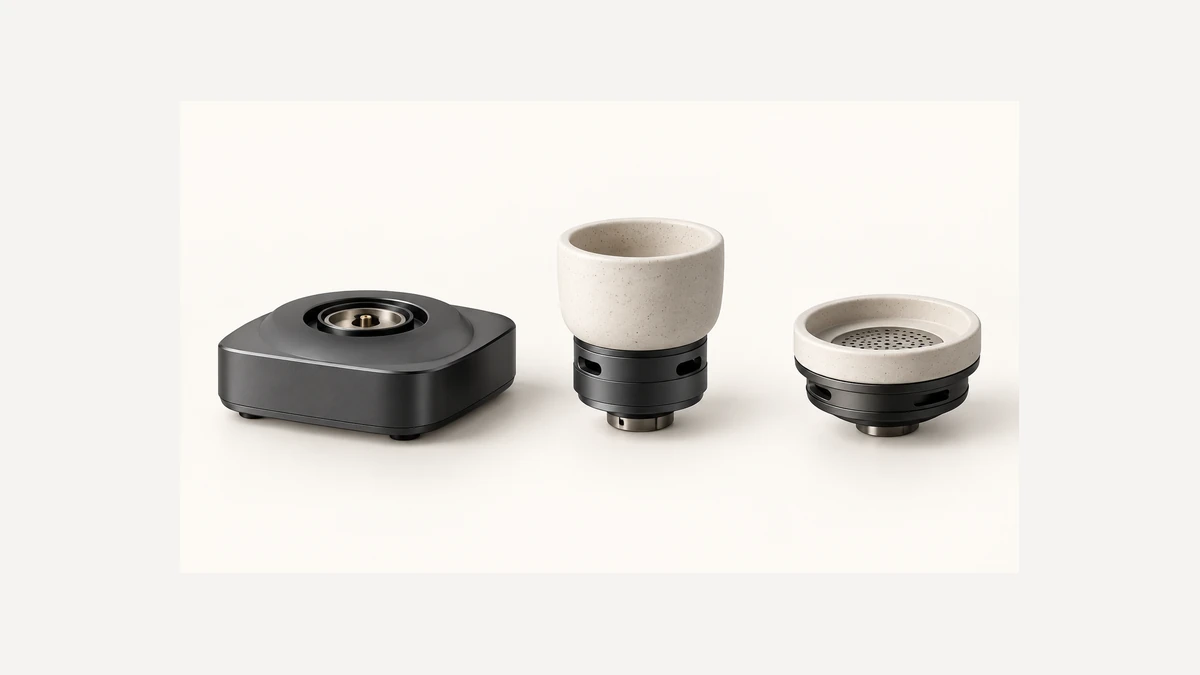
The article can still help by separating the nouns: the base is the larger host device; the atomizer is the OG Peak assembly Puffco names on its product page; and a 3D Chamber is a different model term in Puffco’s support material. That vocabulary does not diagnose an individual device, but it helps a reader describe the question more accurately to the manufacturer.
💬 5.2 Forum reports are context, not a failure-rate estimate
The Reddit discussions referenced here are useful because they show real questions about a newly acquired atomizer, a part that appears to come away during cleaning, and uncertainty between an atomizer and a 3D Chamber. They do not tell us how common those situations are. A handful of posts cannot establish a product defect, the expected life of a part, or a universal repair procedure.
That boundary keeps community research in its proper role. It helps an editor see where readers need clearer vocabulary, while the current manufacturer pages establish the model names and documented compatibility. If an anecdote and a specification appear to conflict, the anecdote should remain an individual account until the manufacturer provides a broader statement.
📚 6. Related Hardware Reading
For broader component terminology, see AOVAPE’s guides to sand and quartz atomizer descriptions, electric dab pen and wax-pen formats, and dab pen accessory categories. These pages cover other hardware contexts; they are not Puffco compatibility references.
For the exact part discussed here, consult Puffco’s Peak Atomizer product page and Peak support documentation. The first identifies the ceramic bowl assembly and limits it to the OG Peak; the second distinguishes Peak generations and names the newer Peak’s 3D Chamber.
✅ 7. The Short Answer
A Puffco Peak atomizer is the ceramic bowl assembly Puffco lists for the OG Peak. “Peak” alone is not enough to establish fit across OG Peak, Peak Pro, and the newer Peak. Puffco documents a 3D Chamber for the newer Peak and treats Peak Pro separately, so keep the part name, exact generation, and official compatibility note together rather than treating every removable Peak-family chamber as one interchangeable atomizer.
Manufacturer references: Puffco Peak Atomizer; Puffco Peak Support.
Community questions (anecdotal, not technical authority): new atomizer question; connection question; atomizer vs. 3D Chamber question.