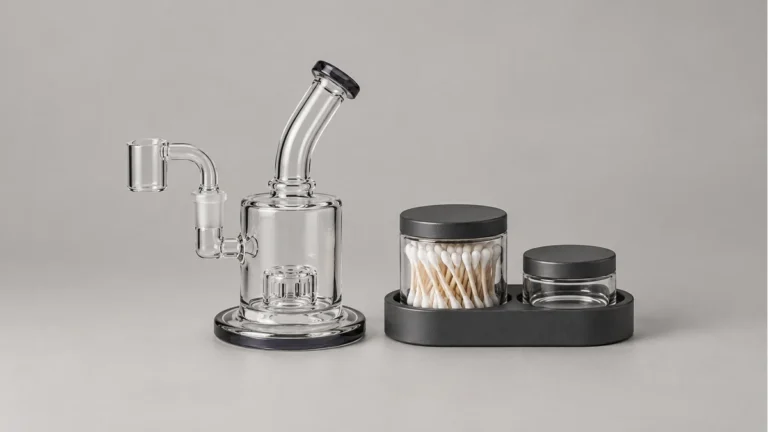
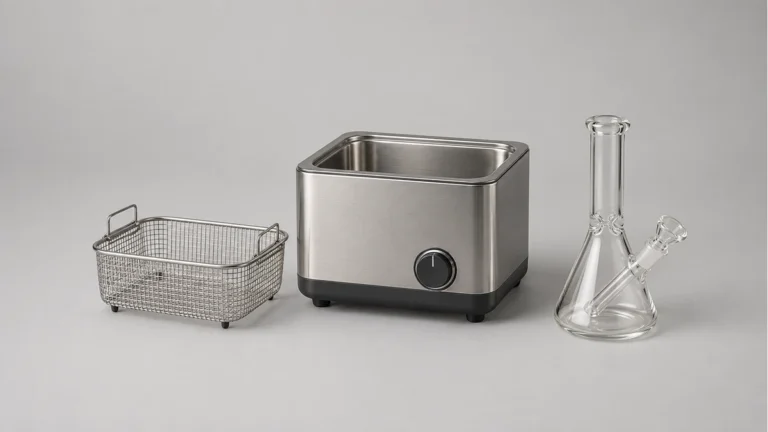
When someone asks what actually changes between a standard nectar collector and a “mini” version, the answer isn’t just overall size. It’s the distance between where a hand grips the tube and where the heated tip meets material. That single measurement, shortened in mini designs, pulls several other specs along with it: balance point, the air gap that separates a hot tip from fingers and lips, how much water a chamber can hold before it sloshes, and how much room a cleaning swab has to reach the bottom. Tracing those effects outward from the shorter body is the clearest way to understand what a compact unit trades away and what it keeps.
🧭 1. What Makes a Nectar Collector “Mini”?
Most “mini” listings describe the same basic three-part layout as a full-size unit: a mouthpiece, a straight or slightly curved body, and a removable tip. What actually shrinks is the length of that middle section — the barrel between where the hand sits and where the tip joint begins. Diameter, joint size, and even tip material often stay identical to the full-size version in the same product line.
That’s a common source of confusion in buyer discussions: people expect “mini” to mean everything scales down proportionally, including joint size or water capacity, when in practice only the barrel length usually changes. A shorter barrel with a standard-size joint and standard tip behaves differently than a uniformly scaled-down tool, and most of that difference traces back to the next few sections.
🧩 1.1. Grip-to-Tip Distance and Reach
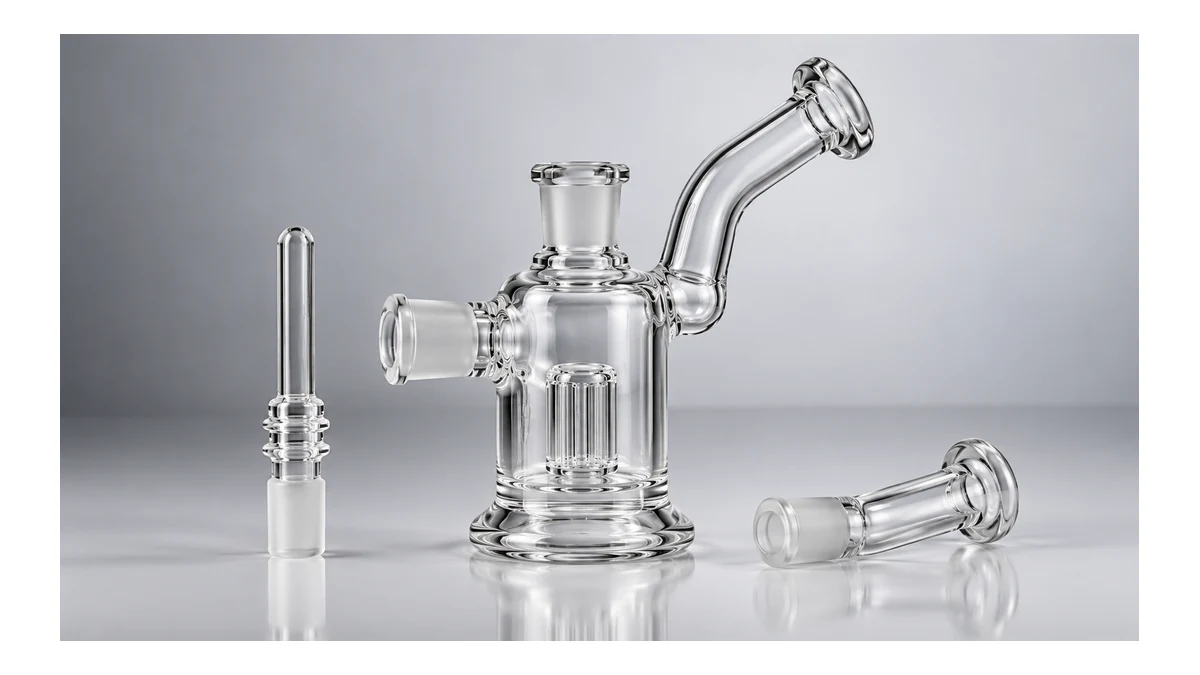
Grip-to-tip distance is the measurement that actually defines “mini” in practical terms. It’s the span from the spot a hand naturally holds during use to the end of the tip. Shortening that distance changes three things at once: how close a torch flame sits to the hand, how the tool balances while tilted, and how far a swab has to travel during cleaning.
Because all three of those outcomes share one root cause, a buyer who understands grip-to-tip distance can predict most of a mini unit’s handling quirks without ever reading a spec sheet.
🧩 2. Balance and Handling
Every nectar collector has a center of gravity somewhere between the mouthpiece and the water chamber near the tip. On a full-length body, that point sits closer to the middle of the hand’s grip, which keeps the tool level with relatively little wrist effort. Shorten the body and the center of gravity shifts toward the heavier chamber end, since there’s less shaft length to counterbalance it.
That shift means a mini unit often feels tip-heavy when held the same way a full-size one would be held. Users adjust by gripping closer to the chamber or by angling the wrist more to keep the tip level over a dab.
📏 2.1. One-Handed vs Two-Handed Use
Portability is the main selling point of compact bodies, and one-handed operation — torch in one hand, collector in the other — is the expected use case. But the same tip-heavy balance that makes a mini easy to pocket can also make it harder to hold steady with one hand while reaching toward a dish or surface.
- Shorter bodies concentrate weight near the tip and water chamber.
- A firmer grip closer to the chamber end generally offsets the imbalance.
- Two-handed bracing (one hand stabilizing the base) is common with smaller-diameter minis.
📏 3. Heat Separation and Tip Distance
The tip is the part of the tool that gets heated directly; everything above it is meant to stay cool enough to hold and place in the mouth. Grip-to-tip distance is what creates that separation. On a full-size body, there’s more shaft length and more air between the heated metal or quartz and the hand or lips.
A shorter body narrows that gap. Heat travels up the tip’s material and, to a lesser extent, radiates through the surrounding air toward the grip zone faster than it would over a longer shaft. This doesn’t make a mini unit dangerous by design, but it does mean cooldown timing and hand placement matter more than they would on a longer tool.
🌬️ 3.1. Titanium vs Quartz Tip Heat Transfer
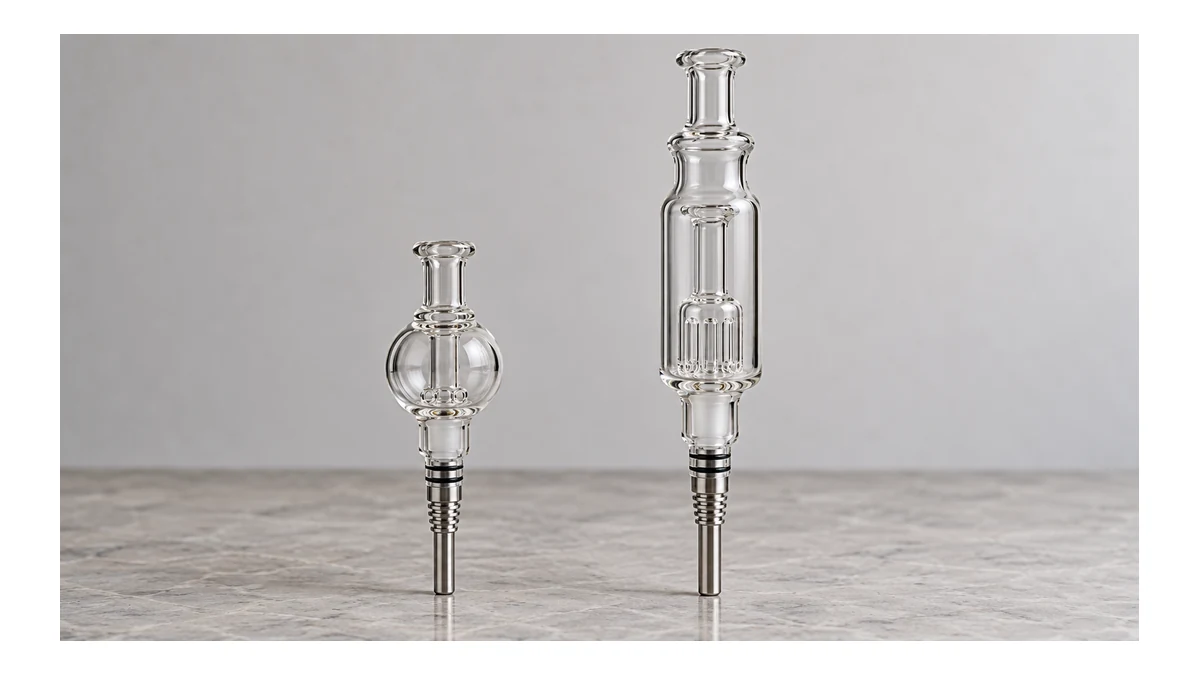
Tip material changes how much that shortened distance matters, since titanium and quartz conduct and hold heat differently.
| Tip Material | Heat Conduction | Practical Effect on Shorter Bodies |
|---|---|---|
| Titanium | Conducts heat efficiently along its length | Warmth travels up the shaft more noticeably; cooldown between uses matters more |
| Quartz | Conducts heat less along its length, retains surface heat | Heat stays more localized to the tip itself, but the tip surface remains hot longer |
Neither material eliminates the shortened-distance effect; they just change where the heat shows up. A closer look at water nectar collector guide covers how tip material selection interacts with body length in more detail.
🌬️ 4. Water Chamber Capacity and Splashback
Water-filtered nectar collectors use a small chamber to cool and filter vapor before it reaches the mouthpiece. Shortening the body usually means shrinking that chamber too, since there’s less overall shaft to house it. A smaller chamber holds less water, which lowers the filtration path length the vapor travels through.
Less water volume also means less buffer against movement. Tilting the tool toward a dish, which is a normal part of using it, can push water closer to the mouthpiece end in a small chamber than it would in a larger one. That’s the mechanical reason splashback comes up more often in discussions about compact units than full-size ones.
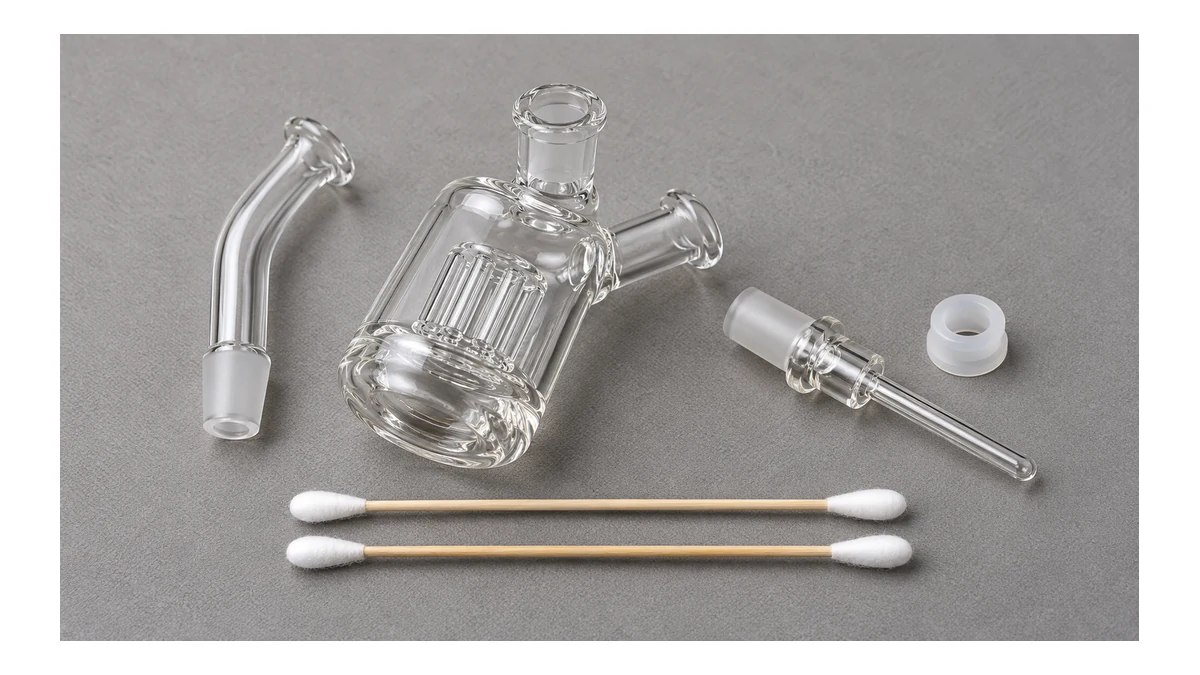
⚖️ 4.1. Percolation and Diffusion Limits in Small Chambers
Full-size water pipes sometimes include percolators — internal structures that break vapor into smaller bubbles for more contact with water. Most mini nectar collectors skip percolation entirely and rely on simple diffusion through a single water pool, because there isn’t enough internal chamber volume to fit additional glasswork without further shrinking capacity.
- Less internal volume means fewer places to add filtration structures.
- Water level becomes more sensitive to small overfills in a compact chamber.
- Angle of use affects splashback risk more than it does on longer, larger-chamber units.
⚖️ 5. Tip Joints and Compatibility
Tip joints on nectar collectors are usually ground-glass connections sized the same way as bong or rig joints, most commonly 10mm or 14mm, in either male or female orientation. Because mini bodies often keep standard joint sizing despite the shorter barrel, tips from full-size units are frequently interchangeable with mini ones, as long as the joint size and gender match.
That compatibility is a frequent point of confusion in buyer questions, since people assume “mini” implies a smaller, proprietary joint. In most product lines it doesn’t — the joint is the one dimension that tends to stay standardized even as the body shrinks. Guidance on silicone nectar collector guide outlines how to check joint size and orientation before assuming a tip will fit.
🧼 5.1. Straight vs Angled Tips
Tips come in straight and angled configurations, and the angle effectively changes how much usable reach the shortened body has left. An angled tip on an already-short barrel can bring the heated end quite close to the hand’s natural grip position, while a straight tip on the same body preserves more of the shaft’s separation distance.
| Tip Style | Effect on Grip-to-Tip Distance |
|---|---|
| Straight | Preserves the body’s full linear length as separation |
| Angled | Shortens effective separation and changes the approach angle to a dish |
🧼 6. Cleaning Compact Bodies
Cleaning any water-filtered tool involves reaching a swab or brush past bends and into the chamber to remove residue. A shorter body reduces the straight-line distance a swab needs to travel, which sounds like an advantage, but the tighter proportions of a mini chamber can also mean less room to maneuver once the swab is inside.
Removable tips help here — most mini units are designed so the tip separates fully from the body, letting the two pieces be cleaned independently rather than trying to reach the full length in one pass.
🔍 6.1. Cotton Swabs, Pipe Cleaners, and Soak Times
A few general points apply across most compact designs:
- Detach the tip before cleaning so the chamber and tip can each be addressed on their own.
- Narrow chambers often need pipe cleaners rather than wide cotton swabs to reach corners.
- A brief warm-water soak loosens residue before scrubbing, reducing how much force is needed on glass.
- Rinsing thoroughly afterward matters more in small chambers, since residual cleaning solution has less water volume to dilute into on the next use.
More detail on chamber-specific cleaning routines is covered in electric nectar collector comparison.
🔍 7. Protective Storage and Transport
Portability is the main reason people choose a mini body in the first place, but a shorter tool also means the fragile tip and water chamber sit closer to whatever else is in a pocket or bag. Protective storage matters more here than it does for a full-size unit that’s typically used at a fixed spot.
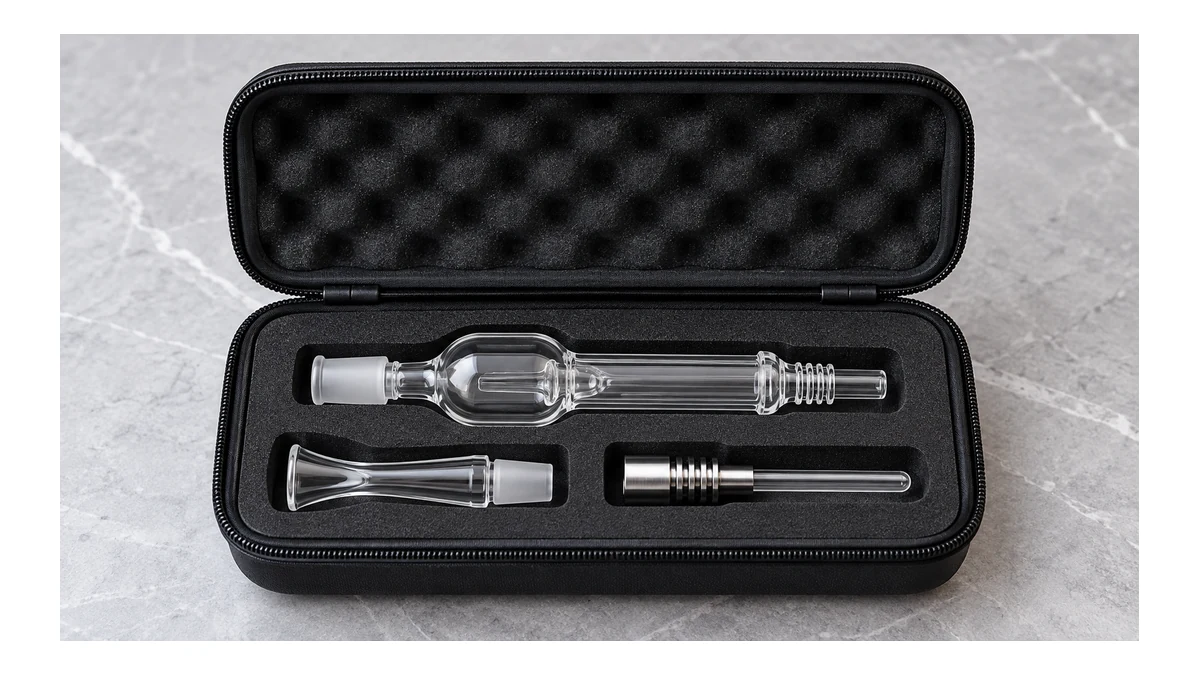
🧲 7.1. Silicone Caps and Travel Cases
| Accessory | Purpose |
|---|---|
| Silicone tip cap | Covers the exposed tip to prevent chips or contact with other items |
| Padded travel case | Keeps the body and tip separated during transport to avoid pressure on the joint |
| Silicone sleeve on the body | Adds grip and cushions the barrel against drops |
None of these accessories change the underlying hardware, but they reduce the odds that a shortened, tip-heavy body takes damage in transit.
🧲 8. Quick Hardware Identification Checklist
Most of what makes a mini nectar collector handle differently from a full-size one traces back to the single grip-to-tip measurement. Before assuming a compact unit is simply a smaller version of a larger one, it helps to check these details directly on the hardware:
| Check | What It Tells You |
|---|---|
| Barrel length from grip zone to tip joint | Indicates balance point and heat separation |
| Tip material (titanium or quartz) | Indicates how heat travels toward the grip |
| Joint size and gender | Confirms whether tips from other units will fit |
| Chamber volume and shape | Indicates water capacity and splashback tolerance at an angle |
| Tip attachment style (removable or fixed) | Determines how the tool can be disassembled for cleaning |
Reading a compact nectar collector this way — measurement by measurement rather than by size category alone — gives a more accurate picture of how it will actually handle, heat up, and clean than the “mini” label on its own ever will.
🌊 9. 📏 Shorter Does Not Mean the Hot End Is Farther Away
On a mini nectar collector, the grip, water chamber, and tip joint occupy less total length. That can bring fingers and facial clearance closer to the tip assembly even when the device looks easier to control. Identify the intended grip zone, any thermal break, and the distance from that grip to the heated component before judging portability.
Compact proportions also magnify balance changes. A heavy tip can pull the body forward when it rests on a table, while a small water chamber may shift noticeably as the piece tilts. Test the cold, fully assembled collector on a level surface and keep the joint stack as short as the design allows.
✅ 9.1. 🌊 Small Water Chambers Have a Narrow Fill Window
A few milliliters can separate complete diffuser coverage from splashback. Add water incrementally and make a dry pull. The lowest level that covers the intended openings during a normal draw is a better reference than a generic fill line. Recheck after changing the tip or adapter because the assembled angle may change.
🧳 9.2. 🧳 Portability Includes the Disassembled Parts
A compact body still needs protected space for the tip, mouthpiece, seals, and any water section. Store the tip only after it is cool and clean, and prevent rigid parts from striking glass. A case designed around the complete set is more useful than one that fits only the central tube.