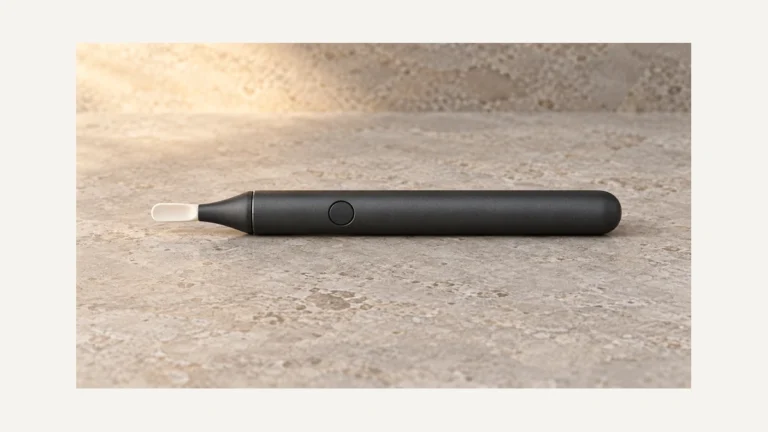
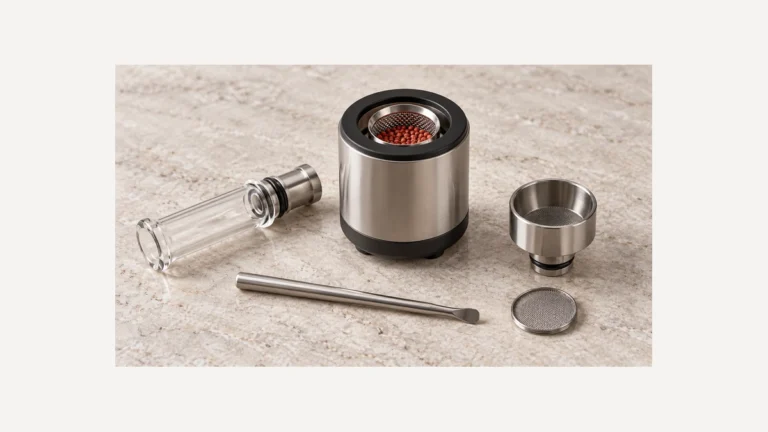
Search for a “510 ceramic cartridge” and the word ceramic does a lot of quiet marketing work. It sits on the packaging next to words like “premium,” “smooth,” and “pure,” implying a single material choice that guarantees a single kind of experience. In practice, “ceramic” describes a family of parts, not a product. A cartridge can use ceramic in the mouthpiece, the heating core, the wicking channel, or the entire chamber — and each of those choices changes clog risk, leak risk, and flavor in different, sometimes contradictory ways. This article breaks down what the material label actually covers, where oil inlet geometry and seals matter more than the headline material, and why online reports of “this ceramic cart is great” or “this one leaked everywhere” are data points worth questioning rather than conclusions worth copying.
🧱 1. “Ceramic” Is a Label, Not a Spec
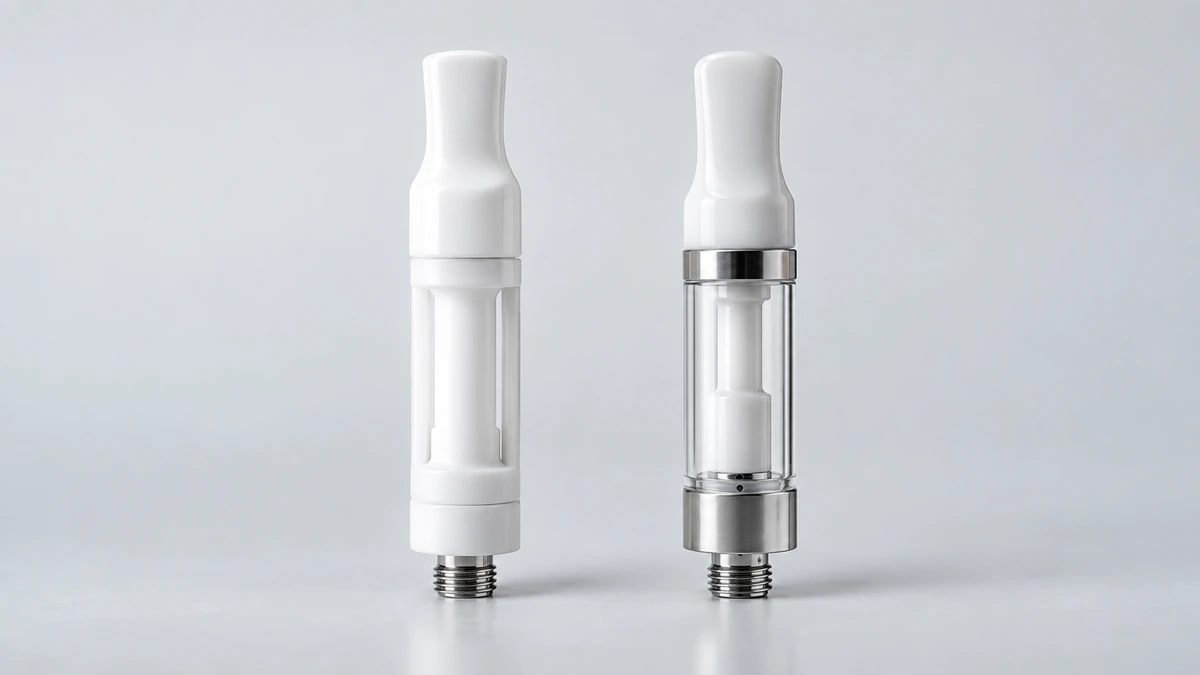
When a listing says “ceramic cartridge,” it is answering a marketing question, not an engineering one. Ceramic can refer to the coil wrap, a flat ceramic disc heating element, a ceramic-coated wick, or a fully ceramic chamber with no wick at all. Each of these uses ceramic for a different reason — thermal stability, chemical inertness, or perceived premium feel — and none of them, by themselves, tells you how the oil actually reaches the heating surface or how well the assembly seals under heat and pressure changes during a flight, a hot car, or a pocket.
This is the core problem with treating “ceramic” as a performance guarantee: it describes one component family, while performance is a system outcome. A deeper breakdown of how these ceramic subtypes differ in real cartridges is covered in this ceramic vape cartridges guide, which is worth reading before assuming any two “ceramic” carts behave the same way.
🧩 1.1 Full-Ceramic vs Ceramic-Core vs Ceramic-Mouthpiece Marketing
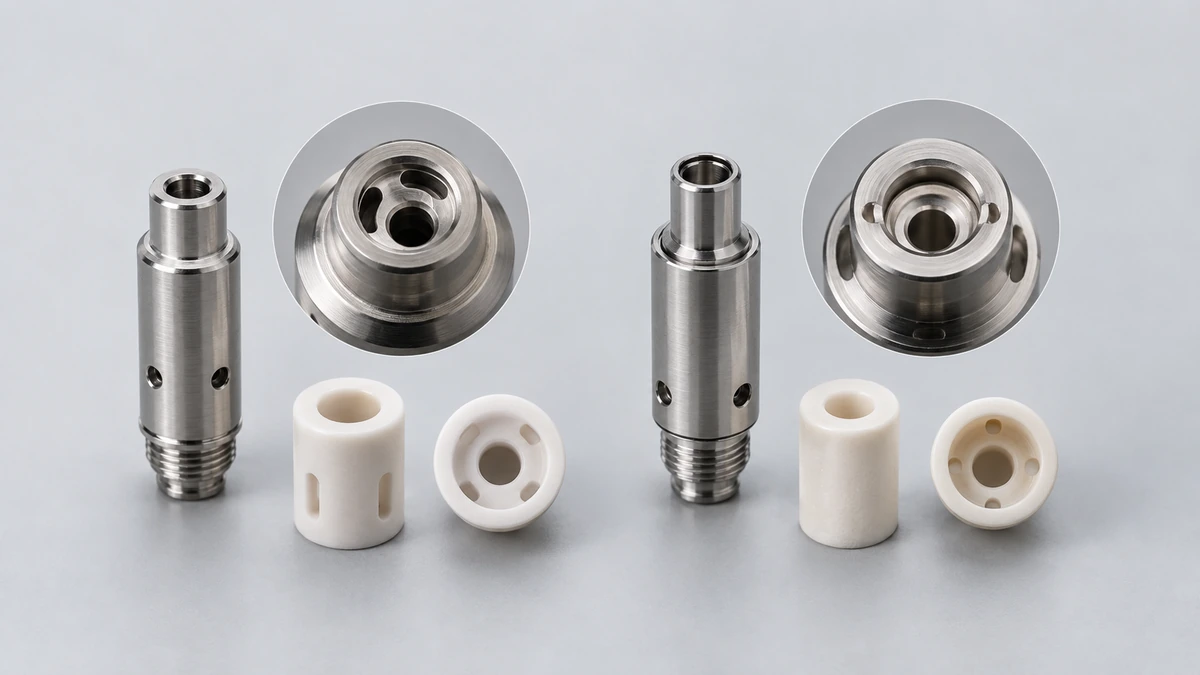
Full-ceramic designs typically mean the heating chamber and often the wicking surface are ceramic, minimizing metal-to-oil contact. Ceramic-core designs usually keep a ceramic heating element but retain metal or other materials elsewhere in the oil path. Ceramic-mouthpiece designs may have nothing to do with the heating mechanism at all — the ceramic is cosmetic and thermal comfort for the lips, sitting far from where oil is actually vaporized.
None of these three is inherently better. A full-ceramic chamber can still clog if the inlet geometry is wrong for the oil’s viscosity. A ceramic-core cart with a well-designed metal wick channel can outperform a poorly engineered full-ceramic unit. The label tells you which part is ceramic; it does not tell you whether the parts around it were designed to work together.
🛢️ 2. Oil Inlet Geometry: Where Clogs Actually Start
Oil inlets are the small holes or slots where distillate or live resin enters the wicking material or ceramic core. Their size, count, and placement determine how fast oil can be replenished as it’s vaporized. Too few or too small inlets, and the core can’t keep up with draw speed — leading to dry hits and eventual scorching of the wick material, regardless of whether that material is ceramic or cotton.
Too many or too large inlets, and oil floods the chamber faster than it vaporizes, especially with thinner distillate. This is a major, underdiscussed leak pathway: oil pools at the bottom of the chamber, finds a seam, and seeps out around the base connector or up through the mouthpiece during temperature swings. Inlet geometry is almost never listed on packaging, yet it arguably matters more to day-to-day reliability than the chamber material itself.
📍 3. Center Post: The Overlooked Metal Part
Every 510-threaded cartridge — ceramic or not — has a center post, the small metal pin that carries current from the battery to the heating element. This part is rarely mentioned in “ceramic” marketing, but it’s a common failure point. Center posts can be too short (poor battery contact, weak or inconsistent heat), too long (shorts against the battery pin, causing overheating), or loosely seated (intermittent connection that reads as “the cartridge is defective” when it’s actually a fit issue between two components made by different manufacturers).
Because the center post is metal in virtually every cartridge regardless of chamber material, its fit and contact quality is a variable that a “ceramic” label says nothing about. A cartridge with a great ceramic core paired with a poorly toleranced center post will still underperform.
🔧 4. Seals and O-Rings: The Leak Path Nobody Markets
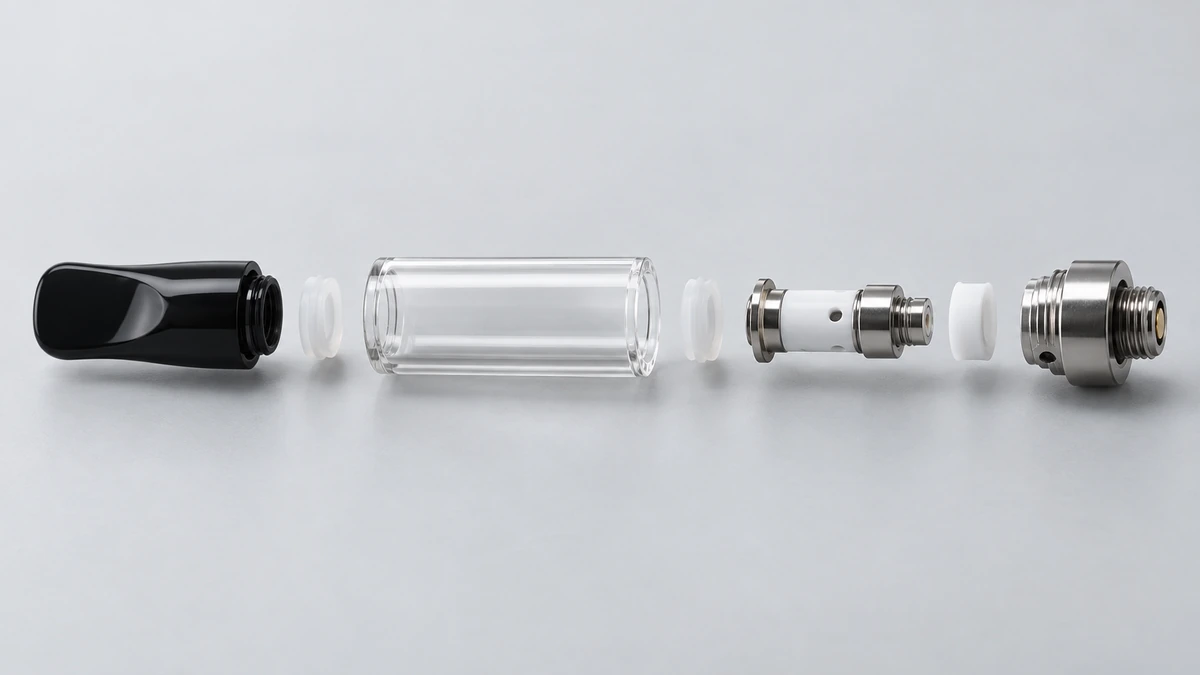
Rubber or silicone seals and O-rings sit between the chamber, the mouthpiece, and the base connector. These are consumable, temperature-sensitive parts that degrade with heat cycling and oil exposure over weeks of use — long before most people question a leak. A cartridge advertised as “ceramic” says nothing about the seal material, its hardness, or how well it was seated during assembly.
Leaks attributed to “bad ceramic” are very often seal failures: a warped O-ring, a seal that wasn’t fully compressed during manufacturing, or a mouthpiece that wasn’t torqued to spec. Since seals interact directly with airflow and pressure differentials inside the cartridge, understanding how air actually moves through the assembly is useful context — this vape cartridge airflow guide covers how draw resistance and internal pressure changes can push oil past a marginal seal even when the chamber material itself is fine.
🍯 5. Viscosity Matching: Why the Same Cartridge Behaves Differently
Distillate, live resin, and rosin have meaningfully different viscosities, and viscosity changes with temperature. A ceramic core sized and drilled for thin distillate may flood or leak with a thicker, more viscous oil, while a core designed for thicker extracts may starve and produce dry hits with thin, low-viscosity oil. This is why the same cartridge shell filled by different producers, or filled with different extract types, can produce wildly different user experiences — and why “ceramic” alone can’t predict the outcome.
Temperature compounds this. Cold environments thicken oil and can starve a wick or core; hot environments thin oil and increase the chance of flooding or leaking through marginal seals. A ceramic core rated well for one climate and one oil type is not automatically well matched for another — the heating core’s design intent matters as much as its material, a distinction covered in more depth in this CBD vape pen heating core guide.
🔍 6. Clog and Leak Pathways Mapped
Putting the pieces together, most cartridge failures trace back to a small set of interacting variables rather than one material choice:
- Clogs — usually inlet geometry too restrictive for the oil’s viscosity, or a wick/core saturated faster than oil resupplies it, causing localized scorching near the inlet.
- Leaks at the base — often a degraded or poorly seated O-ring combined with pressure buildup from airflow design, not the chamber material.
- Leaks at the mouthpiece — commonly oil migration through condensation channels when internal pressure differentials push vapor and oil upward, especially in cold-to-warm transitions.
- Inconsistent hits — frequently a center post fit issue or inconsistent coil/core resistance, not a ceramic quality problem.
Each of these pathways can occur in a fully ceramic cartridge, a ceramic-core cartridge, or a cartridge with no ceramic at all. The material label describes one component; the failure usually involves the interaction of several.
💬 7. What Reddit Discussions Actually Show (and Don’t)
Online threads about ceramic cartridges are useful for spotting patterns, but individual accounts are anecdotes shaped by specific batches, oils, storage conditions, and even individual units — not controlled comparisons. Worth reading as open questions rather than verdicts.
🗣️ 7.1 r/THCarts
A discussion in r/THCarts raises questions about how consistent “ceramic” cartridges are across different brands and fills. Does a shared material label actually predict a shared experience across producers, or is the variation described there better explained by differences in oil viscosity and inlet design between those specific batches? The thread doesn’t answer this definitively — it’s a prompt to look at the underlying components rather than the packaging term.
🗣️ 7.2 r/NYSCannabis
A thread in r/NYSCannabis touches on regulated-market cartridge experiences, including questions about reliability across licensed products. Are the differences users report there tied to ceramic quality, or to regional formulation differences and testing standards that have nothing to do with the chamber material? Regulated-market context adds variables — compliance testing, standardized fills — that unregulated comparisons don’t have, which makes direct generalization risky.
🗣️ 7.3 r/ColdFire
A post in r/ColdFire discusses cartridge performance in cold conditions, an area where viscosity effects on wicking and clogging are especially relevant. Does the cold-weather behavior described there stem from the ceramic core itself, or from oil thickening interacting with inlet size the way described in Section 5? The thread is a good prompt to test viscosity-related explanations rather than a confirmed cause.
Across all three threads, the throughline is that firsthand reports flag real symptoms — inconsistent draws, leaks, cold-weather issues — without isolating which component caused them. That isolation requires knowing the inlet geometry, seal condition, and oil viscosity involved, none of which show up in a product label or a single user’s post.
✅ 8. How to Actually Evaluate a “Ceramic” Cartridge
Since the material label alone can’t predict performance, a more useful evaluation looks at several things together:
- Whether the listing specifies full-ceramic chamber, ceramic core, or ceramic mouthpiece only — and treats each differently.
- Whether the oil being used matches the viscosity the core was designed for (thin distillate vs. thicker live resin or rosin).
- Whether the cartridge has a history of center post fit issues with your specific battery — a compatibility problem, not a material one.
- How the seals hold up after repeated heat cycling, not just on first use.
- How draw resistance and airflow design interact with the chamber to affect pressure buildup and leak risk.
None of these require abandoning ceramic as a preference — ceramic materials do offer real advantages in thermal stability and flavor neutrality in many designs. The point is that “ceramic” is a starting filter, not a finishing one.
🧾 9. Bottom Line
A “510 ceramic cartridge” label tells you that ceramic is used somewhere in the assembly. It does not tell you whether that ceramic is the chamber, the core, or just the mouthpiece; it says nothing about oil inlet geometry, center post fit, seal quality, or whether the design matches the viscosity of the oil inside it. Clogs and leaks trace back to these interacting variables far more often than to the chamber material alone. Reports from Reddit threads about inconsistent, leaking, or cold-sensitive ceramic carts are worth treating as open questions about specific batches and conditions — not proof that ceramic, as a category, performs one particular way. Evaluating a cartridge on inlet design, seal integrity, and oil match, alongside the material label, gives a much more reliable read on how it will actually perform.
🧭 10. Read a Ceramic Cartridge as an Assembly
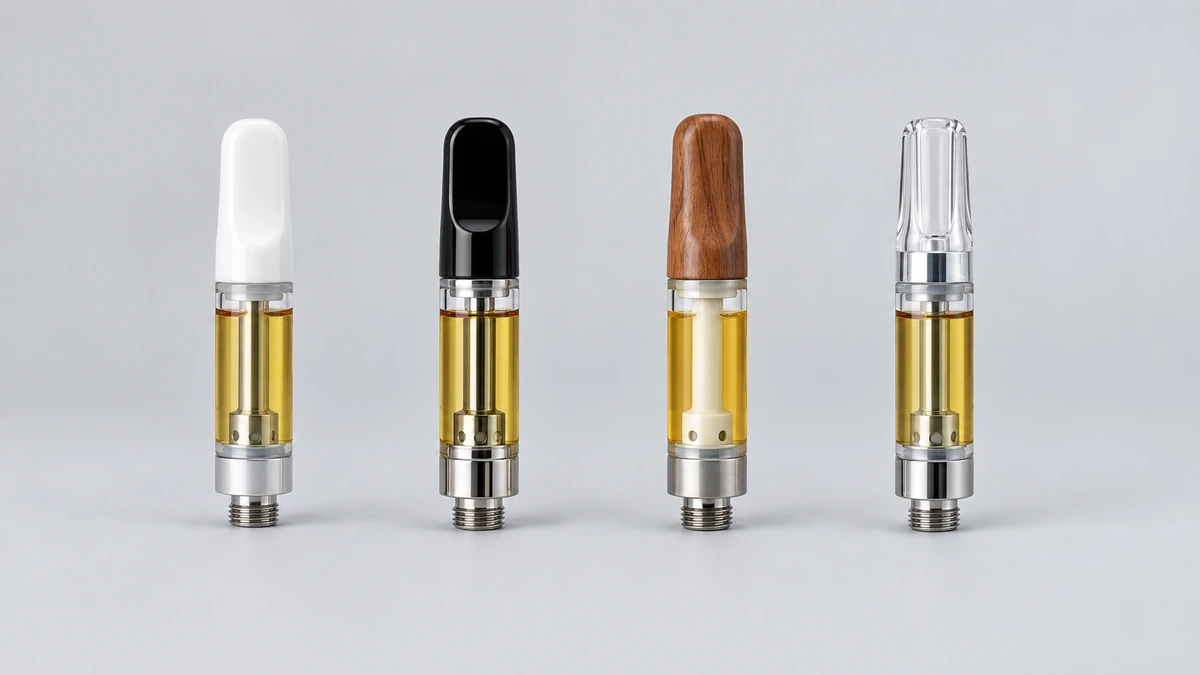
Start at the mouthpiece and trace the continuous air path to the center tube, heating zone, inlet openings, base seal, and 510 contact. This prevents one visible white component from standing in for the construction of the entire cartridge. A ceramic mouthpiece, ceramic center tube, and ceramic heating element are three different claims.
🔍 10.1 Ask Which Part Is Actually Ceramic
Useful documentation names the ceramic component and shows how it meets the reservoir and base. It should also distinguish the wetted path from decorative exterior pieces. Without that detail, “ceramic cartridge” remains a broad material label rather than a complete hardware description.
🧩 10.2 Keep Oil Matching Separate From Material Prestige
Inlet size, seal compression, center-airway diameter, and heater geometry all interact with oil viscosity. Ceramic can be part of a well-matched system, but it cannot compensate for an inlet path that does not suit the formulation. Compare the whole route instead of ranking material words.