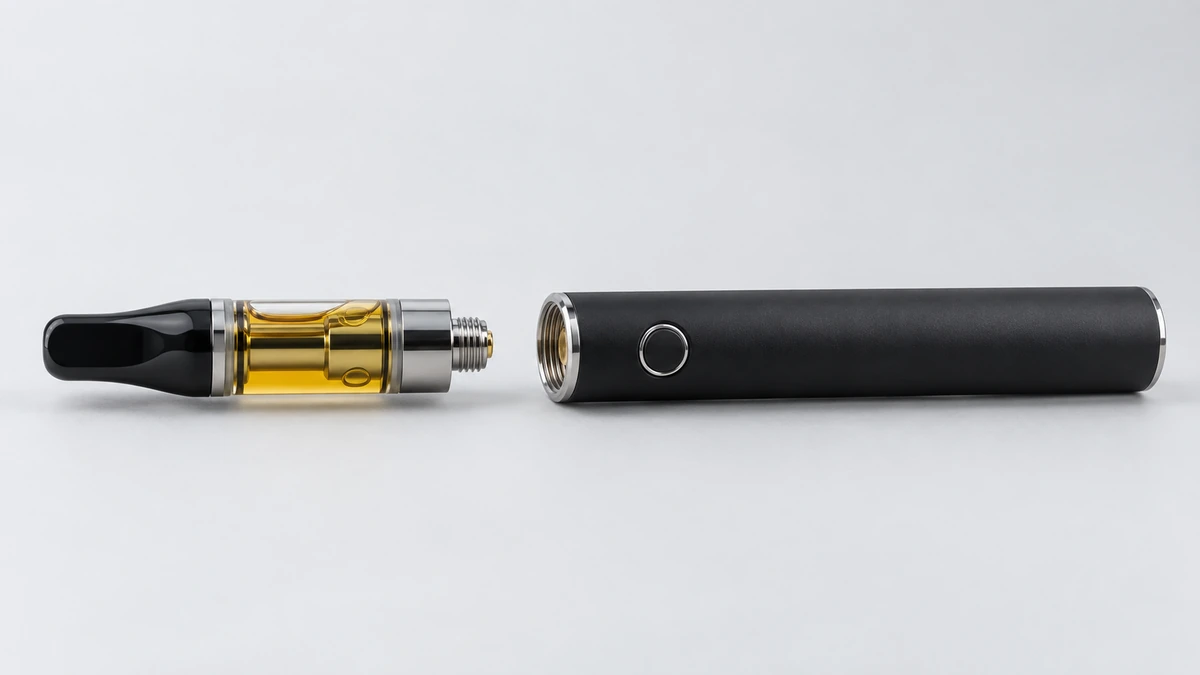
A 510 atomizer connector is the small hardware interface where a tank, RDA, or pod attaches to a battery or mod. It looks simple — a threaded ring, a center pin, and a bit of plastic in between — but those three parts have to align mechanically and electrically at the same time for a device to fire. When people say a connector is “loose,” “corroded,” or “not making contact,” they are almost always describing a failure in one of these specific components rather than the connector as a whole. Understanding what each part does makes it much easier to diagnose why a tank won’t fire, why a mod reads “no atomizer,” or why a new coil never seems to seat the same way twice.
🧩 1. What a 510 Atomizer Connector Actually Is
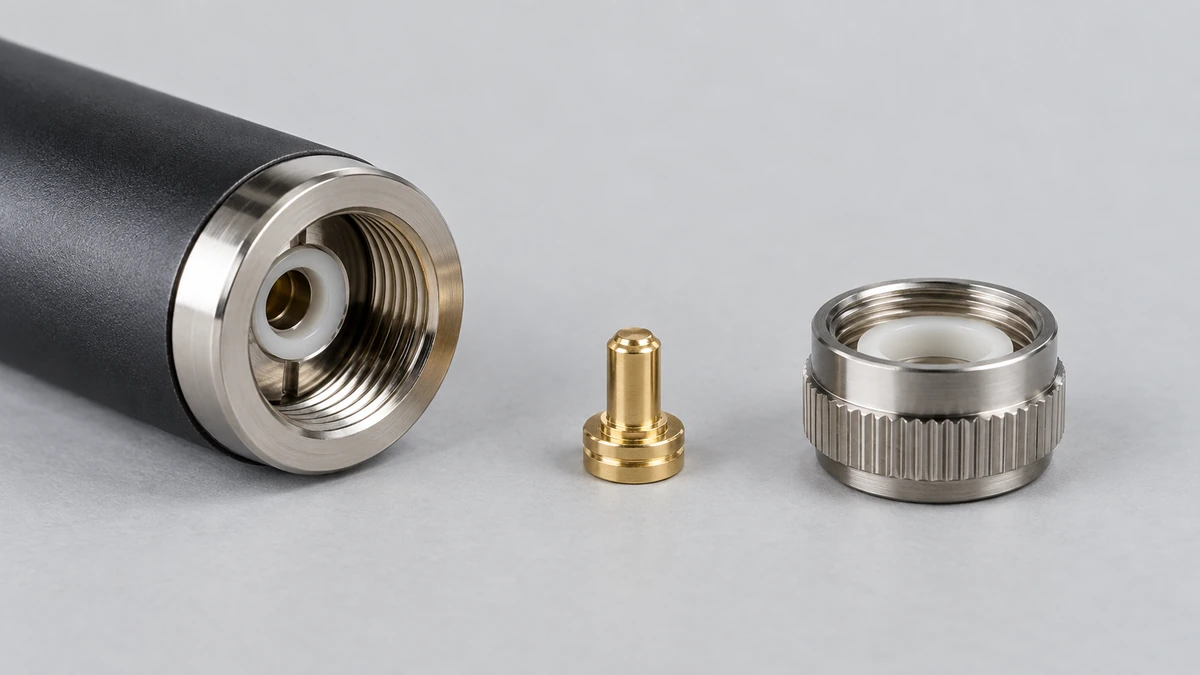
The name “510” refers to a thread specification: roughly 5.0 mm in outer barrel diameter with a specific thread pitch, standardized so that atomizers from one brand can screw into batteries or mods from another. The connector itself is the assembly at the bottom of the atomizer or the top of the battery/mod that completes this junction. It’s made of a handful of small, purpose-built parts:
- A metal thread shell that provides the physical screw-fit and, in most designs, carries the negative (ground) path.
- A center positive contact, usually a pin or a small raised post, that carries the positive current.
- An insulator, typically plastic or ceramic, that physically separates the positive and negative paths so they don’t short against each other.
Every complaint about a “bad connector” — flickering, intermittent firing, a device that reads no atomizer despite a coil that should work — traces back to one of these three components failing to do its job.
⚙️ 2. The Thread Shell: Mechanical Fit, Not Electrical Proof
The thread shell is what gives you that satisfying “click” as an atomizer screws down. Its job is almost entirely mechanical: it holds the atomizer physically in place and, on most 510 designs, doubles as the ground/negative return path. Because threading is the first thing a user feels, it’s easy to assume that a tight, smooth thread means the connection is good. That assumption is the root of a lot of confused troubleshooting.
A thread shell can be perfectly clean and cut correctly while the connector still fails to complete a circuit, because threading and current-carrying contact are two separate jobs performed by two different surfaces. This is the same reason 510-thread magnetic adapters can preserve a secure mechanical fit while changing how the electrical path is made; if you’re curious how manufacturers work around thread-only connections entirely, our 510 thread magnetic adapter guide breaks down how that swap works in practice.
⚡ 3. The Center Positive Contact
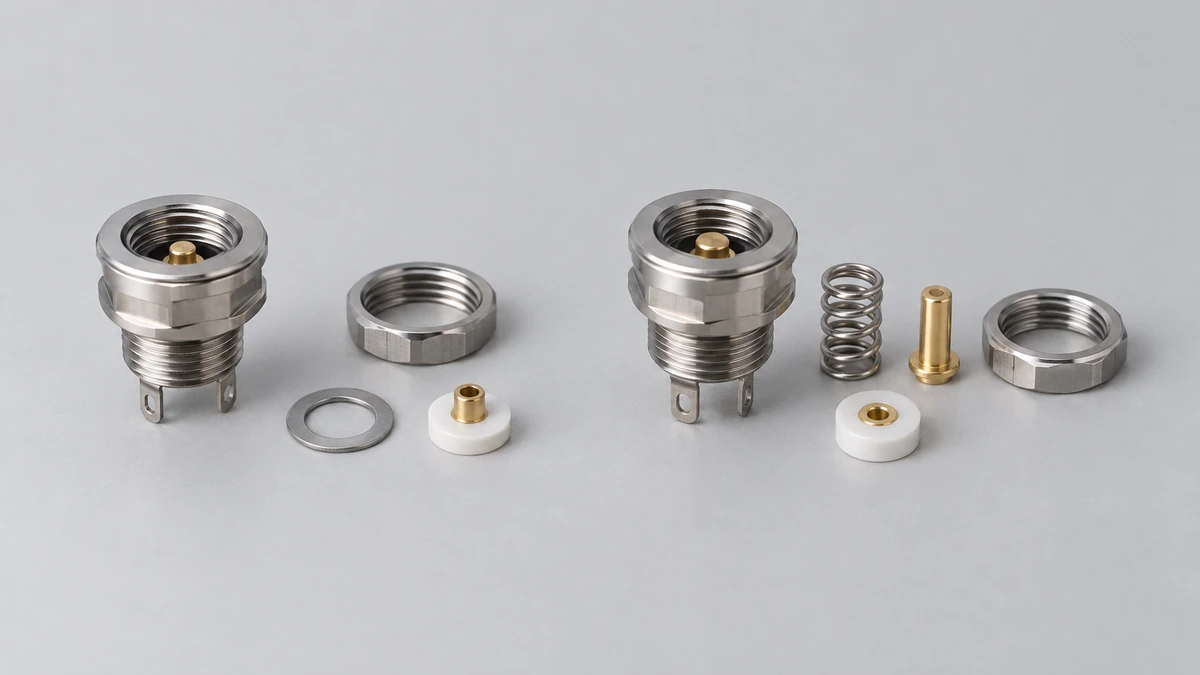
The center positive contact is the small pin or post at the middle of the connector. On a battery or mod, it’s usually a pin, often spring-loaded, that presses upward. On an atomizer, it’s typically a fixed post or pad that the pin presses against. This is the actual current path for positive voltage, and it depends on physical pressure between two metal surfaces. If that pressure is too light, inconsistent, or absent, current won’t flow reliably even though the threads are fully seated.
This is the exact issue described in reports where users noted the ground or contact felt “unstable” — firing worked sometimes, failed other times, or required wiggling the atomizer to get a connection. That kind of intermittent behavior is a strong signal that the fault lies in the contact pin or pad, not the threads, since the threads don’t change state when a device is wiggled but a marginal pin contact does.
🛡️ 4. The Insulator
Sandwiched between the thread shell and the center contact is the insulator — usually a ring or disc of plastic, delrin, or ceramic. Its entire function is to keep positive and negative separated so the connector doesn’t short. It looks like a minor detail, but it’s arguably the most safety-critical part of the whole assembly, since a compromised insulator can allow the positive and negative paths to touch directly.
🔬 4.1 Cracked, Melted, or Damaged Insulators
Insulators degrade from heat cycling, physical impact (dropping a mod or tank), or repeated cross-threading during installation. Common symptoms include a hairline crack visible around the base of the center pin, a slightly recessed or misshapen ring where plastic has softened from heat, or a center contact that now sits crooked instead of flush. Once an insulator is visibly cracked, melted, or missing material, the safest and most reliable path is replacing the part or the device — not attempting to reshape, glue, or improvise a fix on a component that separates your circuit’s polarities. If a compromised insulator is the reason a device won’t recognize a coil at all, it’s worth reading through the possible causes in our no atomizer meaning guide, since insulator damage is one of several distinct causes behind that same error message.
📏 5. Contact Height and Pin Reach
Contact height refers to how far the center pin or post protrudes relative to the surrounding thread shell. This measurement matters more than people expect, because a 510 connection only works if the pin can physically reach and press against its counterpart with enough travel to maintain pressure once the threads are fully seated. A pin that sits too low, or a post that’s too shallow, may never make contact even in a mechanically perfect connector.
🔍 5.1 When Pin Reach Is Too Short
Short center-pin reach shows up as a connector that threads down completely smooth and tight, yet the device never fires, or fires only under pressure from squeezing the tank slightly while it’s installed. This is a distinct failure mode from a worn or dirty contact — the geometry itself doesn’t allow the two surfaces to meet. It happens most often when mixing atomizers and mods from different manufacturers that interpret the 510 spec’s tolerances slightly differently, or when a spring-loaded pin has lost some of its travel over time and no longer extends as far as it did when new.
🔩 6. Spring-Loaded vs. Fixed Receivers
Not all center contacts behave the same way, and the distinction matters for both fit and longevity:
- Spring-loaded receivers (common on mod/battery sides) use a small internal spring to push the pin upward, letting it compress slightly and self-adjust to different atomizer contact heights. This tolerance is what makes most tanks “just work” across brands.
- Fixed receivers (common on many atomizers and some regulated mods) have no give — the contact is a static post or pad. Fixed contacts rely entirely on precise manufacturing tolerances and a fully seated thread to make reliable contact.
A spring-loaded pin that has weakened, stuck, or lost tension over months of use will behave like a fixed contact that’s slightly too short — it stops compensating for minor height mismatches, and the same intermittent-firing symptoms reappear even though nothing on the atomizer side has changed.
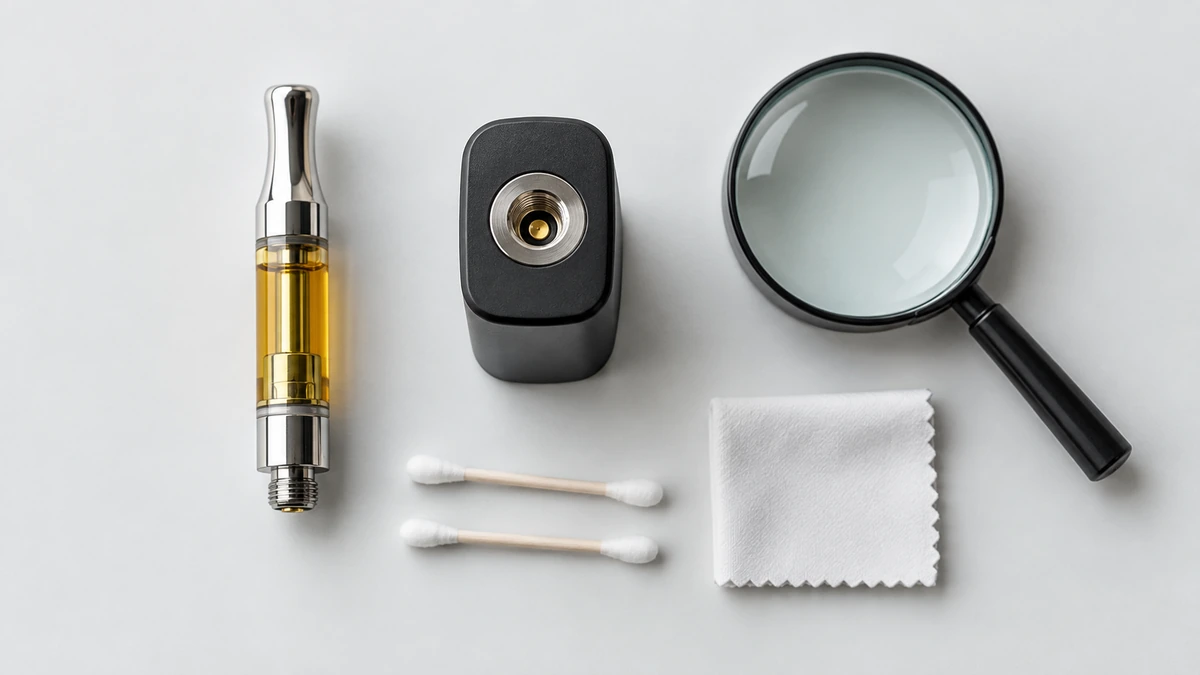
🔍 7. Seating and Why Thread Fit Alone Doesn’t Prove Contact
“Seating” describes the final, fully-threaded position where the atomizer’s base sits flush against the mod or battery’s connector face. It’s tempting to treat a solid mechanical seat as proof that the electrical connection is good, but the two are not the same measurement. Threads can bottom out completely while the center pin still fails to make adequate contact, for three main reasons:
- The pin’s travel or height doesn’t match the mating surface (see contact height, above).
- Oxidation, residue, or debris sits between the two contact surfaces even though the threads themselves are clean.
- A weakened spring or bent pin no longer applies enough pressure once compressed, even at full thread depth.
This is precisely the gap that trips people up when a connector “looks fine” but a device still won’t fire, and it’s why troubleshooting a 510 connection should always separate the mechanical check (does it thread down smoothly and fully?) from the electrical check (is there continuity and steady contact once seated?). It’s the same underlying principle that lets 510-thread chargers use the exact same connector geometry as an atomizer without any risk of confusion between mechanical fit and the actual charging circuit — worth a look in our 510 thread charger guide if you want to see how the same connector standard is repurposed for charging instead of firing.
🧴 8. Residue, Oxidation, and Contact Wear
Even a well-designed connector degrades with normal use. E-liquid seepage, condensation, and everyday pocket lint accumulate on the thread shell and around the center contact, forming a thin film that insulates rather than conducts. Over enough cycles, that residue can harden into a crust that keeps the pin from making full metal-to-metal contact even when everything is seated correctly.
Separately, the contact surfaces themselves wear. Repeated threading and unthreading, especially with any side-to-side torque, gradually scratches and flattens the pin or pad. Combined with oxidation from ambient humidity, this shows up as a dull, discolored, or pitted contact surface rather than the bright, clean metal it had when new. A connector showing heavy discoloration, visible pitting, or a pin that no longer springs back after being pressed is a strong candidate for replacement rather than continued use, since these are wear patterns rather than surface dirt.
🧪 9. Diagnosing Connector Problems the Safe Way
When a tank won’t fire or a device is inconsistent, it helps to check the connector systematically before assuming the coil or battery is at fault:
- Visual check: Look for a crooked, recessed, or discolored center pin, and inspect the insulator ring for cracks or melted edges.
- Fit check: Confirm threads engage smoothly with no cross-threading or grinding, and that the atomizer seats fully flush.
- Isolation check: Try the same atomizer on a different, known-working device (or a different atomizer on the same device) to determine whether the fault follows the connector or the coil.
- Symptom pattern: Intermittent firing that changes when you wiggle or press the tank points to a contact or spring issue rather than a thread problem.
This kind of isolation testing is also the fastest way to figure out whether a “no atomizer” message is a connector fault, a coil fault, or something else entirely in the device’s firing circuit — a distinction covered in more depth in the no atomizer meaning guide linked above.
🔄 10. Repair, Adapt, or Replace
Because the insulator and center contact are small, precisely fitted parts working under repeated heat and mechanical stress, they aren’t good candidates for improvised at-home repair — bending a pin back into shape or filling a cracked insulator can just as easily create a short or an unreliable connection as fix one. When a connector shows real damage — a cracked insulator, a pin that no longer springs, or contacts too worn or corroded to clean back to bare metal — the reliable options are:
- Replacing the affected atomizer, tank base, or battery/mod if the part is user-replaceable or inexpensive relative to the device.
- Using a manufacturer-supported adapter if you need to bridge a height or geometry mismatch between compatible 510 devices, rather than forcing an ill-fitting thread.
- Sending the device to the manufacturer or an authorized repair channel for anything involving the internal spring mechanism or soldered connections, since those repairs affect both fit and safety.
Understanding the anatomy of a 510 atomizer connector — thread shell, center positive contact, insulator, contact height, and the spring-loaded versus fixed distinction — turns a vague “it’s not working” into a specific, checkable list. In most cases, the fix isn’t forcing a tighter thread; it’s recognizing which of these small parts has actually failed, and treating the mechanical fit and the electrical contact as the two separate checks they really are.