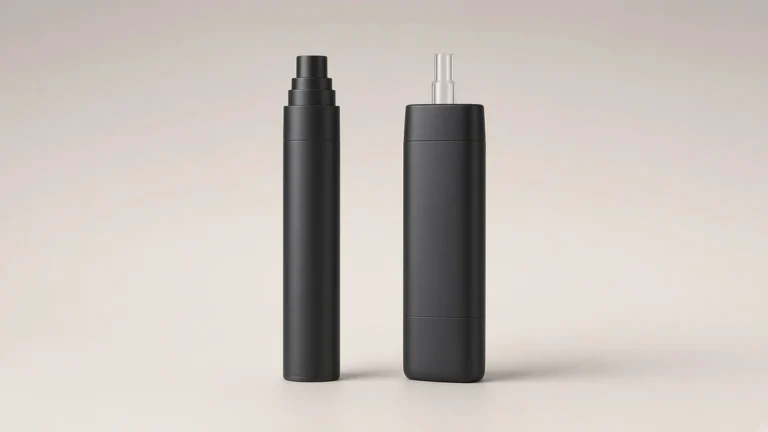
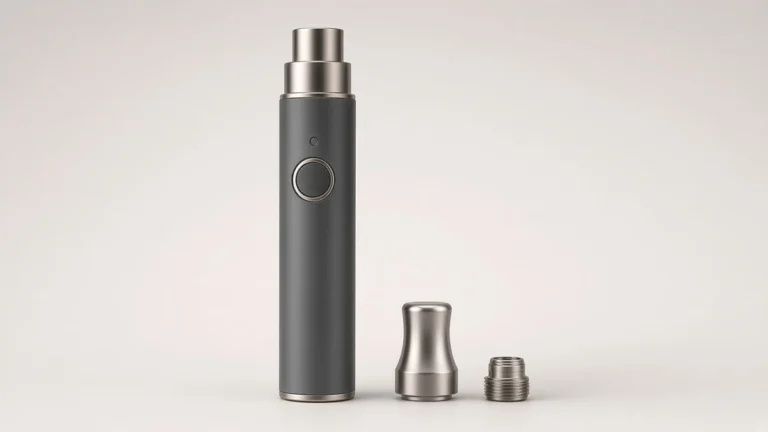
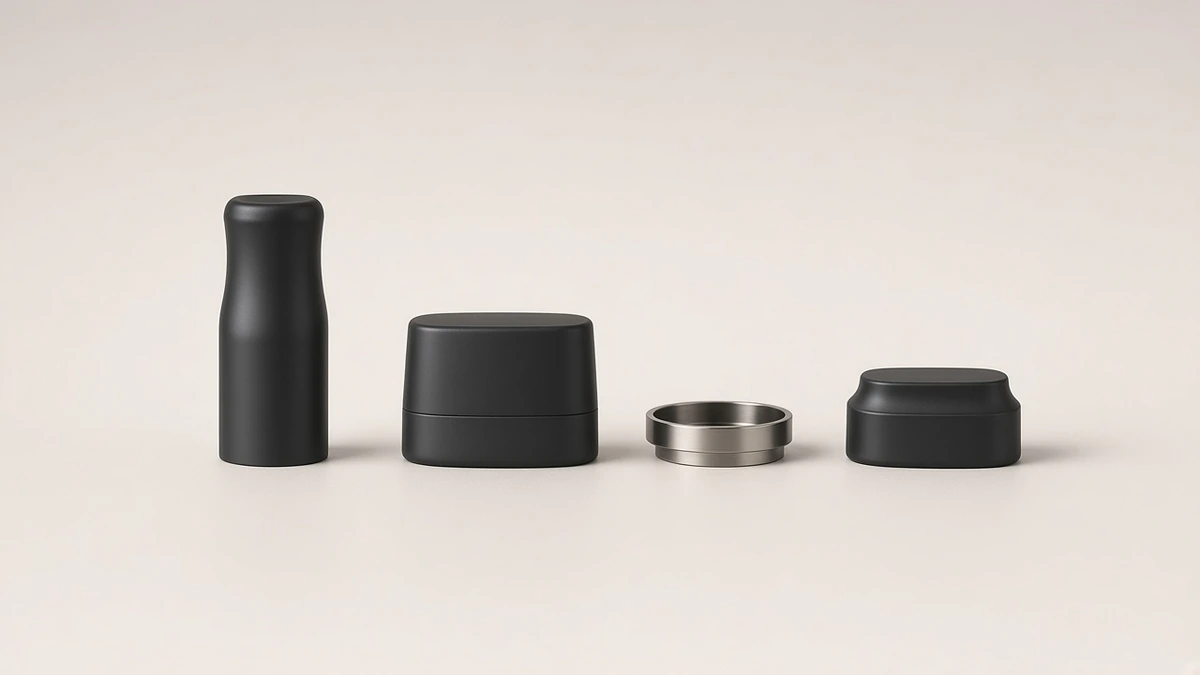
A dry herb vaporizer has to give vapor a path from the oven to the user, and that path is not always a single mouthpiece. On some versions, the top of the device is a cooling unit: a documented stack of caps, bases, seals, and screens that is designed to come apart for cleaning and reassembly. On others, the top path is a stem, an aroma tube, or a simpler mouthpiece that seats into the body as one primary part, sometimes with its own screen or cap. Two handhelds can share a similar outline and still ask the user to remove very different hardware from the top.
That distinction is easy to collapse into a complaint that the mouthpiece feels loose, or into a screen identification. It should not be. Vape Mouthpiece: Loose Stems, Seals and Top Assemblies already treats movement, retaining features, and replacement fit as fault and service questions. Vape Screens: Tell the Oven Mesh From the Mouthpiece Filter already separates an oven screen from a mouthpiece filter. The present guide stays on the top-path architecture: is the version built around a multi-part cooling unit, or around a stem or mouthpiece that the manual treats as the primary removable top?
🔎 1. The Top Path Is Not the Oven and Not a Fault
The first cut is simple. What is designed to come off the top of the device, and how many parts that assembly contains, is a top-path question. How the oven heats the material is a heating-method question. Whether a stem feels loose, binds, or has lost a seal is a service question. Those identifications can live on the same device, but they are not interchangeable.
Convection Dry Herb Vaporizer: Airflow vs. On-Demand already treats airflow and activation timing. Dry Herb Vaporizer Pipes and the Parts Hidden Above the Bowl already maps pipe-style tops. This guide does not retell those subjects, and it does not turn a cooling path into a heating claim. It only asks the buyer to name the top assembly before borrowing a cleaning or replacement habit from a different device.
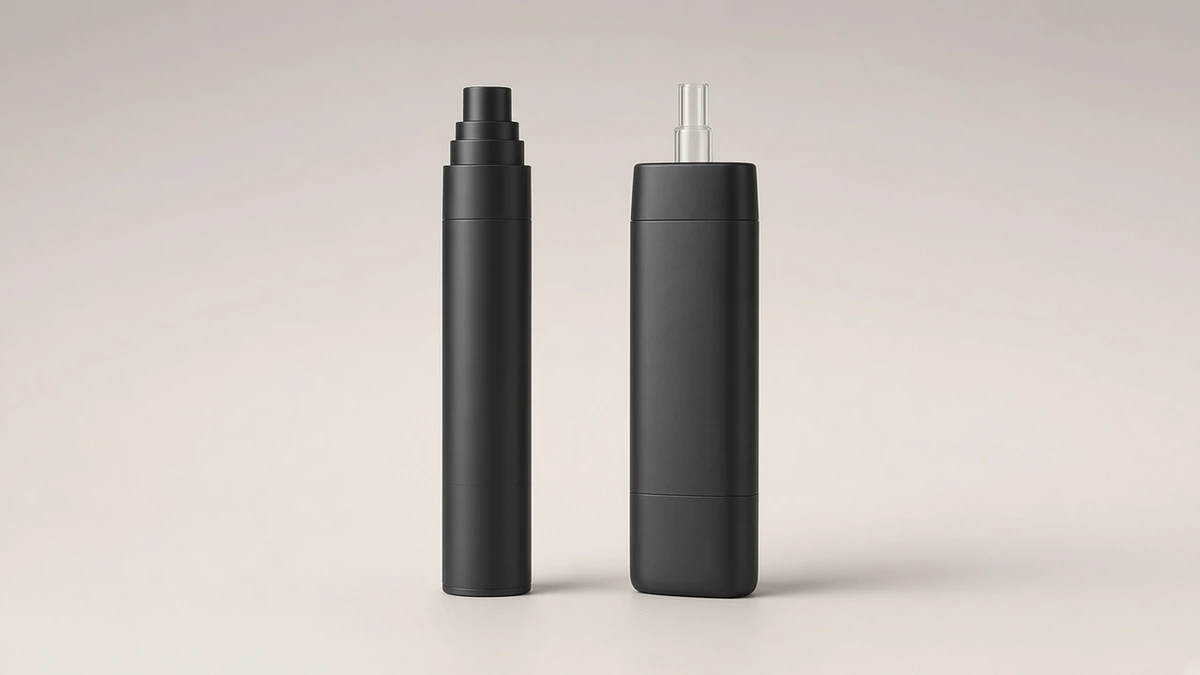
A cooling unit, in the official sense used below, is a named assembly with multiple parts that the manufacturer expects the user to disassemble. A glass stem or aroma tube is a primary mouthpiece path that seats into the heater body. A simple molded mouthpiece may be simpler still. The label on a listing is not the identification. The version manual’s parts list is.
🧊 2. A Cooling Unit Can Be a Stack of Named Parts
On some dry herb vaporizers, the top path is documented as a cooling unit, and that unit is not a single piece. A Storz & Bickel Support article titled “Disassembling & Assembling,” updated 10 September 2025 09:56 on that page, is a named official example of this layout, not a map for other brands. That page’s cooling-unit disassembly lists a sequence of parts: the mouthpiece is pulled from the cooling unit cap; a mouthpiece seal ring is removed; a rotary cap is opened; another seal ring is removed; the cooling unit cap is pulled off the vaporizer; an intermediate base is slid off the cooling unit base; the cooling unit base is unscrewed from the vaporizer; and a screen and a large base seal ring are removed from their grooves. The same page says to assemble the parts in reverse order, with seal rings properly seated and the screen in the groove provided for it.
A companion Storz & Bickel Support article titled “Cleaning,” updated 10 April 2026 07:19, tells the user, before cleaning, to turn the vaporizer off, disconnect it and the USB-C cable from the power supply, disassemble the cooling unit, and remove the filling chamber screen. It then gives cleaning options for the cooling unit parts and the filling chamber screen, and it tells the user to check parts for damage and to dispose of damaged parts. Those sentences are useful as an official picture of a multi-part, user-serviceable top assembly. They are not a specification for any other dry herb vaporizer, and they are not treated here as a cleaning-result claim or as permission to soak a device the manual does not name.
The identification for a buyer is the presence of that kind of documented stack — a cooling unit named as such, with several seals, caps, and at least one screen in the top path — not a single familiar mouthpiece silhouette.
🌬️ 3. A Glass Stem or Aroma Tube Is a Different Top Path
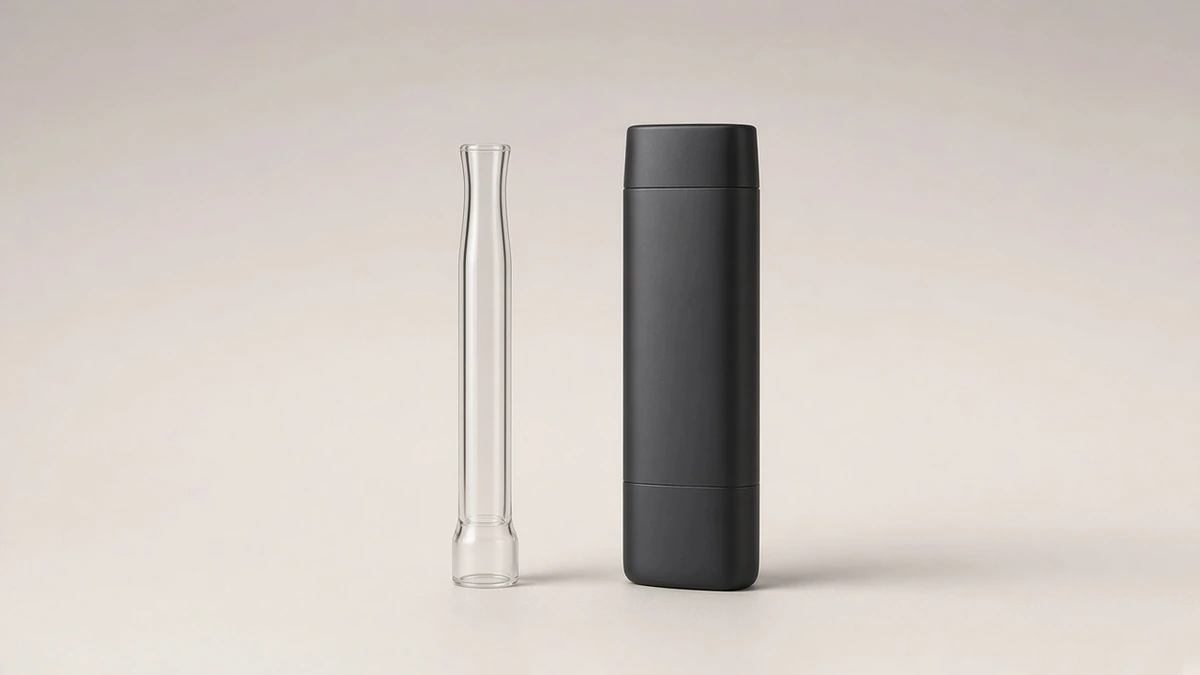
Other dry herb vaporizers present the top path as a stem or tube that seats into the body. The official Arizer Air MAX product page, opened for this research at arizer.com, is a named example of that family, not a specification for other heaters. In the “What’s Included?” list on that page, the kit includes an “Air / Solo Glass Aroma Tube (70mm)” and an “Air / Solo Frosted Glass Aroma Tube (14mm),” along with stem caps, travel tubes, and steel filter screens. The same page also describes a glass pod system and an isolated air path. Those kit lines are useful as a parts-list illustration: this version treats a glass aroma tube as the primary top path, with screens and caps as accessories to that tube. They are not a performance result, and they are not a claim about oven design.
A glass stem can still be removable, cleanable, and easy to lose. Removability alone does not make it a cooling unit in the sense of a multi-part stack with a base, an intermediate piece, a rotary cap, and several seal rings. The useful brief names the primary top part, then lists any screens, caps, or dishes the manual assigns to it. Do not rename a stem a cooling unit because it can be taken off, and do not rename a cooling unit a mouthpiece because the user draws through the top of it.
🧷 4. Screens and Seals Belong to a Specific Location
Both families use screens and seals. The difference is where the version manual puts them. In the Storz & Bickel disassembly example, a screen is pressed out of the cooling unit, a large base seal ring sits in a groove, and a separate filling chamber screen is levered from the oven rim. In the Arizer kit list, steel filter screens are included with the aroma tubes and dishes. Vape Screens: Tell the Oven Mesh From the Mouthpiece Filter is the place to keep those locations apart. This guide only asks that a screen found in a cooling-unit groove not be treated as an oven screen, and that a stem screen not be treated as proof of a cooling-unit design.
Seals follow the same rule. A mouthpiece seal ring on a cooling-unit cap is not interchangeable with a stem cap or with a dish seal the manual does not name. If a replacement bag is labeled only “mouthpiece,” check which assembly it actually belongs to.
Dosing Capsules for Vapes: Fit, Airflow, and the Tradeoffs That Matter is the place to ask how a capsule sits in a chamber. A capsule is not a top path. Do not treat a capsule lid as a cooling unit or as a stem.
📷 5. What a Listing Photograph Can Hide
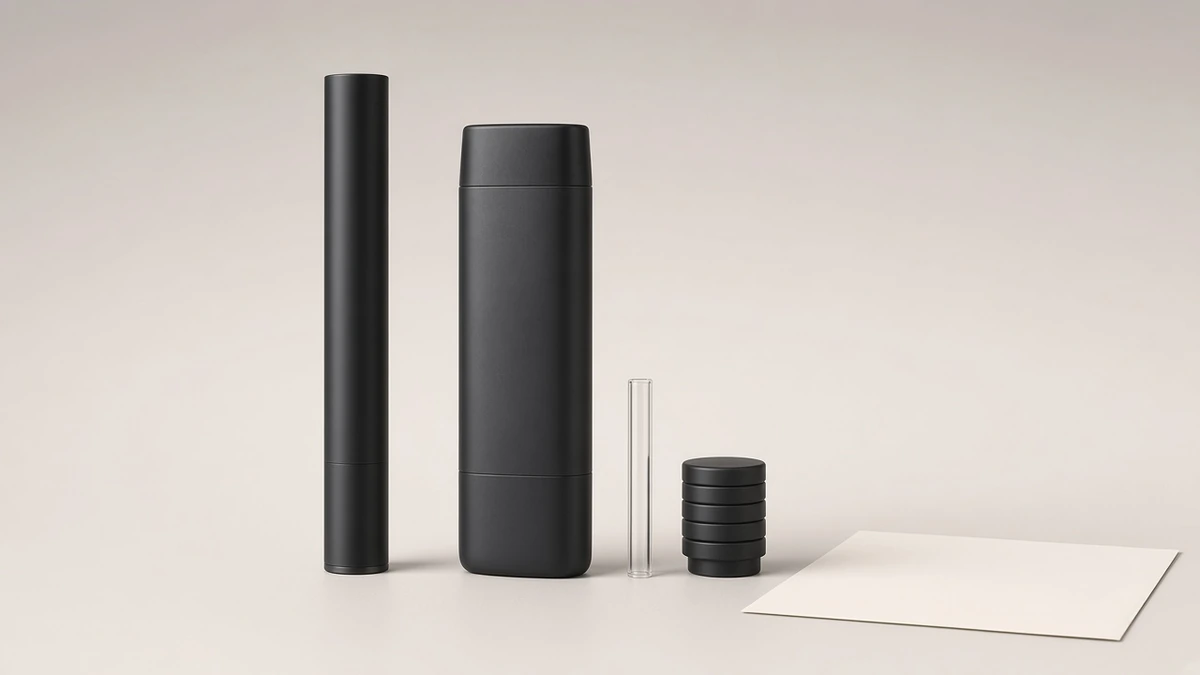
A listing photograph can support a top-path identification if the parts are shown both on the device and separated, and if the names match the manual. Often they are not. A closed beauty shot of a mouthpiece hides whether a cooling-unit stack is underneath. A single glass tube in a lifestyle image can look like the entire top path when the version also uses a dish, a cap, or a screen. An exploded cooling unit can look like a bag of loose spares rather than a required assembly order.
The photograph is also the wrong place to diagnose looseness. A cooling-unit cap that turns in its socket, or a stem that rocks in the oven, is a service observation for the loose-stem guide, not a reason to rename the architecture. Identify the designed top path first.
✅ 6. What to Check on a Sample, a Manual, and a Listing
A one-line description a team can reuse should name the top-path family and the primary removable parts. Example: “Handheld dry herb vaporizer; version manual names a multi-part cooling unit with a mouthpiece, cap, intermediate base, cooling-unit base, seals, and screens; the oven screen is a separate part.” Or: “Handheld dry herb vaporizer; kit and manual treat a glass aroma tube as the primary mouthpiece path, with stem caps and filter screens as accessories to that tube.”
On the sample, with the device off and cool:
- See what actually comes off the top, without forcing parts the manual does not release.
- Count caps, bases, stems, tubes, seals, and screens, and note where each one sat.
- Keep oven parts and top-path parts on separate trays.
On the manual and the current parts list for that exact version:
- Record whether the manufacturer names a cooling unit, a stem, an aroma tube, or only a mouthpiece.
- List the disassembly order if one is documented, and the seating rule for seals and screens.
- If the manual and the sample disagree, stop and confirm the revision before writing the brief.
On the listing:
- Treat “cooling unit,” “glass stem,” “mouthpiece,” and “easy clean” as labels to reconcile with the parts list.
- A multi-part cooling-unit sequence on a named official support page is that product family’s documentation, not a default for the next handheld in the same outline.
Questions worth sending with a sample request:
- What does the current manual name as the primary top path: a cooling unit, a stem or aroma tube, or another mouthpiece?
- Which parts, in which order, are designed to come off for cleaning?
- Which screens and seals belong to the top path, and which belong to the oven?
- Which replacement kits include the full assembly, and which include only a mouthpiece or a tube?
- Which statements in the listing are architecture descriptions, and which would require the version manual to interpret?
❓ 7. Short Answers a Brief Can Reuse
❓ 7.1 Identification Questions
What comes off the top of a dry herb vaporizer? Whatever the version manual names. On some devices that is a multi-part cooling unit. On others it is a glass stem or aroma tube, sometimes with its own caps and screens.
Is a removable mouthpiece the same thing as a cooling unit? No. Removability alone is not the architecture. A cooling unit, in the official example cited above, is a documented stack of caps, bases, seals, and screens. A stem can come off and still be a single primary path.
Does a glass tube mean the device has no screens? No. Screens may sit in the stem, in a cooling-unit groove, or in the oven. Identify each screen by location, using the screen guide, rather than by the fact that a tube is present.
Can official cooling-unit steps be used on a stem-style device? No. A Storz & Bickel support sequence documents that family’s cooling unit. An Arizer kit list that names a glass aroma tube documents that product. Neither is a shared disassembly map.
Is a loose top a design identification? Not by itself. Identify the intended assembly first, then use the loose-stem guide to describe movement, seals, and replacement fit.
Can a listing photograph settle the top path? It can support an identification if the parts are shown separated and named. A closed mouthpiece shot often hides a stack or a stem dish. Confirm the path on the sample and in the version parts list.