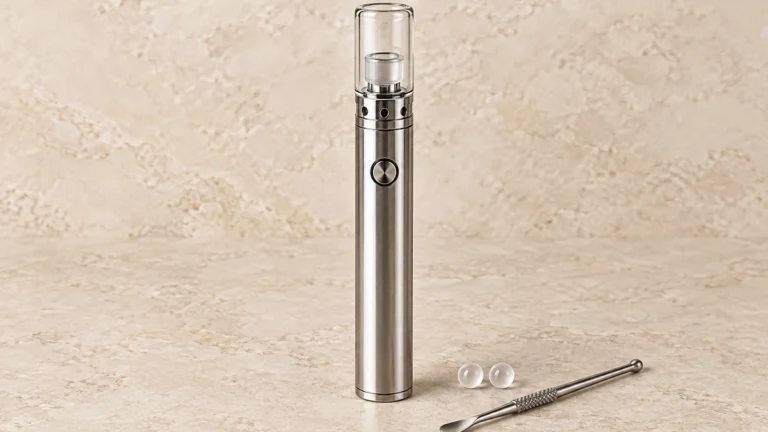
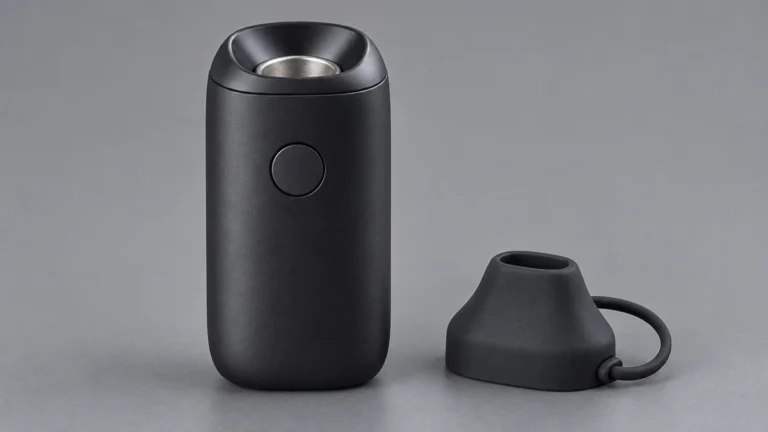
The phrase Doctor Dabber Switch 2 usually points to the company’s current desktop electronic rig, but people also use it when asking about the quartz insert, glass attachment, cap, heating profiles, or infrared sensor. These are connected features, not one interchangeable “atomizer.” Dr. Dabber’s product page identifies a 20 mm quartz insert, three named heating profiles, an IR sensor, and omnidirectional induction heating. Because those performance statements come from the maker, this guide attributes them rather than presenting them as independent test results.
This is an informational overview of terminology and parts, not a buying guide or operating tutorial. The exact design and package contents should be checked against the current Switch² manual and product documentation. The original Switch and Switch² are distinct devices; dimensions, accessories, and operating details should not be transferred between them by assumption.
🧭 1. Switch² is a system of separate components
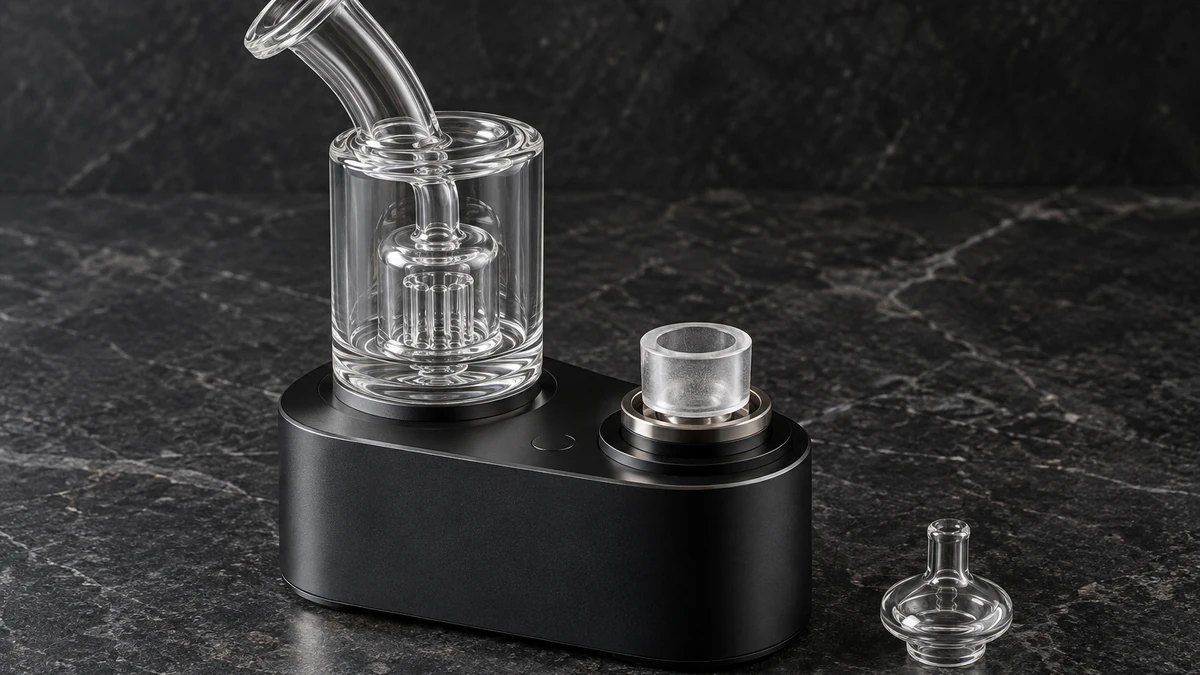
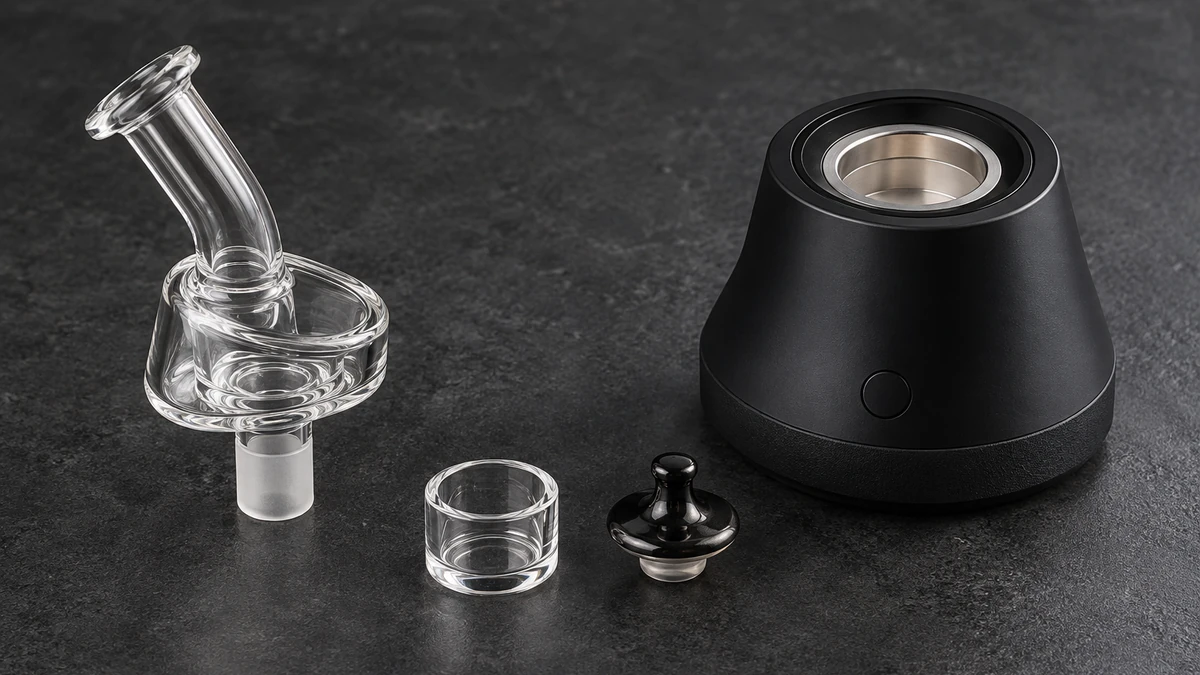
Dr. Dabber lists the Switch² unit, quartz insert, carb cap, and glass attachment as separate components. The insert is the cup-shaped part placed in the induction well; the glass attachment sits above the heating area; and the cap is a separate accessory. The device’s electronics and induction hardware are not the insert itself. This vocabulary helps separate a question about a removable quartz piece from one about the base or software.
The naming matters because “atomizer” is used loosely in online discussions. It may refer to a replaceable coil chamber in one device, a cartridge in another, or an insert in a third. Dr. Dabber’s Switch² product materials use “Quartz Insert,” so using that phrase is clearer and less likely to suggest that the part is a coil-based cartridge. A replacement insert advertised for the original Switch should not be assumed to fit Switch².
🔎 1.1 The model number is part of the specification
Switch² is not merely a cosmetic refresh of the older Switch for purposes of identifying parts. The manufacturer’s current product page presents its own insert size and accessories. If an accessory listing says only “Switch,” ask whether the seller means the original generation or Switch². Photos can help compare shape, but they cannot confirm dimensions, material grade, or fit. Prefer a listing that names the exact model and cites the manufacturer’s compatibility statement.
Similarly, a community post about a cap, glass top, or insert might describe a customized setup. That can be useful for discovering what owners are asking, but it should not be converted into a universal accessory recommendation. State what the official materials establish, and mark anything beyond them as unknown.
🧩 2. What the quartz insert does—and what its size does not prove
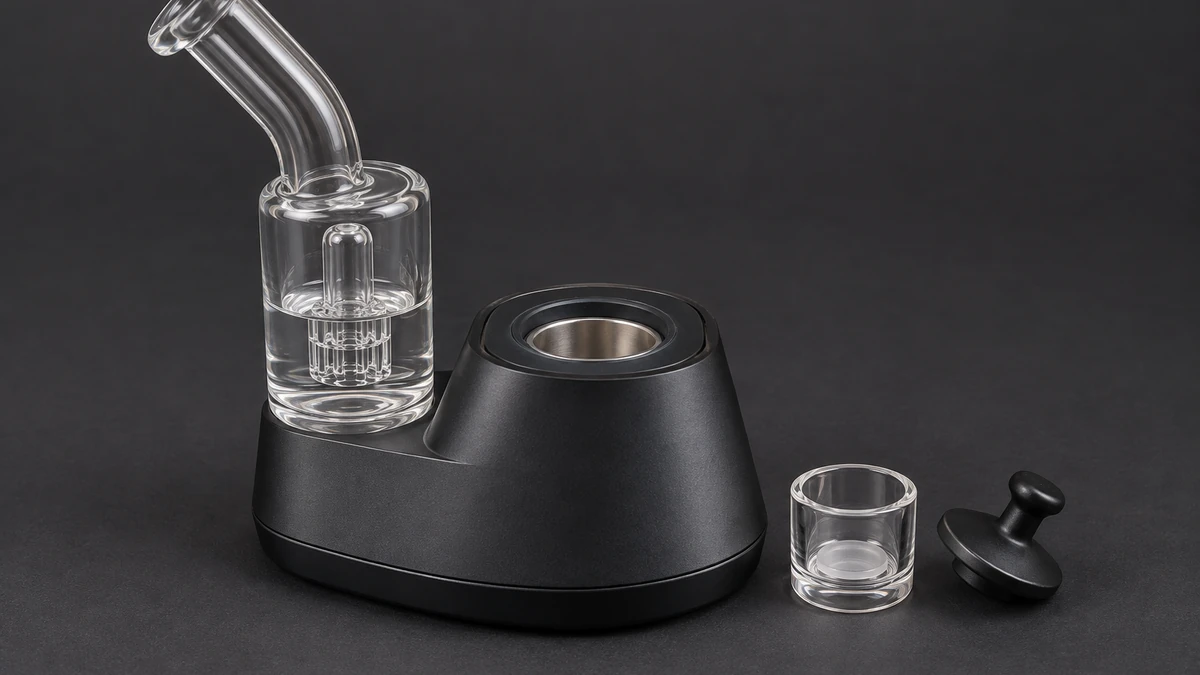
The Switch² product page names a 20 mm quartz insert and describes it as fitting within the induction well. The company also describes the insert as larger than the original Switch’s insert. Those are product specifications and promotional comparisons from the manufacturer. They help identify the model-specific part, but they do not by themselves establish how much material a person should use, a universal heating result, or a measured temperature across the surface.
Quartz is the named insert material. Avoid expanding that fact into unverified statements about purity, uniformity, durability, or chemical behavior unless a source provides a defined test and method. The product page makes its own claims about heat transfer and surface performance; if those claims are relevant, attribute them to Dr. Dabber. A neutral explainer should distinguish what the component is from what the manufacturer says it does.
📐 2.1 Insert, well, and chamber are not synonyms
The insert is the removable cup. The induction well is the space in the base that accepts it. People sometimes call the whole heated area “the chamber,” but that can obscure which item they mean. In a support description, state whether the issue involves the insert, its seating in the well, or another part. Do not infer that a problem with one necessarily indicates a failure in the other.
This distinction is also useful when comparing materials. A replaceable insert can be quartz, sapphire, or another listed material, while the surrounding device has its own housing and heating system. Material comparison should be specific to the component being discussed. A statement about a sapphire insert cannot automatically be applied to the quartz insert simply because both fit a related device family.
⚙️ 3. Induction heating is the stated heating approach
Dr. Dabber describes Switch² as using induction heating and advertises “omnidirectional” heating. At a general engineering level, induction systems create a changing magnetic field that can induce heating in a compatible conductive element; the product-specific arrangement depends on the design. The public product page is the source for the Switch² claim, but it does not provide an independent lab map of temperatures or a full component teardown. This article therefore reports the maker’s description without claiming that every point on an insert is measured to heat at the same rate.
That distinction is important because “even heating” can mean different things: a design intention, a manufacturer feature claim, or a measured result under specified conditions. Without a published test method, one cannot responsibly present the strongest interpretation as a verified fact. The Switch² product page states that its system heats from the sidewalls and base; that is a manufacturer description, not an independent measurement reproduced here.
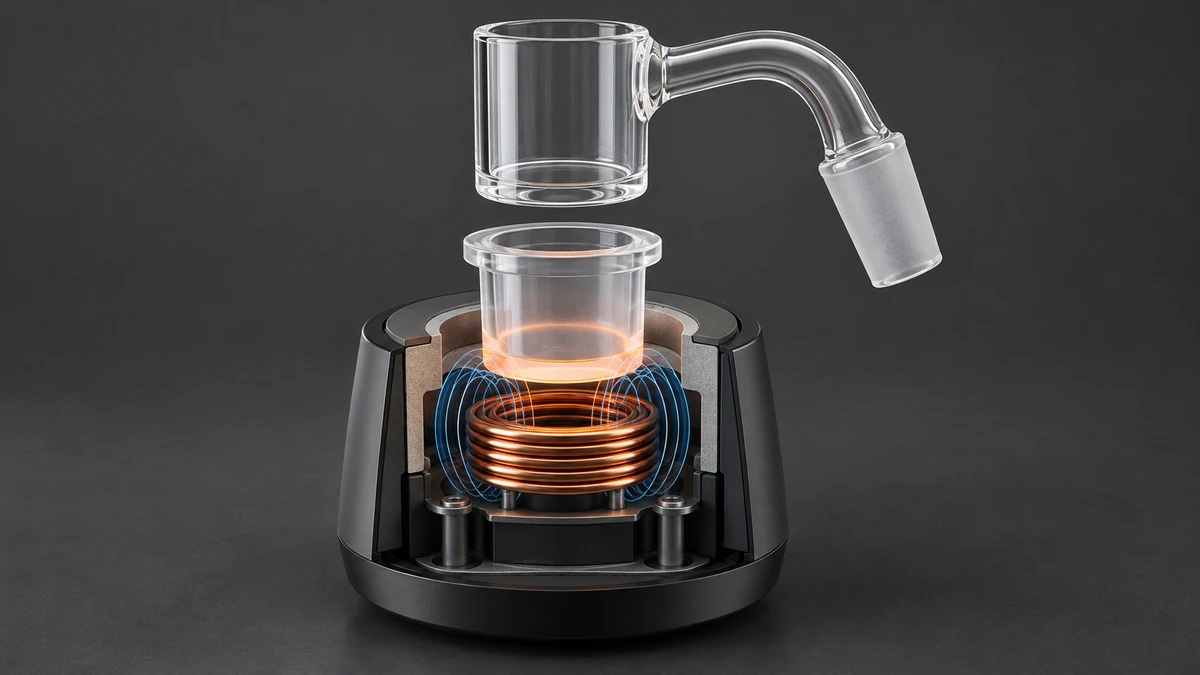
🧲 3.1 Why the insert and heating well are discussed together
The insert sits in the area where the heating system operates, so questions about fit and heating often appear together. But physical seating and temperature control are separate issues. A part may have the correct name yet still be the wrong generation or not seated as documented. Conversely, a question about settings or sensor behavior concerns the control system and cannot be resolved merely by identifying the insert material.
For a technical discussion, useful details include the exact Switch generation, insert type, and wording used by the device or manual. Avoid using a photograph of an exposed base to claim coil number, coil layout, or magnetic-field pattern unless those features are explicitly documented. The conceptual illustration above deliberately does not imply specific internal dimensions.
🌡️ 4. Three named heating profiles describe control behavior
The product page lists Descent, Ascent, and Steady profiles. In Dr. Dabber’s description, Descent reduces temperature over a session, Ascent gradually increases it, and Steady aims to maintain a stable set point. These summaries describe the company’s profile labels. They should not be confused with a universal temperature curve measured independently for all loads, accessories, or ambient conditions.
A control profile is different from a material. The quartz insert is the contact component; a profile is a way the device manages heating over time. A discussion that calls a profile “low temp” or “more even” may reflect a user’s preference or experience. It is not an objective characterization unless the conditions and evidence are stated.
📲 4.1 App controls and device settings
Dr. Dabber also presents app-enabled customization for certain settings and lighting. Feature availability can depend on the current product version, software, and region. If app behavior is a concern, use the current official support instructions rather than an old forum screenshot. A screenshot may belong to another app version, and a display label alone does not establish the actual insert temperature.
We avoid reproducing setup steps here. The purpose is to explain that profile selection and insert identification are different subjects. A reader looking for hardware parts should not mistake a setting profile for an accessory, while a reader researching control behavior should consult the manual and current support materials.
🫧 5. Glass attachment and carb cap are separate from the insert
The Switch² product page lists a replacement glass attachment and a carb cap separately from the quartz insert. The glass component forms the visible upper section of the assembly. The cap is another removable part. Their appearance and fit may vary across models or accessory revisions, so the word “glass” alone is too broad to identify an exact component.
Owners discussing alternative glass may focus on shape, appearance, or personal handling preferences. Those are useful subjects for community conversation but not proof that a particular attachment fits or changes measurable performance. Do not infer compatibility from an image. Use a model-specific part listing or support statement, and treat an unverified aftermarket fit as unknown.
🧾 6. A reliable way to assess a Switch² claim
When a description makes a technical statement, ask four questions: Is it from Dr. Dabber or an owner? Does it name Switch² rather than the original Switch? Does it identify the part? Does it provide a measurement method or only a feature description? These questions prevent a maker’s feature claim from silently turning into an independently validated outcome.
- Part: insert, induction well, glass attachment, cap, electronics, or app.
- Generation: original Switch or Switch².
- Source: current manual/product page, seller listing, or community anecdote.
- Evidence: documented specification, attributed claim, or individual impression.
For example, “Dr. Dabber lists a 20 mm quartz insert for Switch²” is a sourced specification. “This insert always heats evenly” is a much broader assertion that would require a defined test. Good technical writing makes that difference visible to the reader.
✅ 7. The short answer
Doctor Dabber Switch 2 refers to a specific desktop e-rig system. Its official materials identify a 20 mm quartz insert, an induction well, glass attachment, carb cap, IR sensor, and three heating profiles. The profile and heating descriptions are the manufacturer’s claims; without independent testing, they should be presented with attribution rather than as measured guarantees.
For related hardware context, read our guides to Puffco Peak atomizer terminology, the ball-vape heater, and heated loading tools. Those articles cover separate systems and do not imply cross-compatibility.
Manufacturer reference
Check the latest model revision before relying on any older accessory listing.
🧪 8. What an independent performance claim would need
A broad statement about temperature uniformity would need more than a feature description. A reader would need to know where temperatures were measured, what sensor was used, how the insert was prepared, what profile was active, how long the system had been operating, and whether glass or other accessories changed the conditions. Without that context, two people can report different impressions while neither observation is necessarily fabricated. The conditions may simply differ.
The same standard applies to claims about battery runtime, durability, or session consistency. Manufacturer specifications can identify a rated feature, while laboratory or independent tests can address measured outcomes. A customer review contributes a personal account but not a controlled test. Keeping these evidence types distinct makes the article more useful than a list of unqualified superlatives.
For that reason, this guide intentionally avoids repeating owner claims as facts. Reddit threads reviewed for this topic raised practical questions about glass, caps, and the Switch 2’s component layout. Those questions shaped the section order, but technical details were checked against Dr. Dabber’s product page and insert listing. Community discussion is a map of reader uncertainty—not a substitute for a manual or a test report.