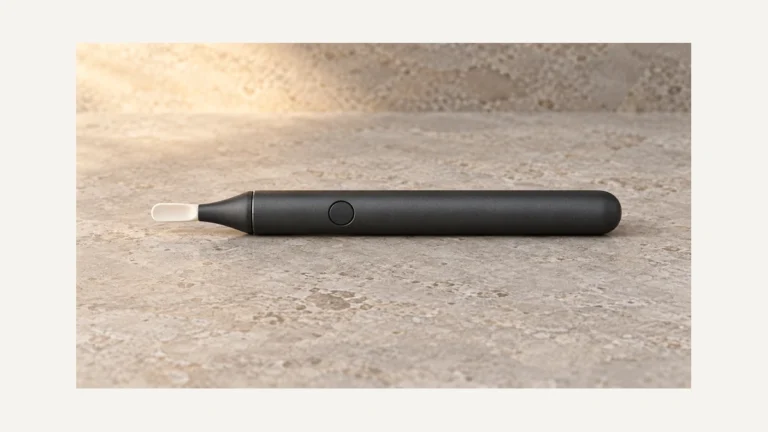
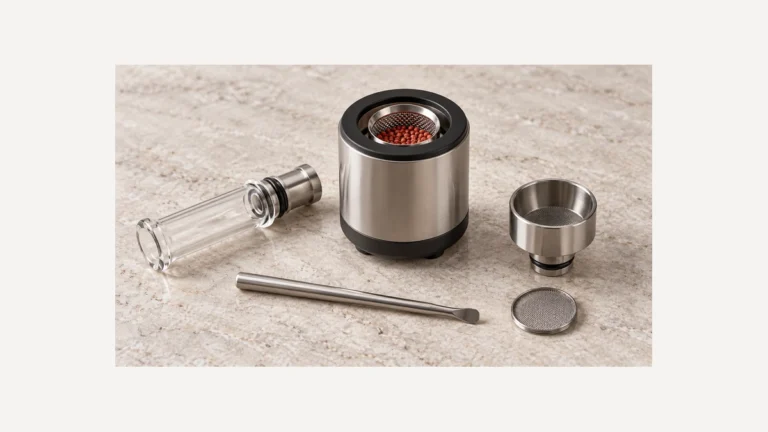
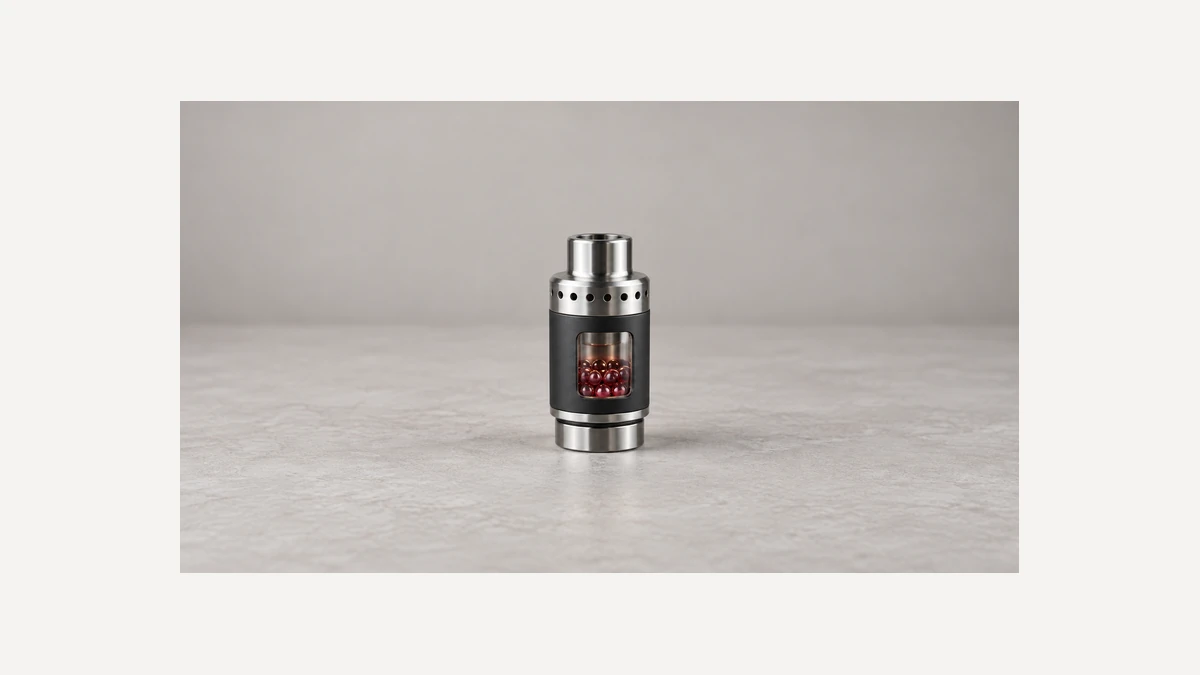
A ball vape is a desktop dry-herb vaporizer design that uses a heater paired with a separate diffuser or screen containing small thermal-media balls. The name describes a family of hardware layouts, not one universal device or specification. In Cannabis Hardware’s documented FlowerPot B1 example, the maker identifies a titanium head, a 22 mm diffuser/screen, and ruby balls; the company also lists other media options for its systems. Those are details of that manufacturer’s design, not rules for every ball vape.
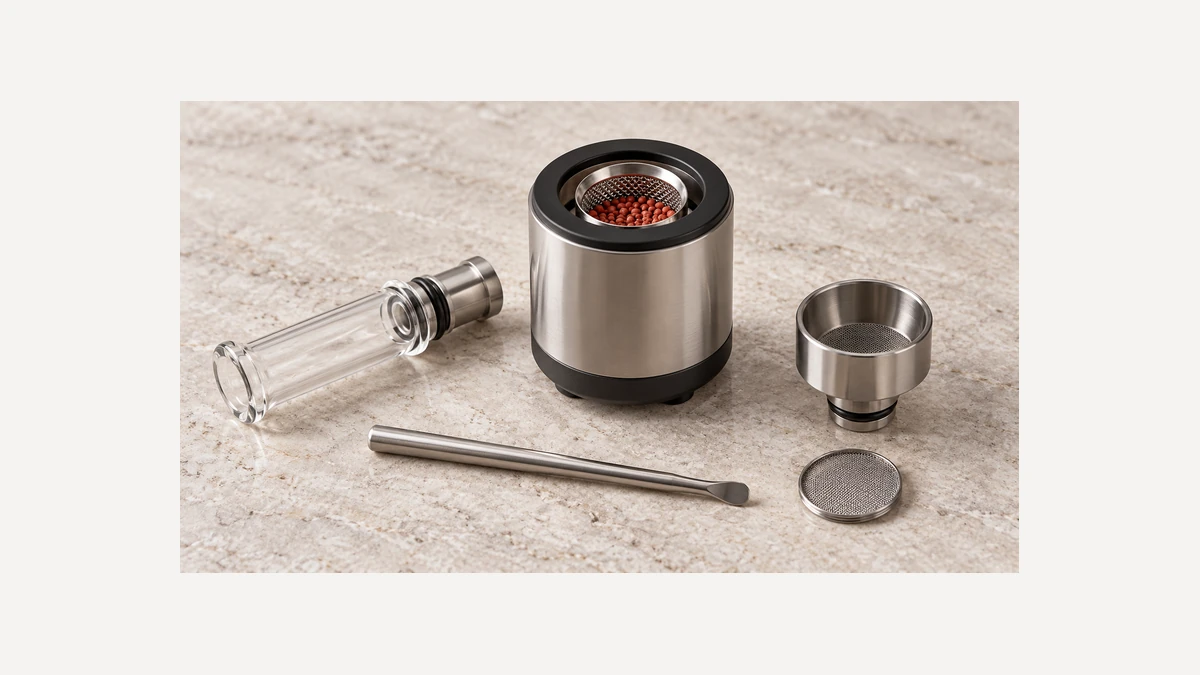
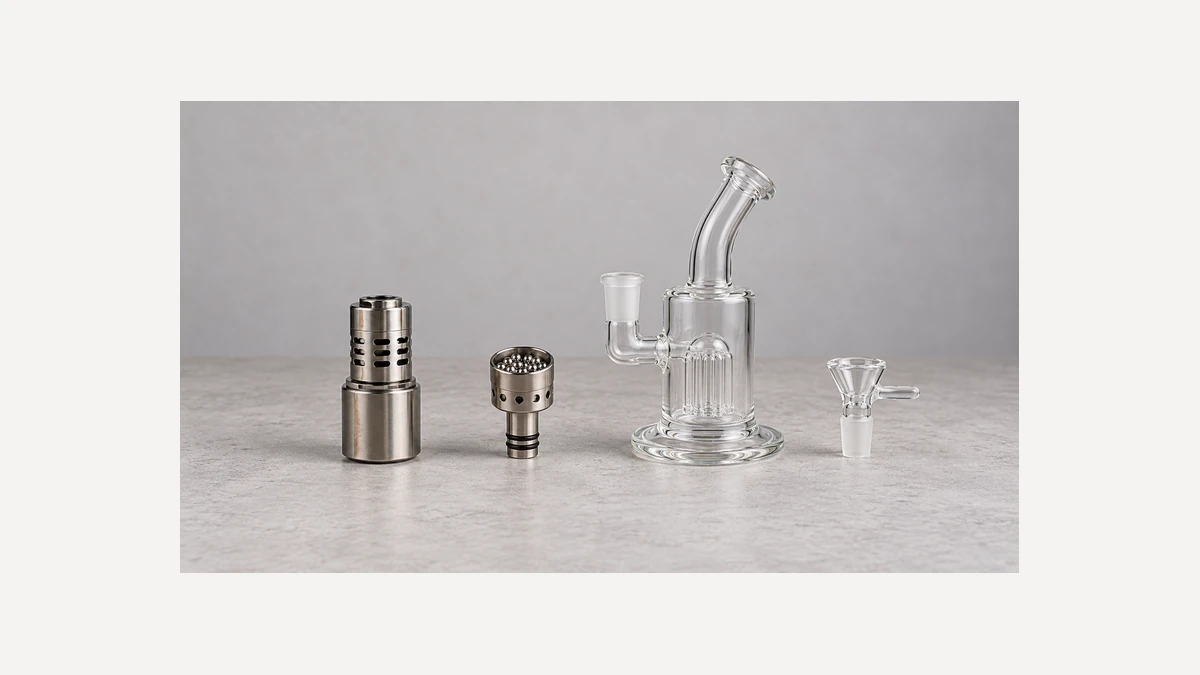
The useful way to picture the system is as several parts with separate jobs: a heater head, a ball-containing diffuser, a bowl, and often an external glass piece. That modular arrangement is the main contrast with a typical handheld dry-herb vaporizer, which packages its chamber and air path inside one portable body. Individual models differ, so a category label alone cannot tell you the material, dimensions, temperature control, or connection style.
🧩 1. What the Name “Ball Vape” Describes
“Ball vape” refers to a dry-herb heating approach built around a head or heater assembly with small spheres held in a screen or diffuser. The balls are thermal media within that assembly; they are not a standalone heating element. Cannabis Hardware’s FlowerPot pages offer one concrete example: the maker describes a titanium head and a separate diffuser/screen that holds balls.
That example helps explain the name, but it should not be mistaken for a standard adopted by every manufacturer. A different product may use other materials, a different amount or size of media, another screen design, or a different way of joining the heater to its bowl. The phrase “ball vape” is therefore a category clue. It is not a parts list or a compatibility promise.
It is also distinct from a generic “dry herb vaporizer.” The latter names a broad product category; “ball vape” points to a particular desktop-oriented heater/diffuser architecture within that category. AOVAPE’s overview of conduction and convection in dry-herb vaporizers covers the broader heating vocabulary without implying that every device uses the same layout.
⚙️ 2. How the Main Components Relate
On a component level, a ball-vape system can be understood through four labels. Their exact construction varies by product, but separating the names makes manufacturer documentation easier to read.
- Heater head: the part that supplies heat. In the FlowerPot B1 example, Cannabis Hardware identifies the head as titanium.
- Ball screen or diffuser: the separate part that contains the small spheres. The manufacturer’s B1 product information identifies a 22 mm diffuser/screen and documents ruby-ball configurations.
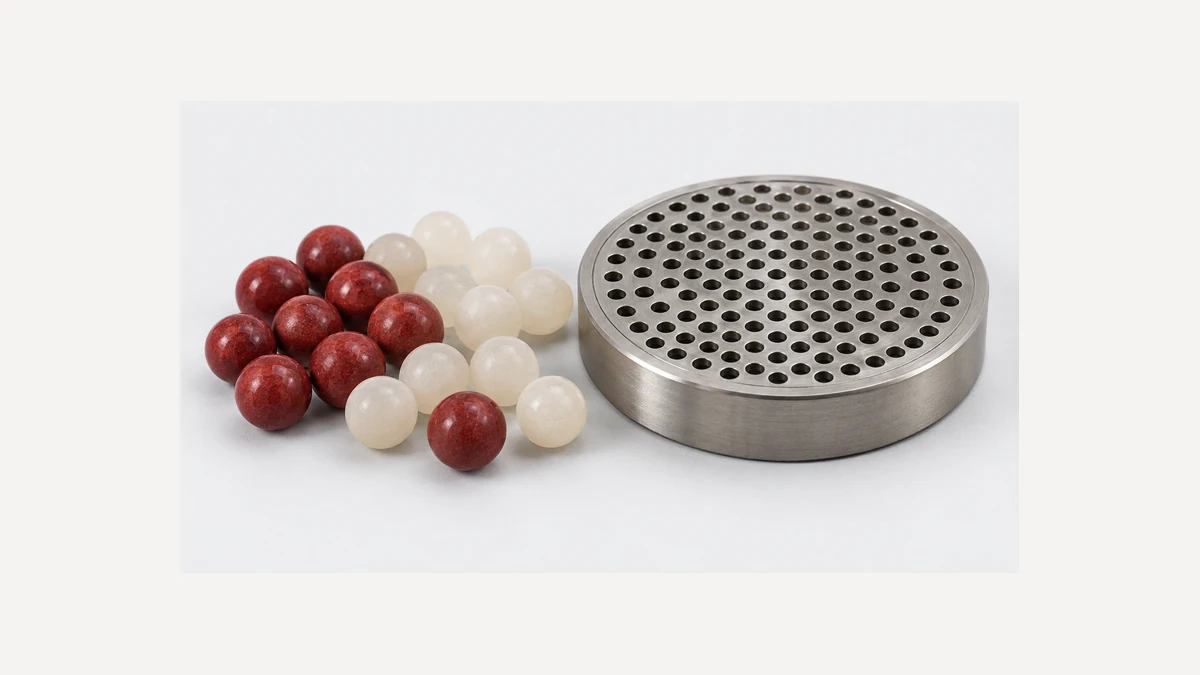
- Thermal media: the balls themselves. Depending on the specific product, maker documentation may list materials such as ruby, sapphire, quartz, or silicon carbide. These are options documented for particular systems, not a universal checklist.
- Bowl: the chamber associated with the dry-herb material. The FlowerPot B1 kit page describes that specific configuration as flower-only.
The manufacturer describes its own ball assembly as changing the route air takes through the diffuser. That is a product-design explanation for the B1 example, not a measured claim about every ball vape. The important distinction is that the heater and ball-filled screen are separate components in that named configuration. “The balls heat the device” is an imprecise shortcut; the device has a heater, while the media forms part of the maker’s heat-and-airflow design.
🧪 3. Why the Balls and Screen Are Discussed Together
Descriptions of ball vapes often mention the screen and the media in the same sentence because they form one part of the assembly. The screen retains the spheres; the specific head and diffuser determine how those parts sit in relation to one another. On the B1 product page, for example, the maker describes a 22 mm diffuser and the supported ruby-ball arrangement. Another manufacturer may use a different chamber shape or material.
Material names also need context. A product listing may offer ruby, sapphire, quartz, or silicon carbide, but those names alone do not establish that two media sets are interchangeable. Size, screen opening, fill arrangement, and the head’s design all belong to the individual system’s documentation. Do not infer a universal fit from two accessories that look like small spheres in a photo.
These distinctions are why a ball vape is better understood as a modular assembly than as a heater with a catchy nickname. The head, screen, media, bowl, and any glass interface are separate points of design. A product page that names only one of them may not describe a complete system or its compatibility.
🧭 4. Desktop Ball Vapes Versus Portable Dry-Herb Devices
Many portable dry-herb vaporizers package the heating chamber, power source, controls, and mouthpiece or air path into a handheld unit. A desktop ball-vape configuration is more modular: the heater and diffuser are separate from the bowl and often connect to external glass. That is a structural distinction, not a performance ranking.
“Portable” and “desktop” are useful shorthand, but they do not describe every possible design. Portable models differ from one another, and desktop systems differ too. Some products combine features or use terms differently. The specific manufacturer’s diagrams and part names should settle what a particular setup includes.
For another overview of dry-herb device categories, see AOVAPE’s dry-herb vape guide. The point of comparison here is simply that a ball vape generally names a heater-and-diffuser arrangement, while a portable device is typically described as a self-contained form factor.
🔍 5. What a Manufacturer Example Can—and Cannot—Tell You
Cannabis Hardware’s FlowerPot B1 documentation is useful because it gives names to the separate parts. Its product page identifies a Grade 2 titanium head, a diffuser/screen, and ruby-ball options; the kit page labels that configuration for flower. The company’s guide describes the balls as part of its airflow and heat-transfer approach. Together, those pages explain one example of the category.
They do not establish that all ball vapes use titanium, use ruby, contain the same number of spheres, or connect to the same bowl. Nor do they show that a component from one brand fits another. Use each brand’s own product names and specifications for its own system. If a description is vague, the term “ball vape” by itself does not fill in the missing information.
This is also a useful distinction between a broad technical category and a branded product. A FlowerPot B1 is a named example within the category. A “ball vape” is the general search term. Treating the two as synonyms can lead to overgeneralizing one manufacturer’s design.
💬 6. The Questions Enthusiasts Bring to the Topic
Reddit discussions show readers often describe ball vapes alongside the glass piece or portable device they already know. In one thread, owners discuss pairing a heater with a glass setup; in another, a portable-device owner asks how the two categories differ; a third conversation is framed around personal preference between systems. These posts illustrate vocabulary and comparison questions, not technical consensus.
That community context suggests a helpful explanation should focus on the layout: the head and diffuser are part of a broader desktop system, rather than a single handheld product. Individual comments about draw, vapor, material amount, taste, or ease of use are subjective and are not used here as product facts.
For adjacent component terminology, AOVAPE’s article on modular dab-rig parts discusses how separate hardware pieces form a larger setup. It is a related glass-hardware topic, not a ball-vape compatibility chart.
📚 7. Sources and the Short Answer
A ball vape is a desktop dry-herb design that pairs a heating head with a separate diffuser or screen containing small thermal-media balls and a bowl. In one documented example, the FlowerPot B1, the maker identifies a titanium head and a 22 mm diffuser/screen; materials and configurations vary across product lines. The name describes a category, not a universal design or compatibility standard.
Manufacturer references: FlowerPot B1 head and diffuser; FlowerPot B1 kit documentation; manufacturer’s ball-vape terminology guide.
Community threads (anecdotal, not technical authority): a ball-vape and glass setup discussion; a portable device versus ball-vape question; an owner’s comparison thread.