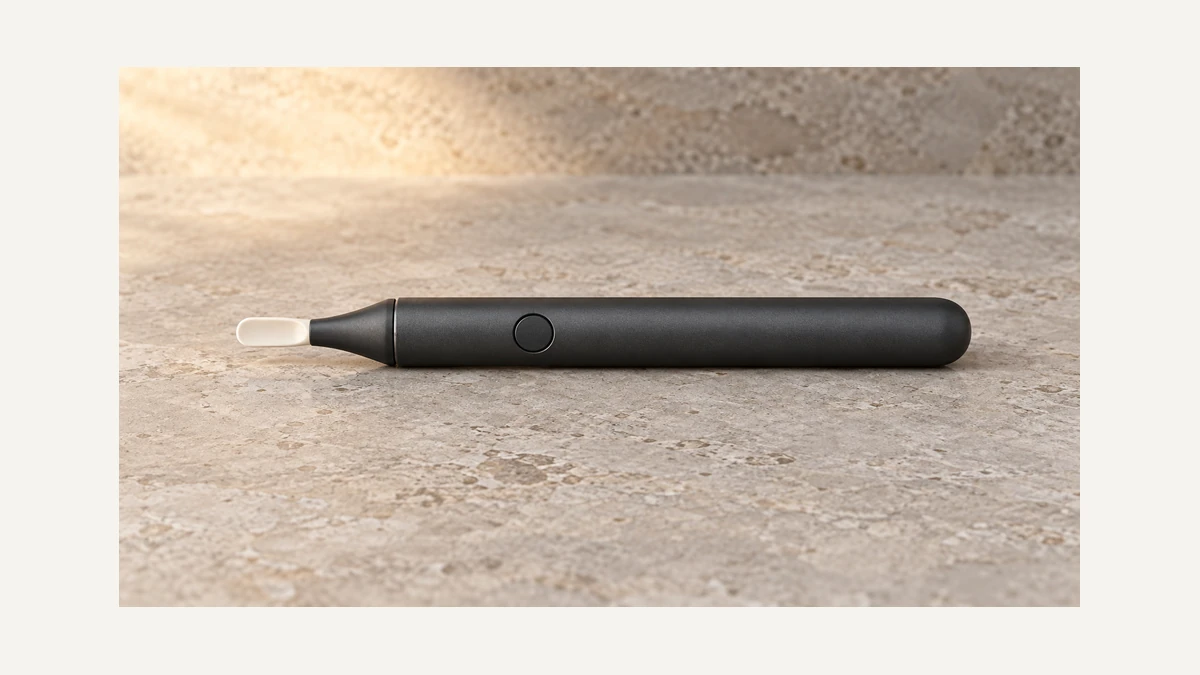
The Puffco Hot Knife is a separate, battery-powered accessory with a heated ceramic tip. It is designed as a loading tool, not as the atomizer or chamber inside a vaporizer. That small distinction clears up a lot of product-page language: “ceramic tip,” “heater,” and “atomizer” can all appear in the same conversation while describing different parts and jobs.
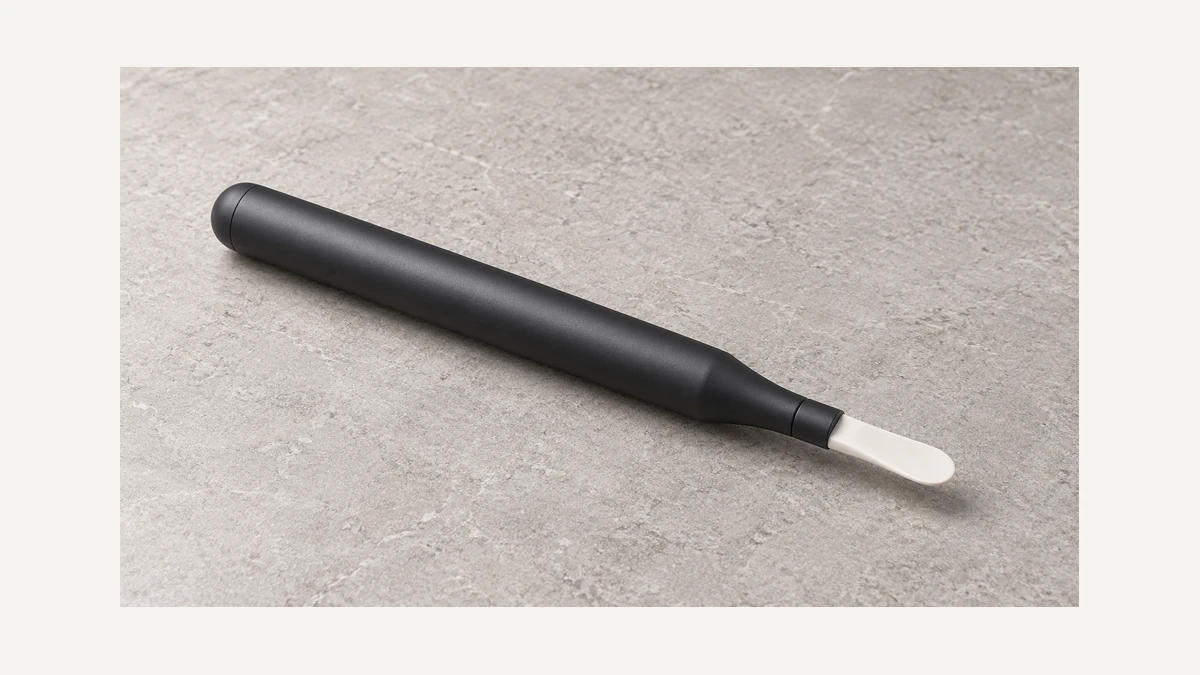
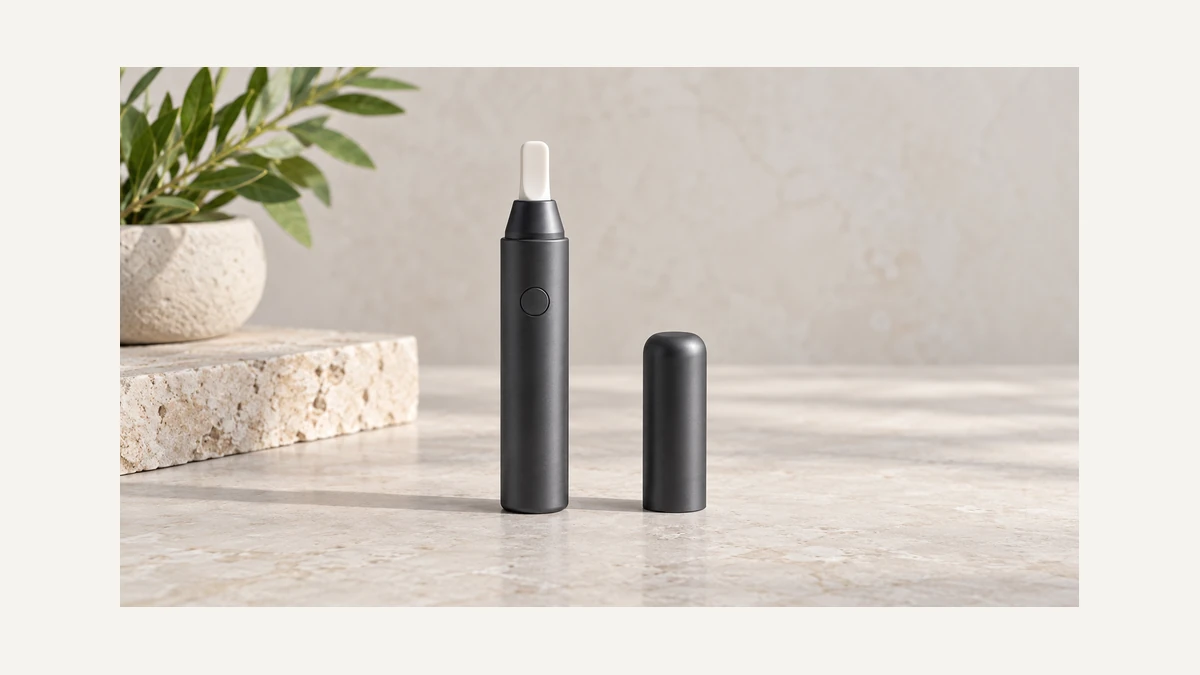
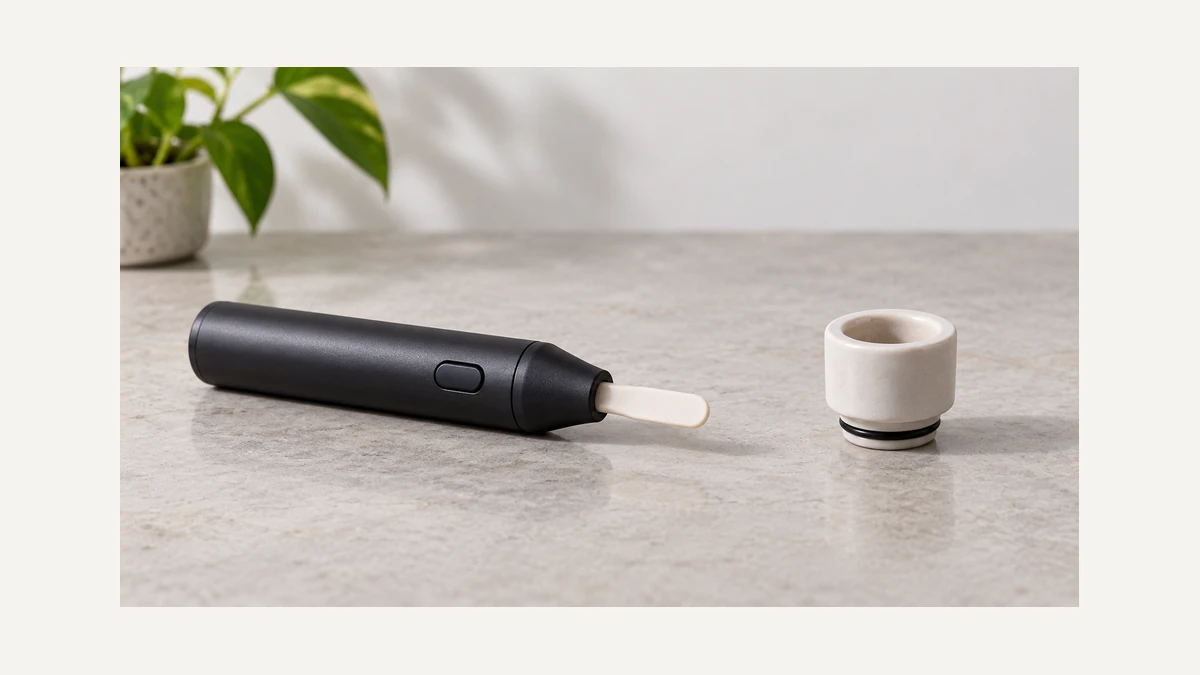
Puffco’s current Hot Knife Haze materials identify a rounded glazed ceramic tip, a revised body and button, a cap, USB-C charging, a three-click battery indicator, and a lanyard loop. Those are descriptions of the current version, not a universal blueprint for every heated loading accessory or every earlier Hot Knife. Below, the focus is on what the names mean, what the manufacturer actually documents, and what cannot be inferred from a product name or photograph.
🧭 1. What the Puffco Hot Knife name refers to
The Hot Knife is a specific branded accessory. Puffco describes it as a heated tool for loading concentrates; it is not a complete vaporizer and it is not the chamber that heats material inside a device. Think of it like the difference between a kitchen utensil and the cooking appliance: both may involve heat, but one is a separate hand tool while the other is part of the appliance’s working system. The analogy is about component roles, not a suggestion to use the products in the same way.
That distinction matters when reading a listing or comparing parts. A chamber or atomizer belongs to a particular vaporizer design. A loading accessory sits outside that device and has its own body, controls, tip, and cap. A conversation that calls every heated part an “atomizer” can therefore create confusion about what the item is, where it belongs, and whether two similarly named parts are related.
🧩 2. The visible parts documented for the current version
Puffco’s current product and support pages describe several exterior elements. They are useful for identifying the current Hot Knife Haze, but they do not provide a complete engineering drawing or a bill of materials. A product photograph can help locate a component; it cannot, by itself, prove the composition or design of hidden parts.
🪨 2.1 The rounded, glazed ceramic tip
The tip is the contact end of the accessory. Puffco describes the current tip as glazed ceramic and rounded in shape. Those words tell a reader where the ceramic component is and how the manufacturer characterizes its visible finish and form. They do not establish the exact ceramic formulation, dimensions, thermal profile, or whether another brand’s tip is equivalent.
“Ceramic” is a broad material family, not a complete specification. Different products can use different ceramic compositions, finishes, geometries, and attachment methods. A photograph that looks similar is not enough to confirm a match. For an accurate description, keep the source’s wording attached to the exact model and version it identifies.
The body is the handheld housing; the button is the visible control; and the cap is the protective cover described in the manufacturer’s current materials. Puffco notes that the body and button were revised and that the current cap is designed differently from the earlier version. These details help distinguish product generations in photos and listings.
They do not reveal the internal layout. A button’s appearance cannot tell you how the electronics are arranged, and a cap’s silhouette cannot confirm an unlisted retention force or interchangeability. When a listing uses “new,” “updated,” or “revised,” look for the date and exact model name. If those are absent, avoid assuming that a photo shows the same revision as the item being described.
🔌 2.3 USB-C, the battery indicator, and the lanyard loop
The current manufacturer description identifies USB-C charging, a three-click battery indicator, and a lanyard loop. These are separate identification cues: the port describes the connector, the indicator describes a visible battery-status feature, and the loop is an exterior attachment point. They should not be collapsed into a broader claim about charging speed, battery capacity, or runtime.
USB-C is a connector format. It does not, on its own, specify the power profile, cable behavior, charging time, or universal compatibility of a device. Likewise, a battery indicator tells you that a status display exists, but a reader should not infer a precise percentage scale or battery chemistry unless the manufacturer documents it. The loop identifies a physical feature; it does not establish a load rating or guarantee that every lanyard will fit.
🔍 3. A heated tip is not an atomizer or chamber
In vaporizer terminology, an atomizer or chamber is a component within the device’s heating system. Its geometry and relationship to the device are defined by that model. The Hot Knife’s tip is instead part of a separate accessory. Both categories involve a heated component, but their location and function are different.
🧱 3.1 Compare the job, not just the material
Material names can distract from the more useful question: what role does this part play? A ceramic chamber and a ceramic accessory tip may share a broad material label without sharing shape, construction, or function. One belongs to a vaporizer assembly; the other is an external loading tool. That is why “ceramic” alone is not enough to compare parts or claim that one can replace another.
🗂️ 3.2 Use precise terms in product descriptions
For clarity, use “tip” for the accessory’s contact end, “body” for its housing, “button” for the visible control, and “cap” for the cover. Reserve “chamber” or “atomizer” for the specific vaporizer component named that way by its manufacturer. Precise language is especially useful in support articles, inventory records, and product comparisons, where a mistaken part name can send a reader toward the wrong documentation.
The same component-first approach helps when reading about other hardware. A guide to dab-tool forms concerns separate accessories, while a wax-pen overview concerns device formats and their components. Those categories may appear together in a setup, but they are not interchangeable product names.
🕰️ 4. Why version details matter
Puffco’s support materials distinguish the current Hot Knife Haze from an earlier Hot Knife. A revised outline, button, or cap can change what appears in a photograph without changing the broad category of the product. This is a common reason why two descriptions seem inconsistent: one may refer to an earlier product image or release while another describes the current version.
📷 4.1 A photograph is an identification clue, not a spec sheet
Look at the product name, publication date, and the manufacturer’s wording together. A close-up can help identify the visible tip or cap, but lighting, angle, and image editing can make shape or color look different. A lifestyle photo is even less useful for determining hidden construction. If a detail matters, rely on model-specific documentation rather than visual resemblance alone.
When a brand describes an updated design, it does not automatically establish that older and newer parts are interchangeable—or that they are not. Compatibility needs an explicit statement for the exact versions involved. The current support page is a better place to check than a marketplace title that shortens the name to “Hot Knife.” If a listing omits the revision, the honest answer is that the generation is unclear.
📚 5. How to read listings without overreading them
Short product titles often compress several kinds of information. A brand name identifies the product family; “ceramic” describes a material category; “heated” describes a function at a high level; and a model or revision label narrows the reference. None of those words alone supplies a complete specification.
When a description seems ambiguous, separate the questions instead of trying to solve them from one adjective:
- What is the item? A standalone loading accessory, a vaporizer, or a component inside one?
- Which version? Does the source name the current Hot Knife Haze or an earlier Hot Knife?
- Which detail is documented? Is a visible feature stated by Puffco, or inferred from a photograph?
- What remains unknown? Are internal materials, dimensions, compatibility, or performance actually specified?
This method is more reliable than treating every listing as a complete technical sheet. It also makes it easier to distinguish a manufacturer’s claim from a reseller’s wording or an owner’s description. If a page does not identify the revision, do not silently fill that gap with a guess.
🗣️ 6. What owner discussions can—and cannot—tell you
Reddit discussions can reveal the questions people bring to a product: one thread asks about a tip that appears crooked, while other threads discuss reactions to newer Puffco designs and mixed impressions of the Hot Knife. Those are useful prompts for an explainer because they show where a reader may be uncertain. They do not establish a manufacturing tolerance, defect rate, typical experience, or a broad consensus.
For example, an image in a post may be difficult to interpret without knowing its angle, lighting, product version, or condition. A reply may reflect one owner’s expectations rather than a specification. Treat each discussion as an individual account and check factual questions against the manufacturer’s current product and support pages. The discussions about apparent tip alignment, newer product changes, and mixed owner impressions illustrate questions, not technical evidence.
⚖️ 7. What the name and current documents do not establish
The product name and visible features do not provide a full engineering specification. They do not independently establish the tip’s exact composition, internal electronics, temperature behavior, battery capacity, runtime, charging rate, compatibility with another product, or service-part interchangeability. Those points require explicit, model-specific documentation.
🧾 7.1 Keep the claim attached to its source
If Puffco identifies a rounded glazed ceramic tip, attribute that description to Puffco and keep it tied to the current version. Do not broaden it into a statement about every Hot Knife ever made or all heated loading tools. If a detail comes from an owner post, label it as an individual observation. If neither source establishes it, leave it open rather than converting a plausible inference into a fact.
🧭 7.2 A short terminology check prevents category errors
Before repeating a product description, check whether “heater” refers to the external tool’s tip or the heating assembly inside a vaporizer. Confirm whether the page describes the current revision. Then separate listed facts from assumptions about hidden construction. These simple checks make comparisons more accurate without requiring a reader to know the product’s internal engineering.
For a broader look at accessory categories, AOVAPE also explains how dab-pen accessories are classified. That context is useful for terminology, but it is not a Puffco compatibility reference.
✅ 8. The useful short version
The Puffco Hot Knife is a named heated loading accessory with a ceramic tip; it is not the atomizer or chamber inside a vaporizer. Puffco’s current materials describe the visible features of the Hot Knife Haze and distinguish it from an earlier design. Keep “tip,” “body,” “cap,” and “chamber” tied to the part each source actually names, and do not infer hidden specifications or cross-version compatibility from a product photo.
Manufacturer references: Puffco Hot Knife Haze product information and Puffco Hot Knife support documentation. Feature descriptions above are attributed to Puffco and apply to the version identified in those materials.