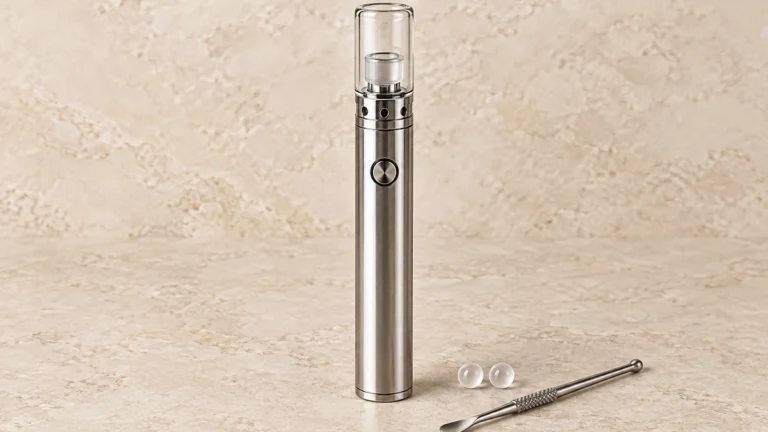
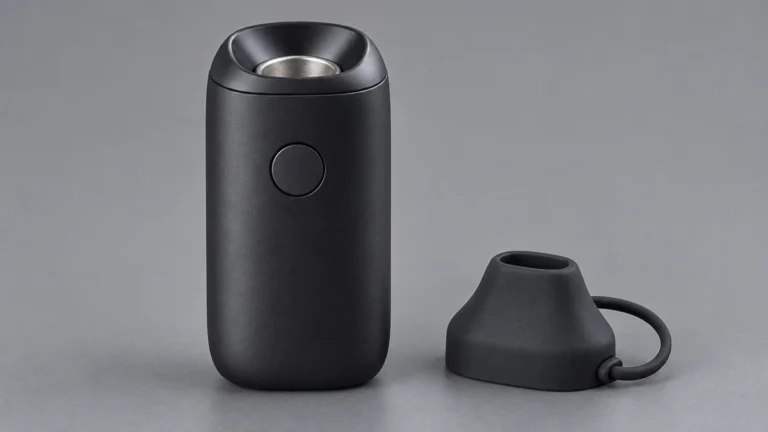
The search phrase Dr. Dabber XS often brings up questions about the small e-rig’s chamber, glass attachment, carb cap, and the way those pieces relate. The XS is not simply a battery with a universal cartridge on top. Dr. Dabber describes it as a compact electronic rig built around a quartz eChamber and a glass attachment. Naming each part separately makes support pages, accessory discussions, and replacement-part listings much easier to interpret.
This is a neutral component explainer, not a recommendation or operating guide. Details below are limited to the manufacturer’s product and knowledge-base descriptions. The exact contents of a package or availability of an accessory can change, so a kit photograph should not be treated as a permanent specification.
🧭 1. What makes XS a compact e-rig format
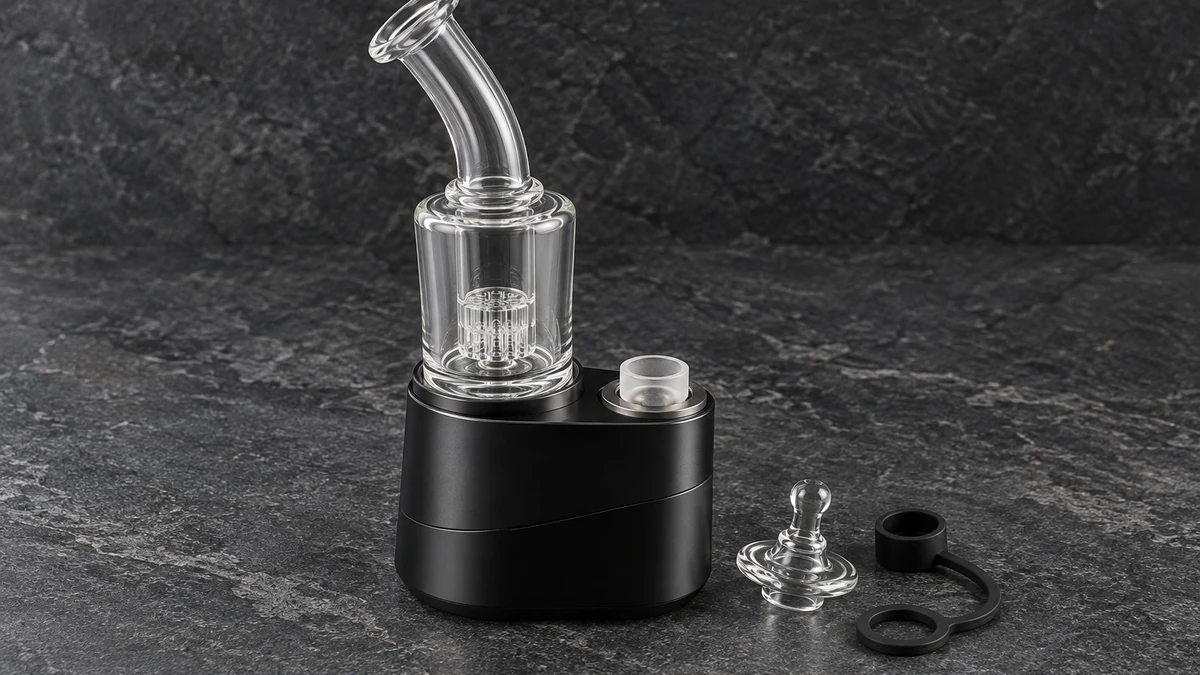
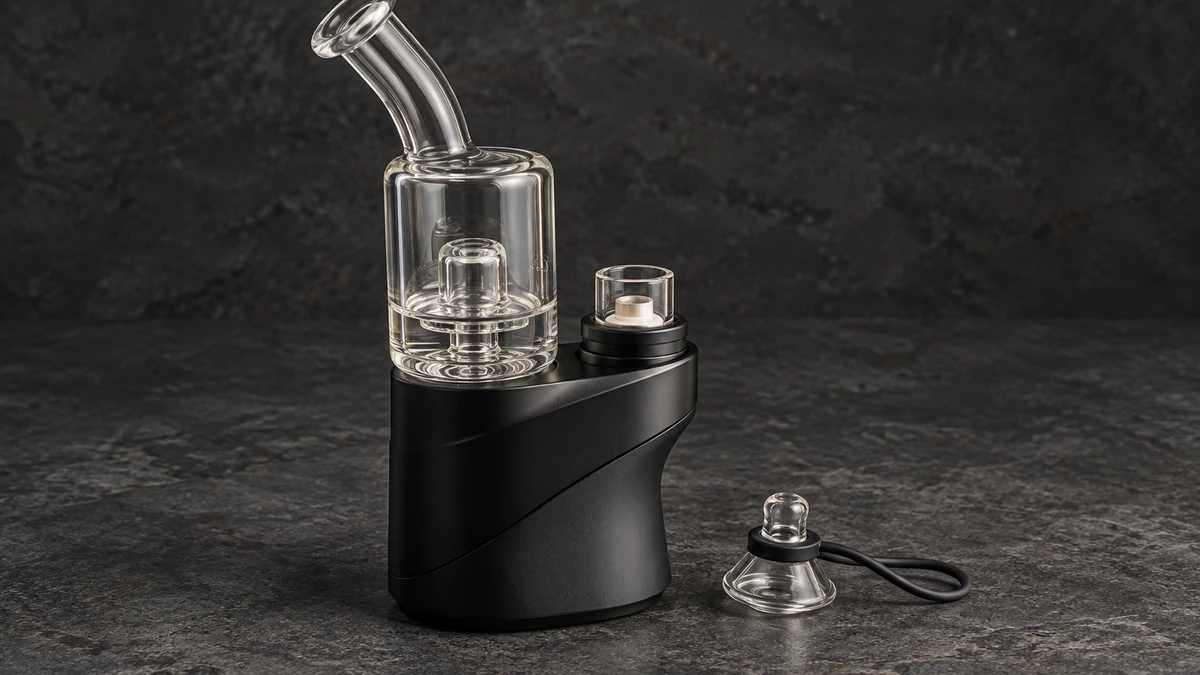
In the XS product documentation, Dr. Dabber identifies a quartz eChamber, glass attachment, carb cap, silicone seal and tether, loading tool, and funnel among the named components. Those terms describe different functions and locations in the assembly. The chamber is where the maker says material is placed; the glass attachment is the upper vapor route; and the carb cap is a separate piece associated with the top of the chamber. The silicone parts are not the heater, even though they may sit beside the chamber in a parts diagram.
“Compact” describes the design category, not a guarantee that all accessories from a larger Dr. Dabber device will fit. A similarly shaped cap or glass piece can differ in diameter, seating geometry, or intended model. Compatibility should be checked against the exact part number or the official XS documentation, not inferred from a side-by-side photograph.
🔍 1.1 Start with the model name on the source
Accessory discussions sometimes shorten the product name to “XS glass” or “the sidecar.” That can mean a stock glass attachment, a third-party replacement, or an aftermarket style discussed by an owner. The source’s model name, the shape of the connection, and any stated part number are more reliable than a generic description. If a thread omits those details, it may still help identify the question people are asking, but it cannot establish a fit claim.
The same caution applies to the word “atomizer.” In vape discussions, it can mean a cartridge, coil assembly, or heated chamber. Dr. Dabber’s own term for the XS component is eChamber. Using that term reduces confusion with a 510 cartridge heater or a separate atomizer sold for a different device.
🧩 2. The quartz eChamber is the central named component
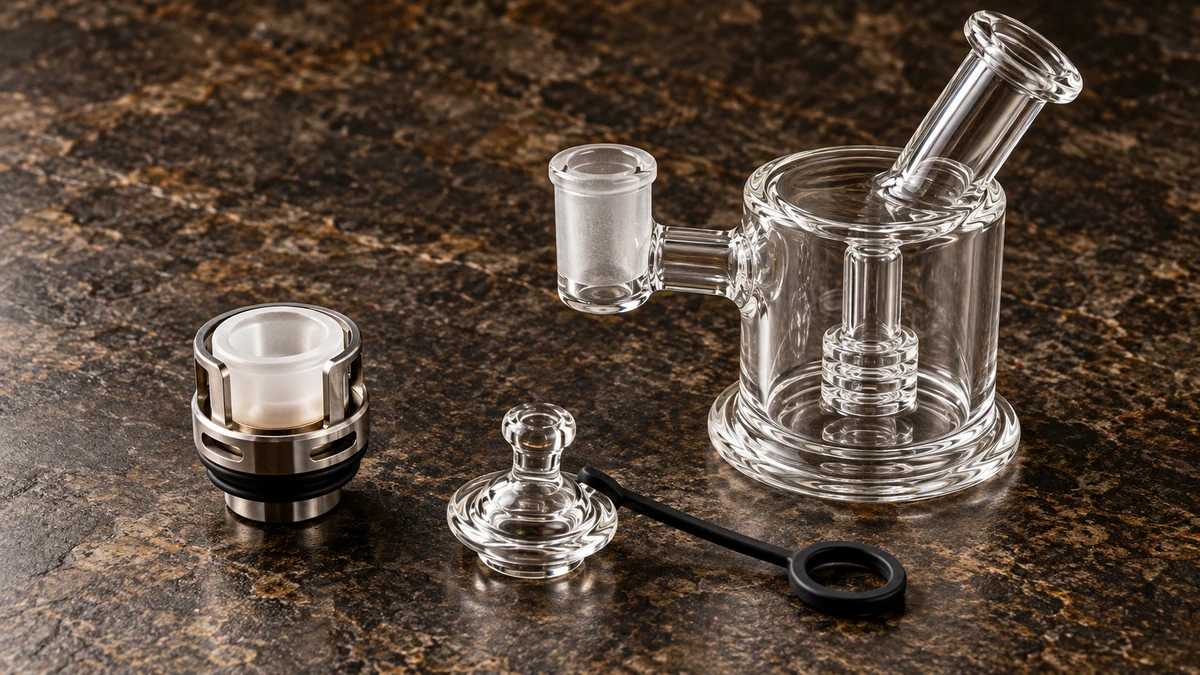
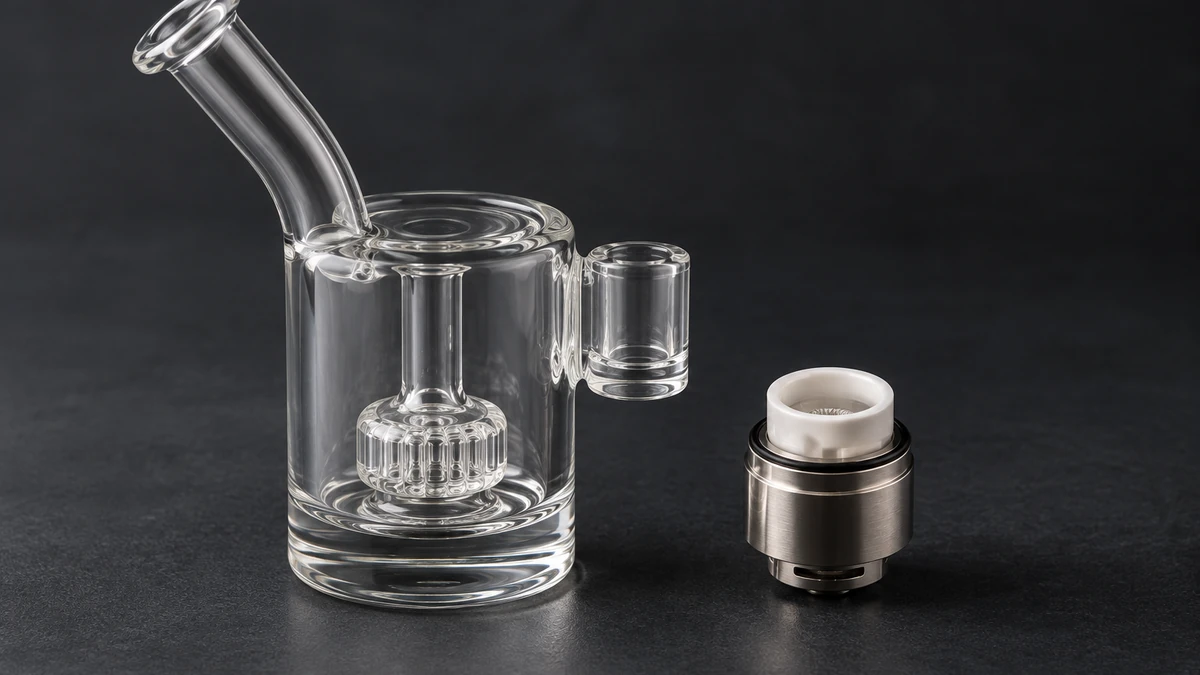
Dr. Dabber’s XS knowledge base names the quartz eChamber and describes the quartz dish as part of the design. That manufacturer language is the basis for calling it a quartz chamber here. The chamber is distinct from the glass attachment and from the device’s electronics. It is also not interchangeable by name with a ceramic bowl, a dry-herb oven, or a cartridge. Each phrase points to a different hardware family.
Online explanations sometimes use broad claims about flavor, heat retention, or how long a chamber lasts. Unless the statement comes from a test with defined conditions, it should be treated as an opinion or a manufacturer claim rather than a universal result. Material labels alone do not establish performance: chamber dimensions, controller behavior, contact surfaces, and the full assembly all matter, and the public support page is not a laboratory report.
🌡️ 2.1 Keep settings and performance claims attributed
The product documentation describes four temperature presets. That is a feature description, not evidence that every device produces an identical chamber temperature under every load or environment. When a source states a number or a preset, repeat it only with attribution and context. Avoid converting a setting label into a claim about the exact temperature at every point in the chamber unless the manufacturer documents that measurement method.
The same principle applies to the phrase “direct quartz-to-glass path,” used in XS materials. It is useful as the company’s description of the path, but it should not be expanded into invented hidden dimensions, coatings, or airflow measurements. A conceptual diagram can show the named chamber and glass attachment, but any hidden route should be labeled illustrative, not presented as a teardown.
🌬️ 3. Glass attachment, carb cap, and seal solve different assembly questions
The glass attachment is the visible upper piece of the XS assembly. The carb cap is named separately in the manufacturer’s support content. A seal helps locate or retain components, while the tether keeps a cap associated with the device. They may appear close together in a photo, but their functions are not synonyms. A person asking about “the top glass” may mean the glass attachment, the cap, or an aftermarket mouthpiece. Asking which piece they mean avoids a mistaken answer.
Glass shape also becomes a common subject in owner discussions. Users may ask about alternative shapes, stability, or cleaning. Those posts reflect individual preferences and experiences, not a universal finding about airflow or compatibility. Before treating an attachment as compatible, check whether the maker or seller explicitly identifies it for the XS and whether any seal or adapter is required. Do not force a part that does not seat as intended.
🫧 3.1 Glass appearance is not a compatibility specification
A glass attachment that looks similar may have a different base, joint, height, or seal. A photograph is helpful for recognizing the part but cannot prove dimensions or a fit. The user reports behind an attachment discussion can also describe a modified setup, not the original package. Treat seller measurements, manufacturer compatibility notes, and the exact model listing as separate pieces of evidence.
There is a second distinction: appearance does not validate an airflow claim. Bubbles, bends, or chambers in glass are visible design features; they do not by themselves prove a particular cooling effect or draw resistance. Without controlled measurements, keep descriptions literal: the attachment is glass, it connects above the chamber, and its visible shape differs. Avoid promising results that a photo cannot establish.
🧰 4. Tools and small parts are easy to overlook in a kit
The XS knowledge base also names a loading tool and funnel. These are small accessories rather than part of the heater assembly. Their presence in official documentation does not mean every used listing contains them. Over time, a kit can be split, replacement accessories can be added, and a seller may photograph only the device. For a factual inventory, compare an itemized list against the current product page or manual.
Do not infer that a tool is compatible with another model simply because it fits in a small kit. The tool’s purpose and dimensions may be model-specific. Likewise, a silicone tether or seal can be easy to confuse with a decorative strap in a low-resolution photo. Better lighting and a close view of the attachment points help identify visible objects, but the model documentation remains the authority for names and assembly.
📋 4.1 A practical way to describe an XS question
- State that the device is an XS, not just “a Dr. Dabber.”
- Name the part: eChamber, glass attachment, carb cap, seal, tether, or accessory tool.
- Describe the visible condition without diagnosing hidden electronics.
- Say whether the part is original, aftermarket, or unknown.
- Use the XS product page or knowledge base to confirm the manufacturer’s wording.
This format is useful in support requests and community posts because it separates a factual description from a theory. For example, “the glass attachment rocks when seated” is an observation; “the device is heating unevenly because of that glass” is an unverified explanation. Keeping the two apart helps the next person respond to the actual issue.
🧼 5. Maintenance advice should match the exact component
Cleaning questions are common because the XS combines a chamber and a glass component. The chamber, glass, cap, and soft silicone pieces are different materials and may have different instructions. Follow the manufacturer’s current documentation for the exact part rather than applying a generic “dab rig cleaning” method to every component. Avoid disassembling the electronic base or applying a solvent where the maker does not instruct it.
If a component appears loose, cracked, or damaged, stop treating online photos as a repair manual. The correct action may depend on the specific revision and warranty status. This article intentionally does not provide a step-by-step operating or cleaning procedure; it explains how to identify the parts and points readers to the product support material.
In a written description, identify what was cleaned and what remains assembled. This helps distinguish residue in a glass piece from a concern about the eChamber or base. It also prevents a common error in forum discussions: calling any part that touches the load “the coil,” even when the manufacturer identifies a quartz chamber.
✅ 6. The short answer
The Dr. Dabber XS is a compact electronic rig whose maker names a quartz eChamber, glass attachment, carb cap, silicone seal and tether, loading tool, and funnel. The chamber is not the glass, and neither is the electronic base. Similar-looking accessories should not be presumed compatible across models or third-party designs.
Community discussions can reveal the questions owners actually ask—especially about glass options and replacement tops—but they do not prove fit or technical performance. Use Reddit as a prompt to clarify terminology; use the official XS product and support pages to verify hardware details. When the documentation is silent, say so rather than filling the gap with an assumed feature.
For related formats, read our explainers on the mini nectar collector, Puffco Peak atomizer terminology, and ball-vape heater architecture. Those devices use different chambers and connectors; the links are comparisons of vocabulary, not compatibility guidance.
Manufacturer references
🧭 7. Reading conflicting sources
For the XS, the current manufacturer product page and knowledge base are the primary references for component names and the maker’s listed features. A retailer listing can help identify a particular item but may reuse old copy. An owner post can show a real-world configuration, but it usually cannot establish that the configuration is standard or universally compatible. If sources disagree, prefer the current model-specific manufacturer documentation for basic identification and state the disagreement instead of choosing whichever claim sounds most certain.
Part photographs should be read with similar care. A top-down shot may hide the connection surface; a low-resolution image may make glass and silicone appear identical. Ask for a clear view of the relevant joint and the manufacturer’s exact part name. Do not use a generic illustration to prove compatibility. In this article, the figures only explain categories: they do not claim exact XS dimensions or certify a third-party component.
Finally, keep model architecture separate from operating advice. Technical descriptions can explain what the parts are without instructing someone how to use the device. When the question becomes procedural, the manufacturer manual is the appropriate source; this article deliberately stays with identification, terminology, and claims that can be attributed to published materials.
📌 7.1 When the public material is silent
Some details simply may not be published: exact internal geometry, production tolerances, or a full compatibility matrix. An accurate explainer should say the documentation does not establish the answer. Readers can then ask the manufacturer with a model name and clear photo rather than relying on guesswork. This is more useful than turning a plausible assumption into a definitive specification.