Anyone shopping for a dry herb vaporizer eventually asks the same question: does it actually smell? The honest answer is yes. Heating plant material to the point of vaporization still releases the aromatic oils naturally stored in that material, and those oils are what a nose in the room picks up. The scent tends to be different from smoke, and many people describe it as softer, but “different” is not the same as “absent.”
This matters differently depending on who’s asking. A consumer wants a realistic expectation for indoor use. A retailer or brand owner needs product copy that describes the hardware without promising odor elimination. Both groups are better served by plain, verifiable information than by marketing shorthand.
💡 Quick answer: Yes. Dry herb vaporizers produce a noticeable herbal odor because heating plant material releases volatile aromatic compounds into the air. The odor is different from combustion smoke, but no dry herb vaporizer is odorless, and buyers should not treat “discreet” as a measurable hardware specification.
What matters most
- Dry herb vaporizers are not odorless devices; heating releases aroma compounds from the material.
- Odor strength is not fixed — material, temperature, session size, airflow, and device residue all push it up or down.
- Cleaning, ventilation, and sealed storage manage odor; nothing in this category eliminates it.
🌿 1. Why dry-herb vapor has a smell
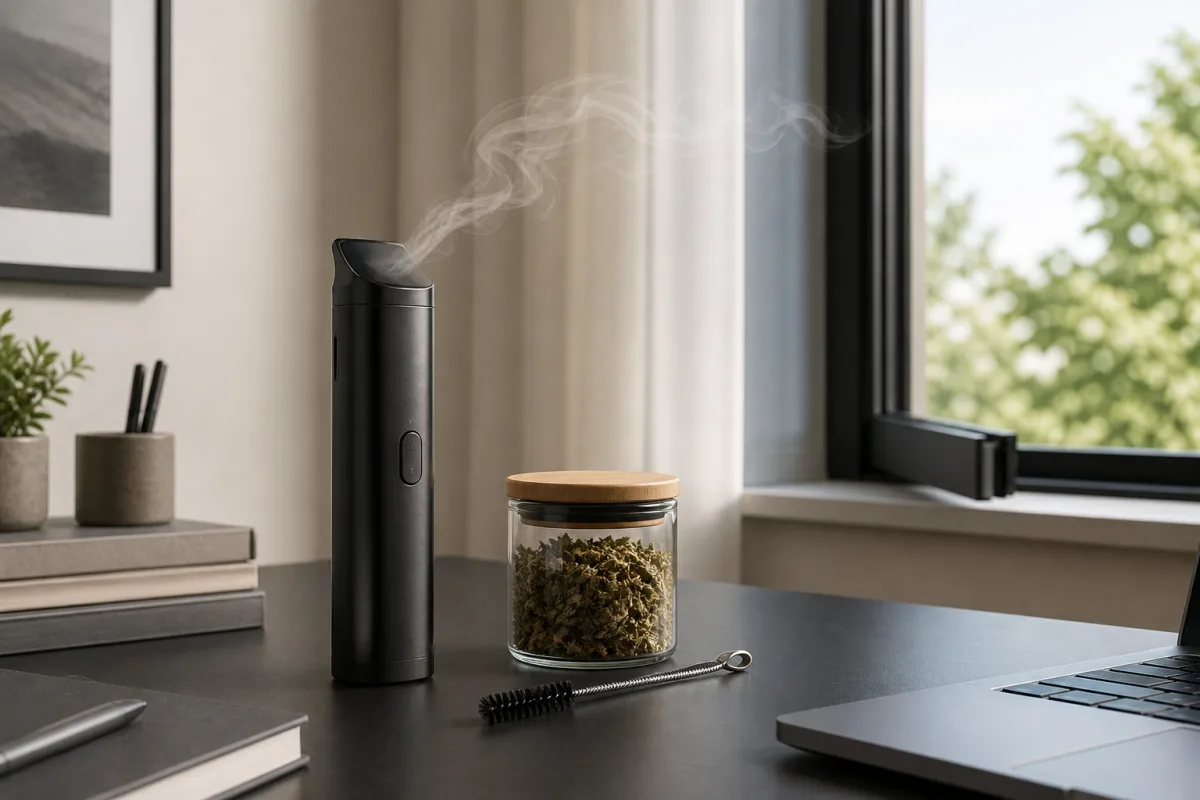
A dry herb vaporizer heats plant material without intentionally igniting it. Heat releases volatile aromatic compounds from the material, and moving air carries part of that aroma out through the device. A flame is not required for a noticeable scent.
Avoiding combustion does not remove the aroma. The material is fragrant before it is loaded into a chamber, and heating makes part of that fragrance airborne. Buyers and sellers should treat odor as a normal product-use characteristic, not an unusual exception.
The device holds onto some of that scent too. Chambers, screens, and mouthpieces sit in direct contact with heated material session after session, and oils from that material settle into those surfaces over time. How noticeable that residual smell becomes, and how quickly it builds up, depends on design and maintenance — both covered further down.
💨 2. Vapor odor versus combustion smoke
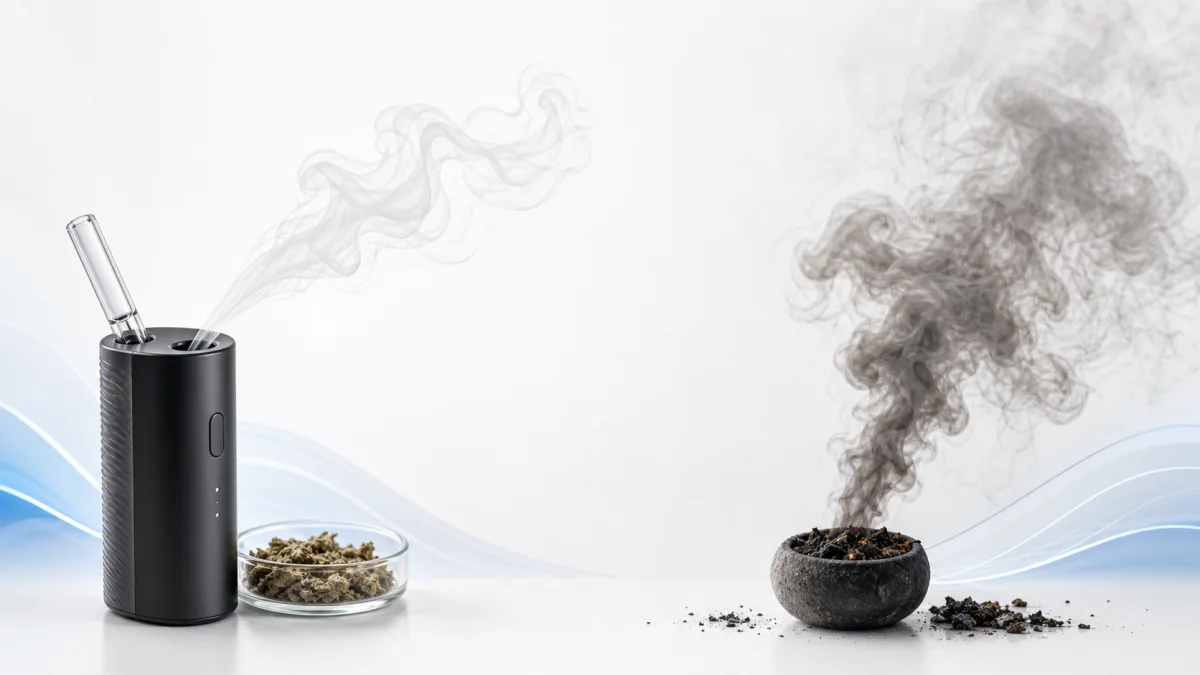
Vapor and smoke get compared constantly, and for good reason — they come from the same starting material but behave differently once they hit the air. The table below outlines general, non-technical distinctions in how each tends to present. It’s a description of odor character, not a health or safety comparison, and shouldn’t be read as one.
| Characteristic | Vaporized dry herb | Combusted (smoked) dry herb |
|---|---|---|
| General scent character | Often described as lighter and more herbal | Often described as heavier and ashy |
| Combustion | No combustion; material is heated, not burned | Combustion occurs; material is burned |
| Key variables affecting odor | Material type, temperature, session size, airflow, and residue shape how strong the odor is and how long it lingers, for both methods. | |
Note: this table compares general odor character and combustion status only. It is not a health or safety comparison.
Both methods leave a detectable smell in a room. Neither should be treated as faint enough to ignore or easy to manage without any deliberate effort.
🎛️ 3. Five variables that change odor
Odor from a dry herb vaporizer isn’t a single fixed output — it moves depending on a handful of factors that users and retailers can actually account for.
3.1 Material
Different plant materials and strains carry different natural aromatic profiles. Some are noticeably more pungent than others before any heat is ever applied, independent of the device doing the heating.
3.2 Temperature
Higher heat settings release aromatic compounds more readily. Pushing a device toward the top of its temperature range tends to make the resulting vapor more noticeable in a room than a lower, more conservative setting.
3.3 Session size
A short session with a small amount of material generally produces less overall odor than a long session or a fully packed chamber. Portion size is one of the simplest levers available to a user.
3.4 Airflow and ventilation
A closed, still room lets vapor and its scent settle and concentrate. An open window, a fan, or any source of moving air helps disperse that scent rather than letting it pool in one space.
3.5 Residue
Spent material, oils left behind in the chamber, and buildup on the mouthpiece keep carrying scent well after a session ends, right up until the device gets cleaned. Residue is often the most persistent source of odor, since it lingers between sessions rather than dissipating with the vapor itself.
None of these variables can be eliminated entirely, but understanding them sets a realistic expectation for how noticeable a given session will be in a given setting.
🧹 4. A practical odor-management routine
The steps below reduce how much scent lingers in a space or clings to a device. None of them make a dry herb vaporizer odorless, and none should be marketed that way.
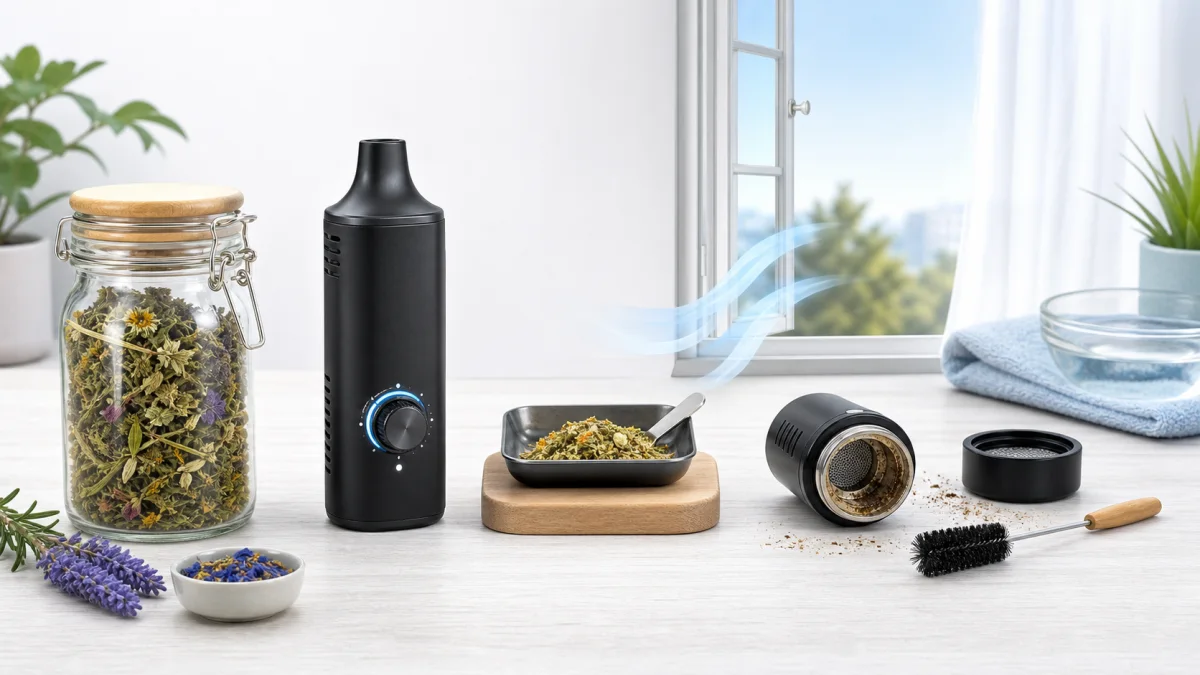
- Store material in a sealed container. Loose plant material left out in the open keeps releasing scent even when the device isn’t in use.
- Ventilate the space during and after a session. Open a window, run a fan, or move to an area with airflow so vapor disperses instead of settling into fabric and furniture.
- Empty spent material once the device has cooled. Used material continues to hold odor. Clearing it out promptly, after it’s safe to handle, cuts down on what lingers in the chamber.
- Clean the chamber and mouthpiece on a regular schedule. Residue buildup is one of the more persistent, ongoing sources of smell on a device, even between active sessions.
- Store the device in a case or pouch between uses. This can reduce how much residual scent transfers onto bags, drawers, or nearby items, though the effect varies with device design and case material.
🔍 5. What B2B buyers should test in samples
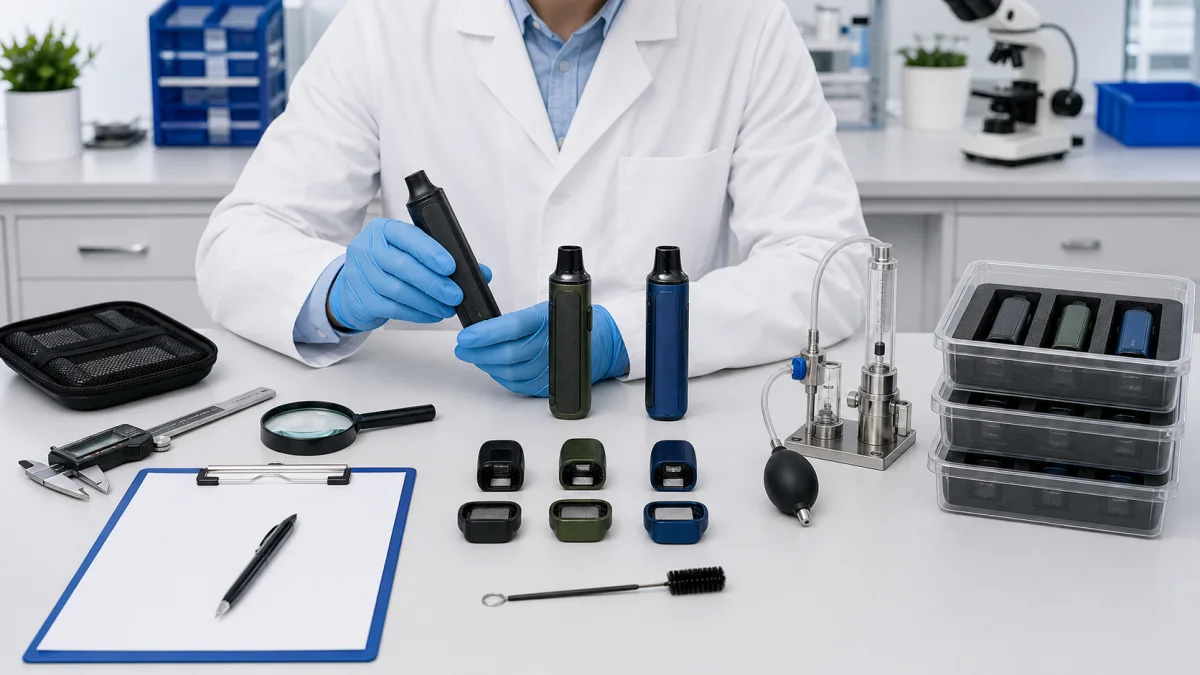
Retail and wholesale buyers evaluating dry herb vaporizers for a catalog should assess odor-related characteristics directly on sample units, rather than taking marketing copy at face value.
- Chamber and airflow design. Ask how well the chamber seals during operation and how accessible the airflow path is for routine cleaning — buildup in these areas is a direct driver of ongoing odor.
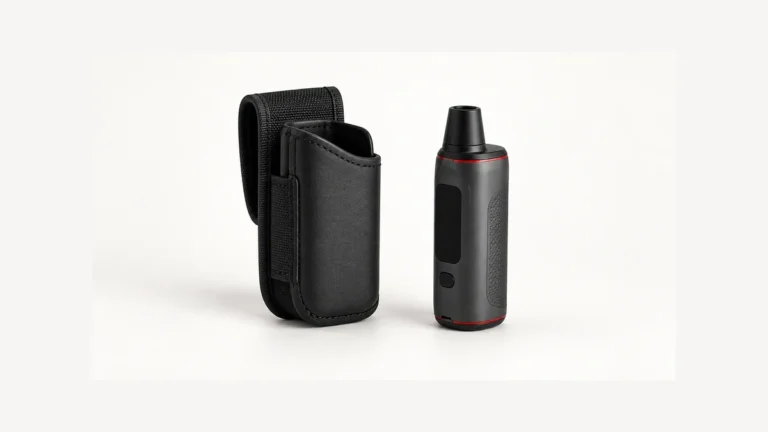
- Material compatibility. Confirm exactly which materials a sample is rated for, since some devices are built for dry herb only while others cover multiple formats. The AOVAPE TRIO is presented as a 3-in-1 device for dry herb, concentrates, and oils, using different coil formats for each — a relevant detail when a catalog needs to represent a multi-format product accurately.
- Cleaning accessibility. Test how easily a sample disassembles and cleans. Devices that come apart easily tend to hold less residual odor over repeated use, and this is worth verifying hands-on rather than assuming from a spec sheet.
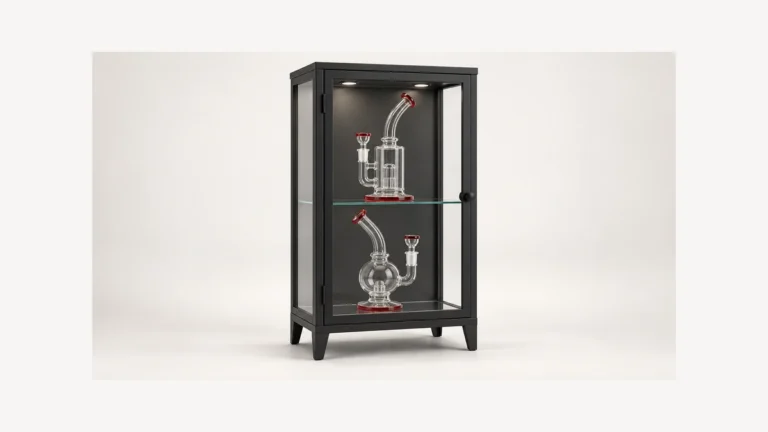
- Format and use case fit. Some devices are built around a specific format rather than a pocket-style shape. The AOVAPE Buzzle is presented as a 2-in-1 dry-herb and wax device with variable settings in a glass-bong format — a different use case that may carry different handling and odor-management expectations for the end customer.
- Accurate customer-facing claims. Steer away from sourcing or promoting devices as odorless or fully discreet. That language sets an expectation the category can’t reliably meet, and it’s a liability for both the retailer and the buyer down the line.
❓ 6. FAQ
6.1 Does a dry herb vaporizer smell less than smoking?
Many users describe vapor as lighter or more contained than smoke, consistent with the general differences outlined above. It’s still a detectable, herbal odor — not an absent one.
6.2 Can cleaning a device remove odor completely?
Regular cleaning cuts down on residue-based odor building up in the chamber and mouthpiece, but it doesn’t prevent odor from occurring during active use.
6.3 Does a higher temperature setting always mean more odor?
Generally, higher heat releases aromatic compounds more readily, which tends to make vapor more noticeable. Material type and session size also factor in, so temperature is one variable among several rather than the sole cause.
6.4 Are multi-format devices like the AOVAPE TRIO or Buzzle different in terms of odor?
Odor behavior tracks material, temperature, and airflow more than it tracks the number of formats a device supports. A multi-format dry herb vaporizer still follows the same general principles covered in this guide, whether or not it also handles concentrates or wax.
✅ 7. Bottom line
Dry herb vaporizers produce a real, noticeable odor because heat releases aroma from the plant material. The odor differs from combustion smoke in character, but describing any device in this category as odorless misrepresents how the hardware is used. Buyers and retailers can evaluate a consistent set of variables — material, temperature, session size, airflow, and residue — then use ventilation, prompt cleaning, and sealed storage to manage odor rather than promise its absence. For B2B buyers, the useful work is testing chamber design, cleaning access, and repeatability on sample units before writing customer-facing copy.
📚 8. Sources
- AOVAPE Dry Herb Vaporizer — product category page, referenced as an example, not independent scientific evidence.
- AOVAPE TRIO — product page, referenced as an example, not independent scientific evidence.
- AOVAPE Buzzle — product page, referenced as an example, not independent scientific evidence.
- Related AOVAPE article — referenced as an example, not independent scientific evidence.