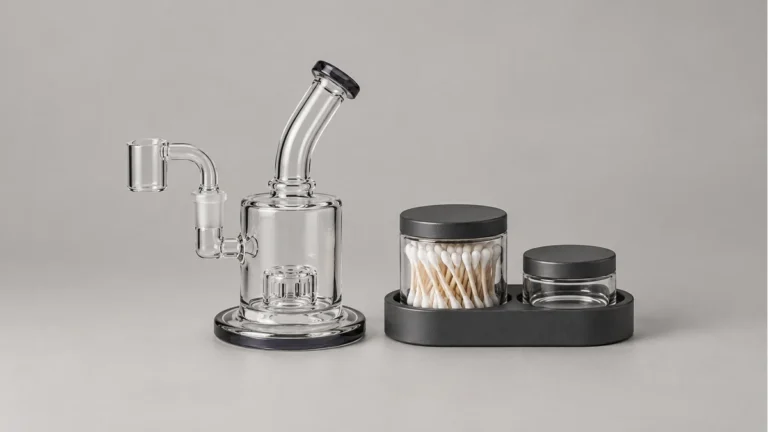
The first time you set up a mini dab rig next to a friend’s full-size setup, the difference isn’t subtle. You reach for the banger and your hand practically swallows the whole piece. Torch it, wait a beat, and the water inside is already churning — a fraction of the volume, reacting to heat and vapor a lot faster than the six-inch bubbler you’re used to. It’s not a smaller version of the same experience. It’s a different set of mechanics wearing a familiar shape.
That distinction matters more than most buying guides admit. People downsize for real reasons — desk space, travel, a quieter footprint on a shelf — but a smaller mini dab rig doesn’t just shrink the glass. It shrinks the margin for error in base stability, water volume, joint fit, and how easily you can actually clean the thing. Understanding where those tradeoffs show up is the difference between a compact rig you reach for daily and one that ends up in a drawer after a month.
🔍 1. What Actually Qualifies as a Mini Dab Rig
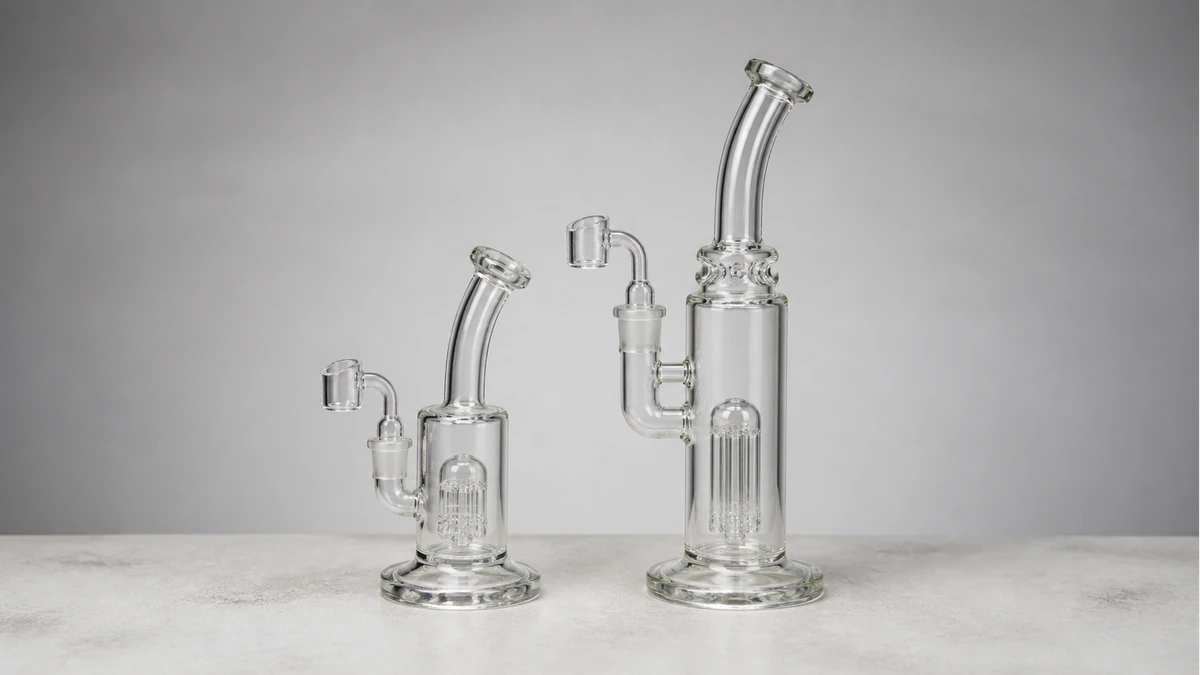
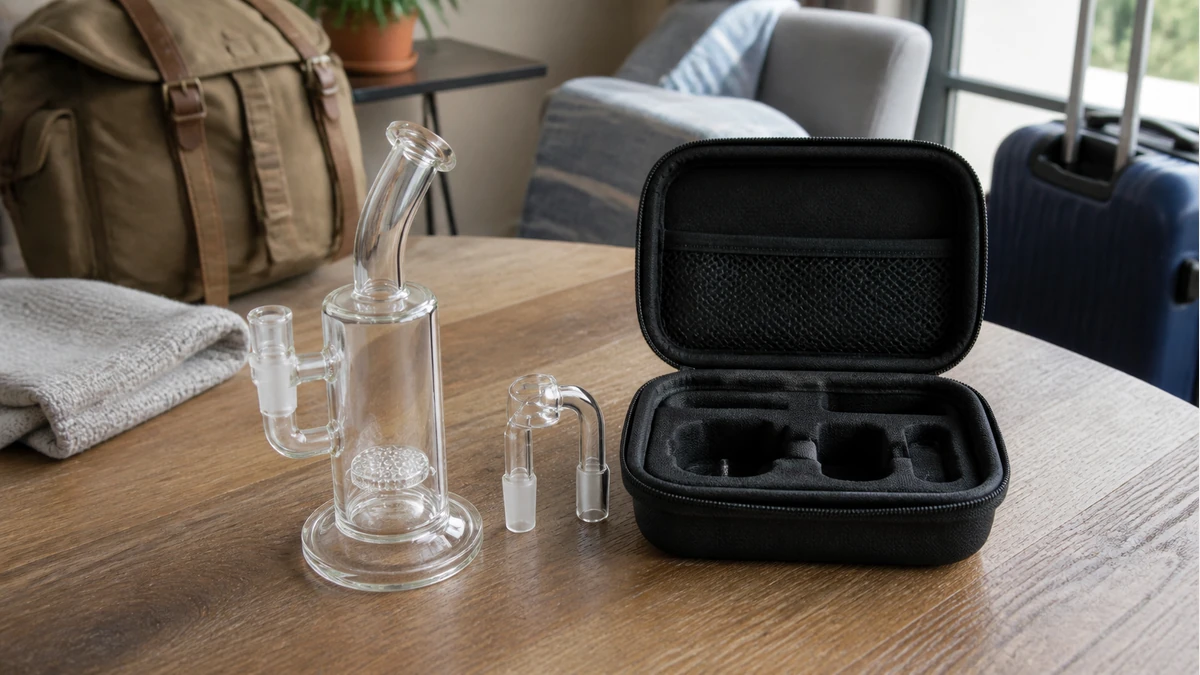
“Mini” gets used loosely in glass listings, so it helps to think in terms of proportions rather than a strict height cutoff. A mini dab rig is built around a reduced water chamber, a shorter neck, and usually a smaller joint size than what you’d find on a standard rig. The percolation is simplified too — often a single fixed perc or none at all, rather than the stacked diffusion you see in taller pieces.
The category sits below what most people would call a standard dab rig and well below a full recycler or multi-chamber setup. If you’re weighing the category against other water pipe styles in general, the breakdown in dab rig vs bong is useful background, since a lot of the same volume-and-diffusion logic applies once you start comparing rig sizes against each other.
What makes something genuinely “mini” isn’t just visual scale — it’s that every downstream function of the rig (cooling, splash control, cleaning, joint stability) has to be re-solved at a smaller scale, and not every design solves it well.
🧭 2. Smaller Water Volume Changes How the Rig Behaves
Water volume does three jobs in a dab rig: it cools vapor, it filters some of the coarser particulate, and it buys you a moment of stability between the banger and your lungs. Reduce the volume and you reduce the margin on all three at once.
A smaller chamber heats up faster during a session because there’s simply less water absorbing thermal load. Two or three dabs in, some mini rigs will run noticeably warmer to the touch near the base than a standard rig would after the same use. That’s not a flaw by itself — plenty of people prefer a warmer, more direct draw — but it’s a real behavioral shift, not a downside-free size reduction.
🧩 2.1 Percolation and Diffusion in a Small Chamber
Diffusion depends on surface area and travel distance through the water, and both shrink in a mini format. A single-slit or showerhead perc in a small chamber still breaks up vapor, but it has less water to work with and less vertical space for bubbles to dissipate before reaching the mouthpiece. The practical result is a rig that can feel harsher or splashier at the same draw speed you’d use on a bigger piece, simply because the physics changed underneath you.
This is one of the recurring points of confusion people run into when they size down — the rig looks similar to what they had before, so they expect it to pull the same way, and then wonder why the draw feels sharper or why water is reaching the mouthpiece. It’s rarely a manufacturing defect; it’s usually a fill-level and draw-speed mismatch that a smaller chamber simply won’t forgive the way a larger one does.
⚙️ 3. Base Stability and Joint Leverage Problems
Stability in a dab rig is a ratio problem: base footprint versus overall height, and base weight versus the leverage applied at the joint. Mini rigs often get the height part right — they’re short — but manufacturers don’t always widen the base proportionally, and that’s where wobble creeps in.
The joint itself introduces a second stability issue that has nothing to do with height. A banger and carb cap sitting in a 10mm or 14mm joint on a small rig create real leverage. Every time you set the cap down, adjust the banger, or knock the torch against the male joint, that force transfers directly into a lighter, smaller base. On a heavier standard rig, the base absorbs it. On a mini rig, it doesn’t always.
- A wide, flat base with real glass thickness resists tipping far better than a narrow base, even at the same overall height.
- Smaller joint sizes (commonly 10mm on true mini pieces) mean the banger itself is lighter, which helps, but also means less margin if the banger isn’t seated evenly.
- Off-center joints — common on some novelty or angled mini designs — put uneven torque on the base that a straight joint wouldn’t create.
None of this means mini rigs are inherently unstable. It means the base-to-joint relationship deserves more scrutiny on a small rig than it would on a taller one, where gravity and base mass are doing more of the work automatically. If you’re comparing options with this in mind, the buying considerations laid out in the dab rig kit guide cover joint sizing and base proportions in more detail than most spec sheets do.
🧩 4. Cleaning Access Gets Tighter, Not Just Smaller
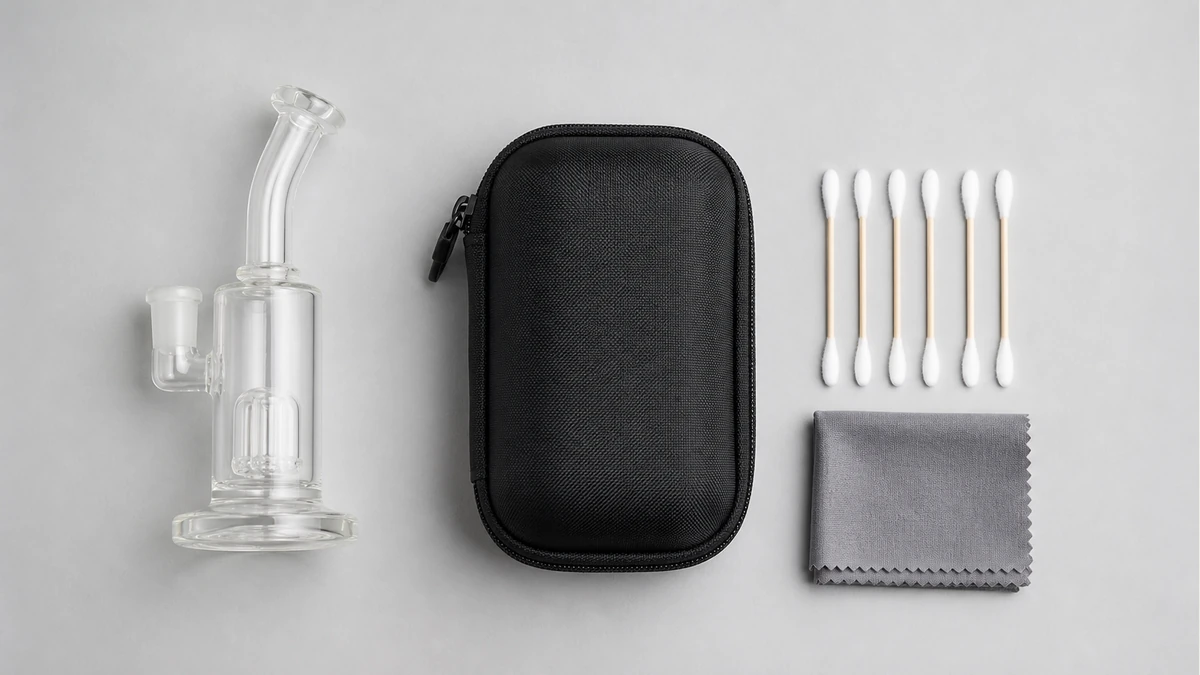
This is the tradeoff people underestimate most. A smaller chamber sounds like it should be easier to clean — less surface area, less residue — but access is the real constraint, not volume. Narrow necks and tight joints that look elegant on a shelf turn into a genuine obstacle when you’re trying to work a cotton swab or pipe cleaner into a perc slit that’s half the size of what you’re used to.
Residue also concentrates faster in a small chamber. The same amount of reclaim that would spread thinly across a large rig’s interior coats a much smaller surface area in a mini piece, so buildup becomes visible — and functionally relevant to airflow — much sooner. A perc that would take weeks to noticeably restrict draw in a standard rig can start affecting pull within days in a mini one.
A practical cleaning sequence for compact glass looks different from what works on a full-size rig:
- Rinse with warm water immediately after use, while residue is still soft, rather than letting it set.
- Use a cleaning solution appropriate for glass, with enough volume to fully submerge the percolator area — mini rigs often need a longer soak, not a shorter one, because there’s less room for solution to circulate.
- Agitate gently rather than shaking hard; small joints and thin necks are more prone to stress fractures under sharp movement than thicker standard glass.
- Use narrow brushes or picks sized specifically for small percs — a standard-size cleaning brush usually won’t reach into a mini perc slit at all.
- Dry fully before reassembly, since trapped moisture in a small chamber has less airflow to evaporate through than in a larger one.
This is also a point where the recurring questions people ask in online forums track pretty consistently — confusion about why a small rig gets dirty faster, and frustration that standard cleaning tools don’t physically fit. Those are access and surface-area problems, not signs of a defective piece.
🛠️ 5. When Compact Glass Makes Sense — and When It Gets Annoying
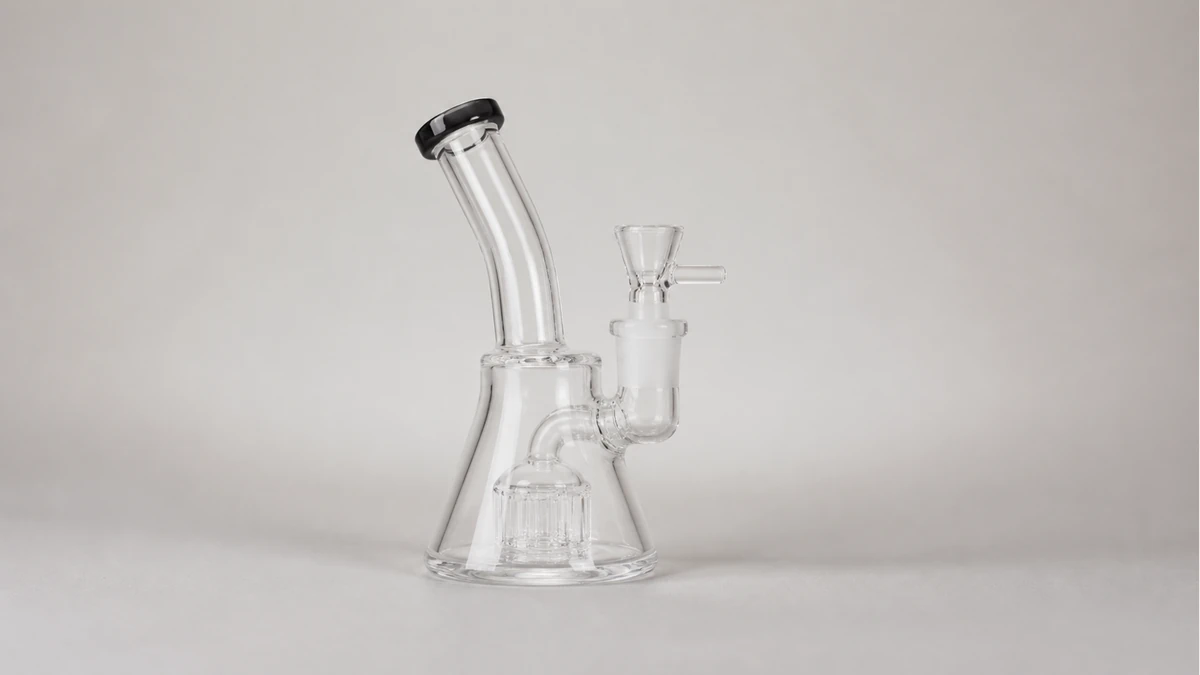
Mini rigs earn their place in specific situations. Desk or nightstand use, where a six-inch piece is proportionate to the space and a fourteen-inch piece is not, is the clearest case. Travel is another — fewer components, lighter glass, and a smaller footprint in a bag all genuinely matter when you’re packing carefully. A secondary rig for quick sessions, kept separate from a main piece that gets more careful use, is a third scenario where compact glass is the right call rather than a compromise.
Where it becomes inconvenient is less about the rig itself and more about mismatched expectations. Anyone doing frequent back-to-back sessions will find themselves cleaning far more often than they would with a larger chamber. Anyone with an unsteady work surface — a coffee table that gets bumped, shared counter space — is taking on more risk with a lighter, narrower base. And anyone who wants a cooler, smoother draw at the expense of a bit more size should look at the fuller range covered in dab rigs rather than assuming smaller automatically means better.
📐 6. Mini vs Standard Glass at a Glance
| Factor | Mini Rig | Standard Rig |
|---|---|---|
| Water volume | Lower — heats and reacts faster | Higher — more thermal buffer |
| Base stability | Depends heavily on base width and weight | Generally more forgiving due to mass and height |
| Cleaning access | Tighter necks, faster residue buildup | Easier tool access, slower visible buildup |
| Portability | Lighter, fewer parts, travels well | Bulkier, more fragile in transit |
| Draw feel | More direct, less diffusion cushion | Smoother, more forgiving draw speed |
One useful dry check is to set the clean rig on the same flat surface where it will actually be used, attach the intended accessory, and apply only a light sideways touch near the joint. The point is not to stress the glass. It is to notice whether the combined center of mass moves outside the base before a hot component is involved. Repeat the check with the expected water level, because added water changes both weight and splash behavior. This simple setup reveals more about everyday stability than judging height from a product photo.
🧼 7. Frequently Asked Questions
Does a mini dab rig hit harder than a standard one?
Not inherently. What changes is diffusion and cooling, since there’s less water and less travel distance for vapor. That can make the draw feel more direct, which some people read as “harder,” but it isn’t a function of the rig delivering more concentrate.
Is a smaller joint size a problem?
Not on its own. A 10mm or 14mm joint sized correctly for the rig’s proportions works fine. Problems arise when the joint is disproportionately large or off-center relative to a narrow base, since that’s what creates leverage and tipping risk.
Why does a mini rig need cleaning more often?
Residue that would spread across a larger interior surface concentrates in a smaller one, and it accumulates in tighter spaces that are harder to fully clear with a quick rinse.
Are mini rigs a good first rig for a beginner?
They can be, especially for portability, but a beginner should be aware that fill level and draw speed matter more on a small chamber than a large one — there’s simply less room for error.
Sizing down is a legitimate choice, not a downgrade, as long as it’s made with eyes open. A mini dab rig trades water volume for portability, trades a forgiving base for a lighter footprint, and trades easy cleaning access for a smaller shelf presence. None of those trades are wrong — they’re just trades, and the rig that fits your actual routine, not just your available counter space, is the one worth keeping around.