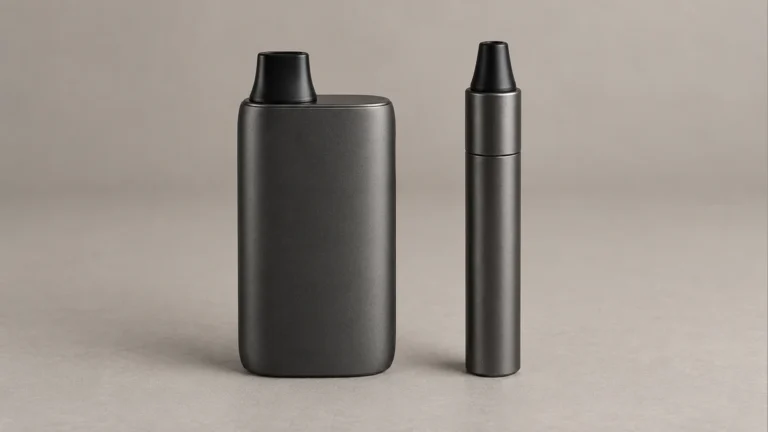
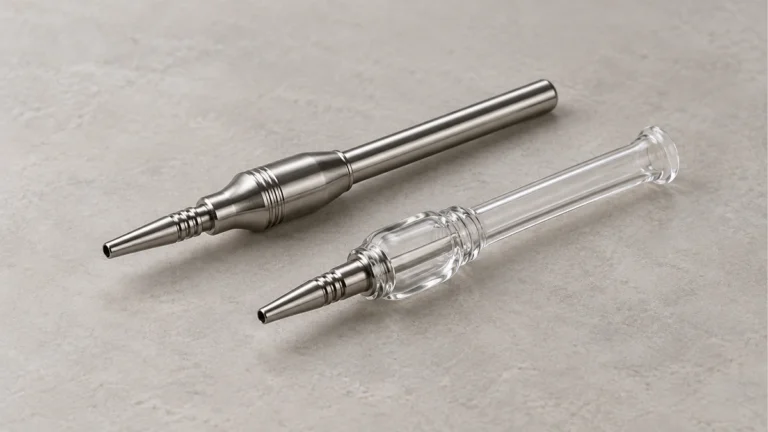
From across a room, a dab rig and a bong can look like siblings — glass tubes, water chambers, percolators catching the light, maybe a matching joint size. That resemblance is exactly why so many people assume the two are interchangeable, or that a $15 quartz banger adapter turns a flower bong into a proper concentrate rig. The glass may share a family tree, but the two pieces are engineered around fundamentally different heat sources, vapor paths, and cleaning demands. Understanding where they diverge is the difference between a setup that performs the way you expect and one that just sort of works, with harsher pulls, wasted concentrate, or a piece that gunks up twice as fast as it should.
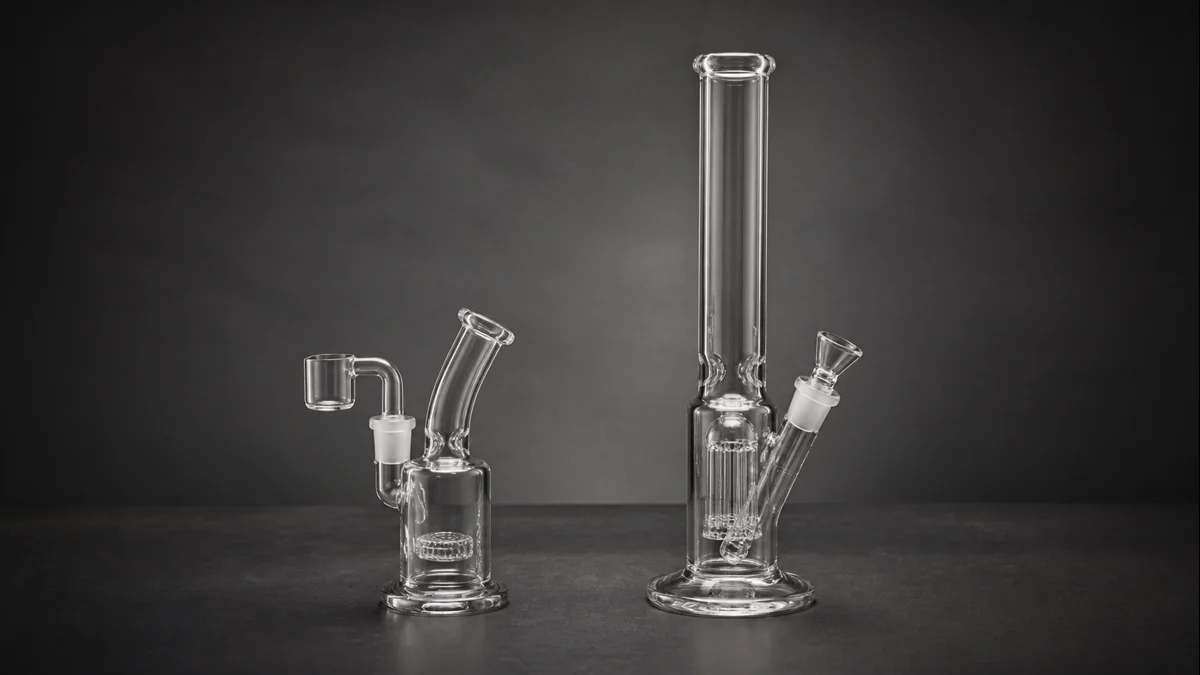
🔍 1. One Silhouette, Two Different Machines
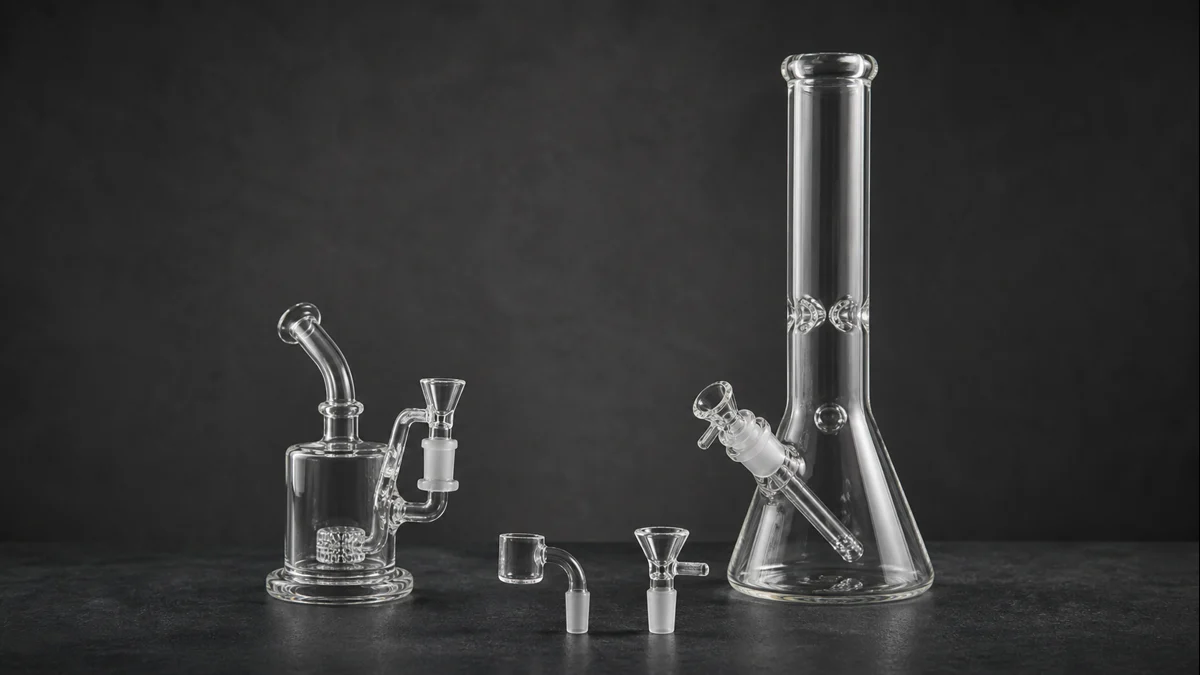
Strip away the glass art and both pieces are doing the same basic job: pull vapor or smoke through water, cool it, and deliver it through a mouthpiece. That shared mechanism is why manufacturers can sell the same base tube as either a “bong” or a “rig” depending on which bowl or joint attachment ships with it. But the attachment isn’t a cosmetic accessory — it defines the entire thermal and airflow relationship between the user and the substance being consumed.
A flower bowl and a quartz banger are not variations on a theme. One is a small dish that holds plant material to be combusted by an open flame. The other is a thick-walled vessel designed to hold and radiate stored heat long enough to vaporize a small dab without scorching it. Everything downstream of that difference — chamber size, joint angle, how often you clean, what residue forms — traces back to this one fork in the design.
⚙️ 2. Bowl vs. Banger: Combustion vs. Conduction
This is the single biggest technical divide between the two categories, and it’s worth sitting with before comparing anything else.
🧩 2.1 How a Bong Bowl Actually Works
A bowl is built for direct combustion. Flame meets flower on contact, and the smoke produced travels immediately into the water chamber. There’s no real temperature control beyond how long you hold the lighter and how hard you pull — the bowl itself doesn’t store or regulate heat, it just holds material in place while it burns.
🧩 2.2 How a Banger Actually Works
A banger is a thermal mass, not a holder. Made from quartz, ceramic, or titanium, it’s heated with a torch (or an e-nail) until it reaches a temperature high enough to vaporize concentrate on contact, then it’s given time to cool to a working range before the dab goes in. The banger itself does the work of vaporization; the flame is gone by the time you actually use it. If you’re still deciding which material fits your habits, the differences between bangers, nails, and e-nails matter more than most buyers expect, since heat retention and recovery time vary a lot between them.
That’s also why a banger tends to be noticeably thicker-walled than a flower bowl. It has to survive repeated cycles of torch heat and rapid cooling without cracking, something a bowl never has to withstand.
🧩 3. Chamber Volume and Airflow Behavior
Bong chambers are generally built around moving a larger volume of smoke efficiently — bigger percolators, wider tubes, more diffusion, because combustion produces a lot of visible smoke and the goal is filtering and cooling as much of it as possible per pull.
A dab produces a much smaller total volume of vapor. A rig built for concentrates is usually sized down accordingly, with a tighter airflow path so that small amount of vapor doesn’t get lost or diluted in a chamber built for something ten times larger. Pull a dab through an oversized bong chamber and the vapor spreads thin, cools unevenly, and can taste flat compared to the same dab in appropriately sized rig glass. This is the practical reason “just use my bong with an adapter” often disappoints people who are used to a dedicated rig — the glass wasn’t sized for what’s now moving through it.
🧰 4. Reclaim vs. Resin: Different Residue, Different Habits
Combustion leaves behind resin — a sticky, tar-like byproduct that coats bowls, downstems, and percolators over time. It’s a waste product; nobody scrapes it out to reuse it.
Vaporized concentrate behaves differently. As vapor travels through a rig, some of it condenses back into a viscous, often still-usable substance called reclaim, which collects in the downstem and lower chamber. Some users repurpose reclaim; others just clean it out. Either way, it accumulates faster and in a more concentrated form than bong resin does, because dab rigs are typically used more frequently in smaller sessions and the concentrate itself is denser to begin with. If reclaim buildup is new territory for you, it’s worth browsing what dab rig accessories exist specifically for managing and collecting it before it hardens in awkward spots.
📏 5. Joint Geometry: Why “It Fits” Isn’t “It Works”
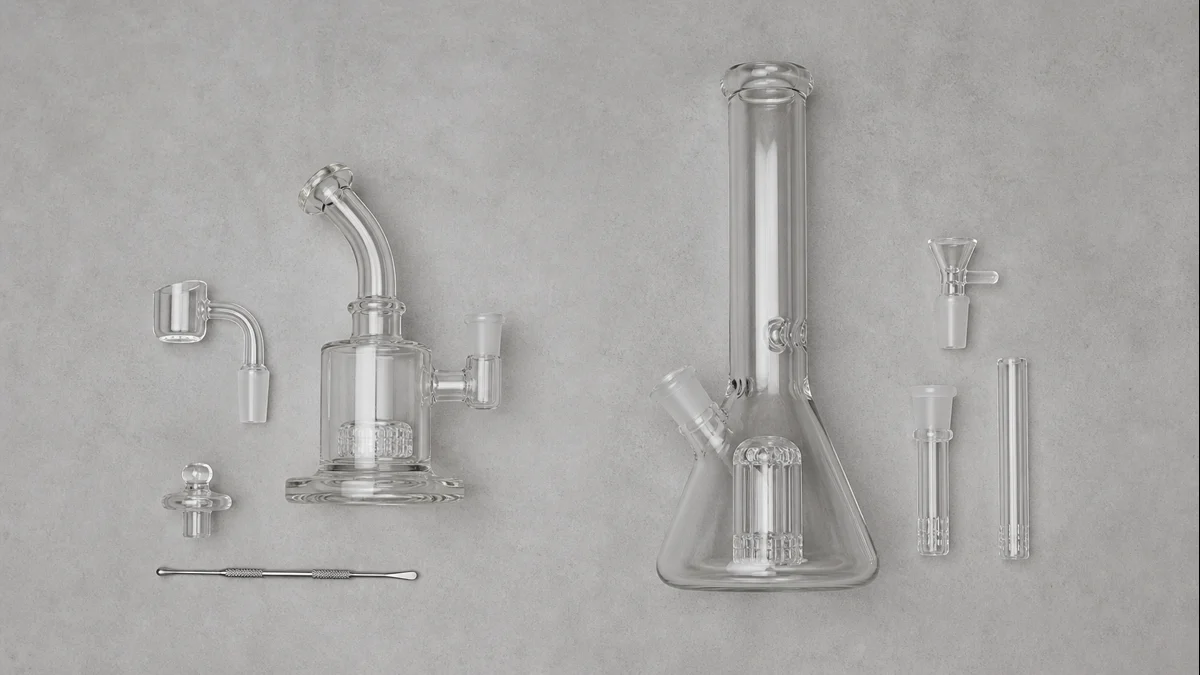
Joint sizes (commonly 10mm, 14mm, and 18mm) are standardized enough that a banger can often be physically dropped into a bong’s joint, which is exactly where the assumption of interchangeability comes from. But fit and function aren’t the same thing.
Rig joints are usually angled and positioned with a specific vapor path in mind — short, direct, and matched to a downstem sized for small-volume, high-heat vapor. A bong joint was positioned for a bowl and a much larger anticipated smoke volume. Drop a banger into a bong built for flower and the angle, downstem length, and percolator spacing weren’t chosen with that vapor path in mind. It’ll draw. It just won’t draw the way a rig purpose-built around that banger would.
⚡ 6. Heat Management: Two Very Different Temperature Jobs
A bong’s “heat management” is really just combustion control — how long you hold the flame, how big the bowl is. There’s no cooldown period baked into the process; you light, you pull, you’re done.
A rig’s heat management is a whole separate skill. Heat the banger too hot and you scorch the concentrate, wasting it and producing a harsh, burnt taste. Heat it too cool and it won’t fully vaporize, leaving material behind. This is why a wait period between torching and dabbing matters so much, and why some users reach for tools like a titanium dabber, sometimes called a hot knife, to manage stubborn or hardened concentrate directly against a hot surface. Puffco’s own guidance on using a hot knife is a useful reference for just how deliberate that heat-timing process is compared to simply flicking a lighter over a bowl.
E-nails remove some of the guesswork by holding a set temperature electronically rather than relying on torch-and-cooldown timing, which is part of why they’ve become popular with people who dab often enough that consistency starts to matter more than ritual.
🧼 7. Cleaning Realities You’ll Actually Live With
Bong resin is stubborn but predictable — a soak in isopropyl alcohol and coarse salt, some agitation, and most buildup lifts. It’s an occasional chore tied to how often you smoke.
Rig maintenance tends to be more frequent and more particular. Reclaim residue can affect flavor noticeably faster than resin does, so many rig owners clean the banger and lower chamber far more often, sometimes after every few sessions rather than every few weeks. Joint and downstem geometry that’s tighter to begin with also means buildup narrows airflow faster. If you’re setting up a maintenance routine for the first time, a structured look at how to clean a dab rig properly is worth more than guessing based on bong-cleaning habits, since the two residues respond differently to the same cleaning solutions and soak times.
⚙️ 8. So Does an Adapter Make Your Bong a Dab Rig?
Technically, an adapter lets you dab through a bong. Practically, it recreates the vaporizing surface without recreating the chamber volume, joint angle, or airflow path that a dedicated rig was built around. It’s a reasonable way to try dabbing before committing to separate glass, or a backup option when your actual rig is being cleaned. It’s not a permanent substitute if you dab regularly, because the mismatch shows up every session as flavor loss, uneven hits, or vapor that feels thinner than it should.
| Factor | Bong (flower) | Dab rig (concentrate) |
|---|---|---|
| Heat source | Open flame, direct combustion | Pre-heated banger, no flame during use |
| Chamber sizing | Larger, built for smoke volume | Smaller, built for concentrated vapor |
| Residue | Resin (tar-like, discarded) | Reclaim (viscous, sometimes reused) |
| Cleaning frequency | Periodic | More frequent, more particular |
| Temperature control | None (flame duration only) | Manual torch timing or e-nail |
If you’re weighing rig styles against each other rather than against a bong, comparing the common types of dab rigs first will save you from buying glass shaped around a chamber-volume assumption that doesn’t match how you actually plan to use it.
❓ 9. Frequently Asked Questions
Can I use a bong bowl in a rig, or a banger in a bong, without any other changes?
Physically, if the joint size matches, yes. Functionally, you’re borrowing a heat source designed for one chamber volume and airflow path and dropping it into glass sized for the other, which is why performance usually suffers even when the fit is fine.
Why does my reclaim smell or taste different from bong resin?
They’re chemically different byproducts. Resin comes from combustion residue; reclaim is condensed vapor from a substance that was heated but not burned, which is why some people choose to reuse it rather than discard it.
Do I need a torch for every dab rig, or are there alternatives?
Traditional bangers rely on torch heating and a cooldown period, while e-nails hold a set temperature electronically. Both are still built around the same conduction principle — a heated surface vaporizing concentrate on contact — rather than the open-flame combustion a bong bowl uses.
Is a smaller chamber always better for dabbing?
Not universally, but a chamber sized closer to the vapor volume a dab actually produces generally preserves flavor and hit consistency better than an oversized one built for smoke dilution.
If you already dab a few times a week, the honest move is to stop treating an adapter as a permanent fix and budget for rig-specific glass sized around your banger, since that’s where the flavor and consistency differences actually live. If you’re still occasional or experimenting, an adapter on existing bong glass is a perfectly sensible way to test the waters before you commit. Either way, the deciding factor isn’t joint size — it’s whether your chamber, airflow, and cleaning habits match what you’re actually putting through the glass.
An adapter can still be useful as a controlled trial. Confirm the joint specifications, support the added weight so it cannot lever against the glass, and pay attention to how much air volume sits between the banger and mouthpiece. If the setup feels awkward to cap, clean or stabilize, that is information about the geometry—not a reason to add another adapter. The most useful experiment is the one that tells you whether dedicated rig glass would simplify the path.
For a buyer comparing new glass, inspect the complete system rather than the silhouette. The banger or bowl should seat without force, the piece should stand securely with the attachment installed, and every wetted or residue-prone area should be reachable for cleaning. Those checks explain more about day-to-day ownership than height alone. They also make it easier to choose accessories once, instead of repeatedly correcting a fit problem created at the first joint.