🔍 1. What “reusable” actually means for a vape pen
You open a drawer, pull out a vape pen you haven’t touched since last winter, and the question isn’t really whether it still holds a charge. It’s whether anything inside it is still worth using. That’s the moment where “reusable” stops being a marketing word and starts being a practical one — and for most buyers, distributors, and brand teams sourcing hardware, it’s a harder question than it looks.
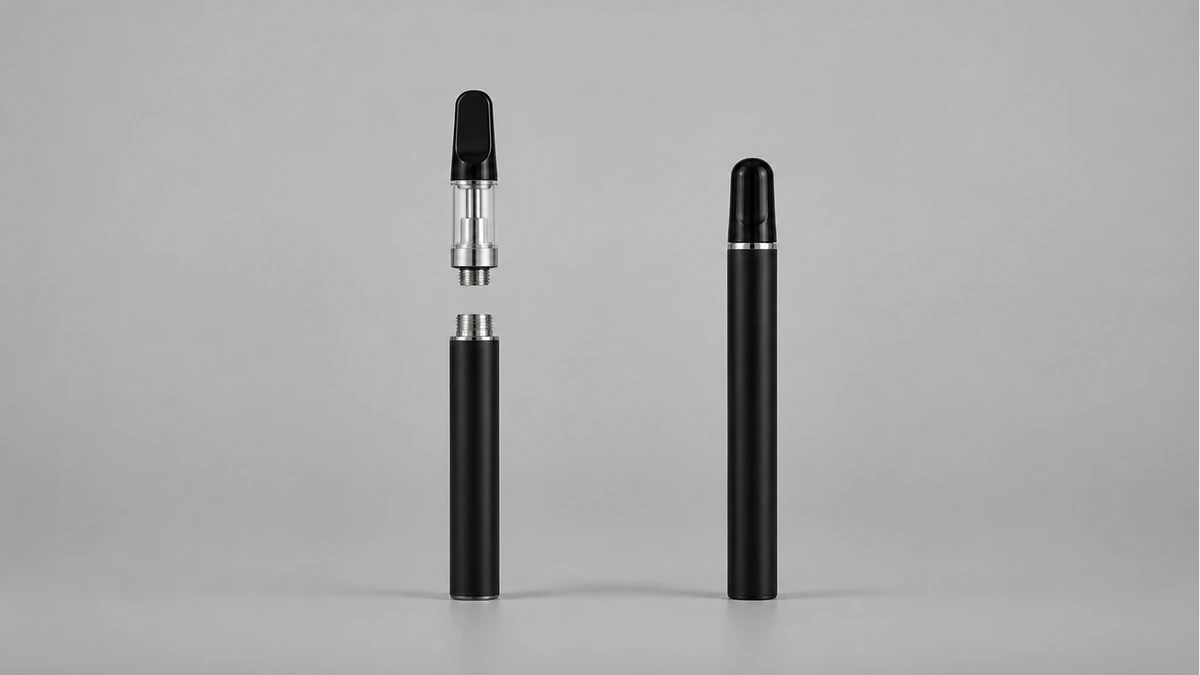
A reusable vape pen isn’t a device that lasts forever. It’s a device built around a small number of parts that are designed to be refilled or reused many times, surrounded by a larger number of parts that are designed to wear, degrade, or be swapped out on a schedule. Calling a pen “reusable” describes its architecture, not its lifespan. The housing might survive years. The heating element inside it might not survive a season of daily use. Both facts can be true of the same product at the same time.
This distinction matters most when you’re comparing devices for resale or private-label sourcing, because the word “reusable” gets applied loosely across very different hardware categories — pod systems, refillable cartridge pens, and closed disposable-adjacent designs — and the actual serviceable parts vary a lot between them. Our refillable vape pen guide goes deeper into how tank and pod architecture differs across these categories if you’re evaluating them side by side. For this article, the more useful lens is simpler: which parts survive repeated cycles, which parts are consumables wearing a reusable disguise, and where the line between the two actually sits.
🧭 2. The parts built to survive multiple cycles
Every reusable pen has a small set of components that are genuinely engineered for longevity — meaning they’re expected to outlast dozens or hundreds of use cycles under normal handling, not that they’re indestructible.
The outer housing is usually the most durable piece. Metal or hard polymer shells don’t degrade from vapor contact, and unless they’re dropped, crushed, or exposed to moisture they hold up well over time. This is the part that makes a pen feel “reusable” at a glance, because it’s the part you see and hold. But the housing is also the part doing the least functional work — it’s a shell around the components that actually matter.
The battery is the second piece worth separating out, and it deserves its own scrutiny rather than being lumped in as “durable.” Rechargeable lithium cells in vape pens are rated for a specific number of charge cycles before their usable capacity drops meaningfully — this is standard behavior for lithium battery chemistry generally, not a flaw specific to vape hardware. A battery that’s reusable in the sense that it recharges is not the same as a battery that performs identically after its two-hundredth charge as it did on day one. Gradual capacity loss is normal wear, not a defect, and it’s worth understanding before you judge a pen’s “reusability” by how it performs a year in. Our vape pen battery guide covers charge-cycle behavior and battery care in more detail if that’s the part of the system you’re most concerned about.
The control circuitry — the button, the firing mechanism, the low-voltage cutoff — is the third genuinely long-lived component in most designs, assuming it isn’t exposed to liquid intrusion. Circuit boards don’t wear from normal firing the way heating elements do. Their failure mode is almost always contamination or physical damage, not accumulated use.
So the honestly reusable core of a vape pen is smaller than the branding suggests: housing, battery (with capacity that declines gradually), and control circuitry. Everything else on the device exists in a different category.
⚙️ 3. The parts that are refillable or replaceable, not permanent
This is where most of the confusion lives, and it’s also where recurring questions show up in online vape communities — people asking why a pen that’s marketed as reusable still needs a new tank, a new coil, or a new mouthpiece within a few months. The answer is that “reusable” was never meant to describe those parts. It described the device architecture that lets you replace them without replacing the whole pen.
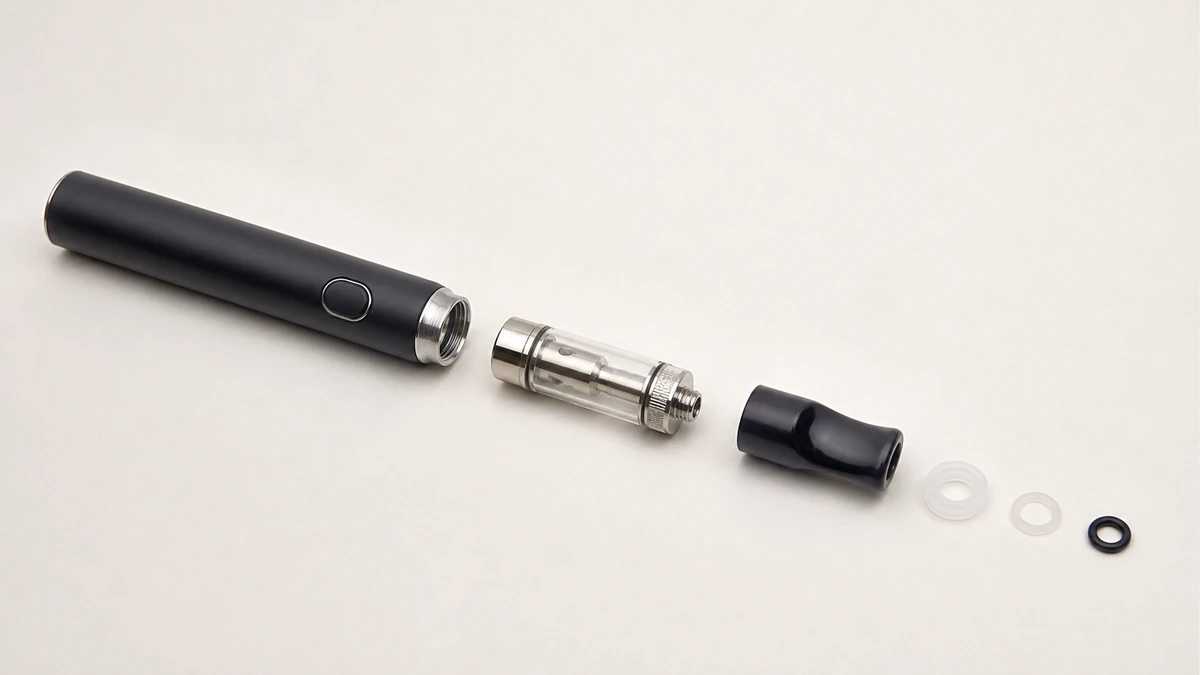
A refillable tank or cartridge is reusable in the sense that you can empty it, clean it, and refill it repeatedly — but the seals inside it are consumables with a shorter service life than the tank body itself. A coil is replaceable, not reusable, in almost every design; it’s a wear part by definition, and pens that market “reusable coils” usually mean the coil housing is refillable with new coil material, not that the same heating wire survives indefinitely. And a mouthpiece, while technically reusable indefinitely from a materials standpoint, degrades in a different way — through residue buildup and micro-scratching that affects draw feel and cleanliness rather than function. For a closer look at how tank and cartridge components differ across pen formats, our vape cartridges page breaks down the refillable and replaceable pieces in that category specifically.
🧩 3.1 Coils and heating elements
The heating element is the single most consistent point of failure across reusable pen designs, and it’s worth understanding why rather than just accepting it as inevitable. Heating wire and wicking material are both directly exposed to repeated thermal cycling and to whatever residue accumulates from the material being vaporized. That combination — heat plus buildup — is what limits coil life, not a design flaw in any particular device.
Some pens use replaceable coil heads that screw or snap into a fixed base, which means the “reusable” part is the base and contacts, while the coil itself is a scheduled replacement. Other pens integrate the heating element permanently into the chamber, which means once the heater degrades, the chamber — and often the whole pen — reaches the end of its useful life. Knowing which architecture you’re holding tells you whether a performance drop means “replace a $-few part” or “replace the device.”
🧩 3.2 Seals, gaskets, and o-rings
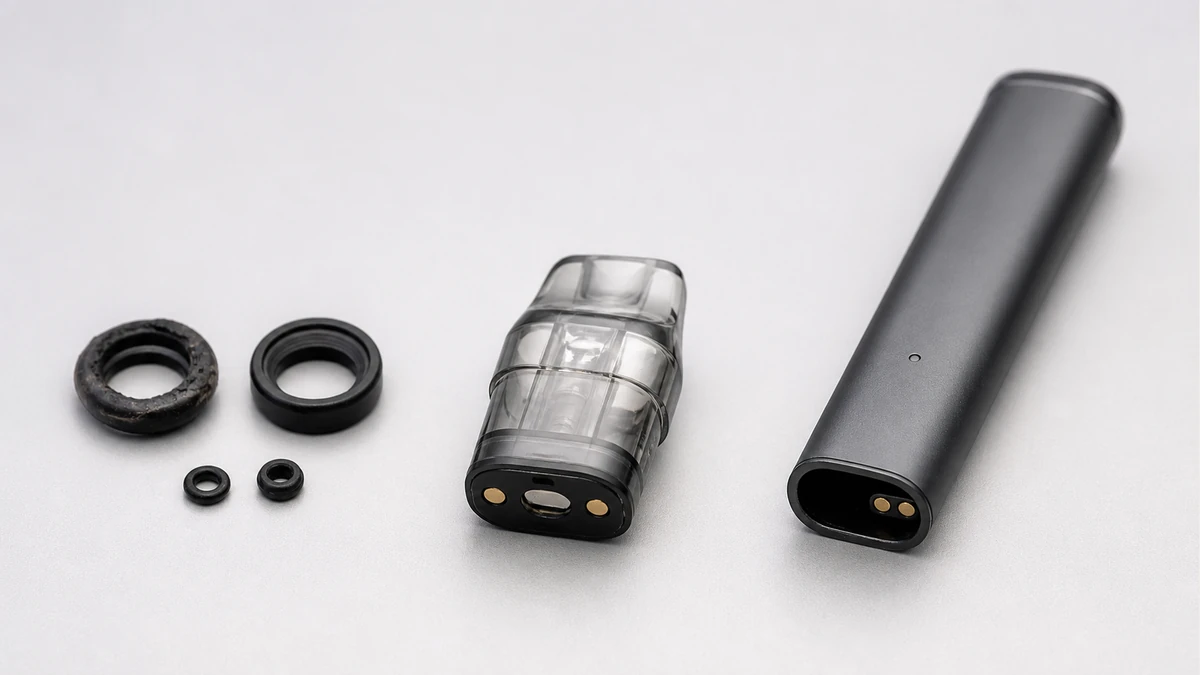
Seals get far less attention than coils, but they’re arguably the more common failure point in day-to-day use. O-rings and gaskets keep liquid contained between the tank, the chamber, and the base — and they’re made from materials that compress, warm, cool, and get cleaned repeatedly. Over time they lose elasticity and stop sealing as tightly, which shows up as leaking around the base, liquid pooling under the coil, or airflow that suddenly feels looser than it used to.
This is also one of the more common points of confusion raised in vaporizer forums and comment threads — people noticing a pen has started leaking and assuming the whole unit has failed, when in many cases a worn seal is the actual cause. It’s not evidence of anything beyond the fact that seal wear is a known, ordinary part of how these devices age; it’s simply a recurring real-world observation worth being aware of before assuming a device is unrepairable.
🧩 4. Maintenance that extends usable life
Cleaning doesn’t reset a device’s lifespan, and it can’t undo battery capacity loss or reverse a burnt coil. What it does is prevent residue buildup from accelerating wear on the parts that are still functioning normally. That’s a meaningful difference — maintenance protects the reusable core; it doesn’t extend it beyond what the hardware is capable of.
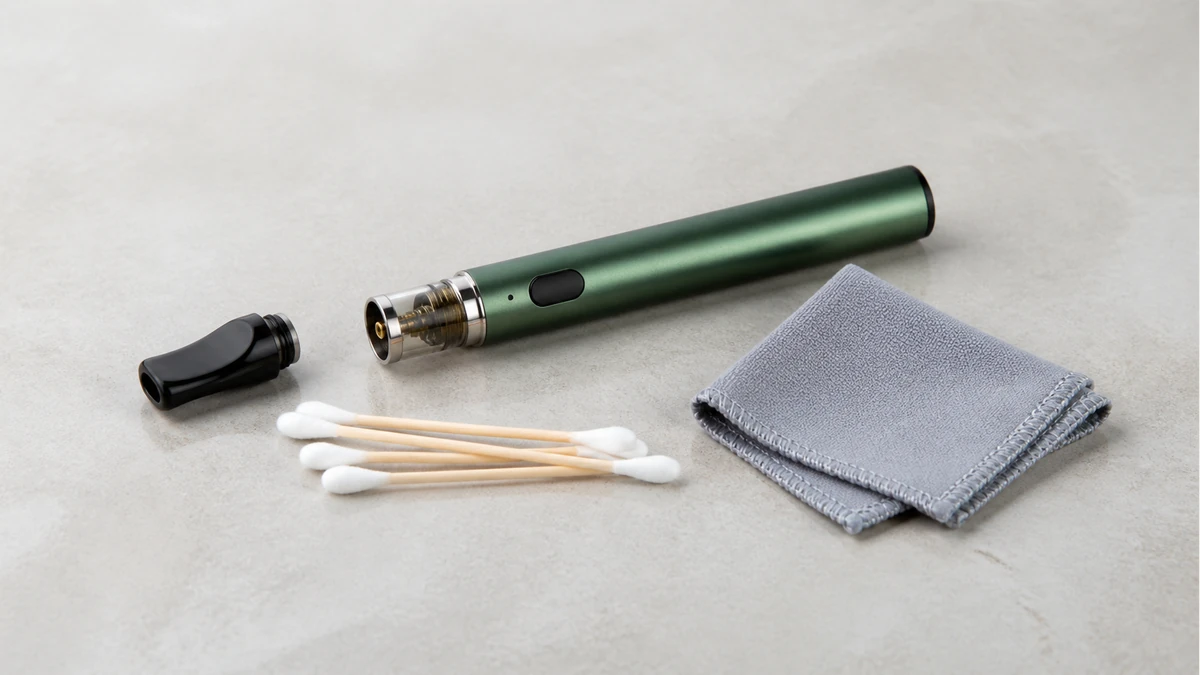
A basic cleaning sequence that applies across most refillable pen designs looks like this:
- Power down and, where the design allows it, separate the tank or cartridge from the battery section before cleaning anything.
- Empty any remaining liquid from the tank and wipe the interior with a dry, lint-free cloth or a cotton swab to remove visible residue.
- Check the contact points — the small metal surfaces where the tank meets the battery — for buildup, and clean them gently with a dry swab. Corroded or dirty contacts are a common cause of misfires that get mistaken for battery or coil failure.
- Inspect visible seals and gaskets for cracking, flattening, or discoloration before reassembling. A seal that looks compressed or brittle is close to the end of its service life even if it hasn’t failed yet.
- Let all parts air-dry completely before refilling or reassembling. Reassembling while damp is one of the more preventable causes of early contact corrosion.
None of this is a promise of a specific lifespan, and it shouldn’t be presented as one. What consistent cleaning does is remove one of the two variables that shortens a device’s usable life — the other being straightforward material fatigue in coils, seals, and battery cells, which cleaning cannot touch.
🛠️ 5. When replacement makes more sense than continued cleaning
There’s a point where continuing to clean and troubleshoot a pen costs more time and effort than it returns, and recognizing that point is a practical skill, not a concession. A few signals tend to show up together when a device has reached it:
- The battery no longer holds a charge long enough for normal use, even after a full charge cycle — a sign of capacity loss rather than a charging fault.
- A replaceable coil has been swapped and the flavor or vapor output still doesn’t return to normal, which usually points to a chamber or contact issue rather than the coil itself.
- Leaking continues after a seal has been cleaned and reseated, suggesting the seal material itself has lost its elasticity rather than simply needing cleaning.
- The contact points show visible corrosion that doesn’t come off with cleaning, which affects the electrical connection regardless of how new the battery or coil is.
When one of these shows up on its own, cleaning or a single part replacement usually resolves it. When two or three show up together, that’s typically the hardware telling you it’s reached the end of its practical service life — not a defect, just the normal endpoint of a device built from parts with different wear rates.
📐 6. Quick answers
Is a reusable vape pen the same as a rechargeable one?
Not exactly. Rechargeable describes the battery specifically. Reusable describes the broader device architecture — which can include a rechargeable battery alongside refillable tanks and replaceable coils.
Does cleaning a pen extend its lifespan?
Cleaning prevents residue and corrosion from accelerating wear on functioning parts. It doesn’t restore battery capacity or reverse coil degradation once those parts have worn down.
Why does a reusable pen still need new coils?
Because “reusable” refers to the tank, housing, and battery system, not the coil, which is a wear part by design in nearly every refillable device.
What usually fails first on a reusable pen?
Seals and coils tend to show wear earliest, since both are directly exposed to heat and residue. Battery capacity loss tends to become noticeable later, over a longer stretch of charge cycles.
🧼 7. The practical takeaway
A reusable vape pen is a system, not a single durable object. The housing, battery, and circuitry form a genuinely long-lived core; the coil, seals, and contact surfaces are consumables that determine how well that core performs day to day. Treating the whole device as either permanent or disposable misses what’s actually happening inside it. The more useful approach is to know which parts you’re maintaining, which parts you’re replacing on a schedule, and when the wear parts have outpaced what cleaning can fix — because that’s the real difference between a pen that’s still reusable and one that’s just still sitting in a drawer.