A friend of mine filled a 510-thread cartridge for the first time, ran through it cleanly, and refilled it the next week expecting the same experience. Instead, the second fill wept oil around the mouthpiece within a day, and by the third fill the draw had gone thin and slow, like pulling on a coffee stirrer. Nothing about how he refilled it had changed. What changed was the hardware itself, quietly, in ways that aren’t visible until you take the cartridge apart.
This is the part of refillable vape cartridge ownership that rarely gets explained well: refillability isn’t a single yes-or-no feature. It’s a combination of closure design, seal material, airway geometry, and inlet sizing, and each of those degrades or behaves differently depending on how the cartridge was built. Understanding the hardware, not just the marketing claim of “refillable,” is what separates a cartridge that survives multiple fills from one that only survives one.
🔍 1. What Makes a Cartridge Genuinely Refillable, Not Just Reopenable
Almost any cartridge can be pried open with enough patience. A mouthpiece can be twisted off, a base can be pulled loose, a glass tube can be cracked free of its threading. None of that makes a cartridge refillable in any meaningful sense. Genuine refillability means the cartridge was engineered with a defined fill path and a closure that can be opened and resealed repeatedly without damaging the parts that keep oil contained.
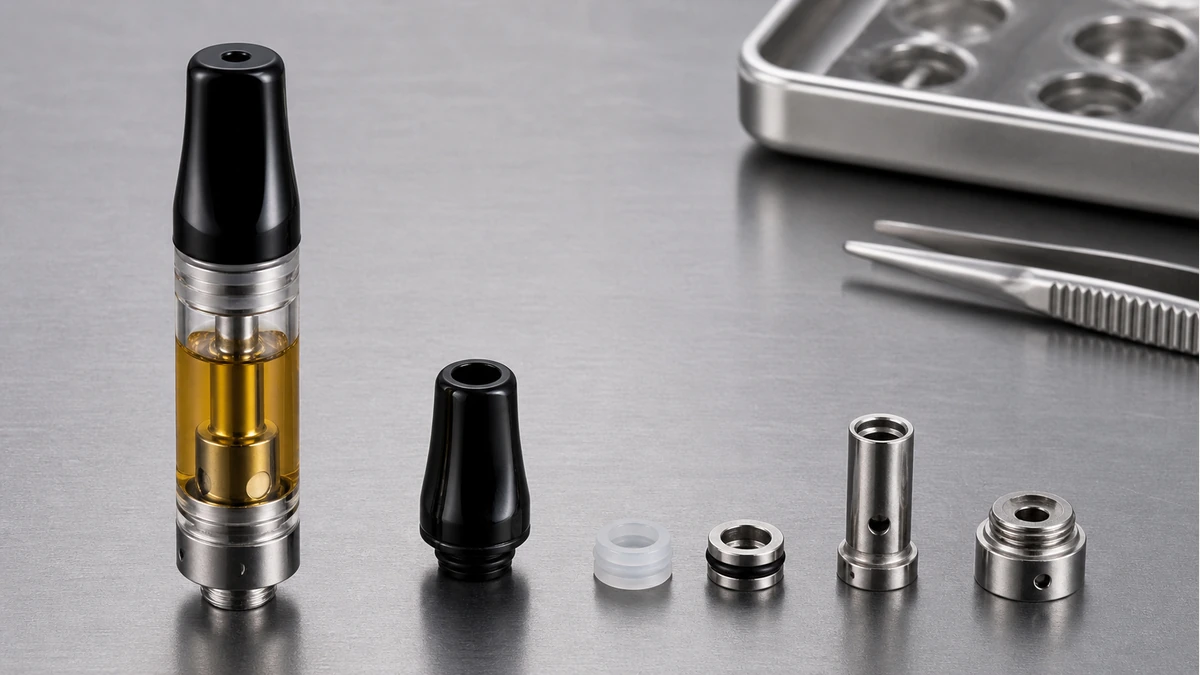
The clearest signal is a dedicated fill port: either a top-fill opening under a removable mouthpiece, or a bottom-fill opening through a removable base plate, sized and positioned so oil can be introduced without touching the wick or center post. Cartridges without this feature force the filler to go in through the airway or around the coil assembly, which is how oil ends up flooding the mouthpiece or pooling against seals it was never meant to contact.
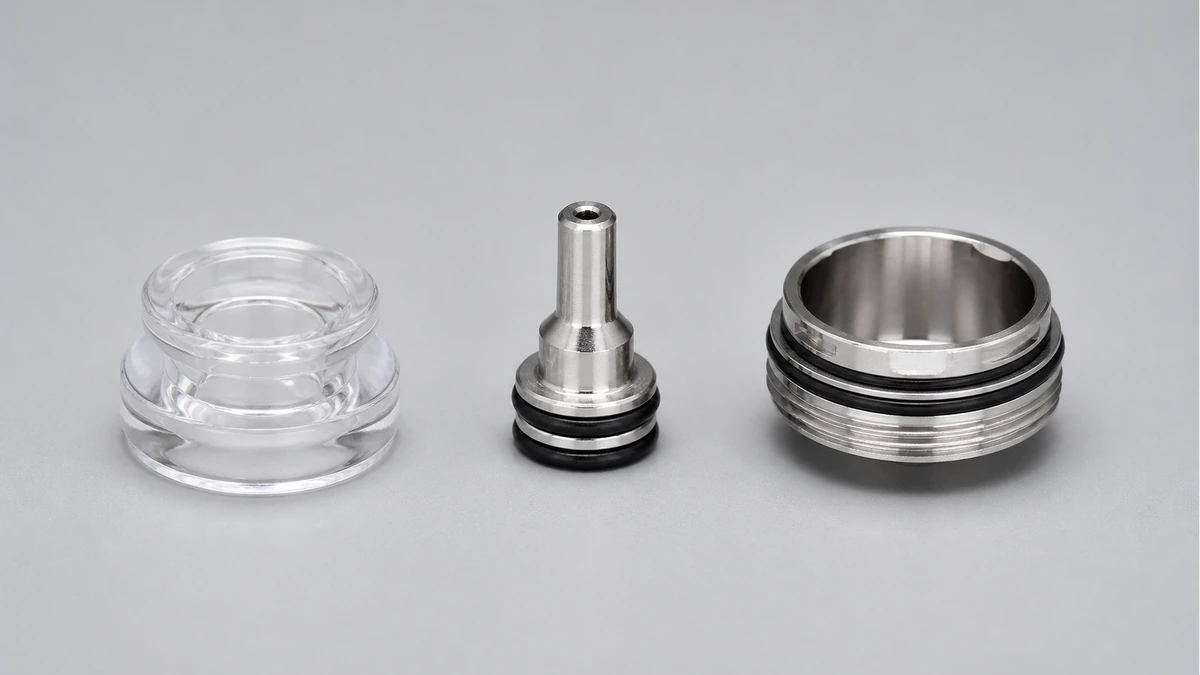
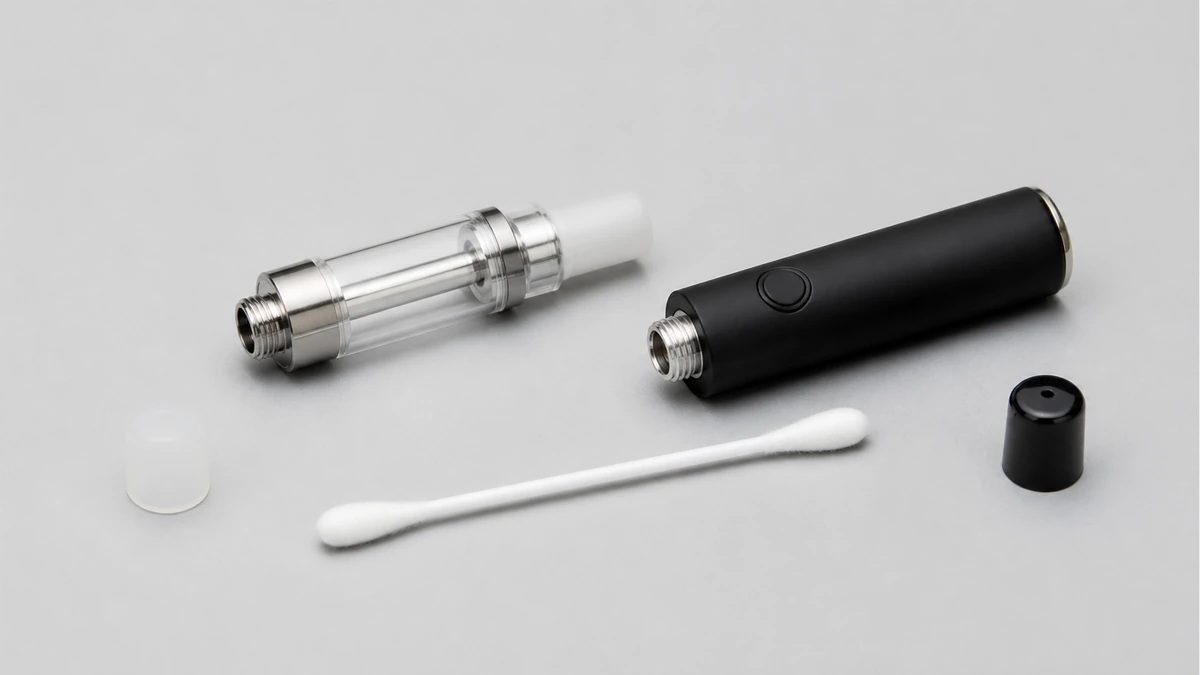
The second signal is a closure that relies on compression rather than adhesive. Cartridges bonded together during assembly, whether by press-fit friction that isn’t designed for reopening or by a thin bead of adhesive at the base, are built for one use. A genuinely refillable design uses a threaded or snap-fit closure with a defined seal interface, something you can open and close cleanly with your fingers or a simple tool, fill after fill, without cracking housing material or deforming the seal. For a closer look at how these parts fit together, our breakdown of vape cartridge anatomy walks through the fill port, base, center post, and mouthpiece as separate components rather than a single sealed unit.
What this means practically is that “refillable” printed on packaging or a listing tells you almost nothing on its own. Two cartridges can share that label while one has an engineered fill port and reusable seal, and the other is a sealed cartridge that happens to come apart if you’re willing to break something.
🧩 2. Why Heat Cycles and Repeated Opening Wear Down Seals
Every refill cycle asks a cartridge to do two things it wasn’t necessarily built to survive indefinitely: get warm and cool down repeatedly through vaporization, and get physically opened and closed by hand. Both stress the same component, the seal, in different ways.
Thermal cycling causes the seal material, typically a silicone or rubber compound at the mouthpiece, base, and around the center post, to expand slightly when the cartridge is in use and contract as it cools. Over enough cycles, this expansion and contraction can cause the material to lose some of its original elasticity. A seal that was compressed evenly against its mating surface when new may develop a slightly uneven set, meaning it no longer presses back with the same uniform force everywhere around its circumference.
Mechanical wear from reopening compounds this. Threads can gall slightly with repeated use, snap-fit tabs can lose a bit of their original grip, and a seal that gets pinched or twisted during a hurried refill can develop a small permanent crease. None of these changes are dramatic on their own. But refillable cartridges are working with tolerances measured in fractions of a millimeter, so a seal that’s slightly less resilient than it was on fill one is often enough to turn a previously leak-free cartridge into one that weeps oil after a few cycles.
This is also why the same cartridge model can behave inconsistently across users. Someone who lets a cartridge cool fully before opening it, aligns the closure carefully, and avoids overtightening will get more usable cycles out of the same seal material than someone who reopens a still-warm cartridge and forces the closure shut. The hardware sets the ceiling; handling determines how close you get to it.
⚙️ 3. The Airway and Inlet Details That Decide Leaks and Clogs
If seals govern whether oil escapes the cartridge, the center airway and coil inlet govern whether oil flows correctly inside it. These two details are responsible for most of the leaking and clogging complaints that show up in cartridge discussions, and they’re often overlooked because they’re not visible from outside the cartridge.
🧩 3.1 Center Post and Airway Design
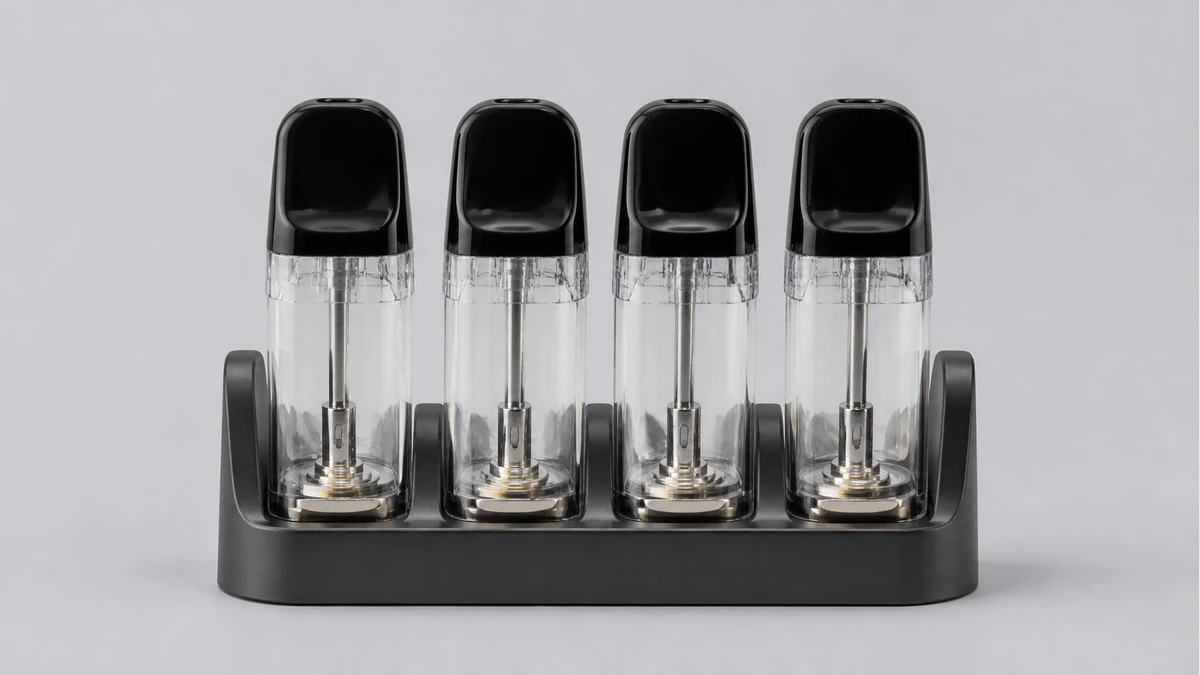
The center post is the tube running down the middle of the cartridge that carries vapor from the coil chamber up to the mouthpiece. Its diameter and the tightness of its seal at both ends determine two things: draw resistance, and whether oil can migrate up through the airway instead of being drawn up through the wick as intended.
A center post seal that’s slightly undersized or degraded from repeated opening allows oil to seep past it and travel up the airway itself. That’s the mechanism behind the “gurgling” or spitting sensation some cartridges develop after a refill or two, and it’s also a common cause of oil pooling at the mouthpiece even when the outer closure seal is intact. The leak, in that case, isn’t at the seam users can see. It’s internal, at the base of the center post.
🧩 3.2 Inlet Sizing and Wicking Holes
On the intake side, the coil’s wicking holes, sometimes called inlet ports, control how quickly oil reaches the wick material. Holes sized too small for the oil being used restrict flow and lead to a dry hit or a scorched taste as the wick outpaces its oil supply. Holes sized too large, or a wick that’s become looser in its housing after repeated refills, can flood the chamber, which shows up as gurgling and eventually as oil pushing back out through the airway or mouthpiece.
Refilling repeatedly can quietly shift this balance. Residue from earlier fills can partially coat or narrow the inlet holes over successive cycles, particularly if oil has been left to sit in the reservoir between fills rather than being used down. A cartridge that wicked well on its first fill can gradually wick less evenly as buildup accumulates at these small openings, which is one of the more common causes of clogging that has nothing to do with the seal at all.
🧼 4. Oil Viscosity and Material Compatibility
Hardware doesn’t operate in isolation from what’s put into it. Oil viscosity interacts directly with inlet sizing: thinner oil moves through small wicking holes and a snug center post seal more readily, while thicker oil needs larger inlet ports and often a wider fill port to load without air pockets forming. A cartridge engineered around one viscosity range can underperform, leak, or clog when filled with oil well outside that range, not because either the cartridge or the oil is defective, but because the two weren’t matched.
Material compatibility matters just as much. Seal and housing materials vary by cartridge, and manufacturers select those materials with certain oil compositions in mind. Using a cartridge with an oil type its seals weren’t designed to contact can cause the seal to swell, soften, or degrade faster than normal thermal and mechanical cycling alone would explain. This is a case where following the cartridge manufacturer’s stated compatibility information matters more than assuming any refillable cartridge will tolerate any oil equally well.
Because these interactions aren’t always obvious from a cartridge’s outward specs, it’s worth comparing hardware options directly against the oils you intend to use before committing to a particular design, rather than assuming refillable means universally compatible. Our overview of vape cartridges outlines the range of fill port, coil, and material configurations available, which is a useful starting point for matching hardware to intended use.
📏 5. Capping Technique and Realistic Reuse Expectations
Even well-matched hardware performs worse than it should if the refill process itself introduces problems. A few habits make a measurable difference in how many clean cycles a cartridge delivers:
- Let the cartridge cool to room temperature before opening it, so the seal isn’t being flexed while warm and pliable.
- Fill through the designated port only, avoiding contact between the filling tip and the center post or wick.
- Leave a small air gap at the top of the reservoir rather than filling to the absolute brim, since oil expands slightly with heat and an overfilled reservoir has nowhere for that expansion to go.
- Wipe the seal and mating surface clean of any oil residue before closing, since trapped residue can prevent the seal from seating evenly.
- Close the cartridge to a snug fit by hand rather than forcing it, since overtightening can deform a seal as easily as underfilling it can leave a gap.
- Let a freshly filled cartridge sit briefly before use so the wick can saturate, rather than firing it immediately, which reduces stress on a wick that hasn’t fully absorbed oil yet.
None of this makes a cartridge refillable indefinitely. It simply means the cartridge gets a fair chance to perform at whatever its hardware ceiling actually is, rather than failing early due to handling on top of normal wear.
🔄 6. When to Retire a Cartridge Instead of Refilling It Again
Every refillable cartridge has a realistic number of cycles it can handle well, and that number is set by the seal material and mechanical tolerances discussed above, not by how carefully any single refill is done. A few signs indicate a cartridge has reached that point:
- Oil appears at the mouthpiece or base seam shortly after closing, even when the cartridge was filled and closed carefully.
- Draw resistance has become noticeably tighter or airier compared to earlier fills, suggesting the airway or wick condition has shifted.
- The closure no longer seats with the same resistance it once did, or threads feel looser than on previous fills.
- Flavor or vapor quality has dropped off in a way that persists across a fresh fill of the same oil, which points to wick or inlet buildup rather than the oil itself.
- Visible residue has built up around the fill port or center post that cleaning doesn’t fully clear.
Continuing to refill a cartridge past these signs doesn’t usually restore performance. It tends to produce more leaking, more clogging, and inconsistent vapor, since the underlying seal or wicking issue doesn’t reverse itself. If you’re evaluating hardware options as part of choosing which cartridges to standardize on, our vape cartridge holder guide covers compatible holder formats, which is a useful reference once you’ve settled on cartridge hardware that fits your refill habits and oil type.
🧰 7. Frequently Asked Questions
Does a wider fill port always mean easier refilling?
A wider fill port generally reduces spillage and air pockets during filling, but it needs to be paired with a center post seal and inlet sizing suited to the oil viscosity being used, or the wider opening won’t solve leaking or clogging on its own.
Is it normal for a cartridge to perform slightly differently after each refill?
Some variation is expected as seals and wicking surfaces go through normal wear, but a sharp drop in performance after just one or two refills usually points to a mismatch between the oil and the cartridge’s inlet sizing or material compatibility, rather than expected wear.
Can a leaking cartridge be fixed by tightening it further?
Overtightening a closure that’s already leaking is more likely to deform the seal further than to resolve the leak, since most leaks originate at the center post or inlet holes rather than at the outer closure itself.
A refillable cartridge is a small assembly of parts working within tight tolerances, and every one of those parts has a finite tolerance for heat, reopening, and oil contact. Judging a cartridge by its first fill tells you almost nothing about its fifth. Judging it by fill port design, seal material, airway geometry, and how it’s handled between fills tells you almost everything.
📚 8. Sources and Reader Questions Reviewed
- FDA: Vaporizers, E-Cigarettes, and other ENDS
- Reddit discussion ev18ov (reader-language research only)
- Reddit discussion scw1iq (reader-language research only)
- Reddit discussion 11fywrt (reader-language research only)
- Reddit discussion ckhl9z (reader-language research only)
- Reddit discussion ph7vr4 (reader-language research only)