A cartridge rolls off a desk during a video call, lands mouthpiece-down on a laptop charger, and by the time anyone notices, a thin brown line has crept along the glass. It’s not dramatic. It’s not even particularly rare. It’s the kind of small, preventable accident that happens to people who otherwise take good care of their gear, because loose cartridges in a drawer, a jacket pocket, or the bottom of a bag are simply living on borrowed time. A vape cartridge holder exists to interrupt that pattern before it starts, and understanding exactly what it’s protecting against makes the difference between buying one that actually helps and one that just looks tidy on a shelf.
🔎 1. What a cartridge holder actually protects against
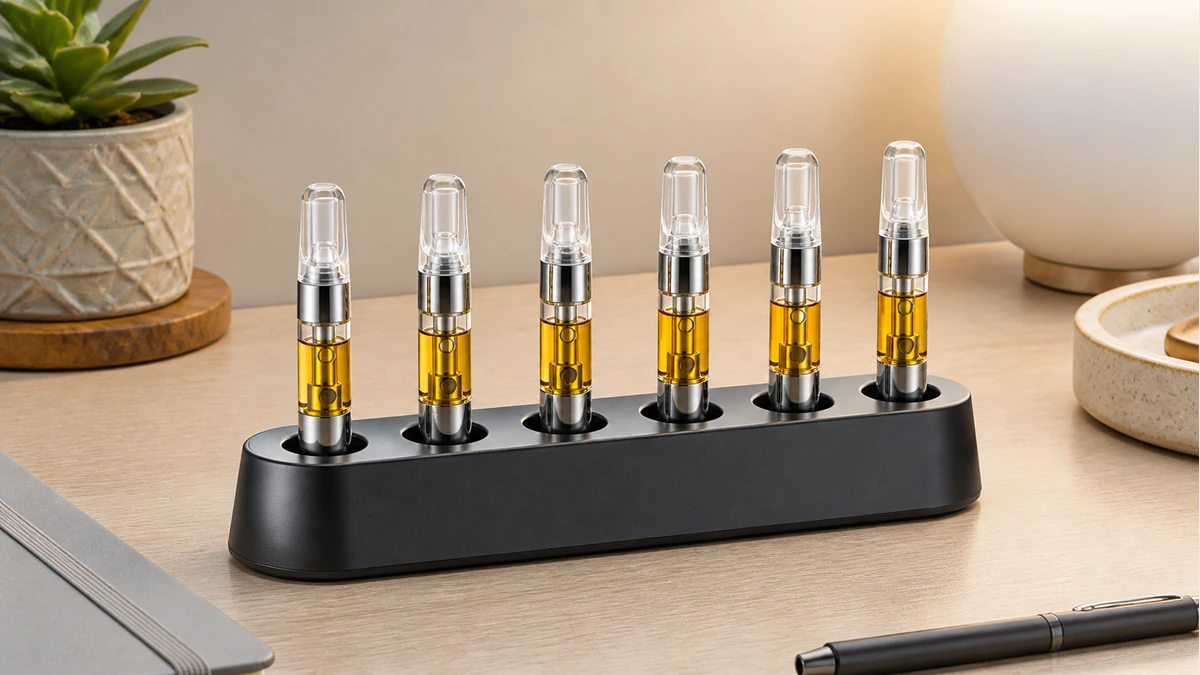
Cartridges fail in a handful of predictable ways, and almost all of them trace back to how the cartridge is stored between uses. Tipping over is the most common. A 510-thread cartridge has a narrow base and a comparatively heavy glass or metal body, so it’s naturally top-heavy when it’s not screwed into a battery. Left on its side in a drawer, oil can settle unevenly, air can migrate into the wick, and the mouthpiece becomes an exit point rather than a sealed opening.
Impact is the second failure mode, and it’s the one people underestimate most. A cartridge sliding loose in a bag next to keys, a phone charger, or a multitool doesn’t need to be dropped from height to crack. Everyday jostling against a harder object is often enough, especially with thin-walled glass cartridges that were never designed to absorb lateral pressure. A holder with individual, snug-fitting slots keeps each cartridge from becoming a projectile against its neighbors.
Contamination is the quieter problem. An exposed mouthpiece sitting in a bag collects lint, dust, and whatever residue is already living in a pocket. It’s not a health emergency, but it’s unpleasant, and it means the first inhale of a session is often preceded by wiping down a mouthpiece that shouldn’t have needed wiping in the first place. Readers who want a fuller breakdown of that lingering-scent complaint, including why it happens even with a capped cartridge, can look at this piece on whether carts smell in storage, which covers the airflow and residue side of the issue in more detail.
Finally, there’s oil migration and leaking, which is really a symptom of the first two problems rather than a separate one. A cartridge that tips repeatedly, or that gets knocked against something hard enough to stress the seal at the base, is far more likely to weep oil around the threading. Once that happens, the leaked oil attracts more lint and dust, and the cycle compounds. A well-designed holder is really just an attempt to remove the tipping and impact variables so the other two problems never get a chance to start.
🧩 2. Why upright storage and mouthpiece coverage matter
Upright storage isn’t a cosmetic preference. Keeping a cartridge vertical, base down, means gravity is working with the design instead of against it. Most 510 cartridges are built assuming they’ll spend their working life either threaded into a battery (also vertical) or resting on a flat surface in that same orientation. Laying them flat or letting them tip sideways in a drawer puts the internal wick and oil chamber in a position the seal wasn’t optimized for, which is exactly when slow leaks start.
Mouthpiece coverage solves a different problem: exposure. A capped or recessed mouthpiece keeps the one part of the cartridge that touches your mouth away from pocket lint, bag debris, and casual contact with other items. This matters more than it sounds, because the mouthpiece is also usually the tightest tolerance part of the cartridge, and dust in that opening can affect airflow slightly even before it becomes a hygiene issue.
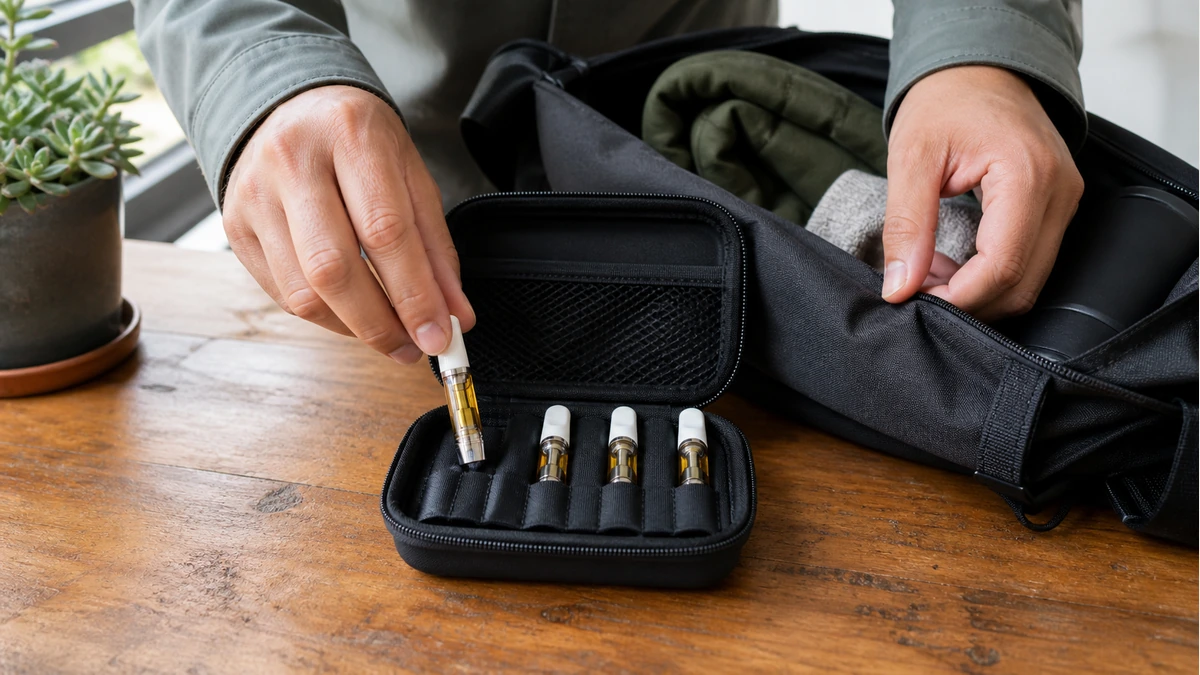
The two ideas work together. A holder that keeps a cartridge upright but leaves the mouthpiece fully exposed only solves half the problem, and one that covers the mouthpiece but allows the cartridge to lean or rattle around inside an oversized slot solves the other half only partially. The holders that actually prevent damage combine a snug vertical slot with some form of mouthpiece protection, whether that’s a flip lid, a soft sleeve opening, or a recessed cavity that sits slightly below the case’s rim.
⚙️ 3. Matching holder diameter and spacing to your cartridges
This is where a lot of buyers get tripped up, because “cartridge holder” covers a wide range of internal diameters and cartridges are not remotely standardized in body width. A slot cut for a slim glass cartridge will leave a wider ceramic or metal-bodied cartridge loose enough to rattle, and a slot sized for a thicker body won’t accept a narrower one without the cartridge leaning at an angle.
A few practical points to check before buying:
- Measure the widest part of the cartridge body, not the mouthpiece, since that’s usually the tightest fit point in the slot.
- Look for holders that list an internal slot diameter range rather than a single fixed number, since that flexibility accommodates more cartridge styles.
- Check slot depth against cartridge length. A cartridge that sits too high in a shallow slot loses most of the stability benefit, because the exposed top half can still tip.
- If you rotate between multiple cartridge brands or styles, prioritize a holder with slightly adjustable or foam-lined slots over one with rigid, exact-fit cutouts.
Spacing between slots matters almost as much as the slot diameter itself. Cartridges packed too close together defeat the purpose of individual storage, because a knock to one still transfers force to the next. Reasonable spacing, even a few millimeters, gives each cartridge its own cushion of empty space so an impact on the case exterior doesn’t turn into cartridge-on-cartridge contact inside.
For anyone assembling a broader setup rather than storing a single cartridge, it’s worth looking at how a dedicated vape case handles this spacing question at scale, since cases built for multiple cartridges and a battery or two have to solve fit, spacing, and mouthpiece coverage simultaneously rather than as separate features.
🧰 4. Materials that are easiest to inspect and clean
Storage isn’t just about preventing damage in the moment; it’s also about being able to see a problem early. This is where material choice quietly matters more than most buyers expect.
Clear or translucent plastic holders let you see oil residue, condensation, or a cracked cartridge without opening the case or handling each cartridge individually. That’s a meaningful advantage if you’re rotating through several cartridges and want a quick visual check before grabbing one. Opaque cases hide the same problems until you’re already holding the cartridge, which is a worse time to discover a leak.
Silicone sleeves and inserts are easy to wipe down and rinse, and they resist absorbing spilled oil the way some fabric-lined cases do. The tradeoff is that silicone can be harder to inspect at a glance, since the material itself isn’t transparent, so any leak check has to happen by touch or smell rather than sight.
Hard-shell cases, whether plastic or aluminum, protect well against impact but vary a lot in how easy they are to clean internally. A hard case with a removable foam or silicone insert is far easier to maintain than one with fixed, molded slots, because the insert can be pulled out, wiped, and reseated without trying to reach into narrow fixed cavities with a cloth.
| Material | Inspection ease | Cleaning ease | Best fit |
|---|---|---|---|
| Clear plastic | High — leaks and cracks visible without handling | Moderate — wipes clean, can scratch over time | Frequent visual checks, rotating cartridges |
| Silicone sleeve/insert | Low — opaque, requires touch check | High — rinses and wipes easily, oil-resistant | Bag or pocket carry, spill resistance |
| Hard shell with removable insert | Moderate — depends on insert visibility | High if insert is removable | Travel, impact-prone environments |
| Fabric-lined case | Low — residue soaks in before it’s visible | Low — harder to fully clean once stained | Least ideal for cartridge storage specifically |
The general pattern is that transparency and cleaning ease tend to trade off against each other, so the right choice depends on whether you’d rather catch a problem visually or prevent one from soaking into the material in the first place. Anyone new to the differences between cartridge builds, including why some seal and travel better than others, may find it useful to start with this overview of vape cartridges before deciding which holder material suits the cartridges they actually use.
🔋 5. Comparing trays, sleeves, and travel cases
Once the diameter, spacing, and material questions are settled, the remaining decision is really about format, and each of the three common formats suits a different daily pattern.
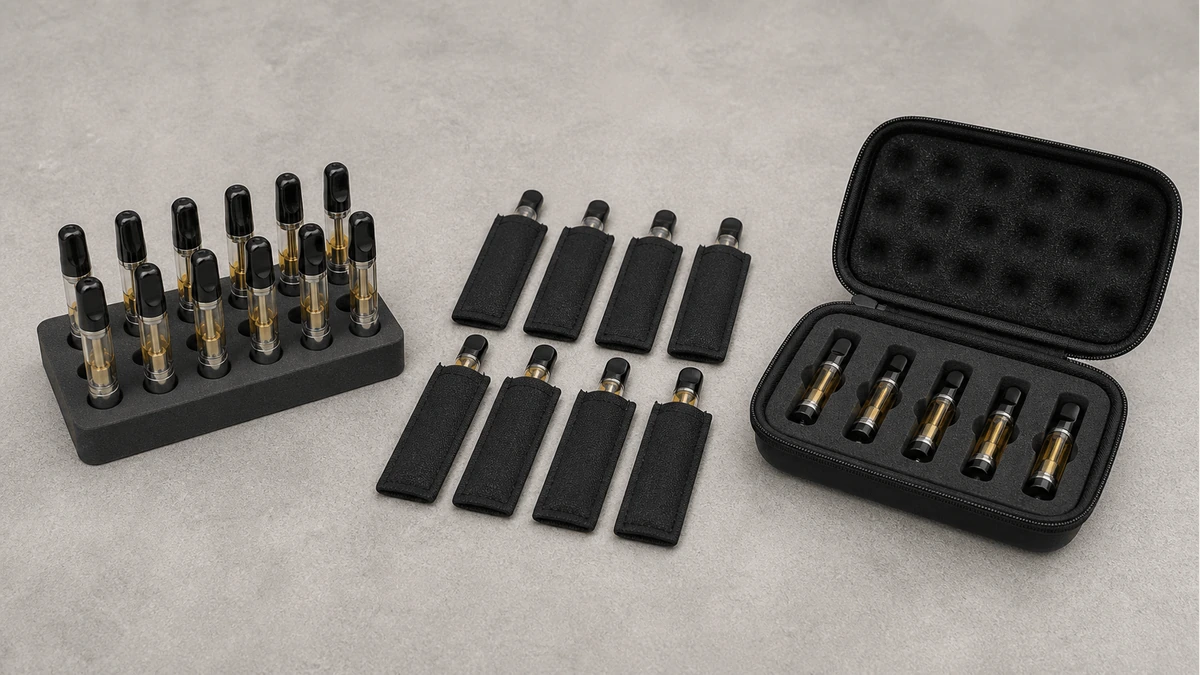
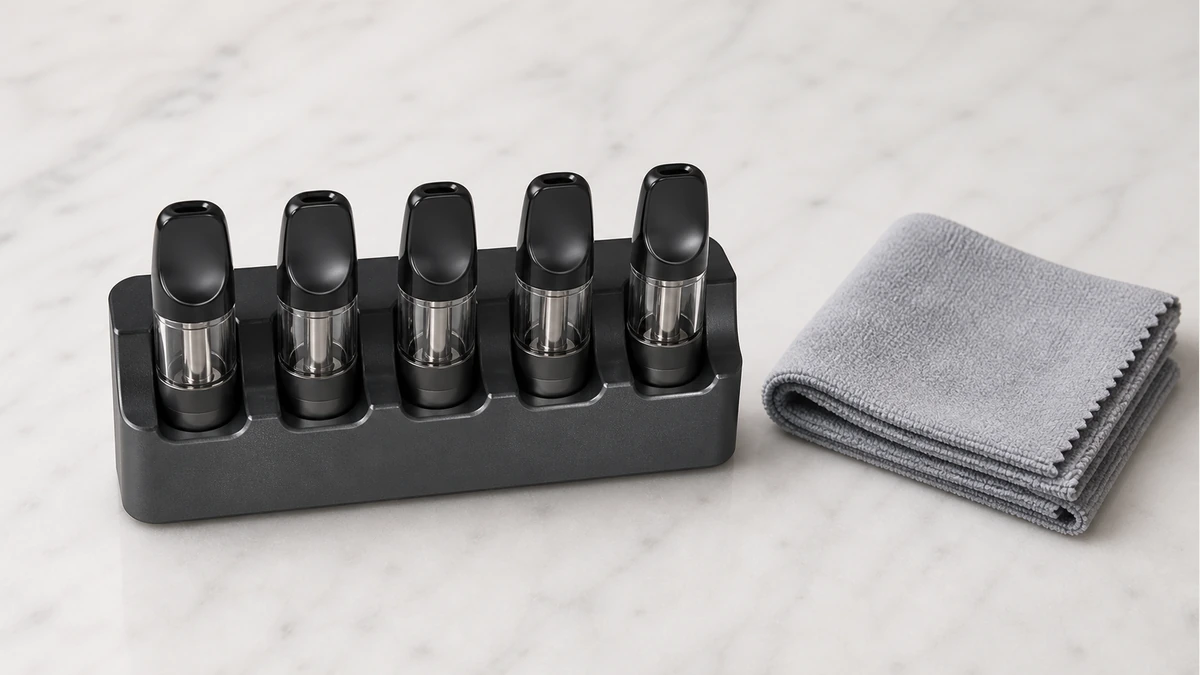
Upright trays, often open-topped with individual slots cut into a foam or plastic block, are best for desk or drawer storage where the tray stays in one place. They’re not designed for bag travel, since nothing stops a cartridge from popping out under repeated jostling, but for someone who keeps a rotation of cartridges at a fixed location, a tray offers the clearest at-a-glance inventory and the easiest single-cartridge access.
Sleeves, typically silicone or soft fabric with individual pockets, work well for short trips or a jacket pocket because they’re flexible and low-profile. Their weakness is limited impact protection; a sleeve keeps cartridges separated and upright but won’t do much against a hard knock, so they’re better suited to gentler carry situations than a backpack full of tools or hardware.
Travel cases, usually a hard or semi-rigid shell with a foam or molded insert, are the right choice when cartridges are traveling alongside other gear, going through repeated bag changes, or facing real impact risk. They’re bulkier and less convenient for quick single-cartridge access, but they’re the format built specifically for the scenario this whole topic is about: preventing damage during ordinary movement rather than storage.
A simple way to decide is to think about where the cartridge actually spends its idle time. A tray suits a desk drawer. A sleeve suits a pocket. A case suits a bag. Matching the format to the environment matters more than any single feature of the holder itself.
🧪 6. Frequently asked questions
🧩 6.1 Do all cartridge holders fit standard 510-thread cartridges?
Most are designed around common 510 body diameters, but “standard” varies more than the name suggests. Always check the listed slot diameter or diameter range against the actual width of your cartridge body rather than assuming universal fit.
🧩 6.2 Is upright storage necessary for short-term use, or only for long-term storage?
Tipping and leaking can happen within hours, not just over weeks, so upright storage is worth maintaining even for cartridges used within the same day.
🧩 6.3 Can a holder replace a full vape case?
A holder addresses cartridge-specific storage, while a full case typically also accommodates a battery, charging cable, or spare parts. Whether one replaces the other depends on how much gear travels together.
📐 7. The bottom line
Cartridge damage almost never comes from one dramatic event. It comes from small, repeated exposure to tipping, impact, and open air, the kind of everyday handling that a properly sized, upright, mouthpiece-covering holder is specifically built to interrupt. Getting the diameter and spacing right prevents rattling and cross-contact, and choosing a material that’s easy to inspect or easy to clean determines how quickly a problem gets caught before it spreads. None of this requires elaborate gear. It just requires matching the holder to how and where the cartridge actually lives between sessions.
📚 8. Sources and Reader Questions Reviewed
- Reddit discussion 1uuyyr7 (reader-language research only)
- Reddit discussion g0t2sp (reader-language research only)
- Reddit discussion okb6rn (reader-language research only)
- Reddit discussion lf7sp5 (reader-language research only)
For supporting the complete device rather than loose cartridges, see our vape pen stand fit guide.