🔍 1. The moment a nectar collector actually gets used
Most people don’t buy a nectar collector kit after careful research. They get handed one at a smoke shop counter, or a friend leaves theirs behind after a weekend visit, and it’s not until the second or third use — usually alone, usually at eleven at night, trying to figure out why the tip won’t heat evenly or why concentrate keeps dripping onto the table instead of the container — that the real questions start. What is this thing actually made of? Do I need a torch for this, or is there an electric version that skips the open flame? Why does the jar underneath matter as much as the wand on top?
A nectar collector is a dab straw: a handheld tool that heats at the tip, touches directly into a small container of concentrate, and lets you inhale through the same piece. It’s a different physical relationship with concentrate than a rig, where you load a nail or banger first and then draw from a separate mouthpiece. That directness is the appeal — and it’s also where a cheap kit falls apart, because every weak point in a nectar collector is close to your hand and your face, not tucked inside a water chamber.
🧩 2. What a complete kit should actually contain
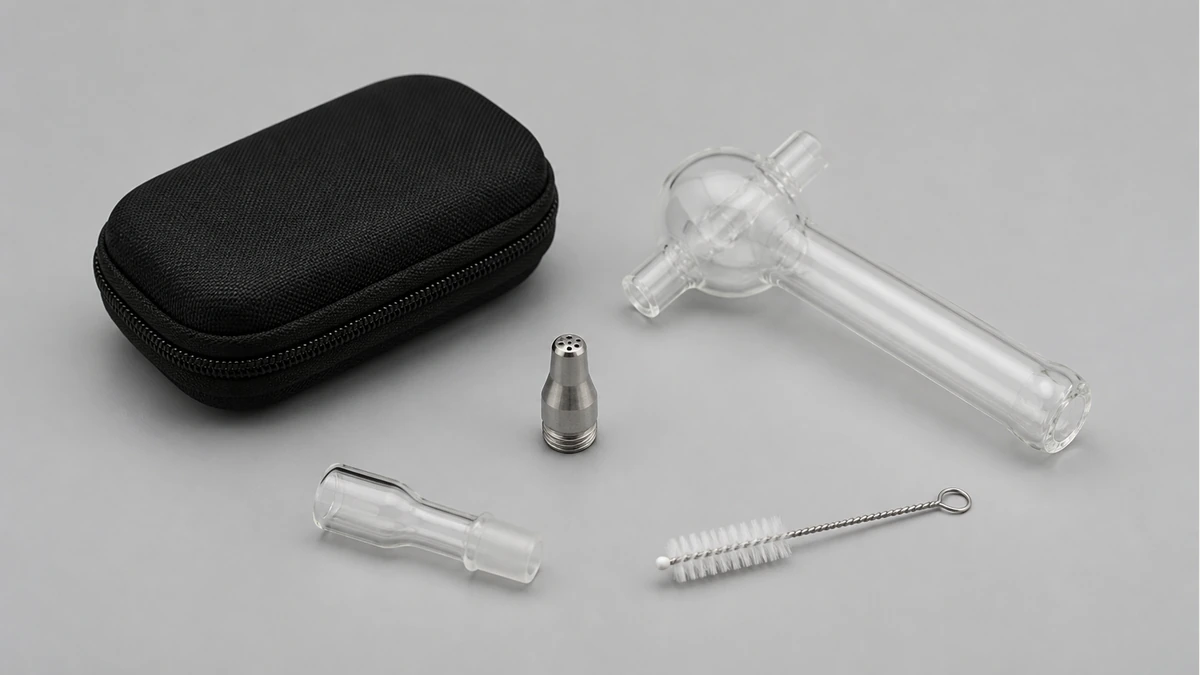
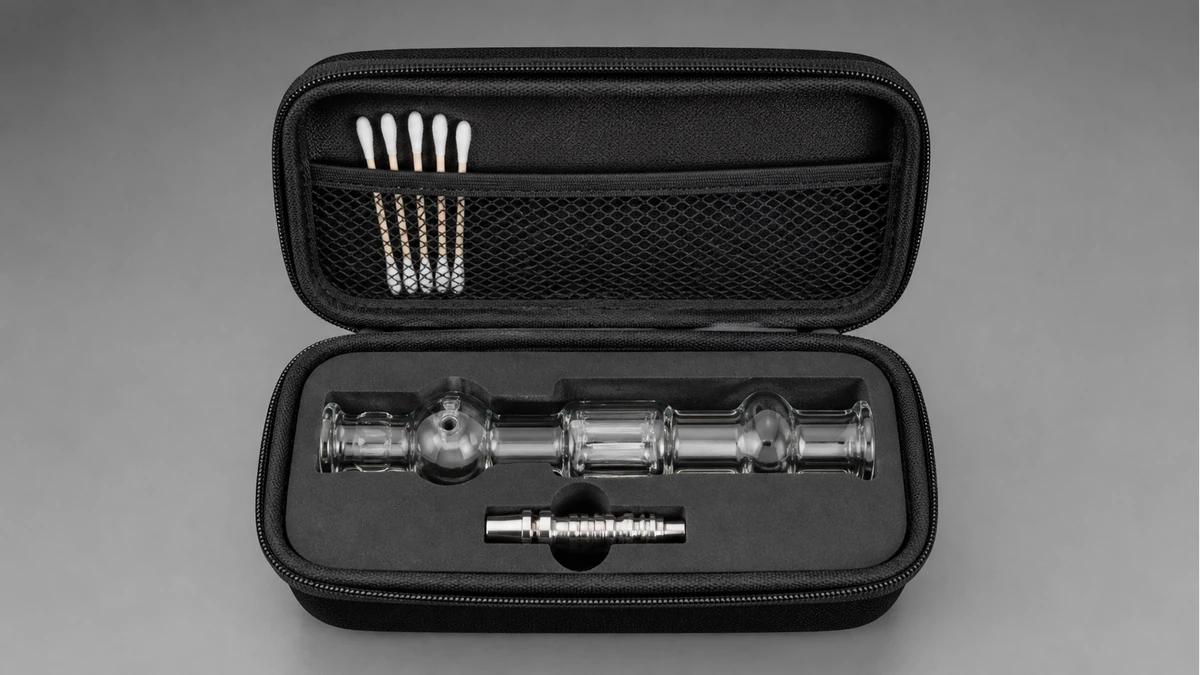
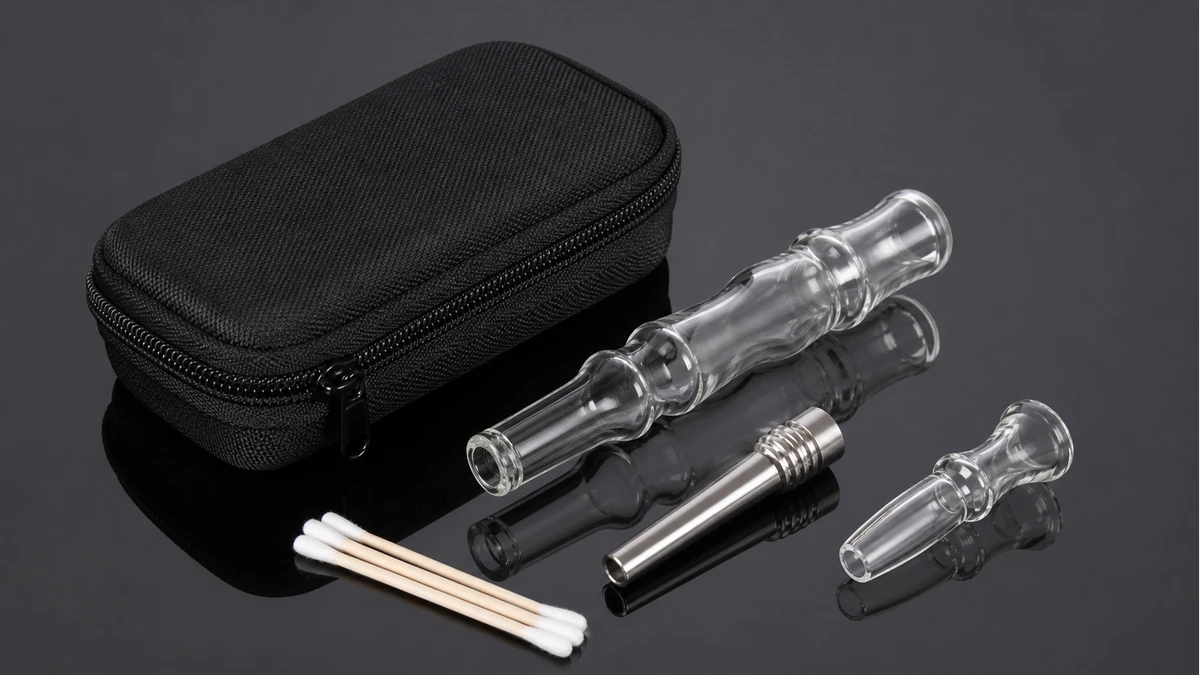
A functional nectar collector kit is smaller than it looks in marketing photos, but it still needs a specific set of parts working together. At minimum, expect:
- A body or shaft, usually glass, silicone, or a glass-and-silicone hybrid, that carries airflow from the tip to the mouthpiece
- A tip, which is the business end that makes contact with the concentrate and does the actual vaporizing
- A stand or holder, since a nectar collector cannot sit flat on a table without rolling or tipping
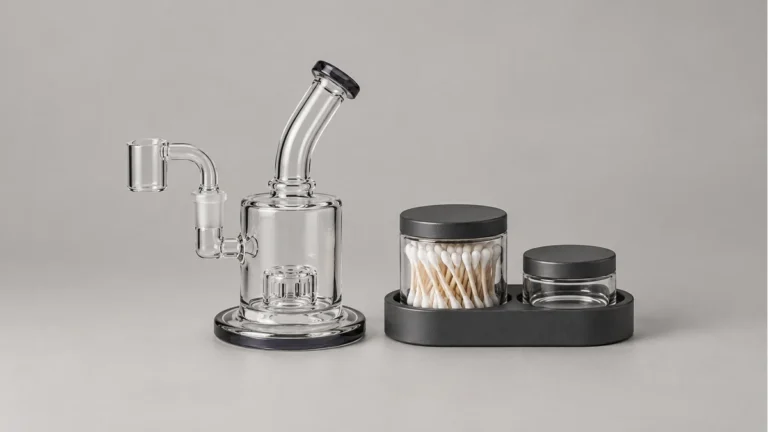
- A small dish or jar for holding concentrate during use, sometimes included, sometimes something the buyer improvises with a standard silicone container
- A heat source, either a handheld torch for manual kits or a battery and charging cable for electric ones
Two things get skipped constantly in budget kits: the stand and the concentrate container. Without a stable stand, a hot tip has nowhere safe to rest between hits, which turns a five-minute session into a small hazard-management exercise. Without a properly sized container, people end up dabbing directly from the original packaging, which usually means an awkward angle and wasted material stuck to the sides.
For readers comparing full kit configurations side by side, AOVAPE’s nectar collector lineup lays out what ships together and what’s sold as an accessory, which is a faster way to compare than reading spec sheets that don’t specify container inclusion at all.
⚙️ 3. Manual torch heating versus electric power
This is the split that generates the most confusion for first-time buyers, and it’s worth walking through directly instead of treating one as automatically superior.
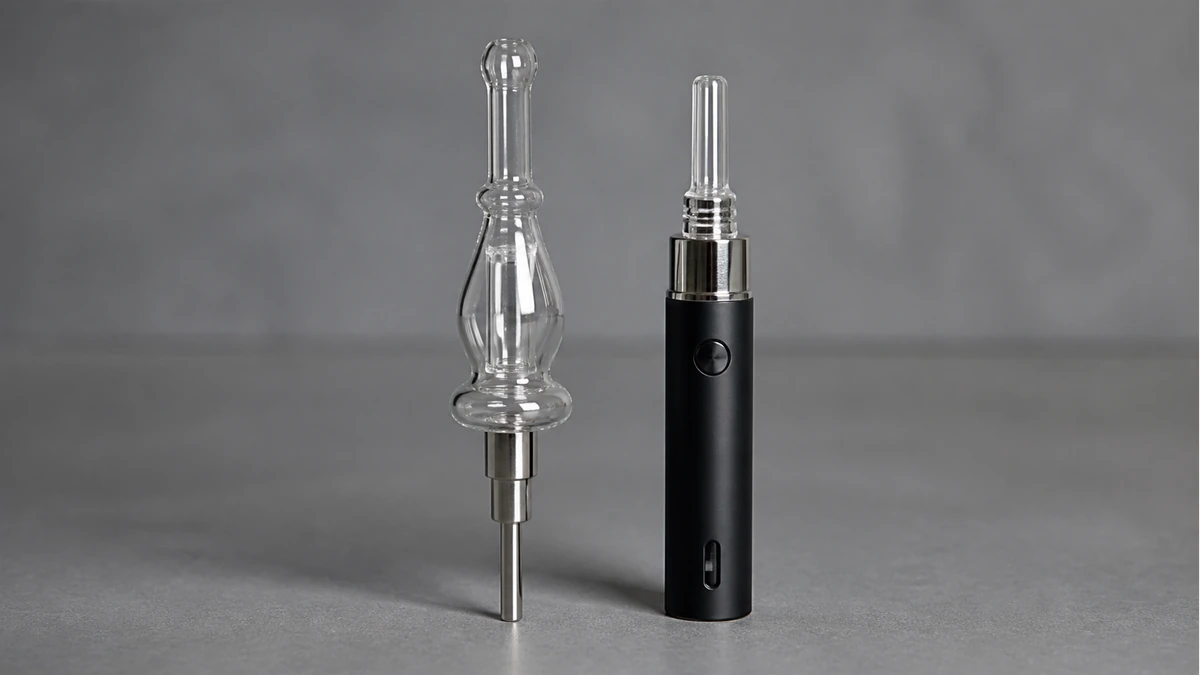
A manual nectar collector uses a handheld butane torch to heat the tip before each dab. It’s simple, it’s usually the cheaper category, and it gives the user full control over how hot the tip gets and how long it holds heat — which also means the user is fully responsible for judging that heat correctly. A tip heated too hot scorches concentrate and produces a harsher, less pleasant vapor; a tip that isn’t hot enough leaves material half-vaporized and sitting in the container.
An electric nectar collector replaces the torch with a rechargeable battery and a heating element built into the tip, usually activated with a button. The tradeoff is straightforward: electric versions remove the open flame and the need to carry butane, and they tend to produce more repeatable results from one hit to the next, but they depend on battery charge and on the heating coil holding up over time, which manual glass and titanium tips don’t have to worry about.
🧩 3.1 A side-by-side look
| Factor | Manual (torch) | Electric (battery) |
|---|---|---|
| Heat control | Fully user-judged, no fixed ceiling | Consistent, limited by device settings |
| What you carry | Torch and butane | Charging cable, spare battery if available |
| Learning curve | Takes practice to time heat correctly | More forgiving for first-time users |
| Long-term wear | Tip material degrades on its own timeline | Battery and heating coil are additional failure points |
| Typical use case | Home use, less concerned with portability of a flame source | Travel, discreet settings, repeated short sessions |
Neither format is a strictly better nectar collector kit — they solve different problems. Someone who already owns a torch for other reasons and dabs mostly at home has little reason to pay extra for a battery. Someone who wants to avoid carrying butane, or who dabs in settings where a flame is impractical, is better served by an electric unit even with the added dependency on charge level.
🧼 4. Tip material and geometry matter more than the shaft
The tip is where the actual chemistry happens, and it’s also the part buyers spend the least time evaluating. Common tip materials include quartz, titanium, and glass, each with different heat retention behavior — quartz tends to heat quickly and cool quickly, titanium holds heat longer, and glass sits in between while being the most fragile of the three under repeated torch contact.
Geometry matters just as much as material. A straight tip is easy to torch evenly but can be harder to angle into a shallow container without scraping the sides. A slightly angled or bent tip, which shows up on several kit designs, makes it easier to dip into a jar at a natural wrist angle, but it can also make even heating trickier since the flame has to track a curve instead of a straight line. Readers who’ve dealt with a silicone-bodied collector specifically — where the flexible shaft changes how the whole tool sits in hand — will find AOVAPE’s silicone nectar collector guide useful for understanding how that material choice interacts with tip angle and grip.
The takeaway isn’t that one tip material or shape is correct. It’s that tip specification deserves the same attention buyers usually reserve for the shaft or the stand, since it’s the single component doing the most work.
📏 5. Container access is not a minor detail
This is the part of the setup that gets the least attention in product photography and the most attention in actual use. A nectar collector only works well if the tip can reach concentrate at a workable angle without the user’s hand cramping or the container tipping over mid-dab.
Wide, shallow dishes are easier to dip into but expose more surface area to open air between hits, which can affect how concentrate behaves over a session. Narrow jars protect the concentrate better but require a steadier hand and often a straighter tip to reach the bottom without smearing material up the sides. A stand that holds the container at a fixed height relative to where the tip naturally rests is a small design detail that makes a real difference in whether dabs come out clean or messy.
People new to nectar collectors often assume any small jar will do. In practice, jar depth relative to tip length and jar diameter relative to hand steadiness are both worth checking before assuming a kit’s included container is the right one to keep using long-term.
🔄 6. Airflow and draw resistance
Because a nectar collector has no water chamber to cool or filter vapor, airflow design inside the shaft does more work than it would on a rig. A wider bore generally means an easier, lower-resistance draw, while a narrower shaft concentrates vapor more but can feel restrictive, especially on longer pulls. Some kits add a carb hole or a small air-intake gap near the base, which lets the user control airflow partway through a hit rather than getting one fixed draw from start to finish.
There’s no universally correct airflow setup — it’s a matter of what the user finds comfortable — but it’s a spec worth checking rather than assuming every collector draws the same way. A shaft that looks similar in a photo to another model can behave very differently depending on internal bore width and whether there’s a carb.
🧰 7. Cleaning access decides how long a kit stays pleasant to use
Concentrate residue builds up inside the shaft and around the tip regardless of material, and how easily that residue comes out is directly tied to the kit’s construction. A one-piece glass shaft is straightforward to clean with standard isopropyl alcohol soaks, since there’s a clear, unobstructed path from one end to the other. Kits with tighter bends, narrower bores, or multiple joined sections trap residue in spots that are harder to reach with a cleaning brush or pipe cleaner, and that buildup gradually changes both airflow and flavor.
A short, practical routine that works across most manual and electric kits:
- Let the tip cool completely before handling or soaking it
- Separate any removable sections — tip, shaft, mouthpiece — according to the kit’s design
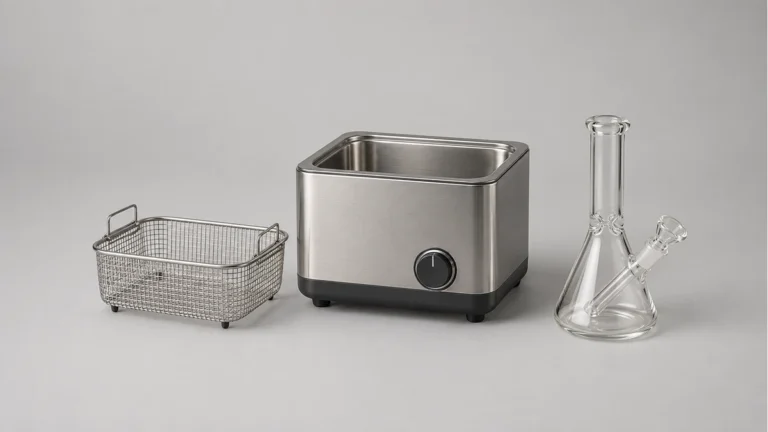
- Soak glass and titanium components in isopropyl alcohol, following the kit manufacturer’s guidance on soak time for the specific material
- Use a narrow brush or pipe cleaner to clear residue from bends or joints that the soak alone doesn’t reach
- Rinse thoroughly and let everything air-dry before reassembling
Electric kits add one extra rule: the battery and heating element should never be submerged, so cleaning has to work around that housing rather than through it. That’s a real limitation worth factoring in before assuming an electric kit will be just as easy to keep clean as a manual glass one.
📦 8. When a rig is the more practical choice
A nectar collector kit is not a replacement for a dab rig in every situation, and it’s worth being honest about where a rig still wins. Rigs filter vapor through water, which most users find smoother on the throat over a long session. Rigs also separate the heating surface from the mouthpiece entirely, which gives more room for larger bangers, more consistent low-temperature dabs, and less direct hand-to-flame proximity during use.
Where a nectar collector earns its place is portability and speed. There’s no loading a nail, no waiting for a banger to reach the right temperature range, and no water to carry or spill. A collector kit fits in a bag, works in situations where setting up a full rig isn’t realistic, and gets a single dab done in a fraction of the steps a rig requires. Someone who dabs occasionally, on the move, or wants a lower-footprint setup at home alongside a main rig is the person a nectar collector genuinely serves. Someone who dabs frequently, cares most about smoothness, and always has a stable surface to work from is usually better served sticking with, or adding, a proper dab rig.
The two aren’t mutually exclusive. Plenty of people keep a rig for home sessions and a nectar collector for everything else, using each for what it does best rather than expecting one tool to cover both roles.
✅ 9. Quick answers before buying
Do I need a torch if I buy an electric nectar collector?
No — the point of an electric kit is replacing the torch with a battery-powered heating element, though some users still keep a small torch on hand for other uses.
Can I use any small jar as the concentrate container?
You can, but jar depth and diameter affect how easily the tip reaches concentrate cleanly, so it’s worth checking fit against the specific tip length rather than assuming any container works equally well.
Is titanium or quartz better for a nectar collector tip?
They behave differently rather than one being outright better — quartz heats and cools faster, titanium holds heat longer — and the right choice depends on how the user prefers to time each dab.
Why does my collector’s draw feel different from a rig?
There’s no water filtration and often a narrower airflow path, so draw resistance and vapor feel are naturally different from a water-cooled rig, not a sign anything is wrong with the kit.
❓ 10. The short version
A nectar collector kit earns its keep on portability and directness, not on replacing everything a rig does. The parts that actually determine whether a kit feels good to use day to day are the ones rarely highlighted up front: tip material and geometry, a container that fits the tip’s reach, a stand that keeps a hot tip safely off the table, and a shaft that’s actually easy to clean out. Get those right, decide honestly between manual and electric based on how and where the kit will be used, and the rest of the kit tends to fall into place.