Somebody posts a photo of a rig they just inherited, found at a yard sale, or got handed by a roommate who’s moving out, and the top comment is always some version of “I don’t even know what this is.” The base looks like a bong. The joint looks wrong for a banger. There’s a loop of glass doing something nobody in the thread can quite explain. It’s a small, recurring moment on cannabis forums, and it points at something real: dab rigs don’t come in one shape, they come in a handful of genuinely different formats, and the differences aren’t cosmetic.
“Types of dab rigs” sounds like a question about glass shapes, but the shape is mostly downstream of a few practical decisions — how the concentrate gets heated, whether water is involved and how, how much upkeep the thing demands to stay pleasant to use, and how forgiving it is if you drop it, travel with it, or hand it to a beginner. Sort a rig by those questions instead of by silhouette, and the whole category gets a lot easier to shop for.
🔥 1. What Actually Changes From One Rig to the Next
Before comparing formats, it helps to name the handful of things that actually differ between them, because every rig on the market is really just a different combination of the same five variables.
Heat source is the big one: a torch heating a quartz or titanium banger by hand, versus a coil or induction element controlled by a button and a chip. Water path is the second — a simple single chamber, an engineered loop that recycles water through two connected chambers, or no meaningful water path at all. Then there’s maintenance load, portability, the learning curve for getting a decent hit without babysitting a flame, and how easy it is to replace a part when something wears out, cracks, or just goes out of production. Every format below trades these five things differently. None of them wins on all five at once.
🧊 2. Traditional Glass: The Rig Most People Picture
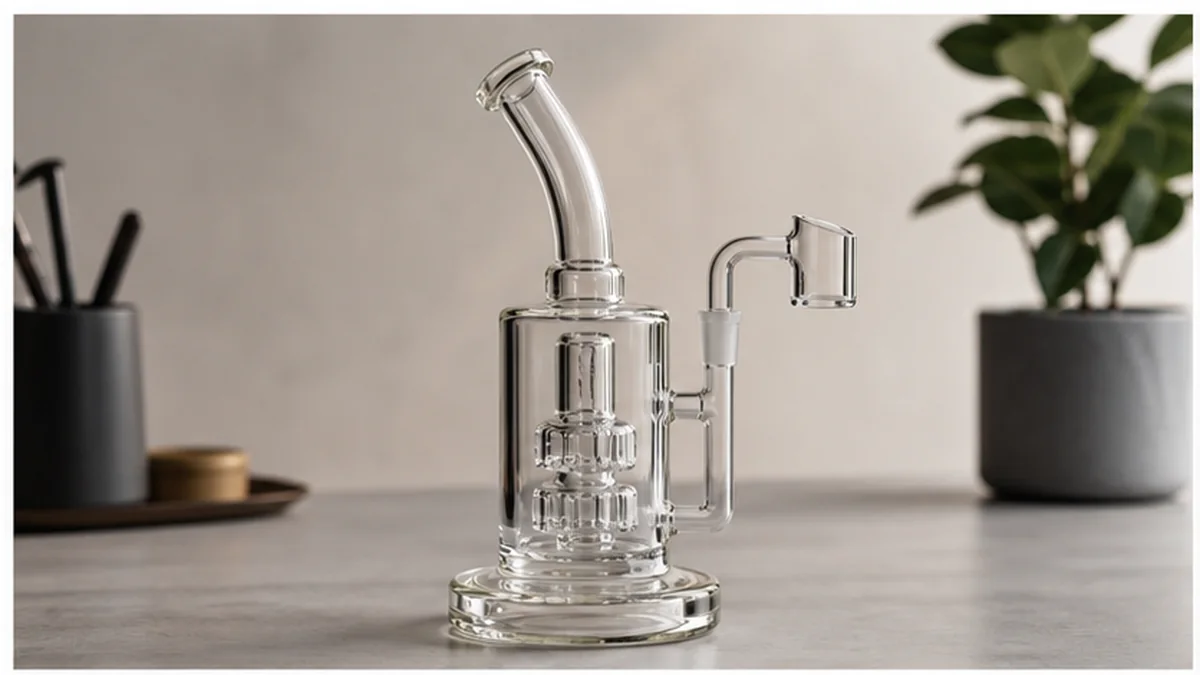
This is the format that shows up first in anyone’s mental image — a water pipe with a joint sized for a banger instead of a bowl, heated with a handheld torch. It’s also the format with the widest range of actual designs, from a plain straight tube to elaborate hand-blown pieces with percolators stacked on percolators, which is exactly why strangers on the internet can’t always agree on what a given piece even is. Glass is a craft medium, and rig makers use that freedom.
The appeal is real: torch-and-banger setups are mechanically simple, the parts that touch the concentrate are cheap and standardized, and a straight-tube piece is about as forgiving to clean as a rig gets. The tradeoff is that heating by hand is a skill — judging when a banger has cooled enough after the torch comes off takes some repetition, and a novice’s first few sessions rarely look like their fiftieth. These rigs are also glass, full stop, which means they live on a shelf or a table rather than in a bag, and while a chipped banger is a cheap, easy swap, a cracked main chamber is not always replaceable if it was a limited or one-off piece to begin with. Anyone who’s browsed a customize dab rigs shop knows how much of this category is genuinely one-of-a-kind glass, which is wonderful right up until it isn’t.
🌀 3. Recyclers and Incyclers: Glass Doing More Work
Recyclers and incyclers are still torch-and-banger rigs at heart — same heat source, same skill curve — but the water path is engineered rather than incidental. A recycler routes water and vapor in a continuous loop between two connected chambers instead of just bubbling through one pool; an incycler tucks that same looping action inside a single chamber. Either way, the goal is more contact between vapor and water before it reaches you, using the glass itself to do that work instead of adding a separate percolator.
⚠️ 3.1 The Replacement-Part Reality
The tradeoff shows up in two places. First, cleaning: a recycling loop has more internal surface, more tight bends, and more spots where water sits and residue collects than a straight tube does, so it asks for more frequent and more careful attention to stay clear. Second, and more permanent — the elaborate geometry that makes a recycler impressive is usually the work of a specific glassblower, made in small runs or as a one-off. If it cracks, “replace the part” isn’t really an option the way it is with a standardized banger. You’re back to sourcing another piece from scratch, and it may not exist anymore. That’s the calculation behind a question that comes up more than you’d expect after someone’s favorite piece breaks: whether to replace it with something equally elaborate, or step down to something plainer and sturdier next time.
🔌 4. Electronic Rigs: Trading the Torch for a Button
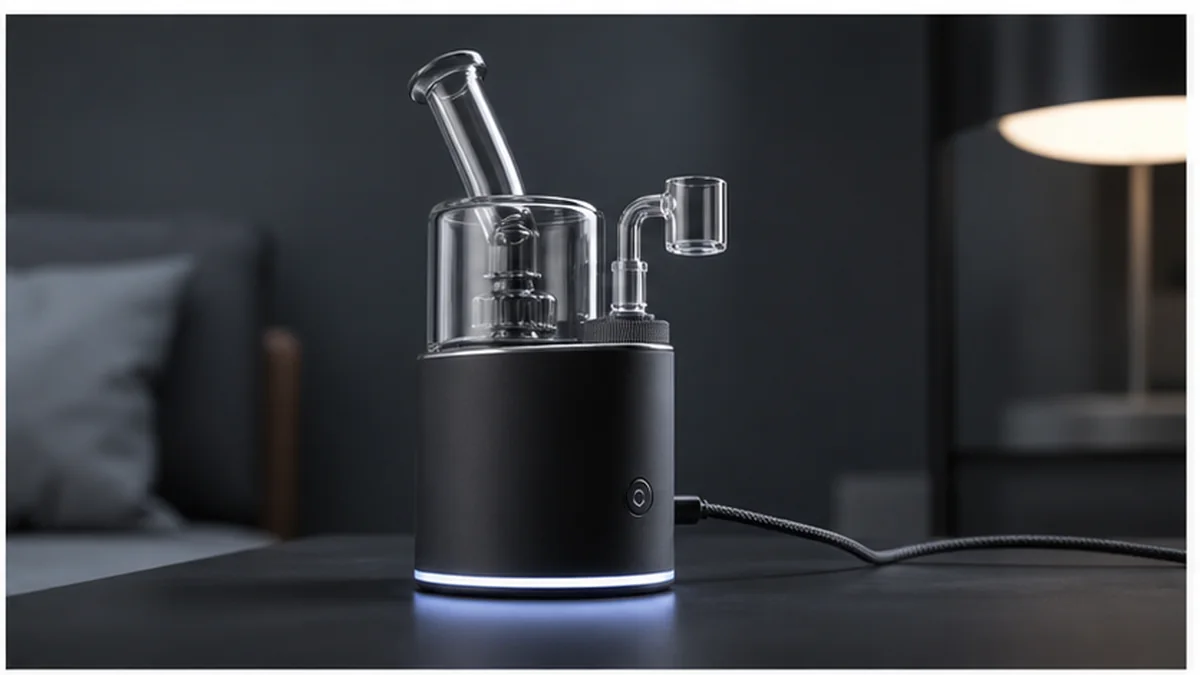
Electronic rigs, often shortened to e-rigs, replace the torch and banger with a heating element built into the base and controlled by a battery or a plug-in power supply. You pick a setting instead of judging a flame by eye, which removes most of the timing skill that traditional glass demands and makes the experience far more repeatable session to session. Because the engineering effort goes into the heater and control board rather than the glass, the chamber on an e-rig is usually simpler and sturdier than a hand-blown showpiece — which is part of why some are marketed hard on being nearly impossible to break in normal use, with silicone bodies and travel cases built around that promise.
That durability claim is about the housing, though, not about the parts that actually wear. The coil or atomizer inside an e-rig is a consumable — it degrades with use the way any heating element does, and eventually needs replacing. If a model gets discontinued or a manufacturer changes its coil design, tracking down a compatible replacement becomes its own version of the recycler problem: not broken glass, but an obsolete proprietary part. E-rigs also add a genuinely new maintenance category — batteries and electronics — which means no submerging the base, no shortcuts with cleaning solvents near the circuitry, and a charge to manage before every session. In exchange, you get a rig that a beginner can hand off to a friend with a two-sentence explanation instead of a demonstration.
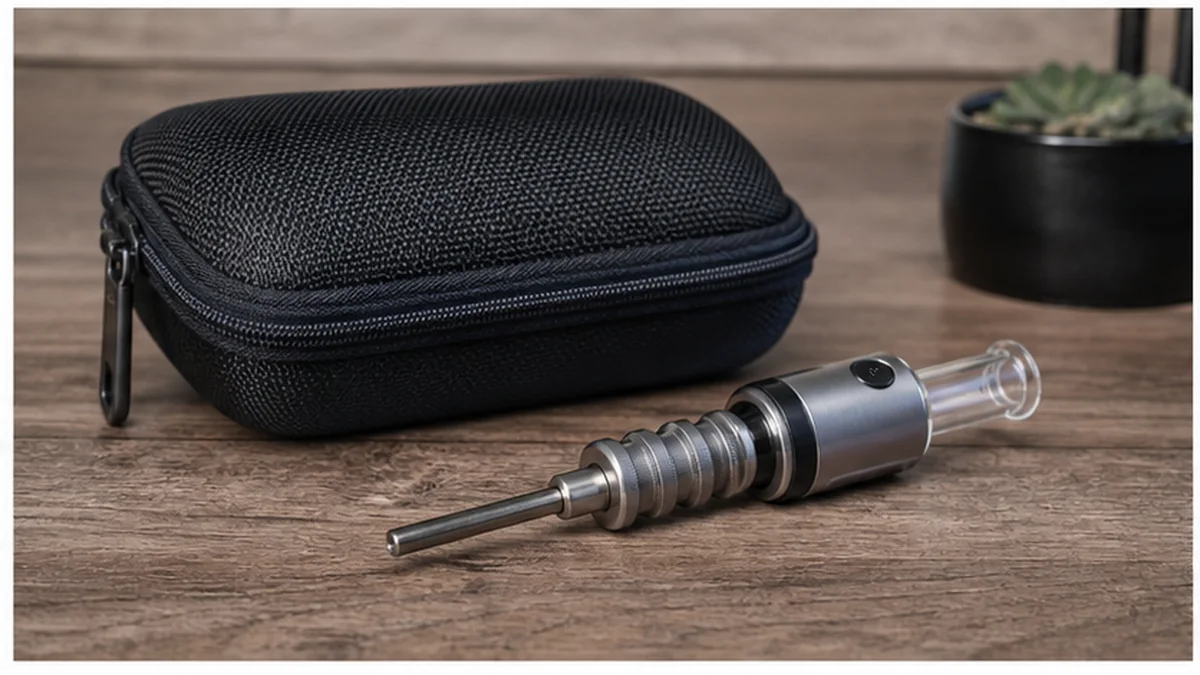
🥄 5. Nectar Collectors: The Straw-Style Shortcut
A nectar collector flips the whole interaction: instead of loading concentrate into a fixed chamber and drawing through it, you heat a tip and dip it directly into the concentrate, pulling vapor through a straw-like body as it forms. Some are torch-heated, some are electronic with a battery and a heating tip — a category sometimes called an what is an electric nectar collector how it works collector — but either version skips the fixed water chamber that defines the other three formats, or shrinks it down to a small optional attachment.
The appeal is portability and speed. There’s less glass, fewer joints, and a single dab takes a fraction of the setup a full rig does, which makes this the format people reach for when they want one hit and want it fast, not a sit-down session. The tradeoff is that without a real water path, the pull tends to be harsher than a percolated rig delivers, and the small heated tip is easy to lose track of or damage compared to a chamber that just sits on a table. It’s also a solo tool by design — passing a nectar collector around a group works less naturally than passing a rig with a shared chamber.
🧽 6. Where the Cleaning Actually Happens
Ask around and you’ll find people on both ends of the cleaning spectrum — some running a quick rinse after every single dab, others going days between real attention, and both groups second-guessing whether they’re doing it right. There isn’t one correct frequency, because the honest answer depends entirely on which format is sitting in front of you.
A straight-tube traditional rig is close to the easy end: few internal surfaces, a straightforward rinse, done. A recycler or incycler sits at the difficult end, because the same looping geometry that improves the hit also traps residue in spots a bottle brush can’t reach, which usually means disassembling what comes apart, soaking the rest, and accepting that this is now a recurring chore rather than an occasional one. Electronic rigs flip the method entirely — no soaking the base, ever, just wiping down what’s reachable and trusting the coil to handle buildup until it’s swapped rather than scrubbed clean. Nectar collectors are the simplest by volume of glass but still need the tip and mouthpiece attended to regularly, since residue there affects flavor fast given how little material is involved. If you want the fuller walkthrough on technique and what not to do, a dedicated guide on how to actually how to clean dab rig covers the sequence in more depth than a comparison piece like this one can. The practical takeaway is simpler: whatever rig looks best in a photo, the one you’ll actually enjoy using daily is the one whose cleaning routine matches how much patience you actually have.
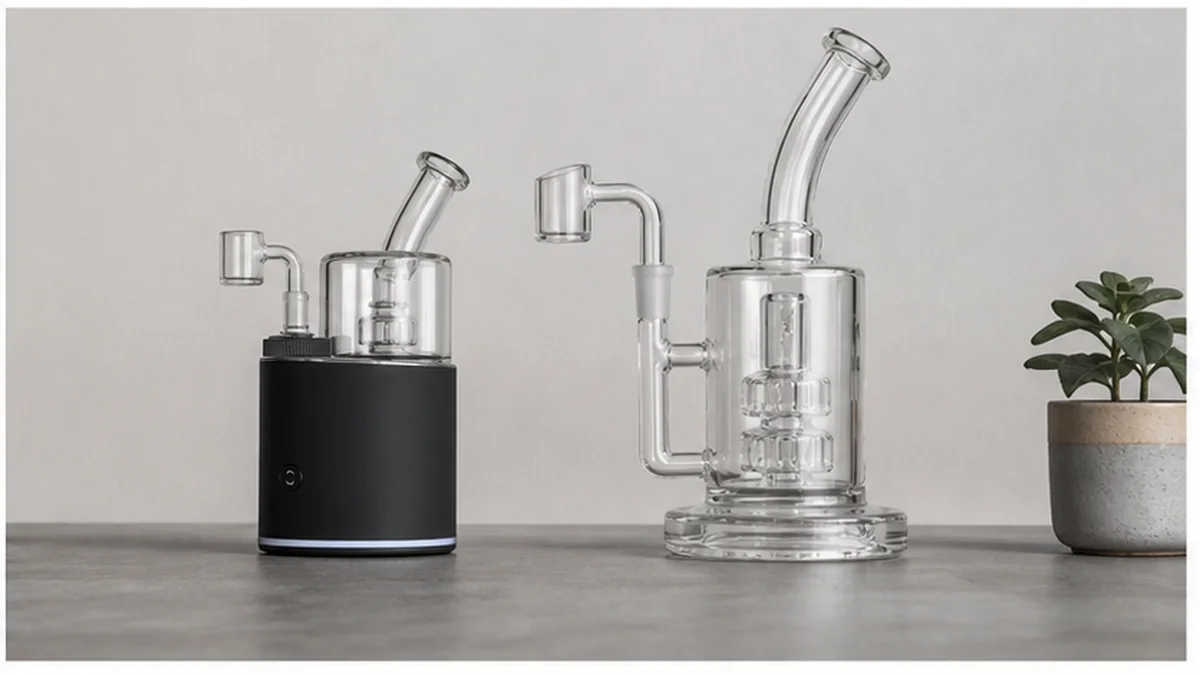
📊 7. Traditional vs. Recycler vs. Electronic vs. Nectar Collector, Side by Side
| Format | Heat Source | Water Path | Portability | Cleaning Load | Replaceable Parts |
|---|---|---|---|---|---|
| Traditional glass | Handheld torch + banger | Single chamber | Desktop-bound, fragile | Low to moderate | Banger easy; main piece often one-off |
| Recycler / incycler | Handheld torch + banger | Engineered recycling loop | Desktop-bound, fragile | High, frequent | Banger easy; main piece usually irreplaceable |
| Electronic rig | Coil or induction element | Simple chamber, varies by model | Moderate; some travel-cased | Low, but electronics-specific | Coil/atomizer wears; risk if discontinued |
| Nectar collector | Torch tip or electronic tip | Minimal or none | High, pocketable | Low, but frequent for flavor | Tip is small and easy to lose or damage |
🧭 8. Matching the Rig to Where and How You Actually Dab
🎯 8.1 Start With This Question
Not “which rig looks best,” but “where does this actually live, and how often am I really using it.” That single question does more to narrow the field than any spec comparison.
If the rig is staying on a desk at home and you’re using it daily by yourself, a plain traditional straight tube or an electronic rig both make sense — the straight tube if you don’t mind the torch and want the cheapest parts to replace, the e-rig if you’d rather not think about flame judgment every time. If the sessions are social and you and your friends care more about how smooth the hit feels than how fast it happens, a recycler or incycler earns its keep, but only if you’re honestly willing to commit to the cleaning routine and accept that replacing it later means finding another piece, not ordering a spare part. If the rig needs to survive a backpack, a weekend trip, or just doesn’t have a permanent home yet, a nectar collector — electronic or torch-tip — is built for exactly that, at the cost of the smoother, more percolated pull a water-heavy rig delivers. And in a shared household where the person using the rig isn’t always the person who bought it, an electronic rig’s push-button consistency tends to prevent more bad first impressions than any glass shape does.
None of these formats is a healthier or objectively better choice than the others — they’re different tools solving for different constraints, and the constraint that matters most is usually the one nobody puts on a spec sheet: how the thing fits into an actual routine.
Most people who’ve owned more than one rig end up landing somewhere specific to their own habits rather than sticking with whatever they bought first. Someone who started with an elaborate recycler often ends up keeping a plain backup piece around for lazy nights, and someone who started with a nectar collector for portability sometimes adds a proper desktop rig once they have a permanent spot for it. There’s no wrong order to arrive at that — just a clearer sense, once you’ve lived with one format’s tradeoffs, of what you actually want from the next one.