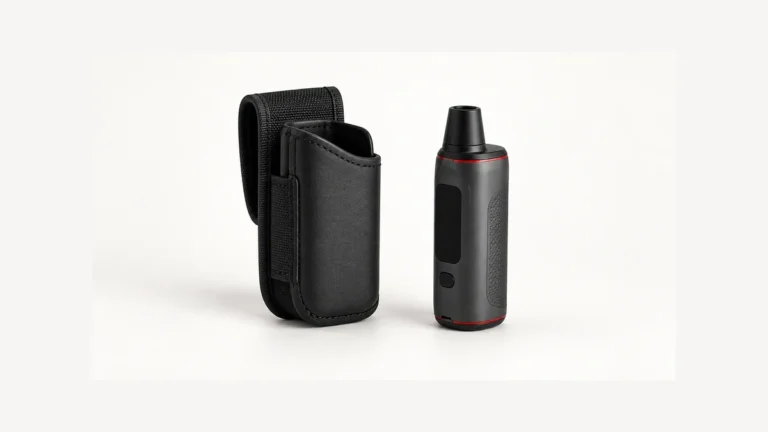
Before requesting a single document, define what you are actually buying: the exact product, its target market, and the requirements that apply there. A pod system for one market and a disposable for another draw on different tooling, materials, and controls, so a generic factory audit tells you little without that anchor.
Once the product is defined, evaluate the manufacturer across seven evidence areas rather than relying on a polished tour. A golden sample, a written specification, and a pilot-run acceptance plan turn broad assurances into criteria your team can verify before committing to volume.
💡 Quick Answer
Auditing a vape hardware manufacturer means verifying documented evidence — not just a factory tour or a certificate photo — across seven areas: legal entity, process ownership, quality system scope, component traceability, change control, test capability, and complaint handling. Confirm claims with a golden sample, a written specification, and a pilot-run acceptance plan before committing to volume.
✓ What matters most
- Lock down the product definition and target market before evaluating factory claims.
- Require documented evidence, not verbal assurances, across all seven audit areas.
- Use a golden sample, written specification, and pilot-run plan to make quality measurable.
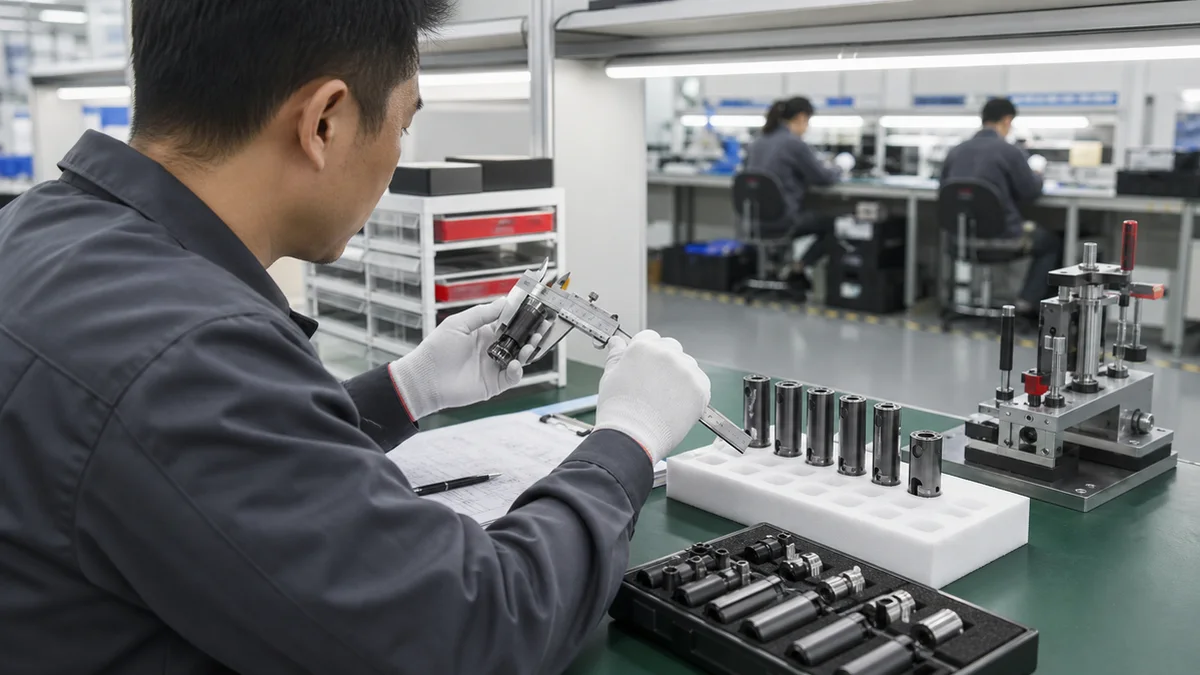
🎯 1. Define the exact product and target market
An audit only means something if you first define what you are auditing against. “Vape hardware manufacturer” covers factories that make disposables, pod systems, mods, coils, batteries, or component subassemblies — and a supplier that is strong in one category may be a trading company or light-assembly operation in another. Before requesting a single document, write down:
- The exact product type (device only, device plus coil, disposable, open-system pod, battery-integrated hardware, etc.)
- The destination market(s) — regulatory expectations differ by country, and in the United States, many ENDS components and parts are treated by the FDA as tobacco-product components subject to manufacturer and premarket obligations. Requirements are not identical across every product or every market, so this needs to be confirmed for your specific SKU and destination, not assumed from a general claim. This is general information, not legal advice; confirm specific regulatory obligations with qualified counsel or the relevant regulator.
- Whether you need OEM (your design, their build), ODM (their design, your brand), or private label (their existing product, your label) — this materially changes what “process ownership” even means for the audit, covered later in this piece. Background on how these models differ is covered in our OEM/ODM guide.
- Your branding and packaging scope, which affects which departments (printing, assembly, QC) you need to see evidence for — see our vape branding guide for what that scope typically includes.
Only once the product and market are fixed can you judge whether a supplier’s certificates, capacity claims, and quality documents are actually relevant to your order — rather than generic marketing material.
🔎 2. Check seven evidence categories, not just the factory tour
A tour lets you see equipment running and people at benches. It does not tell you who owns the process behind that equipment, whether the quality system covers your product, or what happens when something goes wrong after shipment. Structure your audit around these seven categories instead.
- Legal entity and site. Confirm the company issuing quotes, contracts, and invoices is the same legal entity operating the site you toured (or reviewed via video/live audit). Trading companies subcontracting to unnamed factories are common in this industry and are not inherently disqualifying, but you need to know which one you are dealing with.
- Process ownership. Which steps happen in-house (injection molding, PCBA, coil winding, assembly, final test) and which are subcontracted? A factory that owns final assembly and test but outsources battery cells or PCBA is normal; the question is whether they can name and document those subcontractors, not whether they own everything.
- Quality system scope. A quality certificate such as ISO 9001 attests to a management system operating within a defined scope — it does not certify that any specific product or shipment conforms to a safety or regulatory standard. Ask what scope the certificate covers — which site, which product lines — and request the certificate registration number so it can be checked against the issuing body’s own database rather than a supplied PDF alone.
- Component traceability. Can the supplier trace a finished unit back to the lot of battery cells or key electronic components used in it? This matters most for recall response and for verifying that components match what was tested or certified.
- Change control. How does the factory handle a component substitution — a different battery supplier, a revised PCBA, or a different coil/heating-element material? Ask whether they notify customers before substituting, and whether substitutions are documented internally. Undisclosed substitution is one of the more common ways a previously acceptable product drifts out of spec.
- Test capability. Distinguish between tests performed in-house (leak test, short-circuit test, puff-count verification, visual/dimensional QC) and tests that require a third-party lab (electrical safety, emissions, chemical composition). Ask to see the actual test records for a recent batch, not just a list of equipment on the floor.
- Complaint and corrective-action process. Ask how the factory has handled a real defect complaint in the past 12 months: how it was identified, contained, root-caused, and closed. A supplier with no process for this — or one who claims they have never had a defect — is a bigger risk than one who can walk you through an imperfect but documented resolution.
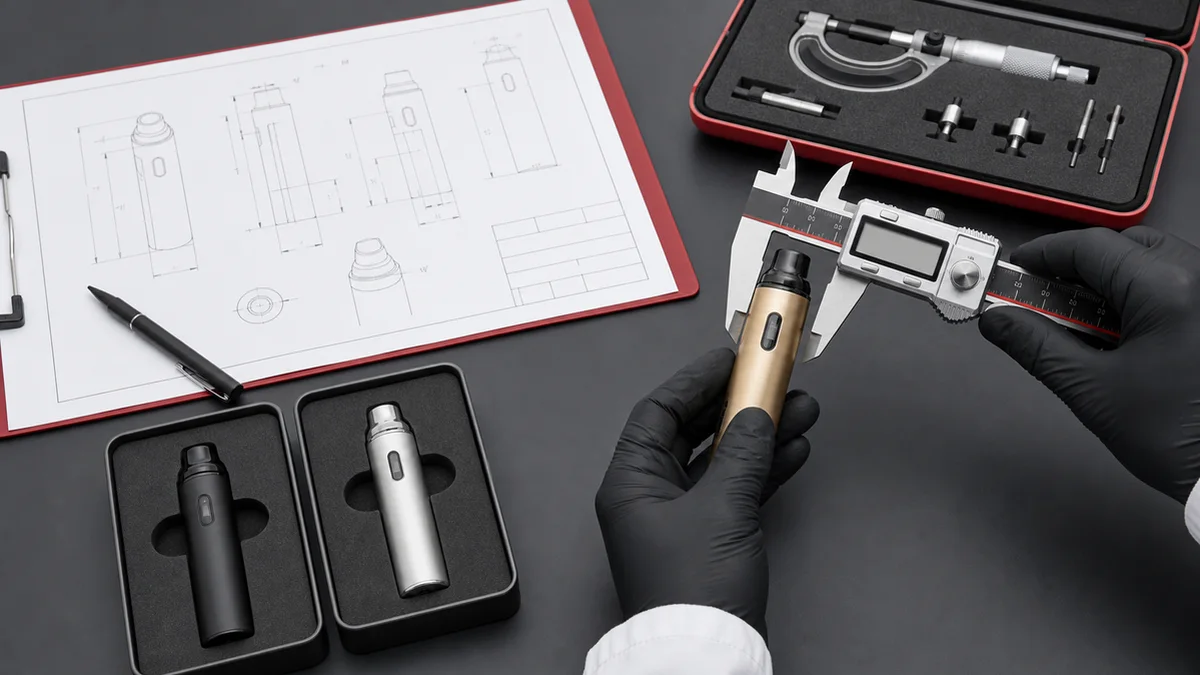
📋 3. Build a focused document request
Request these documents before sampling. Each has value and a limit — use them together, not individually.
| Evidence | What it helps verify | Limitation |
|---|---|---|
| Business license / legal registration | Correct legal entity, business scope | Does not confirm manufacturing capability |
| Site photos/video or live walkthrough | Physical existence, general process flow | Can be staged or reflect a different order’s setup |
| Quality management certificate (e.g., ISO 9001) | A quality system exists and covers a defined scope | Does not certify any specific product or shipment; states the scope of the management system only |
| Product test report from a named third-party lab | A specific sample met specific test parameters, on a specific date | Applies only to the sample tested, not to every unit produced afterward |
| Component/material declarations (e.g., RoHS, battery cell datasheets) | Declared material or component compliance | Self-declared unless independently verified; see our certifications overview for how CE, FCC, RoHS, and TPD documents differ and what each does and does not cover |
| Internal QC records for a recent production batch | Whether stated inspection steps are actually performed routinely | Records can be selectively shared; ask for a batch close to your intended order size |
| Subcontractor list for outsourced steps | Full process ownership picture | Rarely volunteered; must be explicitly requested |
| Prior corrective-action report (redacted if needed) | How the factory actually responds to defects | May not exist in writing at smaller factories |
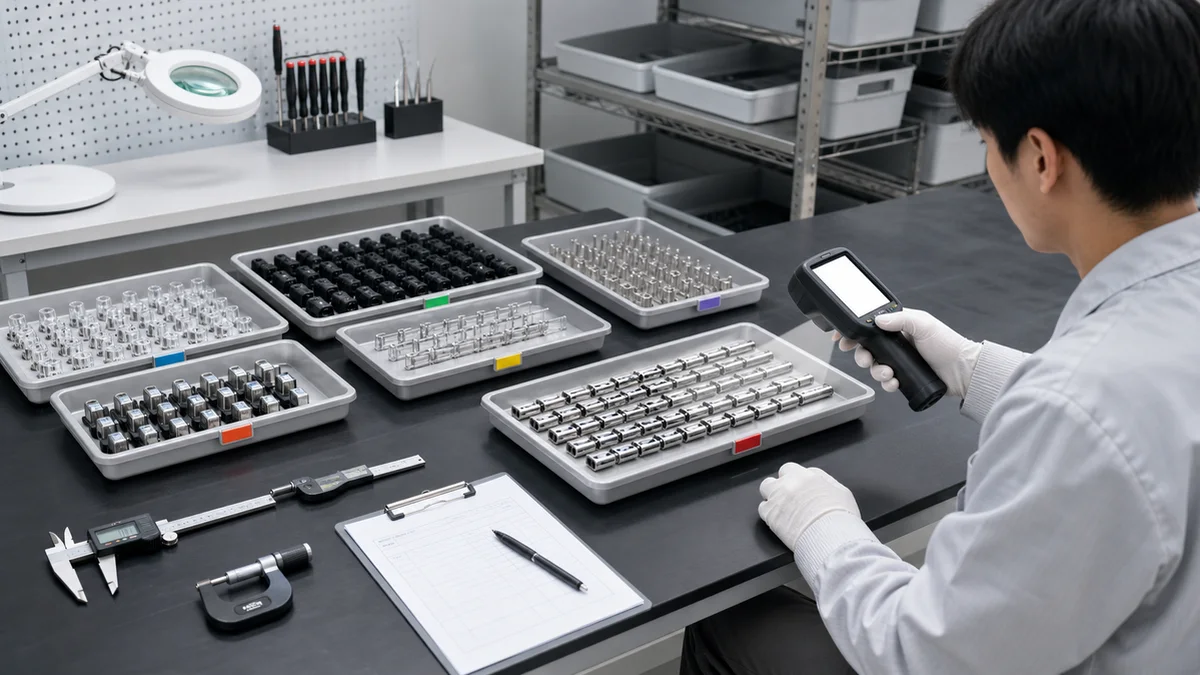
📐 4. Pair the golden sample with a written specification
Once document review supports moving forward, formalize expectations before any pilot or bulk order. A “golden sample” is a physical unit both parties agree represents the standard — but the sample only has value if it is paired with a written specification covering:
- Dimensional tolerances and materials
- Electrical parameters (e.g., resistance, output range, battery capacity) with acceptable variance
- Puff count or capacity claims, if applicable, and how they were measured
- Packaging and labeling requirements
- Acceptable quality limit (AQL) for inspection, and who performs the inspection
Keep the golden sample under your control (not solely at the factory) and reference it explicitly in your purchase agreement. Verbal or catalog-based agreement on “matching this quality” is not enforceable and is not verifiable at the next production run.
🧪 5. Set a pilot-run acceptance plan
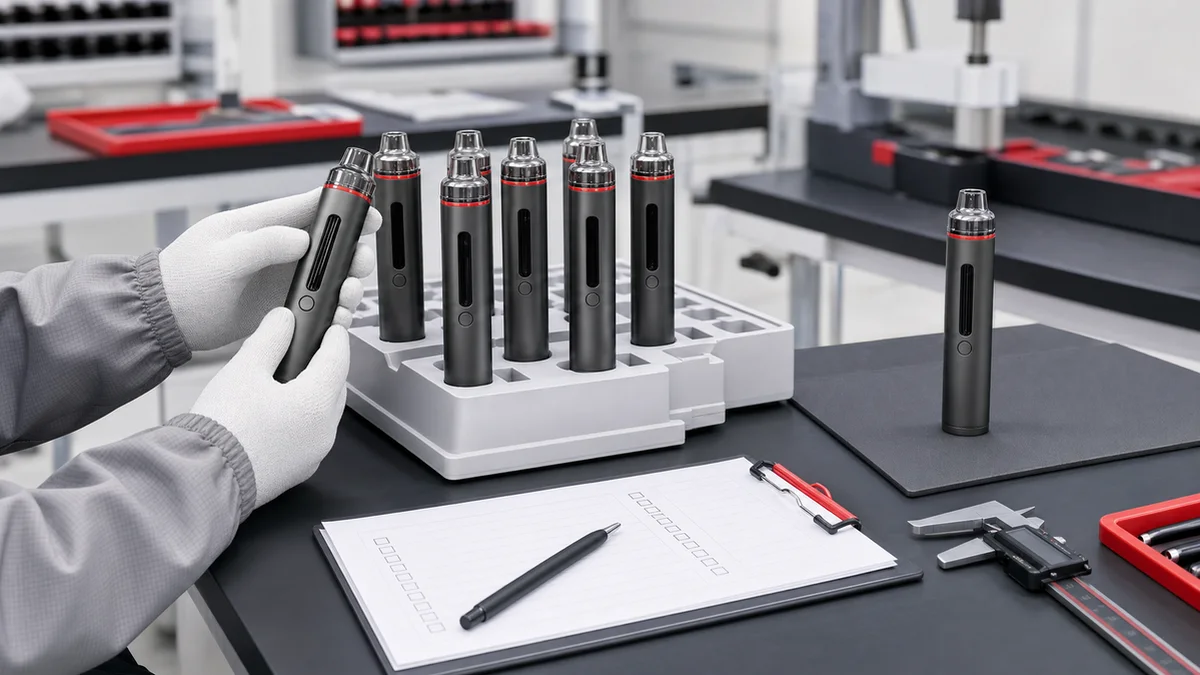
Before committing to a full production order, run a smaller pilot batch with a defined acceptance plan:
- Confirm the pilot uses the same tooling, components, and line as the intended full-scale run — not a hand-built reference batch.
- Set inspection criteria in advance (AQL level, critical/major/minor defect definitions) and agree who inspects — you, a third-party inspection service, or a joint inspection.
- Test a statistically meaningful sample from the pilot batch against the written specification, not just visual/cosmetic checks.
- Document any deviations and require written resolution (rework, re-spec, or supplier change) before scaling volume.
- Retain pilot-batch samples as a reference point for comparison against future production lots.
A pilot run that is skipped to save time is one of the most common points where an otherwise well-documented supplier relationship goes wrong.
🚩 6. Recognize red flags that justify pausing
- Certificates provided as images or PDFs with no registration number you can independently check with the issuing body
- Reluctance to name the specific site where your product will be made, especially after multiple requests
- No willingness to share any internal QC or batch records, even redacted
- Test reports where the tested product description does not clearly match your intended SKU
- No documented process for handling past complaints, or a claim that no defect has ever occurred
- Pressure to skip a pilot run and move straight to full-volume production
- Component substitutions mentioned only after you ask directly, rather than disclosed proactively
None of these automatically disqualifies a supplier on its own, but two or more together are reason to slow down and get independent verification before placing a volume order.
🏭 7. Adjust audit depth for OEM, ODM, and private label
OEM (you supply the design): Audit depth should concentrate on process ownership, component traceability, and change control, since the factory is executing your specification rather than their own. Confirm they can hold your tooling and specification without unauthorized substitution.
ODM (factory supplies the design, you brand it): Add scrutiny on the factory’s own R&D and design-history documentation, since you are relying on their engineering decisions, not just their manufacturing execution. Ask what regulatory or safety review, if any, the design has already been through, and treat that as a starting point for your own market-specific compliance work rather than a substitute for it.
Private label (existing product, your label applied): The core hardware and its history are largely fixed before you engage, so audit focus shifts to whether the existing product’s documented test history and component list actually match what you plan to sell, and in which markets. Verify this rather than assuming a product sold successfully elsewhere already meets your target market’s requirements.
Across all three models, more of the manufacturing process happening under a factory’s own design and design control generally calls for deeper scrutiny of their internal engineering and regulatory review process, not less. A quote request is a reasonable point to formally ask which model applies and to begin requesting the documents in the table above.
❓ 8. Frequently asked questions
Is a factory audit report from a third-party inspection firm enough on its own?
It is strong evidence for what it directly covers — typically a site visit and process observation on a specific date — but it is not a substitute for product-specific test reports, component traceability, or a pilot-run acceptance check against your written specification.
Does an ISO 9001 certificate mean the product is compliant?
No. It shows that a quality management system exists and meets a defined scope; it does not certify that any specific product or shipment meets safety or regulatory requirements. Confirm the certificate’s scope and registration number, and pair it with product-specific test evidence.
How is auditing a vape hardware manufacturer different from other electronics categories, in the US specifically?
The FDA treats many ENDS components and parts as tobacco-product components, which brings manufacturer and premarket considerations that don’t typically apply to general consumer electronics, though applicability varies by product and market. A proposed FDA tobacco manufacturing-practice rule remains proposed and should not be treated as a final, currently enforced rule. This is general information, not legal advice — confirm requirements for your specific product and market with qualified counsel or the relevant regulator.
What’s the single most common mistake buyers make in this process?
Treating an attractive catalog, a factory tour, or a certificate image as sufficient proof on its own, and skipping a defined pilot-run acceptance step before scaling to full volume.
📚 9. Sources
- U.S. Food and Drug Administration, E-Cigarettes, Vapes, and Other Electronic Nicotine Delivery Systems (ENDS)
- U.S. Food and Drug Administration, Manufacturing (Tobacco Products Compliance, Enforcement, and Training)
- U.S. Food and Drug Administration, Premarket Tobacco Product Applications for Electronic Nicotine Delivery Systems (ENDS)
- OEM/ODM Guide — AOVAPE
- Vape Branding Guide — AOVAPE
- Understanding Vape Certifications: CE, FCC, RoHS, TPD — AOVAPE
- Request a Quote — AOVAPE