Quartz coil versus ceramic is not really a single choice. The label is used loosely across product listings—sometimes for the heater substrate, sometimes for the cup, and sometimes for the entire assembly. Before comparing products, buyers need a shared definition of what each term means in the specific design under review.
Quartz and ceramic are only parts of a larger heating system that also includes the coil, housing, contacts, power delivery, and airflow path. Evaluating either material in isolation misses how those parts interact, so a useful comparison must examine complete samples under matched conditions.
💡 Quick Answer
“Quartz coil” is a category label, not a single design — it can mean a wire-wrapped rod, a dual-rod, a quartz cup, or a quartz tube, and suppliers use the term inconsistently. Neither quartz nor ceramic guarantees better flavor, bigger clouds, faster heat-up, or greater safety on its own; resistance, geometry, contact area, power delivery, and airflow all shape the result. Ask for a drawing, written specification, and physical sample before treating the word “quartz” as a spec.
✓ What matters most
- Confirm what “quartz coil” or “ceramic” refers to before treating the label as a specification.
- Compare complete heating assemblies rather than ranking one material in isolation.
- Evaluate matched samples for heating behavior, residue, cleaning access, and serviceability.
🔍 1. Clarify what “quartz coil” means in the listing
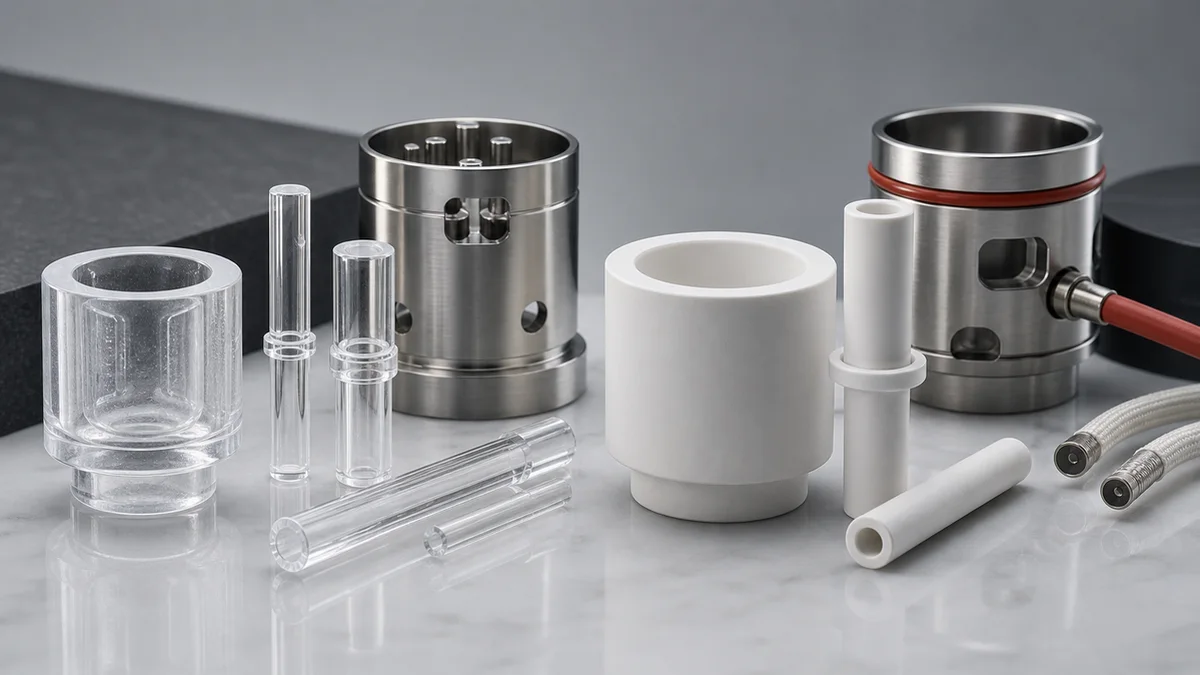
“Quartz coil” is a category label, not a single design, and different suppliers apply it to different builds. In wax and concentrate vaporizers, it commonly refers to one of a few different constructions:
- Wire-wrapped quartz rod or dual-quartz rod — resistance wire coiled directly around one or two quartz rods, which sit in the chamber and contact the material directly.
- Quartz bowl or cup — a wire coil embedded in or seated against a quartz basin, so the concentrate rests on quartz rather than touching wire.
- Quartz tube atomizer — a hollow quartz tube with wire wrapped around the outside or inside, used in some cartridge and pod-style builds.
These variants heat, hold, and release material differently — a dual-quartz-rod coil has more direct wire-to-material contact than a quartz-cup design, and a tube atomizer distributes heat differently again. Because “quartz coil” is used inconsistently across listings and suppliers, the label alone does not tell a buyer which geometry, resistance, or contact pattern they are actually getting. Treat it as a starting point for a conversation, not a specification: request a technical drawing, a written spec sheet, or a physical sample before assuming how a given “quartz coil” will perform.
⚙️ 2. Compare complete heating systems, not material names
Quartz and ceramic are heater substrates, not finished heating systems. Buyers sometimes hear that quartz heats and cools quickly, or that ceramic holds heat more evenly, but those tendencies are design-dependent — they follow from the specific thickness, geometry, and wire configuration of a given heater, not from the material name by itself. A thin quartz rod and a thick quartz cup will not necessarily behave the same way, and the same is true across ceramic designs. Overviews such as AOVAPE’s piece on ceramic and multi-porous glass coils describe how ceramic heaters are typically built, but the performance of any specific unit still depends on its own geometry and the device around it.
A coil never operates in isolation from the rest of the device. The variables that actually determine how a session performs include:
- Resistance (ohms) — sets how much current flows at a given voltage, and interacts with the device’s power curve.
- Thermal mass — how much material the heater has to warm up, which affects how quickly it reaches working temperature and how much it overshoots or lags.
- Contact area — how much of the load actually touches the heated surface versus sitting away from it.
- Power control — the battery, voltage/wattage settings, and any regulation circuitry (some devices offer stepped voltage, others constant wattage).
- Airflow path — how air moves across the heater and chamber, which affects vapor density and how much residual material gets pulled through versus left behind.
- Loading method — how the user packs or applies material, which changes contact area session to session.
- Firmware/preheat behavior — whether the device ramps to temperature gradually or fires at full power immediately.
A silicon-carbide element, discussed in AOVAPE’s piece on silicon carbide atomizer coils, illustrates the same point from a third angle: material choice changes thermal behavior, but the surrounding system — chamber geometry, power delivery, airflow — determines what that behavior translates to in the vapor path. The same logic applies when comparing quartz to ceramic. Neither material has a fixed, universal outcome independent of the specific heater design and device it’s built into.
📊 3. Verify the variables behind quartz and ceramic
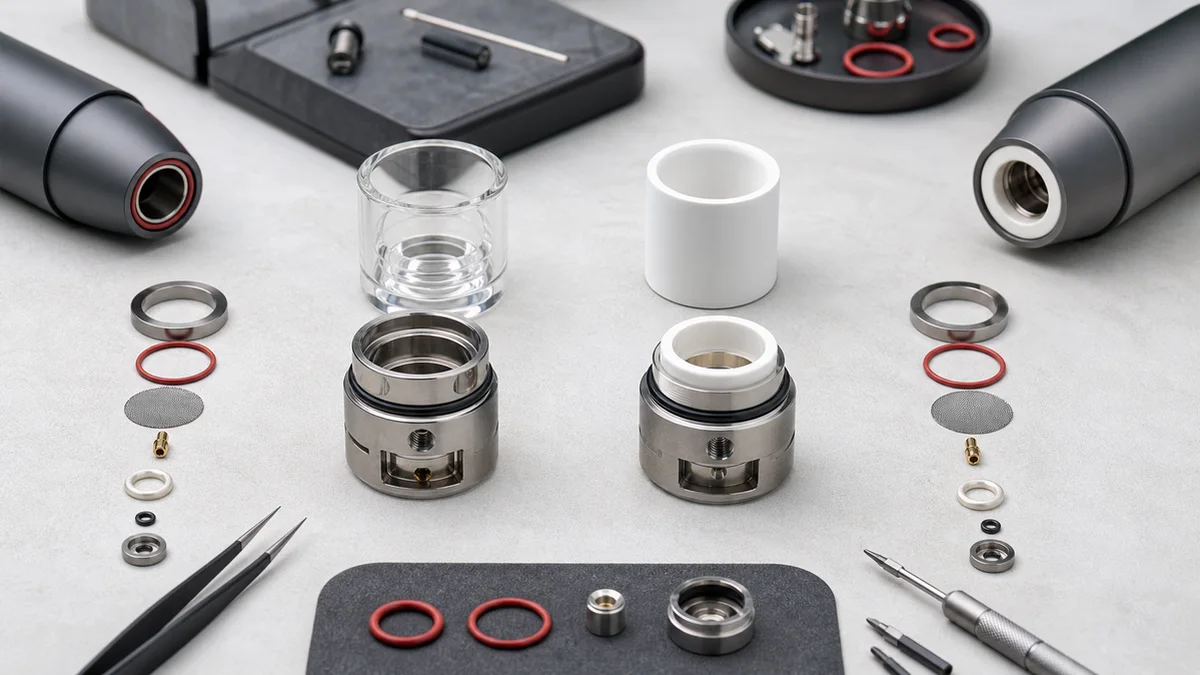
Rather than ranking quartz above or below ceramic, use this table to identify what to ask a manufacturer or check in a datasheet before assuming how a coil will behave.
| Variable | Why it matters | What to ask/verify |
|---|---|---|
| Heater geometry | Rod, dual-rod, cup, or tube changes contact area and heat distribution | Request a diagram or sample teardown |
| Resistance (ohms) | Determines current draw at a given voltage; affects heat-up speed and power efficiency | Confirm rated ohms and the manufacturer’s stated tolerance in writing |
| Thermal mass | Heavier substrates hold heat longer but may lag on ramp-up | Ask for time-to-temperature data if available |
| Contact area with material | More direct contact can change how quickly material is drawn to vapor | Compare wire-exposed vs. fully enclosed designs |
| Power source and settings | Battery capacity and voltage/wattage steps set the ceiling and range of usable heat | Confirm mAh, voltage options, and regulation type |
| Preheat function | A preheat cycle changes how the coil reaches working temperature | Confirm preheat duration and whether it’s adjustable |
| Airflow design | Chamber and mouthpiece airflow affect vapor density and residue pull-through | Ask for airflow path description or draw-resistance data |
| Cleaning/serviceability | Some heaters are replaceable, others are fixed to the chamber | Confirm whether the coil is user-replaceable |
No single row in this table determines outcome by itself — they interact. A buyer evaluating two “quartz coil” SKUs from different suppliers should expect meaningfully different answers across most of these rows, which is why a drawing, written spec, or sample matters more than the label.
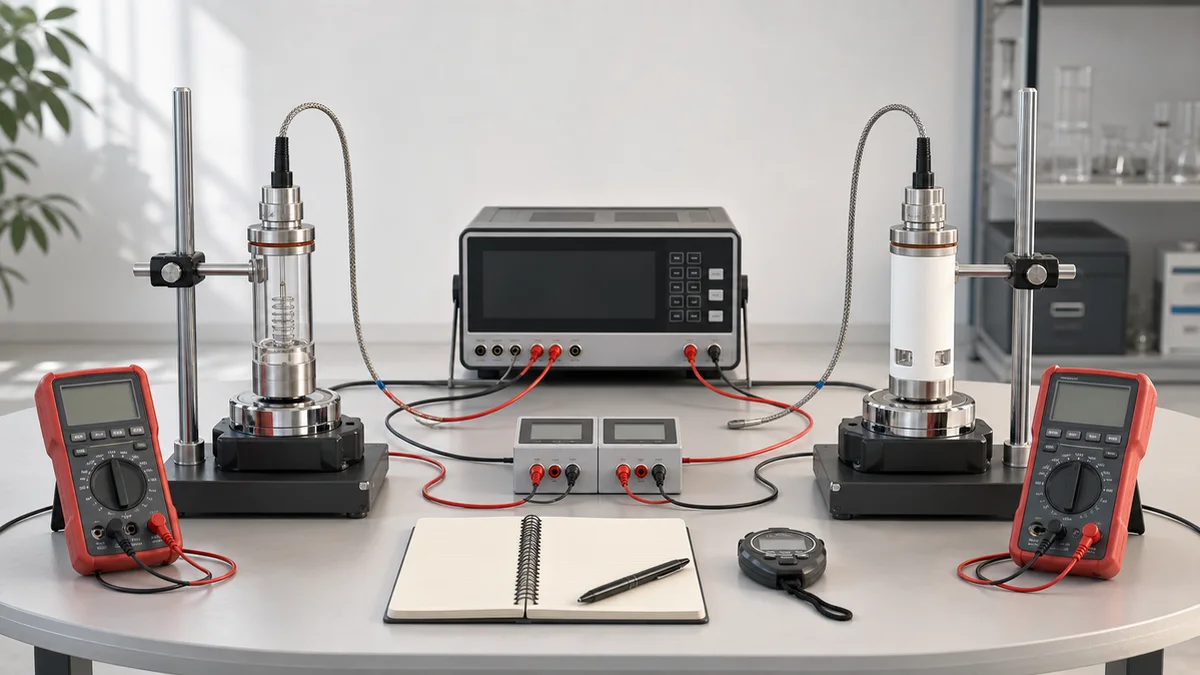
🧪 4. Use eight controlled sample-test questions
For B2B buyers running sample evaluation or QC acceptance testing, the following questions give a structured way to compare coils without relying on marketing claims about material superiority. This is a framework for what to measure — not a set of pass/fail numbers, since acceptable thresholds depend on your product spec and target market.
- Heat-up time — How long does the coil take to reach its rated working temperature from cold, at the device’s default voltage/wattage setting? Acceptance category: time-to-temperature consistency across a sample batch.
- Temperature stability under load — Does output temperature drift or spike when material is applied, and does it recover predictably? Acceptance category: variance across repeated draws.
- Resistance consistency — Do measured ohms across a sample batch fall within the supplier’s stated tolerance? Acceptance category: batch-to-batch resistance spread.
- Preheat behavior — Does the preheat cycle (if present) complete in the stated duration and at the stated voltage? Acceptance category: preheat timing accuracy.
- Residue and buildup after repeated use — How does the heater surface look after a defined number of load cycles? Acceptance category: visual residue accumulation rate.
- Cleaning recovery — After a standard cleaning procedure, does the coil return to baseline resistance and heat-up performance? Acceptance category: post-cleaning performance recovery.
- Mechanical durability — Does the heater withstand repeated insertion/removal or vibration without cracking or wire detachment? Acceptance category: cycle count to failure, if applicable.
- Battery draw and runtime impact — How many sessions does the coil support per charge at rated settings? Acceptance category: sessions-per-charge under defined use pattern.
Buyers should set their own numeric thresholds for each category based on their target device class and user expectations, rather than relying on a coil’s material label as a proxy for performance.
🧹 5. Evaluate cleaning, residue, and serviceability
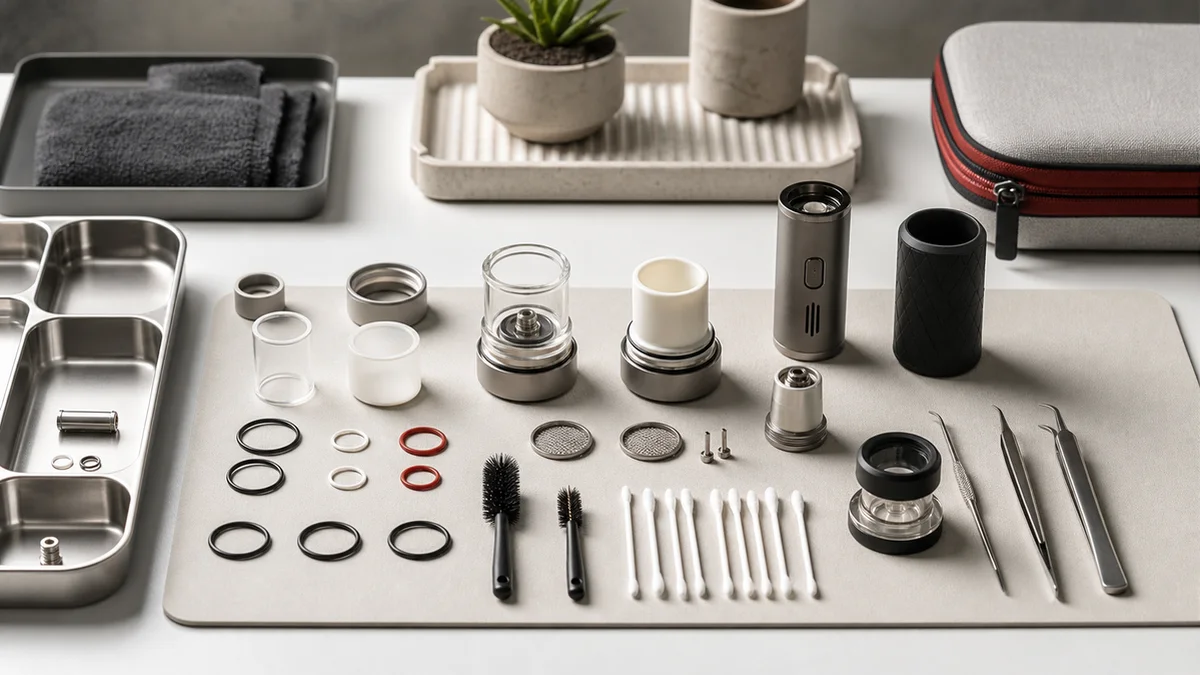
How a coil handles residue and cleaning is largely a function of design decisions, not just material. A few factors to weigh:
- Exposed wire vs. enclosed heater — Designs where wire is more exposed to material may accumulate residue differently than designs where the material sits above or away from the wire.
- Fixed vs. replaceable heaters — Some devices integrate the coil into the chamber permanently; others use a swappable atomizer, which changes how a brand handles warranty and long-term serviceability.
- Recommended cleaning method — Isopropyl-alcohol soaks, dry-burn cycles, or brush cleaning each interact differently with a given substrate and geometry; the manufacturer’s documented method matters more than the raw material.
- Chamber accessibility — Whether the chamber is easy to open and wipe down affects how much residue realistically gets removed between sessions.
These are engineering and product decisions a brand makes independent of whether the heater is quartz, ceramic, or another substrate. When evaluating a coil for a product line, ask for the documented cleaning procedure and serviceability design rather than assuming one material is inherently easier to maintain.
✅ 6. Review two documented AOVAPE examples
Cylindra Wax Vaporizer uses a 0.5-ohm quartz heating element paired with an 1100 mAh battery, three voltage settings (3.0V / 3.6V / 4.2V), a 10-second preheat function, and Type-C charging at 1A/5V. This is one specific configuration of a quartz-based heater — the resistance, battery capacity, and voltage range are specific to this device and should not be assumed to apply to other products described as “quartz coil.”
VertiDip Wax Pen Vaporizer uses ceramic-tube heating with a 650 mAh battery, three voltage settings (3.2V / 3.6V / 4.2V), a 510-threaded adapter for compatibility with other batteries, and a 2.0V, 10-second preheat in CBD mode. The lower default voltage in this mode is specific to VertiDip’s CBD setting, not a general rule for ceramic heaters.
Comparing these two devices side by side illustrates the article’s core point: Cylindra (quartz) and VertiDip (ceramic) differ in resistance, battery capacity, voltage range, and preheat voltage — variables that shape the user experience alongside, not because of, the heater material label alone.
❓ 7. Frequently asked questions
Is a quartz coil always better than a ceramic coil for flavor?
No single material produces universally better flavor. Flavor output depends on heat-up speed, temperature stability, contact area, and airflow, all of which vary by specific device design — not by material category alone.
Does a quartz coil heat up faster than a ceramic coil?
Heat-up behavior depends on the specific coil’s thermal mass, resistance, and geometry, plus the device’s voltage/wattage setting — not on the material name by itself. Ask for documented heat-up times for the specific heater rather than assuming based on the “quartz” or “ceramic” label.
Can I compare two “quartz coil” products directly based on that label alone?
Not reliably. “Quartz coil” is used inconsistently across suppliers and can cover rod, dual-rod, cup, and tube geometries with different resistances, contact areas, and thermal behavior. Request a drawing, written specification, or physical sample before comparing.
Are quartz coils easier to clean than ceramic coils?
Cleaning ease depends more on chamber design, whether the heater is replaceable, and the manufacturer’s recommended method than on the substrate alone. Request the documented cleaning procedure for each specific product.