If a cartridge works only when pushed or tilted, stop treating the adapter as “close enough.” A clean contact can fix contamination; it cannot correct incompatible geometry.
A 510 thread magnetic adapter screws onto a compatible cartridge and lets that cartridge seat in a battery’s magnetic bay. The threaded side may be called 510, but the magnetic side is not a universal standard. Adapter height, contact shape, magnet position, and the battery recess still have to match.
🧲 1. The adapter bridges threads to a magnetic battery bay
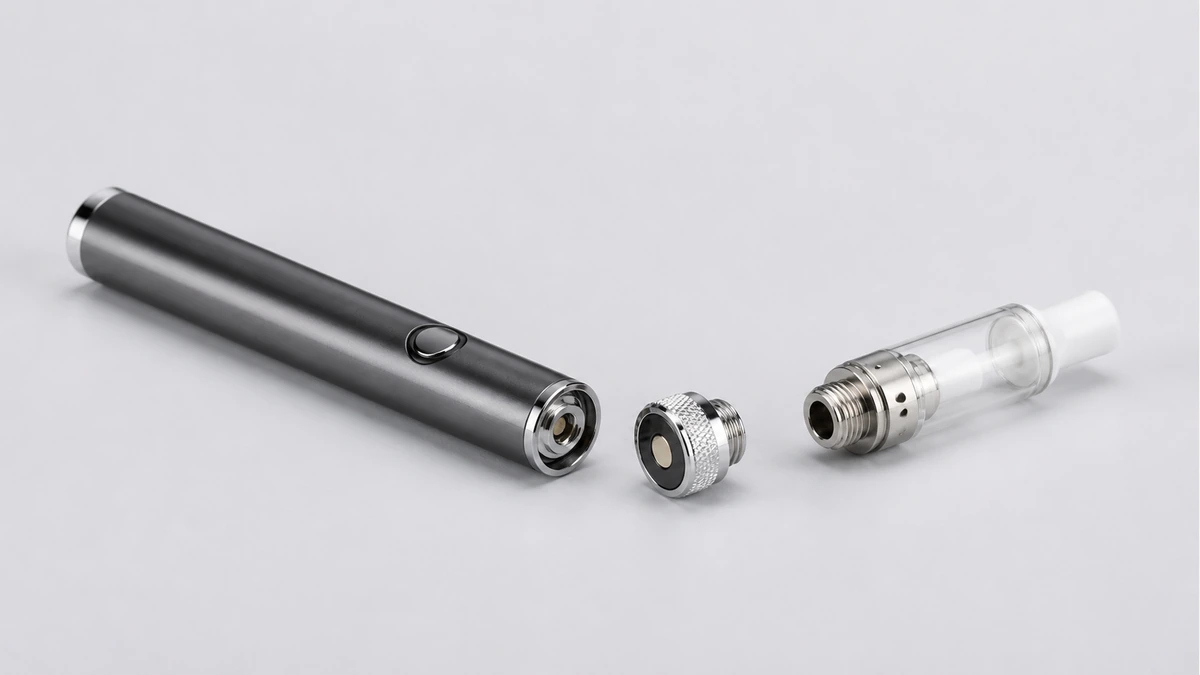
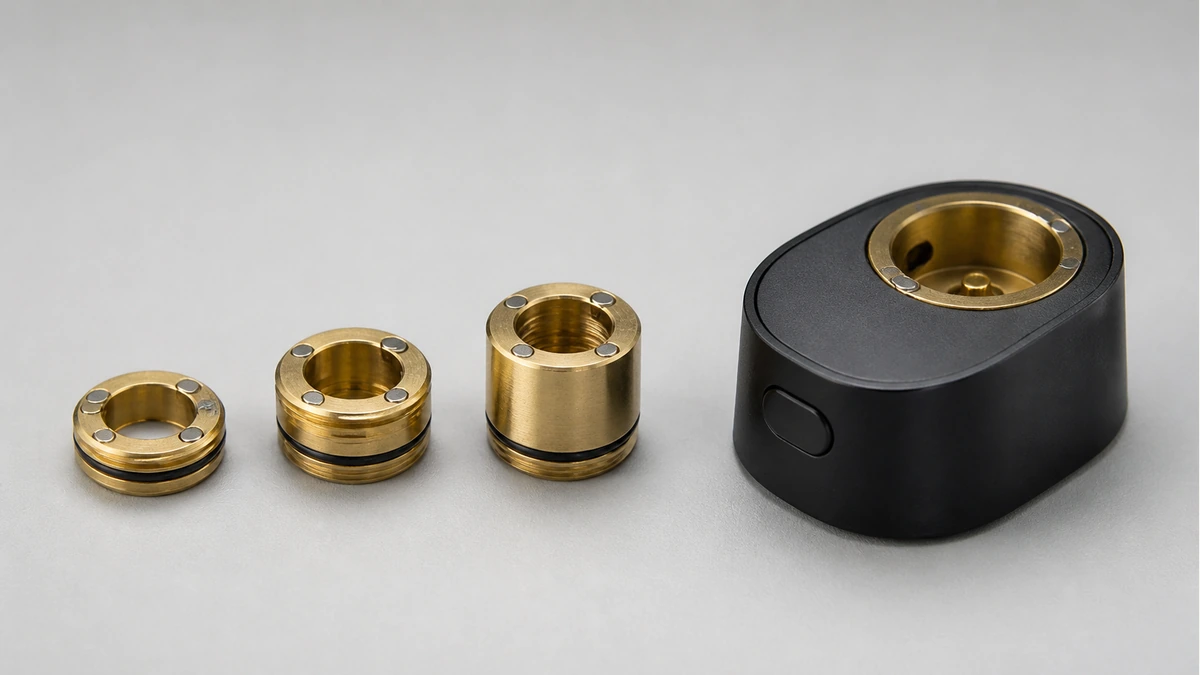
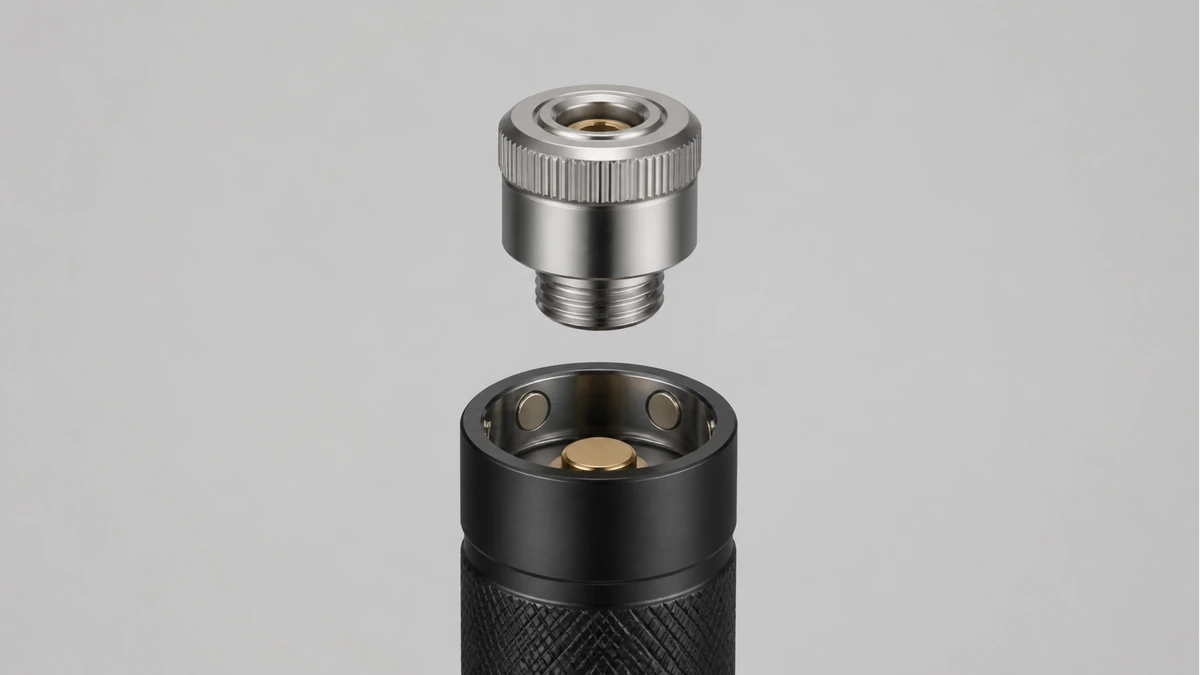
A magnetic 510 adapter has two distinct jobs happening at once. On one side, it threads onto the cartridge exactly like a standard 510 connection, using the same fine threading found on most cartridge-hardware batteries. On the other side, it presents a flat magnetic face — usually a thin ring with an embedded magnet and a center pin or pad — that mates with a corresponding magnetic ring inside the battery’s bay.
That center pin or pad is doing the electrical work. The magnet’s only job is mechanical: holding the two halves in physical alignment so the pin makes consistent contact. If the magnet is strong but the pin is dirty, bent, or sitting at a slightly different height than the battery expects, you can have a solid mechanical connection with a weak or nonexistent electrical one. That’s a distinction worth keeping in mind before assuming a “loose” adapter is a magnet problem — it’s frequently a contact problem wearing a magnet’s disguise.
🔩 2. A 510 thread does not make every adapter universal
Because the threading itself is a shared standard, it’s easy to assume any 510 adapter will work in any 510 magnetic bay. In practice, manufacturers design the magnetic side of the connection independently — bay depth, pin diameter, magnet polarity, and ring thickness vary from brand to brand and sometimes from model to model within the same brand. Two adapters can both be stamped “510 thread” and still be physically incompatible with each other’s batteries.
This is the root cause behind a common scenario: someone buys a replacement magnetic adapter, threads it onto a cartridge, and finds it either won’t drop fully into the battery’s bay or sits so loose that it wobbles. The thread fit isn’t the issue — the magnetic housing dimensions are. If you’re troubleshooting a battery that seems to have stopped recognizing a cartridge altogether, it’s worth ruling out the battery itself first; our 510 thread battery guide covers how these bays are built and what typically causes a battery to stop reading a connection at all.
The practical takeaway is that “510 thread” is a necessary label but not a sufficient one. It tells you the cartridge will screw onto the adapter. It tells you nothing about whether that adapter’s magnetic housing was designed for the battery you’re using it with.
📏 3. Height and cartridge diameter affect physical fit
Even when an adapter is genuinely compatible with a given battery, physical fit can still go wrong in two independent ways: adapter height and cartridge diameter.
Height matters because magnetic bays are often recessed — built as a shallow cup so the adapter sits flush or slightly below the battery’s outer edge. If a replacement adapter is taller than the one it’s replacing, the cartridge can end up sitting proud of the battery, putting lateral stress on the magnetic connection every time it’s bumped or the device is set down. If it’s shorter, the pin may not reach far enough into the bay to make firm contact, even though the magnet still grips.
Diameter matters for a different reason. A cartridge with a wider base can partially overhang a narrow adapter or bump against the rim of a recessed bay before the magnetic faces are even close to touching. This is especially noticeable with dab and concentrate cartridges that use thicker glass or ceramic bodies, where the base diameter is larger than typical thin-cartridge designs. In both cases, the failure looks electrical — flickering, no power, intermittent hits — but the cause is purely dimensional.
🧼 4. Clean contacts solve some failures, not incompatible geometry
Oil residue, concentrate runoff, and general debris are the most common reason a magnetic connection stops working despite looking fine. A thin film across the center pin or the magnetic ring is enough to insulate the contact just enough to cause intermittent power, dimming, or a battery that seems to charge but won’t fire. Because this failure mode looks identical to a dead battery or bad adapter, it’s usually the first thing worth checking before replacing any hardware.
Wiping the pin and the magnetic ring with a dry cloth or a cotton swab, letting any moisture fully evaporate, and reseating the connection resolves a large share of these cases. If a battery still won’t charge or fire after the contacts are visibly clean, the problem is more likely downstream — either in the battery’s charging circuit or in a fit issue rather than surface debris. Our vape not charging guide walks through how to tell the difference once cleaning has been ruled out.
What cleaning cannot fix is a geometry mismatch. No amount of contact cleaning will make an adapter that’s too tall sit flush, or make a pin reach a battery bay it’s too short for. If a connection is inconsistent immediately after installing a new adapter — before any residue has had a chance to build up — that’s a signal pointing toward fit, not cleanliness.
⚠️ 5. Do not pry pins or improvise conductive shims
When an adapter almost makes contact but not quite, the temptation is to “help” it along — bending the center pin outward with a fingernail or small tool, or wedging a scrap of foil or metal between the pin and the battery to close the gap. Both of these are worth avoiding.
Bending a spring-loaded pin changes its travel distance and can permanently deform it, which often makes the connection worse rather than better once the pin no longer retracts evenly. Improvised shims introduce an uncontrolled conductor into a battery circuit, which risks a short or an unpredictable current path rather than a stable fix. If a connection only makes contact when it’s physically pressed together, that’s a sign the adapter and battery weren’t designed for each other, not a sign that a small mechanical workaround will make them compatible.
In that situation, the more reliable path is stepping back to hardware that’s confirmed to match — either the adapter that originally shipped with the battery or one explicitly sold for that battery model. If the battery’s own charging behavior is also in question at this point, it’s worth checking it independently using something like a dab pen charger guide before concluding the adapter is the only variable.
📦 6. Small adapters are easy to lose and hard to identify
Magnetic 510 adapters are small enough — often barely larger than a coin’s rim — that they’re easy to lose track of. They can stay screwed onto an empty cartridge and get discarded along with it, fall out of a pocket, or end up mixed in with other loose hardware where they’re hard to tell apart at a glance. Once separated from the battery they were paired with, identifying the right replacement by sight alone is difficult, since most adapters look broadly similar despite having different internal dimensions.
This is less a hardware flaw than a consequence of the part’s size and the fact that it moves between the cartridge and the battery every time you swap one. If you’ve lost the original adapter, the more useful reference point is the battery’s model or the packaging it came with, rather than trying to match a replacement by appearance to whatever similar-looking part is on hand.
✅ 7. Match the exact battery system before buying spares
Because magnetic bay depth, pin layout, and ring diameter vary between manufacturers, the most dependable way to buy a replacement adapter is to match it to the specific battery system it’s going into, not to the generic “510 thread magnetic” category. Two products in that category can differ enough in their magnetic-side dimensions that one seats cleanly and the other never makes reliable contact.
When you’re comparing options, the details that matter most are the ones rarely emphasized in a listing title: the adapter’s overall height, the outer diameter of the magnetic ring, and whether it’s designed for a flush or recessed bay. If that information isn’t available, the safer bet is sourcing a replacement from the same brand or line as the original battery, since those parts are far more likely to share the same internal tolerances than any adapter picked based on thread size alone.
Ultimately, a 510 thread magnetic adapter is a small part carrying a surprising amount of specificity. The thread guarantees one thing — that it will screw onto a cartridge. Everything else about whether it will work with a particular battery depends on details the “510” label was never meant to cover.
🔍 8. Diagnose the connection without modifying it
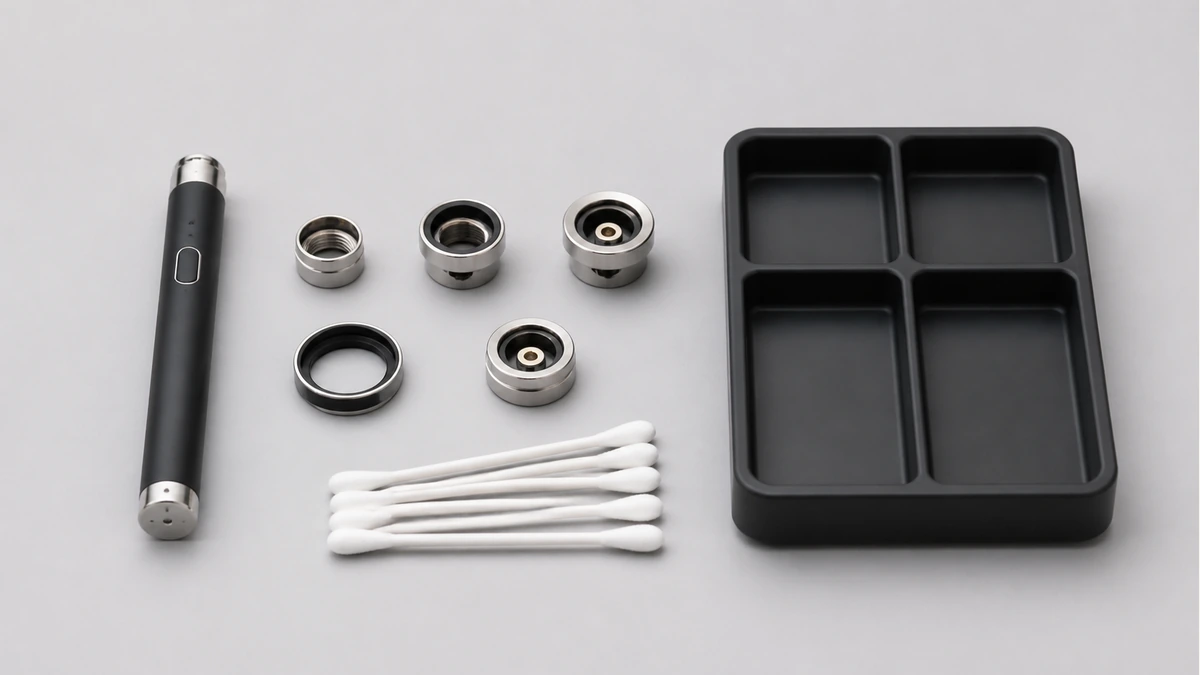
Start with the battery off. Remove the cartridge and adapter as one unit if the design allows, then separate them over a tray so the small ring cannot roll away. Compare the adapter with the battery maker’s specification or an original known-good part. Height and shoulder shape are often more revealing than the thread label.
Inspect accessible contacts for residue, lint, dents, or a crooked adapter. Clean only as directed by the device manufacturer and allow every surface to dry completely before reassembly. Never insert metal tools into the battery bay, pry a center pin, add foil, or build a conductive shim. Those shortcuts can create a short circuit or damage a spring contact.
⚡ 8.1 Separate retention from electrical contact
A cartridge can snap into the bay yet fail electrically, or make contact while sitting loose. The magnet provides retention; dedicated contact surfaces carry current. If pressing downward changes operation, either the adapter is wrong, a contact is contaminated or damaged, or the battery needs service. Continuous hand pressure is not a repair.
Airflow is a third issue. Some cartridges take air near the threaded base. An adapter shoulder or recessed bay can block those inlets even when the connection powers correctly. Hard draw with normal activation points to a physical airflow mismatch, not necessarily a weak battery.
🏷️ 8.2 Label spares by battery system
Because the rings look nearly identical, store them in a small labeled compartment away from used cartridges. Record the battery model and adapter version, not merely “510.” If a replacement comes in more than one height, compare it with the maker’s compatibility list instead of choosing the one that appears closest.
Stop using any setup that becomes unusually hot, activates unpredictably, shows damaged insulation, or needs pressure or tilting. Replace the correct adapter first when the battery and cartridge are otherwise known to work; seek device support if the fault remains.
🧪 8.3 Do not mix adapters during troubleshooting
Test with one known battery, its documented adapter, and one compatible cartridge at a time. Swapping several unmarked rings between batteries creates more variables and can make an intermittent contact look mysterious. A labeled known-good adapter is the fastest diagnostic tool.
If the original adapter is lost, ask for the battery model’s replacement part rather than a generic magnetic ring. Similar color and thread appearance do not establish bay depth, contact travel, or airflow compatibility.
Keep the original packaging or record the exact part number; that detail makes future troubleshooting faster and prevents accidental cross-system swaps.