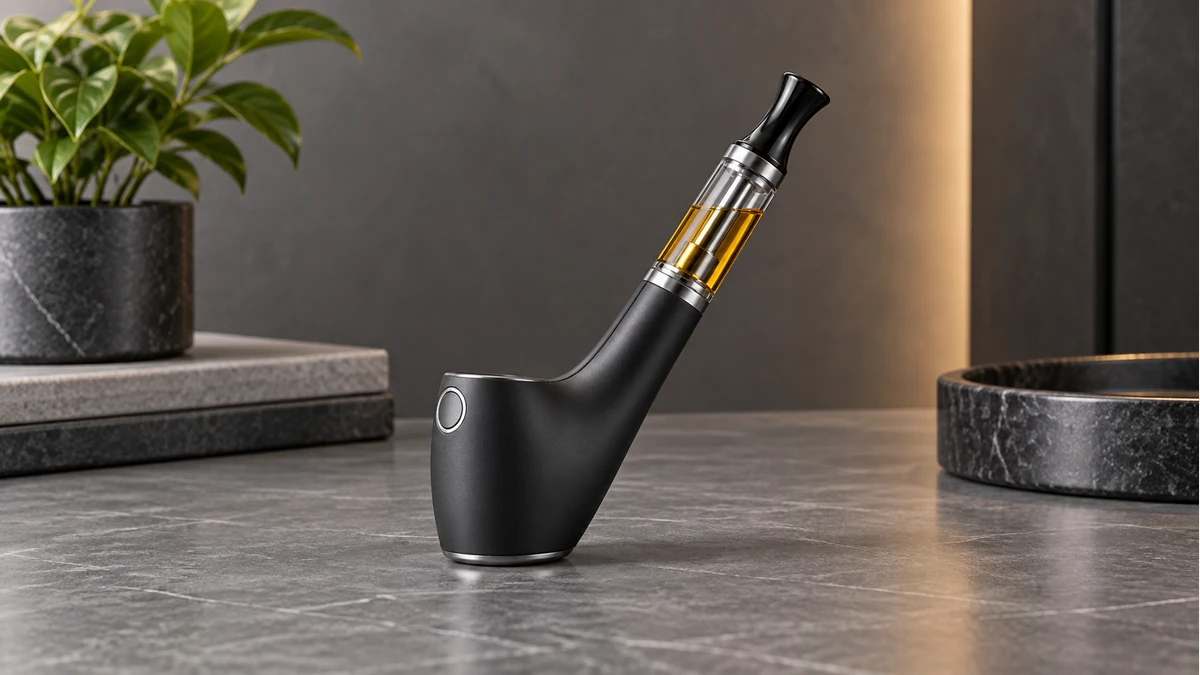
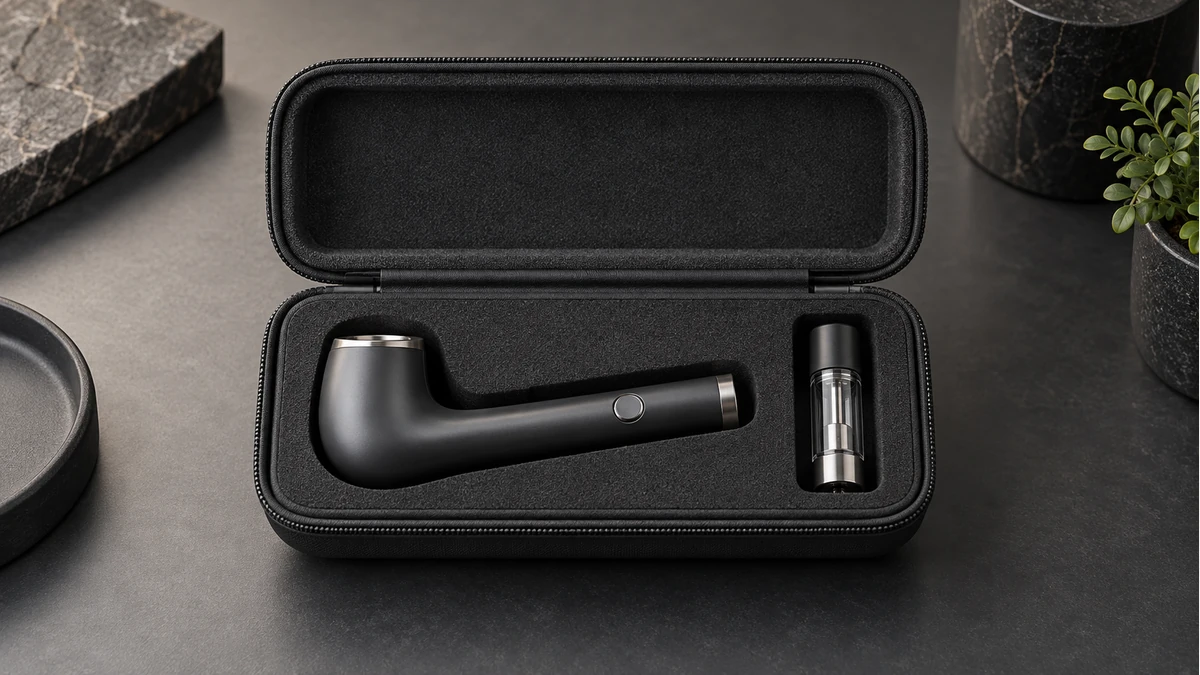
A “pipe” battery is one of the most recognizable shapes in the 510 thread category. Instead of a straight tube or a flat box, the body curves or steps upward into a raised neck that holds the cartridge at an angle away from the main cylinder, similar to the bowl-and-stem silhouette of a smoking pipe. That single geometry change affects grip, cartridge stress, airflow routing and how the unit sits in a pocket. Below is a breakdown of how the pipe layout differs from tube and box-mod batteries, what to check for fit and labeling, and how to keep the connection clean over time.
🔌 1. Pipe-Form Body vs Tube and Box Batteries
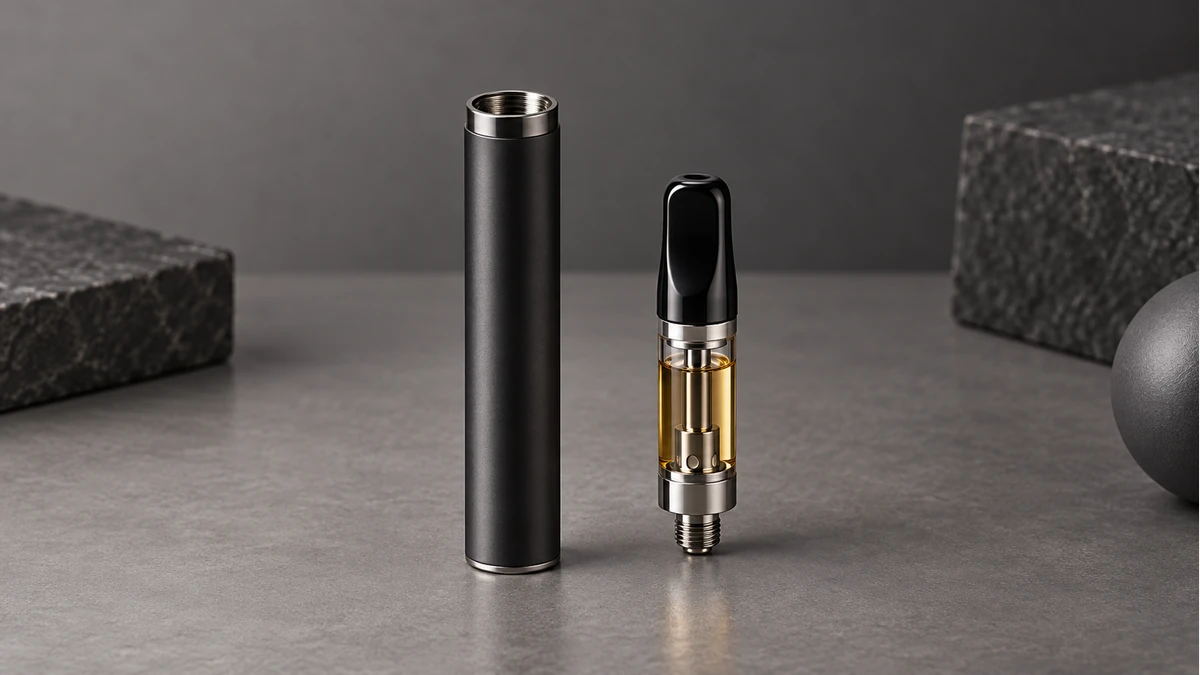
Most 510 batteries fall into one of three rough body categories: straight tubes, flat rectangular boxes, and pipe or “L-shaped” designs. A tube battery keeps the cartridge in line with the battery cell, so the whole unit is one continuous cylinder from base to mouthpiece. A box battery widens the body for a bigger cell or a screen, with the 510 connector usually centered on top.
A pipe battery breaks that straight line. The lower section houses the cell and circuit board, then the housing narrows and bends or steps upward into a shorter neck that the cartridge threads onto. The result is a cartridge that sits higher and often at a slight forward or backward tilt relative to the base.
🔎 1.1 Why Manufacturers Use This Shape
The angled neck does two things mechanically. First, it shortens the visual profile compared to stacking a long cartridge directly on top of a long cell, which can make the unit easier to grip with fewer fingers. Second, it moves the connector away from the thickest part of the housing, which can reduce how much a wide cartridge overhangs the body on one side.
🧭 2. Cartridge Angle, Center of Gravity and Grip
Any time a cartridge sits off the main axis of the battery, the combined center of gravity shifts. On a straight tube, the weight of a full cartridge stays stacked directly over the cell, so the device balances the same way whether it is upright or on its side. On a pipe-style unit, the cartridge’s mass sits partly to one side of the cell, which is what gives the device its characteristic pipe silhouette.
This has a few practical effects:
- The device can feel front-heavy or back-heavy when held loosely, since the cartridge is not stacked directly in line with the grip point.
- Setting the unit down on a flat surface, it may rock slightly or come to rest at a tilt rather than standing perfectly vertical, depending on how wide the base is.
- A cartridge threaded even slightly crooked will amplify the tilt, because the offset compounds with the body’s existing angle instead of correcting it.
None of this is a defect — it is a direct consequence of the geometry. Knowing to expect it helps distinguish normal pipe-shape balance from an actual threading problem.
🔋 3. Protected Collar vs Exposed Threading
Pipe batteries generally handle the cartridge-to-body transition one of two ways: a protected collar or fully exposed threading.
🔎 3.1 Protected Collar Design
Some pipe bodies extend a raised lip or cup around the base of the neck. When a cartridge is threaded in, that collar surrounds the lower portion of the cartridge glass and hides the metal threading almost entirely. This shields the connector from side impacts and keeps pocket lint or dust away from the contact pin, since the collar acts as a physical buffer around the joint.
🧠 3.2 Exposed Threading Design
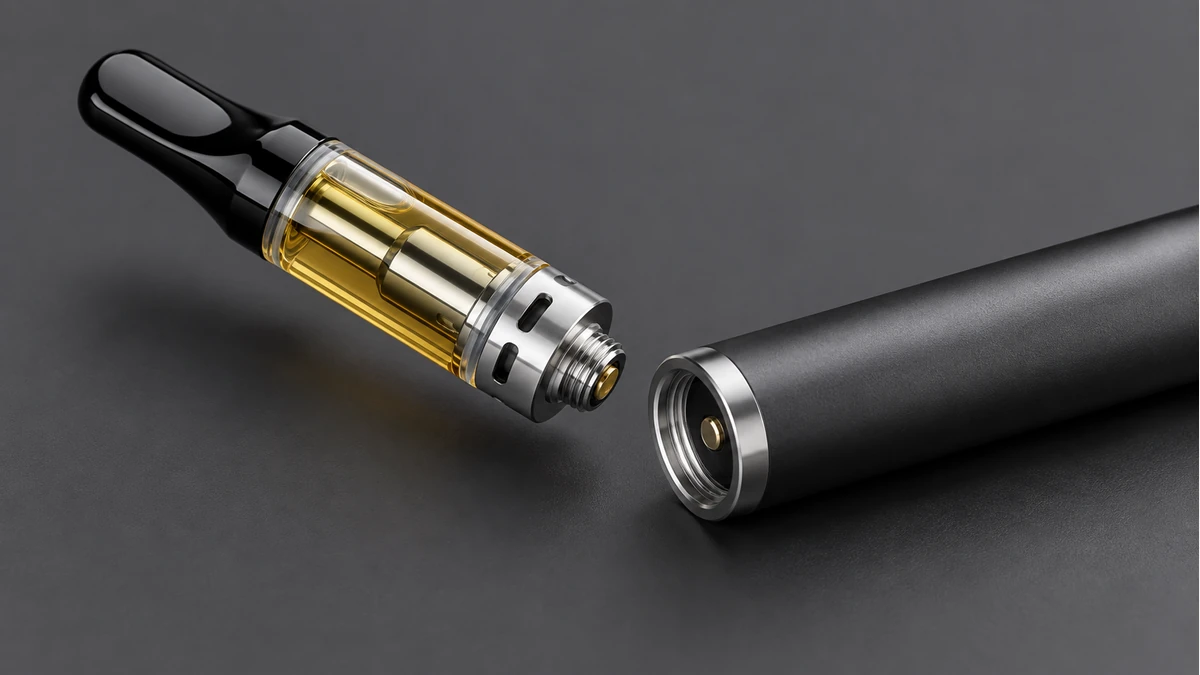
Other pipe batteries leave the 510 connector sitting flush or nearly flush with the top of the neck, with no surrounding wall. The cartridge threads on and the full length of its base, plus the connecting threads, stay visible. This design is usually easier to wipe down since there’s no recessed collar trapping residue, but the threads and center pin are more exposed to bumps and to whatever is loose in a pocket or bag.
Neither design is universally better — a protected collar trades easy cleaning access for physical protection, while exposed threading trades protection for a connector that’s simpler to inspect and clean.
🧩 4. Airflow Path and Button or Draw Activation
Airflow on a pipe battery has to route through the bend between the cell chamber and the cartridge neck, which is a longer and less direct path than a straight tube design. Intake holes are typically placed low on the body, near the base of the neck or on the collar itself, so air travels up through the angled section before reaching the cartridge’s own airflow inlet.
🔎 4.1 Button-Fire vs Draw-Activated
Button-fire pipe batteries place the fire button on the flat or curved face of the lower body, usually where a thumb naturally rests when the neck is gripped near the top. Draw-activated versions skip the button entirely and rely on an internal sensor that detects airflow through the same intake path, which means a partially blocked or misaligned airflow hole can affect activation as much as it affects vapor delivery.
🧠 4.2 Adjustable Airflow Rings
Some pipe designs include a rotating ring at the base of the neck with graduated slots that can be turned to widen or narrow the intake opening. Because this ring sits right at the bend in the housing, it’s also the spot most likely to accumulate residue that has traveled down from the cartridge, so it benefits from more frequent attention than a straight-tube airflow ring would.
🧼 5. Fit, Labels and Compatibility Confusion
“510 thread” describes the connector’s physical dimensions, not a guarantee that every cartridge and every battery will seat identically. On pipe-style batteries, a few compatibility issues come up more often than on straight tubes.
- Wider cartridges overhanging the collar: a cartridge with a wider diameter than the neck it’s threaded onto will hang over the edge on one or more sides, which can look like a loose or crooked fit even when the threading itself is fully seated.
- Labeling that only says “510 thread”: that label confirms thread pitch and diameter compatibility, but says nothing about total height, cartridge width or whether the collar will fully surround a given cartridge base. A cartridge can be fully 510-compatible and still look mismatched in proportion to the battery.
- Crooked-feeling connections: because the neck is already off the main body axis, a cartridge that isn’t screwed in perfectly straight is easier to notice by feel on a pipe battery than on a tube, where the tilt has nowhere obvious to show up.
If a cartridge threads on with resistance partway through, back it off and restart rather than forcing it — cross-threading at an angle is more likely on a neck that’s already offset than on a straight connector, since it’s harder to keep the cartridge perfectly vertical while threading by feel.
📐 6. Pipe Shape Changes Balance Before It Changes Electronics
A pipe-style 510 battery relocates the cartridge away from the straight line of a pen. That creates a different center of gravity, a different hand position and often a different path for the cartridge’s intake holes. None of those changes alter the 510 thread itself, but each can determine whether the assembled device feels stable and whether the cartridge stays protected.
🔎 6.1 Check the Cartridge Angle and Shoulder
Set the battery on a flat surface without powering it. Confirm that the cartridge clears the body through its full threaded travel and that the mouthpiece does not become the first point of contact if the device tips. A wide cartridge shoulder may touch a recessed collar before the center pin reaches electrical contact. That is a geometry mismatch, not a reason to tighten harder.
🧠 6.2 Airflow May Enter Through the Collar
Some cartridge bases draw air through slots near the thread. A pipe body with a deep collar can cover those slots if the design does not provide another inlet. Compare the cartridge base with the battery recess and keep decorative sleeves away from small openings. Restricted draw with normal indicator behavior is a reason to inspect this interface first.
📏 6.3 Store the Cartridge as a Fragile Part
The horizontal or angled silhouette can invite users to carry the device by its mouthpiece. Avoid that habit. Remove the cartridge when the manufacturer recommends separate storage, cap both ends, and keep it upright in a fitted compartment. The threaded joint is an electrical connection; it is not a handle for the entire battery body.
Button placement also deserves a dry handling test. Hold the empty, powered-off device in the positions used to pick it up, set it down and place it in a case. If the control sits where normal grip pressure can press it, use the documented lock or power-off sequence before storage. Pipe styling does not eliminate the need for an electrical lockout.
A stable stand can also matter because pipe bodies place mass away from the cartridge axis. Set the empty assembly on the surface described by the maker and verify that a cable, sleeve or nearby object cannot pull it over. Stability is a property of the complete assembly, not the battery shell by itself.
🔍 7. Cleaning, Storage and Troubleshooting Connection Issues
The bend in a pipe battery is also where residue tends to collect, since any oil or condensation that migrates down from the cartridge has to pass through the neck before it reaches the wider body. This makes the collar area and the center pin the first places to check when a connection stops firing consistently.
🔎 7.1 Cleaning the Connector
A dry cotton swab run around the base of the neck and across the center pin removes most surface residue. For a protected-collar design, angle the swab to reach under the lip where the cartridge base sits, since that hidden ring is easy to skip during a quick wipe-down. For exposed threading, residue is usually visible directly on the threads and can be cleared the same way.
🧠 7.2 Troubleshooting a Loose or Inconsistent Connection
- If the cartridge feels loose or wiggles slightly, remove it and check the center pin for buildup that could be preventing full contact.
- If the device doesn’t fire on a draw-activated model, check that the airflow path at the base of the neck isn’t blocked by debris, since that’s the same route the sensor uses.
- If a button-fire model fires intermittently, inspect the threading for residue rather than assuming a battery fault, since a thin film on the threads can interrupt contact without being visible at a glance.
📏 7.3 Storage Between Uses
Because the cartridge sits off-axis on a pipe battery, storing it upright in a holder or case keeps the connector’s weight distributed the way it was designed for, rather than resting on its side where the cartridge’s offset weight puts sustained pressure on one edge of the threading. If storing for an extended period, removing the cartridge first prevents any residue from settling into the collar or threads while sitting unused.
For a closer look at how airflow adjustment rings are built across different housing shapes, see the 510 cartridge guide. For a comparison of connector protection styles across other 510 body types, see the hardware cleaning-kit guide.
Takeaway: A pipe-style 510 battery isn’t a variation of a tube battery with a bent neck for looks — the offset geometry changes where weight sits, how airflow has to travel, and where residue collects, all in ways that are specific to that bend. Checking a cartridge’s fit against the collar shape rather than just its thread label, and cleaning the neck area more often than a straight-tube connector would need, addresses most of the fit and firing issues that come up with this form factor.