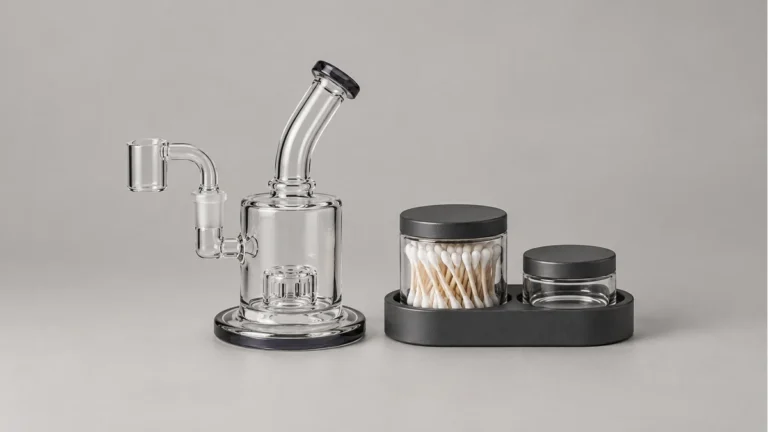
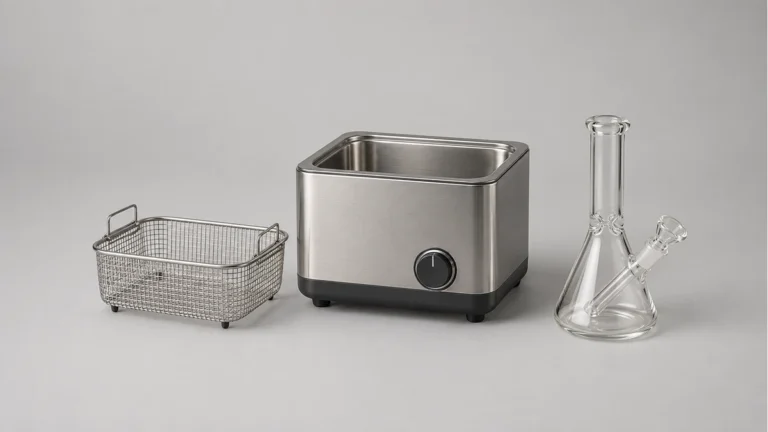
You buy the kit because the packaging looks organized. Twelve pieces, a zippered case, a picture of a spotless pen on the front. You get it home, open it up, and half the brushes are too wide for anything you actually own, one is clearly meant for a rifle barrel, and the two cotton swabs at the bottom look like they came from a bathroom cabinet. None of it addresses the narrow airpath on your cartridge, the screen inside your chamber, or the sensor pin that should never see liquid. A vape cleaning kit only earns its name when the tools match the hardware in front of you — not when it fills a case.
That mismatch is the real starting point for talking about cleaning gear. The device world isn’t one category. A cartridge pen, a wax pen with a coil, and a device with a removable ceramic or ceramic-lined chamber each wear differently, trap residue differently, and tolerate cleaning differently. A kit built around a generic brush set treats all three the same way, which is how people end up scratching a mouthpiece, soaking a battery contact, or pushing gunk deeper into a channel instead of out of it.
🧰 1. What a Vape Cleaning Kit Actually Needs to Contain
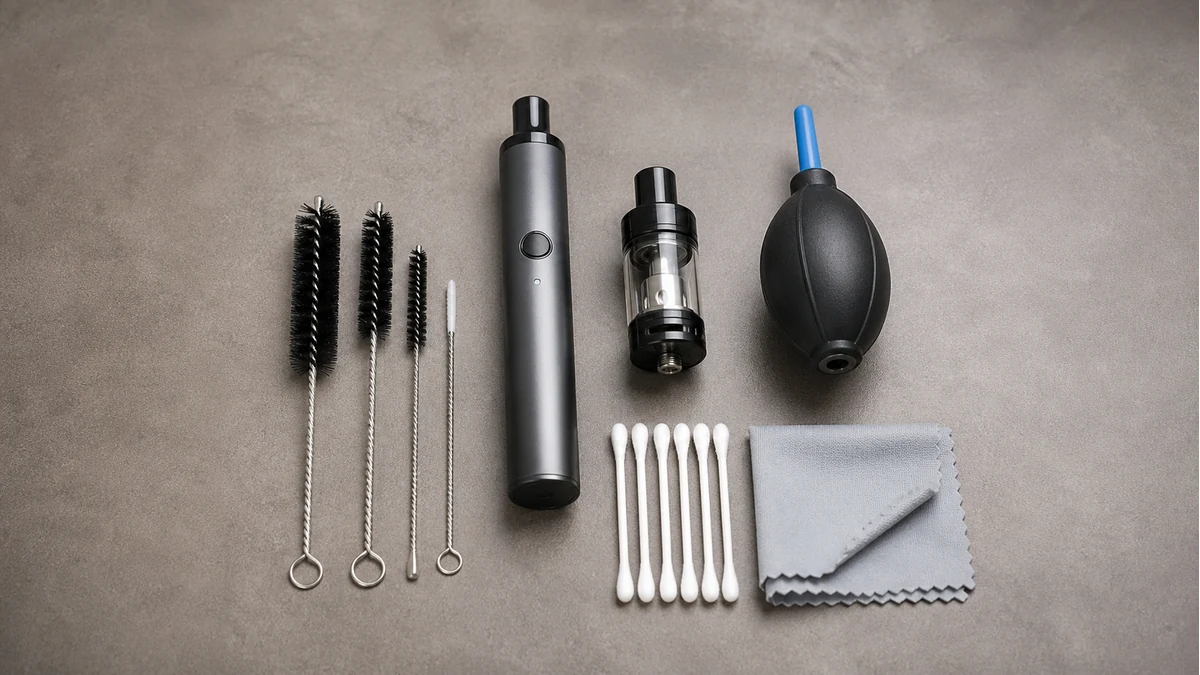
Strip away the marketing and a cleaning kit that does real work is smaller than most people expect. The core list is short, and every item earns its place because it solves one recurring problem: residue in a narrow space, residue on a flat surface, or moisture that needs to leave before the part goes back together.
🧰 1.1 The Short List That Covers Most Devices
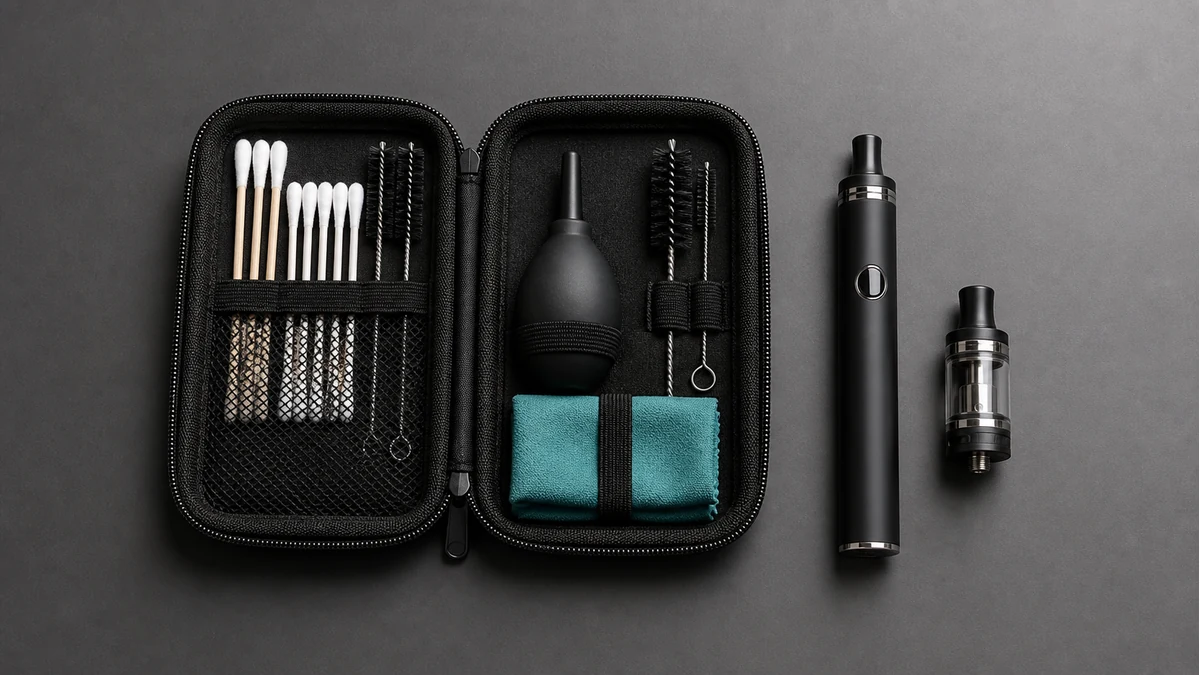
- Soft cotton swabs — for mouthpieces, threading, and any surface you can reach directly without forcing anything into a channel.
- Narrow, flexible brushes — sized for airpaths and chamber walls, not generic bottle brushes bought by diameter alone.
- A small air bulb or rubber squeeze bulb — for clearing loosened residue and moisture out of enclosed channels without touching electronics.
- Lint-free cloths — for glass, exterior housings, and any surface where fibers or lint would otherwise stay behind.
- A dedicated drying space — a tray, a stand, or simply a clean towel set aside so parts air out fully before reassembly.
Notice what’s absent: no metal picks, no wire brushes, no all-purpose solvent. Those show up later, and not as recommendations. The list above is deliberately narrow because narrow tools are what actually fit inside a cartridge threading, a chamber wall, or a mouthpiece channel. A brush that’s too wide doesn’t clean faster — it just can’t reach the surface at all, and residue accumulates around it instead of coming off. For the mouthpiece specifically, the swab-and-cloth approach is closer to what’s covered in this walkthrough on cleaning a vape pen mouthpiece, where the emphasis is on repeated light passes rather than one aggressive scrub.
The drying space deserves more attention than it usually gets. Most cleaning mistakes aren’t about the tool — they’re about reassembling a part before it’s actually dry. A chamber that looks dry on the outside can still hold moisture in a threaded seam or around a screen. Setting parts out on a clean surface for a real stretch of time, rather than wiping once and reassembling immediately, prevents a surprising share of the problems people blame on cleaning products.
💧 2. Matching Tools to Cartridge Pens, Wax Pens, and Removable Chambers
This is where a generic kit falls apart, because these three device types don’t share a cleaning profile. They share a category — vaporizer hardware — and not much else once you look at how residue actually forms in each one.
💧 2.1 Cartridge Pens
A cartridge pen’s cleaning needs are mostly external. The threading where the cartridge meets the battery base collects residue and can affect the connection over time. A dry cotton swab, or one very lightly dampened per the manufacturer’s own guidance, handles the threading and the outer edge of the mouthpiece. The internal path of the cartridge itself is sealed and isn’t something you disassemble or flush — that’s a manufacturing detail, not a maintenance step, and forcing a brush into a sealed cartridge risks damaging it rather than cleaning it.
💧 2.2 Wax Pens
Wax pens built around a coil have a different failure pattern. Residue builds on the coil itself, on the chamber walls around it, and sometimes on the mouthpiece where vapor condenses on its way out. A narrow brush works the chamber walls around the coil — never directly scrubbing the coil surface, since that’s where wear shows up fastest. Manufacturer instructions vary meaningfully here: some coils are designed for a light dry-brush pass only, others specify how they should be cleaned or when they should simply be replaced rather than cleaned. That variance is exactly why the instructions that came with the specific device matter more than a general routine.
💧 2.3 Removable Chambers
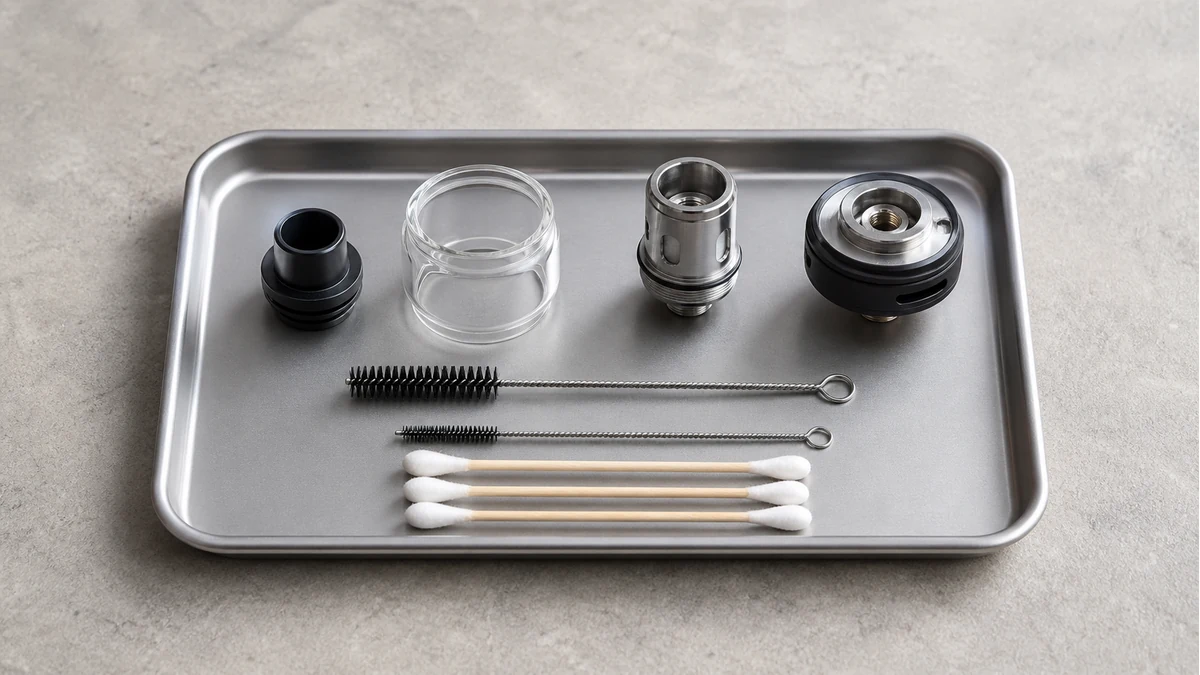
Removable chambers, whether ceramic, ceramic-lined, or glass-lined, are the most forgiving of the three because they usually come out of the device entirely. That means they can be cleaned away from anything powered, on their own, with more thorough access. A narrow brush reaches the interior walls, a swab handles the rim and any screen present, and the air bulb clears loosened material out through the opening before the chamber goes back in. The chamber being removable is the whole advantage here — it’s the one part of most devices where more thorough cleaning is actually appropriate, precisely because it separates cleanly from the electronics.
The common thread across all three is that the manufacturer’s own instructions should decide whether liquid cleaning is appropriate, how often, and with what. A cartridge and a removable ceramic chamber are not interchangeable in what they tolerate, and treating them as if they were is how a single cleaning session damages a part that was working fine.
⚡ 3. The Parts That Must Stay Dry, No Exceptions
Every device with a battery has a boundary line, and that line is where cleaning stops being about residue and starts being about risk to the electronics. Battery contacts, charging ports, sensor pins, and any circuit board surface fall on the wrong side of that line for liquid of any kind.
This is the part of a cleaning routine that a lot of generic kits actively work against, because they include swabs pre-dampened with solvent and no guidance on where those swabs shouldn’t go. A moist swab on a mouthpiece is fine. The same swab near a battery contact or charging port is a different situation entirely, and it’s one of the more common ways people damage an otherwise functional device — not through neglect, but through cleaning it too aggressively in the wrong spot.
The practical rule is simple to state and easy to follow once it’s internalized: anything that conducts electricity or reads a signal gets a dry cloth or a dry brush, never liquid, never a damp swab, and never compressed air aimed directly at it with force. If a removable chamber or cartridge needs to come off before cleaning, take it off. Clean the powered base with the device off, using only dry tools, and reassemble everything only once every part that did get liquid cleaning is fully dry. This is also where the dab rig comparison is useful: electric rigs face the same divide between a cleanable chamber and a base that should never get wet, which is covered in more detail in this guide to cleaning an electric dab rig. The logic transfers directly to pens and portable devices with removable chambers.
🚫 4. Tools and Improvised Cleaners That Cause Avoidable Damage
Some of the worst outcomes in vape maintenance don’t come from skipping cleaning — they come from cleaning too hard, with the wrong tool, or with something never meant for the job. A few patterns show up often enough to call out directly.
🚫 4.1 Metal Picks and Wire Brushes
Metal picks and wire-bristle brushes are common in generic kits because they look thorough. On a ceramic or ceramic-lined chamber, they scratch the surface, and a scratched surface holds residue more readily than a smooth one, which makes the next cleaning session harder, not easier. On a coil, metal contact can bend fine wire or damage a delicate surface entirely. If a brush is stiff enough to feel like it’s scraping rather than sweeping, it’s the wrong brush for the surface.
🚫 4.2 Household Solvents and Improvised Liquids
Nail polish remover, undiluted alcohol used far beyond what a manufacturer specifies, and general household cleaners are not formulated for the plastics, seals, or coatings used inside vaporizer hardware. Some plastics and coatings react to solvents in ways that aren’t obvious until the part is already degraded — clouding, softening, or a seal that no longer holds. The manufacturer’s stated cleaning method exists specifically because they know what their materials tolerate; a household product doesn’t come with that knowledge built in.
🚫 4.3 Compressed Air Cans and High-Pressure Blasts
A gentle squeeze bulb clears loosened debris. A compressed air can, aimed into a narrow channel at full pressure, can drive residue deeper into a chamber, force moisture into a seam it wouldn’t otherwise reach, or — near a powered base — push debris toward a contact point rather than away from it. Pressure that’s controlled by hand beats pressure that isn’t, every time, for this kind of work.
🚫 4.4 Skipping the Coil Compatibility Question Entirely
Sometimes the honest answer to “how do I clean this coil” is that the coil isn’t meant to be cleaned indefinitely — it’s meant to be replaced on a schedule, and no amount of careful brushing restores performance that’s genuinely due to wear rather than residue. Knowing which coil actually fits a given device, and how it’s rated to be maintained, prevents the trial-and-error that leads to forcing the wrong tool into the wrong part. That’s a compatibility question first, before it’s a cleaning question, and it’s worth resolving with a resource like this vape coil compatibility guide rather than guessing based on what fits by eye.
❓ 5. Quick Answers
❓ 5.1 Do I need a different kit for every device I own?
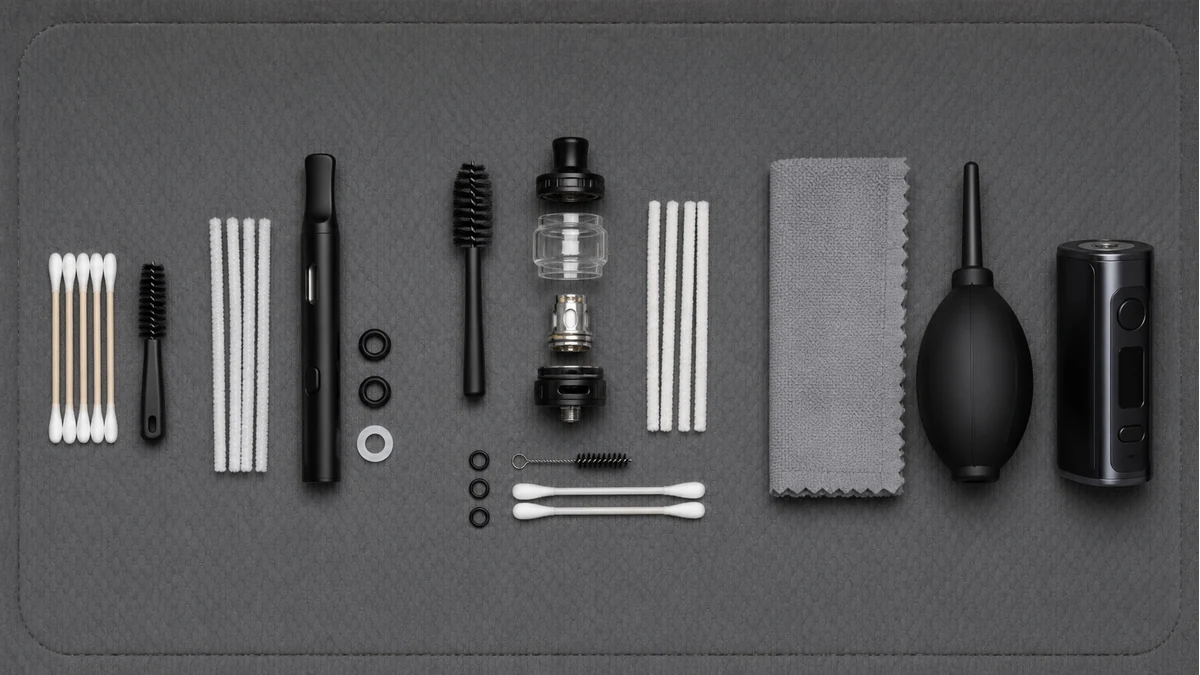
No — the same core set of soft swabs, narrow brushes, an air bulb, lint-free cloths, and drying space covers cartridge pens, wax pens, and devices with removable chambers. What changes is which tools you use on which part, and how closely you follow that specific manufacturer’s instructions for liquid contact.
❓ 5.2 How often should removable chambers be cleaned versus cartridges?
This depends entirely on usage and on what the manufacturer specifies for that particular device — there’s no universal interval that applies across brands and hardware types. What’s consistent is the method: removable parts get more thorough attention specifically because they detach from the electronics, while sealed cartridges are limited to external cleaning only.
❓ 5.3 Is it safe to use the same swab on the mouthpiece and near the battery?
No. A swab that’s been used with any liquid, however light, shouldn’t touch battery contacts, charging ports, or any exposed circuitry afterward. Keep dry tools and liquid-cleaning tools mentally and physically separate, and treat the powered base as off-limits for anything but a dry cloth.
A working cleaning kit isn’t the one with the most pieces in the case. It’s the one where every tool has a specific part of the device it’s meant for, where the powered base never sees liquid, and where the manufacturer’s own instructions — not a generic routine — decide what each piece of hardware can actually tolerate. Build around the device, not around the zipper.
📚 6. Sources and Reader Questions Reviewed
Technical statements were checked against the sources below. Reddit discussions were used only to identify reader questions and language, not as proof of technical, health, safety or legal claims.
- FDA battery charging and handling guidance
- Reddit discussion 4mkus6 (reader-question research only)
- Reddit discussion rumth4 (reader-question research only)
- Reddit discussion ikmuph (reader-question research only)
For removable mesh parts and keeping spares identified, see our metal pipe screens guide.