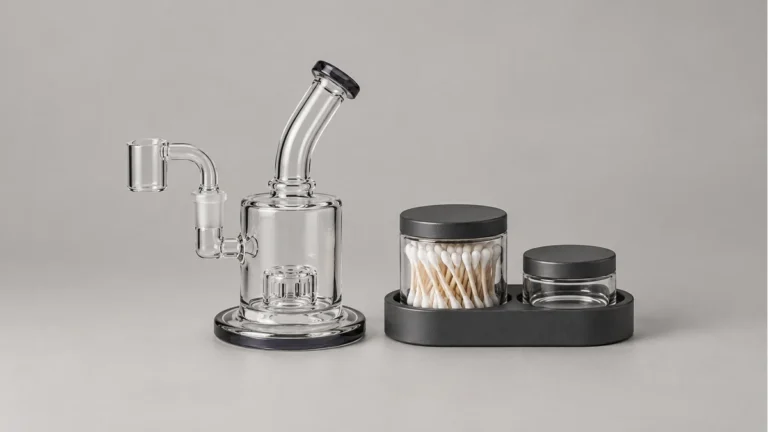
You’re standing in front of a display case—or scrolling a marketplace listing at midnight—looking at two dab rigs. One is thirty dollars. The other is a hundred. They’re roughly the same height, both have a percolator, both come with a banger. The cheap one has a marbled color-changing accent and a fumed logo. The expensive one looks plainer but heavier. Which one actually gets you through six months of daily use without a crack, a wobble, or a joint that won’t seal? That’s the real question buyers are trying to answer, and it has almost nothing to do with which one looks better in a photo.
Price in dab rig glass tracks a handful of specific things: wall thickness, how the base was formed, how precisely the joint was ground, and how much labor went into the percolator. It does not reliably track color, branding, or how elaborate the design looks. A buyer who understands which of those factors matters for daily function—and which is just decoration—can spend thirty or forty dollars intelligently instead of guessing.
🔍 1. The $30-Versus-$100 Shelf Decision
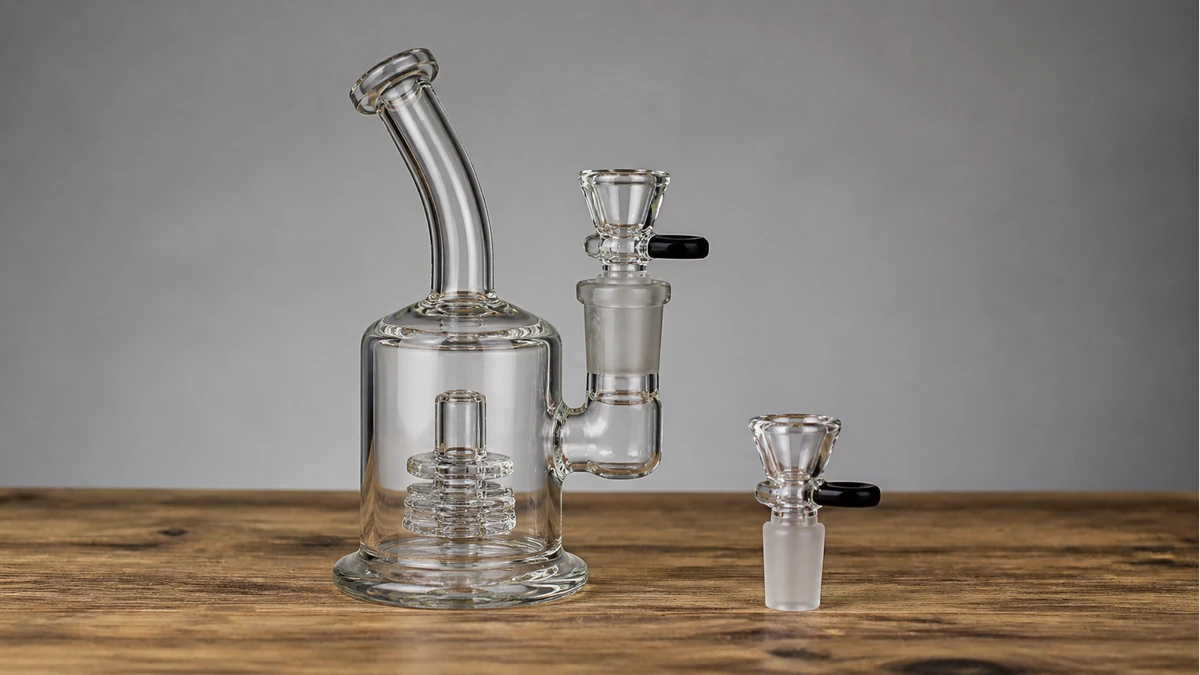
Most first-time buyers assume the price gap is entirely about glass thickness, and thickness does matter, but it’s only part of the story. A rig’s price also reflects how much hand-finishing went into the joint, whether the base was blown as one continuous piece or assembled from separate parts, and how tightly the percolator slits were cut. Two rigs can weigh almost the same and still behave very differently once you’re heating a banger to working temperature and setting a hot quartz piece into the joint several times a day. Fusing a base and neck in one continuous pull of glass takes longer at the torch than welding a pre-formed foot onto a separate tube, and that extra time is where a chunk of the price difference actually lives.
The instinct to equate “cheap” with “fragile” isn’t wrong, but it’s imprecise. A well-made budget rig with thick borosilicate walls and a wide, flat base can outlast a mid-priced piece with a narrow foot and thin percolator arms. Borosilicate resists thermal shock better than soda-lime glass, but even good borosilicate fails if the shape around it is poorly proportioned. The goal isn’t to avoid the low end of the shelf—it’s to know which specific features at that price point are worth checking before you commit, which is exactly what the next few sections walk through.
🧩 2. What an Inexpensive Rig Does Perfectly Well
A cheap dab rig is not automatically a bad rig. Several things that matter for daily function are cheap to get right, and plenty of budget pieces get them right.
- Basic filtration. A simple showerhead or tree percolator diffuses vapor effectively even in an inexpensive rig. Percolator complexity adds drag and cleaning difficulty faster than it adds noticeable smoothness, so a rig that skips the elaborate multi-chamber design isn’t giving up much.
- Standard joint sizes. A 14mm female joint is a 14mm female joint. As long as it’s ground evenly, a low-cost rig accepts the same bangers, carb caps, and quartz inserts as a rig three times its price.
- Straightforward cleaning. Simpler shapes with fewer internal chambers are often easier to maintain than ornate, expensive designs, since there’s less internal geometry for residue to collect in.
- Visual presence. Color accents, fuming, and worked-glass details show up just as clearly on an entry-level piece as they do on an expensive one—decoration doesn’t require premium engineering.
If you’re outfitting a first setup, or you want a rig that lives at a friend’s house instead of your main piece, these are the features that make a lower price genuinely fine, not just tolerable.
⚙️ 3. Where Low-Cost Compromises Actually Hurt
The frustration reports that circulate around budget glass tend to cluster around the same handful of issues, and they’re rarely about the price itself—they’re about specific manufacturing shortcuts that show up more often at the low end.
The most common complaint is a base that’s too narrow or too light relative to the rig’s height. A tall rig with a small foot is unstable on a table, a shelf, or a dab mat, and it takes one bump from a hand or a pet to send it over. This is a design and proportion issue as much as a price issue, but rushed budget production is where it shows up most, because a wider base uses more glass and more time on the torch.
The second recurring problem is joint fit. A banger that rocks slightly in the joint, or one that seats too loosely to seal against the female opening, breaks the seal during a dab and lets vapor escape before it reaches the mouthpiece. This is almost always a grinding-precision issue: the joint surfaces are cut on a lathe, and a shop rushing through volume production is more likely to leave a slightly uneven taper than one that grinds each piece to spec.
The third is airflow that’s either too restricted or, less commonly, too open. Percolator slits cut too narrow create excessive drag, making every pull feel like work. Slits cut too wide or too few in number let vapor pass through without meaningful diffusion, so the percolator becomes decorative rather than functional.
None of these three problems are guaranteed at a low price point, and none of them are impossible at a higher one. But they’re the specific things a buyer should check for, rather than trusting price as a stand-in for quality. For a broader look at how these pieces fit into a full setup, the guide to dab rigs covers the range of styles and sizes available before you narrow down to a specific piece.
🧼 4. How to Inspect Stability, Joints, and Airflow
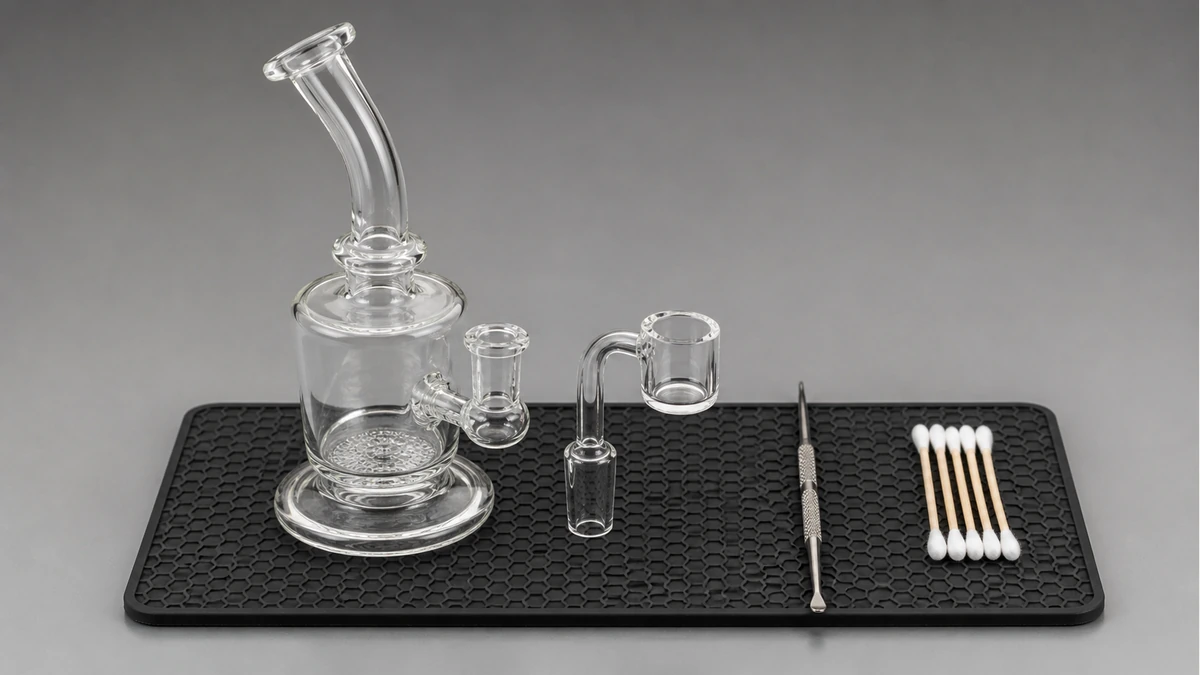
You don’t need specialized tools to check the three things that matter most. You need a flat surface, your own hands, and a few minutes of attention before you buy—whether that’s in a shop or by studying photos and dimensions closely online.
🧩 4.1 Checking the Base
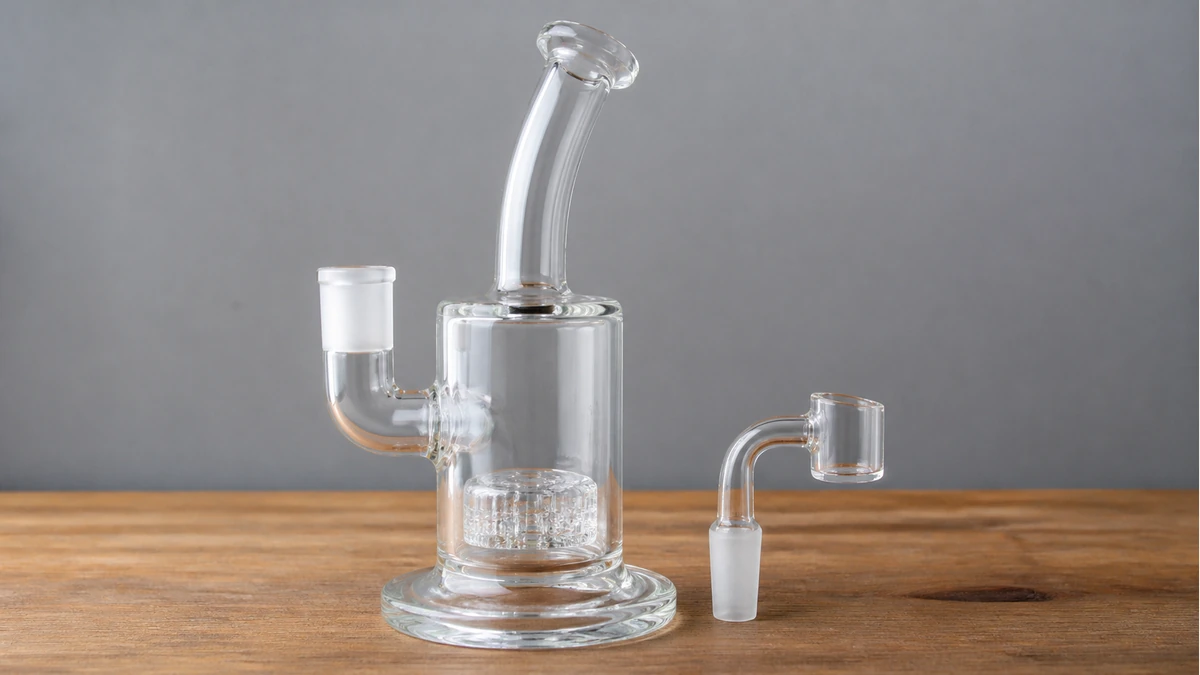
- Set the rig on a flat, hard surface and look at it from the side, not from above. The base should sit flush without any visible gap or rock.
- Push gently on the upper section of the rig at an angle, the way an accidental bump would happen. A stable base resists this without tipping; a marginal one starts to lean immediately.
- Compare the width of the base to the overall height. As a rough guide, a taller rig needs a proportionally wider foot to stay upright through normal handling.
🧩 4.2 Checking Joint Fit
- Insert the banger or downstem into the joint and rotate it slowly. It should turn with light, even resistance—not spin freely and not bind.
- Check for any visible gap of light between the ground surfaces when you hold the joint up to a light source. A properly ground joint shows a continuous seal.
- Gently wiggle the inserted piece side to side. Noticeable play or rocking means the joint won’t hold a seal reliably during use.
🧩 4.3 Checking Airflow
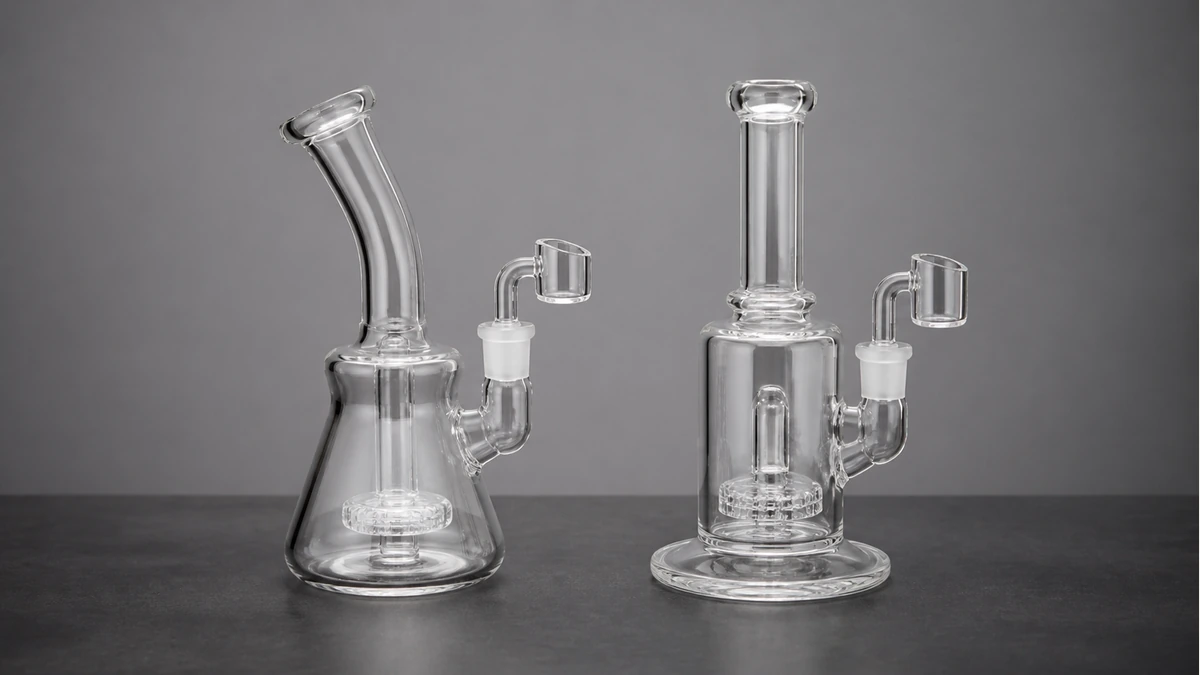
- Look through the percolator chamber toward a light source and count the visible slits or holes. More isn’t automatically better, but a percolator with only one or two narrow openings will restrict airflow noticeably.
- If you can test the piece before buying, take a dry pull with no heat involved. Excessive resistance on a dry pull points to a chamber that’s too restrictive for comfortable daily use.
- Check that the percolator doesn’t sit directly against the walls of the outer chamber in a way that limits how far diffused vapor can travel before reaching the mouthpiece.
These checks take less time than reading a full spec sheet, and they catch the specific failure points that price alone won’t reveal. If you’re assembling a full kit rather than just a rig, the dab rig kit guide walks through how the rig interacts with the banger, torch, and carb cap you’ll be pairing it with.
📏 5. The Real Setup Budget Beyond the Glass
The rig itself is usually the smallest recurring cost in a dab setup, even though it’s the part buyers spend the most time comparing. A realistic budget accounts for several other components, some of which need periodic replacement.
| Component | Why it matters | Replacement frequency |
|---|---|---|
| Rig (glass) | Filtration, stability, joint compatibility | Rarely, unless damaged |
| Banger or nail | Determines heat retention and material contact | Occasional, depending on material and handling |
| Torch or heating tool | Brings the banger to working temperature | Rarely, but fuel or batteries are ongoing |
| Carb cap | Controls airflow over the heated surface | Rarely, unless lost or cracked |
| Cleaning supplies | Keeps joint and percolator clear for consistent airflow | Ongoing, consumable |
Buyers who put their entire budget into the rig and treat everything else as an afterthought often end up spending more over time—replacing a banger or restocking cleaning supplies more often than expected, or discovering that a cheap carb cap doesn’t seat well over the banger they already bought. Thinking about the setup as a whole, rather than the rig in isolation, tends to produce a better outcome even at the same total spend.
It’s also worth deciding early whether a dab rig is actually the right tool for what you want, rather than assuming it by default. The comparison in dab rig versus bong is a useful reference if you’re still weighing which format fits your routine before you spend on either piece of glass.
🔄 6. Frequently Asked Questions
Does a higher price always mean a more durable rig?
No. Price correlates with glass thickness and finishing quality on average, but individual pieces vary widely within that average. The base-and-joint checks in section 4 are more reliable indicators than the number on the price tag.
Can a cheap rig use the same bangers as an expensive one?
Yes, as long as the joint size matches—commonly 14mm or 10mm—and the joint is properly ground. Joint fit, not price, determines compatibility, so there’s no need to buy accessories from the same tier as the rig.
Is a simpler percolator design actually worse?
Not necessarily. Simpler percolators are often easier to clean and can perform just as well as more elaborate designs for everyday use, provided the airflow isn’t overly restricted by narrow or too-few slits.
What’s the most common reason a budget rig ends up frustrating to use?
An unstable base or a poorly fitted joint, more often than the glass itself cracking. Both are things you can check before buying rather than discovering afterward.
Should the recycler or percolator style be the deciding factor?
Usually not on its own. Style affects how the rig looks and, to a lesser extent, how it feels to clean, but it’s a secondary factor compared to base stability and joint precision, which affect whether the rig stays intact and seals properly session after session.
🧰 7. The Bottom Line
A lower price on a dab rig isn’t a warning sign by itself, and it isn’t a guarantee of savings either—it’s a variable that needs to be checked, not trusted. Filtration, joint sizing, and visual design hold up fine across most price points. Base stability, joint precision, and percolator airflow are where the real differences show up, and they’re differences you can check with your hands in a few minutes. Spend your inspection time there, budget for the accessories around the rig, and the price tag becomes far less important than what’s actually in front of you.