⚙️ 1. The Spec Sheet Behind the Logo
Somebody on the marketing side sends over a PNG—maybe a wordmark, maybe a leaf icon they like—and the email says “put this on a grinder, four-piece, aluminum, whatever size is standard.” That’s the moment most custom grinder orders start, and it’s also the moment they start going sideways. A logo tells a factory where to laser or engrave. It says nothing about tooth height, chamber depth, magnet pull, thread tolerance, or where the anodized finish is supposed to stop. Those are the details that decide whether the second production run matches the first one, and whether the grinder actually works the way a buyer expects it to.
A custom tobacco grinder isn’t a single product with a logo slapped on top—it’s a stack of independent decisions that happen to ship in one housing. Diameter and piece count set the footprint and the price bracket. Tooth pattern and chamber depth set how the grind feels and how consistent it is. Thread pitch and wall thickness set how long the unit survives daily twisting. Coating boundary and screen mesh set how easy it is to clean and how much pollen collects underneath. None of that is implied by a logo file, and none of it is something a factory should be guessing at on your behalf.
The buyers who get repeatable results are the ones who write these things down before the first sample even gets tooled. Not because they distrust the manufacturer, but because verbal agreements about “standard” sizing rarely survive a language barrier, a tooling change, or a six-month gap between reorders. If you’re building out a private-label line rather than a one-off, our wholesale herb grinders guide walks through the sizing and material categories that most factories work from, which is a useful starting vocabulary before you get into your own customizations.
⚙️ 1.1 What “Repeatable” Actually Means
Repeatable doesn’t mean identical to a fraction of a millimeter—metal parts have tolerances, and anodizing baths vary slightly batch to batch. What it means is that unit 500 from reorder three feels and functions like unit 5 from the original sample. The teeth engage the same way. The lid seats with the same resistance. The magnet holds with the same strength. Buyers who skip the spec sheet often don’t notice the drift until a distributor complains that “the new batch feels cheaper,” even though nothing was technically changed on purpose—just a supplier decision made without anyone writing it down the first time.
The practical fix is a shared specification covering dimensions, tooth layout, finish boundaries and the approved reference sample. That document becomes the basis for reorders instead of relying on memory or a catalog image.
⚙️ 1.2 Deciding What’s Actually Custom
Not every dimension needs to be bespoke. Existing tooling can be sensible when its body, chamber and interfaces fit the intended use. Reserve custom work for details that create a real functional or brand difference, and confirm every retained platform dimension in the approved specification.
🧩 2. Tooth Pattern and Chamber Layout
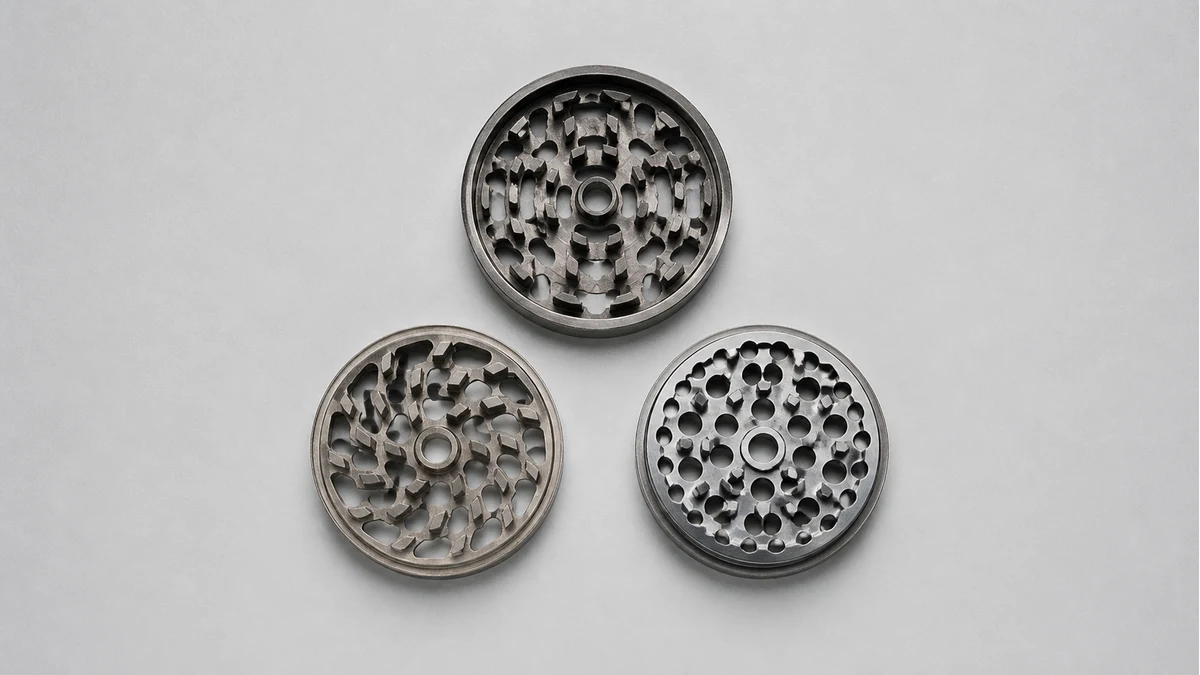
This is the part of the spec conversation that gets skipped most often, and it’s the part that determines whether people actually like using the grinder. Diamond-cut teeth, shark-tooth teeth, and rounded pyramid teeth all shear material differently. Sharper, more numerous teeth tend to produce a finer, more even grind but can also shred material faster than some buyers want. Fewer, blunter teeth grind more slowly and leave a coarser, chunkier result. Neither is objectively better—it depends on what texture the end buyer expects, and that’s a conversation worth having explicitly rather than assuming the factory’s “standard” tooth pattern matches your customer’s preference.
Chamber depth interacts with tooth pattern in ways that aren’t obvious from a spec sheet alone. A shallow top chamber with aggressive teeth grinds fast but can bind on denser material. A deeper chamber gives material more room to fall away from the teeth as it breaks down, which usually means smoother rotation but a slightly longer grind time. If your supplier offers a sample with the “standard” configuration, it’s worth actually grinding something in it and paying attention to how much resistance you feel on the crank—that tactile check tells you more in ten seconds than a spec number does.
🧩 2.1 Three, Four, or Five Pieces
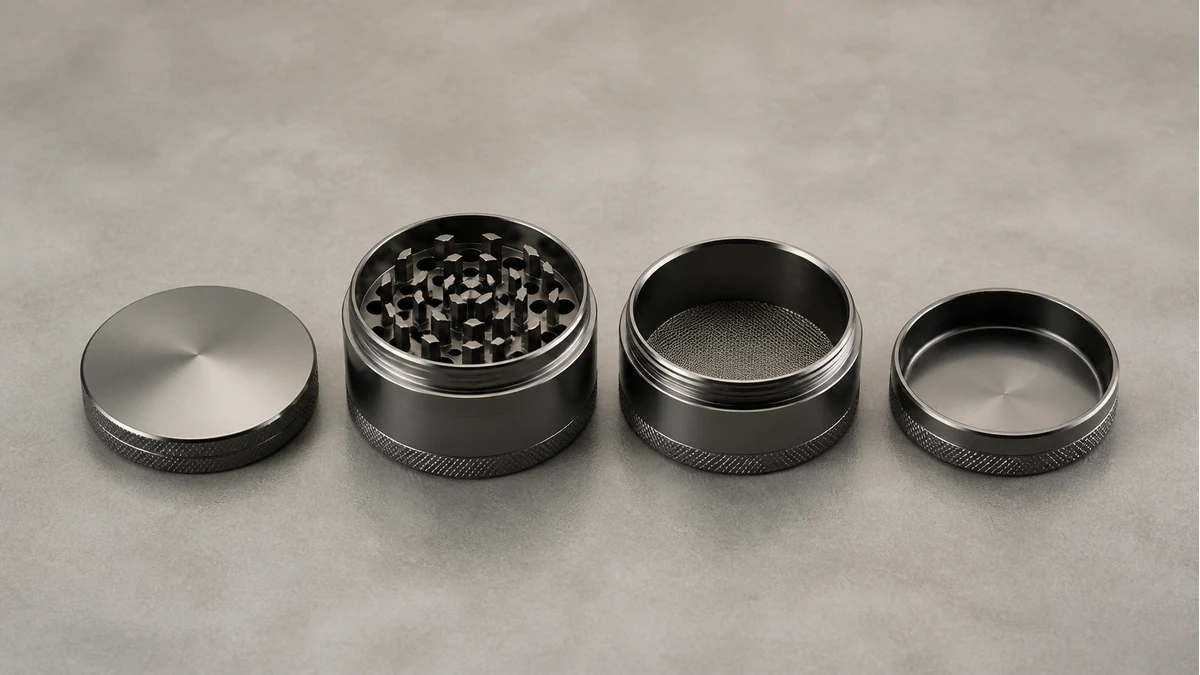
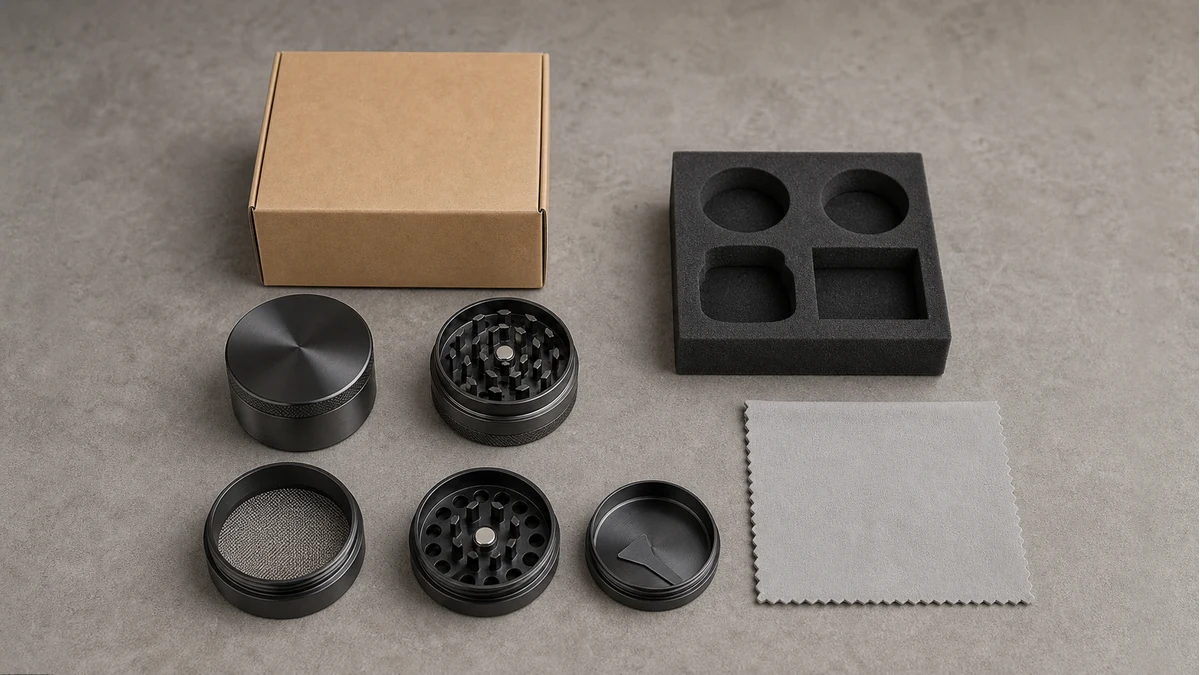
Piece count changes function, not just price. A two-piece grinder is fast and simple but gives up the collection chamber and the screen. A three-piece adds a chamber to catch ground material below the teeth. A four-piece adds a screened compartment and a kief catcher underneath, which is the configuration most private-label brands default to because it signals a more complete product without adding much manufacturing complexity. Five-piece designs exist but add another set of threads, another gasket surface, and another point where alignment can go wrong—worth it only if there’s a specific reason for the extra chamber.
Each additional chamber also adds height, which matters more than people expect when a grinder is going into retail packaging designed around a specific footprint. If your box art and inserts were designed around a three-piece silhouette, swapping to four-piece late in development can mean redoing packaging tooling too.
🧩 2.2 Where Magnets and Alignment Go Wrong
Magnet placement affects two things buyers actually feel: how solidly the lid seats, and whether the pieces align consistently every time you twist them together. Weak or off-center magnets show up as a lid that “clicks” inconsistently or slides slightly before catching. This is a detail that’s easy to miss on a single sample—magnets in a small first batch are often hand-placed with more care than a full production run—so it’s worth asking specifically how magnet strength and centering are checked at scale, not just whether magnets are present.
Screen mesh size is the other quiet variable. A finer mesh catches more kief but clogs faster and needs more frequent cleaning with a brush or pick. A coarser mesh stays cleaner longer but lets more plant material through with the kief. If you already have opinions on this from the electric side of the category, they carry over: our best electric herb grinder comparison covers mesh and chamber tradeoffs that apply just as directly to manual custom builds, even though the mechanism is different.
🎨 3. Where Finish and Branding Interfere with Threads and Cleanup
This is where a good-looking mockup and a functional product start to pull in different directions. Anodizing, powder coating, and laser engraving all add a layer of material or remove a layer of surface, and both of those things can change how threads fit. A coating applied too thick on the threaded ring of a chamber can turn a smooth twist into a gritty, sticky one. A logo engraved too close to the thread edge can leave a slightly raised or roughened lip that catches on the mating piece every time it’s opened.
The practical fix is to define a coating boundary on the spec sheet—a clear line, usually a few millimeters back from any threaded or mating surface, where finish is masked off during anodizing or coating. Good factories do this automatically once they know the housing will be branded, but it’s worth confirming rather than assuming, especially if the branding wraps around a body panel that sits close to a seam.
🎨 3.1 Engraving Depth and Legibility Over Time
Laser engraving that looks crisp on a factory sample can go shallow or uneven at scale if laser settings drift between batches, and a logo that’s legible on day one can start to fill with grime and lose contrast after months of handling. Deeper engraving holds up better cosmetically but takes more time per unit, which affects lead time and cost on larger orders. Shallower engraving is faster and cheaper but shows wear sooner, particularly on darker anodized finishes where contrast depends on the raw aluminum showing through cleanly.
If branding consistency matters to your line—and for most private-label buyers it does, since the grinder is often the most visibly branded item in a bundle—it’s worth asking the factory to hold a physical reference sample specifically for engraving depth and matching every production run against it, rather than trusting a written spec number alone.
🎨 3.2 Color Matching Across Runs
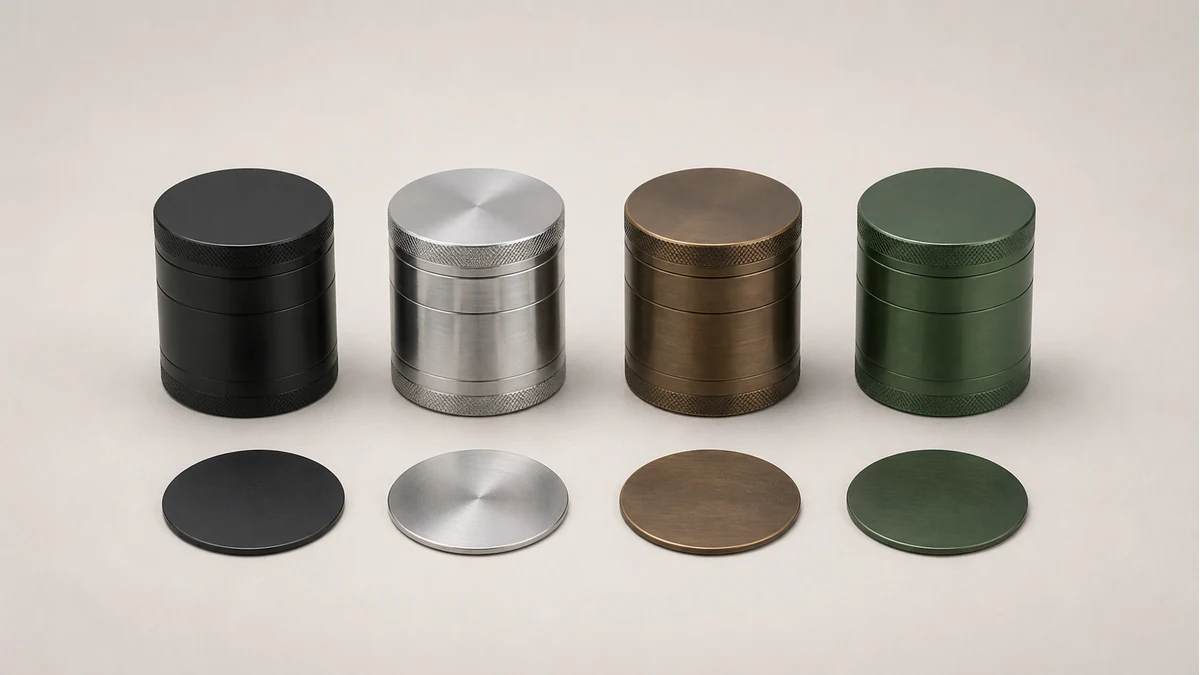
Anodized colors, especially blacks and darker metallics, can shift slightly between dye batches even when everyone follows the same process. It’s a normal characteristic of the finishing method, not a defect, but it becomes a visible problem if a distributor is displaying grinders from two different production runs side by side. Asking for a color reference chip or a retained sample from the first run, and having the factory check new runs against it before shipping, catches most of this before it becomes a customer-facing issue. This kind of finish and branding coordination is exactly the territory our OEM/ODM program is built around, since matching cosmetic consistency to a buyer’s brand standards is a bigger part of the work than the engraving itself.
📦 4. Inspecting Samples and Packaging Before You Commit
A sample that looks right in photos can still hide problems that only show up in hand. Twist the pieces apart and back together several times in a row—not once—and pay attention to whether the resistance stays consistent or gets gritty as coating debris works loose. Check the teeth for any rough or sharp edges left over from the cutting process; they should be clean and slightly rounded, not raw. Run a finger around the inside of the threaded rings to feel for coating buildup that a visual inspection alone might miss.
Grind something in the sample the way an actual customer would, not just a token pass. Pay attention to how much material collects on the screen versus falls through, whether the kief chamber catches what it’s supposed to, and whether the scraper tool—if one is included—actually reaches the corners of that chamber comfortably. A scraper that’s slightly too short or too wide for the chamber it ships with is a small thing, but it’s exactly the kind of detail that gets noticed and complained about once a product is in a customer’s hands.
📦 4.1 Packaging Consistency Matters as Much as the Grinder
Review packaging with the physical sample. The insert must hold the approved grinder and included accessories without forcing parts together or allowing them to move freely in transit.
| Inspection Point | What to Check |
|---|---|
| Threads | Smooth engagement across repeated twists, no coating grit |
| Teeth | Clean edges, consistent height, no burrs |
| Magnet | Centered alignment, consistent hold strength |
| Screen and scraper | Mesh size matches intended use, scraper fits chamber |
| Finish boundary | Coating stops clear of threads and seams |
| Packaging | Insert fit, printing accuracy, accessory count |
📦 4.2 Getting a Second Sample Before Full Production
If the first sample requires any changes—tooth pattern, coating boundary, magnet strength, packaging fit—it’s worth getting a second physical sample built to the corrected spec rather than approving the fix on paper alone. Corrections that look right in a spec revision don’t always translate cleanly into production, particularly across tooling changes. A second sample round adds time, but it’s far less costly than discovering a mismatch after a full production run has already shipped.
📦 5. Frequently Asked Questions
📦 5.1 How much branding customization is possible on a standard grinder body?
Most factories can laser engrave or apply printed branding to an existing tooled body without changing the underlying dimensions, which keeps cost and lead time down. Changing the body shape or diameter itself is a larger tooling commitment and worth discussing separately from branding.
📦 5.2 Can tooth pattern be changed without retooling the whole grinder?
Sometimes—it depends on whether the teeth are cut into the same mold or tool as the rest of the piece. Ask specifically rather than assuming, since the answer affects both cost and how much a design revision will delay your timeline.
📦 5.3 What’s the biggest reason reorders don’t match the original sample?
Missing written specs. Verbal agreements about finish, tooth pattern, or coating boundaries tend to drift between production runs, especially across time gaps or supplier staff changes, which is why a documented spec sheet is worth the upfront effort.
A custom tobacco grinder succeeds when thread feel, magnet consistency and coating boundaries are settled before the logo is applied. Lock those specifications in the physical sample; branding is the easier part.
📚 6. Sources and Reader Questions Reviewed
Technical statements were checked against the sources below. Reddit discussions were used only to identify reader questions and language, not as proof of technical, health, safety or legal claims.