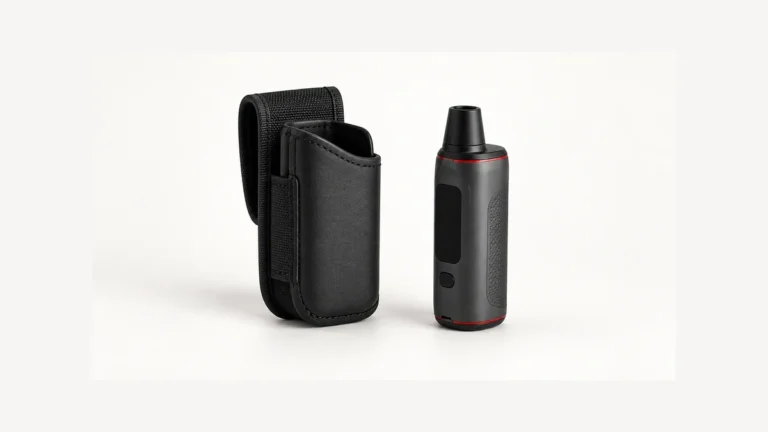
The email usually arrives with the logo already final. A vector file, maybe a brand guideline PDF with two Pantone colors and a clear-space diagram, sometimes a mockup of the device someone made in an afternoon just to see how it would look. The founder on the other end is proud of it, and they should be —getting a logo to that stage takes real work. The question attached to the file is almost always some version of “can you put this on a vape and how fast can we start.”
Nobody’s being naive here. It’s a reasonable question to ask, and in a narrow sense the answer is usually yes —a logo can go on a device screen, a battery sleeve, a cartridge band, a box. The trouble is that the file isn’t actually the starting point. Everything the logo is going to sit on top of —what the device is for, how the cartridge and heating system perform, how the battery behaves, what the housing is made of and finished in, what has to appear on packaging for the market it’s sold in —is either still undecided or was never treated as a decision at all. A custom vape isn’t a logo placement exercise on a stock device. It’s a small product system, and the artwork is the last piece that gets locked, not the first.
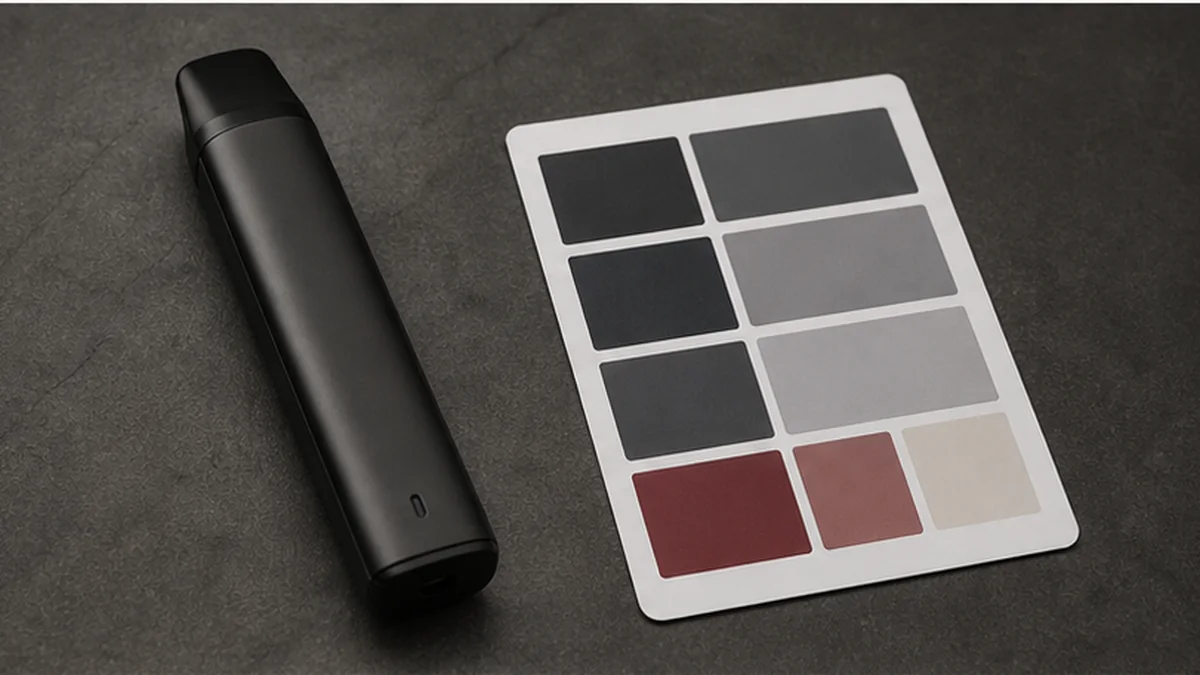
That order matters more than it sounds like it should. People enjoy the idea of a branded splash screen or a custom-printed shell —there’s a whole thread of vapers on Reddit talking about how satisfying it is to upload a personal logo to a device screen, purely as a nice-to-have. But in the same breed of forum, you’ll find longer, more skeptical threads about clone hardware wearing familiar logos, where the branding is exactly what triggers the scrutiny —does this actually perform like the real thing, or is the logo doing work the hardware underneath can’t back up? A logo raises expectations about what’s inside. If the product system behind it wasn’t actually decided, the logo is now making a promise nobody defined.
Start with what the device has to do, not what it should say
Before any conversation about finish or artwork, the more useful question is what the device is actually for. A cartridge-based system built around a thick, high-viscosity oil behaves differently than one built for a thinner distillate, and both are different again from a dry-herb or disposable format. Who’s using it, in what setting, and what they expect the draw and vapor output to feel like —that’s not branding work, but it determines almost everything that comes after, including which hardware platforms are even candidates.
This is also where it’s worth being honest about a pattern that shows up a lot in hardware-founder circles: the instinct to reach for custom electronics before the use case actually justifies it. There’s a recurring conversation among hardware startups about exactly when custom electronics work becomes necessary versus when it’s just expensive perfectionism applied too early. The same logic applies here. A lot of what a brand wants —a distinct look, a specific draw feel, particular capacity —can come from selecting and configuring an existing hardware platform intelligently, not from commissioning a from-scratch battery and control board. Custom engineering has its place, but it should be a decision made because the use case requires it, not a default because “custom” was the word in the brief.
Cartridge and heating system: the part the oil actually touches
The heating system —coil material, wicking, airflow path, and how the cartridge is designed to seal against a given battery’s connector —is where product performance mostly lives. It has to match the oil’s viscosity and the intended vapor experience, and it has to be compatible with whatever battery and control behavior get chosen next. This is functional decision-making, not a branding choice, and it’s the piece that most directly shapes whether the finished product feels good to the person actually using it —which, per that same logo-on-screen thread, is often what people care about more than the cosmetic layer once the novelty of a custom screen wears off.
Battery and control behavior: what the device is allowed to promise
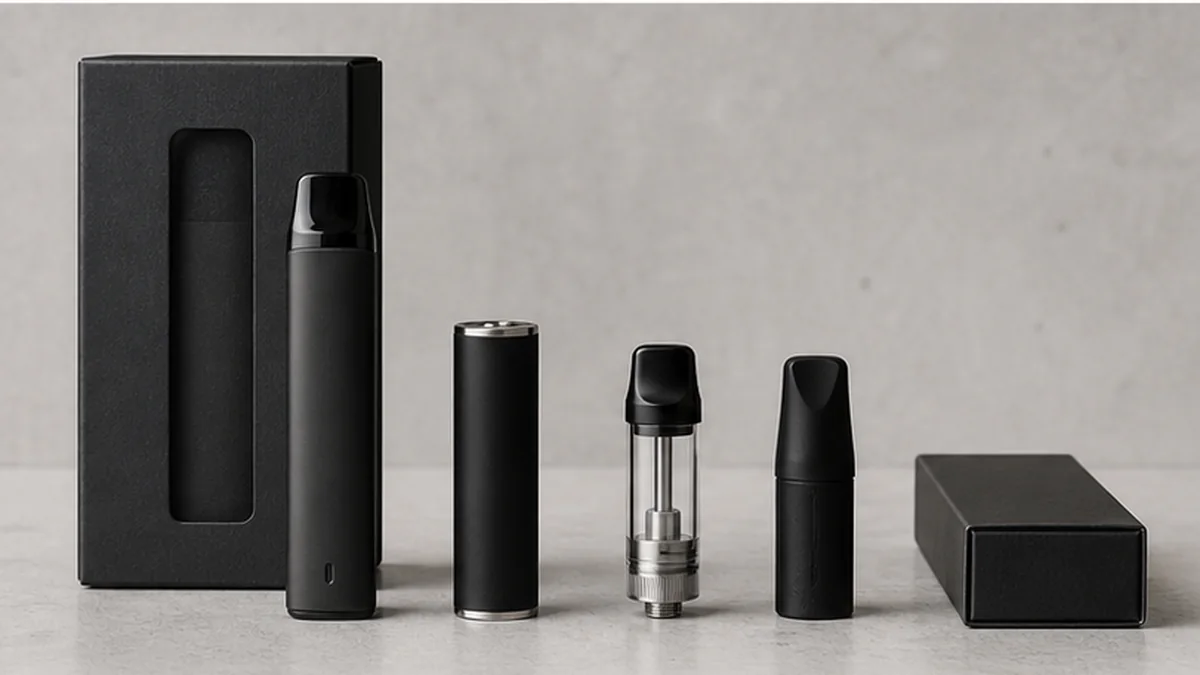
Battery capacity, output behavior, and how the control circuit manages voltage or temperature across a charge cycle determine what claims the product can honestly make about draw count, consistency, and how it behaves as the cell depletes. These aren’t cosmetic settings layered onto a finished device after the fact —they’re structural to the platform, and changing them can mean changing which cartridge and housing options are even compatible. If a brand wants specific behavior here, that’s a real customization conversation, and it belongs early, alongside the use-case decision, not after a shell color has already been chosen. Our 510 battery customization guide overview goes into what’s typically adjustable at the battery and control level versus what’s fixed by the platform.
Industrial design and finish: downstream, not first
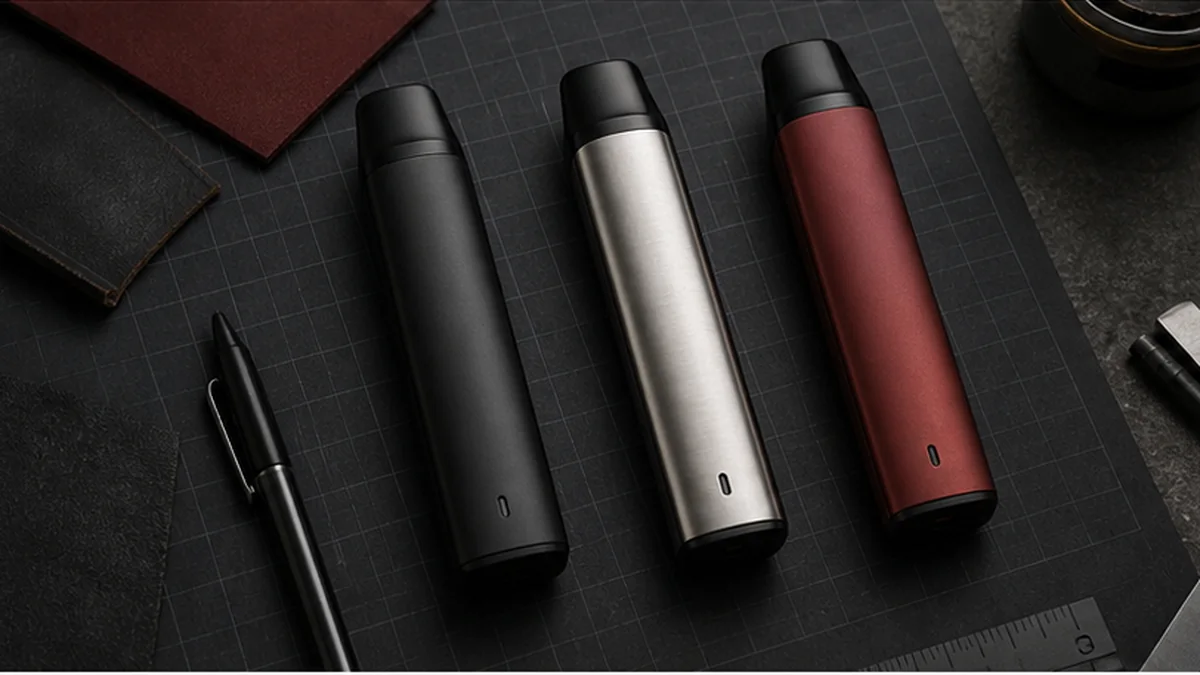
Shape, material, and finish —soft-touch coating, anodized metal, gloss versus matte plastic —are where a device starts to look and feel like a specific brand’s product rather than a generic one. This is legitimate, valuable customization. It’s also genuinely downstream: the housing has to accommodate the battery and control components already chosen, and the finish has to hold up to how the device is actually handled and pocketed by the people using it. Treating finish as the first decision, before the internals are settled, usually means redoing the industrial design work once the real constraints show up.
Packaging and artwork: where the logo finally belongs
This is the stage where that original logo file actually earns its place —on the box, the insert, the device screen if the platform supports one, the cartridge band. It’s also where market-specific requirements tend to surface: what has to be printed on packaging, what warnings or disclosures apply, what a given retailer or distributor requires before they’ll carry the product. None of that is universal, and none of it should be guessed at or assumed from a competitor’s box —it needs to be confirmed for the specific product and the specific market it’s going into. Our vape branding guide guide covers what’s typically customizable at this layer and how it fits with everything decided earlier in the process.
Sample approval and change control: keeping the system honest after launch
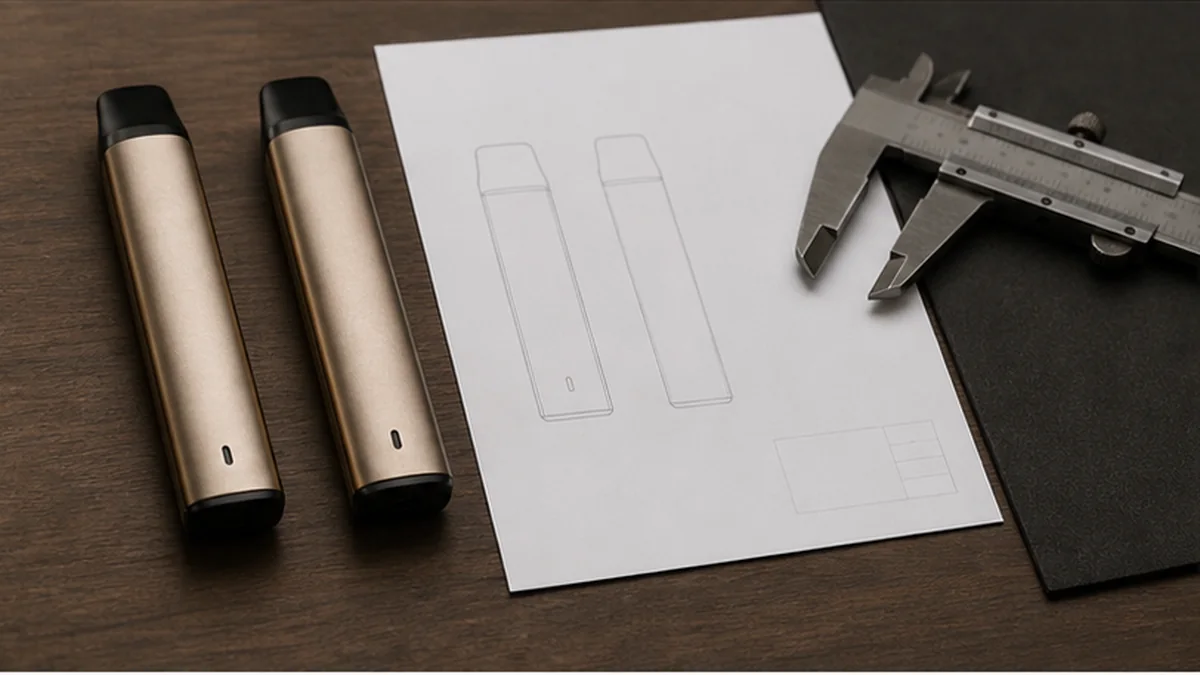
Once use case, hardware, and artwork are aligned, a physical sample is what confirms all of it actually holds together —not a rendering, not a spec sheet, an object you can hold and test against what was agreed. And the work isn’t finished once that sample is approved. If a component ever needs to change later —a coil supplier, a battery cell, a finish that turned out not to hold up —that change should be something the brand is told about and agrees to, not something that shows up unannounced in a later shipment. A logo on the box implies consistency to the customer buying it; the manufacturing side has to actually deliver that consistency, order after order, for the branding to mean what it looks like it means.
Private label, OEM, and ODM aren’t interchangeable —and the words aren’t standardized
These three terms get used loosely across the industry, and different manufacturers sometimes mean slightly different things by them. Broadly: private label means taking an existing, unmodified hardware platform and applying a brand’s artwork and packaging to it. OEM typically means the brand defines specific changes —a finish, a capacity, a particular cartridge pairing —and the manufacturer builds to that definition. ODM usually means the manufacturer leads the design of a platform, often with some built-in flexibility, and adapts it for a given brand rather than building fully from a blank page.
Because the terminology isn’t consistent from one supplier to the next, the label matters less than writing the actual scope down: which decisions are fixed on the existing platform, which are open for the brand to specify, and who is responsible for validating that the result performs and complies as intended. Two manufacturers can both say “OEM” and mean noticeably different levels of involvement.
| Model | What’s typically fixed | What’s typically open to the brand |
|---|---|---|
| Private label | Cartridge/heating system, battery and control behavior, industrial design | Artwork, packaging, finish color where the platform offers options |
| OEM | Underlying platform architecture | Brand-defined changes to finish, capacity, cartridge pairing, or other specified features |
| ODM | Core design ownership stays with the manufacturer | Adaptation of that design —features, configuration, branding —for a specific customer |
None of these labels should be treated as a fixed menu. What matters is getting a specific manufacturer to state, in writing, what falls into each column for the product being discussed. A conversation with a vape hardware manufacturer guide is a reasonable place to have that scope written down before any artwork gets finalized.
What to send first
Not the logo file —or not only the logo file. The information that actually moves a custom vape project forward is a short, specific brief: the intended use case and the oil or material it needs to handle, any performance expectations around draw or capacity, the target market and whatever labeling or packaging requirements apply there, and a rough sense of volume and timeline so the right model —private label, OEM, or ODM —can even be discussed sensibly. The artwork can follow once those are settled; it usually takes far less back-and-forth than the hardware and compliance decisions do. contact AOVAPE is the right place to start that conversation, with the brief rather than the file, and let the logo find its place once the product underneath it is actually decided.