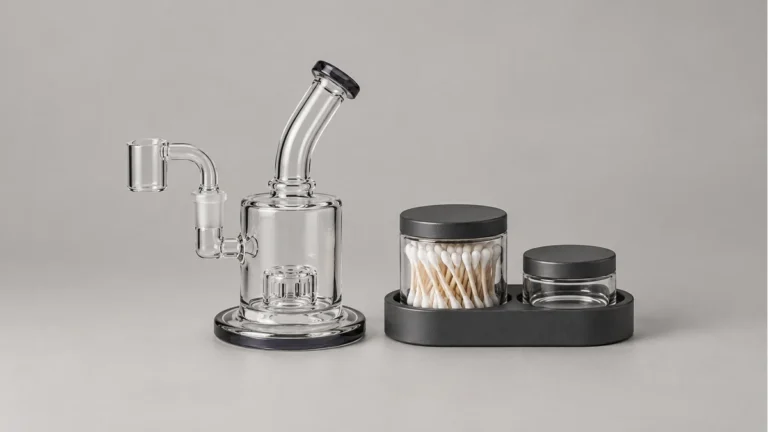
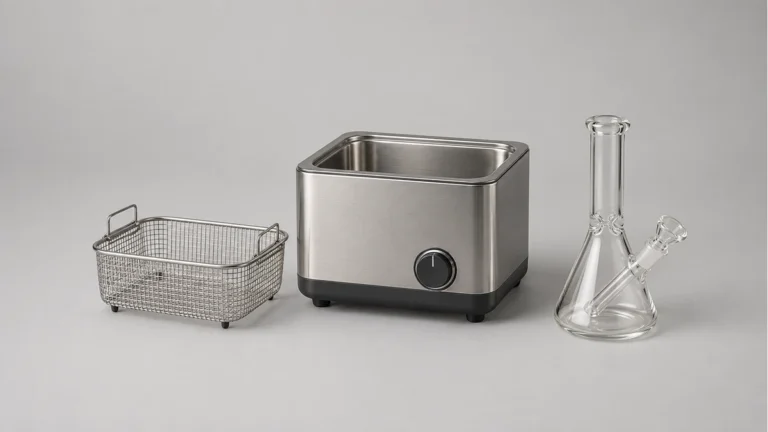
Set a hot titanium dabber down on a wooden end table and you’ll find out fast why so many concentrate users end up with a small burn scar on furniture, a cracked phone screen from a paddle rolling off the edge, or a permanent haze on a bamboo tray that no amount of scrubbing fixes. The tool itself only takes a few seconds to use. The problem is everything that happens before and after: where does it go while it’s heating, and where does it land once it’s covered in warm residue? Most dab stations don’t fail because the rig is bad. They fail because there’s no dedicated, heat-tolerant, easy-to-wipe spot for the tool, so it ends up on a napkin, a coaster, or directly on whatever surface happens to be closest.
🔍 1. What Problem a Dab Tool Holder Actually Solves
A dab tool holder is a small fixture — a tray, stand, silicone mat, or built-in slot — whose only job is to give a hot or sticky tool a stable, contained place to rest between uses. That sounds almost too simple to write about, but the failure modes it prevents are real and specific: a carbon-scored dabber tip touching a laptop charging cable, a paddle sticking to a paper towel and pulling fibers into the next dab, a scoop rolling off a glass tabletop and chipping the tip against the floor.
The underlying issue is that dab tools have two properties at once that most household surfaces aren’t built for. They get hot enough to scorch wood, plastic, or fabric, and they’re coated in residue that’s tacky at room temperature and nearly liquid when warm. A holder addresses both problems in one object: it isolates heat from whatever’s underneath, and it gives the sticky part of the tool a boundary so drips and smears stay in one place instead of migrating across a desk or bench.
This is also a workflow issue, not just a mess issue. Anyone who dabs regularly develops a rhythm — heat, wait, dab, set down, reheat, repeat — and every step in that rhythm where the user has to improvise a landing spot is a step where something gets knocked over, scorched, or contaminated. A dedicated holder removes that decision entirely. The tool always goes in the same spot, which is part of why people who’ve used a proper holder rarely go back to balancing tools on the rig’s base or a folded paper towel.
🧭 2. Matching the Holder Shape to the Tool
Not all dab tools behave the same way when they’re resting, and holder shapes exist because tool shapes vary. A holder that works well for a flat paddle can be a poor fit for a long scoop, and neither may suit a tool that’s still hot enough to matter.
🧩 2.1 Trays for Scoops and Mixed Sets
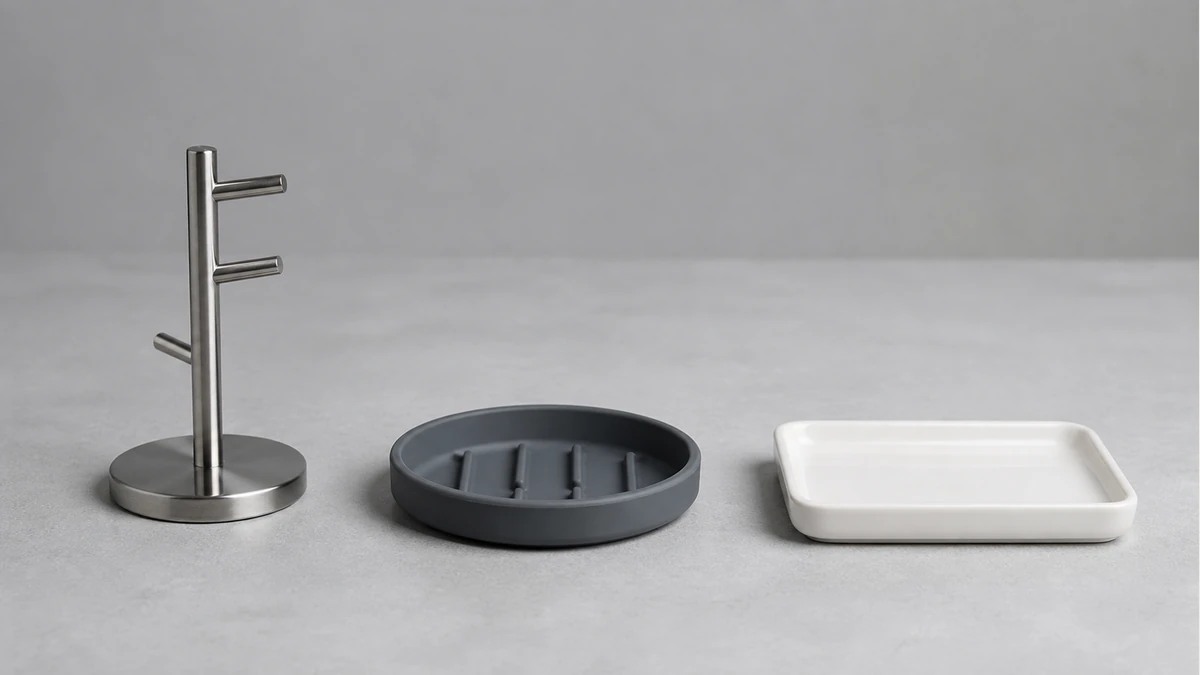
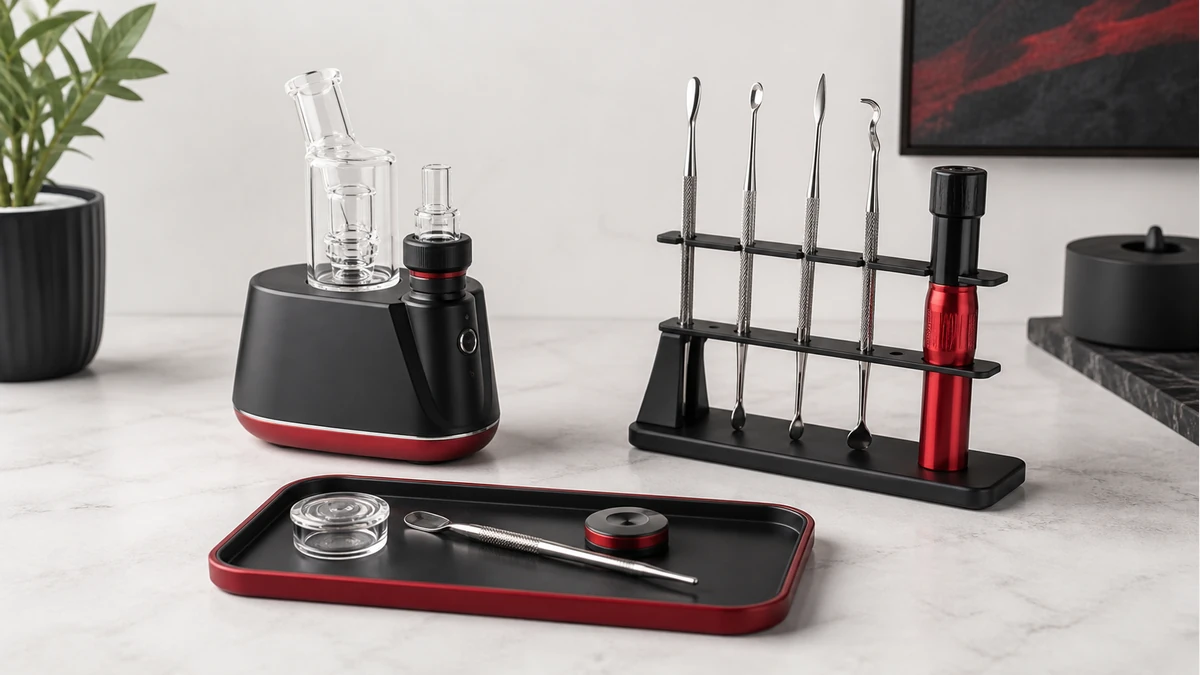
An open tray, usually shallow with a slightly raised lip, is the most forgiving option because it doesn’t care much about tool geometry. Scoops, small dabbers, carb caps, and loose accessories can all sit in the same tray without rolling off the table. The tradeoff is that a tray puts the tool flat against its own surface, so if that surface isn’t heat-resistant, a genuinely hot tip can still leave a mark on the tray itself over time. Trays are best suited to tools that are picked up cool or only briefly warm, and to households where several small accessories need one shared landing zone rather than individual slots.
🧩 2.2 Vertical Stands for Paddles and Long Tools
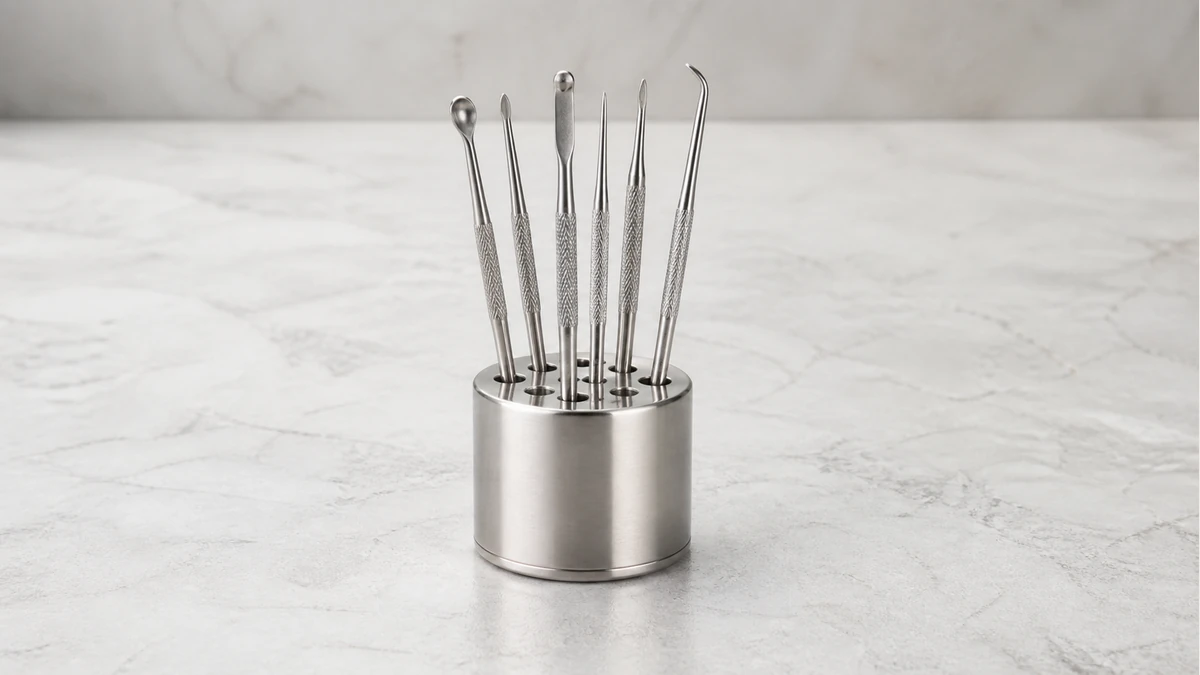
A vertical stand holds the tool at an angle or upright, typically gripping the handle end and leaving the working tip suspended in open air rather than resting on a surface. This matters most for paddles and dabbers that are used hot, straight off a torch or e-nail, because suspending the tip means it isn’t transferring heat directly into a tray or mat the moment it’s set down. It also keeps the sticky working end away from whatever’s underneath, which cuts down on the smearing that happens when a residue-coated tip drags across a flat surface as it’s picked back up. The downside of a stand is stability: a lightweight stand with a narrow base can tip over if a long tool is set in at an angle, so base weight and footprint matter more here than in a tray.
🧩 2.3 Silicone Rests for Heat and Grip
Silicone holders combine a bit of both approaches. The material itself tolerates direct contact with a warm tool far better than wood, cloth, or bare metal, and its slightly tacky surface keeps tools from sliding around the way they can on glass or polished stone. Silicone rests are commonly shaped with a groove or depression that cradles the tool’s handle so the tip stays elevated, similar in intent to a stand but lower-profile and harder to tip over. The one thing to watch for with silicone is that its surface texture, while good for grip, also holds onto residue if it isn’t wiped down regularly — more on that below.
🧩 2.4 Integrated Stations for Full Setups
An integrated station combines a tool rest with other elements of a dab setup — a base for the rig, slots for a carb cap, sometimes a small tray for extra accessories — into one fixed piece. These make the most sense for a stationary setup where the rig, tools, and accessories all live in the same spot rather than getting moved around. Readers assembling a full setup from scratch often find it useful to look at how tool storage fits into the broader kit, which is covered in more detail in this dab rig kit guide, and for background on the individual tools themselves — what each one is actually for — this dab tools guide is a useful reference point before choosing a holder shape.
⚙️ 3. Keeping Hot Tools Away From Electronics and Soft Surfaces
Heat separation is the part of holder design that’s easiest to underestimate until something gets damaged. A dabber or nail that’s just come off a torch or e-nail can stay hot enough to scorch for longer than it looks like it should, and the places people instinctively set things down — next to a laptop, on a phone case, on a fabric-covered ottoman — are exactly the surfaces least able to handle it.
A few practical points worth keeping in mind:
- Distance matters more than material in the first few seconds. Even a heat-resistant holder benefits from simply not being placed directly next to charging cables, phone screens, or anything plastic that can warp from proximity heat rather than direct contact.
- Suspension beats flat contact for genuinely hot tools. A stand or a rest that elevates the tip, rather than laying it flat, reduces the direct transfer of heat into whatever the holder itself is sitting on — which matters if that holder is sitting on a wooden desk or a laminate counter.
- Soft surfaces are the highest-risk zone. Fabric, carpet, and paper are the quickest to scorch or catch a lingering smell, and they’re also the surfaces where a dropped tool is likely to leave residue that’s hardest to remove.
- Cooldown time isn’t instant. Tools that feel warm rather than hot to a quick touch can still be warm enough to soften silicone or leave a faint mark on painted wood, so giving a holder a moment before assuming it’s fully safe to handle bare-handed is a reasonable habit rather than overcaution.
None of this requires exotic materials — the point is simply that the holder’s job is to create a buffer zone, both physically (elevating or containing the tool) and spatially (keeping the whole station away from anything sensitive nearby). People setting up a station around an existing rig often find it worth reviewing how the rig itself is positioned relative to other furniture and electronics; the broader setup considerations are covered in this overview of dab rigs.
🧩 4. What Makes a Holder Easy to Clean Instead of Another Residue Trap
This is where a lot of holders quietly fail. A tray or stand that looks clean-lined in a product photo can turn into its own sticky, hard-to-reach mess within a few weeks if its shape or material works against cleanup rather than for it.
A few design traits separate holders that stay clean from ones that accumulate residue:
- Fewer seams and tight corners. Residue collects in crevices, and a holder with molded seams, screw joints, or narrow grooves gives it places to hide that a cloth or brush can’t easily reach.
- Non-porous materials. Silicone, glass, and sealed metal wipe clean; untreated wood and fabric-wrapped surfaces absorb residue and hold onto smell and staining over time.
- Removable or single-piece construction. A tray insert that lifts out for washing, or a one-piece silicone rest that can be rinsed under warm water, is far easier to maintain than a multi-part stand that has to be cleaned in place.
- Light coloring or a texture that shows buildup early. A darker holder can visually hide residue until it’s genuinely built up, which makes cleaning feel optional even when it isn’t — a lighter or smoother surface tends to get wiped down sooner simply because the mess is visible.
A simple, honest way to think about cleanup is to picture the holder after a month of regular use, not on day one. If the shape has flat, open surfaces with nowhere for residue to pool, a quick wipe keeps it functional indefinitely. If it has tight grooves or absorbent material, it eventually becomes the exact kind of sticky, hard-to-clean object it was supposed to replace — which defeats the point.
🛠️ 5. Comparing the Main Holder Types
Because the right choice depends on tool shape, heat exposure, and how much cleanup someone is realistically willing to do, a side-by-side comparison is more useful here than a single recommendation.
| Holder Type | Best Suited To | Heat Handling | Cleanup Effort |
|---|---|---|---|
| Open tray | Scoops, mixed small accessories | Moderate — flat contact with hot tips | Low, if surface is smooth and non-porous |
| Vertical stand | Paddles and longer tools used hot | Strong — tip stays elevated off any surface | Low to moderate, depends on base shape |
| Silicone rest | Tools needing grip and heat contact tolerance | Strong — material tolerates direct warm contact | Moderate — texture can hold residue if not wiped regularly |
| Integrated station | Full stationary setups with rig and accessories together | Varies by design and materials used | Depends on component materials and seams |
None of these is universally correct. A user who mostly handles cool or briefly warm scoops has little reason to invest in a stand designed for tools straight off a torch, while someone who dabs frequently with a hot paddle will likely find a tray inadequate within a few uses. The honest approach is to match the holder to the specific tool and habit, not to the most elaborate-looking option on a shelf.
📐 6. Frequently Asked Questions
Does a dab tool holder need to be heat-resistant everywhere, or just where the tip lands?
The area of direct contact with a hot tip matters most, but a holder that’s warm-tolerant only in one spot tends to get misused over time as habits shift, so broader tolerance is generally the more durable choice.
Can a silicone mat replace a dedicated holder?
A flat mat helps contain drips and protects the surface underneath, but it doesn’t solve the same problem as a stand or tray that elevates or contains the tool itself, so the two serve different, complementary purposes rather than being interchangeable.
How often should a holder actually be cleaned?
This depends entirely on frequency of use and the holder’s material, but a quick wipe after noticeable buildup — rather than waiting for a deep clean — keeps most holder types from becoming a maintenance chore.
Is a multi-slot holder better than a single-tool stand?
Only if the setup actually involves multiple tools in regular rotation. A single-tool stand kept simple is often easier to keep clean than a multi-slot piece with more surfaces and seams to maintain.
🧼 7. The Bottom Line
A dab tool holder isn’t a luxury accessory — it’s the piece that keeps a hot, sticky object from becoming a recurring source of scorched furniture, contaminated tools, and avoidable cleanup. The right shape depends on what’s actually being held: a tray for mixed small accessories, a stand or silicone rest for anything used hot, and an integrated station for a setup that stays in one place. What matters more than the category is whether the holder actually keeps heat away from what’s underneath and wipes clean without a fight. Get those two things right, and the rest of the dabbing routine gets noticeably less messy.
📚 8. Sources and Reader Questions Reviewed
- Reddit discussion 1qtcw6u (reader-language research only)
- Reddit discussion 16ryyte (reader-language research only)
- Reddit discussion nws1h3 (reader-language research only)
For supports designed around loose glass joints, see our banger holder storage guide.