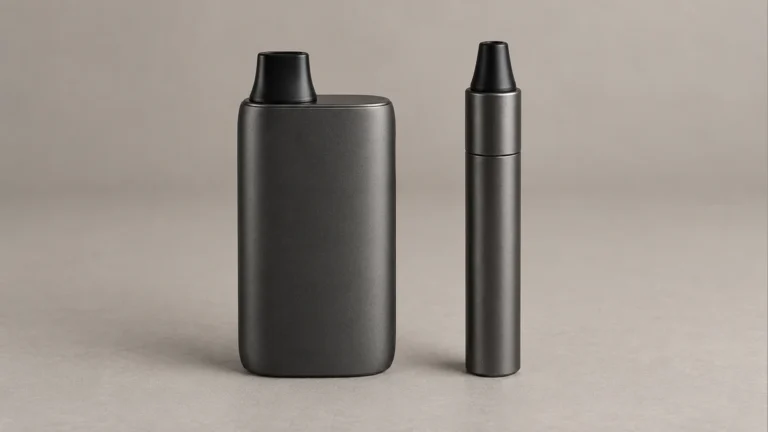
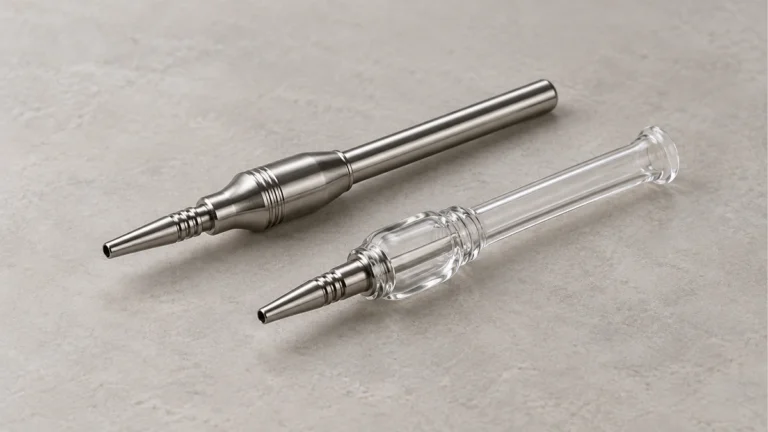
Every dab tool is solving the same basic problem: getting a sticky, temperature-sensitive substance out of a container and into a hot chamber without losing half of it to the table, the tool, or your fingers. The physics of concentrate — its stickiness, its tendency to shatter or smear depending on consistency — determines which tool shape actually works, and manufacturers have converged on a handful of proven designs rather than reinventing the wheel every season. Understanding those designs by job, not by marketing name, is what lets you build a small kit that actually matches how you load instead of one that just looks complete in a display case.
This guide follows the material’s actual path: out of the jar, onto the tool, into the chamber, and finally off the tool during cleanup. Along the way we’ll look at why tip material and seams matter more than most buyers expect, and why a couple of popular tool habits are quietly responsible for scratched or cracked quartz.
🔍 1. From Container to Chamber: The Path a Dab Tool Follows
Concentrate arrives in a few common textures — sap, budder, shatter, sauce, rosin — and each one behaves differently under a metal tip. A soft, oil-like sap will cling and drip if you try to lift it the way you’d lift a shard of shatter. A brittle shatter, by contrast, needs to be broken and scooped rather than wound onto a tool the way you’d wind up taffy. The tool’s job is to bridge that gap between container and chamber cleanly, and most of the frustration people report with dabbing tools traces back to using the wrong shape for the texture in front of them, not a defect in the tool itself.
That’s the organizing idea behind this piece. Rather than listing every tool shape a hardware catalog might carry, we’ll group them by the job they’re built to do, then talk about the material choices, ergonomics, and cleaning habits that separate a tool that lasts from one that starts leaving scratches in a banger within a month.
⚙️ 2. Scoops and Paddles: Moving Concentrate Without Waste
Scoops and paddles are the workhorses of a loading kit, and the difference between them comes down to surface area and depth.
🧩 2.1 Scoop tools for softer extracts
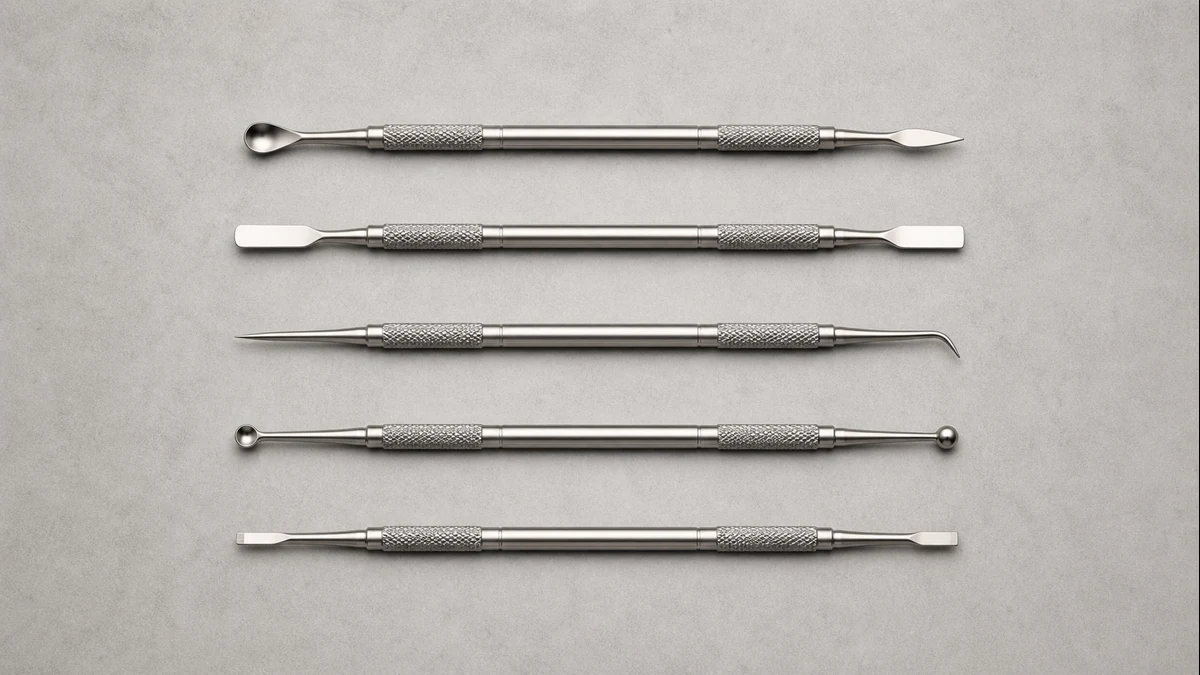
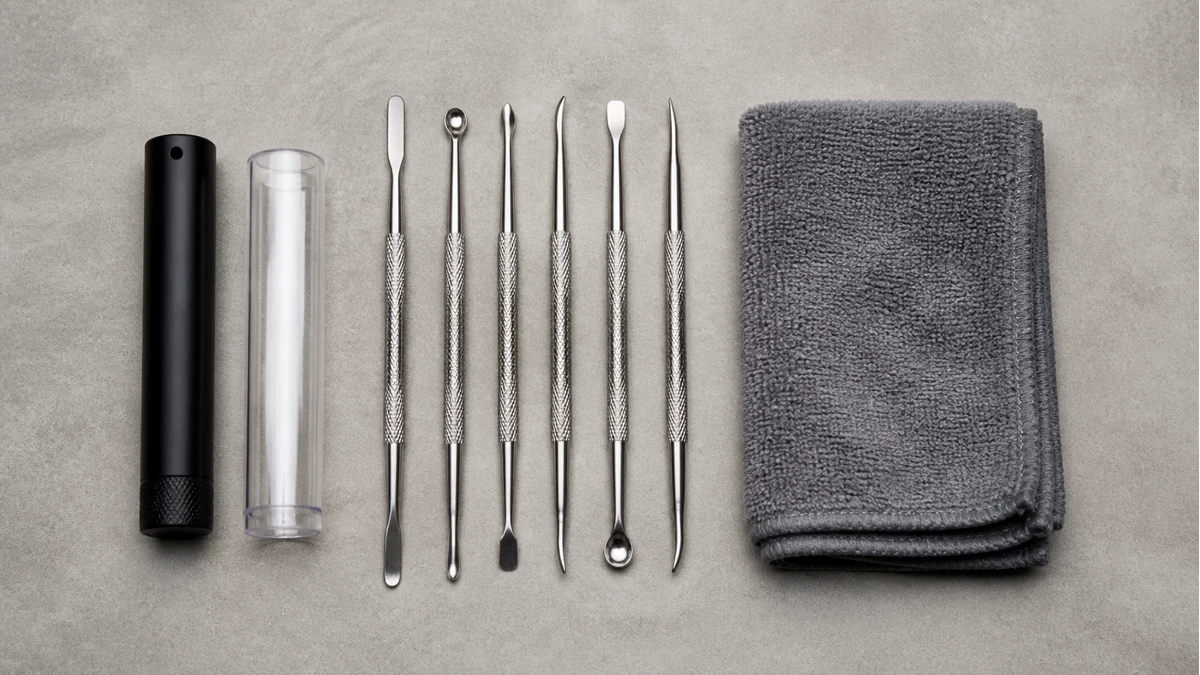
A scoop has a shallow concave bowl at the working end, sized to hold a controlled amount of a softer extract — sap, live resin, or anything with enough give that it would slide off a flat surface. The curve does two things: it keeps the dose contained as you move from jar to nail, and it gives you a visual reference for portion size, since you’re looking at a defined shape rather than guessing at a smear. Scoops tend to work best with textures that are cohesive enough to hold together but not so brittle that they crumble against the metal.
🧩 2.2 Paddles and flat tools for shatter and budder
A paddle is closer to a small flat blade, sometimes with a slight taper, and it’s the better choice for shatter or budder. Shatter cracks into flakes rather than scooping cleanly, so a flat edge lets you press down and lift a shard without trying to force it into a bowl shape it won’t hold. Budder, which is often somewhere between a paste and a wax, tends to smear rather than scoop, and a flat paddle gives you more control over spreading a thin layer versus trying to corral it into a spoon. Many multi-tool sets pair a scoop on one end with a paddle on the other, which is a practical answer to the fact that most people work with more than one texture over time.
🧩 3. Picks, Ballpoint Tips, and Precision Loading
Once you move past bulk loading and into smaller or more deliberate doses, the geometry shifts from scooping to piercing and dragging.
🧩 3.1 Picks for small or sticky doses
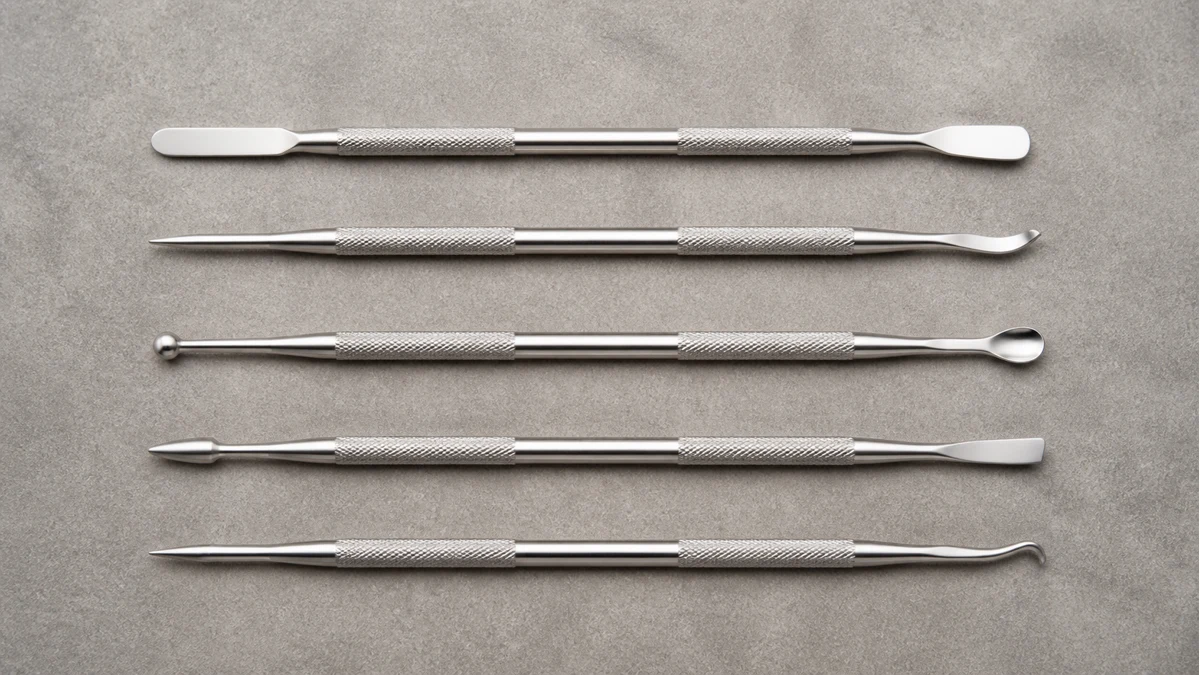
A pick is essentially a thin, pointed rod, sometimes single-ended and sometimes double-ended with a small hook or loop on the opposite side. It’s built for situations where a scoop would grab too much — very sticky sap that clings in long strings, or a small leftover amount stuck to the side of a jar. The point lets you spear a small piece and carry it directly to the nail without the wide surface area of a scoop or paddle picking up more than intended. Picks are also useful for cleanup tasks like clearing a clogged airpath, which is part of why they show up in general dab rig accessories kits rather than being sold purely as loading tools.
🧩 3.2 Ballpoint-style tips and control
Some tools use a rounded, pen-like tip — often described as ballpoint style — that sits between a pick and a scoop in function. The rounded ball shape lets you roll and gather stickier extracts against the side of a container, then carry the gathered material to the nail with less risk of it stringing off mid-transfer the way a sharp point sometimes does with very viscous concentrate. It’s a smaller adjustment than it sounds, but for people who work with sap or sauce regularly, that rounded tip cuts down on the mess considerably compared to a flat or pointed alternative.
⚡ 4. Heated Tools and the Hot Knife Approach
Heated loading tools are a different category altogether, closer to a miniature soldering iron than a scoop, and they solve a specific problem the other shapes can’t.
🧩 4.1 What heated tools solve
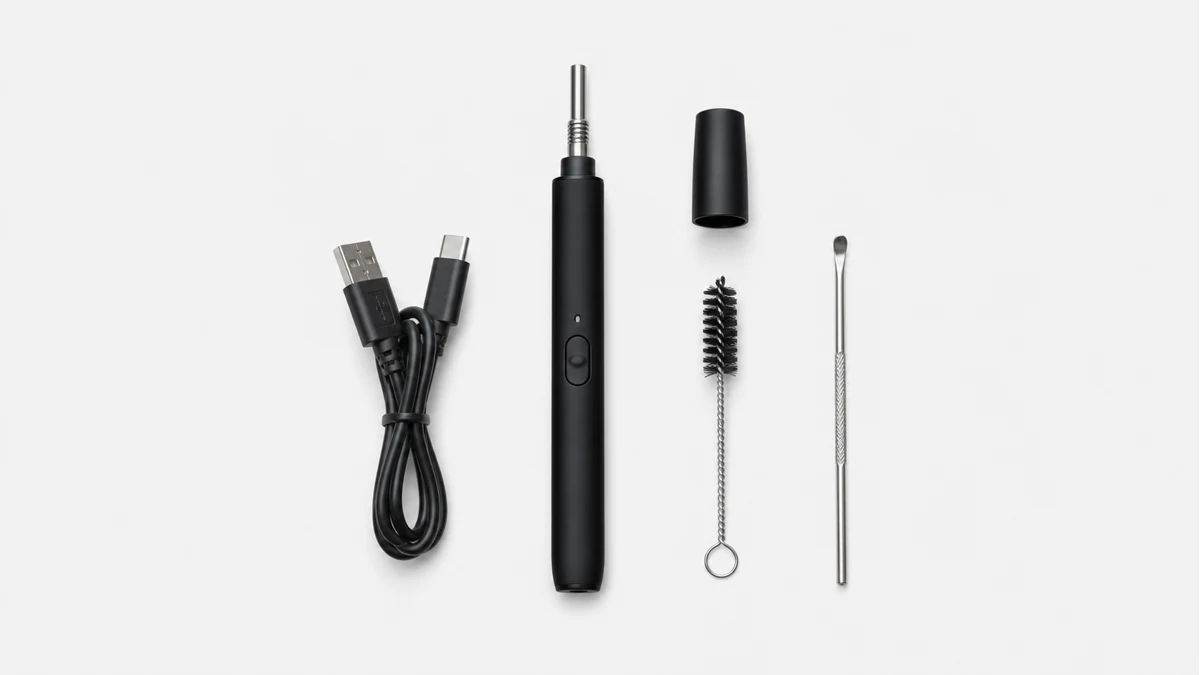
A heated loading tool—often called a hot knife—gently warms its tip so sticky concentrate can release into a chamber instead of stretching back toward the jar. It is still a loading accessory, not a vaporizer or a substitute for the device heater. Follow the tool maker’s instructions, let the ceramic tip cool before cleaning, and keep liquid away from its battery and charging port.
🧩 4.2 Where heat helps and where it doesn’t
A heated tip earns its keep when sticky material repeatedly refuses to leave a room-temperature tool. With material that already releases cleanly, the extra accessory may add little beyond another item to charge, cap and store. The Consumer Product Safety Commission’s high-energy battery guidance remains relevant to any rechargeable loading tool: use the specified charging equipment and stop using equipment that is damaged, swollen or overheating.
🛠️ 5. Tip Material, Seams, and Grip: What Actually Matters
Once you’re choosing between similarly shaped tools, the differences that matter shift from shape to build quality.
🧩 5.1 Titanium, stainless, and glass-tipped tools
Titanium and stainless steel are common because they are durable and easy to wipe, while glass tips make residue easy to see but are more vulnerable to chipping. Material name alone does not establish quality. Inspect the working end for burrs, rough seams, flaking coatings or a sharp edge, and use light pressure around quartz, ceramic and coated chambers. The exact chamber manual should decide which tools may touch its surface.
🧩 5.2 Grip, handle length, and comfort during real use
Handle length and grip texture matter more in practice than most first-time buyers expect. A tool that’s too short forces your fingers close to a hot nail; one that’s too long feels unwieldy for small, precise movements. Textured or contoured grips help most when your hands are less than perfectly dry, which is a common enough situation that it’s worth handling a tool before assuming it’ll feel right. If you’re building out a broader kit, it’s worth thinking about tools alongside the rest of your setup — see our breakdown of dab rig accessories for how loading tools fit alongside carb caps, dishes, and torches — and understanding the nail itself helps clarify what the tool is actually interacting with, which our dab nail vs. banger vs. e-nail comparison covers in more depth.
| Tool type | Best suited for | Main risk if misused |
|---|---|---|
| Scoop | Soft, cohesive extracts (sap, resin) | Overloading the bowl end |
| Paddle | Shatter, budder | Pressing hard enough to scratch a nail |
| Pick | Small, sticky, or leftover amounts | Jabbing forcefully into a chamber |
| Ballpoint tip | Sauce, very sticky sap | Dragging across a coated surface |
| Heated tool | Hard or cold, dense concentrate | Touching a hot tip directly to glass or a cold banger |
🧼 6. Cleaning and Care: Keeping Tools From Becoming a Problem
A tool that isn’t cleaned regularly stops being a precision instrument and starts being a source of buildup, and that buildup travels straight into your next dab.
🧩 6.1 Daily wipe-down vs deep cleaning
A quick wipe after each use — while residue is still soft — prevents the slow hardening that makes tools sticky and hard to clean later. For a deeper clean, the same isopropyl alcohol soak that works for the rest of a rig works for metal or glass tools too, though heated tools should never be submerged; wipe those down only while unplugged and cool. If you’re already working through a full cleaning routine, our guide on how to clean a dab rig covers the soak times and materials that keep both tools and glassware in good shape without resorting to abrasive scrubbing.
🧩 6.2 Tools and habits that damage a chamber
The most common damage isn’t from the tool material itself but from how it’s used: scraping a metal tip forcefully against the inside of a quartz or ceramic bucket to chase the last bit of residue, using a pick with a sharpened or burred point that’s begun to catch on the surface, or tapping a tool against the rim to knock off excess material. Quartz and ceramic surfaces are more scratch-resistant than glass but not immune, and a scratched interior surface can become a spot where residue accumulates faster over time. Gentle, deliberate motion — letting the tool’s shape do the work rather than pressing harder — is the simplest habit that protects a nail’s working surface long-term. It’s the same underlying material logic that shows up when comparing quartz vs. ceramic surfaces for atomizers: harder isn’t the same as indestructible.
❓ 7. Frequently Asked Questions
Do I need a separate tool for every concentrate texture?
Not necessarily. A double-ended tool with a scoop on one side and a paddle or pick on the other covers most textures well enough for everyday use; dedicated single-purpose tools become more useful once you’re regularly working with a wider range of consistencies.
Is titanium better than stainless steel for a dab tool?
Both resist scratching a nail under normal use when the tip is well-finished. The more meaningful difference is usually build quality — smoothness of the tip and solidity of the handle — rather than which of the two metals it’s made from.
Can a heated tool replace a torch?
No. A heated tool is designed for portioning and softening extract before it goes into the chamber, not for heating the nail itself. Those remain two separate steps with two separate tools.
Why does my tool keep sticking to the concentrate?
This is usually a sign the tool needs cleaning, not a flaw in the tool. Hardened residue on the tip gives sticky extract more surface to grab onto; a quick wipe before use often solves it.
Are glass tools worth the extra care?
They’re easier to see extract on and simple to wipe clean, but they chip if dropped on a hard surface. Whether that trade-off is worth it depends mostly on how careful your workspace setup already is.
⚙️ 8. Choosing the Right Set for How You Actually Load
The right dab tool kit isn’t the most complete-looking one — it’s the one that matches the textures you actually handle most weeks. If you mostly work with softer sap or resin, a well-made scoop will outperform a drawer full of picks. If shatter and budder are the norm, a paddle earns its keep in a way a scoop never will. Heated tools are worth adding only once you’re regularly running into concentrate too firm or too cold for a room-temperature tool to manage cleanly — and when you do add one, treat its battery with the same basic care you’d give any small rechargeable device. Beyond the shape question, the details that actually extend a tool’s life are unglamorous: a smooth, well-finished tip, a grip that fits your hand, and a habit of gentle motion instead of forceful scraping against the chamber. Get those right and the tool disappears into the background of a smooth loading process, which is exactly where a good tool belongs.
📚 9. Sources
Puffco, “How to Use the Puffco Hot Knife,” Cannabis Knowledge Base — puffco.com/blogs/cannabis-knowledge-base/how-to-use-the-puffco-hot-knife
U.S. Consumer Product Safety Commission, “High-Energy Batteries,” Safety Education Center — cpsc.gov/Safety-Education/Safety-Education-Centers/High-Energy-Batteries