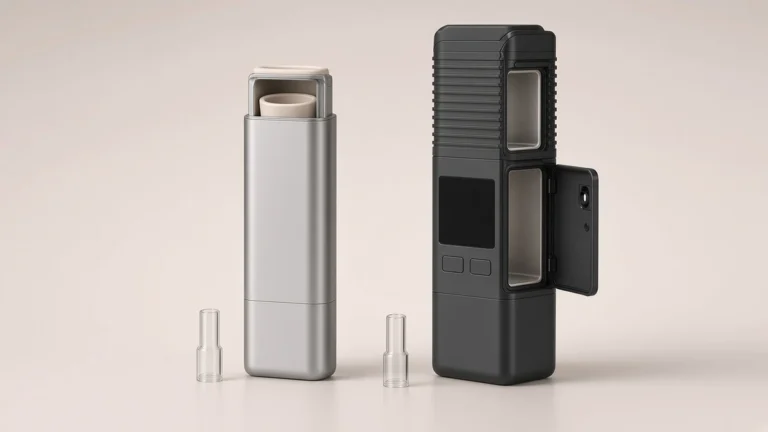
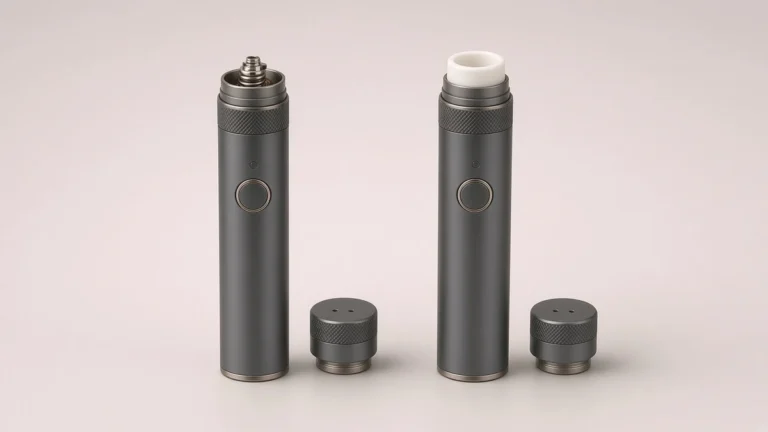
A 500-unit dry herb vaporizer private-label program, on AOVAPE’s published planning table, is an OEM quantity per color for an existing platform. It is not a combined total across colors, and it is not the published ODM starting quantity. For ODM, dry herb vaporizers start at 1,000 units total, with a minimum of 500 units per color. Those figures are planning ranges. The sample plan, final specification, tooling and lead time are confirmed in the quotation.
AOVAPE is a Shenzhen-based dry herb vaporizer hardware manufacturer for brands, distributors and product teams. Private label, in this setting, is the work of branding and finishing a selected platform so a brand can sell it as its own, including color, logo, kit contents and packaging as confirmed for the order. This article explains what the 500-unit figure covers, how it differs from ODM, and what still has to be specified. The dry herb vaporizer category page is the starting point for platform shortlisting. Small-Batch Vaporizer OEM or ODM: How a New Brand Can Compare a Manufacturer is the wider comparison frame.
🔎 1. What Private Label Means on a Dry Herb Brief
Private label is easy to use as a synonym for any branded order. On the official pages, the closest defined routes are white label and OEM customization of an existing platform, as described on the OEM/ODM page, and existing-platform customization on the manufacturer page. White label is pre-designed hardware that a client can brand and sell. OEM customization is a branded program built around an agreed specification, artwork and approved sample. Both are different from ODM or new-tooling development, which may change structure, electronics or dedicated molds.
A brief that says only “private label, 500 units” is therefore still incomplete. It has to name the platform, the color split, the kit contents and whether any requested change stays on the existing platform. If the brand needs a new housing, a different oven geometry or a new control architecture, the project may have left the 500-unit OEM planning path. Existing Vaporizer Platform or New Tooling: What a Custom Project Is Asking For is the place to make that cut explicit.
📦 2. The Published 500-Unit Figure Is an OEM Quantity per Color
The manufacturer, OEM/ODM, dry-herb category and FAQ pages repeat the same planning table. For OEM, dry herb vaporizers start at 500 units per color. That is the figure a 500-unit private-label inquiry is usually pointing to. It is a per-color quantity, not a mixed-color total. Two colors on an OEM program are two per-color quantities, unless the quotation says otherwise.
Selected stock devices can be evaluated from 10 pieces, subject to availability. The homepage states that available stock products can typically ship in 5–7 days by UPS or DHL, which helps a brand evaluate a platform before freezing a branded specification. Sample quantity and availability depend on the model. A 10-piece evaluation order is not the same commitment as a 500-unit-per-color OEM run.
🧭 3. How ODM Planning Quantities Differ
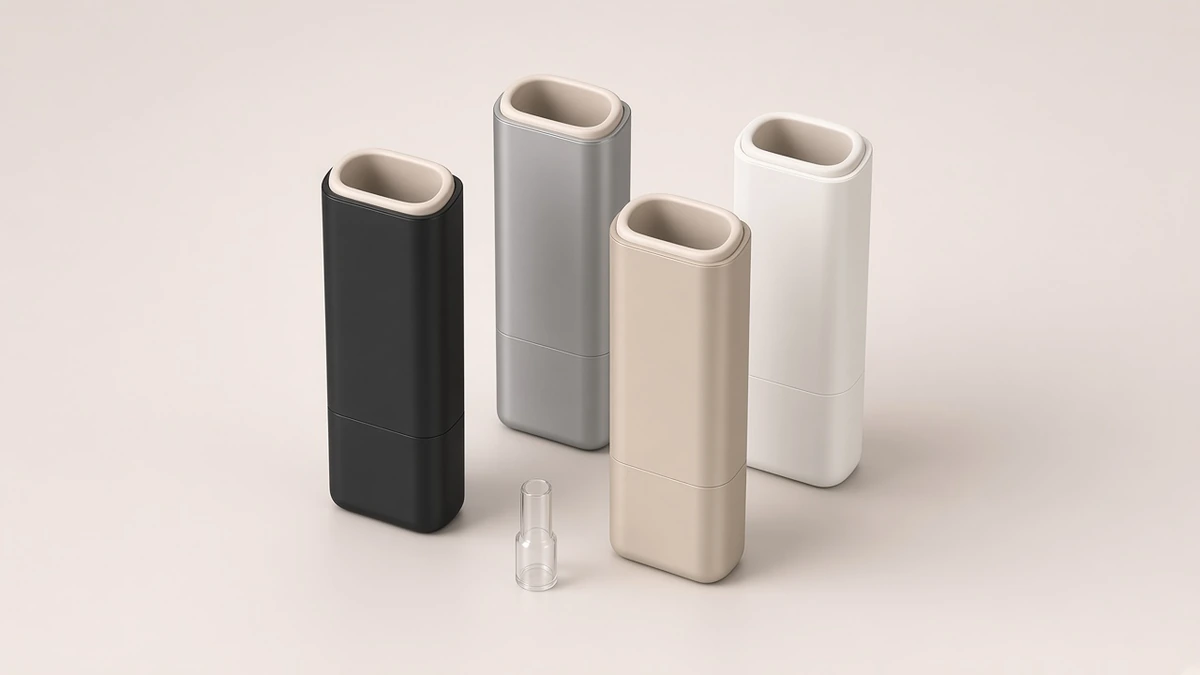
For ODM, dry herb vaporizers start at 1,000 units total, with at least 500 units per color. That path is the published planning range for deeper development, including work that may require new engineering or tooling. A buyer should not assume that a 500-unit private-label target still applies once the brief leaves existing-platform OEM and becomes an ODM project. The path has to be named before the number is used.
Wax pens use the same published OEM and ODM quantities as dry herb vaporizers. 510 thread batteries and CBD oil pens use higher planning quantities: OEM starts at 1,000 units per color, and ODM starts at 3,000 units total, with a minimum of 1,000 units per color. Those other category figures should not be imported into a dry-herb brief by habit. Wax Pen or Dab Pen OEM in Shenzhen: What Low MOQ Actually Specifies is the matching reading for concentrate pens. In every category, final MOQ, sample timing, tooling and test requirements are confirmed for each inquiry.
🧩 4. What the 500-Unit Program Still Has to Specify
The 500-unit-per-color figure covers a planning starting quantity for OEM branding of a dry herb platform. It does not, by itself, specify the model or revision, chamber material, heating design, temperature control, battery configuration, charging, cleaning access, kit contents or packaging. It does not approve a new tool. It does not name the destination-market documents. Those items still have to be written into the specification and confirmed on an approved sample.
The dry-herb category asks procurement teams to compare the same hardware revision, kit contents, quantity by color, packaging and delivery assumptions across quotes, and to specify which model-specific documents are needed for the market. Product and engineering teams are asked to set acceptance criteria for chamber size, heat-up, temperature control, airflow, charging and cleaning access, and to record the model, sample revision, test conditions and results. Brand owners are asked to set a target launch date, order volume and the product differences the brand actually needs, and to include tooling, packaging and the sample-approval milestone in the decision.
🧪 5. Platforms Buyers Can Shortlist for a Sample Review
The dry herb vaporizer category page and the existing vape hardware platforms page publish reference platforms for sample review. Raptor is described as a hybrid convection and conduction platform with a 21700 battery format, a 0.96-inch TFT color display and USB-C charging; buyers are asked to review the cell configuration and heat profile on the sample. Canopus is described as a compact ceramic-heating platform with 93–220°C control, a 0.69-inch OLED and a built-in 2,000 mAh battery; buyers are asked to check chamber capacity and cleaning access. Gemini Pro is described as a rounded dry-herb platform with a stainless-steel oven, 149–224°C control, a 0.91-inch OLED and a 2,000 mAh battery; buyers are asked to check temperature behavior and mouthpiece configuration. Mars is described as a 3-in-1 multi-format platform for dry herb, concentrates and compatible pipe materials, with a 3,000 mAh battery and a color display.
Those published descriptions are starting points, not a substitute for the exact configuration on the quotation. A published product is a reference platform. Current stock, component availability, sample timing and customization feasibility are confirmed for each inquiry. The dry herb vaporizer buyer FAQ repeats that sample availability and final specifications must be confirmed for the exact configuration.
📋 6. Samples, Approval and the Quotation
The quality evidence page asks buyers to agree on the model and revision, sample ID, configuration, test method, acceptance limits and destination-market documentation before approval, and to retain the approved reference sample for production. The dry-herb FAQ adds that buyers should then compare operation and kit contents on a physical sample before finalizing the specification. Some changes can be made within the current platform; others require new tooling or validation. Confirm that boundary before treating the 500-unit OEM figure as the project quantity.
These quantities remain planning ranges. Confirm the sample plan, final specification, tooling and lead time in the quotation. The website does not publish a standard tooling fee or a standard tooling lead time. Compliance is product- and market-specific. Send the platform preference, required functions, color split, kit contents, target volume, market and launch timing through the wholesale inquiry form. The OEM/ODM process page and the company FAQ repeat the planning quantities already used above.
A practical private-label brief can reuse these questions:
- Is the work existing-platform OEM or white-label branding, or ODM / new tooling?
- Which platform and revision is being quoted, and does the sample match that revision?
- What is the quantity per color, and how many colors are in the first order?
- Which chamber, heating, control, charging and cleaning criteria will be used for approval?
- Which kit contents and packaging are included in the 500-unit-per-color price?
- Which destination-market documents are required before production release?
❓ 7. Short Answers a Brief Can Reuse
❓ 7.1 Identification Questions
What does a 500-unit dry herb private-label MOQ cover on AOVAPE’s pages?
It matches the published OEM starting quantity of 500 units per color for an existing dry herb platform. It is a planning range, not a completed quotation.
Is 500 units a total that can be split across colors?
Not on the published OEM table. The 500-unit figure is per color. The color split has to be named on the brief and confirmed on the quotation.
How does the ODM quantity differ?
For ODM, dry herb vaporizers start at 1,000 units total, with a minimum of 500 units per color. Deeper development may also require tooling review.
Can a brand evaluate a platform before placing 500 units?
Yes. Selected stock devices can be evaluated from 10 pieces, subject to availability, before the custom specification is finalized.
Which dry herb platforms are published for sample review?
Reference models published for sample review include Raptor, Canopus, Gemini Pro and, on the platforms page, Mars. Confirm current availability and the exact configuration.
What still has to be specified besides the quantity?
The platform and revision, chamber and heating design, controls, kit contents, packaging, color split, sample-acceptance criteria, any tooling, lead time and destination-market documents.