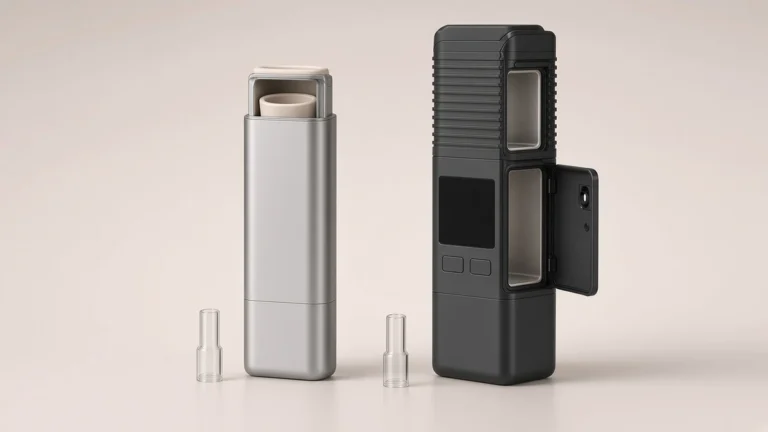
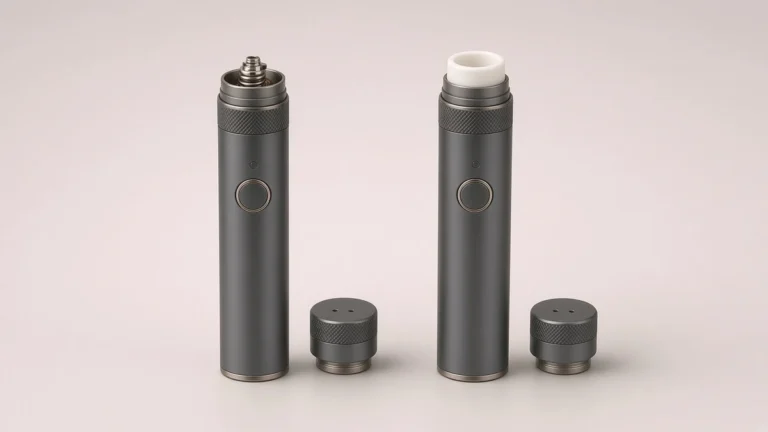
A dry herb vaporizer has to hold the load in an oven. The surface that load actually contacts may be ceramic, or it may be metal, often a stainless or other documented metal chamber wall. Those two surfaces are easy to collapse into a single catalog phrase such as “ceramic heating,” “stainless oven,” or “convection chamber.” They should not be. A ceramic oven is a chamber whose contact surface is ceramic. A metal chamber is a chamber whose contact surface is metal. A brief that names only the heating method, or only a removable cup, is incomplete.
That distinction is not the same as conduction versus convection, and it is not the same as a dosing capsule or a removable cup. How Do Dry Herb Vaporizers Work? Complete Guide already treats the heating method. Dry Herb Vaporizer Cups: Fit and Heat Path and Dosing Capsules Vape Guide: Fit, Airflow and Cleaning already treat cups and capsules as their own hardware. This guide stays on the oven contact surface itself: ceramic, metal, and what a listing photograph cannot prove.
🔎 1. A Ceramic Oven and a Metal Chamber Are Not the Same Surface
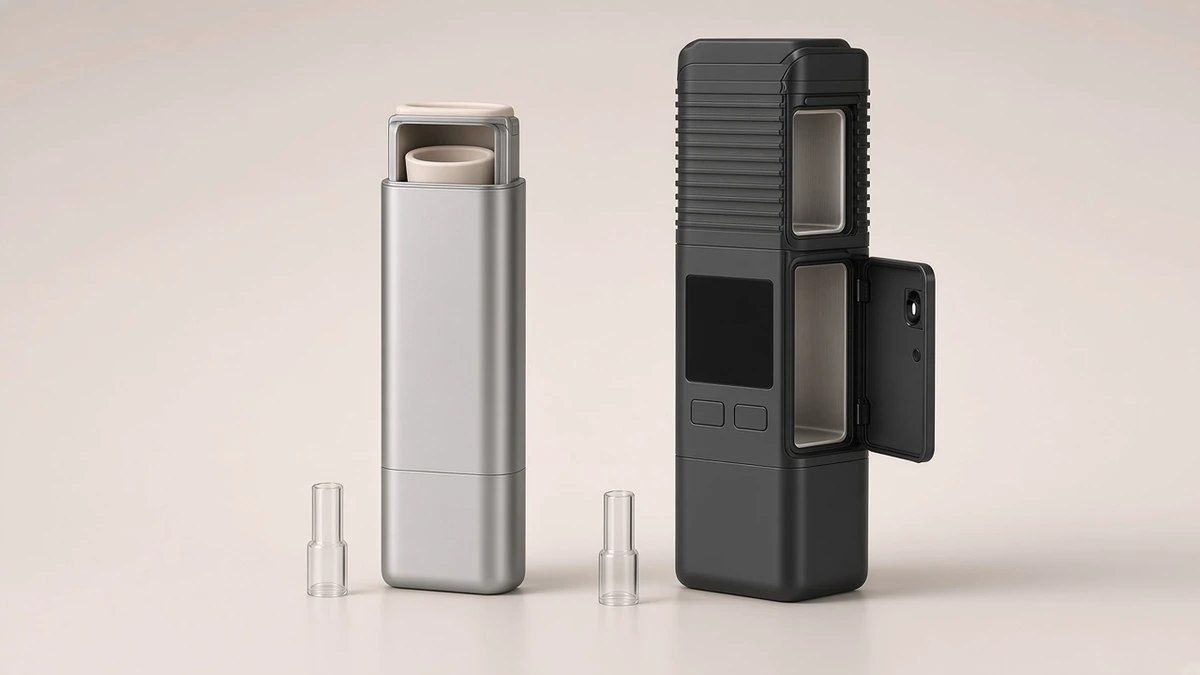
The first cut is simple. A ceramic oven is a chamber in which the load contacts a ceramic wall, floor, or bonded ceramic lining. A metal chamber is a chamber in which the load contacts a metal wall or floor, unless a documented liner stands between the load and that metal. One fact tells you the contact surface is ceramic. The other tells you the contact surface is metal. They can both be used with conduction, convection, or a mixed method, and they can fail independently of a heating-method label.
A “convection” label does not identify a ceramic wall. A “stainless oven” label does not, by itself, tell you whether a ceramic cup or a screen sits inside that metal shell. A device can heat by convection and still present a metal chamber, or it can use a ceramic bowl in a conduction-style oven. Do not assign the contact surface from the heating-method word alone.
A removable cup or capsule is a third identification again. Dry Herb Vaporizer Cups: Fit and Heat Path already treats cups. Dosing Capsules Vape Guide: Fit, Airflow and Cleaning already treats capsules. Those inserts can change what the load contacts, but they are not automatically the oven wall. If a project will ship a cup or a capsule, record the insert and the oven wall as separate lines.
🏷️ 2. A Heating-Method or “Cup” Label Is Not a Complete Oven Specification
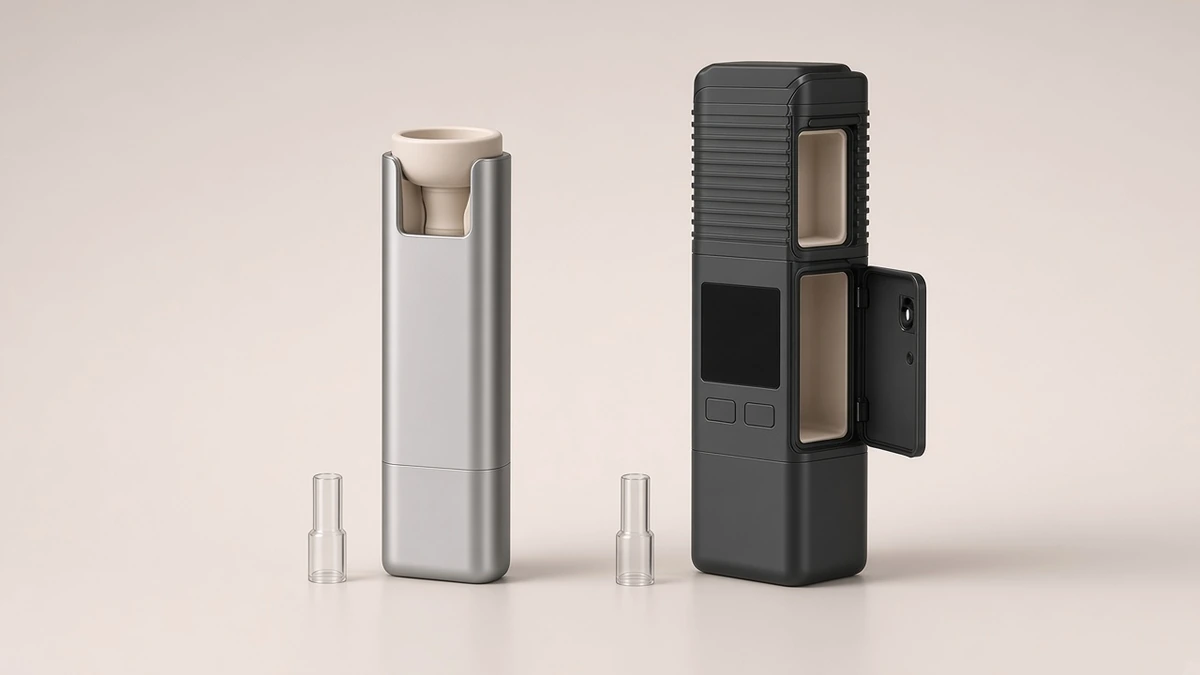
“Conduction,” “convection,” “hybrid,” “ceramic heating,” and “includes a cup” are starting labels, not finished oven-surface specifications. Heating method tells you how heat is supposed to reach the load. It does not tell you whether the wall the herb touches is ceramic or metal, whether that surface is a bonded lining or a removable bowl, or whether a screen stands between the load and the wall. Two devices can share a “convection” label and still differ in contact surface, cup use, and how the oven is loaded.
A “ceramic chamber” claim is also incomplete if it does not say whether the ceramic is the oven wall, a lining, or a removable cup. Vape Screens: Tell the Oven Mesh From the Mouthpiece Filter already treats screens and mesh. A screen is not the oven wall. Top-Load Oven or a Side-Load Door: How a Dry Herb Vaporizer Is Filled already identifies the loading path. Loading path is useful context, not a substitute for the contact surface.
If the listing says only “ceramic heating,” “stainless oven,” or “use with capsules,” write that wording down and ask which contact surface, which insert, and which revision the drawing actually names. Do not treat a photograph of a light-colored bowl as proof of the wall material, and do not treat a heating-method word as the oven surface.
🧩 3. Identifying a Ceramic Contact Surface on a Sample
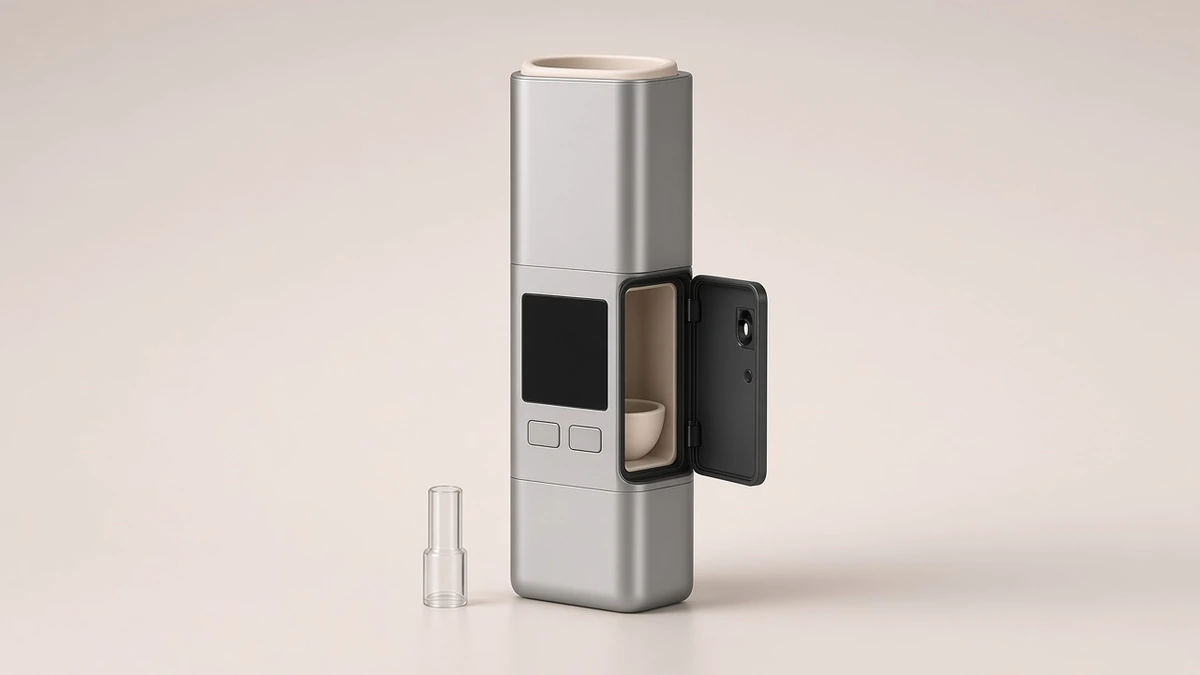
An open oven, with any cup or capsule removed, is the right place to look at the contact surface. Look at the wall and the floor the load is supposed to touch when no insert is used. If that surface is ceramic—a bowl, a bonded lining, or a documented ceramic chamber—record it as a ceramic contact surface on that version. Record what you can actually see, and record whether the ceramic part can be lifted out.
A ceramic-looking coating can hide a metal wall, and a metal shell can hide a ceramic bowl. If you cannot tell the surface from the open oven, do not guess. Write that the surface is not visually settled and ask for the version drawing or a materials callout for that exact oven. Dry Herb Burning: Residue or a Hardware Fault? already treats scorching as a hardware-fault question. This guide does not diagnose a burnt load. It only asks the buyer not to infer oven material from a color, a “ceramic heat” slogan, or a scorched sample.
If the project will be used only with a ceramic cup, still record the oven wall underneath. The cup is an insert. The wall remains part of the specification when the cup is left out or replaced.
📐 4. A Metal Chamber Still Has to Be Named
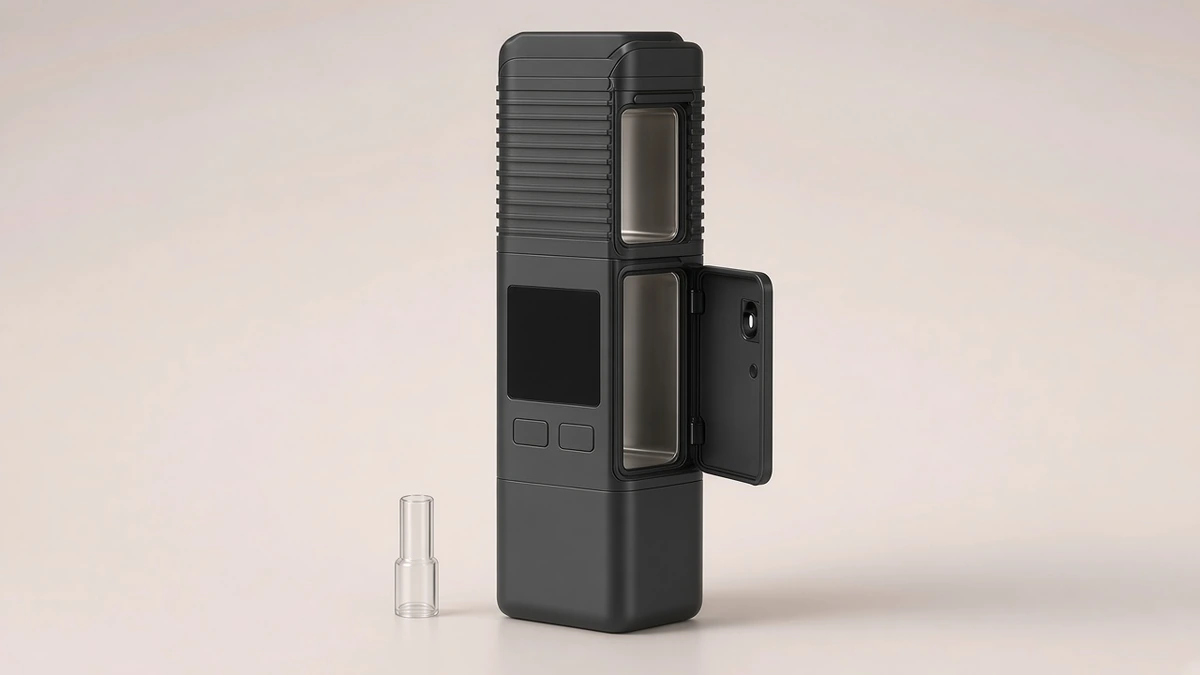
Once a ceramic contact surface has been ruled in or out, a metal chamber still has to be named on its own. Look at the open oven with inserts removed. If the load is supposed to contact a metal wall or floor, record the chamber as metal on that version, and record any more specific metal name only if the version documentation actually uses it. Do not invent an alloy name from a photograph.
A metal chamber can still be used with a ceramic cup, a dosing capsule, or a screen. Those parts change what the load contacts during a session, but they do not erase the oven wall. Write the wall and the insert as two lines. How Do Dry Herb Vaporizers Work? Complete Guide remains the place to identify heating method. A metal wall is not automatically conduction, and a ceramic bowl is not automatically convection.
If the drawing and the sample disagree—if the listing says “ceramic oven” and the open sample shows a bare metal wall, or if a cup revision has changed the contact surface—stop and confirm the revision before the oven is treated as approved. Mouthpiece and cooling path remain different identifications. Cooling Unit or a Glass Stem: What Comes Off the Top of a Dry Herb Vaporizer already treats that path. Cooling hardware is not oven material.
📷 5. What a Listing Photograph Can Hide
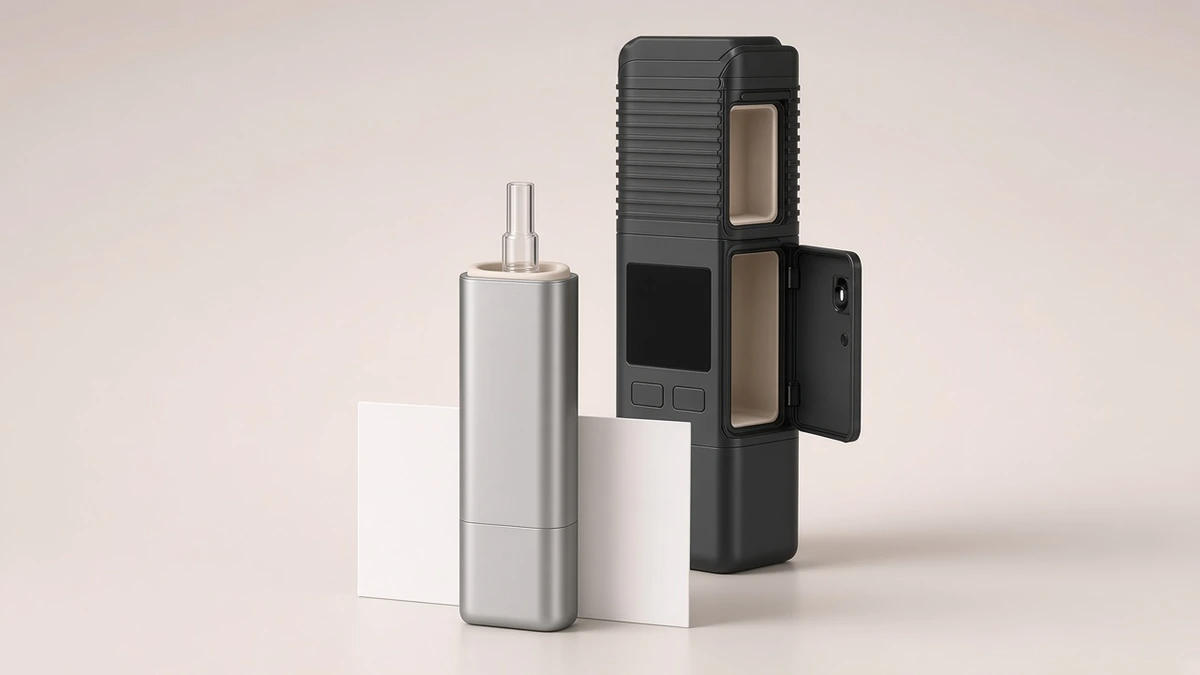
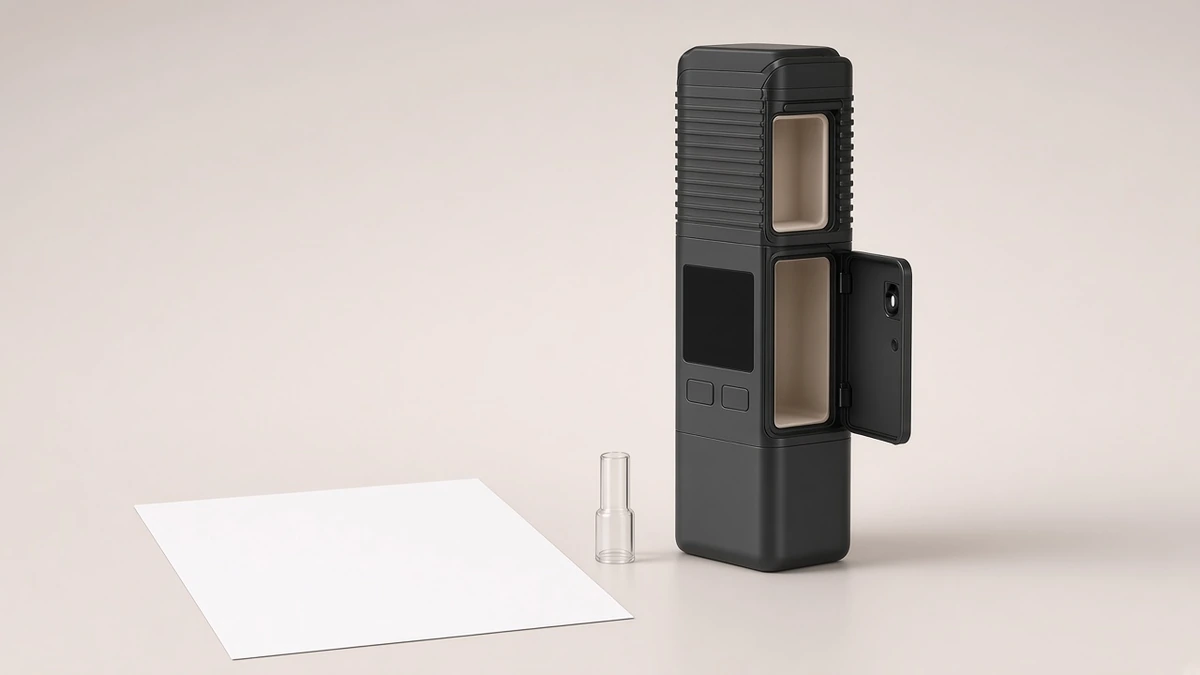
A listing photograph can support an oven-surface identification if the chamber is open, inserts are shown separately or are clearly absent, and the visible wall matches a sample of the same version. Often it is not. A beauty shot with the mouthpiece on hides the oven completely. A tight crop can show a light or dark bowl without showing whether that surface is a removable cup or the oven wall. A rendered chamber may show a ceramic bowl that is not the revision in the quotation.
The photograph is also the wrong place to borrow a heating-method claim. A marketing image that says “ceramic convection oven” or “stainless chamber” does not identify the contact surface the load will touch. Those assignments come from the drawing and from an open sample of the exact version. If the listing says “ceramic heating” and shows only a closed device, write the label down and request an open-oven view, a materials callout, and a sample.
✅ 6. What to Check on a Sample, a Drawing, and a Brief
A one-line description a team can reuse should name the contact surface and should keep that fact apart from heating method, cups or capsules, and loading path. Example: “Portable dry herb vaporizer; oven contact surface ceramic or metal as confirmed on the exact version with inserts removed; heating method, cup or capsule use, and loading path are documented separately.”
On the sample:
- Open the oven and remove any cup, capsule, or screen that is not the oven wall.
- Record whether the load is supposed to contact a ceramic surface or a metal surface when no insert is used.
- Record whether a ceramic bowl or lining can be lifted out, or whether it is bonded to the oven.
- If a cup or capsule will ship with the device, record that insert as a separate line, and still record the oven wall underneath.
On the drawing and the current brief for that exact version:
- Record the contact-surface material, the revision, and whether the surface is the wall, a lining, or a removable bowl.
- Keep heating method, loading path, screens, and cooling hardware in separate lines.
- If the drawing and the sample disagree, stop and confirm the revision before writing a purchasing line.
On the listing:
- Treat “ceramic heating,” “stainless oven,” “convection chamber,” and “includes a cup” as labels to reconcile with the open oven.
- A chamber shown for a named catalog example is that page’s documentation, not a default for the next device in the same photograph style.
Questions worth sending with a sample request:
- On this exact version, what surface does the load contact when no cup or capsule is used?
- Is that surface ceramic or metal, and is it the oven wall, a lining, or a removable bowl?
- If a cup, capsule, or screen is part of the project, what does the load contact with that insert in place, and what is the wall underneath?
- Which revision do the quotation and the sample cover, and does the open oven match that revision?
- If the listing says “ceramic heating” or “convection oven,” which contact surface has actually been confirmed?
❓ 7. Short Answers a Brief Can Reuse
❓ 7.1 Identification Questions
What is a ceramic oven on a dry herb vaporizer?
It is a chamber whose contact surface is ceramic: a bowl, a bonded lining, or a documented ceramic wall or floor that the load is supposed to touch.
What is a metal chamber?
It is a chamber whose contact surface is metal, often a documented metal wall or floor, unless a liner stands between the load and that metal.
Does a “convection” or “conduction” label complete the oven specification?
No. Heating method is one fact. The surface the load contacts is a separate fact, and it has to be confirmed on the exact version.
Is a ceramic cup the same thing as a ceramic oven?
No. A cup is a removable insert. The oven wall underneath still has to be named, especially for sessions that leave the cup out.
Can a metal chamber still be used with a ceramic cup or a capsule?
Yes. The insert changes what the load contacts during that session. It does not, by itself, identify the oven wall.
Can a listing photograph settle the contact surface?
It can support an identification if the oven is open, inserts are clear, and the visible wall matches a sample of the same version. It often shows a closed device or a rendered bowl. Confirm the surface on an open sample and in the version documentation.