Someone buys a dual 510 battery expecting it to work like two single batteries fused together, then loads two cartridges and finds the device does something unexpected: only one cartridge fires, the display shows one number instead of two, or both cartridges heat at once when only one was supposed to. None of this means the unit is defective. It means the phrase “dual 510 battery” describes a mounting format, not a fixed behavior, and the internal wiring decides what actually happens when two cartridges share one housing.
This is worth sorting out before assuming a hardware fault, because the confusion usually traces back to one of five things: whether the circuits are independent or shared, whether the cartridges physically fit as installed, what the mode control is actually switching, how contact wear affects one side more than the other, or how charging behaves with two loads instead of one. Each of these has a mechanical explanation, not a guess.
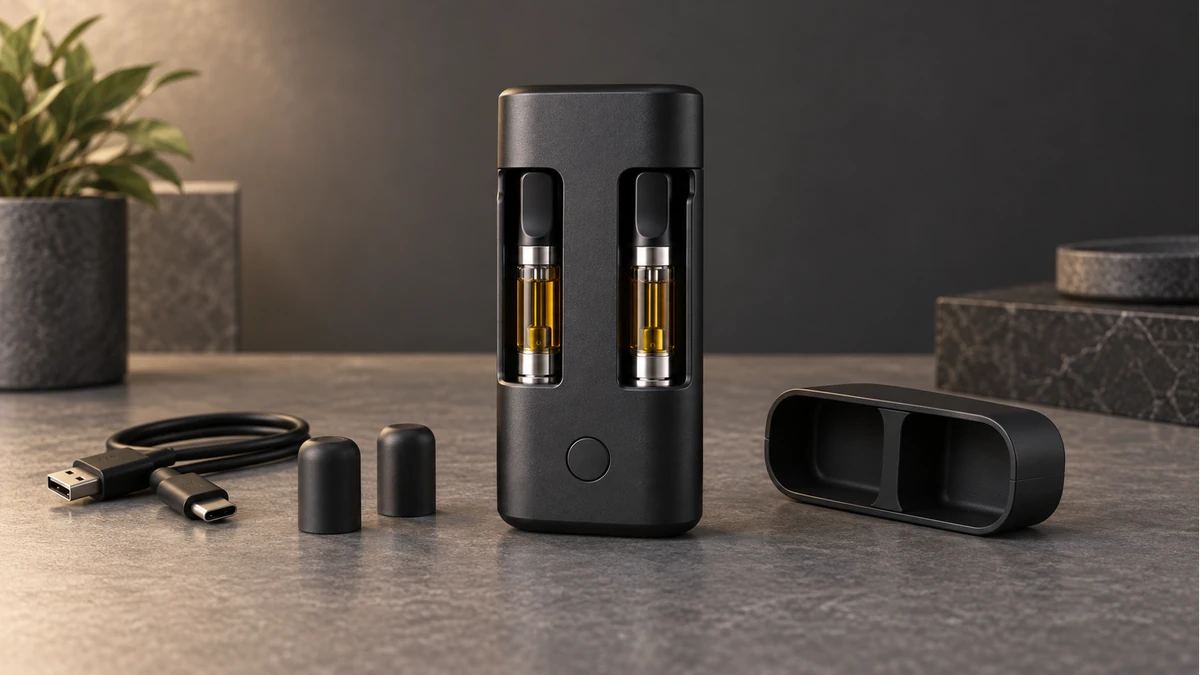
The single biggest source of confusion is assuming every dual-cartridge device treats both sides identically. There are two distinct wiring approaches sold under the same “dual” label, and they behave very differently in daily use.
🔀 1.1 Independent-circuit design
In an independent-circuit battery, each 510 connector has its own path to the cell, often with its own button, its own voltage memory, and sometimes its own small display or LED. Firing one side has no effect on the other. This is the design most people picture when they hear “dual battery” — two cartridges that behave like two separate devices sharing a case and a cell.
The giveaway is usually two buttons, or one button paired with a physical switch that selects which connector is active. If a device has only one fire button and one connector lights up at a time, it is not running both cartridges independently, even if two are physically installed.
A shared-circuit dual battery routes both connectors through one control path. Depending on the model, this can mean the button fires whichever cartridge was last selected, or it can mean both fire together at whatever voltage is set. Shared designs are usually built for switching between two different cartridges without unscrewing anything, not for running both at once.
This distinction explains the recurring complaint of “only one cartridge works” — on a shared-circuit unit, that’s the intended behavior once a side has been selected, not a malfunction. Checking the product documentation for the word “independent” versus “selectable” clears this up faster than testing by trial and error.
the broader 510 thread battery guide
📏 2. Physical Clearance: Height and Diameter
Before circuitry matters at all, both cartridges have to physically fit. Dual housings are built around a specific internal cavity, and cartridges vary enough in body length and diameter that a pairing that works on one device can jam on another.
📐 2.1 Height stacking
Most dual batteries mount cartridges side by side rather than stacked, but the cavity still has a fixed depth. A cartridge that’s slightly taller than the housing was designed for won’t seat the threads fully, which produces the same symptoms as a loose connection — intermittent firing, a blinking error light, or no response at all. The cartridge may look installed while the threads are only partially engaged.
↔️ 2.2 Diameter and thread seating
Diameter mismatches show up differently. A cartridge slightly wider than its neighbor can press against the housing wall or against the second cartridge, which either prevents full insertion or puts sideways stress on the 510 threads. Over repeated insertions this can wear the threading unevenly on one side before the other, which is why a battery that’s fine with one cartridge pairing can develop a stiff or wobbly connection with a different pairing.
Checking clearance is simple: insert one cartridge at a time first, confirm it seats fully and sits flush, then add the second. If the second cartridge won’t seat flush once the first is in place, the issue is spacing, not a bad connector.
🎛️ 3. What the Mode Control Is Actually Switching
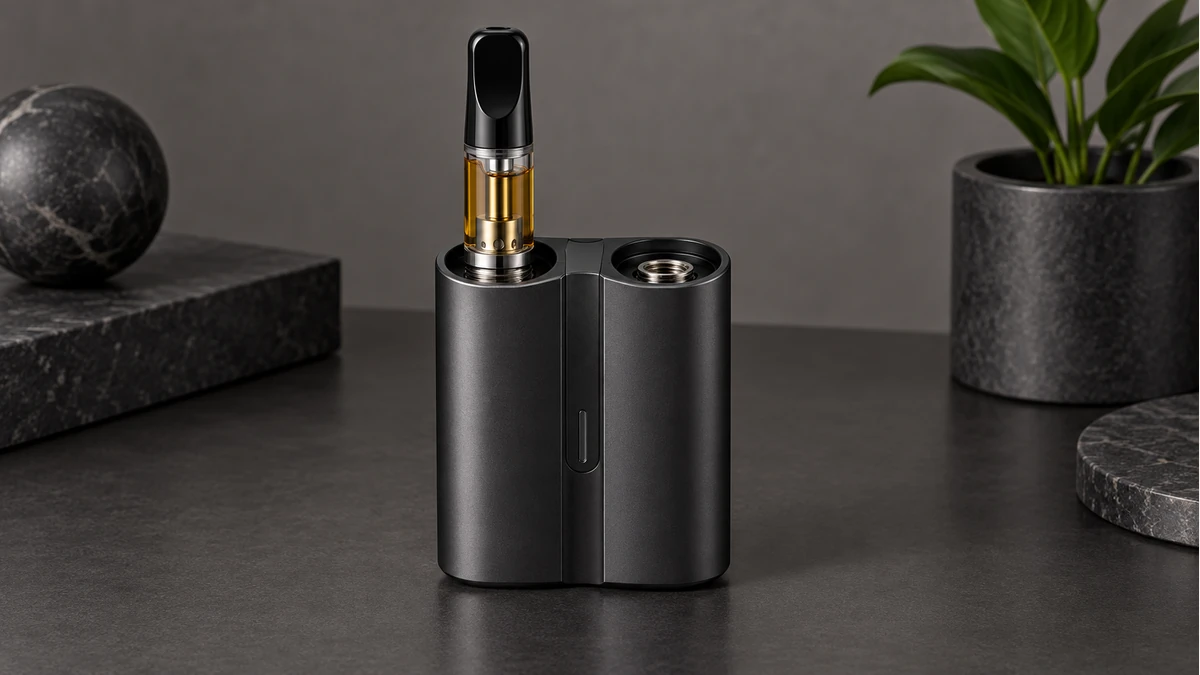
Dual-format devices often add a mode button, a slider, or a set of LEDs, and it’s not always obvious what that control governs. There are three common functions hiding behind similar-looking buttons, and mixing them up is a frequent source of “it’s not doing what I expected.”
- Cartridge selection — toggles which of the two connectors receives power. Doesn’t change voltage.
- Output adjustment — changes voltage or wattage for whichever cartridge is currently active. Doesn’t change which side fires.
- Preheat or activation mode — runs a brief higher-output pulse before settling to a set level, unrelated to which cartridge is selected.
🏷️ 3.1 Why labels like “A/B” cause confusion
Manufacturers label these controls inconsistently — some print “A” and “B” for cartridge selection, others use the same letters for voltage presets, and color-coded LEDs sometimes indicate charge state instead of either one. Without checking the printed manual or the fold-out insert, it’s easy to assume a color change means the wrong cartridge is firing when it actually means the battery has dropped into a lower charge tier. Matching the LED behavior to the manual’s legend before troubleshooting saves a lot of misdiagnosis.
⚡ 4. Contact Loading and Uneven Cartridge Performance
It’s common to notice one side of a dual battery performing weaker than the other over time, even with cartridges swapped between sides to rule out the cartridge itself. This points to contact wear rather than circuit failure.
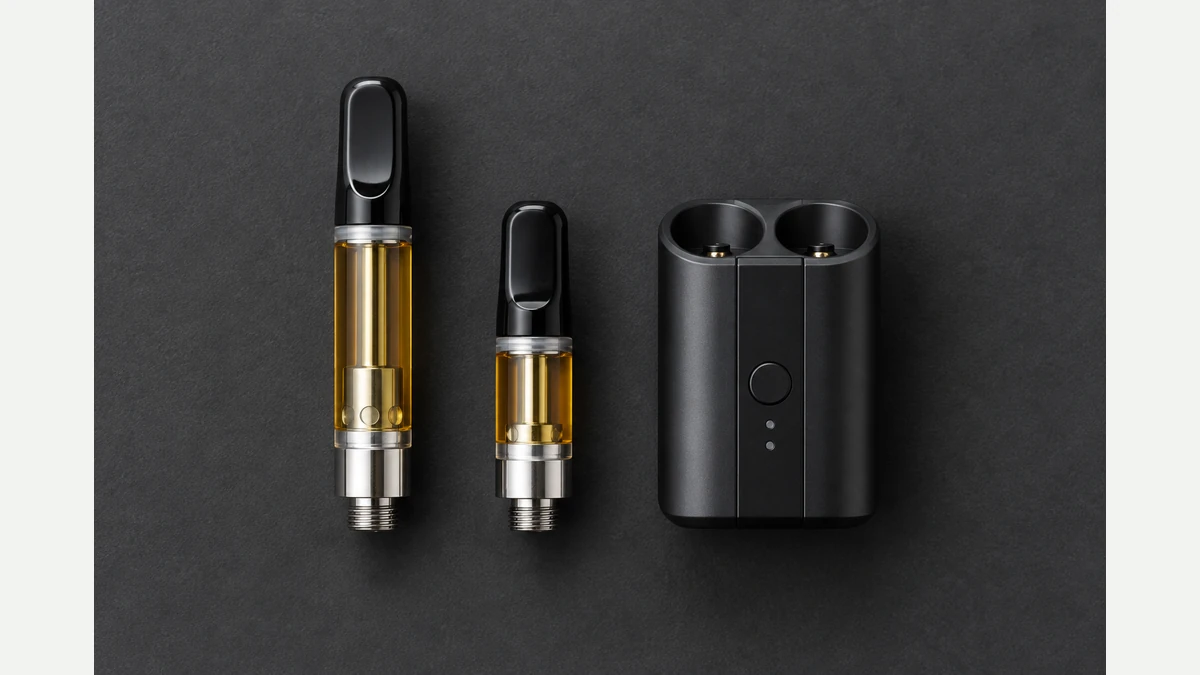
Each 510 connector has a spring-loaded center pin that makes contact under light pressure. That pin sees repeated compression every time a cartridge is inserted or removed, and the two connectors on a dual device rarely get equal use — one side is typically swapped more often, screwed in slightly off-center more often, or exposed to more residue drips. Over time this shows up as a shorter pin travel, a pin that sits slightly recessed, or a contact surface with more oxidation than its neighbor.
None of this requires replacing the whole unit. A weak connector can often be restored by gently lifting the center pin back to its resting height with a small nonconductive tool and cleaning the contact surface — covered in more detail below.
🔋 5. Charging Demand With Two Cartridges Installed
A single cell powering two connectors has to account for the possibility of two loads at once, even on independent-circuit models where both sides can theoretically draw power close together in time. This affects two things a buyer should expect rather than something to troubleshoot as a defect.
🔌 5.1 Runtime per charge
Runtime between charges is a function of total draw, not per-cartridge draw. Running both connectors across a session pulls from the same capacity pool a single-connector device would use for one cartridge, so total sessions per charge drop roughly in proportion to how often both sides are used rather than one.
⏱️ 5.2 Charge time and protection circuitry
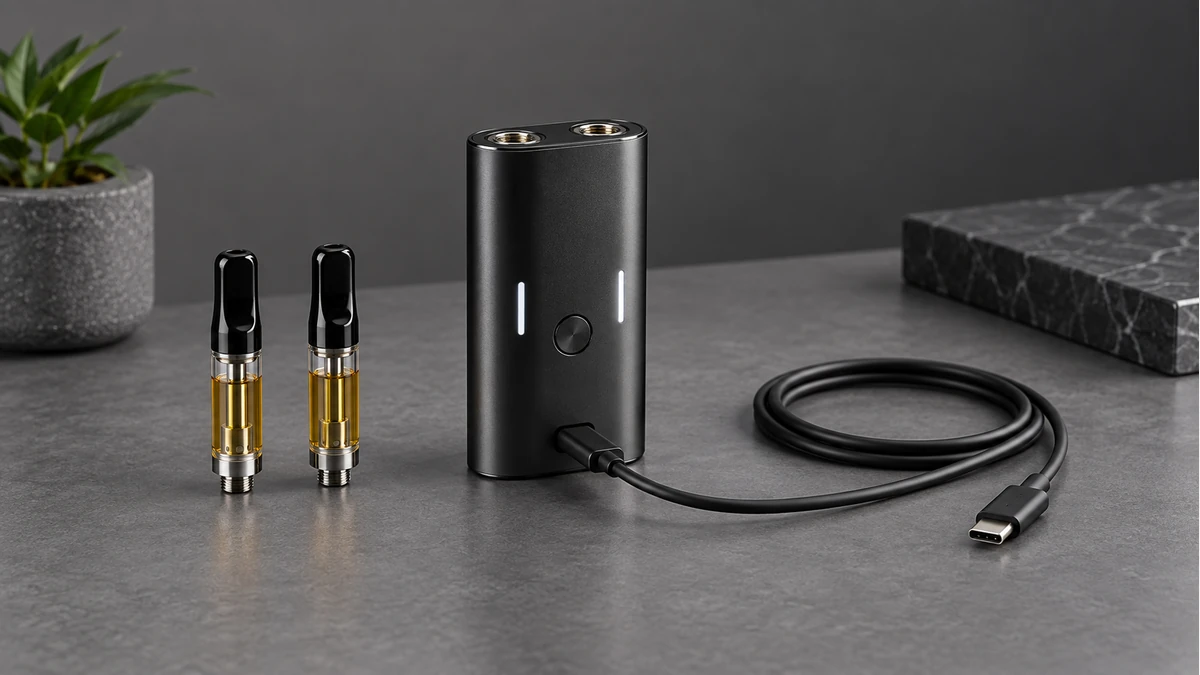
Dual batteries generally charge through a single port regardless of how many cartridges are installed, so charge time reflects total cell capacity, not the number of connectors. Some models cut charging speed or refuse to charge at all while a cartridge is seated, as a precaution against charging and firing simultaneously — this is a protection behavior, not a fault, and removing the cartridges before charging resolves it.
💨 6. Airflow Separation Between Chambers
Each cartridge draws air through its own path in the housing, and these paths are built to stay separate so vapor from one side doesn’t route through or mix with the other. The physical seal around each cartridge — usually a rubber gasket or an insert designed to match the cartridge’s base — is what maintains this separation.
A cartridge that doesn’t seat flush, whether from the height mismatch discussed earlier or from a worn gasket, can let air bypass its intended path and pull from the adjacent chamber instead. The usual symptom is a noticeably airier or thinner draw on one side that doesn’t match the cartridge’s own airflow setting. Reseating the cartridge fully, or checking the gasket for a compression set or tear, is the first thing to check before assuming the cartridge itself is faulty.
🎒 7. Pocket and Travel Handling
Carrying two loaded cartridges in one housing changes how the device should be handled compared to a single-cartridge pen, mainly around two points.
- Orientation during transport — a housing with two open connector wells has two opportunities for residue to migrate under gravity if carried cartridge-down for extended periods. Carrying the unit connector-up, or in a case that holds it upright, reduces this.
- Accidental activation — two buttons or a button plus a selector switch means more exposed controls than a single-cartridge device, which raises the odds of an accidental press in a pocket. Devices with a lock function should have it engaged during transport; models without one benefit from a case that shields the buttons.
🧽 8. Cleaning Dual Contacts Without Cross-Contamination
Cleaning a dual battery is mostly the same as cleaning a single-connector one, done twice, with one added precaution: keep the two connector wells from sharing a swab or cloth pass. Residue carried from one well into the other can leave a film that affects the second connector’s contact quality even if that side was never used with a leaking cartridge.
- Remove both cartridges before cleaning either connector.
- Use a separate dry cotton swab, or the same swab replaced between wells, for each connector.
- Let isopropyl alcohol, applied sparingly, evaporate fully before reinserting a cartridge — residual liquid on the pin can cause a short-lived misfire reading on first use.
- Check the gasket around each well for buildup, since a residue ring here is what usually causes the seating and airflow issues described above.
🧪 8. Test Each Bay as Its Own Hardware Path
When a dual battery behaves oddly, remove both cartridges and test one known-compatible cartridge in each bay separately. This reveals whether the problem follows the cartridge or stays with one connection. Repeat with the same mode and voltage setting so the comparison is meaningful. Only after both bays pass independently should you test the dual operating mode.
🔌 8.1 Two Contacts Double the Fit Questions
Small differences in cartridge base length can change how firmly each center pin meets its contact. A bay that accepts one cartridge may still sit too shallow or too deep for another. Avoid prying pins or stacking improvised adapters; those changes can damage insulation and make the original symptom harder to identify.
🔋 8.2 Read Charging Behavior as a System Check
Charging time and indicator behavior can change with battery capacity, cable, power source, and whether the device was deeply discharged. Use the specified cable and power input, keep cartridges removed if the manual directs it, and verify that the body does not become unusually hot. A dual-cartridge form factor does not automatically mean two independent battery cells.
🛠️ 9. Troubleshooting by Isolating One Variable at a Time
Because a dual 510 battery has more interacting parts than a single-connector one, testing both cartridges at once tends to muddy the diagnosis. Isolating one variable per test narrows the cause far faster than swapping multiple things simultaneously.
| Symptom | First isolation step |
|---|---|
| One side won’t fire | Move that cartridge to the other connector; if it works there, the connector is at fault, not the cartridge |
| Both sides weak | Check charge level first, since low charge affects both connectors equally |
| Airy draw on one side only | Reseat that cartridge fully and inspect its gasket before checking the cartridge itself |
| Inconsistent output between sides at same setting | Confirm the mode control is actually set the same for both, not just visually similar |
Each of these tests changes exactly one variable — cartridge position, charge state, seating, or setting — while holding everything else constant. That structure is what actually identifies whether a problem sits in the cartridge, the connector, or the setting, rather than guessing at a full device replacement for what might be a single worn pin or an unset mode.
The practical takeaway is to treat a dual 510 battery as two separate systems that happen to share a case and a cell, not as one system with double the output. Confirm independent versus shared circuitry before assuming both sides should behave identically, verify clearance one cartridge at a time before blaming the connector, and when something goes wrong, swap or isolate a single variable before deciding the unit itself has failed.