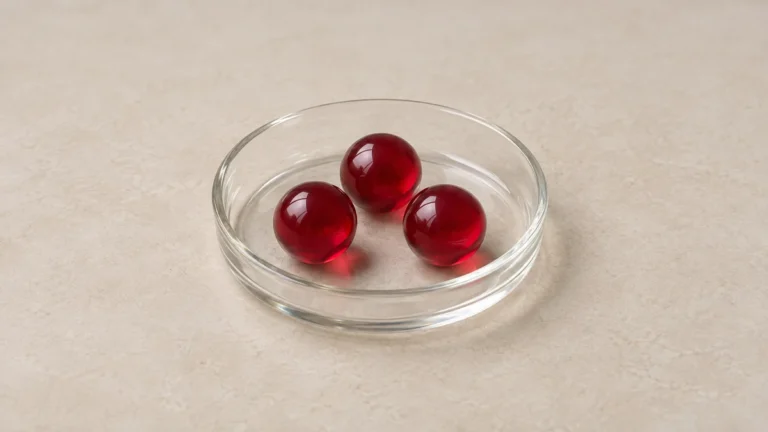
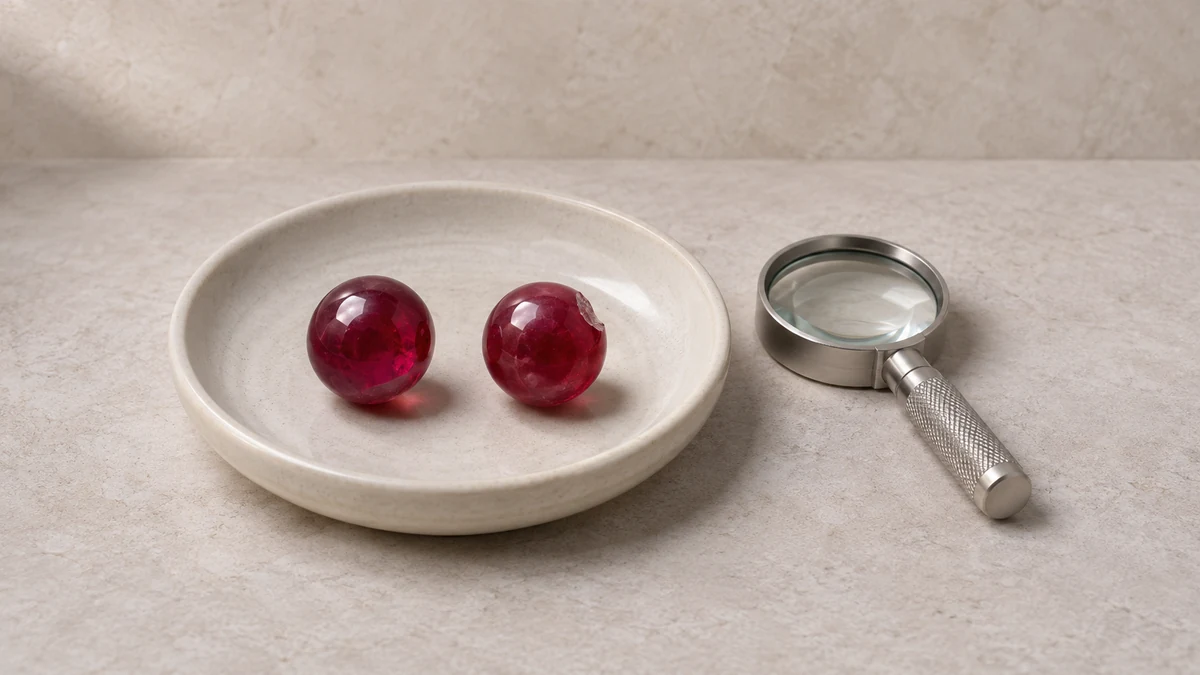
A dark mark on a ruby terp pearl does not tell you whether the surface is dirty, chipped or cracked. Let the hardware cool, keep the small part contained, and read the care instructions for the exact accessory before choosing a cleaner. A visible fracture or missing piece is a condition problem that further cleaning cannot resolve.
The confusing part is the advice surrounding these little spheres. Jewelry pages discuss one kind of use, accessory makers publish another set of warnings, and forum replies often describe completely different cleaning routines. The useful question is which information applies to the actual part in front of you.
🔴 1. Start With the Named Accessory
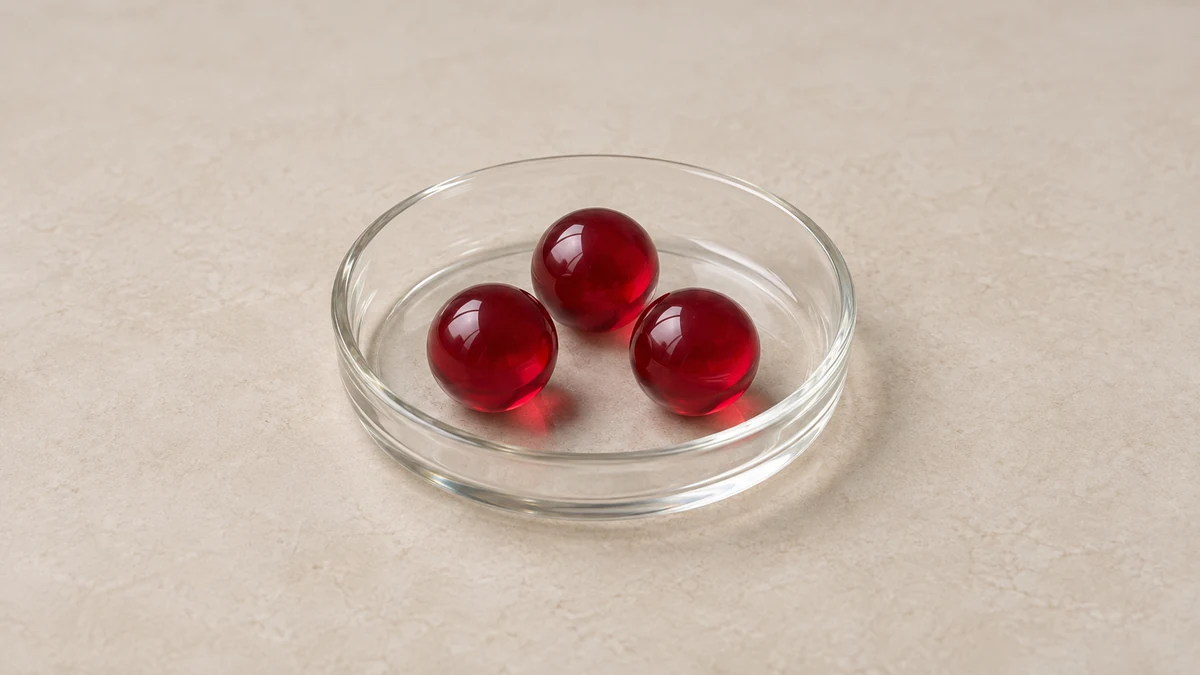
Look for the original product description, packaging or order entry. Does it identify the sphere as lab-grown ruby, another gemstone, or colored glass? A red appearance and a round shape are observations. They cannot establish the composition of an unidentified accessory, particularly after it has been mixed with other small parts.
Ruby Pearl Co’s named ruby products are described as lab-grown material. That is an attributed statement about those products, rather than a test for every red sphere in a kit. Keep the maker’s material description attached to its particular item and size instead of transferring it to visually similar accessories.
🏷️ 1.1 A Mixed Packet Needs More Than a Color Match
If several pearls arrived together, retain the original insert or product list. Different colors can represent different materials, decorative variations or separate items. Assigning a material by color alone creates an uncertain starting point for cleaning advice. Record the supplier’s stated identity and leave an unsupported identity unresolved.
The general terp pearl guide explains the loose accessory and its relationship to a chamber. Here the narrower issue is the condition and care of a pearl described as ruby. Its size, its material description and its present condition are three separate entries worth keeping.
💎 2. Hardness Does Not Answer Every Damage Question
The Gemological Institute of America’s ruby care guide distinguishes mineral scratch hardness from other durability considerations. It also discusses how treatments affect gemstone care. That jewelry context helps explain why a familiar material name does not make every care instruction interchangeable.
A claim about resisting scratches does not tell an owner whether an accessory has already developed a fracture. Likewise, a seller’s broad durability language cannot replace the condition check for the specific sphere. A pearl that was described accurately when new can still need replacement after damage.
🧾 2.1 Keep Gemology and Accessory Instructions in Their Proper Scope
A jewelry care page is written for stones in jewelry and related gemological conditions. It does not certify an unidentified sphere for a heated device. Use it to understand the distinction being discussed, then return to the actual accessory maker for its restrictions on cleaning and handling.
This is also why a care recommendation found by searching only “ruby” can lead to a confusing answer. The search may omit the product’s history, any other materials in the assembly and the conditions named by its maker. Include the accessory’s complete identity when looking for the instruction that belongs to it.
🧪 2.2 Lab-Grown Identity and Treatment History Are Separate
The phrase lab-grown describes an origin claim. It does not, by itself, provide a complete care specification for a finished accessory. GIA’s discussion of treatment-related durability concerns gives another reason to preserve a product’s full description rather than reducing everything to the word ruby.
Do not infer that a specific accessory has been filled, dyed or otherwise treated simply because such treatments exist in the jewelry market. Those are possibilities discussed by the gemology source within its own scope. The owner needs the supplied accessory’s actual description, and any additional information its manufacturer considers relevant to care.
🌡️ 3. Read the Hot-Cleaning Warning Literally
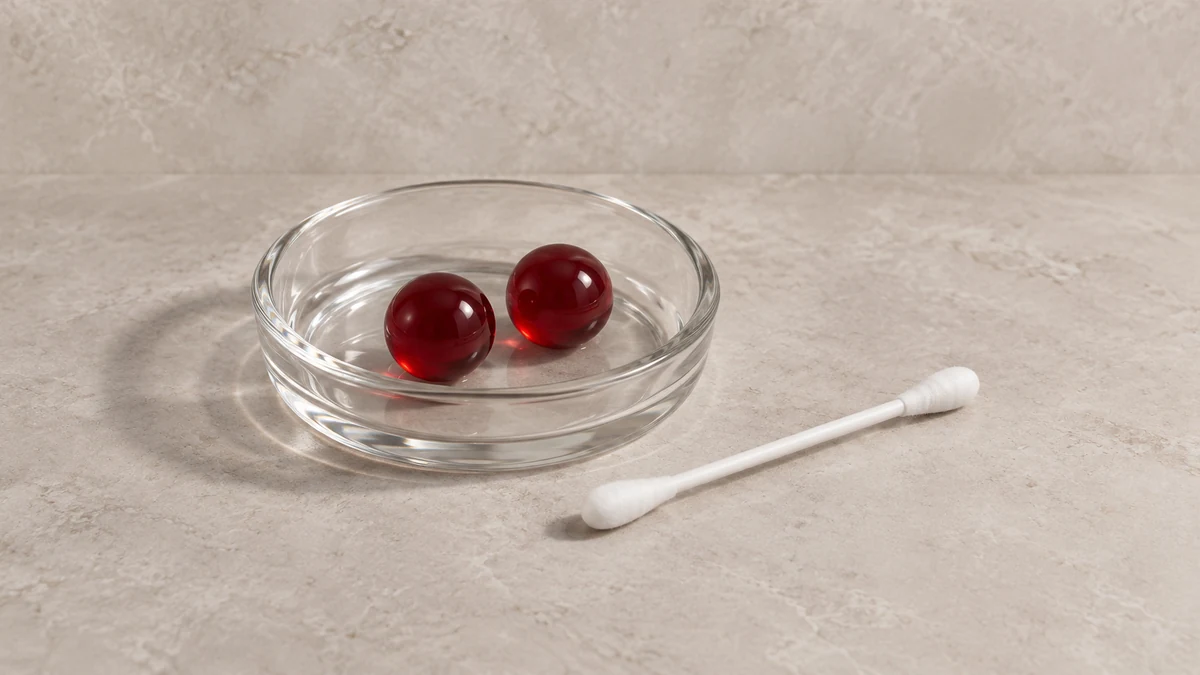
Ruby Pearl Co’s product care text warns against applying rubbing alcohol or cleaning solution while its gemstone is hot, and against direct flame. These are product-specific restrictions that remain relevant even when another owner’s comment says a more aggressive method worked for them. A successful anecdote supplies no condition report for your pearl.
Separate the two questions a short forum reply can merge. Is a particular cleaner permitted for this product? And under what conditions does the maker permit it? The word “alcohol” by itself answers neither question completely. The complete instruction, including its temperature-related warning, is the part that should travel with the accessory.
⏳ 3.1 Avoid Inventing a Universal Waiting Time
A fixed number of minutes from an unrelated comment does not establish the condition of every assembly. A small loose sphere, a large glass cup and a powered chamber can have different recent histories. Keep a powered device inactive and follow the cooling and disassembly directions for the complete setup.
There is no need to recreate a hot-cleaning experiment to decide which instruction to follow. If the relevant directions are unavailable or ambiguous, leave the accessory out of service while asking the maker. That preserves the question as a care decision instead of adding a new damage event to the history.
🔍 4. Inspect the Cooled Surface Without Promising a Diagnosis
Place the cooled, loose part in a shallow container where it cannot roll away. Under ordinary light, look for a missing edge, a line that remains visible from more than one angle, or a surface mark that follows the outside of the sphere. Describe what you can see in those terms.
Reflections move as the viewpoint changes. A line visible through a curved transparent object can also be difficult to locate on the surface. A second photograph may help describe it, but photographs do not turn a home inspection into a material analysis. If the part looks damaged, treat that uncertainty as a reason to stop using it.
📷 4.1 Show the Whole Sphere and the Detail
For a support request, take one clear photograph of the whole accessory and another of the area in question. Keep the lighting plain and include the product label in a separate photograph. Heavy editing, colored lighting and extreme digital sharpening can make a subtle feature harder to interpret.
A useful description might be, “A line remains visible after the part has cooled, and I can see it from two sides.” That reports an observation. It avoids claiming a known cause from a single image. Add whether the part was dropped or whether the change appeared after cleaning, if that history is actually known.
🪟 4.2 Compare the Location of the Mark Across Views
A mark that seems centered in one photograph can appear near the edge in another because the object is curved and transparent. Keep the original views instead of selecting only the image that most strongly suggests a crack. Showing both lets the recipient see the uncertainty the owner is trying to resolve.
There is also a difference between documenting a dark surface deposit and declaring that the sphere has changed material or composition. Cleaning history and an image may help establish the first observation. They cannot establish the second claim. Keep the description narrow enough that someone else can verify what was actually seen.
🧼 5. Match the Cleaning Method to the Exact Part
Consult the maker’s current care instructions before choosing a product or method. The relevant details include the permitted cleaner, whether the item must be removed from the chamber, and how it should be handled afterward. Follow the directions for the complete assembly as well as for the small loose accessory.
A cleaning direction for bare glass does not automatically apply to an electrical chamber holding the glass. A direction for a known gemstone does not identify an unmarked sphere. Keeping those boundaries clear prevents a familiar cleaning routine from being applied to a component that was never included in the instruction.
For a second documented example, Ruby Pearl Co’s 5mm ruby listing repeats its warnings about hot liquid cleaning and direct flame. The restriction belongs to that named accessory. Its presence alongside promotional durability language is a reason to read the care section carefully and avoid interpreting marketing shorthand as permission for any treatment.
🪥 5.1 A Mark That Remains Is Still an Unresolved Mark
If an approved cleaning routine leaves a mark, record that result. It does not prove the item needs a hotter treatment or a stronger chemical. The original identification may be incomplete, the mark may be damage, or the surface may need assessment by the maker. Those possibilities cannot be sorted by simply escalating the cleaning method.
Keep abrasive tools, improvised coatings and polishing attempts out of the identification process. Changing the surface can remove information a support team would otherwise use to assess the item. A small accessory with an unresolved condition question can be replaced without turning its care into a restoration project.
📦 5.2 A Cleaning Container Does Not Define a Storage Method
A container used during an approved cleaning process can look identical to a storage jar. Its appearance supplies no instruction about leaving accessories in a liquid between uses. Check whether the maker describes temporary cleaning, rinsing, drying or storage, and keep those stages distinct.
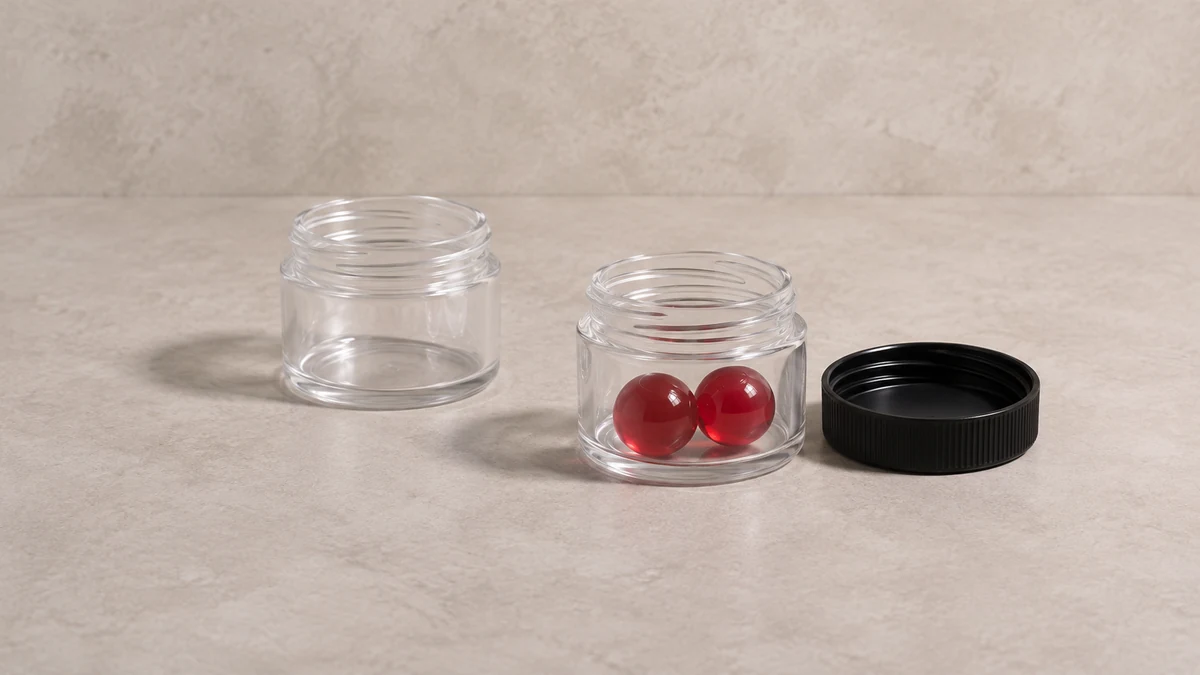
This matters when a photograph shows pearls sitting in a small jar beside a rig. The photo omits the product identity and the time or purpose of the arrangement. Treat it as a picture of a container, then use the actual care instructions to decide what belongs in that container and under which conditions.
🧩 6. Treat a Broken Pearl as a Separate Event
If a pearl has separated into pieces, stop using the affected setup and allow everything to cool before following the maker’s handling directions. Keep the damaged accessory separate from usable parts. A missing fragment should be recorded as missing; collecting the pieces you can see does not establish where every fragment went.
The chamber also deserves its own condition check under the applicable instructions. A broken loose sphere and damaged chamber glass are different components, and the presence of one problem does not tell you whether the other is present. Describe both independently when asking about continued service or replacement.
The article on cracks and chips in a banger addresses the larger glass component. The same useful distinction applies here: identifying the damaged part comes before explaining its cause. Do not assume that a clean-looking cup repairs the condition of a fractured accessory that was inside it.
🗒️ 6.1 Preserve the Known History Without Filling Its Gaps
A short timeline is useful. Record when the pearl was obtained, what product it was sold as, whether it was previously damaged, and what happened immediately before the change was noticed. Use “unknown” for information you do not have, especially with a secondhand or loose accessory.
A fracture after cleaning establishes a sequence of events. It does not by itself establish that the cleaner caused the fracture. A part may already have been damaged, and the actual handling conditions may be incomplete. Let the observations guide the support conversation without presenting an unverified explanation as a material fact.
🫙 7. Keep Similar Small Objects Apart
Use a dedicated, identifiable container for known accessories when they are cool and dry under the maker’s directions. Keep damaged pieces in a separate container. A plain note linking the container to the product record is more useful than relying on memory of which red or clear sphere belonged to which packet.
Dark deposits can hide the appearance of a small object. If something has rolled onto the floor or become mixed with unrelated beads, recover it as an unidentified item first. Its approximate size and color cannot establish that it is the same accessory. Avoid putting an uncertain object back into a heated assembly.
This is a practical identification problem rather than a reason to conduct home material tests. The discussion of unlabeled clear banger materials explains a related limitation: appearance can help describe a part while its original documentation establishes the stated material.
📸 7.1 Record the Accessories Before the Packet Is Discarded
A photograph of a newly received packet can show the original quantity, labels and any separate care card. Keep it with the order record. Later, when one sphere is missing or has become mixed with another set, that simple record may answer which accessories were supplied together.
Record a replacement as a replacement rather than assuming it shares the history of the original set. If one accessory has been exchanged, its care note or product revision may differ. Keeping that distinction takes little space and makes a future question about an individual pearl much easier to explain accurately.
✅ 8. Resolve the Care Question Before Returning the Part
For a known, undamaged pearl, the next step is the current instruction for that exact product and its permitted assembly. For a visibly fractured or chipped pearl, the condition issue takes priority over removing the last mark. For an unidentified sphere, first establish what the item was actually supplied as.
A concise support message can include the product name and size, the care text you followed, the cooled photographs and the known timeline. Ask whether the observed condition calls for replacement and which instruction applies to the remaining accessories. Keep the answer with the product record so the next care decision begins with the complete context.