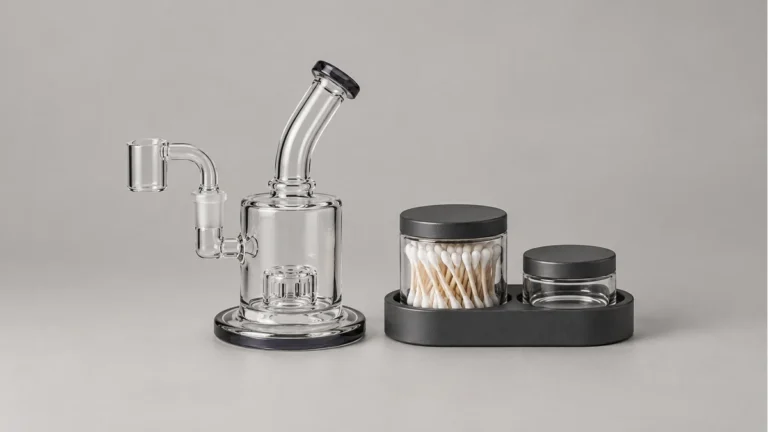
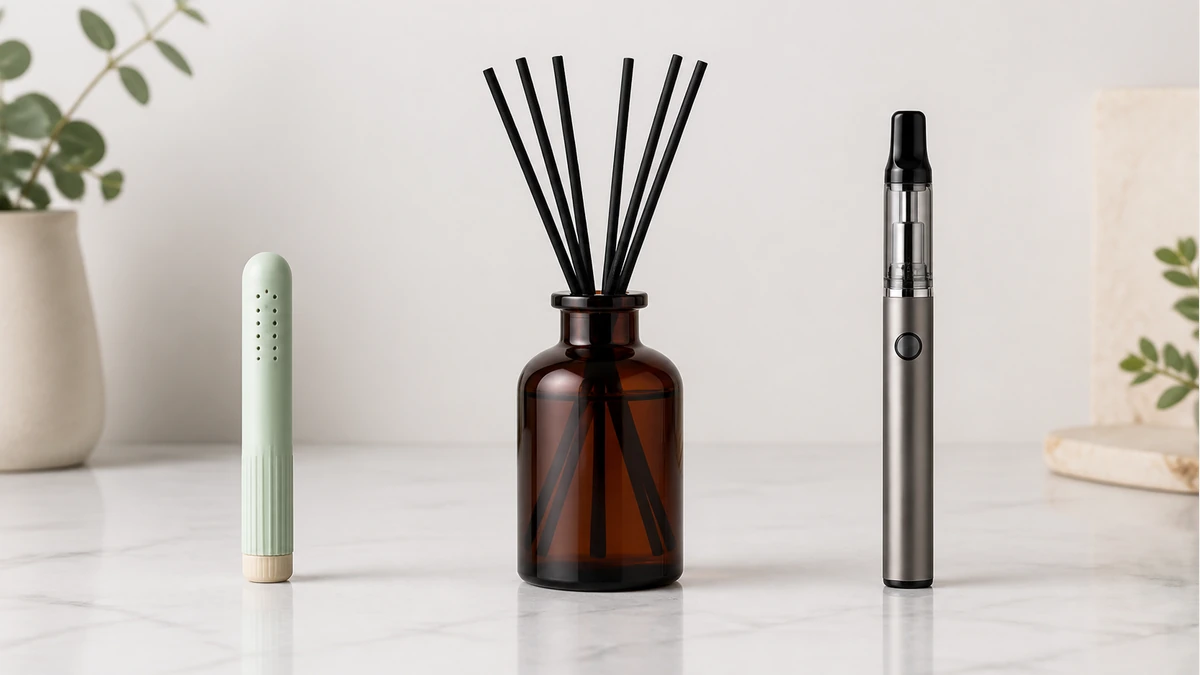
Product listings sometimes use the phrase ‘essential oil vape’ for pen-shaped aroma devices photographed beside bottles of lavender or eucalyptus. The same listing may promise an aroma experience without saying vape juice, e-liquid or anything else that establishes compatibility with conventional vape hardware. That ambiguity creates the obvious question: can an ordinary diffuser oil be poured into the device? The answer must come from the intended-use instructions, not the bottle’s pleasant smell or the product’s pen-like shape.
“Essential oil vape” isn’t a single, well-defined product category. It’s a phrase sellers apply to several genuinely different things — some built for inhalation, others never meant to go near a heating element at all. Confusing the two isn’t just a labeling nuisance; it’s the kind of mix-up that leads someone to inhale something their device, or their oil, was never engineered for.
🔎 1. What Sellers Mean by “Essential Oil Vape”
When a listing uses the term essential oil vape, it’s usually referring to one of three distinct product types, and the copy rarely tells you which one you’re looking at:
- Personal aroma diffusers. Small battery-powered units that disperse scent using a fan and wick, a mesh pad, or gentle ultrasonic vibration that turns a water-and-oil mixture into a fine mist. Nothing is heated to vapor temperature the way a coil-based vape works, and nothing is meant to be drawn directly into the lungs — the mist is designed to disperse into the surrounding air first.
- Heated inhalation devices sold with aroma-branded liquid. These look and function like conventional vape pens — a coil, a battery, a mouthpiece — but the accompanying liquid is marketed using aromatherapy language (“calming,” “spa-grade,” “pure essential oil blend”) instead of standard vape terminology.
- Conventional vape hardware, rebranded. Ordinary cartridge or pod devices a seller has renamed around an essential-oil theme purely for search visibility, with no change to the hardware or the liquid formulation underneath.
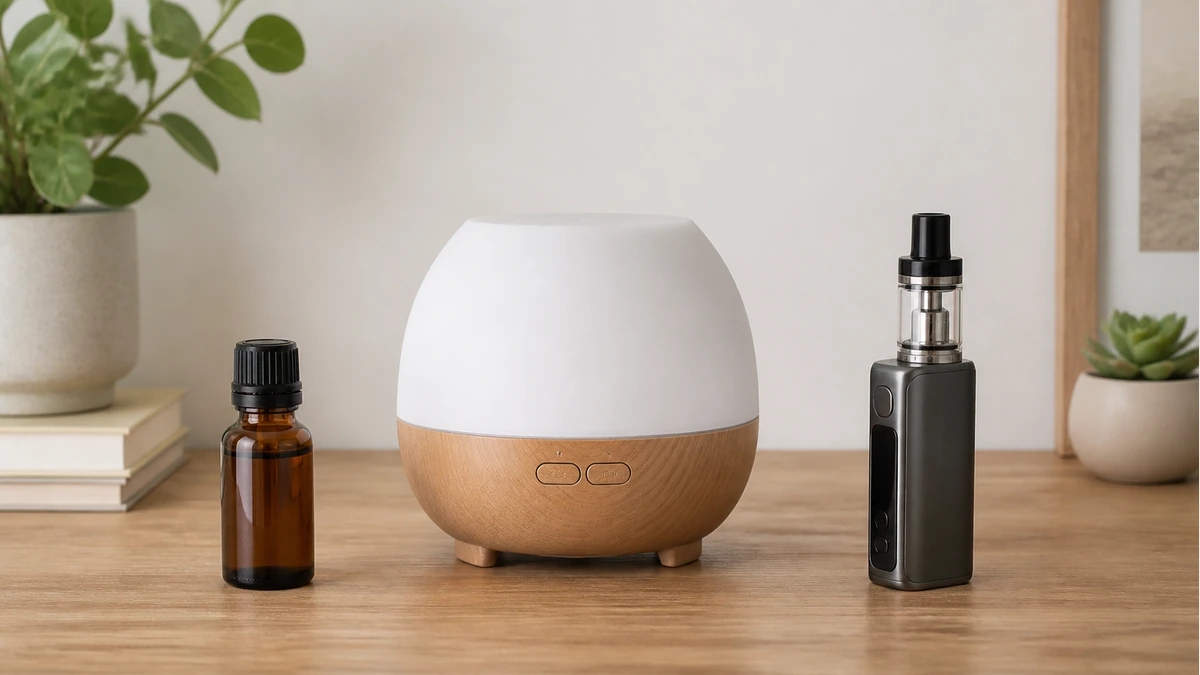
The physical build of the device is often the fastest way to tell these apart before ever checking labels. A true ultrasonic diffuser will have a small water reservoir and typically no visible heating coil; you can see or feel where the mist is generated. A coil-based device will have a chamber or cartridge threaded onto a battery, with a visible heating element and no water involved at all. If the listing photos don’t show enough of the internal build to tell which one you’re looking at, that’s a reasonable signal to ask the seller directly rather than guess.
The overlap in vocabulary is the root of the problem. “Aromatherapy,” “essential oil,” “vape,” and “diffuser” get stitched together in product titles because that combination performs well in search results, not because the device underneath has been engineered for one consistent purpose. If you want a grounding reference for what a vaporizer actually is as a mechanical category — batteries, heating elements, airflow paths — it’s worth reading a plain explanation of what a vaporizer is before evaluating any aroma-branded device against it.
🧩 2. Why Diffuser Oils and Vape Liquids Are Not Interchangeable
Even once you’ve identified that a device is genuinely built for inhalation rather than ambient diffusion, the liquid side deserves the same scrutiny. Diffuser oils and vape liquids are formulated, tested, and labeled for different delivery methods, and that difference isn’t cosmetic — it’s physical.
🧩 2.1 Different Purpose, Different Formulation
A bottle sold for use in a diffuser is formulated to be released into open air, where it disperses and dilutes before anyone breathes it in. A bottle sold as e-liquid or vape juice is formulated specifically to be heated by a coil or atomizer and drawn directly into the lungs at close to full concentration. Undiluted essential oils are also considerably more viscous and more concentrated than the propylene glycol and vegetable glycerin bases used in standard e-liquid, which is why a coil built for e-liquid can struggle to wick, saturate evenly, or heat cleanly when fed a straight essential oil instead. These aren’t two settings on the same product — they’re two different design goals, and a bottle built for one purpose carries no information about whether it’s suitable for the other. That’s not something you can judge by smell, viscosity, or how “natural” the ingredient list looks.
🧩 2.2 What the Label Is Actually Telling You
Manufacturers who intend a liquid for inhalation say so, using specific and consistent language: “e-liquid,” “vape juice,” “for use in electronic vaporizers,” ingredient ratios like PG/VG, or nicotine strength where applicable. Manufacturers who intend an oil for ambient diffusion also say so, using language like “for use in diffusers,” “not for ingestion,” or simply describing it as a fragrance or aromatherapy oil. When a label states neither, that silence isn’t a neutral middle ground — it’s a gap the buyer is being asked to fill in, usually based on nothing more than product photography.
| Product Type | Primary Purpose | Typical Delivery Method | Inhalation Intent Stated on Label |
|---|---|---|---|
| Aromatherapy / diffuser oil | Ambient scent dispersion | Fan, wick, or ultrasonic diffuser | Rarely, and often explicitly discouraged |
| E-liquid / vape juice | Direct inhalation via coil | Atomizer or coil in a vape pen or pod device | Yes, stated as core purpose |
| Dry herb / botanical material | Direct inhalation via convection or conduction heating | Heating chamber in a dry herb vaporizer | Yes, stated as core purpose |
The table isn’t exhaustive, but it makes the point: inhalation suitability is a stated design characteristic, not something inferred from a pleasant scent or a botanical-sounding name. A product engineered for a heating chamber — the kind used in a dry herb vaporizer — follows entirely different heat-transfer and airflow logic than a coil-based system, and neither shares a formulation standard with an ambient diffuser oil.
🧩 2.3 Fragrance Concentrate vs. Raw Essential Oil
There’s a related distinction worth knowing even among liquids that are genuinely built for inhalation: some e-liquid manufacturers use flavor and fragrance concentrates that are chemically engineered and tested for vaporization, formulated to smell similar to a botanical scent — lavender, eucalyptus, citrus — without being the raw plant-derived essential oil itself. A bottle labeled “lavender-flavored e-liquid” is describing a fragrance profile achieved through vape-rated flavoring compounds, not a claim that the bottle contains undiluted lavender essential oil. That’s a legitimate and common approach in the vape industry, but it means the word “lavender” on a label doesn’t tell you what’s actually inside any more than “essential oil” does. The only way to know is to read what the manufacturer states the liquid is made from, not what it’s named after.
⚙️ 3. What Labels and Instructions Should Be Checked
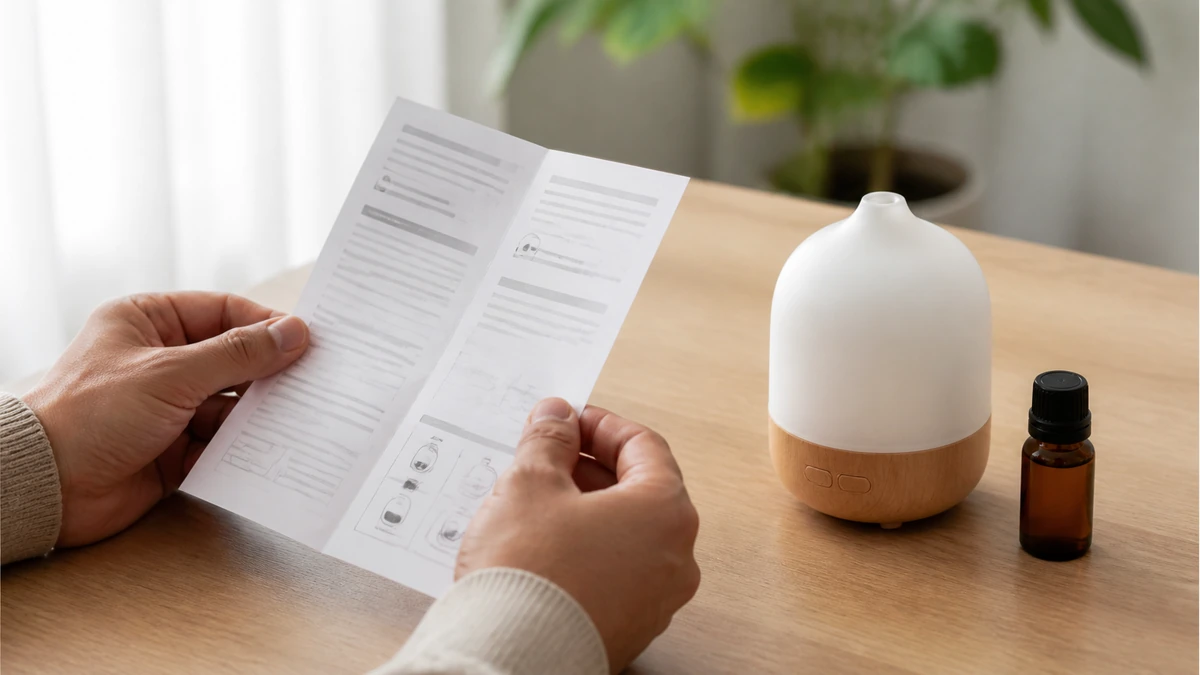
Before assuming any device or liquid is safe to combine, there’s a short list of things worth confirming directly from the packaging or manufacturer documentation, rather than from listing photos or promotional copy.
🧩 3.1 On the Liquid or Oil
- Does the label explicitly say “e-liquid,” “vape juice,” or “for use in electronic vaporizers”? If not, don’t assume it belongs in a heating device.
- Does it list a PG/VG ratio, or does it describe itself purely in aromatherapy terms — essential oil blend, fragrance oil, diffuser oil?
- Is there an explicit inhalation warning — “not for inhalation,” “for external use,” “for diffuser use only”? Treat this as a hard boundary, not a suggestion.
🧩 3.2 On the Device
- Does the manufacturer’s documentation specify what type of material or liquid the device is built to heat?
- Is the heating mechanism a coil, a chamber, or a passive diffusion element? Each implies a different category of intended input, and devices built for one rarely perform safely or as expected with material meant for another.
- Does the product page or manual use consistent terminology, or does it mix “diffuser,” “vape,” and “aromatherapy” in a way that suggests the copy was written for search reach rather than technical accuracy?
If you’re trying to understand how a legitimate coil-based device is meant to be used and documented, comparing it against a standard vape pen listing is a useful baseline — the specifications, intended liquid type, and safety language on a properly documented product tend to be specific rather than vague.

🧰 4. What To Do When Intended Use Isn’t Clear
When labeling doesn’t confirm that a device or liquid is designed for inhalation, the right response isn’t to test it cautiously — it’s to stop and verify before using it at all. A short, practical sequence:
- Stop before use. Don’t fill, heat, or draw from a device until you can confirm intended use in writing from the manufacturer, not from a third-party seller’s description.
- Locate the original manufacturer documentation. Marketplace listings are frequently rewritten by resellers; the manufacturer’s own product page or included manual is the more reliable source.
- Look specifically for inhalation language. Confirm the liquid is described as e-liquid or vape juice, and that the device is described as built for that liquid type — not just compatible with “oils” in a general sense.
- Contact the seller directly if the documentation is silent. Ask a specific question: “Is this liquid formulated and labeled for inhalation?” A seller unable or unwilling to answer clearly is itself useful information.
- If intended use still can’t be confirmed, don’t use the product for inhalation. Set it aside as a diffuser item, a decorative object, or a return, rather than assuming the safer interpretation applies by default.
This isn’t an unusual amount of caution to apply to a small object — it’s the standard most people already apply, without thinking about it, to anything else they’d put near their mouth or lungs. The novelty of the “essential oil vape” framing shouldn’t lower that bar.
🔋 5. Frequently Asked Questions
Is an “essential oil vape” the same thing as a regular vape pen?
Not necessarily. Some products using that name are aroma diffusers with no heating coil at all, while others are functionally identical to standard vape pens but marketed with aromatherapy language. The name alone doesn’t tell you which one you’re holding.
Can I put diffuser oil into a device that heats liquid?
Only if the oil’s own label explicitly states it’s formulated and intended for inhalation. Packaging that describes a product for ambient use reflects how it was actually formulated and tested — that shouldn’t be treated as interchangeable with an inhalation-rated liquid.
Will a straight essential oil damage a coil-based device?
It can behave differently than the liquid the coil was designed for. Undiluted oils are typically thicker and more concentrated than standard e-liquid, and a wick built for a thinner PG/VG base may not saturate evenly with a heavier oil — which is a separate problem from whether the oil is labeled safe to inhale in the first place. Both questions matter, and neither substitutes for the other.
Why do so many listings avoid clear terminology?
Broader, more evocative language tends to perform better in search and social feeds than precise technical terms. That commercial incentive doesn’t change what a product is actually built or labeled to do, which is why the manufacturer’s own documentation matters more than the listing copy.
What if the manufacturer never states intended use at all?
Treat that silence as a reason not to use the product for inhalation, not as an invitation to assume it’s fine. A responsibly documented inhalation product states its intended use plainly, on the packaging or in the manual, without requiring the buyer to guess.
Does a “natural” or “organic” label mean a liquid is safe to inhale?
No. “Natural” and “organic” describe the sourcing of an ingredient, not whether it’s been formulated, tested, and labeled for inhalation. Plenty of genuinely natural, organic essential oils are explicitly labeled for topical or diffuser use only, and that labeling reflects a real safety and formulation distinction, not marketing caution.
The category confusion around “essential oil vape” products isn’t a mystery to solve with intuition — it’s a labeling gap that shifts responsibility onto the buyer. The fix is straightforward: read what the manufacturer actually states about the liquid and the device, and treat any silence on inhalation intent as a stop sign rather than a gray area.