Weed grinders span a wide price range, from a few dollars for a basic aluminum piece to well over eighty dollars for a machined unit with magnetic closures and a polished finish. For someone grinding flower a few times a week, that gap raises a fair question: what does the extra money actually change, and where does it stop mattering?
This isn’t a buying guide. It’s a look at the physical differences between cheap and expensive grinders, so you can judge for yourself whether a given price tag reflects real engineering or just branding.
⚙️1. What Actually Changes When You Pay More
Grinders are simple mechanically: two or more toothed plates that shear plant material as they rotate against each other. Because the mechanism is basic, most of the price difference in higher-end units comes from manufacturing precision rather than added functionality.
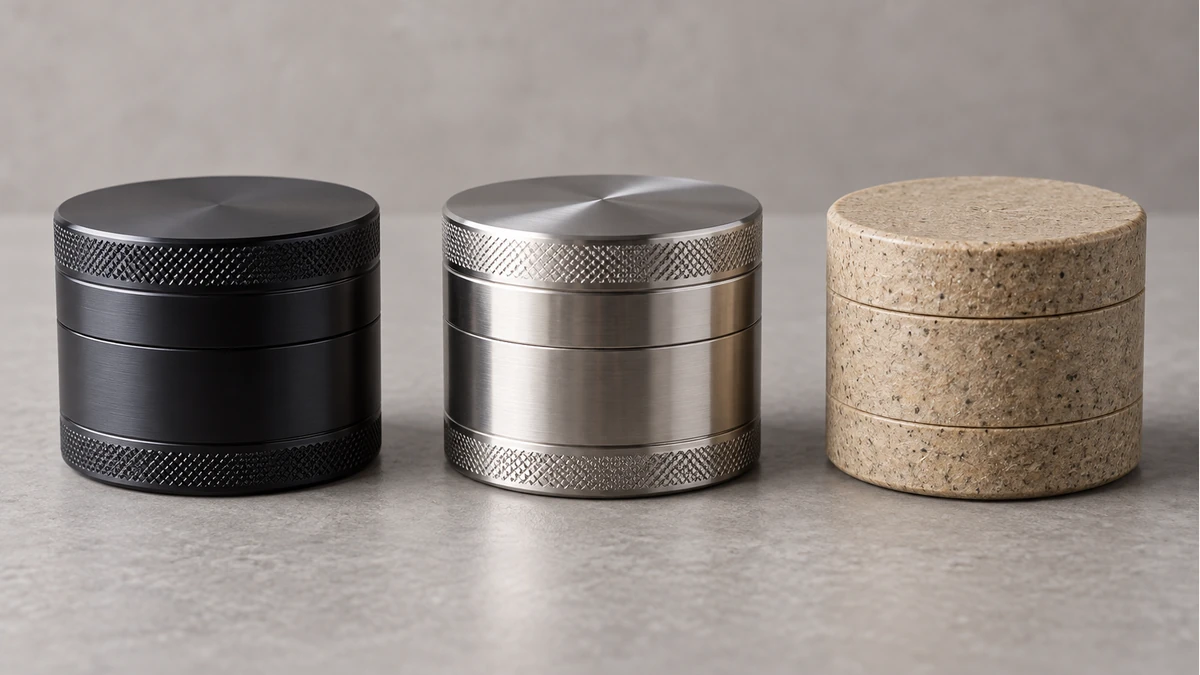
⚙️1.1 Materials: Aluminum, Steel, and Molded Plastic
Most mid-range and premium grinders use aircraft-grade aluminum (commonly a 6000-series alloy), valued for being light, corrosion-resistant, and easy to machine with tight tolerances. Cheaper units often use a lower grade of aluminum or zinc alloy that’s softer and more prone to stripped threads or worn teeth over time.
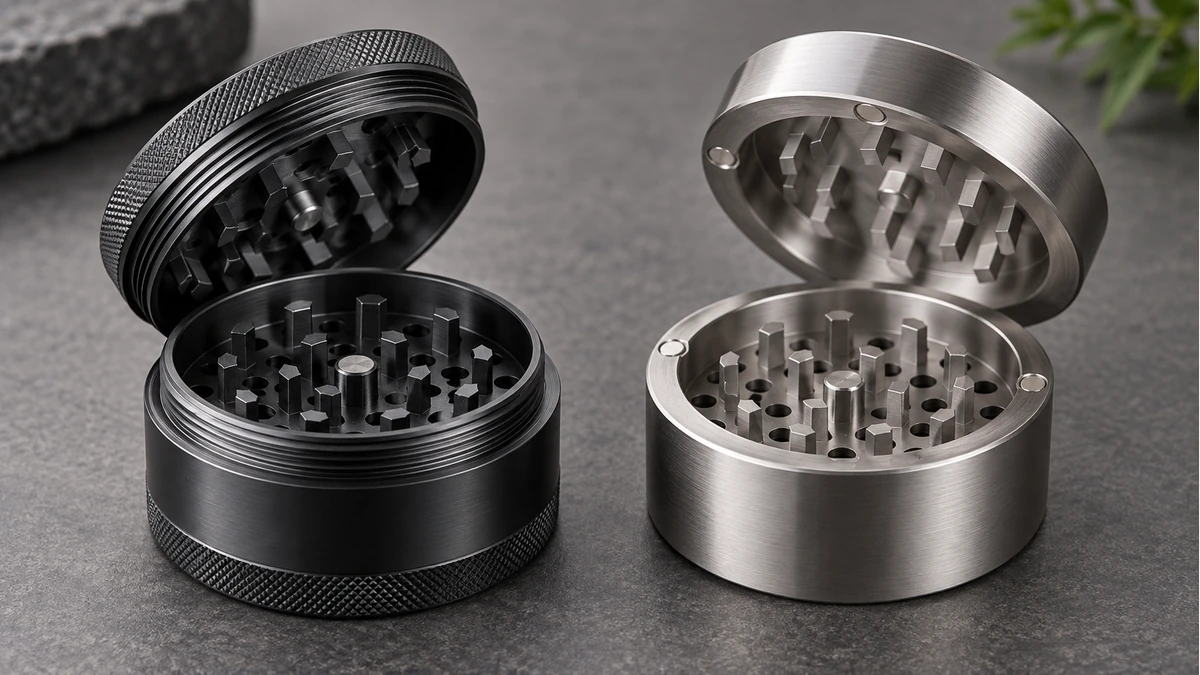
Stainless steel grinders sit at the top end of the material spectrum. Steel is denser and heavier, which some users like for a solid, high-end feel, but it also makes the grinder bulkier to carry and slower to warm up or cool down if temperature matters to you. Steel teeth generally hold their edge longer than aluminum ones, which matters more for daily users than occasional ones.
Molded plastic or acrylic grinders are the cheapest category. They can work fine for light use, but the teeth are usually less sharp by design (injection molding can’t achieve the same edge geometry as CNC machining), and repeated grinding can dull or chip them faster.
⚙️1.2 Machining Tolerances and Alignment
This is where price differences are most tangible but least visible. A well-machined grinder has plates that sit perfectly parallel and rotate on a true axis, so the teeth mesh evenly across the entire surface. A cheaply stamped or loosely toleranced grinder often has slight wobble or off-center alignment, which shows up as uneven grinding, teeth catching unevenly, or a gritty feel when you twist it.
You can sometimes feel this difference immediately: a precisely machined grinder rotates with a smooth, consistent resistance, while a poorly aligned one feels gritty, catches at certain points, or wobbles slightly under torque.
🧲2. Threadless and Magnetic Layouts
Traditional grinders thread each chamber together like a screw. It works, but threads can gunk up with resin over time, making the pieces harder to twist apart, especially after weeks of use without cleaning.
Higher-priced grinders increasingly use threadless designs, where chambers align via a machined lip and are held together with embedded magnets rather than screw threads. This is a genuine functional upgrade for people who grind frequently: no threads means nothing to gunk up, and separating the pieces takes a simple pull instead of unscrewing through resin buildup.
This is one of the most consistent things frequent users mention: threadless access makes daily use noticeably less annoying, because there’s no thread channel for kief and resin to accumulate in. It’s a legitimate mechanical improvement, not just a marketing term, though it does require tighter tolerances to manufacture correctly, which is part of why it shows up mostly in mid-to-premium grinders. If you’re comparing simpler multi-chamber designs and want to understand how the different piece counts and layouts affect this tradeoff, AOVAPE’s 2-piece herb grinder guide walks through how fewer chambers changes both cleaning and grind consistency.
🌀3. Tooth Geometry and Chamber Depth
Tooth shape, count, and spacing affect how material shears rather than tears. Diamond-shaped teeth with sharp edges cut flower more cleanly, producing a more even grind with less variation in particle size. Blunter or fewer teeth tend to tear material unevenly, leaving a mix of coarse chunks and powder.
Chamber depth matters too, though it’s often overlooked. A shallow grinding chamber can bottleneck how much flower processes evenly in one pass, especially in compact designs. If portability is your priority and you’re weighing how a smaller chamber trades off against grind quality, AOVAPE’s mini grinder for weed guide covers how size constraints affect that balance in compact units specifically.
None of this is proprietary or hard to verify visually. You can generally see tooth sharpness and spacing just by looking inside the grinding chamber, which makes it one of the more honest ways to judge quality before relying on marketing language.
🧵4. Screens, Kief Catchers, and Collection Complexity
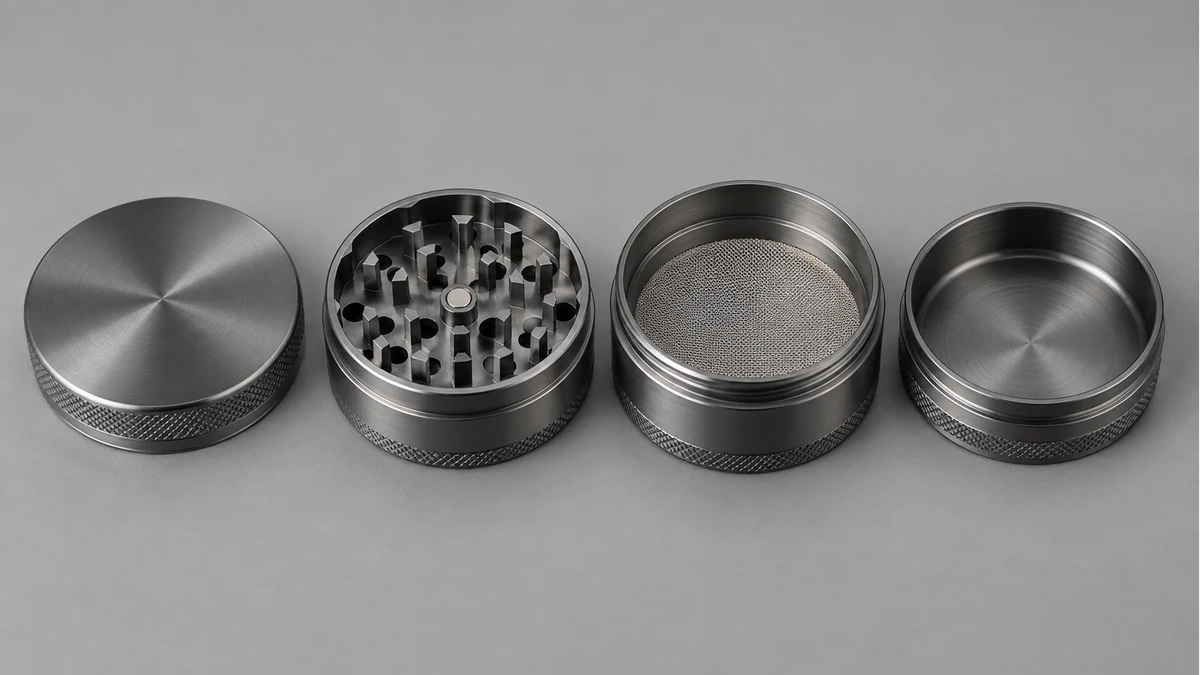
Four-piece grinders add a screen layer and a collection chamber to gather kief, the fine, trichome-rich powder that falls through the screen. This adds real mechanical complexity: the screen has to be fine enough to catch kief but coarse enough not to clog constantly, and it needs to be removable for cleaning without being so loose that it rattles or falls out.
Cheap screens are often a stamped mesh that clogs quickly and is annoying to clean. Better ones use a properly tensioned, food-grade mesh secured in a way that resists sagging or tearing over repeated use. This is a legitimate area where price buys durability, since a screen that degrades after a few months effectively turns a four-piece grinder into a two-piece one.
Some higher-end grinders also include a small scraping tool for the kief chamber, and how well that tool fits into a dedicated slot (rather than rattling loose or getting lost) is another small but real difference between budget and premium builds.
🧼5. Cleaning Access and Maintenance
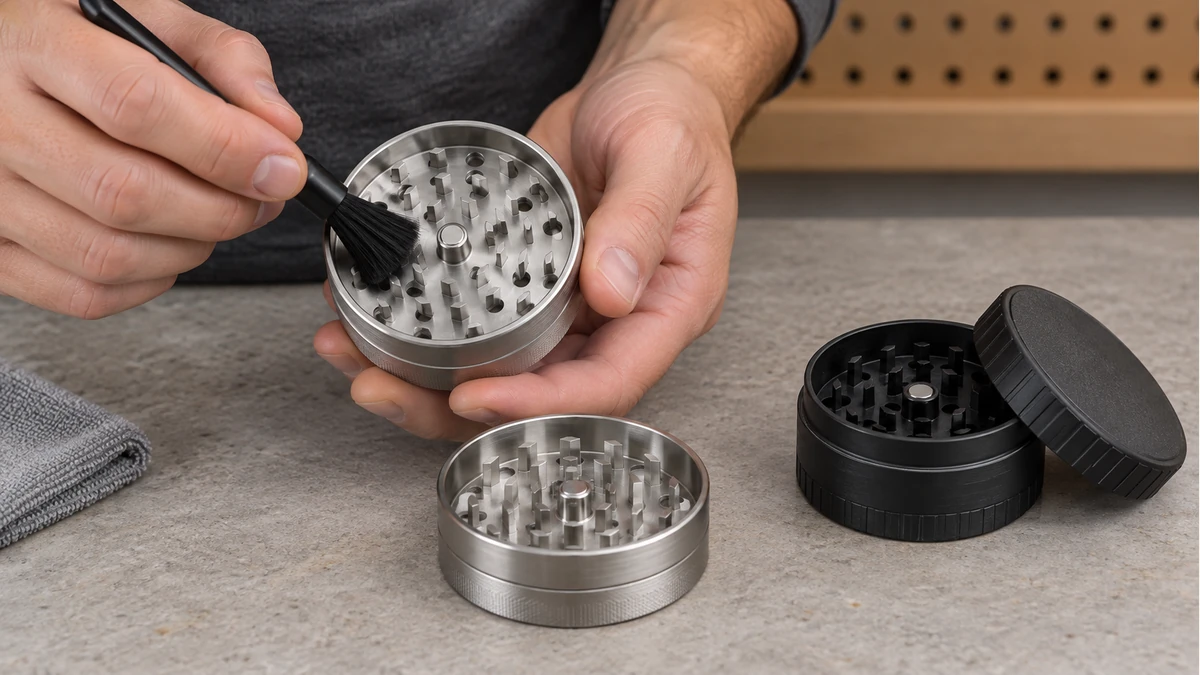
Cleaning ease is one of the most frequently cited practical concerns among regular users, and it ties directly back to several of the design choices above. Threadless designs are easier to clean because there’s no thread channel to scrub out. Wider chamber openings make it easier to reach in with a brush or cloth. Removable screens let you soak and rinse them without disassembling the whole unit.
Anodized aluminum surfaces also tend to clean up more easily than raw or poorly finished metal, since the anodized layer resists sticking and staining better than bare aluminum. This is a case where surface finish, not just base material, has a real cleaning-related effect, though it’s worth verifying with a specific product’s documentation rather than assuming every “anodized” listing meets the same standard.
It’s worth being cautious about unverified coating claims, though. Terms like “non-stick coating” or “medical-grade finish” appear on listings without much detail about what they actually mean chemically or how they were tested. If a listing doesn’t specify the coating material or process, treat the claim as marketing language rather than a verified feature.
🛠️6. Repairability and Warranty
A warranty doesn’t prove a grinder is well built. It documents that the manufacturer is willing to stand behind the product for a defined period, which is different information. A one-year warranty on a $15 grinder and a lifetime warranty on an $80 grinder both tell you something about manufacturer confidence, but neither is a substitute for checking machining quality yourself.
Repairability is a more concrete factor. Grinders with standard-sized screws (rather than proprietary fasteners) and separately replaceable screens or magnets are easier to fix if a small part wears out, extending the practical lifespan of an otherwise solid unit. Fully sealed or glued designs, common in the cheapest grinders, usually mean the whole unit gets replaced rather than repaired.
⚖️7. Weight and Material Tradeoffs
Heavier materials aren’t purely a downgrade or upgrade; they’re a tradeoff. Steel grinders feel substantial and often signal durability, but that same weight becomes a real annoyance for someone who carries a grinder daily in a pocket or bag. This is a recurring point among people who grind flower regularly, and it’s a legitimate practical tradeoff rather than a matter of taste alone.
There’s also a common preference among some users for lighter, cheaper hemp or aluminum grinders specifically because heavier steel units feel unwieldy for daily carry, and because resin buildup can make a heavier unit feel stickier during actual use, independent of the grinder’s build quality. That’s a legitimate preference, not a sign that expensive grinders are poorly designed. It just reflects a different priority: portability and low friction over material heft.
🤖8. When a Manual Grinder Isn’t the Right Comparison
Some of the friction people associate with “cheap versus expensive” manual grinders can be sidestepped entirely by a different category of product. Automatic or electric grinders remove the twisting motion altogether, which changes the calculus for anyone who finds manual grinding tedious or physically uncomfortable, regardless of how well-machined the manual option is. AOVAPE’s automatic weed grinder guide covers how these units work and where they fit for people who’ve decided the manual grinder tradeoffs above just aren’t worth navigating.
📊9. A Decision Framework by Use Pattern
Rather than asking “is this grinder worth it” in the abstract, it helps to match the decision to how you actually use it.
- Occasional use (a few times a month): Machining precision and threadless design matter less here, since resin buildup and thread gunk take longer to accumulate. A basic aluminum two-piece or three-piece grinder is usually sufficient, and spending significantly more mostly buys aesthetics rather than function at this frequency.
- Regular use (several times a week): This is where tooth sharpness, chamber depth, and screen quality start to matter, since you’ll notice grind inconsistency and clogging more often. A mid-range aluminum grinder with a decent screen is a reasonable middle ground.
- Daily or heavy use: Threadless magnetic designs, replaceable screens, and higher-grade materials pay off most here, since you’re the one dealing with cleaning frequency and wear over time. This is also where the weight tradeoff of steel versus aluminum becomes most noticeable in daily carry.
Load size matters too. If you’re grinding small amounts frequently, a compact grinder with a shallower chamber is fine and often more convenient. If you batch-grind larger amounts less often, chamber depth and tooth spacing become more relevant to avoiding uneven grinds or overfilled chambers that jam.
Maintenance tolerance is the final variable. If you’re someone who will realistically clean a grinder every use, a cheaper, simpler design won’t cause you much trouble. If cleaning is something you’ll put off for weeks, threadless design and a smooth, anodized finish will make a bigger practical difference, since those are the features that reduce how bad neglected buildup gets.
💬10. What Occasional Questions on Forums Reveal
It’s common to see posts from occasional users asking, in essence, why anyone would pay eighty dollars for a grinder when a five-dollar one does the same basic job. That’s a fair question, and for someone who grinds a few times a month, it’s often true that the expensive option won’t feel meaningfully different in daily use. These are anecdotal impressions from individual posters, not technical benchmarks, but they do point to a real pattern: the value of precision manufacturing scales with frequency of use and tolerance for maintenance, not with price alone.
The reverse pattern shows up too, among people who grind daily and describe frustration with threaded designs clogging or aluminum grinders becoming sticky with heavy resin buildup between cleanings. Neither camp is wrong; they’re describing different use cases where different tradeoffs make sense.
The most useful takeaway is that price correlates loosely with build quality, but it isn’t a guarantee. A $30 grinder with tight machining and a good screen can outperform a $60 grinder with sloppy tolerances and a flimsy mesh. Checking for smooth rotation, tight alignment, and a well-secured screen in person, or through detailed photos and reviews if buying online, tells you more than the price tag alone ever will.