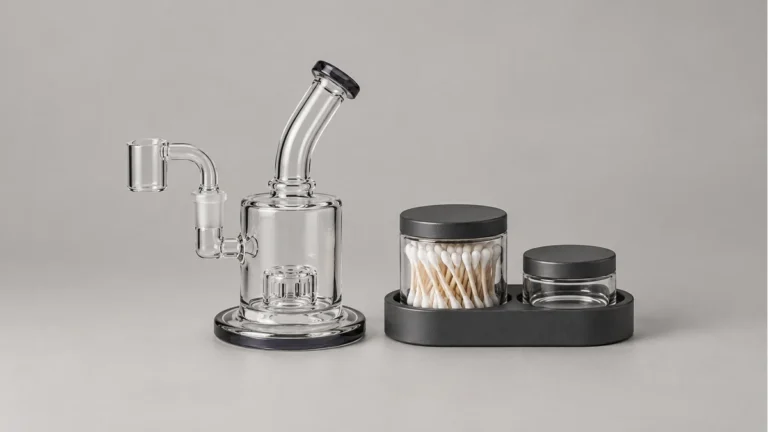
Somewhere around the third time you strip a four-piece grinder for a resin scrape, you start to appreciate a design that only has two parts to lose track of. Two-piece herb grinders never went away, even as the market filled up with multi-chamber setups that promise finer grind, kief collection, and screen-separated storage. For a lot of dry-herb vaporizer users, the two-piece format still solves the actual problem better: get flower into the oven, fast, without a puzzle of stacked rings to reassemble in a moving car or a dim tent.
This isn’t an argument that two-piece grinders are objectively superior. It’s a breakdown of what you gain, what you give up, and which use cases favor which layout — the kind of comparison that gets lost when grinder listings just say “premium aircraft-grade aluminum” and leave the actual mechanical tradeoffs unexplained.
🔍 1. What a two-piece grinder actually is
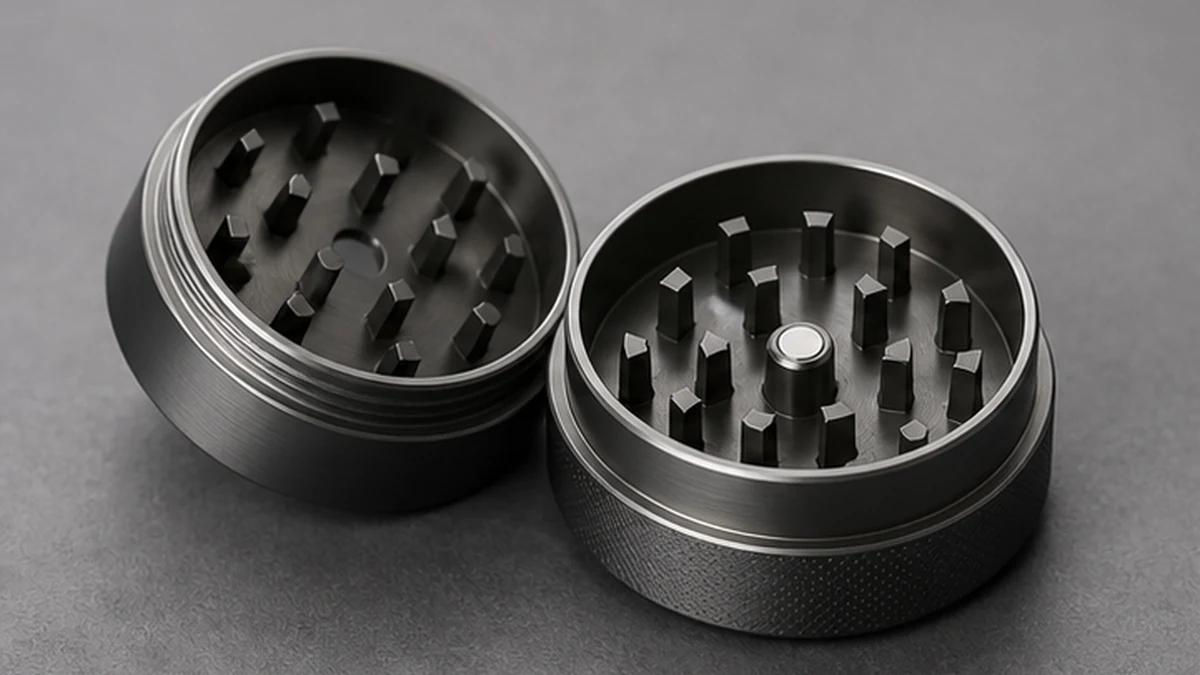
A two-piece grinder is a single grinding chamber with teeth on both the top and bottom halves. You load flower into the lower half, twist the top half closed, turn, and open it back up to scoop out ground material. There’s no screen, no separate kief chamber, no third or fourth compartment underneath. What you see when you open it is what you get. AOVAPE’s related hardware guide adds useful context for that decision.
That simplicity is the entire design philosophy. Every part that isn’t there is a part that can’t get lost, can’t misalign, and can’t trap material in a gap you forgot to clean. The tradeoff is that everything a screen or a collection chamber would normally handle — separating fine kief, storing extra ground herb, filtering out larger stems — now has to happen somewhere else, usually by hand.
🧭 2. What’s missing from a two-piece grinder
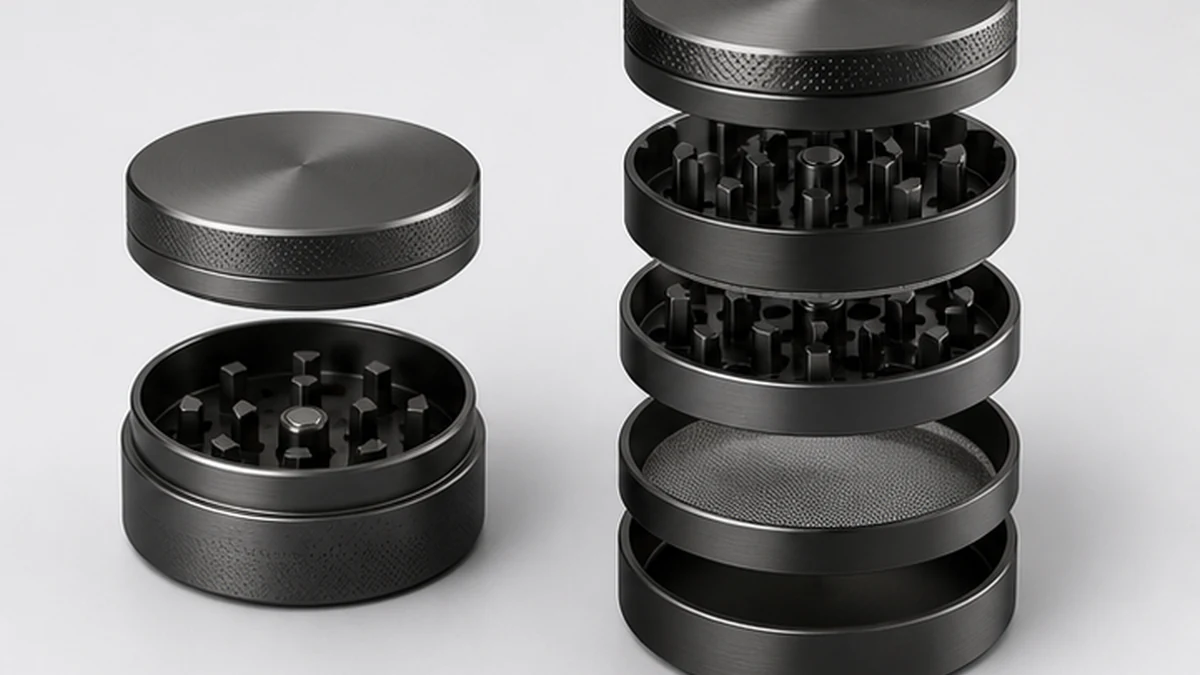
The honest answer to what a two-piece grinder lacks is threefold: no kief screen, no dedicated storage chamber, and no built-in separation between coarse and fine particles. If you grind more than you need for one session, the extra material sits in the same chamber you just ground in, mixed with whatever wasn’t fully broken down. There’s no lower compartment to catch fine powder that falls through a mesh screen, because there’s no mesh screen to fall through.
For anyone chasing kief for concentrates or wanting a visibly separated stash of extra-fine material, this is a real limitation, not a minor inconvenience. A three-piece grinder with a screen, or a four-piece with a screen plus a kief catch, is built specifically to accumulate that fine material over repeated use. A two-piece grinder isn’t designed to do that at all — everything you grind stays together until you physically remove it.
That said, it’s worth being precise about what “missing” means here. It’s not a defect. A two-piece grinder isn’t a stripped-down version of a four-piece grinder; it’s a different tool built around a different priority — speed and simplicity over sorting and collection. AOVAPE’s compatibility guide adds useful context for that decision.
⚙️ 3. Why simpler access is genuinely useful
Chamber access is where the two-piece design earns its keep. Open a two-piece grinder and the entire ground contents are right there, visible in one compartment, reachable with a finger, a pick, or by tapping the grinder upside down over a paper or an oven. There’s no stacking order to remember, no screen sitting between you and the herb, and no risk of losing a kief catch tray if you’re doing this outdoors or in low light.
This matters more than it sounds like in practice. If you’re loading a portable dry-herb vaporizer on the move — in a car, at a campsite, between meetings — every extra piece is something that can be dropped, misthreaded cross-legged in a pocket, or simply fumbled once your hands are cold or your attention is elsewhere. A two-piece grinder collapses that whole sequence into “twist, open, load.” For users who already own a vaporizer with a small chamber and don’t need to stockpile pre-ground material, that reduction in steps is a genuine, not marginal, quality-of-life improvement.
It also means less to clean. A three- or four-piece grinder accumulates residue in the screen mesh and the kief chamber, both of which need periodic attention with a brush or isopropyl alcohol to keep functioning well. A two-piece grinder has one chamber and one set of teeth. Wipe it out, and you’re done. If you’re the kind of user who resents grinder maintenance as much as the grinding itself, this is where the format pays off.
🧩 4. How inversion changes grind control
Inversion is the part of two-piece grinder use that most first-time buyers underestimate, and it’s also one of the recurring points of confusion in online discussions among dry-herb vaporizer users — not because the mechanism is complicated, but because nobody explains it upfront. Since there’s no screen separating coarse and fine material, the only way to control texture and consistency is to physically flip the grinder over mid-process, either right after grinding or partway through. AOVAPE’s maintenance guide adds useful context for that decision.
Here’s the practical sequence:
- Load flower into the lower chamber and close the top half.
- Twist several full rotations to break the material down.
- Open the grinder and check the texture visually — some strands will be finer than others depending on flower density and how long you turned it.
- If you want more even consistency, invert the grinder (top half becomes the base) and give it another few twists so material that was sitting near the rim gets caught by teeth it missed the first time.
- Tap or scoop the ground material out once the texture looks consistent enough for your chamber size.
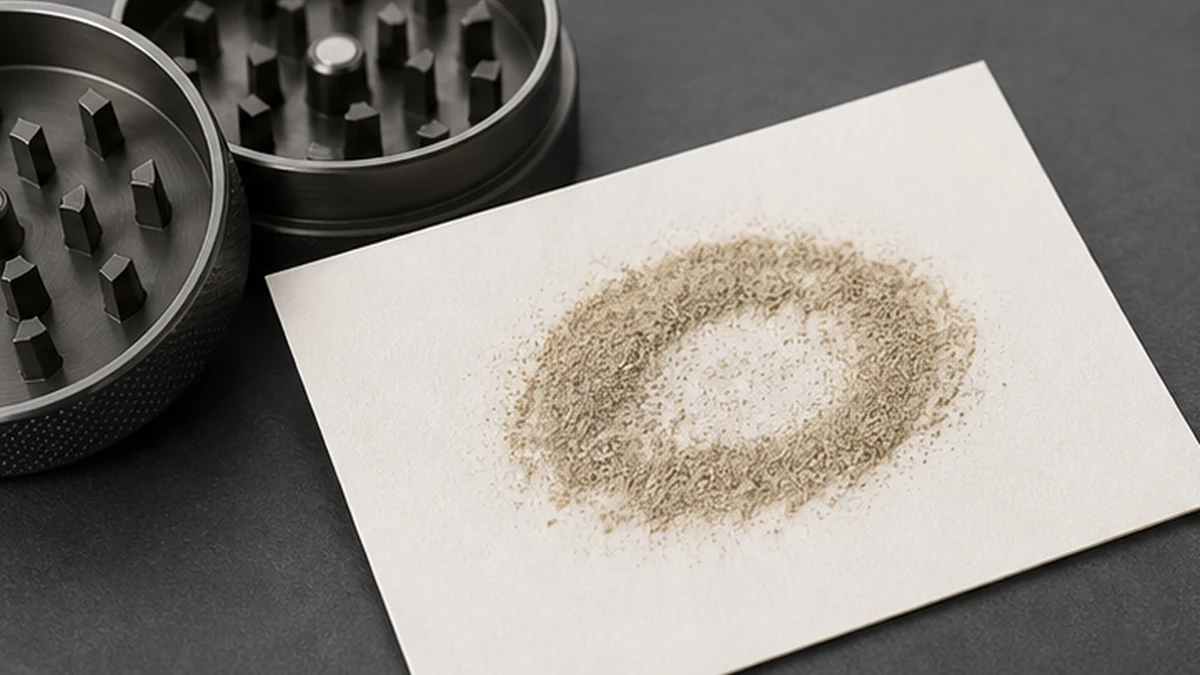
What inversion is actually doing is compensating for the lack of a screen. In a screened grinder, you keep turning until fine particles fall through on their own, and the screen does the sorting for you. In a two-piece grinder, you’re doing that sorting manually, by eye, by flipping and re-grinding until the batch looks even. It’s more hands-on, and it rewards a bit of practice — most experienced two-piece users develop a feel for how many twists and flips a given strain needs before the texture is consistent enough to load.
The upside of this manual process is control. You can stop the moment the texture looks right for your specific vaporizer chamber, rather than grinding until material passes through a fixed screen size that may not match what your device actually needs. Different vaporizers have different ideal grind coarseness depending on whether they rely primarily on conduction or convection heating — a distinction covered in more detail in this explanation of how dry-herb vaporizers work — and a two-piece grinder lets you eyeball that target directly instead of trusting a screen gauge that was chosen for a generic use case.
🛠️ 5. Capacity and what “smaller” really means
Two-piece grinders tend to run smaller in overall internal volume than three- or four-piece units of the same diameter, simply because there’s no lower chamber adding extra depth. That’s usually intentional — the format is built around single-session or small-batch grinding, not stockpiling. If you’re the kind of user who grinds once and loads immediately, this isn’t a limitation you’ll notice. If you’re used to grinding a larger batch and storing the extra in a lower chamber for the next few sessions, you’ll feel the difference immediately, because that storage chamber simply doesn’t exist here.
The practical workaround is to keep a separate small container for extra ground material, which many two-piece users do anyway rather than leaving ground herb sitting in the grinder itself, where it’s more exposed to air and light than it would be in a sealed jar.
📐 6. Thread cleanup and long-term wear
Fewer moving parts also means fewer threads to maintain. A four-piece grinder has threaded connections between each chamber, and any one of those threads accumulating resin or fine particulate can make the grinder harder to twist open, or cause it to bind unevenly. A two-piece grinder has exactly one threaded connection — between the top and bottom half — so there’s only one interface to keep clean for smooth operation over time.
This single-thread design also tends to hold up better under repeated rough handling, since there’s only one seam that can wear loose or develop play. That’s a mechanical observation about part count, not a durability claim about any specific material or finish — grinder longevity still depends heavily on build quality, which varies a lot between manufacturers regardless of piece count.
🔋 7. Grind inspection: what you can and can’t see
Because everything sits in one open chamber, a two-piece grinder gives you a direct, unobstructed view of the grind the moment you open it. There’s no screen partially obscuring the material, and no need to tap the grinder against a surface to see what fell through into a lower chamber. You look, you see the texture, you decide if it needs another few twists.
What you lose is the ability to inspect kief separately from ground flower, since there’s no accumulation chamber where that fine material collects on its own over time. If part of your routine involves periodically checking how much kief has built up in a screened compartment, that visual feedback loop simply isn’t part of the two-piece experience.
🧼 8. Who actually benefits from a multi-piece design instead
None of this makes three- and four-piece grinders obsolete — they solve real problems that a two-piece grinder isn’t built to address. Multi-piece designs make more sense for:
- Users who grind in batches. A lower storage chamber lets you grind enough for several sessions at once and keep the extra sealed away from air, rather than grinding fresh each time.
- Anyone collecting kief for concentrates. A screen and kief catch are the only way to accumulate that fine material passively over repeated grinds; a two-piece grinder has no equivalent function.
- People who want texture consistency without manual inversion. A screen does the sorting automatically, which some users prefer over judging texture by eye.
- Buyers assembling curated kits or gift sets where a multi-piece grinder’s visible complexity and included storage read as more complete out of the box.
For brands and private-label buyers sourcing grinders as part of a broader accessories lineup, the choice often comes down to matching the grinder format to the vaporizer it’s likely to be paired with, plus the buying audience’s stated preferences — points covered in more depth in this wholesale herb grinder sourcing guide, which also gets into how grinder choice interacts with device chamber size and expected batch habits.
📦 9. Two-piece vs. three-piece vs. four-piece at a glance
| Feature | Two-piece | Three-piece | Four-piece |
|---|---|---|---|
| Kief collection | No | Limited (screen only) | Yes (dedicated chamber) |
| Storage for extra ground herb | No | Yes | Yes |
| Texture sorting method | Manual inversion | Screen | Screen |
| Threaded connections to maintain | 1 | 2 | 3 |
| Typical overall size for same diameter | Smallest | Medium | Largest |
The table isn’t meant to declare a winner. It’s meant to make the actual tradeoffs visible, because “which grinder is better” depends entirely on whether you value speed and simplicity or storage and sorting more on a given day.
❓ 10. Frequently asked questions
Does a two-piece grinder produce a coarser grind than a screened grinder?
Not inherently. Texture depends on how long you grind and how much you invert and re-grind, not on the number of chambers. A screen sets an upper limit on particle size that passes through; a two-piece grinder relies on visual judgment instead.
Can I use a two-piece grinder with any dry-herb vaporizer?
Yes, mechanically it works with any device, but how well the resulting texture suits a specific vaporizer’s chamber depends on that device’s heating method and chamber size, which two-piece grinding lets you adjust for manually rather than relying on a fixed screen gauge.
Is a two-piece grinder easier to clean than a multi-piece one?
Generally yes, since there’s only one chamber and one thread to clean, compared to a screen mesh and multiple threaded seams on three- and four-piece designs.
Why would someone choose a two-piece grinder for travel over a multi-piece one?
Fewer parts means fewer things to lose or misassemble when grinding on the move, and a faster open-load-close sequence when time or hand dexterity is limited.
🔍 11. The decisive takeaway
A two-piece grinder isn’t a compromise version of a bigger, more capable grinder — it’s a purpose-built tool for users who value fast, visible, low-maintenance access over kief collection and batch storage. If you already own a vaporizer with a small chamber, grind fresh each session, and don’t need to accumulate kief separately, the two-piece format removes friction rather than features you’d actually use. If storage and collection matter more to your routine, a three- or four-piece grinder earns its extra complexity.
📚 12. Sources and Reader Questions Reviewed
- Reddit discussion 1jzy7uh (used for reader-language research, not technical proof)
- Reddit discussion 1k3c4bi (used for reader-language research, not technical proof)
- Reddit discussion kpp9nn (used for reader-language research, not technical proof)
For open tools and their cleanup tradeoffs, see our weed grinder alternatives guide.