A vape device has to store energy somewhere. That storage is not always arranged in the same way. On some versions, the cell is sealed inside the body and is charged through a port on the device, or through a charger that attaches to the 510 thread. On others, the user can open a documented door, cover, or cap, take the cell out, and replace it with another cell of the type specified for that version. Two devices can share a similarly finished exterior and still differ on that point. The useful identification is whether the exact version is documented as a sealed, charge-in-place design, or as a device that accepts a user-removable cell.
That distinction is easy to confuse with nearby hardware questions. Where a 510 battery accepts a cable is a port-location question, already treated in Bottom Port, Side Port, or Under-Cap Port: Where a 510 Battery Accepts a Cable. Whether charging happens through a screw-on 510 dongle or an integrated USB port is a charger-format question, treated in 510 Thread Chargers: Connector Fit, Contact Logic, and Cable Types and 510 USB Chargers: Thread Fit Is Only the First Compatibility Check. What the letters mAh mean on a capacity label, and how to read an 18650 cell itself, are separate subjects, treated in What Does mAh Mean on Batteries? and 18650 Vape Battery Guide: Fit, Ratings, Wraps, and Safe Handling. The present guide stays on power architecture: is the cell sealed in the body, or can the user remove it as the current manual describes?
🔎 1. Power Architecture Is Not Capacity, a Charge Port, or a Cell-Size Label
The first cut is simple. How the cell is housed is a power-architecture question. How much energy a label claims is a capacity question. Where a cable enters the body is a port-location question. What format name is printed on a cell, a chart, or a listing is a labeling question. Those facts can appear on the same device, but naming one of them does not name the others.
A USB-C opening is a good example. It tells you that a cable can be presented to that port. It does not tell you whether the cell behind the shell can be taken out. USB-C 510 Battery Guide remains the place to treat the connector family, and the port-location article remains the place to find where the opening sits. Neither page is a substitute for a sealed-or-removable identification.
The same caution applies to a printed cell size. A listing that says “18650,” “26650,” or “lithium-ion” is naming a format or a chemistry family. It is not, by itself, a procedure for opening the body. Official pages opened for this research make that gap visible: some documents tell the user how to change a cell; some name a cell format or a battery count and stop there. Those are different kinds of evidence, and they should stay on different lines.
🔋 2. Sealed, Charge-in-Place Cells
On a sealed, charge-in-place design, the user restores energy by charging the device as a unit. The usual paths are a cable port on the body, or a screw-on charger that attaches to the 510 thread after the cartridge is removed. The current manual is the right evidence for which path that version actually uses.
Public education pages opened for this article describe that arrangement as the common case on compact pens. Vaping360's "How to Charge Any Vape Pen", as opened, states that most vape pens, including dab pens, do not use removable batteries, and that a standard vape pen charges via USB, either with a common cable or with an adapter that screws into the 510 threads. Got Vape's charger guide, as opened, likewise describes USB charging, 510-thread pen chargers that screw onto the connection point, and, separately, devices on which the battery can be removed and charged in a charger supplied with the package. Those pages are hardware-education support. They are not AOVAPE product specifications, and they are not a rule that every 510 battery is sealed.
Named official device pages can be read the same way, as version documents, not as a category map. STORZ & BICKEL's CRAFTY+ charging article, updated 3 February 2026 on the page as opened, describes charging the CRAFTY+ through the device’s USB-C port with the included cable. That article does not describe removing a cell in order to charge it. The official MIGHTY+ product page, as opened, states that the product has two Li-Ion batteries and a USB-C socket. That page does not, in the sections opened, describe a user battery-swap procedure. A battery count on a product page is not a door. Ooze's help-center FAQ, as opened, discusses charging some batteries with a 510 charger and others through a Type-C port. That is charge-path language for those products. It is not a statement that every 510 battery is sealed, and it is not a swap procedure.
🔓 3. Removable Cells and a Documented Door, Cover, or Cap
A removable-cell design is identified by a user-accessible opening and by a cell type specified for that version. The opening may be a sliding cover, a screw-on lid, a latch, or another closure the current manual actually names. The method is version-specific. It should not be copied from one model onto another that merely looks similar.
Arizer's official "Hints & Tips: Battery Swapping" page, as opened, states that some Arizer portable vaporizers have interchangeable, rechargeable batteries, and then gives three different change procedures. For the Air SE, the page tells the user to turn the unit over, slide off the cover, and replace the cell with the positive end at the top. For the Air MAX, it tells the user to unscrew the battery-compartment lid on the bottom of the unit, replace the cell with the positive end going in first, and screw the lid shut. For the ArGo, it tells the user to slide a latch on the bottom compartment to the unlocked position, flip the cover open, replace the cell with the positive end going in first, and lock the latch. Those are three documented openings on three named versions. They are not a universal vaporizer language.
The official Air MAX product page, as opened, lists “1 x 26650 Battery” and “1 x USB-C Charger (5v, 2A)” among the included items, and describes a high-capacity 26650 lithium-ion battery. The cell is treated there as a separate boxed part. That supports a removable architecture on that version. It does not make 26650 the default format for every removable-cell device.
DaVinci's official 18650 battery product page, as opened, describes a flat-top replacement 18650 as compatible with the IQ2, IQC, IQ, and Limited Carbon Fiber Edition vaporizers. The FAQ on that same page, as opened, states that the battery is removable, so a user can carry charged spares, and that the cell charges either in-device via the Type-C port on the IQ2 or IQC, or externally using DaVinci’s External Battery Charger. The same FAQ states that this 18650 is not compatible with the IQ3, which it says uses a 21700, or with the MIQRO-C, which it says uses an 18350. Those are version statements on that official page. They are not a shared cell size for the category. The official IQC product manual, as opened from DaVinci’s owners-manuals page, includes the instruction “Only use DaVinci approved batteries in the IQC” and shows a USB-C port. That wording is further evidence that the IQC is documented around a specified, user-serviceable cell, and that in-device charging can exist on a removable-cell version.
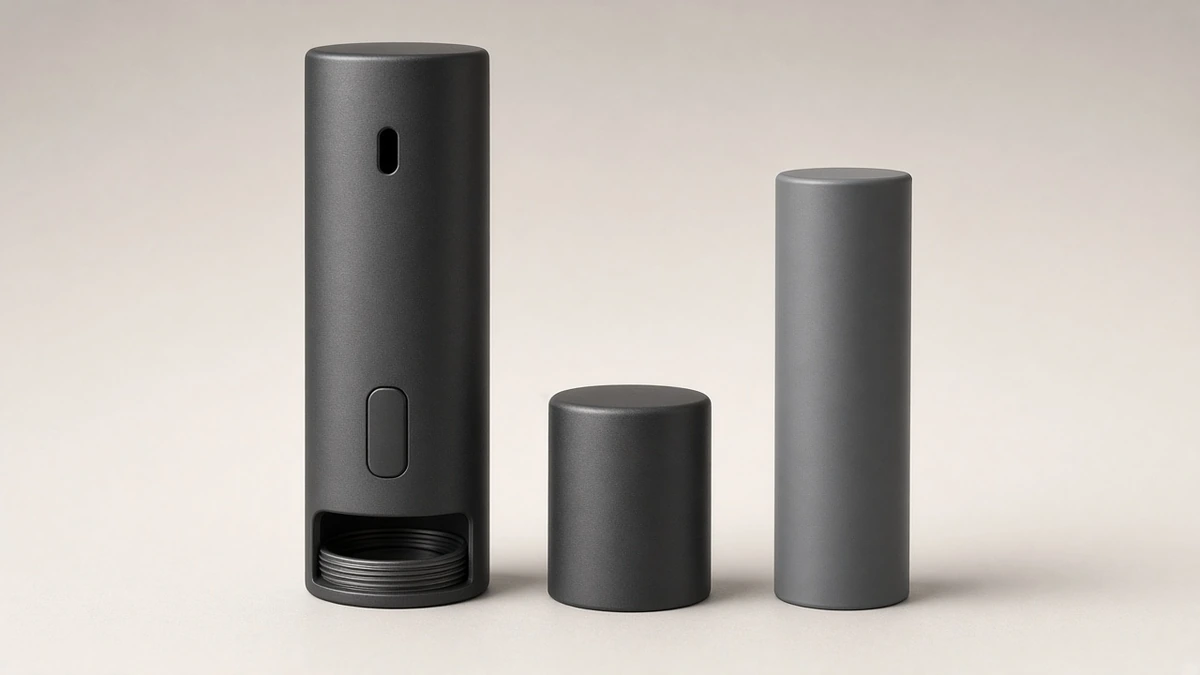
🧩 3.1 In-Device Charging Does Not Prove the Cell Is Sealed
A USB port on a removable-cell device can still charge the cell while it is inside the body. The DaVinci 18650 page, as opened, states that fact for the IQ2 and IQC. Vaping360’s charging guide, as opened, also notes that some vape devices allow a removable battery to be charged inside the device with a USB connection, and that some removable cells are instead charged in an external charger.
The practical identification is therefore not “does it have USB-C?” It is whether the current manual documents a user opening and a specified replacement cell. If it does, the presence of in-device charging is a second, separate fact. If it does not, a charge port still describes only the cable path.
📏 4. A Cell Format Inside the Body Is Not a User-Swap Procedure
This is the confusion that is easiest to carry from a listing into a brief. A chart, a photograph, or a product sentence can name a cell format, or can say that a device has one or two lithium-ion batteries, without telling the user to open the body.
Arizer’s official portable comparison chart, opened as a PDF from arizer.com, labels power on named models in cell-format language, including a 26650 lithium-ion battery on the Air MAX, 18650 lithium-ion batteries on the Air SE and ArGo, and dual-cell 21700 or 18650 labels on Solo-series rows. That chart is useful as a format label for those named models. It is not the same document as the battery-swapping page. The official swapping page, as opened, gives change steps for the Air SE, Air MAX, and ArGo. It does not, on that page, give a change procedure for every model that appears on the chart. A format name on a comparison row should not be rewritten as a published user-swap instruction.
The same caution applies to battery counts. The official MIGHTY+ product page, as opened, states that the device has two Li-Ion batteries and charges through a USB-C socket. That is a count and a charge path. It is not, on that page, a door, a cap, or a cell-change sequence. Do not infer a removable architecture from a battery count alone.
When a version really does accept a removable cylindrical cell, the 18650 vape battery guide is the place to read wraps, ratings, fit, and handling of that cell. This article does not retell that subject. It only insists that the device be identified first: sealed and charged in place, or documented as user-removable, and if removable, with which cell type the current manual actually names.
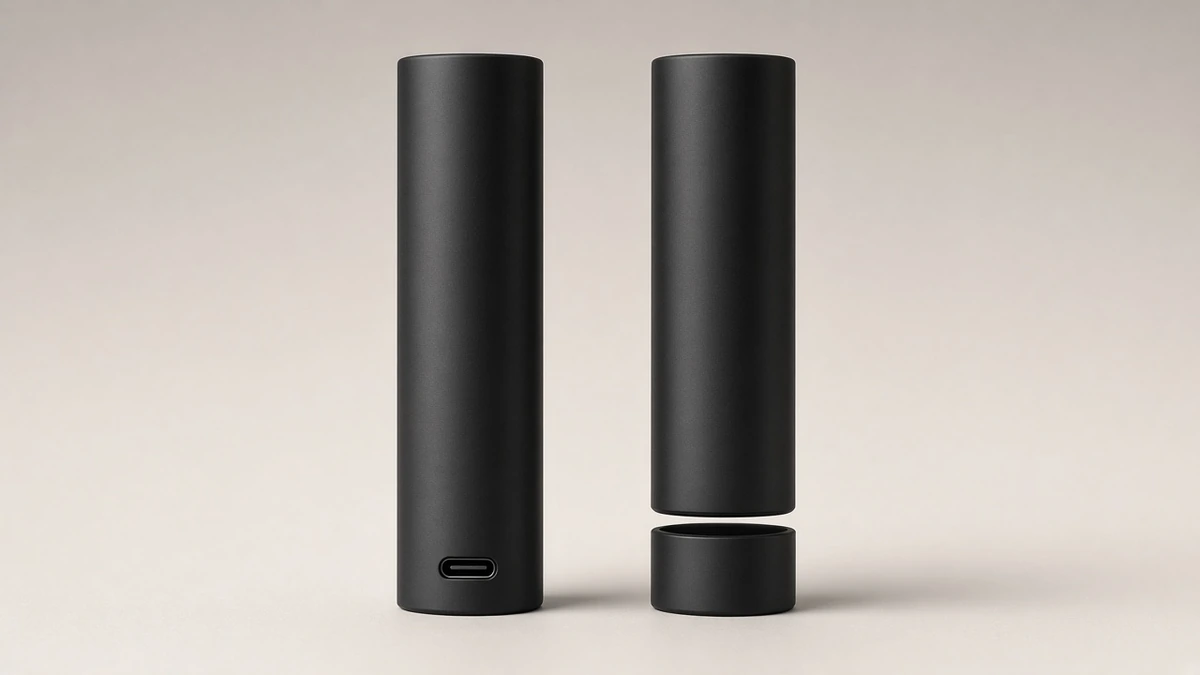
🔌 5. The Charging Path Is a Separate Identification
Once the architecture is named, the charging path can be recorded on its own line. The two questions are easy to collapse, and they should not be.
A sealed device may accept a cable at the base, on the side, or under a cap, as the port-location article already explains. Some sealed 510 batteries still charge through a screw-on 510 USB charger rather than through a body port; that format is the subject of the thread-charger and 510 USB-charger guides. Got Vape’s charger guide, as opened, treats 510-thread pen chargers and Type-C cables as different charger families, and mentions built-in batteries as a case where replacing the entire device can become necessary if the cell is no longer serviceable. That is education about service consequences, not a specification for any AOVAPE SKU.
A removable-cell device may use an external bay charger, in-device USB charging, or both, when the version manual says so. The Arizer swapping page, as opened, refers to an available Dual Battery Charger for multi-battery charging and to keeping spares in a battery case. The DaVinci 18650 page, as opened, describes both in-device Type-C charging and an external charger sold separately. Those are named-version paths. They are not a default kit list for every removable-cell device.
Pass-through charging is a further, separate function: whether the version can be used while a cable is connected. The official MIGHTY+ page, as opened, describes pass-through charging with a Supercharger that, on that page, is specified at least 15V at 3A, with a display signal of “dct.” The official CRAFTY+ charging article, as opened, states that the vaporizer cannot be operated while it is connected to a power source with the USB-C cable. Those two official STORZ & BICKEL documents disagree with each other because they describe different products. Pass-through charging remains the place to treat that function. It does not decide whether the cell is sealed or removable.
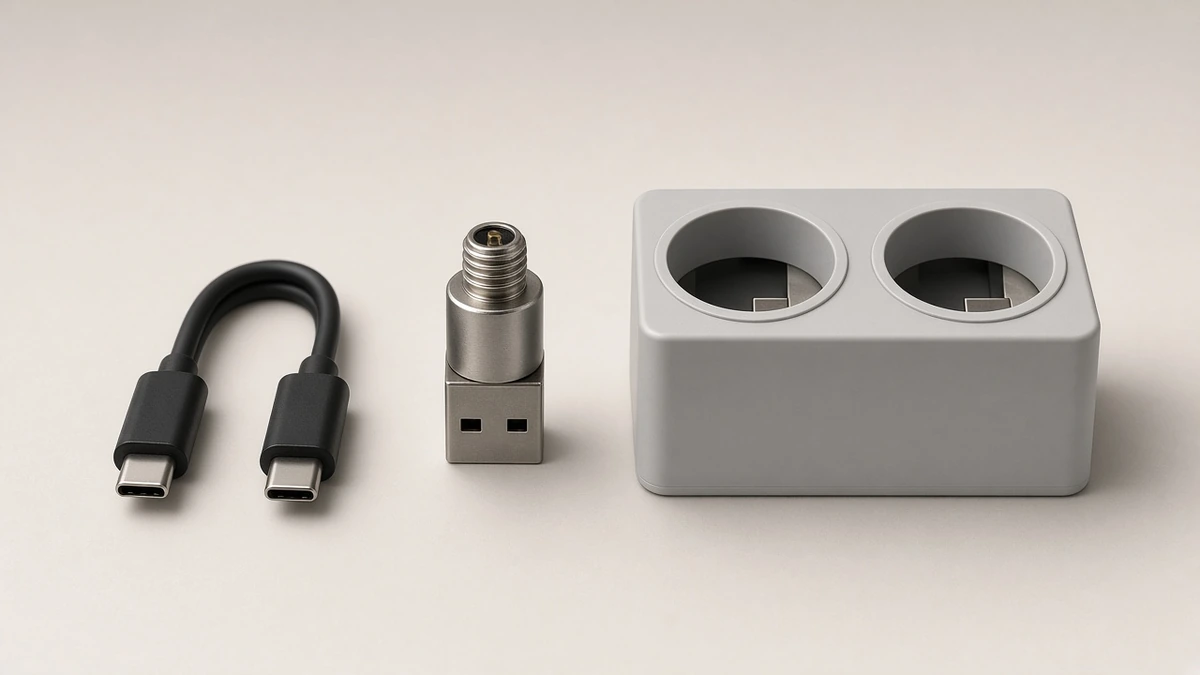
📷 6. What a Listing Photograph and Catalog Words Can and Cannot Show
A single exterior photograph can show a charge port, a bottom cap, or a smooth closed body. It cannot show whether the cap closes a cell compartment or only hides a cable opening. The already-published under-cap port identification is the reason this matters: a removable cap at the base is not automatically a battery door.
Catalog words need the same caution.
- “Rechargeable” says the device is charged again. It does not say whether the cell comes out.
- “Lithium-ion” names a chemistry family. It does not name an opening.
- “18650,” “21700,” “26650,” or “18350” names a format, when the document actually uses that word. It does not, by itself, publish a swap procedure.
- “USB-C” names a cable family. It does not prove the cell is sealed.
- “Replaceable battery” is a claim to reconcile with the current manual and with a sample that actually opens as that manual describes.
Got Vape’s charger guide, as opened, uses both “built-in” and “removable” as service categories. Vaping360’s charging guide, as opened, uses “replaceable batteries” for some pen-shaped devices it also calls tube mods, and says that arrangement is not the usual case on simple vape pens. Those are useful category words only when they are checked against the version in front of you.
✅ 7. What to Check on a Sample, a Drawing, and the Current Manual
Identify the architecture on the exact version, then record the charging path as a second line.
On the sample:
- Look for a door, sliding cover, latch, or screw-on compartment lid, and for what is actually under it.
- Do not treat a bottom cap as a battery door until the opening and the current manual agree.
- If a cell can be removed, note the format only as documented for that version, and keep polarity, fit, and charger identity attached to that document.
- If there is no user opening, record the charge path on the body or at the 510 thread, and treat the cell as sealed for ordinary service.
On the drawing and the current manual:
- Does this version document a user cell change, or only in-device charging?
- If a change is documented, what opening method and what cell type are named?
- If a USB port is present, does the manual also allow an external charger, in-device charging, or both?
- Is pass-through charging documented for this version, separately from architecture?
On the listing:
- Treat “rechargeable,” “USB-C,” “18650,” and “replaceable battery” as labels to reconcile with the manual.
- Do not treat another model’s swap steps, cell size, or charger kit as a default.
Questions worth sending with a sample request:
- For this exact version, is the cell sealed and charged in place, or is a user-removable cell documented?
- If it is removable, what cell type is specified, and where is the opening described in the current manual?
- If a USB port is present, does the cell still come out, or is that port the only charge path?
- If a bottom cap is shown, does it hide a charge port, a cell compartment, or something else?
- What charger, if any, is specified for this version, and is pass-through charging documented as a separate function?
❓ 8. Short Answers a Brief Can Reuse
❓ 8.1 Identification Questions
Is a vape battery sealed or removable? According to the architecture documented for that version. Some devices charge the cell only while it stays inside the body. Some accept a user-removable cell through a documented door, cover, or cap.
Does a USB-C port mean the cell is sealed? No. Official pages opened for this article document in-device USB charging on named removable-cell versions, and they document USB-C charging on devices whose public pages do not describe a user cell swap. Record the port and the architecture as separate facts.
Does an “18650” label mean the user can swap the cell? No. A format name is not a swap procedure. Official documents opened here use more than one cell format on named versions, and some product pages name batteries without publishing a change sequence.
Is a bottom cap a battery door? Not automatically. A cap at the base may hide a charge port, or it may close a cell compartment. The current manual and what is actually under the cap decide that question.
Can a removable-cell device still charge with a cable? Yes, when the version manual says so. In-device charging and an external bay charger can both be documented on the same design. Neither path, by itself, names the architecture.
Do the official examples mean every dry herb vaporizer has a removable cell, or that every 510 battery is sealed? No. The named official pages used here are version documents. Compact pens are often described, in the education pages opened for this article, as charge-in-place devices, but the brief still has to follow the manual for the exact version.