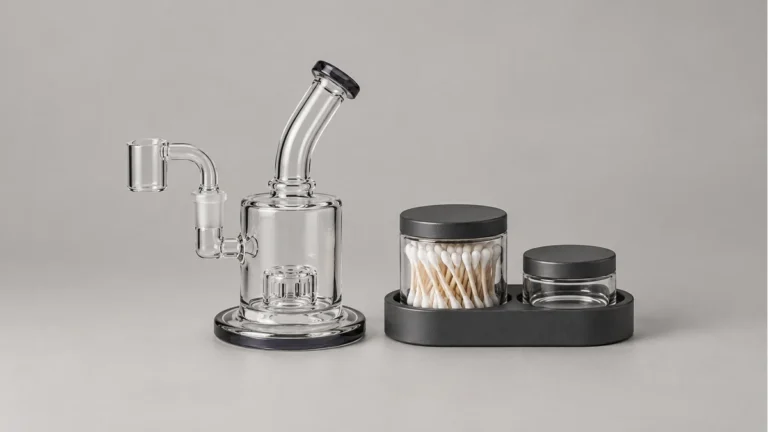
An automatic weed grinder sounds like a manual grinder with the twisting removed. In practice, the motor also changes how the chamber fills, how quickly material reaches the collection cup, and how clearly a user can feel a jam developing. That makes the design details more important than the word automatic.
Automatic weed grinders replace the twisting motion of a manual grinder with a small motor, a battery, and a button. That single swap changes several things about how the tool behaves in daily use, but it does not change the physics of cutting dry plant material into smaller pieces. Shoppers researching this category tend to arrive with a specific set of practical questions: does the motor actually solve hand fatigue, does it grind evenly or just pulverize everything into dust, and how do people judge battery life, jamming, cleaning, portability, noise, and capacity once the novelty wears off. This article works through those questions mechanically, without sales language, so you can evaluate a specific unit on its own terms.
⚙️ 1. What “Automatic” Actually Means in a Grinder
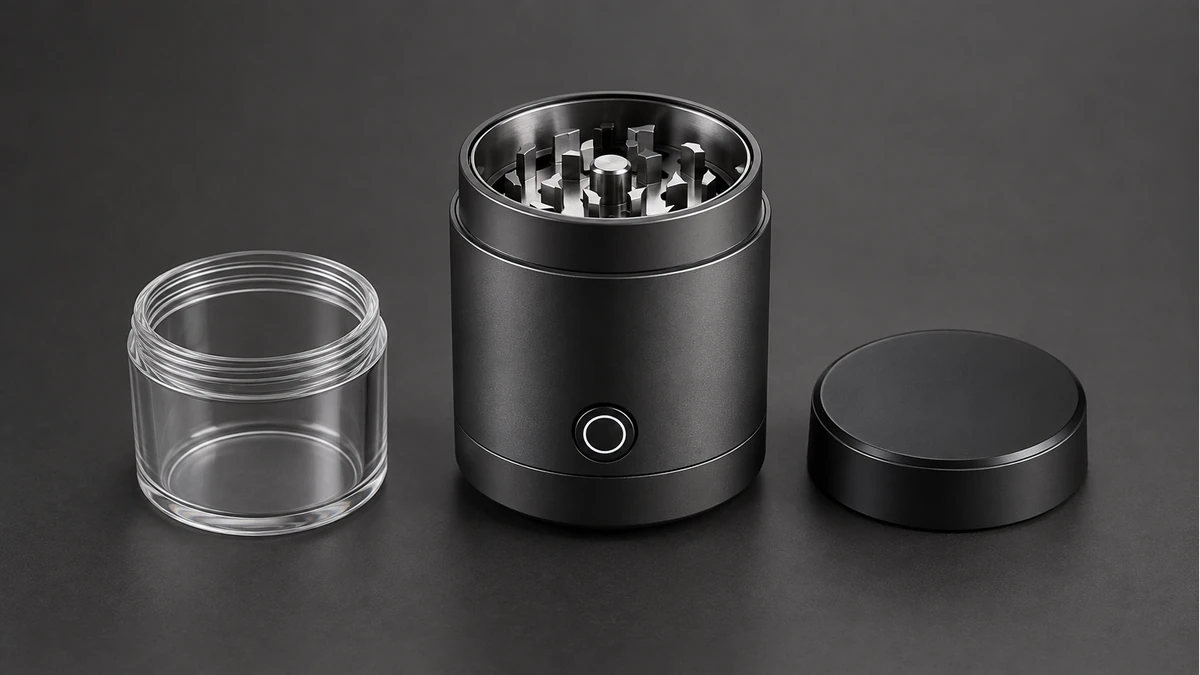
An automatic grinder is a manual grinder’s cutting geometry paired with a motor, a small battery or charging port, and some form of control—usually a single button, sometimes a lid switch. The teeth or blades still have to shear or crush material the same way a hand-turned grinder’s do. What changes is who supplies the rotational force. In a manual unit, your wrist supplies variable torque and you can feel resistance and adjust. In an automatic unit, a fixed or lightly variable motor supplies torque regardless of what you feel, which is the root of both the convenience and the limitations discussed below.
For a broader look at how electric mechanisms are built and marketed, the electric weed grinder guide covers motor types and housing designs in more depth than this article’s narrower focus on the automatic subcategory.
🔩 2. How the Drive System Changes the Job
The drive system is the motor, gearing, and shaft that connect the button press to the spinning cutting chamber. Its job is narrow: convert stored electrical energy into rotational force at a speed the teeth can use without stalling or overheating. Everything else about grind quality still comes from the mechanical parts underneath.
🔩 2.1 Motor Torque Is Only One Variable
Torque determines whether the motor can keep turning when it meets resistance—dense material, a packed chamber, or a stem caught between teeth. Low-torque motors stall easily and may need multiple short bursts to finish a load. Higher-torque motors push through resistance but can also push through material faster than it needs, which is part of why “automatic” and “evenly ground” are not the same guarantee. Torque figures are rarely published in a way that lets you compare units directly, so in practice you’re judging this by reported behavior rather than a spec sheet number.
🔩 2.2 Blade and Tooth Geometry Sets the Ceiling
No motor compensates for poorly shaped teeth. Diamond-shaped or angled teeth tend to shear material into flakes rather than crush it, which produces a more consistent texture. Flat or shallow teeth crush more than they cut, producing a wider mix of large and fine particles regardless of how much torque is behind them. If you’re comparing two automatic grinders, the tooth geometry is often a better predictor of grind consistency than the motor spec.
✊ 3. Does Automatic Solve the Wrist Torque Problem?
This is one of the most common reasons people search for automatic grinders in the first place: manual twisting can be uncomfortable for anyone with wrist, hand, or grip limitations. On this specific point, automatic units genuinely help. Pressing a button requires far less sustained force than gripping and rotating a chamber, and that difference is real regardless of how the grind itself turns out.
What automatic units don’t remove is the need to load the chamber, sometimes hold a lid closed, and occasionally clear a jam by hand, which can involve more finger dexterity than people expect. If wrist strain is the main concern, it’s worth checking whether the loading and cleaning steps also require twisting motions, since those can undercut the benefit the motor provides during grinding.
🌀 4. Even Grind vs. Powder: What Automation Can and Can’t Fix
A recurring complaint in casual online discussion is that automatic grinders either leave chunks or turn material into a fine, near-powder consistency with little middle ground. This tracks with how fixed-speed motors work: a motor set to one speed processes light and dense pockets of material identically, so a light pocket can over-process while a denser clump under-processes in the same cycle. A manual grinder lets you feel that difference and stop; a single-speed automatic unit generally can’t.
Automatic does not guarantee a uniform result. Grind consistency depends on how full the chamber is, how the material is distributed before the button is pressed, tooth geometry, and run time—the motor is only one input among several, and it can just as easily amplify unevenness as fix it.
⏱️ 5. Pulse Control and Overload Behavior
Pulse control—short bursts instead of continuous running—is the main tool automatic grinders offer for managing consistency. Short pulses give you more chances to stop before material turns to powder, similar to how pulsing a kitchen appliance avoids overprocessing. Units without pulse control, running continuously until you release a button or a timer ends, are more prone to the powder complaint described above.
Overloading happens when the chamber is packed too tightly for the motor’s torque to turn the teeth through it. Symptoms include a motor that hums without turning, a smell of hot plastic or metal, or a unit that shuts off mid-cycle. Overload protection, when present, typically cuts power rather than pushing through, which protects the motor but leaves you to redistribute the load and try again. Chronic overloading, especially in low-torque units, is one of the more common mechanical failure points reported anecdotally by users of budget automatic grinders.
🍯 6. Sticky Material and Chamber Design
Resin buildup is a mechanical problem independent of whether a grinder is manual or automatic. Sticky residue coats teeth and chamber walls, reduces cutting efficiency over time, and can bind moving parts enough to stress a small motor. In a manual grinder, resistance from residue is something your hand can push through or notice. In an automatic grinder, that same resistance is invisible to you until the motor stalls or slows audibly.
Chamber shape affects how much sticky buildup accumulates and how accessible it is afterward. Wide, shallow chambers with fewer internal corners tend to trap less material than deep, narrow ones, and are also easier to wipe out between uses.
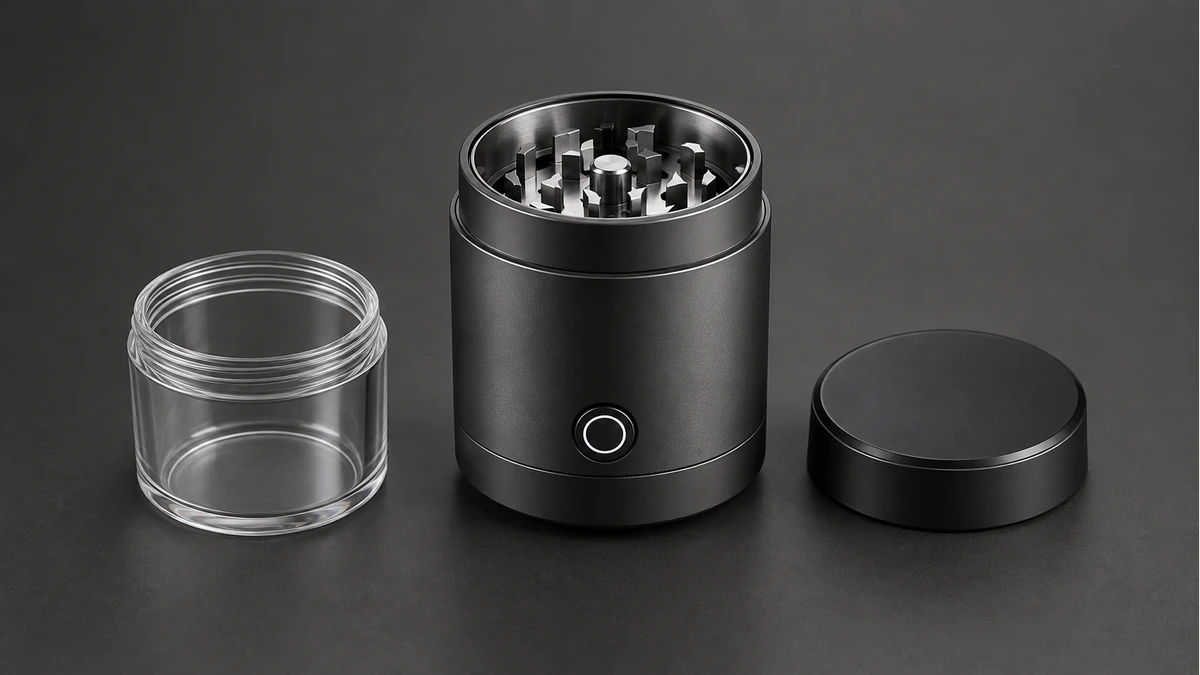
🔋 7. Battery, Charging, and Runtime Expectations
Battery-powered units generally fall into two categories: replaceable disposable batteries and rechargeable cells with a charging port. Replaceable batteries are simpler to source in a pinch but add ongoing cost and waste; rechargeable units need periodic charging and eventually lose battery capacity the way any small rechargeable device does.
Runtime claims are usually stated in number of grind cycles rather than hours, since a “cycle” is short. What matters more in practice is whether the unit gives any indication of remaining charge, since many budget units simply stop working without warning. If battery indicators, charging cable type, and approximate cycle count aren’t listed anywhere in a product’s specifications, treat that as a gap in available information rather than assuming favorable performance.
🧼 8. Cleaning Boundaries: What You Can and Can’t Reach
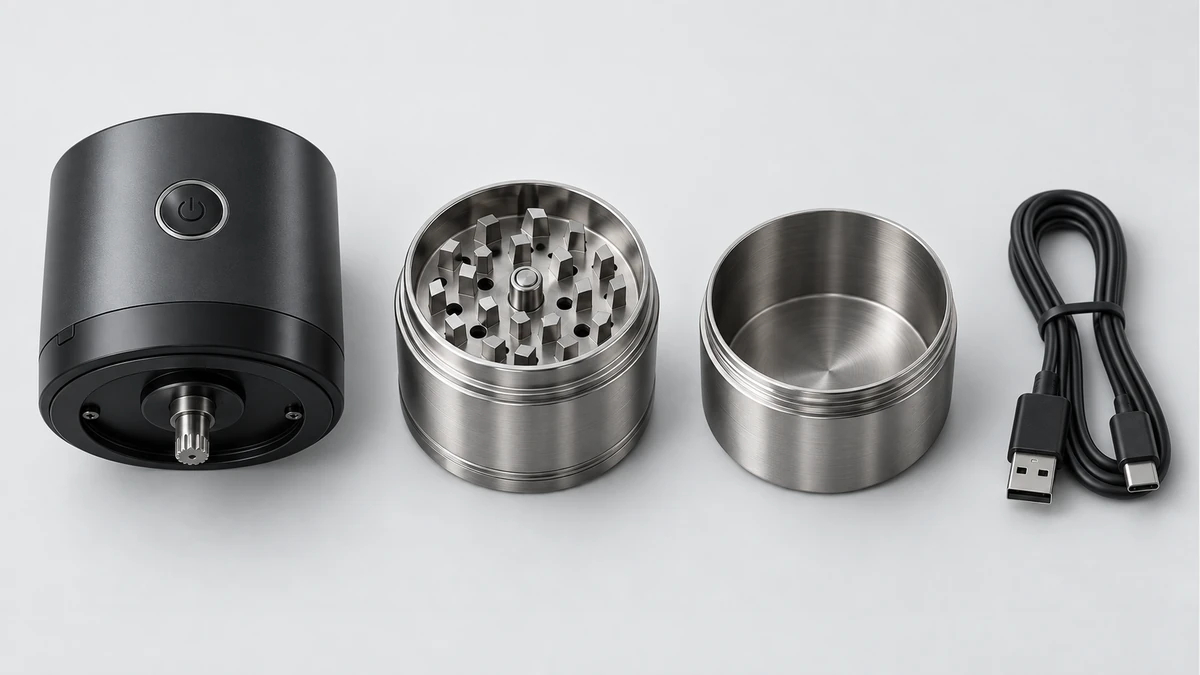
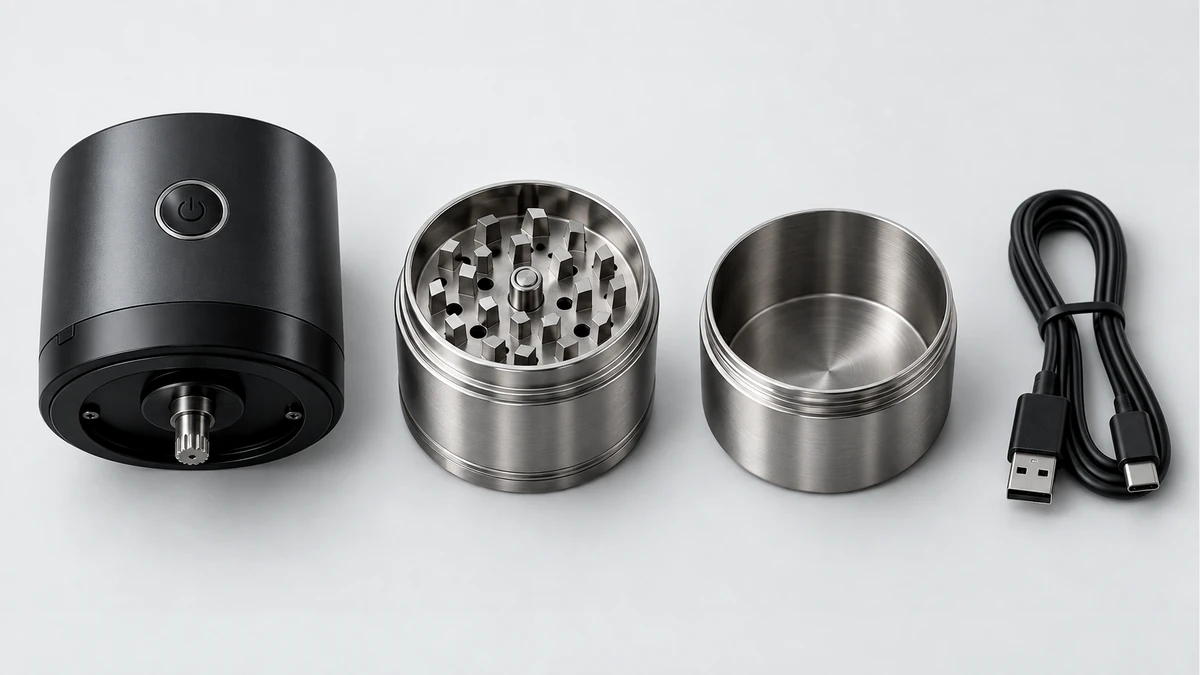
Cleaning is where the automatic category runs into a hard mechanical limit. Manual grinders are fully mechanical, so most models can be taken apart down to individual pieces, including screens and kief chambers, and washed. Automatic grinders have a motor, battery, and often circuitry sealed away from the cutting chamber, which means the electronic housing usually cannot be submerged or disassembled the way a manual grinder can.
In practice, this limits cleaning to wiping the accessible chamber with a dry brush or a barely damp cloth and avoiding liquid near seams, buttons, or charging ports. If a listing doesn’t specify whether the cutting chamber detaches fully from the motor housing, that’s worth confirming before buying, since a non-removable chamber makes routine cleaning noticeably harder. Some automatic designs add a built-in dispenser tray to reduce the mess handling created; the herb grinder with dispenser guide goes into how those trays are built and where they still require manual wiping.
📦 9. Portability and Noise in Daily Use
Automatic grinders are generally larger than manual ones of the same chamber size because they need room for a motor and battery, which affects how easily they fit in a pocket or small bag. Weight follows the same pattern—metal housings with a motor inside weigh noticeably more than a comparable manual grinder.
Noise is rarely mentioned in specifications but comes up often in casual user discussion, since a motor and grinding teeth together are audible in a way that hand-twisting is not. Motor pitch and volume vary by unit and aren’t something you can judge from a listing, so if discretion matters to your use case, this is a question worth raising directly with a seller or looking for in independent user comments rather than assuming from photos or specs.
📏 10. Chamber Capacity and Batch Size
Chamber capacity determines how much material a single cycle can process, and it interacts directly with torque and evenness. A motor sized for a small chamber may struggle if the same design is scaled up without a corresponding increase in torque, since more material means more resistance for the same motor to push through.
Buyers looking for higher-capacity options should treat “large automatic chamber” claims with some skepticism until they check whether the motor spec was adjusted to match; the extra-large herb grinder guide covers this capacity-versus-mechanism tradeoff in more detail for buyers prioritizing volume over portability.
📊 11. Automatic vs. Manual: A Comparison Table
| Factor | Manual Grinder | Automatic Grinder |
|---|---|---|
| Force required to operate | Sustained wrist/hand torque | Single button press |
| Grind consistency control | Direct, felt in real time | Indirect, via pulse timing only |
| Risk of over-processing | Low, user stops by feel | Higher with continuous-run motors |
| Disassembly for cleaning | Usually full teardown possible | Often limited to accessible chamber |
| Power source dependency | None | Battery or charging required |
| Typical size/weight | Smaller, lighter | Larger, heavier for same chamber size |
| Noise during use | Silent | Audible motor and grinding sound |
| Points of mechanical failure | Teeth wear, spring/magnet fatigue | Above, plus motor, battery, switch |
🧭 12. A Practical Inspection Checklist Before You Buy
Because most of the variables above aren’t visible in a quick glance at a product photo, working through a short checklist against the actual listing or unit in hand catches more problems than a general impression does.
- Does the listing specify whether the cutting chamber fully detaches from the motor housing for cleaning?
- Is there any pulse or short-burst control, or only continuous run-until-release operation?
- Is battery type (replaceable vs. rechargeable) and approximate cycle count stated anywhere?
- Is there a stated or implied overload protection behavior, such as automatic shutoff?
- What is the tooth or blade shape—angled/diamond-cut versus flat or shallow teeth?
- Are chamber dimensions given, and do they match the stated motor torque or wattage, if any is listed?
- Is there any indication of operating noise, either in the listing or in independent user comments?
- Does the housing material and weight suggest it will still fit your intended carrying situation?
None of these questions require testing a unit yourself—they’re about whether the manufacturer or seller has provided enough information to make an informed comparison, which is often a better signal than marketing language about “smooth, even grinding every time.”
✋ 13. When a Manual Grinder Is Simply Simpler
Automatic grinders solve one problem well: reducing the physical effort of turning a chamber. They introduce new dependencies in exchange—batteries, charging, sealed electronics that limit cleaning, and a fixed motor speed that can’t adapt mid-grind the way a hand can. For anyone who doesn’t need the wrist-torque relief, a manual grinder remains mechanically simpler: no charging, no motor to fail, and full access for cleaning down to every piece.
The right choice depends on which tradeoff matters more in your specific situation—hand comfort during grinding, or long-term simplicity and easier maintenance. Neither category is a strictly better version of the other; they’re solving different parts of the same task with different mechanical costs attached.