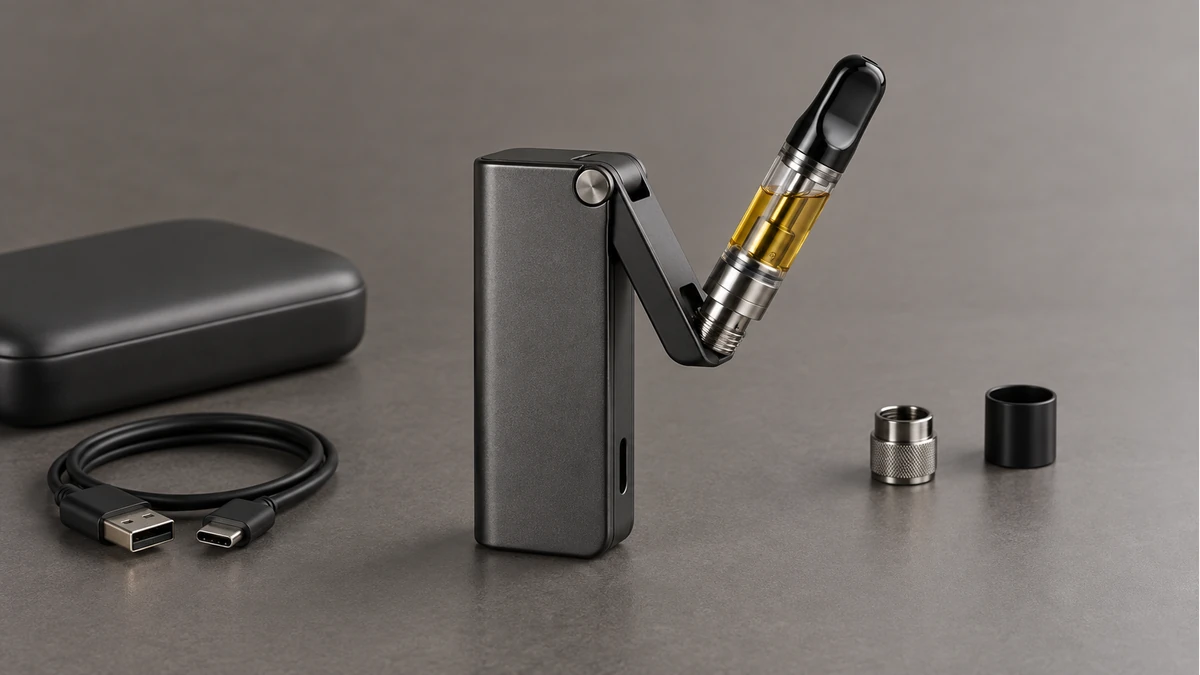
Search “flip 510 battery” and you’re usually staring at a small hinged device that looks nothing like the straight tube batteries you’re used to seeing, and the cartridge doesn’t obviously line up with anything. The confusion is almost always about fit: does my cartridge sit in a slot, does it screw into a thread you can’t see, and why does the battery look closed even when a cartridge is loaded. The flip mechanism just relocates the connection point and adds a lid — it doesn’t change the underlying 510 thread standard. Once you can see where the thread actually lives inside the hinge, the rest of the hardware makes sense.
This piece walks through the mechanical path from hinge to thread to contact pin, then covers the controls, the handling habits that cause the most wear, cleaning, and a straightforward way to isolate a problem when something stops working.
🧭 1. Why “Flip 510 Battery” Shows Up in Search
Most searches for this phrase come from one of two directions. Either someone is holding a device with a hinged top and trying to figure out how the cartridge is supposed to sit, or someone is comparing device styles before buying and wants to know if “flip” means something functionally different from a standard tube battery with an exposed thread.
The short answer is that a flip 510 battery is a standard battery and 510 connector housed under a spring-loaded or friction-hinged cover. The cover exists to protect the thread and the cartridge glass from side impact, not to change how the connection works. That distinction matters because people troubleshoot flip batteries as if the hinge itself is the electrical connection, when the hinge is purely mechanical — the connection is still the threaded pin underneath it.
🔧 2. How the Hinge and Recess Actually Work
Open a flip battery and you’ll see a shaped recess, usually lined with rubber or a soft polymer, with the 510 pin sitting at the bottom center. The cartridge doesn’t rest loose in this recess — the recess is shaped to hold the cartridge steady against the pin while the lid is closed, so the connection stays under light constant pressure rather than depending on a screw thread doing all the work.
🔍 2.1 The Recessed Cartridge Bay
The depth and diameter of this bay are the two dimensions that determine compatibility, more so than brand. A cartridge that’s slightly too wide won’t seat flush, which tilts it off the pin. A cartridge that’s too narrow can shift sideways when the device is in a pocket, which is one of the more common causes of an intermittent connection people report as “flickering” or “no hit.”
⚙️ 2.2 Hinge Tension and Wear
The hinge itself is a mechanical spring or friction joint, and like any hinge it loosens with repeated use. A loose hinge doesn’t stop the battery from working, but it does reduce the clamping pressure that holds the cartridge against the pin, which is why an older flip battery sometimes needs the lid pressed down slightly to get a reliable connection when a newer one doesn’t.
🧵 3. Thread Alignment: The Part That Actually Fails
The 510 name refers to a threading standard — 5mm pitch, 10 threads — and it’s the same thread used across most cartridge and battery combinations regardless of housing shape. In a straight tube battery, you can see the thread and feel it engage as you twist. In a flip battery, that engagement happens inside the closed lid, out of view, which is why alignment problems are harder to diagnose by feel alone.
🧵 3.1 How the Pin Makes Contact
Even though there’s no visible twisting motion, the cartridge’s threaded base still needs to seat straight onto the pin. If the cartridge goes in at a slight angle — easy to do when you can’t see the connection point — the threads catch unevenly and the pin may only make partial contact.
📏 3.2 Why Flip Designs Are Stricter About Alignment
Because you’re closing a lid instead of turning a cartridge into place, there’s no self-correcting rotation the way there is with a screw-in connection. A cartridge that starts slightly crooked in a flip bay tends to stay slightly crooked. This is the single most common mechanical reason people report weak or inconsistent draws from an otherwise functional flip battery.
📐 4. Height Clearance and Cartridge Size
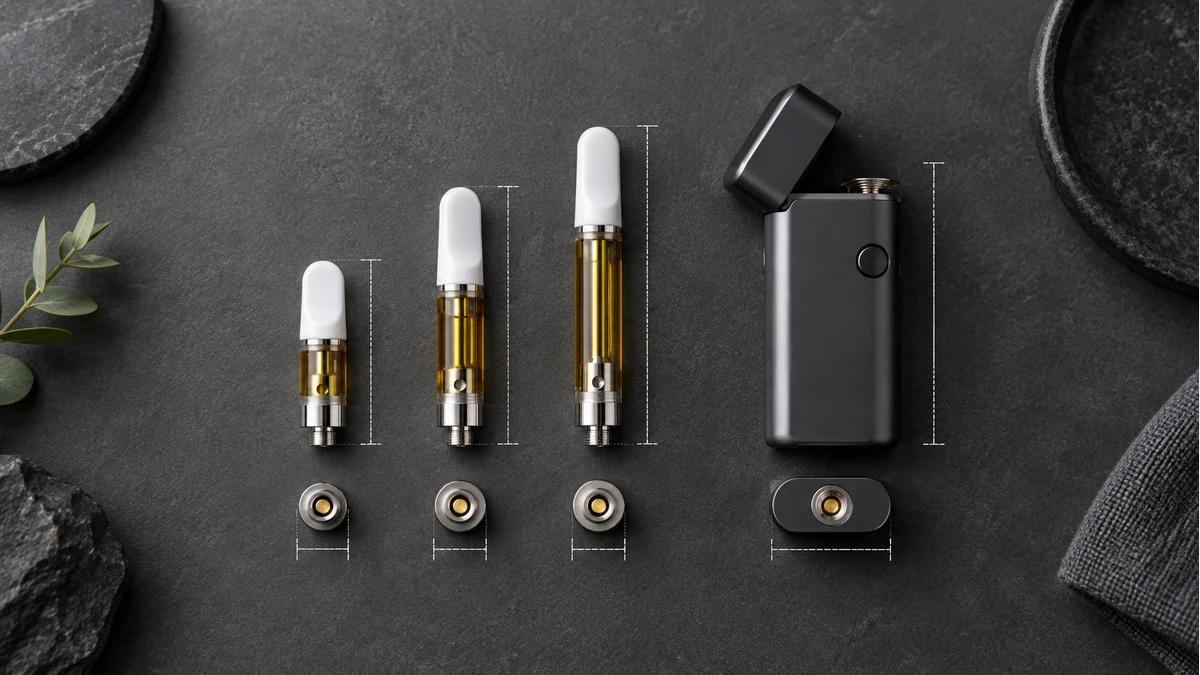
Flip battery housings are built around a specific internal height, measured from the pin to the underside of the closed lid. Cartridges vary in length more than people expect, and a cartridge that’s taller than the housing’s clearance will either prevent the lid from closing fully or will close with pressure that bends the cartridge’s metal base slightly out of true.
| Symptom | Likely Cause |
|---|---|
| Lid won’t close flush | Cartridge taller than housing clearance |
| Weak, inconsistent draw | Off-center or crooked seating on the pin |
| Works only under pressure | Loose hinge reducing contact force |
| No response at all | Pin or cartridge contact corrosion, not the hinge |
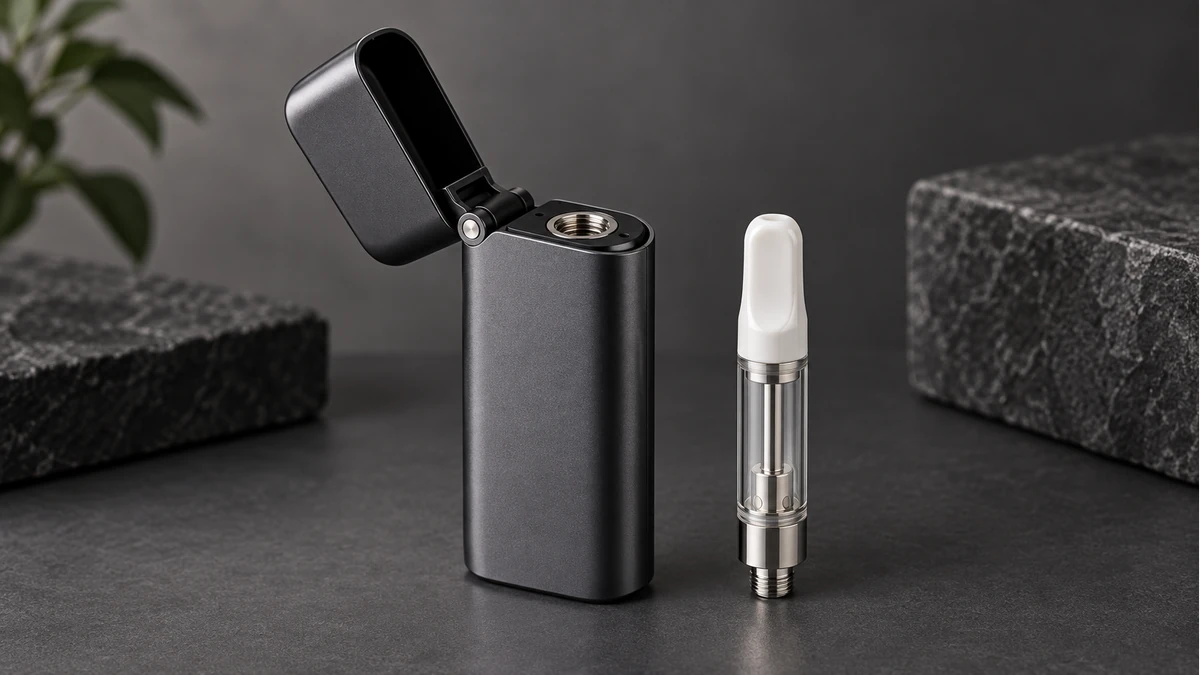
A quick way to check clearance without guessing is to close the lid gently and watch where it meets resistance — if it stops well before the seam is flush, the cartridge is too tall for that housing rather than the battery being defective.
🔘 5. What the Buttons and Voltage Controls Actually Do
Flip batteries typically use one of two control layouts, and the labeling on each is where a lot of confusion comes from, since manufacturers don’t use consistent icons or wording.
💡 5.1 Single-Button Behavior
A single button usually does two things: it activates the heating circuit while held, and a rapid multi-click sequence (commonly five clicks) locks or unlocks the device to prevent accidental activation in a pocket or bag. If a flip battery seems completely unresponsive, checking whether it’s locked is a faster first step than opening the lid to inspect the connection.
🎚️ 5.2 Variable Voltage Rings and Presets
Some flip batteries add a rotating ring, a small dial, or preset LED colors that step through voltage levels. These controls change the power delivered to the heating element, not the physical connection to the cartridge, so adjusting voltage won’t fix a seating or alignment problem — it can only make a properly seated cartridge perform differently. the broader 510 thread battery guide covers how voltage settings interact with different cartridge resistances if you want the electrical side in more depth.
👖 6. Pocket and Travel Handling
The main practical advantage of a flip design is that the lid covers the cartridge glass and the pin, which reduces the chance of impact damage when the device is loose in a pocket or bag. That protection has a limit, though — lint, fabric fibers, and dust still work their way into the hinge gap over time, and lid impact from being sat on or dropped can still crack a cartridge even with the cover closed.
Carrying a flip battery with the lid fully latched (not just resting closed) matters more than people assume, since a partially seated lid is the main way pocket lint reaches the pin and cartridge threads in the first place.
🧼 7. Cleaning Without Damaging the Contact Point
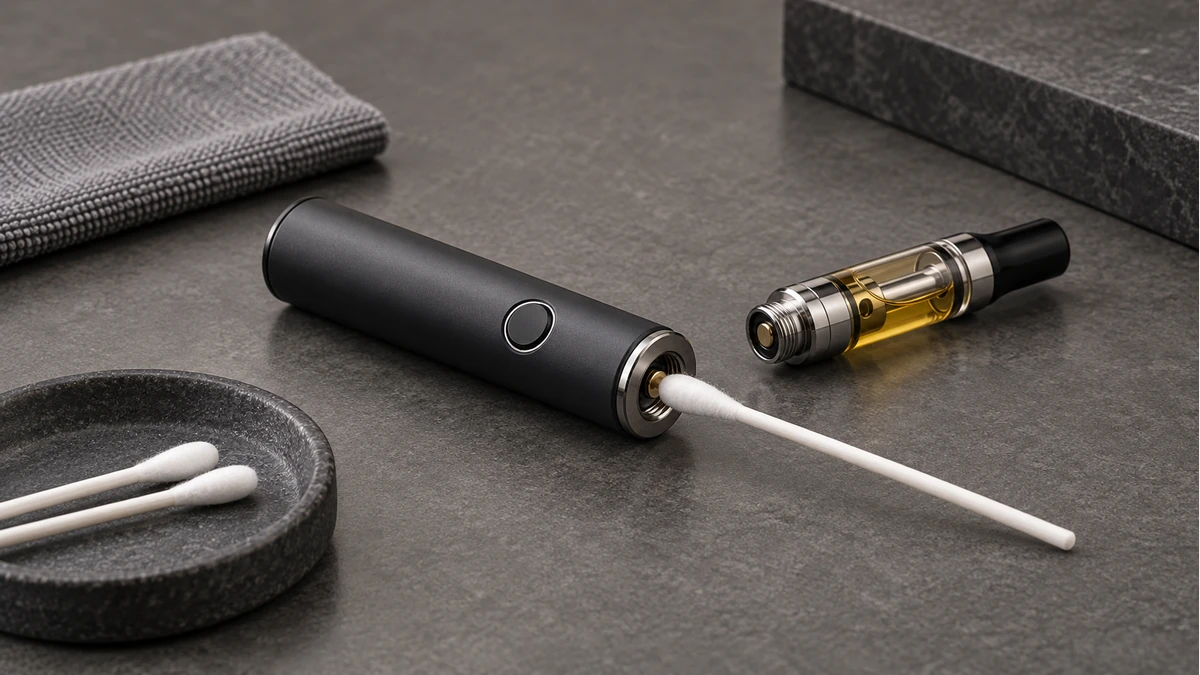
The pin at the bottom of the recess is the single most sensitive part of a flip battery to clean around. Residue buildup on the pin is a common cause of weak or absent connection that looks identical to an alignment problem from the outside.
- Remove the cartridge before cleaning; never clean the recess with a cartridge still seated.
- Use a dry cotton swab first to lift loose debris around the pin and recess walls.
- If residue remains, lightly dampen a swab with isopropyl alcohol and let the recess air-dry fully before reinserting a cartridge — moisture left on the pin is a more common cause of intermittent contact than dust ever is.
- Check the hinge seam separately, since fabric fibers collect there even when the recess itself looks clean.
battery and power basics has a longer walkthrough of pin cleaning intervals if you’re using a flip battery daily rather than occasionally.
🕵️ 8. Troubleshooting by Isolating One Variable
Most flip battery problems get misdiagnosed because two variables get changed at once — a new cartridge is tried on a battery that’s also been dropped recently, for example. Isolating one variable at a time gets to the actual cause much faster.
🔋 8.1 Confirm the Battery Independently
Check the charge indicator and confirm the device isn’t locked before assuming a hardware fault. A dead or locked battery produces symptoms that look identical to a bad connection.
🔄 8.2 Swap the Cartridge, Not the Battery
If a second, known-working cartridge behaves the same way in the same battery, the issue is very likely the pin, the recess, or the hinge tension — not the cartridge. If the second cartridge works fine, the first cartridge’s base or thread is the more likely culprit.
📌 8.3 Check Seating Before Checking Anything Electrical
Open the lid, remove the cartridge, and reseat it while watching that it drops straight down onto the pin rather than at an angle. This single check resolves a large share of “intermittent hit” reports without needing to test voltage settings or clean anything.
🧪 8. Check the Flip Mechanism Before Blaming the Electronics
A flip body adds one mechanical system that a straight battery does not have. Open the device slowly and watch the cartridge path from fully stored to fully exposed. The cartridge should move without scraping the body, levering against the threaded base, or stopping against the mouthpiece. Resistance at the same point on every cycle usually points to clearance or hinge geometry, not a battery setting.
📏 8.1 Cartridge Dimensions Matter in Three Places
Diameter determines whether the cartridge fits the recess. Overall height determines whether the lid can close. The position of the widest shoulder determines whether the cartridge can rotate through the hinge arc. A product page that says only “510 compatible” answers none of those three questions, so compare a dimension drawing whenever the body encloses the cartridge.
🧻 8.2 A Dry Wipe Is Better Than Forcing the Hinge
Condensed residue near the adapter or pivot can make motion feel gritty. Power the unit off, remove the cartridge, and wipe accessible surfaces with a dry lint-free swab. Do not flood a hinge or use the cartridge as a handle to break it loose. The thread connection is designed for electrical contact, not for carrying sideways force.
⚖️ 9. Concealment vs. Service Access: The Tradeoff
The entire appeal of a flip housing is that it hides the cartridge and protects the thread — but that same enclosed design makes visual inspection harder. On a straight tube battery, you can look directly at the thread and pin to spot corrosion or misalignment. On a flip battery, you have to open the lid and often tilt the device toward light to see the same details, which is why problems tend to go unnoticed longer on flip designs until they become consistent rather than occasional.
This isn’t a flaw specific to any one flip battery — it’s the structural tradeoff of the format. Concealment and impact protection come at the cost of quick visual diagnosis, so flip battery owners generally need to build a habit of periodically opening the lid and checking the recess even when nothing seems wrong, rather than waiting for a symptom to prompt the inspection. charger compatibility guide compares flip and tube housings side by side if that tradeoff is the deciding factor in a purchase decision.
The practical takeaway is this: when a flip 510 battery stops behaving consistently, resist the urge to adjust voltage or assume the unit is failing outright. Open the lid, remove the cartridge, and look specifically at whether it drops straight onto the pin — off-center seating explains more flip battery complaints than any electrical fault does, and it’s the one thing a five-second visual check can rule out before anything else.