A dab pen that “won’t pull” can mean three very different things: no air movement at all, air that moves freely but produces nothing, or a draw that used to feel normal and has slowly gone thin. Each of these points to a different part of the device, and confusing them is the most common reason people replace parts that were never the problem. A thread on r/rokinvapes captured this well — users kept swapping cartridges and batteries interchangeably when the real issue was a mix-up between a physically blocked airpath and a battery that simply wasn’t firing. Before touching a screwdriver or ordering a replacement coil, it helps to isolate which failure mode you’re actually dealing with.
🔍 1. Start With the Symptom, Not the Part
Take the device apart mentally before you take it apart physically. Press the fire button (or take a draw on a draw-activated pen) and pay attention to three things: whether the LED or button responds at all, whether you feel any air resistance when you inhale, and whether you see or smell any vapor production. A pen that lights up, produces heat, but gives you nothing to inhale is an airflow problem. A pen that lets air through easily but never seems to heat anything is a power or contact problem. A pen that used to work fine and has gradually gotten harder to pull from is almost always residue or condensation narrowing the path over time rather than a sudden component failure.
Write down or just mentally note which category you’re in, because the fixes for airflow restriction and the fixes for power delivery don’t overlap much. Jumping straight to disassembling the coil when the actual issue is a swollen battery contact wastes time and risks damaging a part that was working fine. The sections below are organized by symptom first, component second, so you can skip straight to the section that matches what you’re actually experiencing.
🌬️ 2. No Airflow at All — Trace the Path
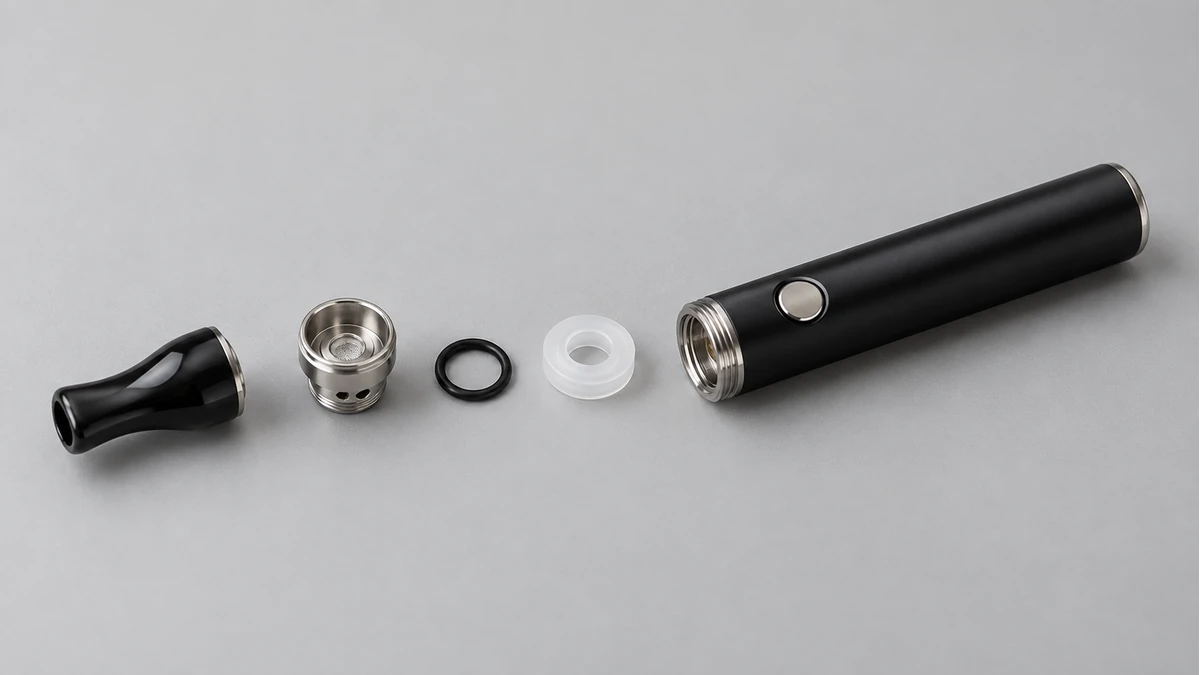
If you genuinely cannot pull any air through the mouthpiece — resistance so tight it feels sealed shut — the blockage is physical, not electrical. Air has to travel from an intake point near the chamber, past or around the coil, up through the airpath tube, and out through the mouthpiece. A obstruction anywhere along that route will produce the same symptom: total or near-total restriction. The fix is to work through the path methodically from the mouthpiece down rather than guessing.
🧩 2.1 Mouthpiece and Airpath Blockage
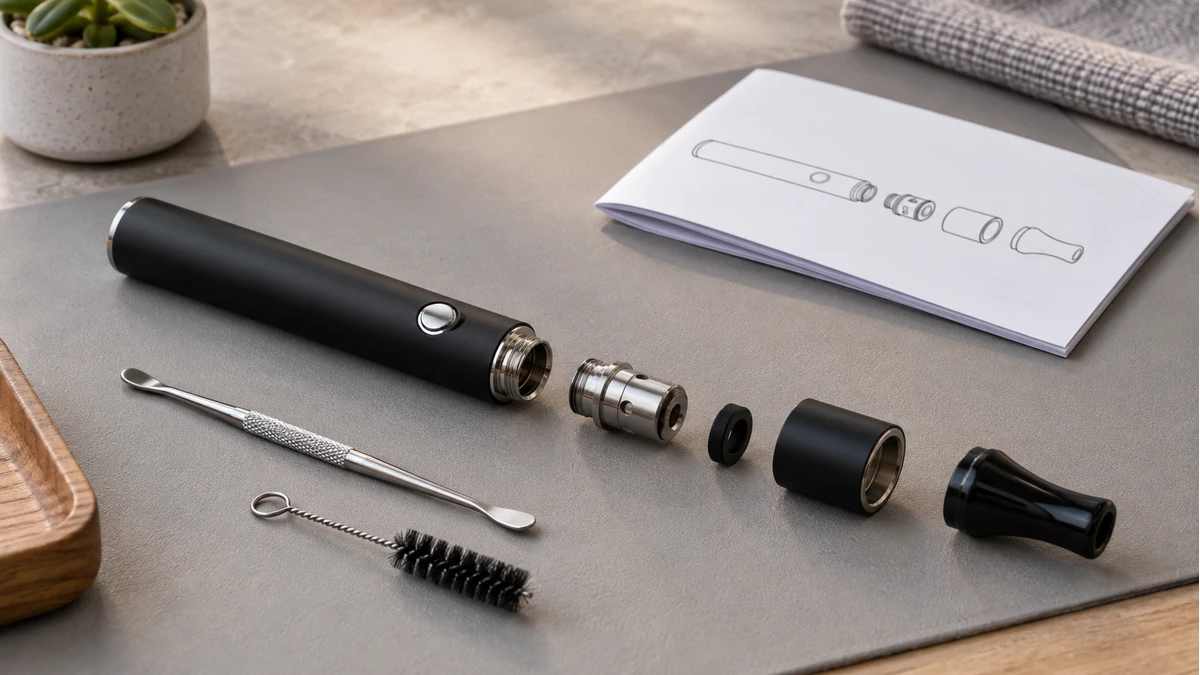
Start at the top. Remove the mouthpiece if it detaches, and look straight through it against a light source. Condensed oil residue collects at the narrowest point of any airpath, and on a wax pen that narrow point is usually inside the mouthpiece itself or in the short tube connecting it to the chamber. A cotton swab dipped in isopropyl alcohol can clear light buildup, but if the residue has hardened, you may need a pipe cleaner or a thin brush worked through from both ends. Check the O-rings around the mouthpiece connection at the same time — a swollen or misaligned O-ring can pinch the airpath enough to choke off flow even when the tube itself is clear.
If the mouthpiece and connecting tube are clear but resistance is still high, the blockage is lower, inside the chamber or atomizer housing itself. That’s a different fix, covered next.
🧩 2.2 Chamber Overload and Packing
Overpacking the chamber is one of the most common causes of total airflow loss, and it’s easy to do without realizing it. Wax expands and pools as it liquefies against a hot coil, and if there was already too much material loaded, that pool can rise up and seal off the air intake holes around the coil housing. This is worth understanding in the context of coil layout, since different atomizer designs handle this very differently. A discussion among Yocan Evolve Plus XL owners noted that certain coil layouts trap residue more aggressively than others and need more frequent attention to avoid buildup choking the chamber — the geometry of the coil relative to the air intake matters as much as how much material you load.
To check for this, remove the atomizer from the battery (or open the chamber, depending on your device style) and look for hardened, gunked-up material bridging the intake holes. Gently scrape it clear with a small tool rather than a metal pick that could scratch or gouge the coil. If you’re loading small, reasonable amounts and still see this buildup returning quickly, the coil layout on that specific atomizer may just be more prone to it, and a lighter, more frequent loading habit will serve you better than trying to solve it with a bigger single load. For a broader look at how different coil and chamber designs affect maintenance frequency, the dab pen atomizer guide breaks down the tradeoffs between common coil styles.
💨 3. Airflow Feels Free but No Vapor Output
This is a different animal entirely. If you can pull air through with little to no resistance but get no visible vapor and no heat at the chamber, the airpath itself isn’t the problem — power isn’t reaching the coil. This splits into two likely causes: a bad physical connection between the atomizer and the battery, or an actual power delivery failure inside the battery.
🧩 3.1 Coil Contact and Connection Issues
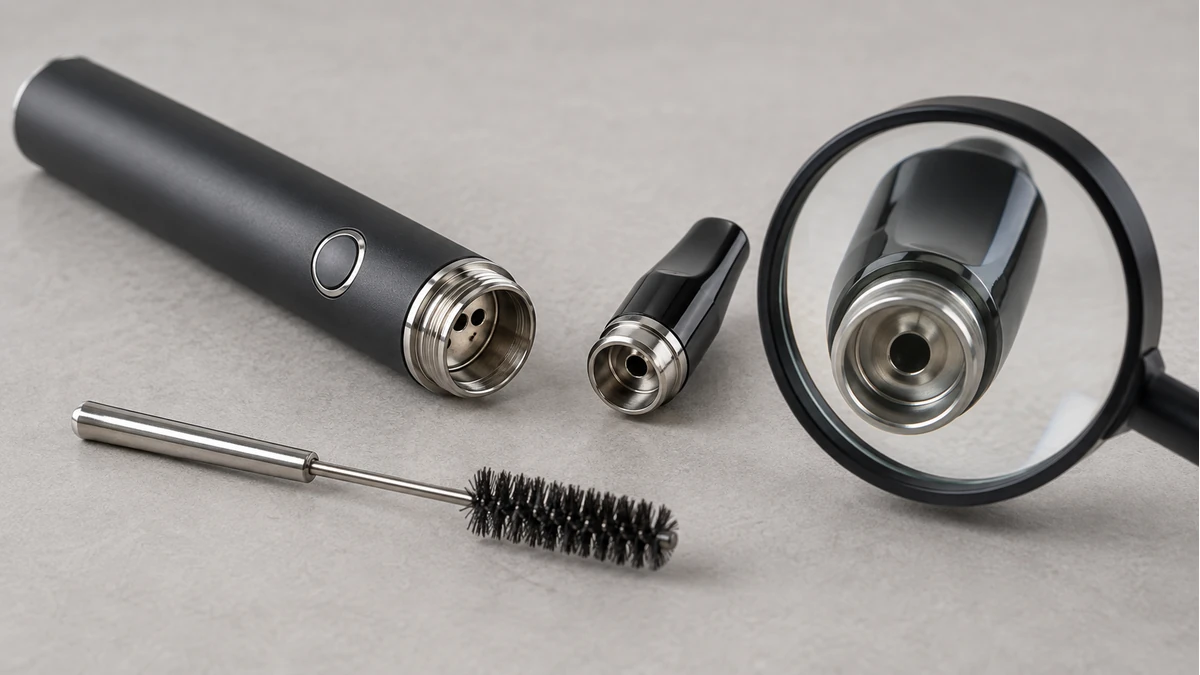
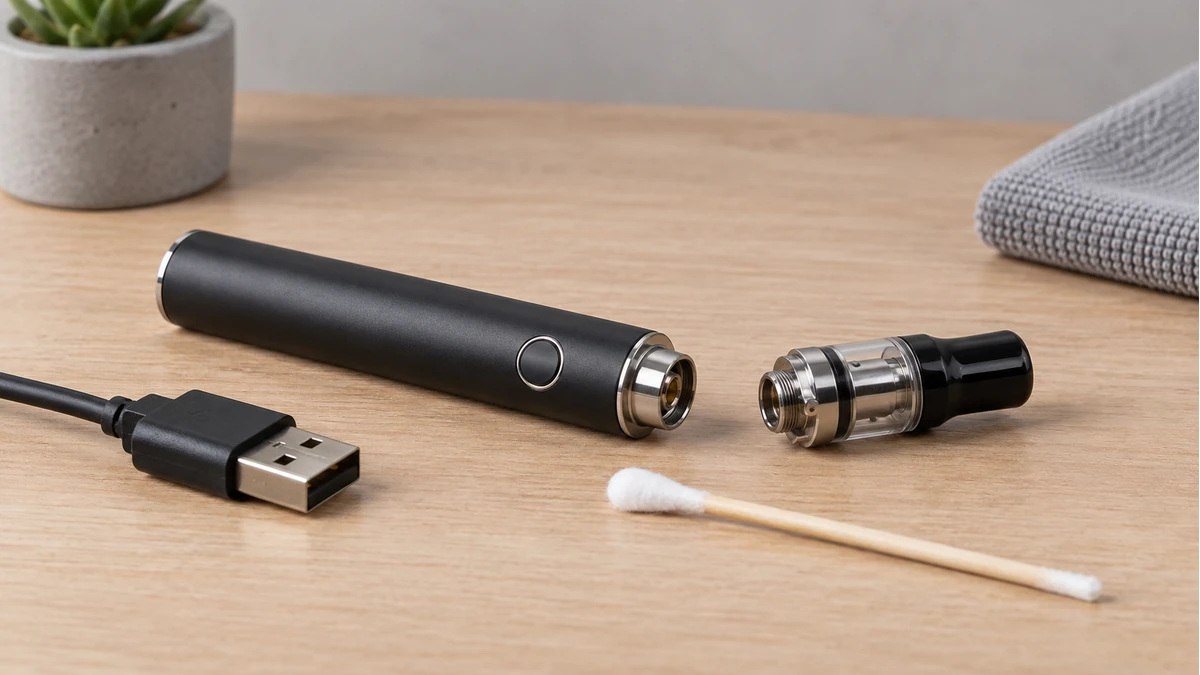
Every dab pen relies on a metal-to-metal connection between the atomizer’s threading or contact pin and the battery’s corresponding contact. Residue, condensation, or just normal oxidation on either surface can interrupt that connection enough to stop the coil from firing even though the button lights up normally. Unscrew the atomizer fully and inspect both the threads on the atomizer base and the raised contact pin inside the battery’s threaded well. A thin film of dark residue is common and usually the culprit — wipe both surfaces with a cotton swab and isopropyl alcohol, let them dry completely, and reassemble with a firm, even thread engagement.
Compact, all-in-one devices make this harder to diagnose because the components are packed tightly and the contact point isn’t always easy to see or reach. Owners working through a Yocan Stix review thread noted that the pen’s small form factor made it genuinely difficult to tell whether a weak hit was an airflow issue or a loose connection, simply because there wasn’t much room to inspect the contact point directly. If you’re troubleshooting a similarly compact pen, err on the side of fully disassembling what you can rather than guessing from the outside — a flashlight and a steady hand go further than trial and error on these smaller builds.
🧩 3.2 Battery Power and Firing Signals
If the contacts are clean and the connection is solid but you still get no heat, the battery itself may not be delivering power the way it should. Blinking LED patterns are the most direct signal here — most pens use a set number of blinks to indicate a low charge, a short-circuit protection trip, or a connection fault, and the specific pattern varies by device, so it’s worth checking your pen’s actual indicator behavior rather than assuming. A battery that fires other atomizers normally but not this one points back to the contact issue above; a battery that won’t fire anything at all points to the battery.
Charging problems compound this, since a battery sitting at a very low charge can sometimes still light the LED without delivering enough current to properly heat a coil. If you’re unsure whether you’re dealing with a charging fault versus a firing fault, it’s worth ruling out the charging side first, since that’s the easier variable to isolate — the vape not charging guide walks through how to tell a charging problem apart from a firing or contact problem using the LED behavior during charging versus during use.
🧪 4. Condensation, Residue, and Seal Problems
Not every weak draw shows up suddenly. More often, airflow degrades gradually as condensed oil and residue accumulate in the airpath, the chamber intake, and around seals over repeated use. This is a maintenance issue rather than a failure, but left unaddressed it eventually mimics a hardware fault closely enough that people replace parts that just needed cleaning.
🧩 4.1 Cleaning and Seal Maintenance
A gradual decline in draw strength over days or weeks, rather than a sudden drop, is the clearest sign this is residue-related rather than a broken part. The fix is routine disassembly and cleaning of the mouthpiece, airpath tube, and chamber intake using isopropyl alcohol and appropriate small brushes or swabs, along with periodic inspection of O-rings for cracking, flattening, or swelling that can break the seal and let air bypass the intended path. A pen with a compromised seal often produces a draw that feels airy or weak rather than fully blocked, because air is leaking in around the coil instead of being pulled properly across it. For related context, see AOVAPE’s vape-not-charging guide.
Building this into a regular routine rather than waiting for symptoms to appear keeps both the airflow and the electrical contacts in good condition at the same time, since the same residue that clogs an airpath often coats nearby contact points too. The vape cleaning kit guide covers which tools and solvents work well for this kind of maintenance without damaging coil coatings or plastic housings. For related context, see AOVAPE’s vape cleaning kit guide.
🧩 4.2 When to Stop and Replace
Cleaning and reseating parts resolves the large majority of “not pulling” complaints, but a few conditions call for stopping troubleshooting and replacing the part instead of continuing to work on it. A battery that feels warm to the touch when idle, appears swollen or misshapen, or shows any exposed or frayed wiring should be set aside rather than charged or used again. An atomizer with a visibly cracked chamber, a coil that looks scorched black and brittle rather than lightly discolored, or a persistent burnt smell that doesn’t clear after a clean is past the point where cleaning will fix it. Forcing a connection that requires excessive pressure to thread, or bypassing a battery’s safety cutoff by repeatedly re-triggering it after a blink-code lockout, isn’t a repair — it’s a way to turn a minor hardware issue into a real safety concern. For related context, see AOVAPE’s 510 wax atomizer guide.
Working through the categories above in order — total blockage, free airflow with no output, then gradual residue buildup — covers the overwhelming majority of “not pulling” situations without needing to guess at which part is at fault. Most of the time the fix is a five-minute cleaning or a re-threaded connection rather than a replacement part, but knowing when you’ve hit a genuine hardware limit is just as useful as knowing how to clean an airpath.
🧭 9. Use the Symptom to Choose the Next Check
If air will not move through the mouthpiece, stay on the airflow path: mouthpiece, internal tube, chamber openings, seals, and residue. If air moves normally but there is no output, move to the power path: battery state, indicator behavior, contact surfaces, coil seating, and documented fault signals. Mixing those paths leads to random part swapping.
Stop when a part is cracked, a seal is distorted, a contact is loose, the housing becomes unusually hot, or the manual identifies a fault that requires service. A troubleshooting guide should help isolate a component, not encourage bypassing a protection or energizing damaged hardware.
🧾 9.1 Record the State Before Disassembly
Note the light pattern, whether airflow is blocked, which parts were recently cleaned, and whether the problem followed a cartridge or coil change. That short record preserves the evidence that disappears after every component has been removed and wiped.