🔍 1. The Moment You Learn a Glass Dab Straw Isn’t a Toy
The first time most people pick up a glass dab straw, they treat it like a drinking straw with attitude. You touch a hot nail or banger to a small ball of concentrate, place the straw against the airflow, inhale, and set it down on the table exactly where it was sitting a second ago. Then you reach for it again ten seconds later without thinking, and you find out the hard way that the tip end of the tube is still carrying real heat. That small, specific moment — the surprised flinch, the quick set-down, the “huh, that’s hotter than I expected” — is basically the entire education a glass dab straw gives a new user in one motion.
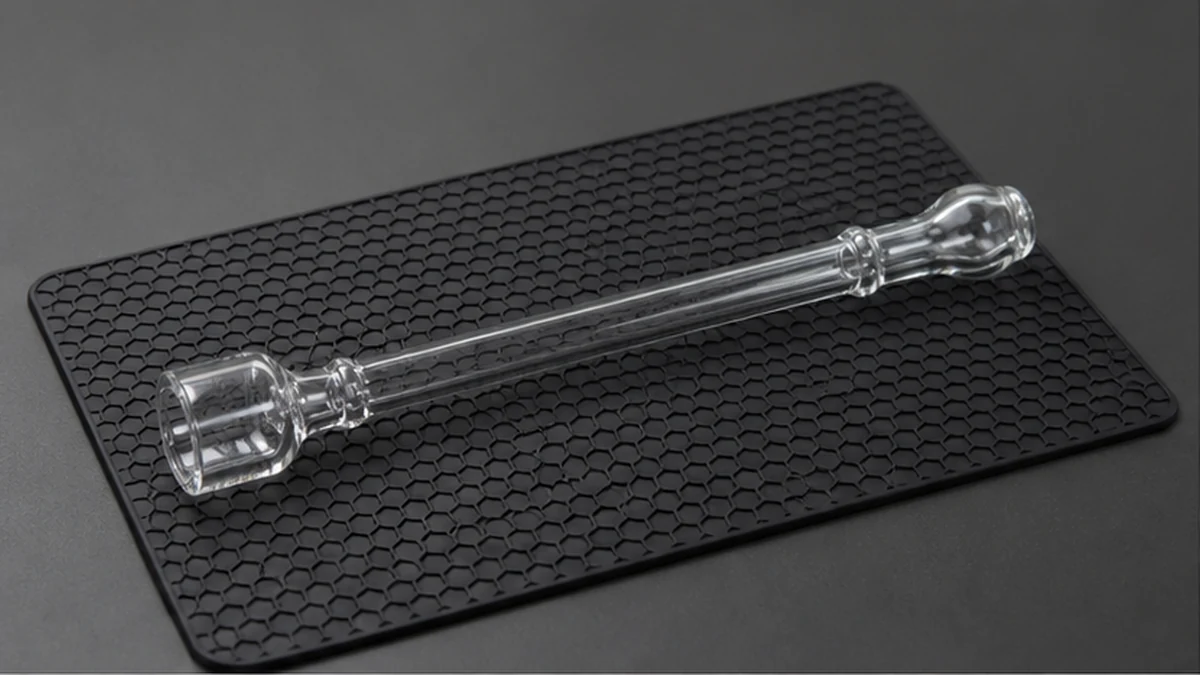
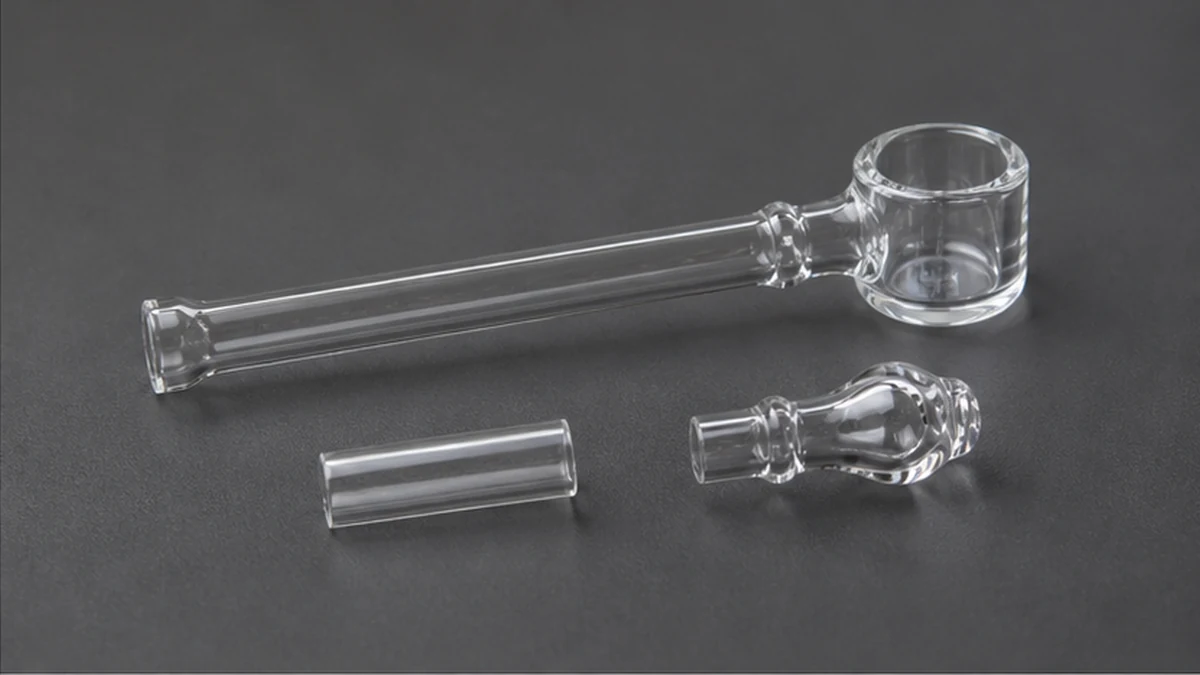
A glass dab straw earns its name honestly. It is, functionally, a straight (or gently curved) tube of borosilicate glass with a narrow tip on one end and a wider mouthpiece on the other. There’s no percolator, no water chamber, no diffuser arm. Vapor travels in a straight line from the heated surface to your mouth, which is exactly why the format has stayed popular for people who want something small, quick to use, and easy to carry — and exactly why it behaves so differently from a full rig in terms of heat and residue.
🧭 2. How a Straw Actually Differs From a Rig
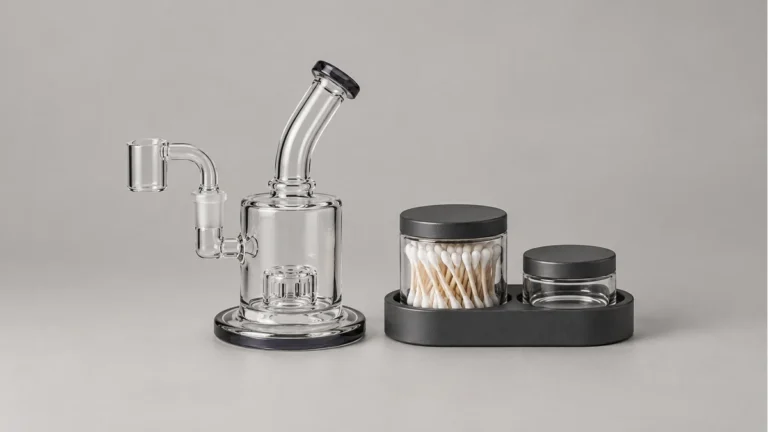
The comparison worth making isn’t glass dab straw versus “the fancy version” — it’s straight-path versus filtered-path, because that’s the mechanical difference that drives everything else. A standard rig pulls vapor down through a joint, often through water, sometimes through a percolator with multiple slits or holes, before it ever reaches the mouthpiece. That water and glasswork cools the vapor, adds some filtration, and physically separates the heated nail or banger from the section you put your lips on by a meaningful distance of glass and liquid. If you want a broader sense of how those water-based setups are built and why people choose one style of percolation over another, our overview of the different types of dab rigs covers the mechanical variety in that category.
A glass dab straw skips essentially all of that. There is no water chamber to cool the vapor path, no percolator to slow it down, and often only a few inches of glass between the heated tip and your mouth. That’s the tradeoff in one sentence: you get a lighter, more portable, easier-to-clean piece, in exchange for a shorter, hotter, more direct path with less built-in cooling. Neither approach is universally “better” — they solve different problems — but understanding that tradeoff is what makes the rest of this guide make sense.
⚙️ 3. Which Parts of the Straw Actually Get Hot
People new to the format tend to assume that only the very tip — the end you touch to the concentrate — gets hot. That’s true at the moment of contact, but it’s incomplete. Glass is a decent conductor of heat along its own length, and borosilicate in particular will carry warmth from a heated contact point back through several inches of tube before it dissipates. That means three zones deserve separate attention.
🧩 3.1 The Tip
This is the obvious one. Whether you’re heating the tip directly with a torch or touching it to an already-hot nail or banger surface, the tip itself reaches temperatures you should never touch with bare skin, and it stays hot longer than instinct suggests. A tip that looks like it’s cooled visually can still be well above comfortable touch temperature.
🧩 3.2 The Neck and Midsection
This is the zone people underestimate. Heat conducts backward through the glass, so the section just behind the tip — the part you might casually grip while adjusting your angle — can be noticeably warm even though it was never in direct contact with a flame or a heated surface. This is also the section most likely to catch a stray brush against skin or fabric if you’re not paying attention to where your hand lands.
🧩 3.3 The Mouthpiece
On a well-designed straw, the mouthpiece stays close to room temperature during normal, unhurried use, because there’s enough length between it and the heat source for the glass to shed warmth before it reaches your lips. But “well-designed” and “used correctly” both matter here. Very short straws, or rapid back-to-back sessions without a pause, reduce that buffer. If you’re pulling immediately after heating, or using a straw that’s on the shorter side, treat the mouthpiece with the same caution you’d give the neck until you’ve confirmed by touch — carefully, with a fingertip, not your lips — that it’s actually cool.
🧩 4. Why Residue Collects Exactly Where It Does
Ask any longtime concentrate user why their straw looks discolored in one specific band rather than evenly along its length, and you’ll get some version of the same answer: vapor condenses where the temperature drops fastest. In a straight tube with no water and no percolation, the vapor is hottest right at the tip and cools steadily as it travels toward your mouth. Somewhere in that cooling gradient, oils and residue in the vapor stream hit a temperature low enough to condense back into liquid and cling to the interior glass wall. That’s why you’ll typically see a darker band a short distance up from the tip rather than a uniform coating — it’s not random, it’s thermodynamics playing out inside a tube with no filtration to intercept the residue earlier.
This is also the practical argument for the straight-path design in the first place: because there’s no percolator or diffuser to catch residue in hard-to-reach chambers, everything that condenses stays in a single, visible, wipeable stretch of tube. That’s a genuine maintenance advantage over more elaborate rigs, but it only holds up if you actually clean that band regularly rather than letting it accumulate.
🛠️ 5. Cooling Before You Touch or Clean It
Cleaning a hot piece of glass is how people end up with either a burn or a crack, and sometimes both at once, so the sequence matters as much as the products you use.
- Set the straw down on a stable, heat-tolerant surface after use — not directly on fabric, plastic, or anything that could scorch or that could stick to warm glass.
- Wait. There’s no shortcut here; residual heat in the neck and tip zone needs real time to dissipate, not just the few seconds between hits.
- Check by proximity first, hovering a hand near the tip before making contact, since radiant heat gives you a warning before direct touch would.
- Once it’s confirmed cool, move to cleaning rather than letting residue sit and re-harden, which makes the eventual cleaning pass more difficult.
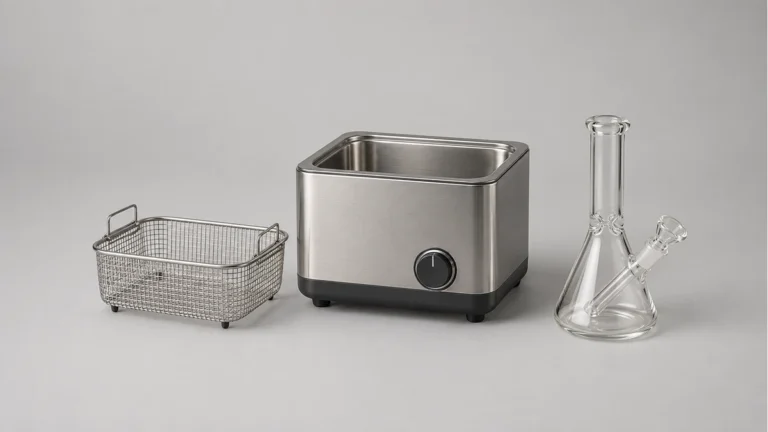
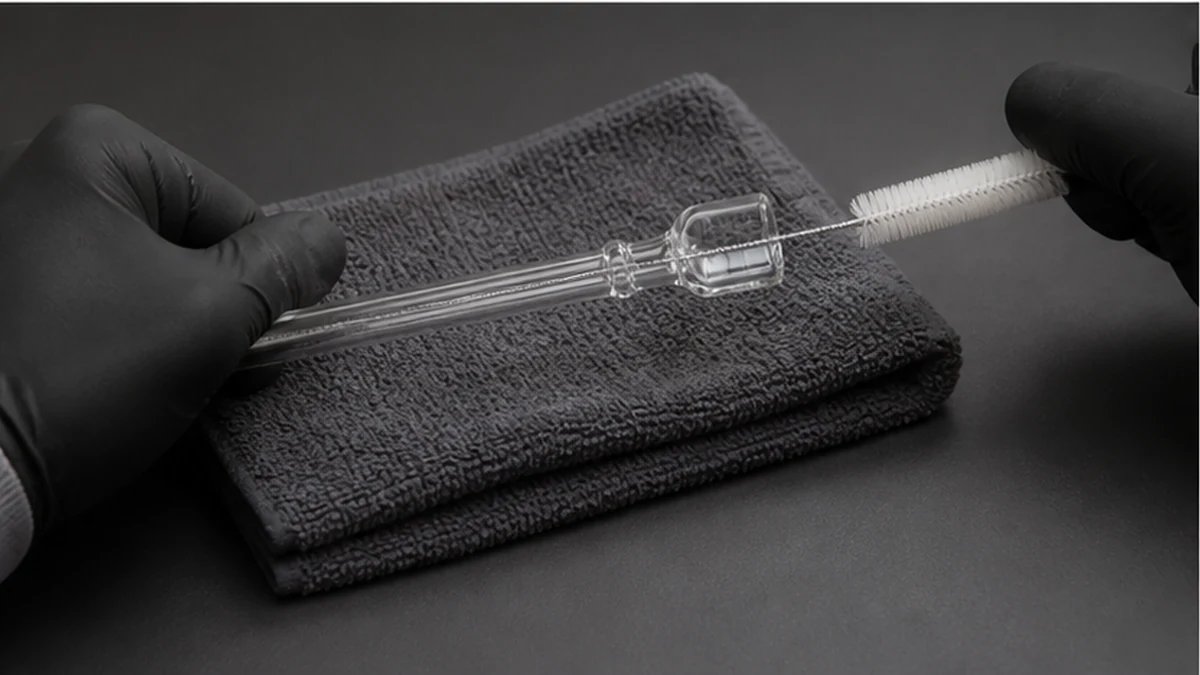
The core cleaning approach for a glass dab straw isn’t fundamentally different from the isopropyl-and-salt or dedicated-cleaner methods used on larger rigs — the tube is just smaller and usually more forgiving to reach into. If you haven’t settled on a routine, our detailed walkthrough on how to clean a dab rig covers the soaking, agitation, and rinsing steps in a way that translates directly to a straw, just with shorter soak times given the smaller residue surface area.
📐 6. Inspecting Glass Before Every Session
A quick visual and tactile check before you heat the tip takes a few seconds and heads off the most common cause of straw failure: heating glass that already has a compromised structure. Run a fingertip lightly along the tip edge and down the tube, and hold it up to light at an angle rather than straight on, since surface stress marks and hairline cracks often only show up as a faint glint rather than an obvious line.
Look specifically for:
- Chips at the tip opening, even small ones, since this is the edge exposed to the most direct, repeated heat cycling.
- Hairline cracks anywhere along the tube, which are often easier to feel as a catch under a fingernail than to see.
- Cloudy or frosted patches on the glass, which can indicate accumulated micro-stress from repeated heating and cooling cycles rather than simple residue buildup.
- Any point where the glass no longer feels uniformly smooth, including near seams or where the tube narrows toward the tip.
🔋 7. When Damaged Glass Is a Stop-Use Condition
This is the part worth being direct about: a chipped or cracked glass dab straw is not a cosmetic issue you work around, it’s a structural one you retire the piece for. Borosilicate glass is heat-resistant within a defined tolerance, but that tolerance assumes intact, continuous glass. A chip at the tip creates a stress concentration point — a place where the next heating cycle is far more likely to propagate a crack than an undamaged edge would be. A hairline crack anywhere in the tube is worse, because repeated thermal cycling (hot, then cool, then hot again) is exactly the kind of stress that turns a hairline into a full fracture, sometimes without warning, sometimes right at your mouth or in your hand.
There’s no reliable at-home test that tells you a cracked or chipped piece is “still fine” — the visible damage is already evidence that the glass has lost some of its structural margin, and further heat cycling is the fastest way to find its remaining limit the hard way. If you notice a chip, crack, frosting, or a section that no longer feels smooth, the piece should be set aside and replaced. That’s not caution for its own sake; it’s a direct response to how thermal stress accumulates in glass over repeated use.
🧼 8. Where a Straw Fits Next to Other Concentrate Tools
People often land on a glass dab straw after trying, or reading about, more automated options and deciding they want something simpler and more hands-on. It’s worth knowing what you’re opting out of. Battery-powered alternatives like electric nectar collectors handle heat regulation electronically rather than relying on a torch and manual timing, which changes both the learning curve and the maintenance routine. If you’re weighing that comparison, our explainer on how an electric nectar collector works lays out the mechanical difference clearly, which makes it easier to see exactly what a straight glass straw trades away — and gains — by staying simple.
None of this makes one format objectively correct. A straw is smaller, cheaper to replace, and easier to clean thoroughly because there’s nowhere for residue to hide. A rig or an electric device adds cooling, filtration, or automation at the cost of size and complexity. Choosing between them is really a choice about how much you value directness and portability versus built-in temperature control and smoother, cooler vapor delivery.
📦 9. Frequently Asked Questions
🧩 9.1 Is a glass dab straw safe to use without water filtration?
It’s designed to be used without water — that’s the point of the format. The absence of water means less built-in cooling, so the emphasis shifts to giving the tip and neck adequate time to cool between uses and never rushing the inhale immediately after heating.
🧩 9.2 How often should I clean a glass dab straw?
Because residue tends to concentrate in a single visible band rather than spreading through hidden chambers, a quick wipe or short soak after each session, or at minimum every few uses, keeps buildup from hardening and becoming harder to remove later.
🧩 9.3 Can a small chip be sanded down or is it always a replace situation?
A chip changes the glass’s structural profile at that point, and there’s no reliable way to restore the original heat tolerance at home. Once glass is chipped or cracked, retiring the piece is the only response that doesn’t carry ongoing risk with continued heating.
🧩 9.4 Why does my straw discolor in one spot instead of evenly?
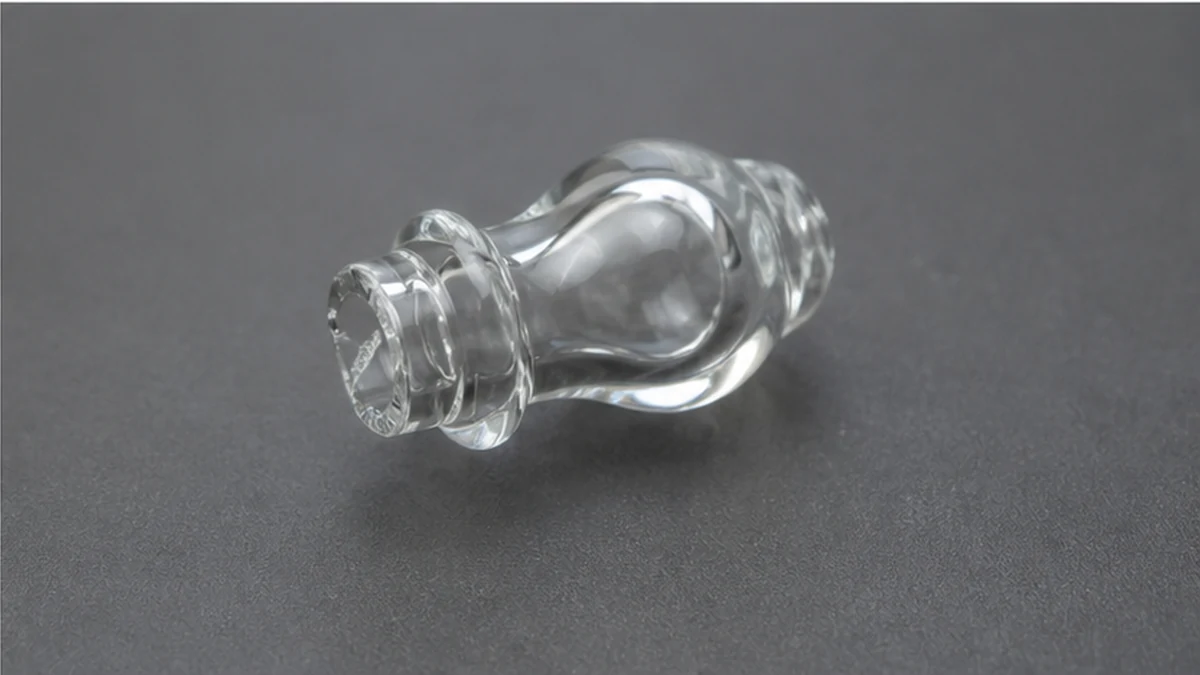
That band marks where vapor cools enough to condense inside the tube. It’s a predictable result of the straight, unfiltered airflow path rather than a sign of anything wrong with the piece.
❓ 10. The Short Version
A glass dab straw is a straightforward tool with a straightforward set of rules: the tip and neck get hot and stay that way longer than they look, residue condenses in a specific band because there’s no filtration to catch it earlier, cleaning that band regularly keeps the piece functional, and any chip or crack means the glass has already lost structural margin it isn’t getting back. Respect those four facts and the format delivers exactly what it promises — a small, direct, low-maintenance way to use concentrate. Ignore them, and the same simplicity that makes it appealing is what makes the failures, when they happen, land close to your hand and your mouth.