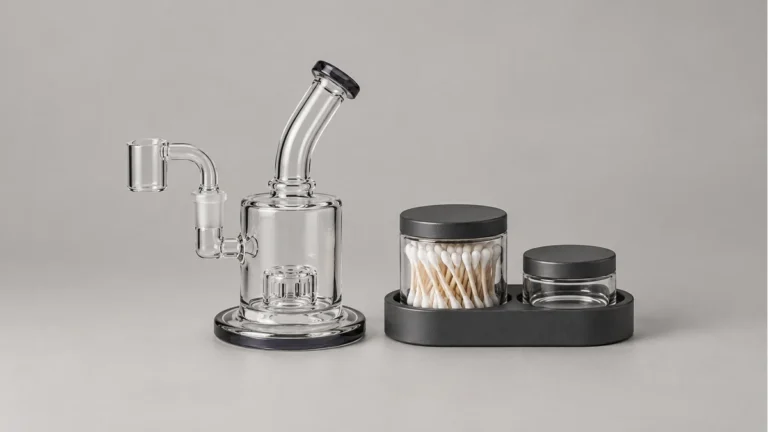
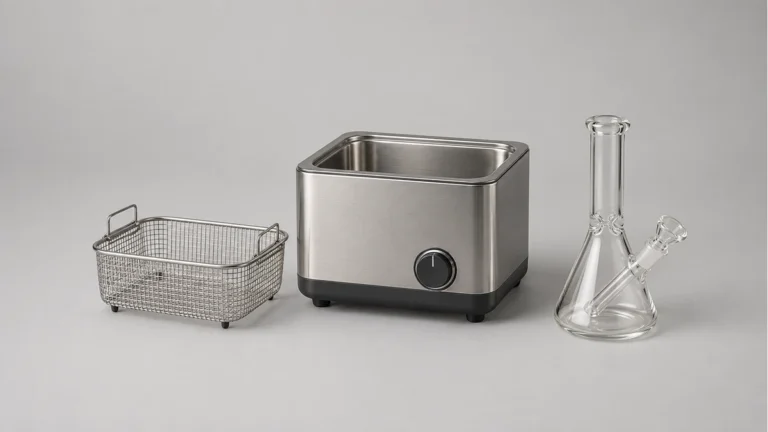
A reader wrote in after buying what the listing called a “710 dab pen,” then, a week later, a “vape pen starter kit” for a friend who vapes nicotine e-liquid. Same silhouette, same click-button battery, same magnetic connector style — so he assumed the two devices were basically interchangeable hardware wearing different labels. He tried loading a bit of leftover wax concentrate into the nicotine cartridge because it looked like the same kind of chamber. It didn’t go well: the coil flooded, the airflow choked, and the cartridge never drew cleanly again. That mix-up happens often enough that it’s worth walking through exactly where “dab pen” and “vape pen” diverge — because the confusion isn’t really about names, it’s about what’s inside the tube.
🔍 1. What “Dab Pen” Usually Means
In everyday buyer language, “dab pen” almost always refers to a portable device built to vaporize solid or semi-solid cannabis concentrate — wax, shatter, budder, rosin, or similar material — using an open heating chamber rather than a sealed, pre-filled cartridge. The chamber typically holds a small atomizer coil or a ceramic or quartz heating element that the user loads directly, often with a metal dab tool, before each session.
The defining feature isn’t the pen shape. It’s that the user is placing a raw, unmetered amount of material directly onto or against a heating surface, then closing a cap or mouthpiece over it. There’s no factory-sealed reservoir doing the metering, no wick pulling liquid at a controlled rate, and no printed nicotine strength or oil formulation on a label. The user controls how much goes in, and the device controls how hot the surface gets. Everything about how a dab pen behaves — how it primes, how it clears, how residue collects inside the chamber — follows from that open-chamber design.
🧭 2. What “Vape Pen” Can Mean
“Vape pen” is a much broader umbrella term, and that’s exactly why it causes mix-ups. It gets applied to at least three meaningfully different hardware categories, and a listing title alone often won’t tell you which one you’re looking at.
🧩 2.1 The Three Common Uses of the Term
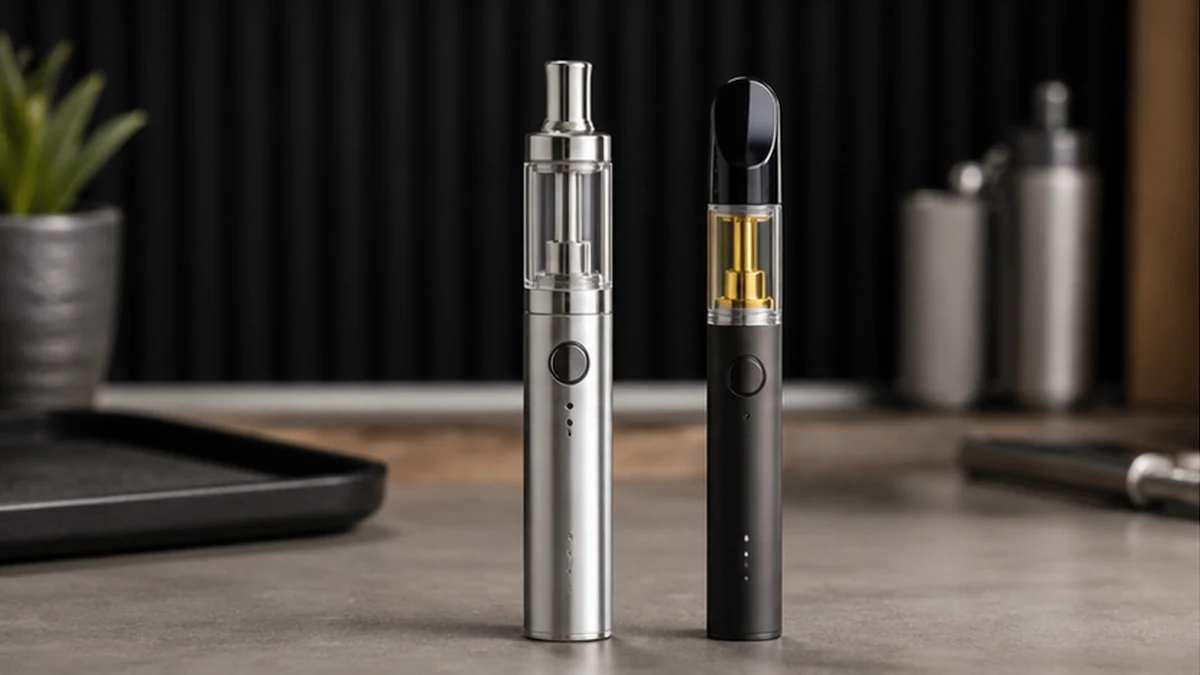
- Nicotine e-liquid vape pens — a battery paired with a coil-and-wick system designed for bottled e-liquid, either in a refillable tank or a pre-filled pod.
- Oil cartridge vape pens — a battery, usually with a 510 threaded connection, paired with a sealed or semi-sealed cartridge that already contains a viscous oil and its own small wick and coil.
- Dry herb vape pens — a battery driving a small oven or heating chamber built specifically for ground plant material, with airflow paths sized for that material’s density.
None of these three share a material path with a dab pen, and they don’t fully share one with each other either. A nicotine e-liquid coil is built around a wicking material saturated with a thin, free-flowing liquid. An oil cartridge coil is built around a wick sized for a thicker, more viscous oil, paired with a sealed reservoir that regulates how much reaches the coil. A dry herb chamber has no wick at all — it’s an oven cavity with airflow sized for loosely packed plant matter, not liquid or wax. When someone says “vape pen” without specifying which of these three they mean, they’ve told you almost nothing about what the device is actually built to hold.
🧩 2.2 Why the Listing Title Isn’t a Reliable Guide
Marketplace listings are frequently written or adapted by resellers rather than the original manufacturer, and “vape pen” gets used as a catch-all keyword because it’s what most buyers search for — regardless of whether the device inside is built for e-liquid, oil, dry herb, or concentrate. A title alone doesn’t tell you which chamber type you’re getting; only the specifics in the product description — coil type, chamber design, whether a cartridge is included or sold separately — actually narrow it down. When in doubt, the packaging and the physical chamber are more reliable indicators than the headline the listing was given.
⚙️ 3. Why the Material Path Is the Real Difference
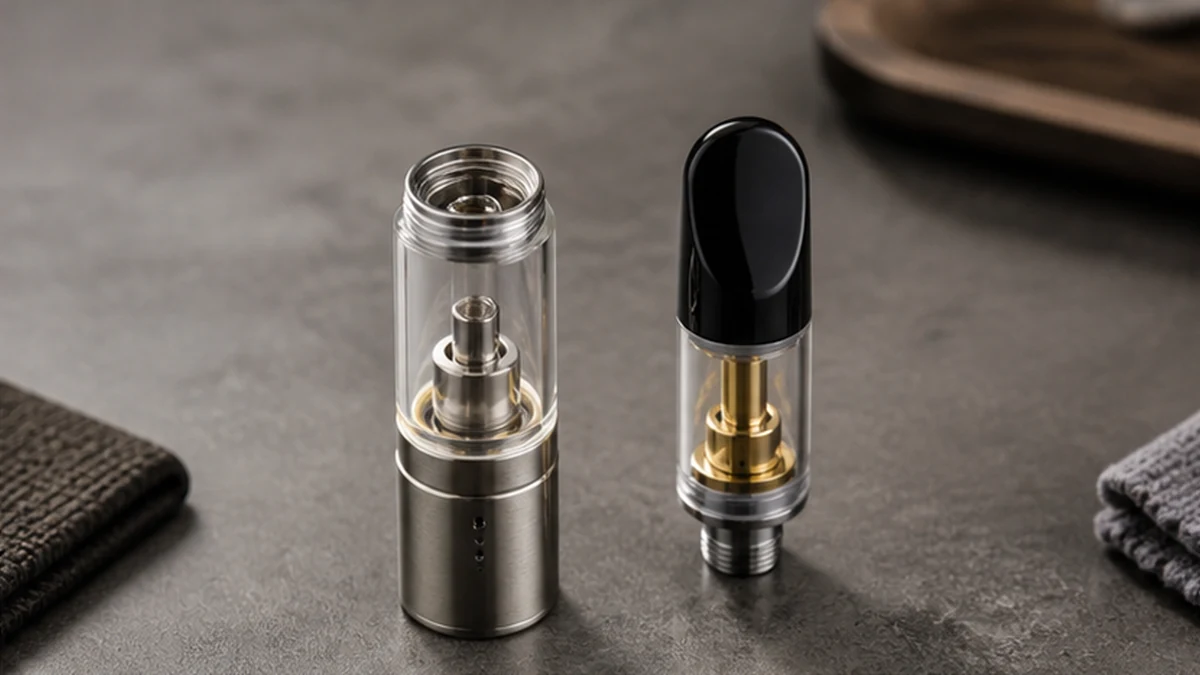
The phrase “material path” is a useful way to think about this because it describes the sequence a substance actually travels — from where it’s loaded, to how it contacts the heating element, to how vapor reaches the mouthpiece. Two devices can look nearly identical on the outside, sharing a diameter, a button placement, even a magnetic cap, and still have completely incompatible material paths on the inside.
🧩 3.1 Direct Contact vs. Wicked Delivery
A dab pen’s material path is direct: concentrate touches the coil or heating element with nothing in between, so it liquefies and vaporizes on contact the moment the button is pressed. A cartridge or pod’s material path is indirect: liquid sits in a sealed reservoir and reaches the coil only through a wick, usually cotton or ceramic, that draws it in at a controlled rate as the user inhales. That single difference — contact versus wicking — explains most of the practical gaps between the two formats, from how quickly each one heats up to what kind of residue builds up inside.
🧩 3.2 Why Wick Design Is Viscosity-Specific
A wick isn’t a neutral piece of material; it’s engineered around a specific viscosity range. Thin nicotine e-liquid saturates a cotton wick quickly and evenly. Cartridge oil, which tends to be thicker, is matched to a wick and airflow design built for that particular viscosity. Push a liquid — or worse, a solid — outside that range through the same wick, and it either saturates too slowly to keep up with the coil, or it sits on top and clogs the path entirely. The wick is doing exactly what it was built to do; the substance is simply the wrong one for the job.
🧩 4. Can Concentrate Go Into an Oil Cartridge or Pod?
This is the question that causes the most damage when people guess wrong, so it deserves a direct answer: no. Solid or semi-solid concentrate is not designed to go into a sealed oil cartridge or nicotine pod, and forcing it in tends to cause problems rather than solve them.
The reasons trace straight back to the material path differences above:
- Viscosity mismatch. Wax and shatter are far thicker and stickier than the liquid a cartridge wick is built to absorb. Instead of soaking in evenly, concentrate tends to sit on top of the wick or clog it outright.
- No open contact surface. A sealed cartridge doesn’t offer a way to place material directly on the coil the way a dab pen’s open chamber does. Any concentrate forced in has to migrate through a wick path it was never built for.
- Flooding and leaking. Because the coil can’t draw dense material at a normal rate, it’s common for the cartridge to flood, leak from the mouthpiece or base, or stop producing vapor entirely.
- Coil damage. A coil saturated with material outside its intended viscosity range tends to underperform or fail well before it would in normal use, since it isn’t operating the way its wick and heating element were designed to.
None of this comes down to technique or careful loading — it’s a structural mismatch between what a sealed reservoir-and-wick system is built to handle and what an open-chamber concentrate device is built to handle. For a closer side-by-side on how these two formats are constructed differently, the comparison in dab pen vs. cart goes further into the hardware distinctions. And for readers who want a device built around concentrate from the ground up, rather than one adapting oil cartridge hardware to a job it wasn’t designed for, the overview at concentrate vaporizer guide lays out what an open-chamber concentrate device typically includes.
🛠️ 5. Cleaning and Replacement: What Actually Wears Out
Because the material paths differ, so does the maintenance routine — and knowing which parts wear out, and which don’t, is often what separates a device that lasts from one that gets abandoned after a few weeks.
🧩 5.1 On a Dab Pen
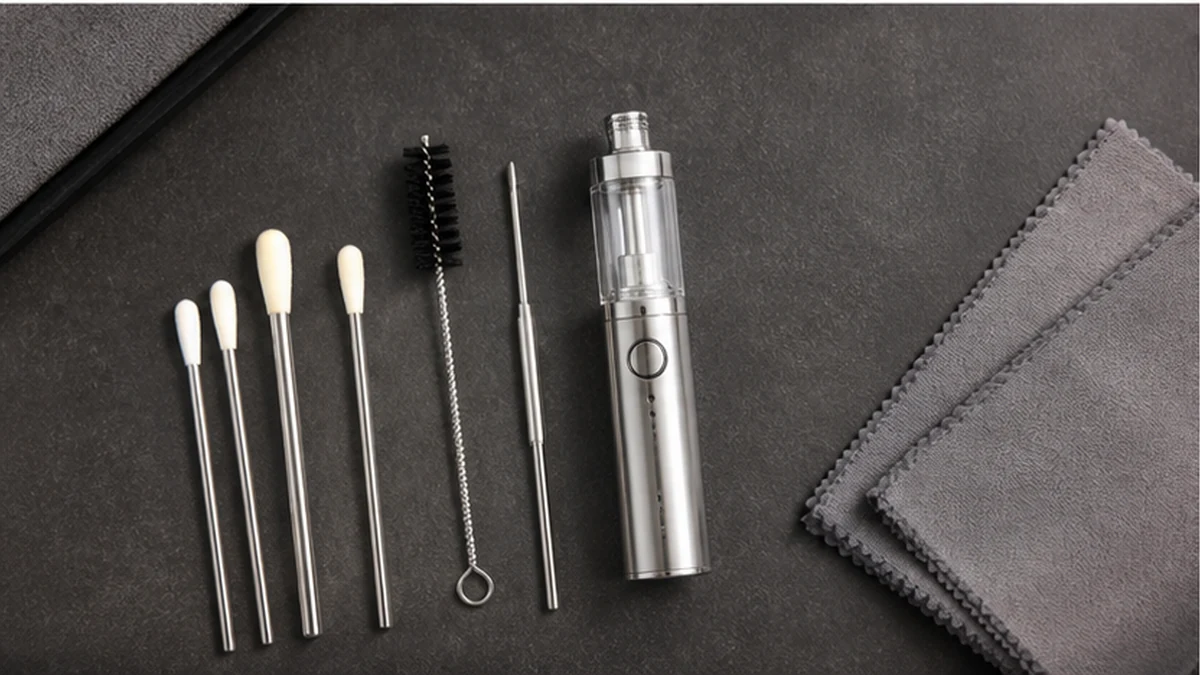
The chamber and heating element take the most direct hit. Because concentrate contacts the coil or heating surface directly, residue builds up there first, then spreads to the chamber walls and the inside of the cap or mouthpiece. A simple cleaning sequence:
- Let the device cool completely before opening the chamber.
- Wipe loose residue from the chamber walls and cap with a cotton swab.
- For sticky buildup on non-electrical parts like the cap or mouthpiece, a swab lightly dampened with isopropyl alcohol can help lift residue — let the part dry fully before reassembling.
- Avoid soaking the coil or heating element itself in liquid, since these are electrical components.
- Replace the atomizer coil when heating becomes noticeably slower or vapor production drops off, since coils are wear parts with a limited lifespan.
🧩 5.2 On a Cartridge or Pod Vape Pen
Here the wear pattern is different because the material never touches an open surface. The battery connection point — the threaded contact for a 510 cartridge, or the pod bay contacts on a pod system — is the part most likely to need attention, since it can pick up residue from leaks or general handling. The cartridge or pod itself is generally a replace-rather-than-clean component: once the coil inside it degrades or the wick dries out, there’s no practical way to service it, since both are sealed inside. Wiping the battery threads or contacts periodically, and replacing cartridges or pods when flavor or vapor output declines, covers most of what routine upkeep involves. For anyone sorting out which components are meant to be cleaned, which are meant to be replaced, and which are interchangeable across a given pen system, the breakdown at vape parts is a useful reference for separating wear items from reusable hardware.
📐 6. Frequently Asked Questions
Does a 510 thread mean two devices are compatible?
A shared 510 thread means a cartridge can physically screw onto a battery. It doesn’t mean the battery’s voltage output, the cartridge’s coil, or the intended material actually match. Threading compatibility and material compatibility are separate questions.
Can a dab pen chamber be used for anything other than concentrate?
An open concentrate chamber is built around direct-contact heating for wax-type material. It isn’t a general-purpose chamber for e-liquid or plant material, since it lacks the wicking or airflow structure those formats depend on.
Why does a device labeled “vape pen” sometimes turn out to be a dab pen?
Because “vape pen” describes a shape and general battery format more than a specific material path, some listings use it loosely across categories. The chamber or cartridge type — not the label — is what actually tells you what the device is built to hold.
Is it safe to swap batteries between a dab pen and a cartridge vape pen?
Even when the threading matches, the two batteries are often tuned for different loads. A battery calibrated for a cartridge’s wicked coil may not suit the higher draw of a dab pen’s heating element, and vice versa — a matching thread isn’t a reason to assume the pairing was intended.
How often should a dab pen chamber actually be cleaned?
There’s no fixed schedule that fits every use pattern, but a chamber that’s clearly coated in hardened residue, or producing noticeably weaker vapor than it used to, is overdue. Waiting until buildup is heavy makes cleaning slower and can affect how evenly the chamber heats, so a quick wipe-down every few sessions is easier than a deep clean after none.
🔋 7. Conclusion
The pen shape is packaging, not a promise. What actually determines whether a device belongs to the “dab pen” or “vape pen” world is the material path inside it — an open chamber built for direct-contact heating on one side, a sealed wick-and-reservoir system built for flowing liquid on the other. Checking which one you’re holding before you load anything is the difference between a device that performs the way it’s supposed to and one that floods, leaks, or burns out its coil in the first week. When a listing’s language is ambiguous, let the chamber do the talking — check it before anything else goes into it.