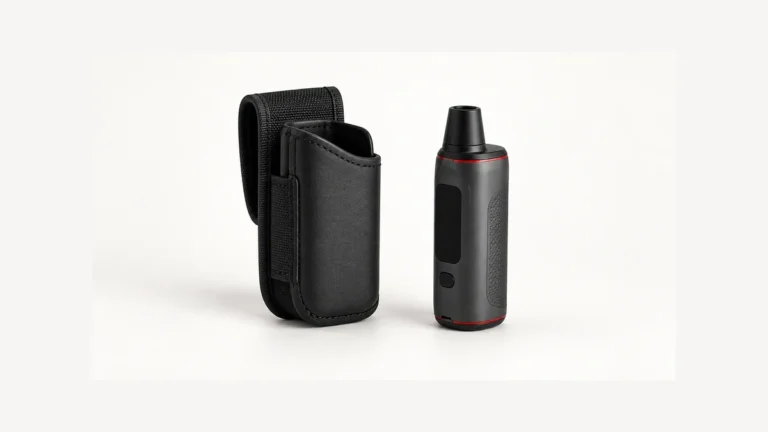
The battery indicator was already blinking when you sat down, but you figured you had a few more pulls left in it. Then the device just quit —no ramp-down, no warning chime, just a dead unit in your hand and a charging cable somewhere in another room. If you’d bought it because the listing mentioned “pass through charging” or you’d seen a USB-C port on the bottom and assumed that meant “plug it in and keep going,” this is the moment you find out whether that assumption was right. For a lot of people, it isn’t.
“Pass through charging” gets used loosely enough in vape marketing that it’s worth slowing down on what the phrase is actually supposed to describe, what a charging port does and doesn’t tell you, and why the answer to “can I use this while it’s plugged in” has to come from the device’s own documentation rather than from the shape of its charging port.
What the term is supposed to mean
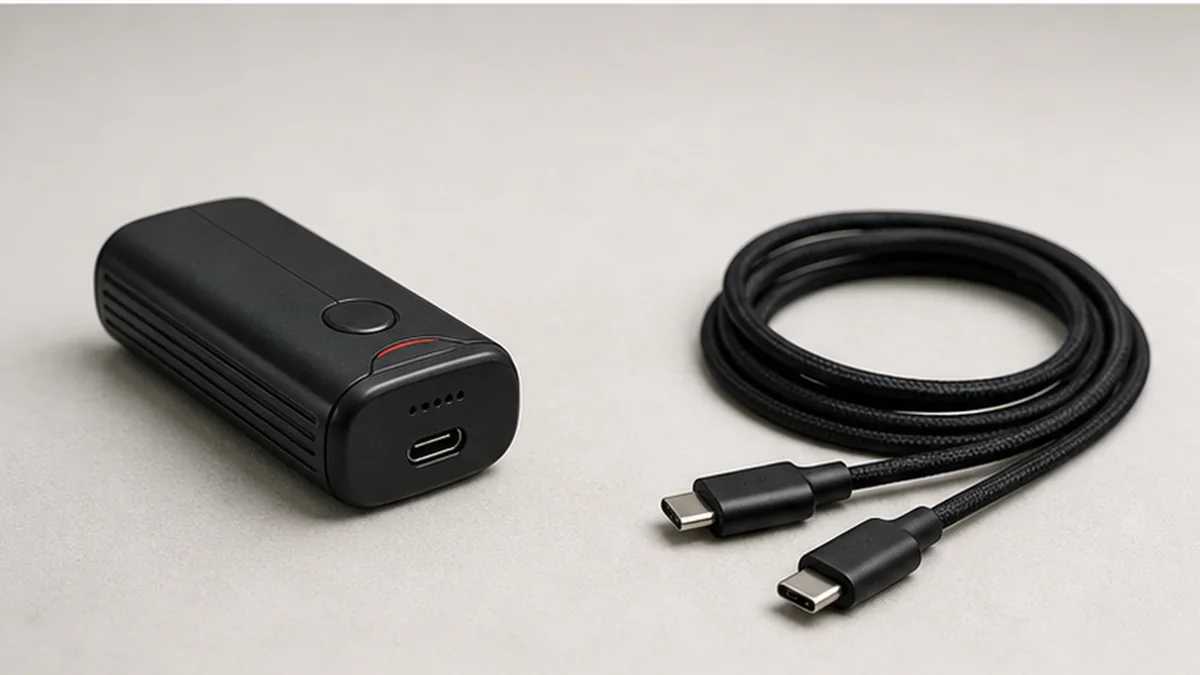
At its narrowest, pass-through charging describes a device that can be operated normally —heating, vaporizing, whatever its function is —while it’s connected to external power and charging at the same time. The idea is that you’re not locked out of the device during a charge cycle the way you would be with a simple battery-only design.
That’s a specific engineering claim, not a marketing flourish. It means the device’s internal circuitry can manage two things happening at once: current flowing in from the charger, and current flowing out to whatever draws power to run the device, without that overlap causing a fault, a shutdown, or unsafe heat buildup. Whether a given device actually does that is a function of how its power management circuit was designed, not whether it has a port you can plug a cable into.
Why a port alone doesn’t tell you anything
Nearly every rechargeable vape device sold today has some kind of charging port —USB-C, micro-USB, or a proprietary connector on the more compact pod-style units. That port exists because the device needs to recharge its lithium-ion cell. It does not exist to prove that the device can also run while that charging is happening.
Most single-cell vape batteries are built around charging circuitry designed to do one job well: bring the cell from empty to full safely, manage voltage as it climbs, and cut off at the right point. Layering “also power the heating element from the same input, at the same time, without disturbing that charge curve” on top of that is a separate design decision —and one that adds cost and complexity many manufacturers don’t build in, especially on entry-level and mid-range devices. A charging port tells you the device accepts power. It doesn’t tell you what the device does with that power once the battery already has somewhere else it needs to go.
This is also where the wording in a product listing matters more than people expect. “USB charging” and “pass through charging” get used almost interchangeably by some sellers, even though the first just describes the connector and the second describes a specific behavior during use. If a listing doesn’t clearly state that the device can be operated while charging —and doesn’t come with documentation backing that up —the safest assumption is that it can’t.
Three things that get lumped together
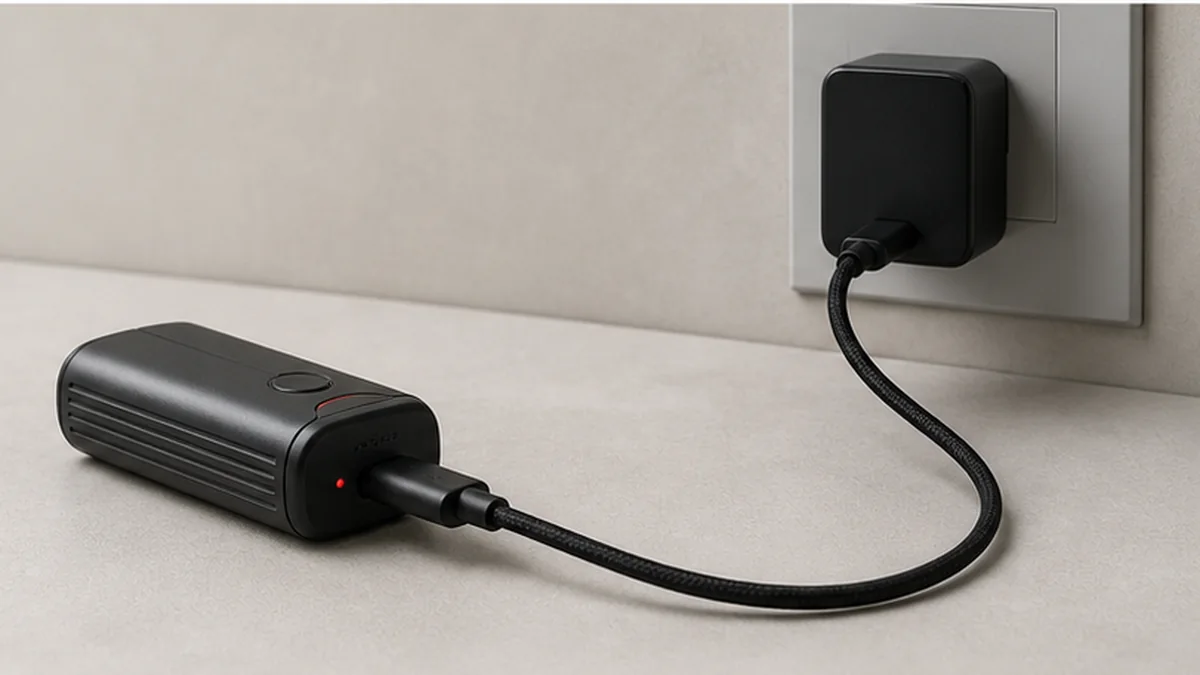
Part of the confusion comes from three genuinely different concepts getting flattened into one conversation. It’s worth separating them out.
| Concept | What’s actually happening | What it tells you |
|---|---|---|
| Charging | The battery is receiving current from an external source and its stored charge is increasing. | The device has a charging circuit. Says nothing about whether it can be used at the same time. |
| Operating from external power (pass-through, loosely used) | The device is drawing power to run while a cable is connected, whether or not the battery itself is actively being replenished at that exact moment. | Requires a circuit specifically designed to route power to both the load and the battery without conflict. Not present just because a port exists. |
| True power-path / bypass charging | The device’s circuitry can run directly from the external power source with the battery effectively taken out of the active current path, rather than being charged and discharged simultaneously. | The most deliberate version of this feature. Found in some higher-end electronics and specific chargers designed for it —not something to assume any given battery or vape device implements just because “pass through” appears somewhere in its marketing. |
None of this is universal across devices that call themselves “pass through capable.” Some products that use the term really do mean the middle or third row. Others use it more casually to mean “you can technically keep the cable connected and the screen stays on,” which is a much weaker claim. The label alone can’t tell you which one you’re getting —only the manufacturer’s manual or spec sheet can.
What people are actually running into
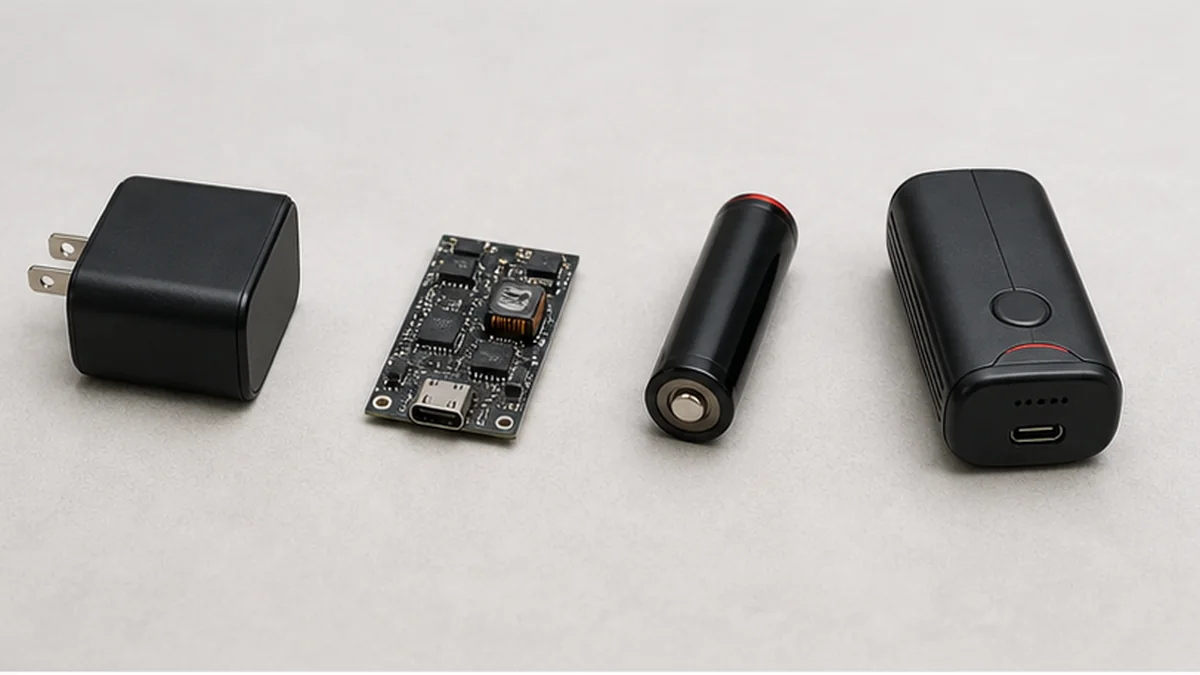
A lot of the frustration behind this search isn’t really about the technical definition —it’s about battery life becoming the bottleneck in how a device gets used. Someone with a heavy-use dry herb vaporizer that needs several charges a day isn’t necessarily looking for a device that can be operated mid-charge; they’re looking for a way to stop babysitting a charging cable altogether, whether that means a swappable battery, a faster charge time, or just a bigger cell to begin with. That’s a real and understandable frustration, but it’s a different problem than pass-through charging solves, and it’s worth being honest that they don’t always overlap. If raw capacity and charge frequency are the actual pain point, that’s a mAh battery guide question more than a pass-through one.
There’s also a recurring safety question —is it actually okay to use a device while it’s charging, assuming it technically powers on? That’s not a question with a single universal answer, because it depends entirely on how that specific device’s circuitry was designed and rated. What’s true in general, per Battery University’s overview of lithium-ion charging, is that charging and discharging a cell simultaneously puts more demand on it than either process alone, and can generate more heat and alter how the charge cycle behaves compared to charging at rest. That doesn’t mean every device that allows it is unsafe —it means the margin for error is smaller, which is exactly why manufacturers that build genuine pass-through support tend to engineer and rate the circuit for it deliberately, rather than leaving it to chance.
And then there’s the bypass question directly —does “pass through” mean the battery gets skipped entirely? Sometimes, in the true power-path sense described above. But it’s not accurate to say that’s what pass-through always means. Plenty of devices marketed with the term are still routing current through the battery while it charges, just tolerating the simultaneous load rather than truly bypassing the cell. Treating “pass through” as a guarantee of bypass behavior is one of the more common misreadings of the term.
What actually governs the answer
For any specific device, the manufacturer’s documentation is the only reliable source —not the product name, not a forum thread about a similar-sounding model, and not the presence of a familiar connector. If a manual explicitly states the device supports operation while charging, and gives any conditions around that (a specific charger, a specific cable, an ambient temperature range), those conditions matter and shouldn’t be ignored because the general behavior “worked” once.
If documentation doesn’t address it one way or the other, that absence is itself informative —it usually means the safer assumption is to charge the device with it powered off, the way most rechargeable electronics with a single lithium-ion cell are designed to be used. This is also true for external batteries and threaded cells, where the charger and the battery need to be matched on their own terms; see the vape battery charger guide and 510 thread batteries pages for how that compatibility question works outside of the pass-through question specifically.
As for AOVAPE’s own lineup —we don’t currently have a verified model where pass-through operation is documented and rated by us as a supported feature, so we’re not going to claim one here just to answer the question neatly. If that changes for a specific product, it’ll be stated in that product’s own documentation, not implied by a port. If you’re trying to confirm whether a particular unit you’re using or sourcing supports it, contact AOVAPE and we can point you to what’s actually documented for that model rather than guessing from the connector.
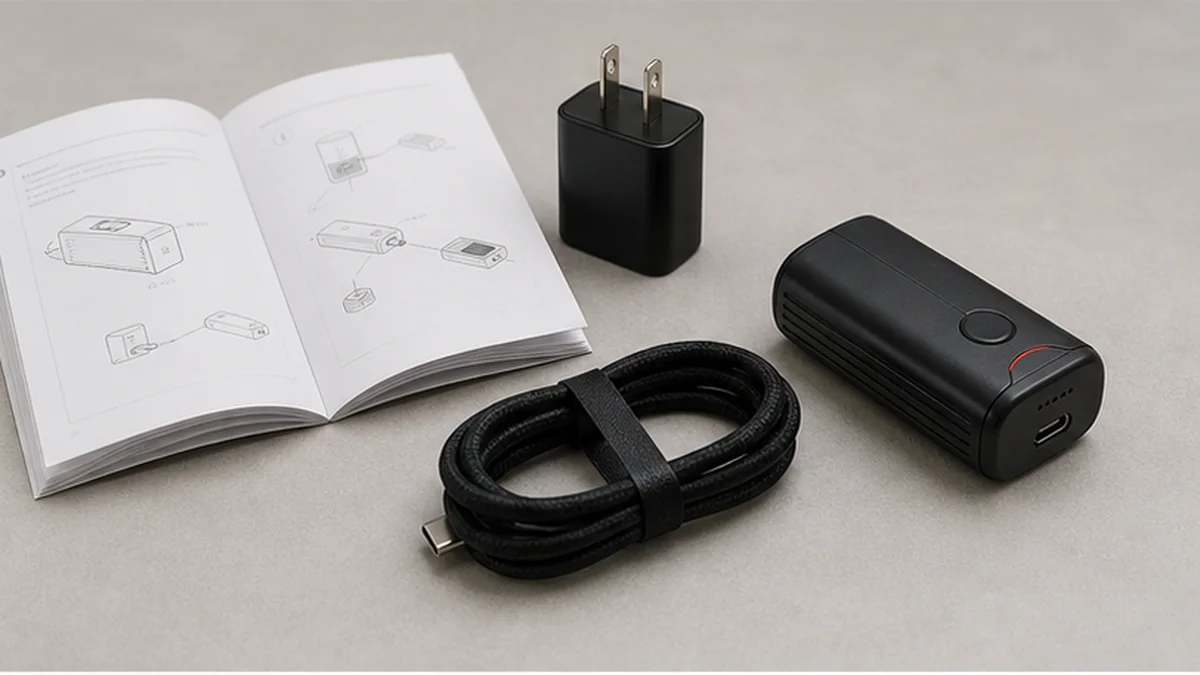
A quick way to check before you rely on it
- Find the device’s actual manual or manufacturer spec sheet —not a retailer’s product description, not a forum summary.
- Look specifically for language about operating, vaping, or heating while connected to power —not just “USB rechargeable” or “USB-C charging,” which describe the port, not the behavior.
- Note any conditions attached to that claim, such as a required charger, cable type, or power rating, and follow them exactly.
- If the manual is silent on the question, treat that as a “no” rather than assuming it’s allowed because the device happens to power on with a cable connected.
- Watch for unusual heat, a device that feels warmer than normal during a charge, or charging behavior that seems inconsistent —and stop and unplug if anything feels off, regardless of what the marketing said.
None of this is complicated once it’s separated out. A charging port is just a port. Pass-through charging is a specific, documented capability, and true power-path or bypass behavior is a more specific claim still. The device’s own manual is what settles which of those you actually have —everything else, including the connector on the bottom, is a guess.