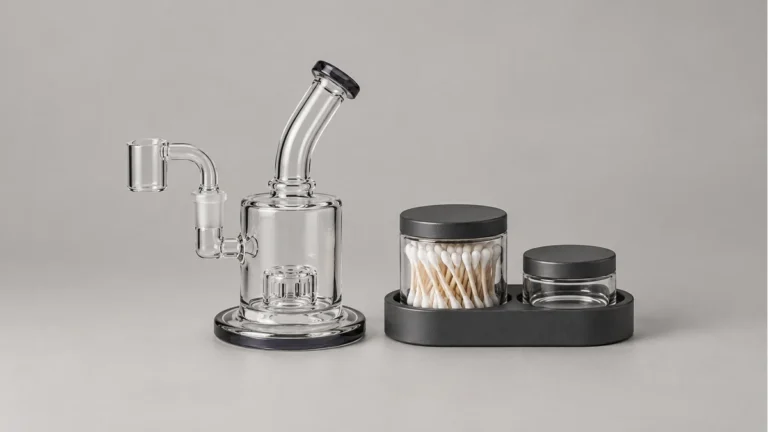
Type “resin dabbing tool” into a search bar and you’ll get two very different families of results: tools built for dabbing concentrate that happen to have a resin-cast decorative handle, and tools meant to help someone work with resin itself — the epoxy or UV-cure kind used in jewelry and craft projects. The phrase doesn’t specify which one, and sellers rarely clarify it either. Before comparing any specific product, it’s worth settling which tool you’re actually looking for, because the evaluation criteria for each are almost entirely different.
This guide treats the ambiguity as the starting point rather than a footnote. It separates the decorative handle from the working tip, walks through what each part should disclose, and flags the places where marketing language tends to outrun what a material can actually do.
🔍 1. Why the Search Term Splits Into Two Products
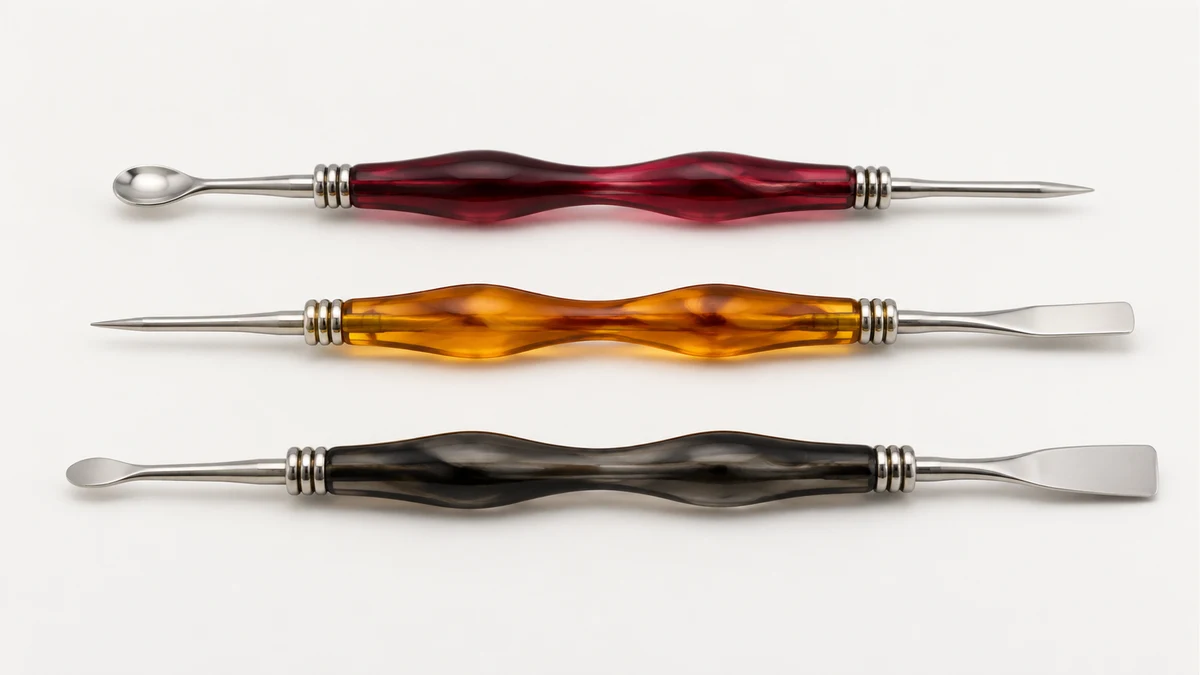
“Resin” is doing double duty in this phrase. In the dab-tool world, resin usually describes the handle — a poured, often colorful acrylic or polyester-resin grip attached to a metal or glass working end. In the craft world, “resin” is the working material itself, and a “resin tool” is something designed to mix, pour, spread, or pop bubbles in liquid resin before it cures. A single search result page can mix both without warning.
🛠️ 1.1 The Dabbing-Accessory Reading
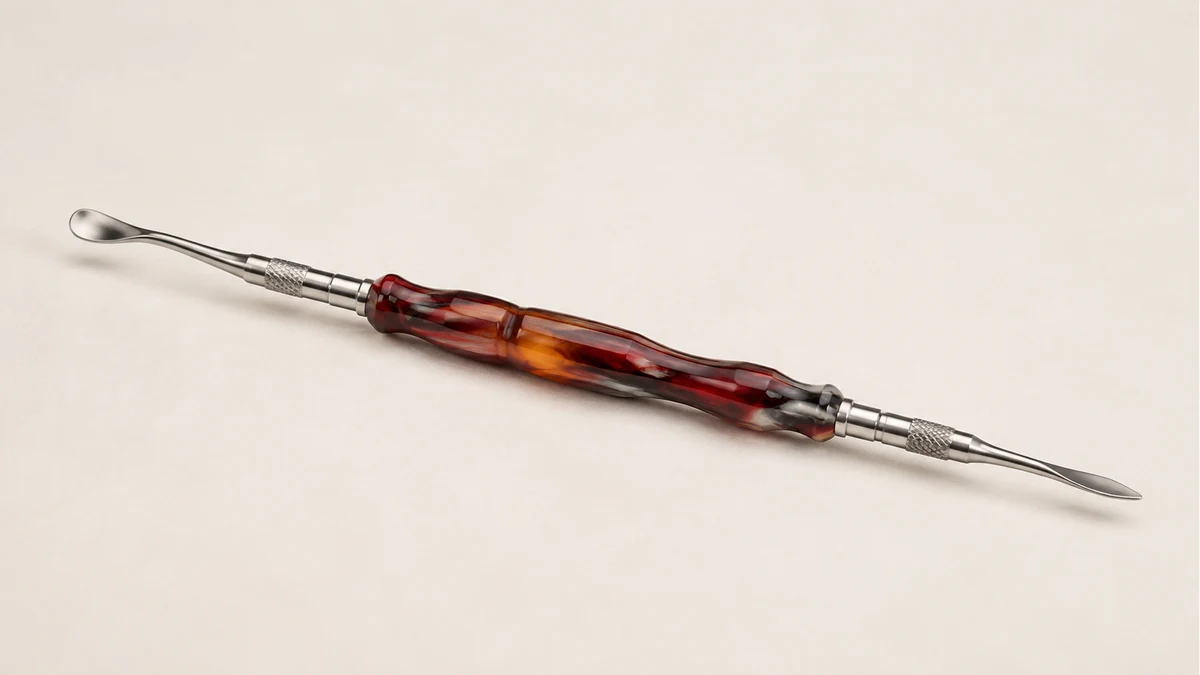
Here, “resin dabbing tool” means a pick, scraper, or spatula used for handling concentrate, where the handle happens to be cast from colored resin for a decorative, often collectible look. The working tip is usually metal (titanium or stainless steel) or glass, attached to that resin handle.
🎨 1.2 The Craft-Material Reading
Here it means a tool intended for use with liquid resin during curing — stir sticks, spreaders, bubble-popping tools, or silicone-tipped applicators. These are sold in craft and jewelry-making contexts, and their working ends are chosen specifically to resist sticking to uncured resin, not to handle heated concentrate.
If you’re shopping from a search result, the product title alone often isn’t enough to tell you which category you’re in. Photos, listed materials, and category placement (dab accessories vs. craft supplies) are more reliable signals than the phrase itself.
🧭 2. The Questions Hidden Inside the Search Term
The term becomes clearer when it is split into four practical questions: what the decoration is made from, how the handle changes balance, how the working tip is attached, and which end contacts sticky material.
✨ 2.1 UV-Resin Decoration on Dab Tools
A recurring thread topic is people casting their own UV resin over a dab tool handle — embedding glitter, dried flowers, or pigment — as a DIY decorative project. This confirms that “resin” as decoration is a deliberate, hobbyist-driven category, separate from anything related to concentrate handling. It also means some “resin dabbing tools” on the market started as a craft technique before becoming a manufactured product line.
⚖️ 2.2 Top-Heavy Handles
A thick decorative handle can move the center of mass away from the working tip. A full-length side view and the product weight are more useful than a close-up beauty shot when evaluating that balance.
🔗 2.3 Attachment Methods
How the metal or glass tip connects to the resin handle — embedded during the pour, press-fit into a pre-drilled channel, or glued after curing — comes up repeatedly. Users care about this because it affects durability, wobble over time, and whether the tip can loosen with repeated use.
🧲 2.4 Sticky Material Handling
Comments about concentrate sticking to certain tip shapes or textures appear frequently. This is a working-tip issue, not a handle issue, but it’s often discussed in the same thread as handle aesthetics because people are describing one tool end to end.
🛠️ 3. Evaluating the Working Tip on Its Own
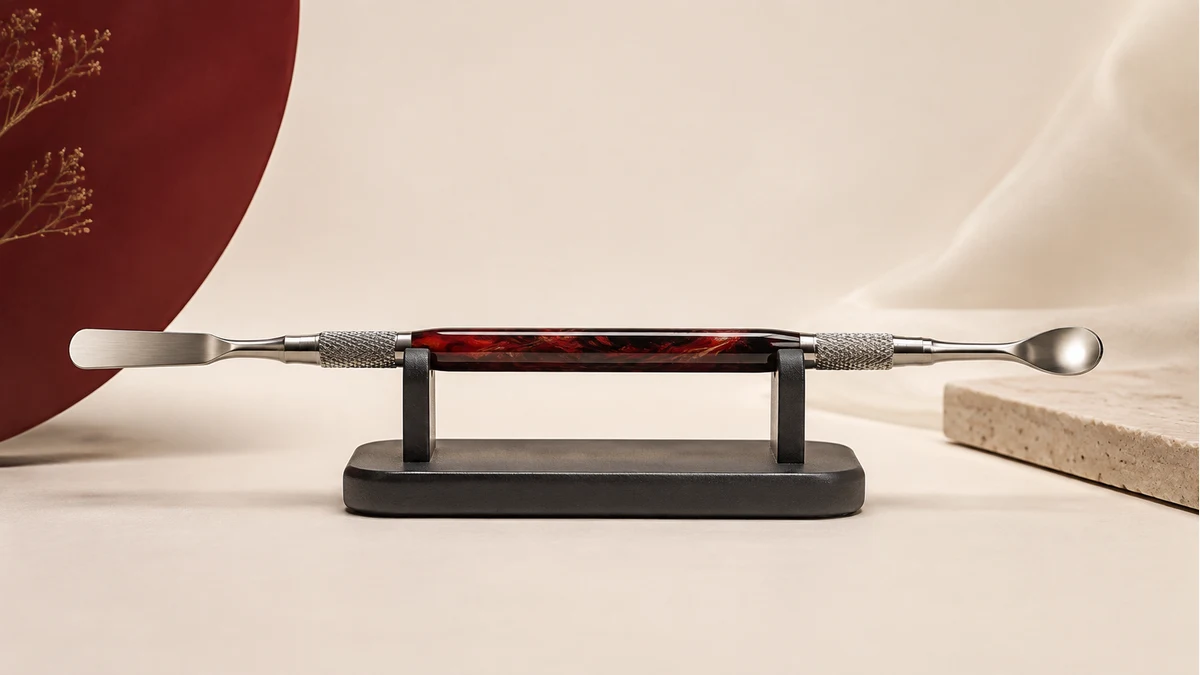
Set the decorative handle aside for a moment. The working tip is the part that actually contacts concentrate, and it deserves its own checklist.
🧾 3.1 Material Disclosure
A listing should name the tip material specifically — titanium, stainless steel, borosilicate glass — rather than using vague terms like “premium metal” or “durable alloy.” If a listing won’t name the material, treat that as missing information rather than filling in an assumption. This is also where a broader look at tip and tool construction helps; the dab tools guide breaks down common tip materials and shapes in more detail.
📏 3.2 Distance From the Working End
How much of the tool is metal or glass versus how much is resin matters for two reasons: heat exposure and hand placement. A short metal tip with the resin handle starting close behind it puts the decorative material nearer to whatever the tip picks up in temperature or residue. A longer metal shaft keeps more distance between the two. Listings rarely state this measurement outright, so it’s worth checking photos for a visible ratio between tip length and handle length.
🌡️ 3.3 Thermal Separation
This is the single most important thing to verify and the easiest thing for marketing copy to gloss over. Nothing about an unspecified resin handle establishes a temperature rating or contact suitability. Those properties depend on the exact formulation and cure process, so they require documentation for that exact product. A metal tip transfers heat back through its shaft, and if the resin handle starts too close to the tip, that heat has somewhere to go. Don’t rely on general claims like “heat-resistant resin” without a specification sheet, a temperature threshold, or a named testing standard behind it.
🎨 4. Evaluating the Decorative Handle on Its Own
Once the tip is assessed, the handle gets its own separate set of questions — these are about ergonomics, construction, and longevity, not performance.
⚖️ 4.1 Balance
Because a decorative handle can be top-heavy, balance is worth checking directly. A resin handle with embedded glitter, stones, or thick pours can shift a tool’s center of gravity toward the grip end. If a product listing includes total weight or a side-profile photo, compare the visual bulk of the handle to the length of the working tip. A handle that looks disproportionately large relative to the tip is a reasonable flag for top-heaviness.
✋ 4.2 Grip and Surface
Cast resin can be smooth, faceted, or textured depending on the mold used. Smooth, glossy resin can be slippery when hands are damp or when residue transfers from the tip during use. A textured or faceted surface tends to offer more purchase, but this is a preference call rather than a universal rule — some people prefer the smooth finish and simply keep the tool dry between uses.
🧩 4.3 Seams and Mold Lines
Resin handles are cast in molds, and visible seams or mold lines are common, especially on lower-cost pours. These aren’t purely cosmetic — a rough seam can catch on fingers or fabric in a pocket or storage bag. Close-up photos of the handle, not just the overall tool, are the best way to check for this before buying.
🔩 4.4 Attachment Integrity
Whether the tip is embedded during the pour or inserted afterward affects how securely it stays put. An embedded tip and a post-pour insertion use different retention geometries; neither method proves durability without construction details or testing. Since this isn’t usually stated in a listing, a wobble-free feel in photos or video, and buyer feedback specifically mentioning looseness over time, are the more reliable signals.
🧼 5. Cleanability and Sticky Material Handling
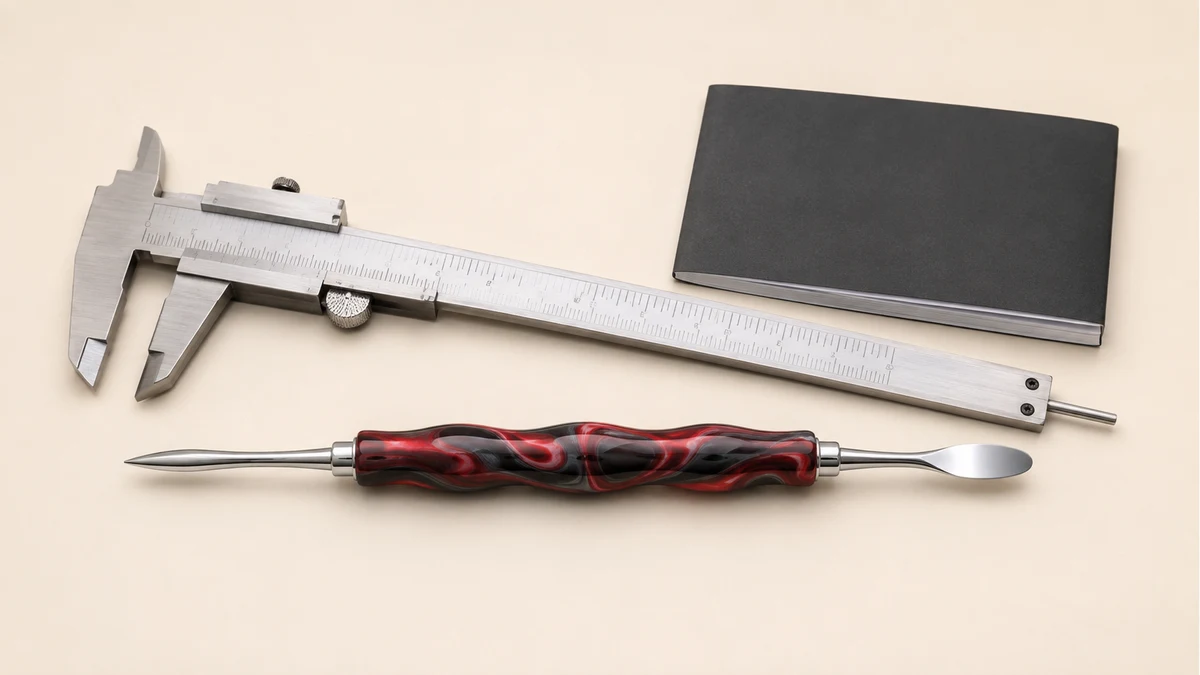
Sticky material handling is primarily a tip-design question, but the handle affects overall cleanability too.
🥄 5.1 Tip Shape and Residue
Flat, wide tips tend to collect more surface residue than narrow or pointed ones, simply because there’s more surface area for material to sit on. Tips with sharper edges or grooves can be harder to fully clean than smooth, rounded profiles. None of this is unique to resin-handled tools — it’s a general tip-shape consideration — but it becomes more relevant here because whatever cleaning method is used on the tip shouldn’t reach the resin handle.
🧴 5.2 Check Cleaning Compatibility
Isopropyl alcohol and other solvents commonly used to clean metal or glass tips can dull, cloud, or degrade cast resin surfaces over repeated exposure. If a tool has a resin handle close to the tip, cleaning it without saturating or dipping the handle end takes more care than cleaning an all-metal tool would. Wiping the tip end only, rather than immersing the whole tool, reduces that risk.
💧 5.3 Drying and Handling After Cleaning
Resin can also be sensitive to moisture trapped against a seam or mold line over time. Letting the tip dry fully before the tool goes back into a pouch or holder avoids trapping residual solvent or moisture against the resin.
📦 6. Storage Considerations
Storage matters more for resin-handled tools than for plain metal ones, because the handle is the part most likely to show wear.
🧵 6.1 Preventing Scratches
Loose storage alongside other tools or hard objects can scratch a glossy resin finish. A dedicated slot, sleeve, or divider reduces surface contact during transport or storage.
☀️ 6.2 Follow Documented Storage Limits
Resin can warp, yellow, or become brittle with prolonged heat or UV exposure — leaving a tool in a hot car or on a sunlit windowsill isn’t a good long-term storage choice, independent of anything related to the tip. This is a property of the resin itself, not something specific to dab tools, but it’s easy to overlook when storage habits are built around convenience rather than material sensitivity.
🗂️ 6.3 Organized Storage for Multi-Tool Kits
If a resin-handled tool is one piece in a larger kit, a case or holder designed with separate compartments keeps decorative handles from knocking against each other or against metal tips. For a closer look at organized storage options and what to check in a holder’s construction, see the dab tool holder guide.
📋 7. A Practical Checklist Before Buying
Given everything above, a short list of questions can be worked through against any specific listing before making a decision.
- Is this listing describing a dab accessory with a resin handle, or a craft tool meant for working with liquid resin?
- Does the listing name the tip material specifically, rather than using vague descriptors?
- How much distance is there between the tip and where the resin handle begins?
- Does the seller make any heat-safety or food-safety claim about the resin, and if so, is it backed by a specification sheet or named standard rather than just marketing language?
- Do the photos show visible mold seams, and if so, where are they positioned relative to the grip?
- Is the tip embedded in the resin or attached afterward, and does buyer feedback mention looseness over time?
- Does the handle look disproportionately heavy or large relative to the tip, based on photos?
🧩 8. Where a Resin-Handled Tool Fits Into a Broader Kit
A single dabbing tool, resin-handled or otherwise, is rarely used in isolation — most people end up with a small kit of tools with different tip shapes for different tasks, plus a way to store them together. If the appeal of a resin handle is partly aesthetic, it’s also worth considering whether a set of tools with matching or coordinated finishes is available, and how they’d be organized. For readers who want a tool with a specific decorative theme or handle style rather than choosing from stock options, custom-built tools are also an option worth understanding before committing to a mass-market pick — the custom dab tools guide covers what’s typically customizable and what questions to ask a maker.
✅ 9. Bringing the Two Halves Back Together
The working tip and the decorative handle answer to different standards. The tip’s material, shape, and distance from the handle determine how it performs and how safely it can be cleaned. The handle’s balance, seams, and attachment determine how comfortable and durable the tool feels over time — and how carefully it needs to be treated during cleaning and storage. Neither half should be evaluated using assumptions borrowed from the other, and no resin handle should be assumed heat-safe, food-safe, or suitable for contact with anything hot without documentation from the manufacturer stating exactly that, for that exact product. Reading a listing with both halves in mind, rather than treating “resin dabbing tool” as a single uniform category, is what separates an informed choice from a guess based on a product photo.