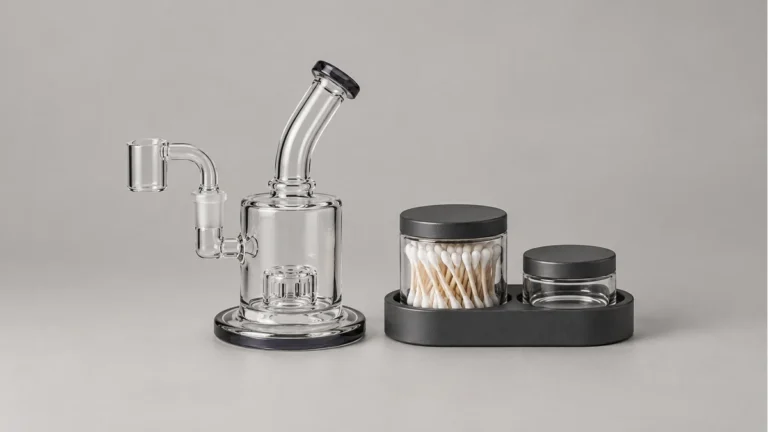
Search for “glass 510 e-nail” and you’ll land on listings that combine three separate ideas into one product name: a glass water attachment, a 510 threaded connector, and an e-nail heating system. Each term describes a different part of a dab setup, and they don’t always belong to the same physical piece. Understanding where one component ends and the next begins is the difference between ordering a part that fits your setup and ordering one that looks right in a photo but doesn’t match anything you already own.
This guide breaks the phrase into its three components, shows where confusion tends to start (often in forum threads where people are troubleshooting mismatched gear), and gives you a way to map any listing against the parts you actually need to identify before buying.
🧩 1. Why “Glass 510 E-Nail” Describes Three Things, Not One
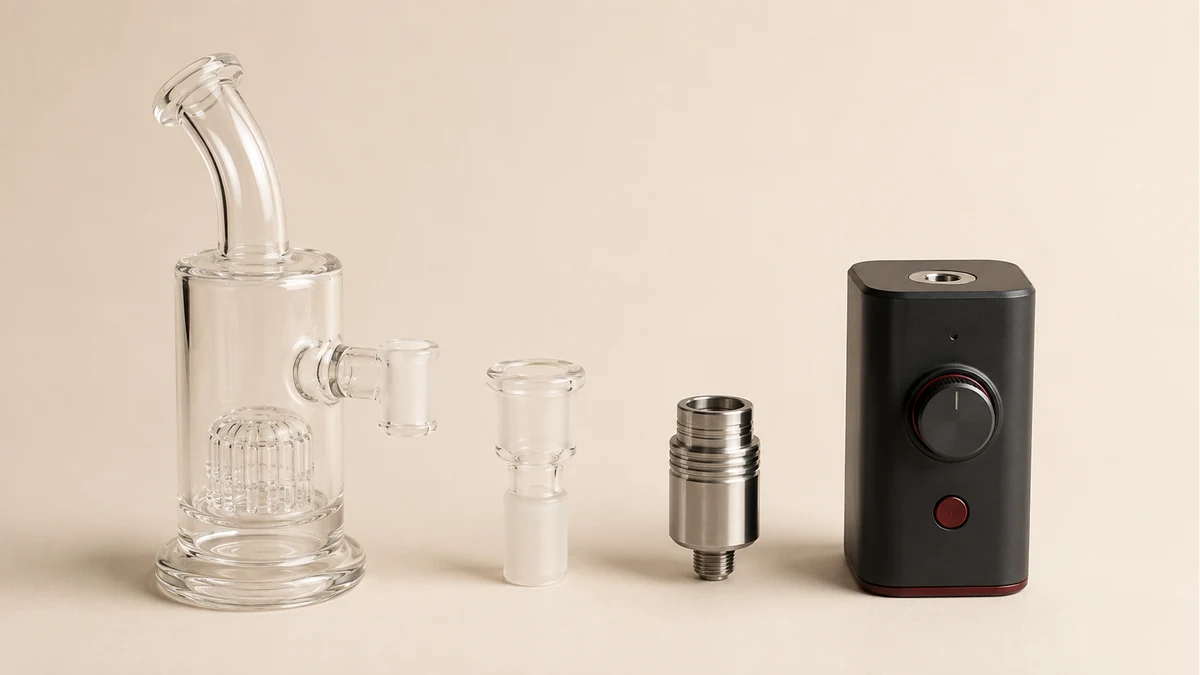
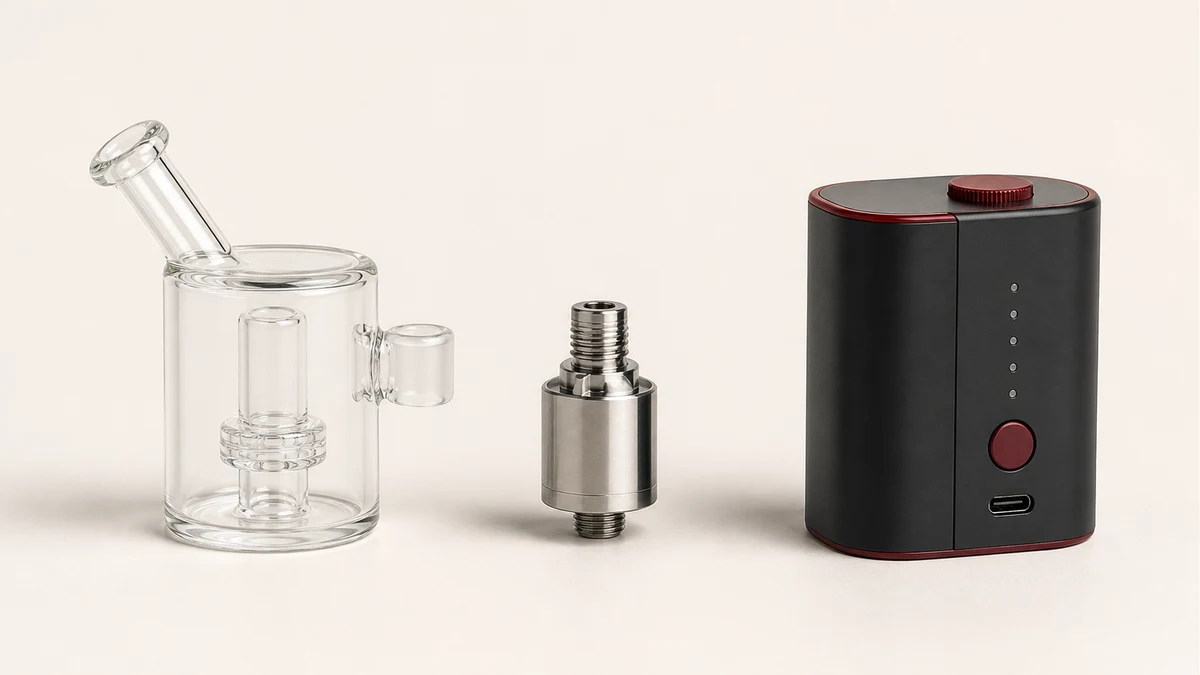
The phrase reads like a single product category, but it’s really a shorthand stack of descriptors. “Glass” refers to the airpath and water filtration piece — the water pipe, bubbler attachment, or glass adapter that the vapor travels through before it reaches your mouth. “510” refers to a threaded electrical connection standard, the same one used on many vape battery systems, which allows a heating element to physically screw into a power source. “E-nail” refers to a controlled heating system, built around a heating element and a documented power-and-control arrangement. General circuit behavior depends on a complete electrical path, as outlined in OpenStax Physics.
A listing titled “glass 510 e-nail” is telling you that a product combines all three: a glass piece, a 510-threaded connection somewhere in the assembly, and an electronic heating element. It is not telling you that these three parts are interchangeable with parts from a different product, or that the glass, the connector, and the controller were engineered as a matched set. They frequently are sold together, but the name alone doesn’t confirm that.
🔤 2. Breaking Down Each Term Individually
💎 2.1 “Glass”: The Airpath and Water Attachment
In this context, “glass” almost always refers to the water filtration piece — a bubbler, bong, or recycler-style attachment that the vapor passes through on its way from the heating chamber to the mouthpiece. This piece typically connects to the rest of the setup through a ground-glass joint whose exact size must be confirmed from the product documentation. The glass component has no electrical function. It doesn’t touch the heating circuit, and it doesn’t determine what power source the device requires.
Because the glass joint size is independent from the electrical connector type, a piece described as having a “10mm glass joint” tells you nothing about what kind of atomizer, coil, or controller it’s designed to pair with. Those are two separate specifications that happen to sit on the same physical device.
🔩 2.2 “510”: The Threaded Electrical Connector
“510” identifies a threaded connector family used on many cartridges, atomizers and power units. When a listing mentions “510 thread,” it’s describing how the heating element screws into its power source — a physical and electrical interface, not a temperature range, wattage output, or brand ecosystem. Two components carrying a 510 label may mechanically engage, but “will screw together” and “will function correctly together” are not the same claim.
Our 510 thread magnetic adapter guide goes deeper into how this threading standard works, including where magnetic adapters are used to convert or extend a 510 connection, and why adapter compatibility still needs to be checked against pin depth and thread count rather than assumed from the “510” label alone.
🌡️ 2.3 “E-Nail”: The Controlled Heater System
“E-nail” describes a heating system that replaces an open-flame torch with an electronically controlled heat source. A complete e-nail system generally includes a heating coil or atomizer (the part that actually gets hot), a power source or box mod (the part that supplies and regulates current), and sometimes a separate temperature controller with a display and dial. Some e-nail systems bundle the coil, power source, and controller into a single unit. Others separate them into interchangeable parts that need to be matched by voltage, resistance, and connector type.
The word “e-nail” by itself doesn’t specify which of these configurations you’re looking at. A listing might use the term for a fully self-contained 510-battery-powered atomizer, or for a benchtop unit with a separate coil and digital controller box. Reading the full product description — not just the title — is the only way to know which structure you’re actually being offered.
🧭 3. Where Product Categories Get Tangled
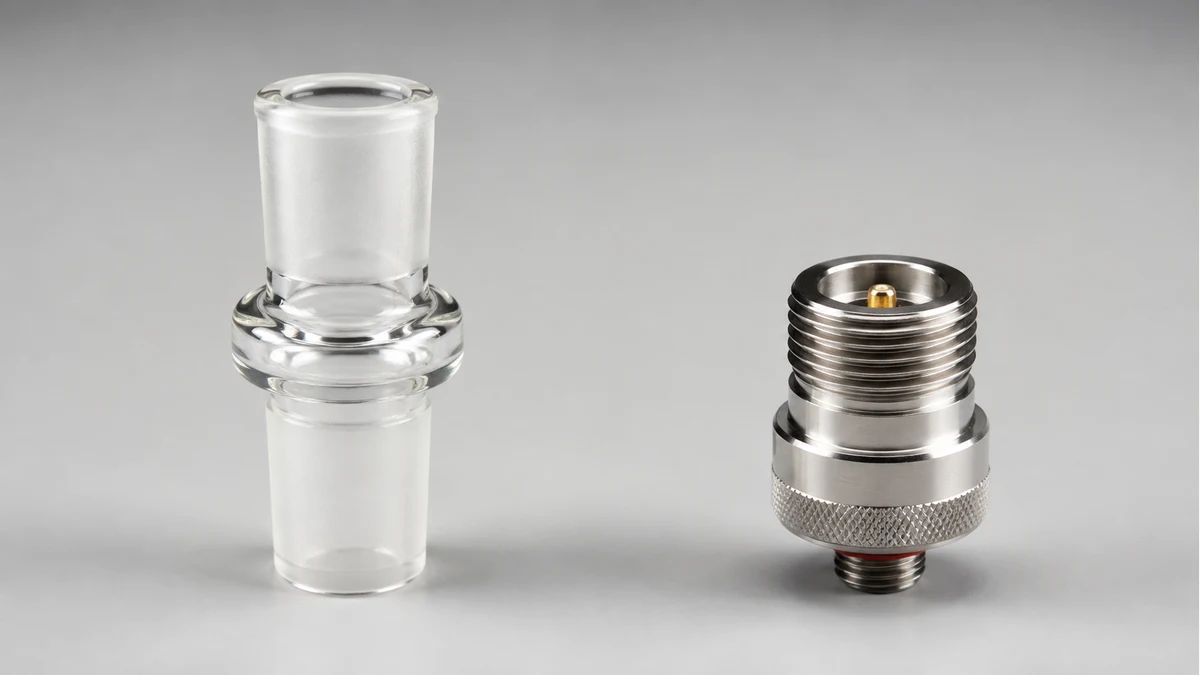
Questions about glass 510 e-nails tend to circle around the same handful of category mix-ups. One common thread pattern involves someone asking why their “e-nail coil” won’t heat inside a glass attachment they bought separately — the answer usually being that the glass piece has a joint size compatible with the coil’s housing diameter, but the coil itself requires a specific power source that wasn’t included in either purchase.
Another recurring pattern involves 510 dry-herb attachments being confused with 510 e-nail atomizers. Both use the same threaded connector and can physically screw into the same battery, but one is built to vaporize ground plant material and the other is built to heat a metal or ceramic surface for concentrate. Sharing a connector type doesn’t mean the internal heating method, chamber design, or intended material is the same.
A third pattern shows up when people compare atomizer “cups” — the small heating chamber that holds concentrate directly against the coil — with traditional nail-and-banger setups. Listings sometimes use “e-nail” loosely to describe both a full temperature-controlled banger setup and a simple 510 atomizer cup, even though the two differ substantially in how heat is generated, retained, and (in controller-based setups) regulated. If you’re trying to understand how a banger differs from a standalone nail versus a full e-nail system, the comparison in our dab nail vs. banger vs. e-nail guide lays out those distinctions component by component.
🗺️ 4. Mapping the Component Boundaries
Rather than treating “glass 510 e-nail” as one item, it helps to break any listing into five distinct zones. Each zone can, in principle, come from a different manufacturer, use a different connector, or have a different replacement cycle. The table below outlines what each zone typically covers and what to check before assuming compatibility.
| Component Zone | What It Typically Includes | What It Does Not Determine |
|---|---|---|
| Glass Section | Water pipe, bubbler, or recycler attachment; joint size (10mm/14mm/18mm); percolator style | Electrical connector type, heating method, power requirements |
| Heater / Head | Atomizer coil, ceramic or quartz heating cup, dish or bucket-style chamber | Whether it fits a specific controller or battery without checking resistance/voltage |
| Connector | 510 threading, pin depth, thread pitch, magnetic adapter interfaces | Wattage output, temperature accuracy, controller feature set |
| Controller / Power Source | Box mod, benchtop control unit, digital display, dial or button interface | Glass joint size, heater material, whether it includes a water attachment |
| Joints / Replaceable Parts | Gaskets, O-rings, glass adapters, carb caps, replacement coils | Long-term compatibility with parts sourced from a different product line |
Once a listing is broken into these zones, it becomes easier to spot which zones are actually specified and which are left vague. A description that details the glass joint size and percolator style but says only “e-nail compatible” for the heater and controller is telling you a lot about one zone and almost nothing about the other two.
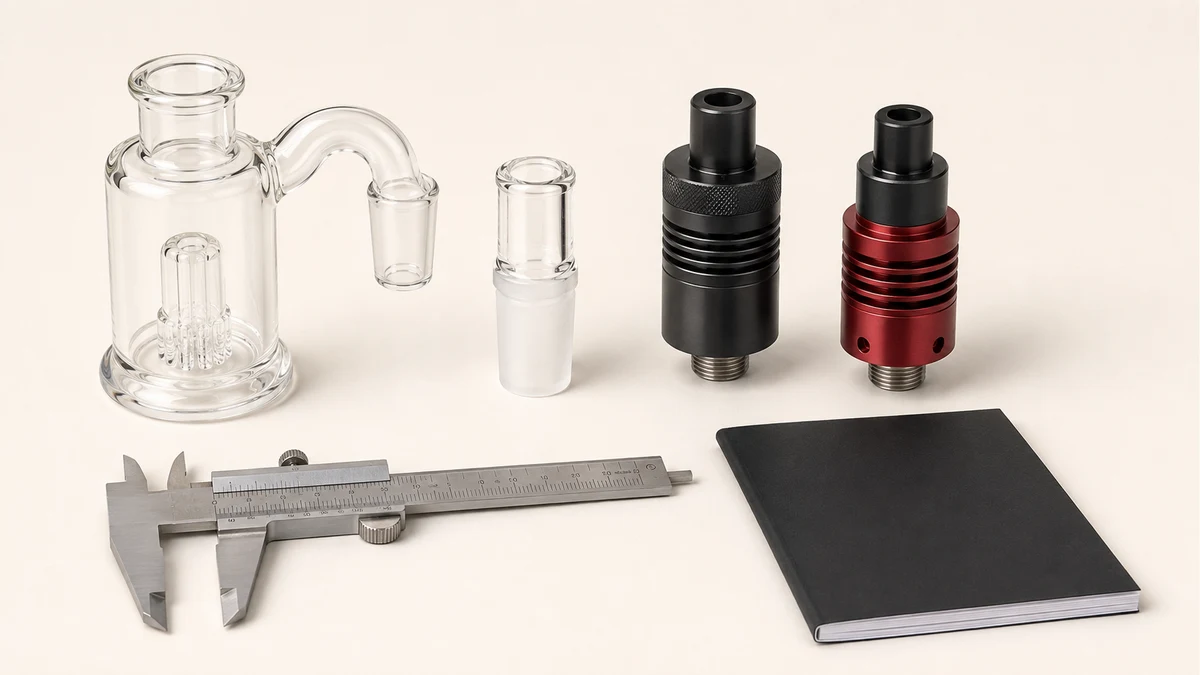
The 510 standard is widely used precisely because it’s a physical fit standard, not a performance standard. It specifies how a threaded connection screws together and roughly where the electrical contact points sit. It does not specify voltage output, resistance range, wattage ceiling, or firmware behavior. Two products can both be “510 compatible” and still be a poor match — one supplying more current than the other’s coil is rated to handle, or one expecting a resistance range the other wasn’t built to regulate.
This matters most when a glass 510 e-nail listing separates its parts across multiple purchases, or when a buyer is trying to pair a standalone atomizer with a controller from a different product line. The connector fitting together is necessary but not sufficient — it confirms the physical interface, not the electrical relationship between the two halves. Our e-nail dab kit guide walks through how complete kits are assembled from these separate zones, which is useful context if you’re trying to figure out whether a mix-and-match approach makes sense for your setup or whether a matched kit avoids that guesswork entirely.
📸 6. What Photos Can’t Tell You
Product photography shows exterior shape, glass color, and overall silhouette — none of which reveal what’s happening inside the heater or how the controller regulates current. A coil’s resistance rating, the material bonded to the heating surface, and the wiring gauge inside a controller are not visible in a listing photo, no matter how many angles are included.
This is particularly relevant for the “e-nail” portion of the phrase. Two heating cups can look nearly identical from the outside while using different heating elements, different thermal mass, or different control logic underneath. A photo can confirm that a glass joint looks like a standard size or that a controller has a digital display, but it cannot confirm internal construction, coil specifications, or how the controller’s circuitry behaves under load. That information has to come from the written specifications, not the images.
🔧 7. Joints, Replaceable Parts, and Wear Points
Even within a single glass 510 e-nail product, some parts are meant to be replaced and others are not. Gaskets, O-rings, and carb caps typically wear out or get lost over time and are usually sold as standalone replacement parts. Glass adapters that step one joint size down to another are also commonly interchangeable across brands, since joint sizing is a shared industry measurement rather than a proprietary one.
Heating coils and atomizer cups, by contrast, are often tied more closely to a specific controller’s expected resistance range, which makes them less safely interchangeable across brands even when the thread pattern matches. Before assuming a replacement part will work, it helps to check whether the manufacturer lists it as a direct replacement for your specific model, rather than relying on the fact that it uses the same joint size or thread type as your current setup.
📋 8. A Documentation Checklist Before You Buy
Because a single product title can’t communicate five separate component zones, it helps to look for documentation that addresses each zone individually before purchasing. The following checklist covers what to look for in a listing, manual, or manufacturer page:
- Glass joint size is stated explicitly (10mm, 14mm, or 18mm), not just described as “standard” or “universal.”
- The heater/head material and chamber style (dish, bucket, cup) are named, rather than left as “quartz-style” or “ceramic-style” without further detail.
- The connector type is specified as 510 threaded, and any adapter requirements are called out separately.
- The controller or power source lists its own compatible connector type and any resistance or voltage range it’s designed to regulate.
- Replacement parts (gaskets, O-rings, adapters, coils) are listed as either universal or model-specific, not left ambiguous.
- The listing distinguishes between a complete kit (all zones matched by the manufacturer) and an individual component meant to be paired with parts you already own.
A listing that covers all six points gives you enough information to know exactly what you’re buying. A listing that covers only one or two — most often the glass joint size and a general “e-nail” label — leaves the electrical and controller details to guesswork.
🔍 9. Reading a Listing Like a Component Diagram
The most reliable way to evaluate a glass 510 e-nail product is to mentally separate the listing into the five zones from the component map before reading further. Ask which zones are described with specific measurements or part names, and which are described only with general marketing terms like “premium” or “universal fit.” Specific measurements and named materials are verifiable; general terms are not.
It also helps to check whether the seller frames the product as a matched kit or as an assembly of separately sourced parts. Matched kits are more likely to have been tested together as a unit, while assemblies built from separately sourced parts put more responsibility on the buyer to confirm that the connector, heater, and controller were actually designed to work together rather than simply fitting together.
🧵 10. Putting the Pieces Together
“Glass,” “510,” and “e-nail” each describe a different, independent part of a dab setup: the water filtration piece, the threaded electrical connector, and the temperature-controlled heating system. A listing that uses all three words together is telling you what categories of components are present, not confirming that those components were engineered as a single matched unit or that they’ll perform identically to a similarly labeled product from another brand.
Breaking any listing down by component zone — glass, heater, connector, controller, and replaceable parts — makes it far easier to spot which specifications are actually documented and which are being implied by a shared name. When in doubt, the documentation checklist above is a practical way to compare listings side by side, and the linked guides on kit structure, nail-versus-banger-versus-e-nail distinctions, and 510 thread adapters go into more depth on each of these component zones individually.