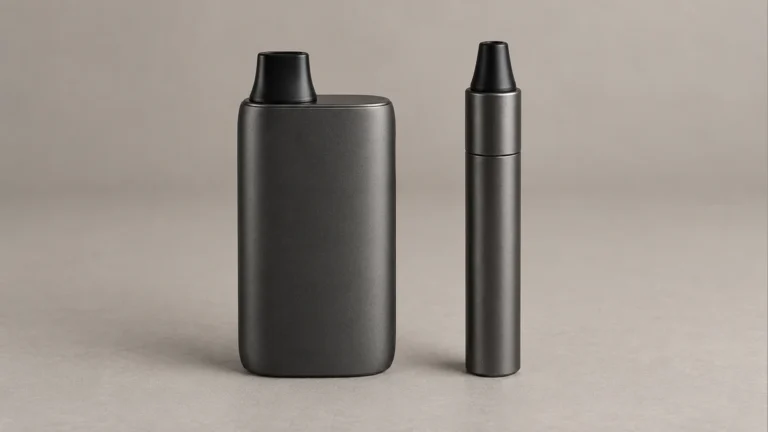
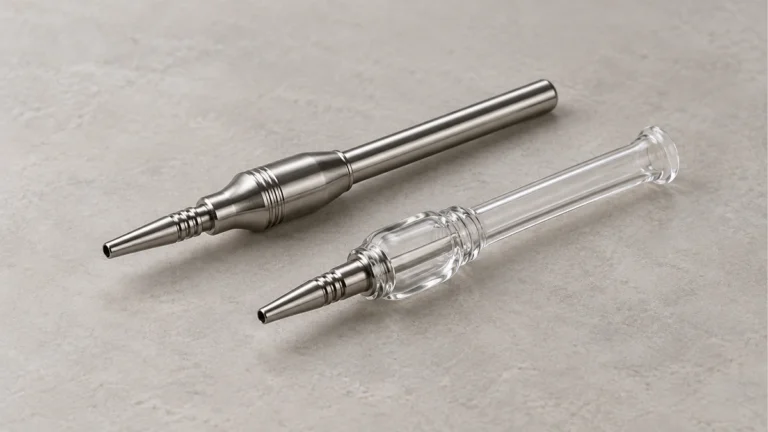
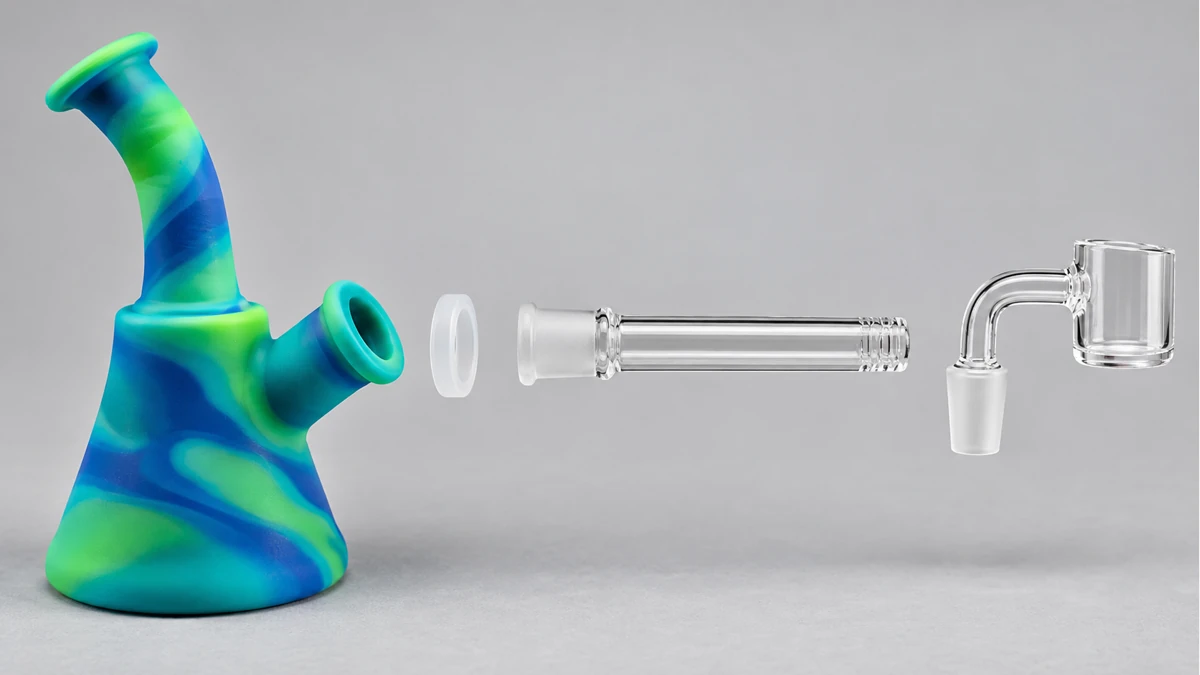
A silicone dab rig looks like a single flexible object, but it never is. Underneath the colored body sits a rigid core: a glass or quartz joint, a banger or nail, and often a glass downstem. The silicone is the shock-absorbing shell; the heat-bearing parts are always something harder. Understanding where that boundary sits — physically, not cosmetically — explains why these rigs are built the way they are, how they fail, and what actually needs replacing when something breaks.
🧩 1. Two Materials, One Rig: Why Silicone Bodies Still Depend on Rigid Heat Parts
Every silicone dab rig on the market is a composite object. The body — the chamber, the base, sometimes the mouthpiece — is molded from platinum-cured silicone because it survives drops, resists cracking, and can be squeezed into shapes glass can’t hold. But silicone cannot be heated directly to dabbing temperatures without degrading, so no functional rig is silicone from top to bottom.
🧩 1.1 The Physical Divide Between Flexible and Rigid Components
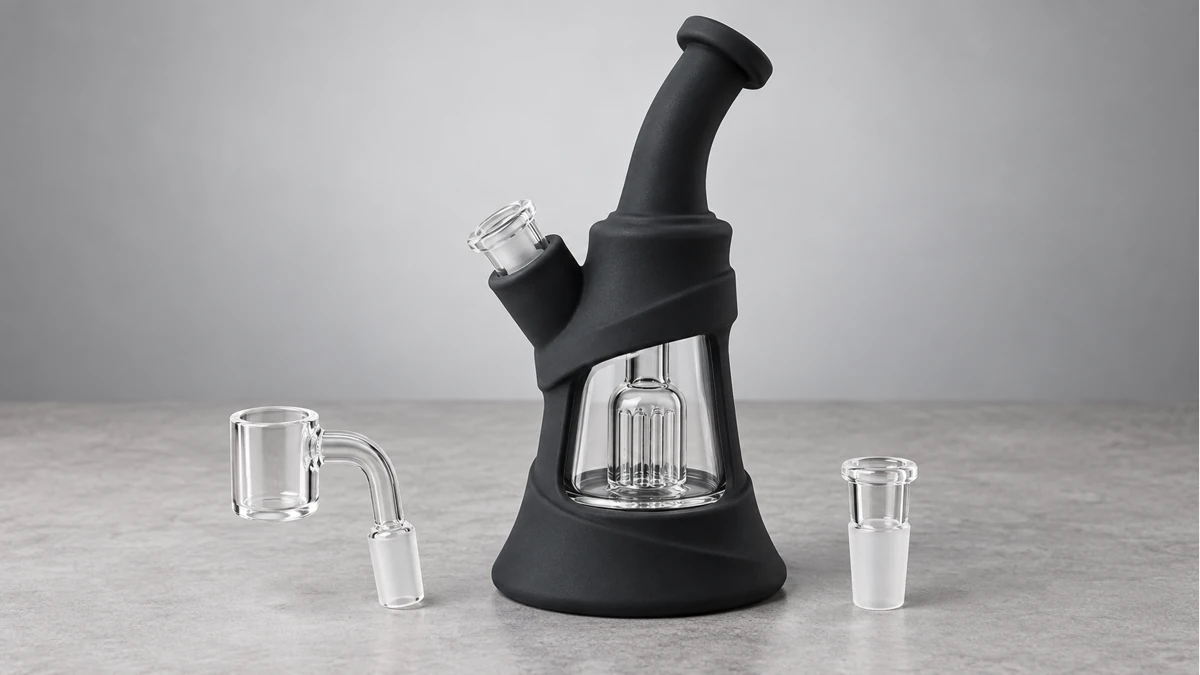
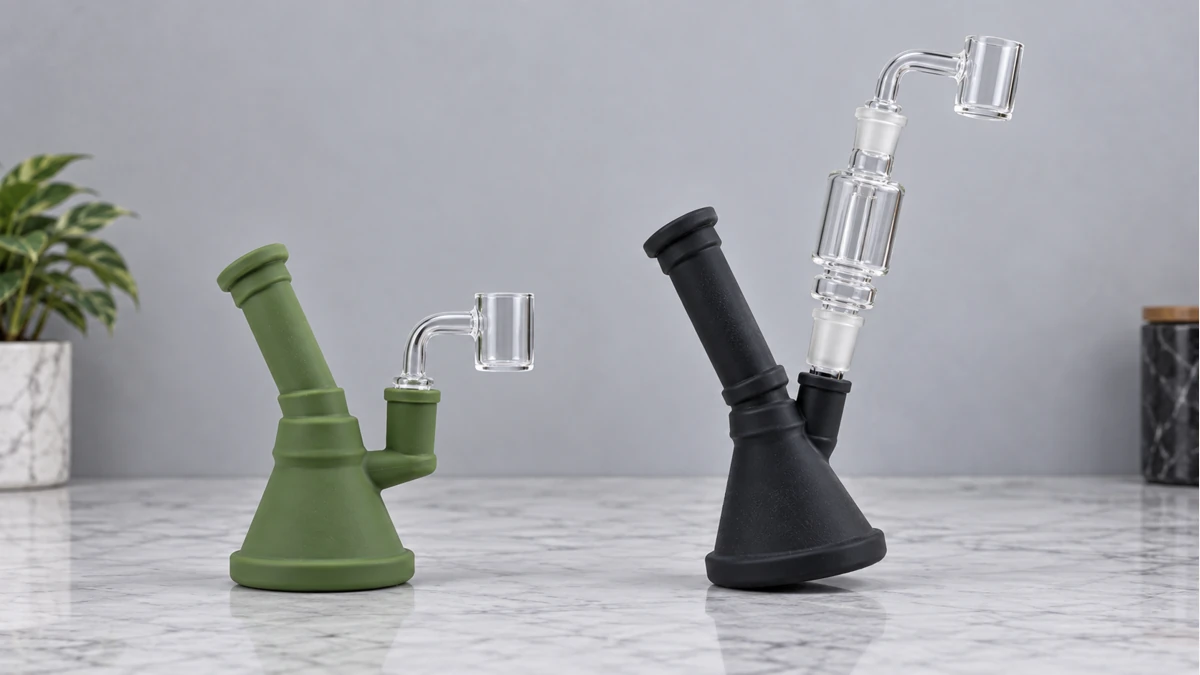
The functional split in almost every design is consistent: silicone forms the outer chamber and water path, while a glass or quartz insert forms the joint and the heated surface. That insert is where concentrate actually contacts heat. The silicone never touches flame or a hot nail directly — it surrounds the rigid piece but stops short of the zone that gets hot.
🧩 1.2 Why No Rig Is Fully Silicone
Silicone has a practical heat ceiling well below what a banger reaches during use. Manufacturers work around this by isolating the heated component entirely — a removable quartz or glass banger seated in a joint, with the silicone body positioned far enough from that joint to stay at a safe working temperature. This is a structural decision, not a stylistic one: the two materials are doing different jobs, and neither can substitute for the other.
🔗 2. Joints and Connections: Where Silicone Meets Glass or Quartz
The joint is the physical interface between the flexible body and the rigid heat component. It’s usually a standard glass joint — ground or polished — set into or bonded onto the silicone chamber, and it determines what accessories will actually fit.
🔗 2.1 Joint Sizes and Fit
Most silicone rigs use the same joint sizing conventions as glass rigs — commonly 10mm, 14mm, or 18mm, in male or female orientation. A banger sized for a different joint diameter won’t seat correctly, so identifying the joint size before buying a replacement part is a mechanical necessity, not a preference. Joint size is usually listed in product specifications, though it’s worth confirming against the physical part when possible, since labeling can be inconsistent between sellers.
🔗 2.2 Adapters and Downstems
Some silicone rigs include a fixed glass downstem embedded in the base; others use a removable stem that slots into a silicone socket. Adapters exist to bridge mismatched joint sizes, but every adapter adds a connection point, and every connection point is a place where a seal can loosen or a part can wobble. Fewer adapters generally means a more stable stack.
🔥 3. Heat, Residue, and the Boundary Line
Heat is the reason the silicone/rigid split exists at all, and it’s also the reason residue behaves differently depending on which material it lands on.
🔥 3.1 Why the Heated Section Must Stay Rigid
A banger or nail needs to hold a stable shape at high temperature and cool down without warping. Quartz and glass do this reliably; silicone does not. This is why the heated component is always a separate, removable piece rather than a molded extension of the silicone body — it needs a material with different thermal behavior, and swapping it out doesn’t require replacing the rest of the rig.
🔥 3.2 How Residue Builds Differently on Each Material
Concentrate residue on quartz or glass tends to bake on with heat exposure, forming a harder film that usually needs direct heat or solvent to loosen. Residue on silicone stays closer to the surface since that section never reaches the same temperatures, but silicone’s texture and any recessed detailing can trap residue more readily than smooth glass. The two materials don’t just look different — they hold onto buildup differently, which is why they’re cleaned with different methods.
🧼 4. Cleaning a Hybrid Rig Without Damaging Either Part
Because a silicone dab rig is really two materials joined at a seam, cleaning it as a single object usually does a worse job than cleaning it as two.
🧼 4.1 Separating Components Before Cleaning
Removing the banger or nail and any downstem before cleaning lets each part be treated according to what it can tolerate. The rigid components can generally handle stronger cleaning methods, including direct heat to loosen residue, without risk to the silicone. Cleaning everything attached increases the chance that a method suited to one material damages the other.
🧼 4.2 Material-Specific Cleaning Limits
Silicone is heat-resistant relative to plastic but still has limits, and prolonged exposure to very hot water or direct flame can degrade it over time in ways that aren’t always visible immediately. Quartz and glass tolerate more aggressive cleaning, including soaking in solvent-based cleaners, without the same risk. Matching the cleaning method to the material — rather than applying one approach to the whole rig — is the difference between a part that lasts and one that degrades early.
🛠️ 5. Replacement Boundaries: What Wears Out First
Because the rig is modular by design, wear doesn’t happen evenly. Knowing which part fails first helps identify what actually needs replacing.
🛠️ 5.1 Bangers, Nails, and Quartz Wear
The heated component takes the most thermal stress in the entire setup, and it’s the part most likely to need replacement — from cracking, thermal shock, or gradual clouding of the quartz surface. Because it’s a standard, separable joint-fit piece, replacing it doesn’t require replacing the silicone body underneath it, as long as the new piece matches the original joint size.
🛠️ 5.2 When the Silicone Body Outlasts Its Hardware
Silicone bodies are typically the most durable part of the assembly precisely because they never experience direct heat. It’s common for a rig’s silicone base to remain intact well after its original banger has cracked or its downstem has broken — which is part of why these parts are sold and replaced separately rather than as a bonded unit.
🧭 7. Inspect a Silicone Rig as a Material System
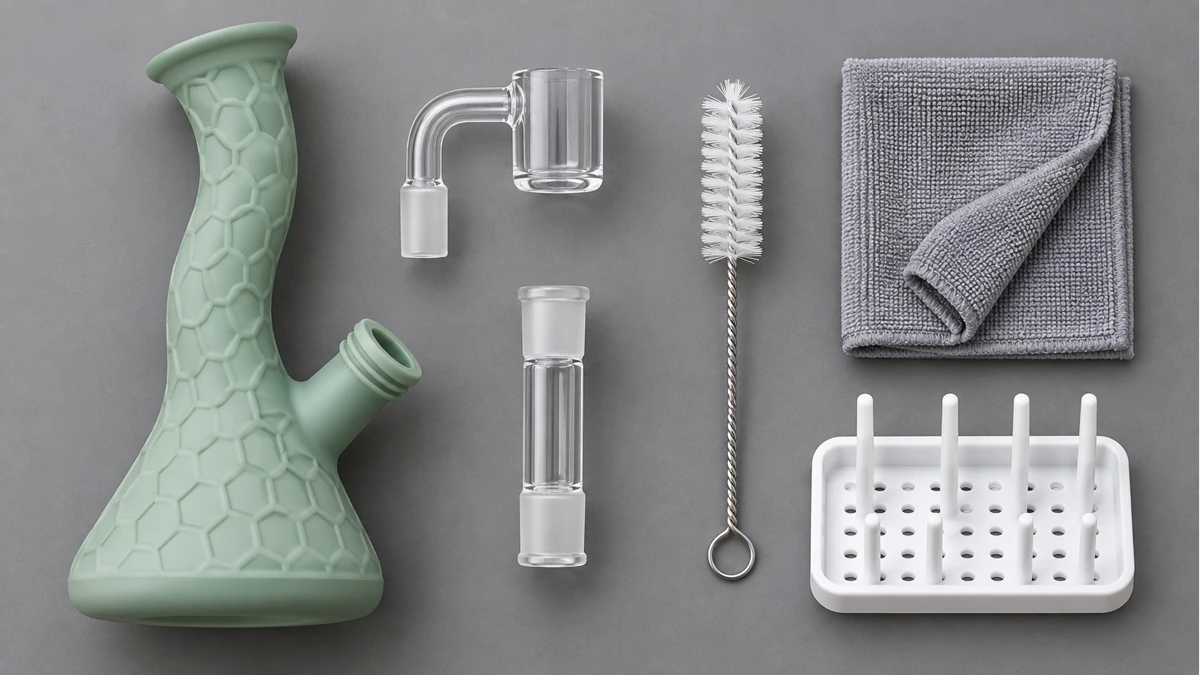
A product photo can make the flexible shell look like the whole device, but the functional assembly is a chain of different materials. Identify the rigid heated component, the joint or adapter that supports it, the flexible body, the water chamber, and the mouthpiece. Each boundary answers a different question about fit and maintenance. The silicone body can tolerate ordinary handling flex, while the inserted glass or quartz part still needs straight support and clearance.
⚖️ 7.1 Test Stability With the Rig Cold
Place the empty, clean rig on a level surface and install its intended rigid components without heating them. The base should return to a stable position after a light touch. A tall banger or heavy adapter moves the center of mass outward, and flexible walls can amplify that leverage. If the joint sags, twists, or pulls the body off balance, the stack is mechanically mismatched even when the nominal joint size is correct.
🔍 7.2 Read Wear at the Boundaries
Inspect where rigid parts enter silicone. Cuts, permanent stretching, trapped residue, and loose sleeves matter more than cosmetic discoloration elsewhere. Remove detachable pieces for inspection rather than flexing them sideways in the opening. Replacement decisions should follow the damaged component: a worn seal does not automatically condemn a sound body, while a cracked heated part should not be kept in service because the flexible shell still looks new.
Storage should also separate forces. Let all parts cool, clean and dry them, then protect rigid pieces from side load. Flexibility helps with bumps; it does not make glass or quartz joints unbreakable.
📋 8. Use a Component-by-Component Cleaning Plan
Hybrid construction requires a cleaning plan that follows materials rather than treating the rig as one object. Separate the quartz or glass banger, any metal inserts, removable gaskets, and the silicone body. Record which pieces belong together if several similar joints are being cleaned at once. That simple inventory prevents a correct-size but wrong-shape adapter from being forced into the body during reassembly.
🧽 8.1 Remove Loose Residue First
Let every part cool completely. Empty water and remove loose particles before using any material-compatible cleaning method. Soft tools protect silicone from cuts, while rigid glass and quartz still need protection from impacts. Never use the flexibility of the body to twist a stuck glass joint sideways; support the joint and follow the maker’s removal guidance.
💧 8.2 Rinse, Dry, and Inspect Separately
Rinse each component according to its material instructions, then allow hidden passages and sleeves to dry. Water trapped between a removable joint and silicone can mimic a loose seal. Inspect dry parts under good light for cuts, clouding, chipped edges, or deformation before reassembly.
📏 9. Compatibility Extends Beyond Joint Diameter
A listing may state a familiar joint size and still omit the dimensions that control real fit. Measure insertion depth, shoulder diameter, and available clearance around the joint. Check whether the banger neck rests against flexible material and whether an adapter raises the heated section enough to change leverage.
🧩 9.1 Keep the Heat Boundary Visible
The intended heated zone should remain physically separated from the silicone body. If a replacement part changes that spacing, do not assume the shared joint size makes the assembly suitable. Match the original material boundary and use documentation for the specific product where available.
✅ 9.2 Finish With a Cold Assembly Check
Reassemble only when every part is dry. Confirm that joints seat straight, the body sits flat, and the water path remains unobstructed. A short unheated draw can reveal leaks or a pinched airway without introducing heat. This final check turns cleaning into an inspection instead of a purely cosmetic task.
A parts list is especially useful for modular rigs. Record joint size, gasket position, and the orientation of removable sleeves before taking the assembly apart. Reassembly should reproduce the original straight load path without pulling the flexible body toward one side.
✈️ 6. Identifying Hardware Before Travel or Purchase
Because a “silicone dab rig” is actually a mix of materials, knowing exactly what’s in a given rig matters both for buying replacement parts and for understanding what the object physically is.
✈️ 6.1 Reading a Listing for Material Breakdown
Product listings that specify joint size, banger material, and whether the downstem is fixed or removable give a clearer picture than listings that just describe the rig as “silicone.” Some hybrid designs — including zinc-alloy or metal-bodied rigs with detachable silicone mouthpieces — blur the category further, so checking which parts are silicone versus metal, glass, or quartz avoids confusion about what’s actually replaceable.
✈️ 6.2 What to Check Before You Buy
Before purchasing a silicone rig or a replacement part, confirming joint size, banger material, and whether the downstem is separate or fixed prevents the most common mismatch problems. This is a hardware question, not a legal one — rules around carrying any dab rig, silicone or otherwise, vary by jurisdiction and venue, and are outside what the physical materials themselves can determine.
The practical takeaway: treat a silicone dab rig as two connected systems rather than one object. Identify the joint size, confirm what the heated component is made of, and clean and replace each material according to its own limits. The silicone body will likely outlast several bangers — knowing that in advance makes both maintenance and part-shopping far more straightforward.