📏 1. Why a Dedicated Case Matters for a 510 Oil Pen
A 510 thread oil pen is really two separate objects that happen to travel together: a battery and a cartridge. Tossed loose into a bag or pocket, the threaded connection between them is exposed to lint, keys, coins, and pressure from other objects. A dedicated case exists to keep those two parts apart, upright, and cushioned, while also giving the mouthpiece and threading somewhere to sit that isn’t touching fabric or metal. This guide looks at what actually matters when evaluating a case for a 510 pen — internal dimensions, orientation, separation of components, liner materials, and how the case holds up to daily handling and temperature swings.
🧩 2. Internal Dimensions and Compartment Fit
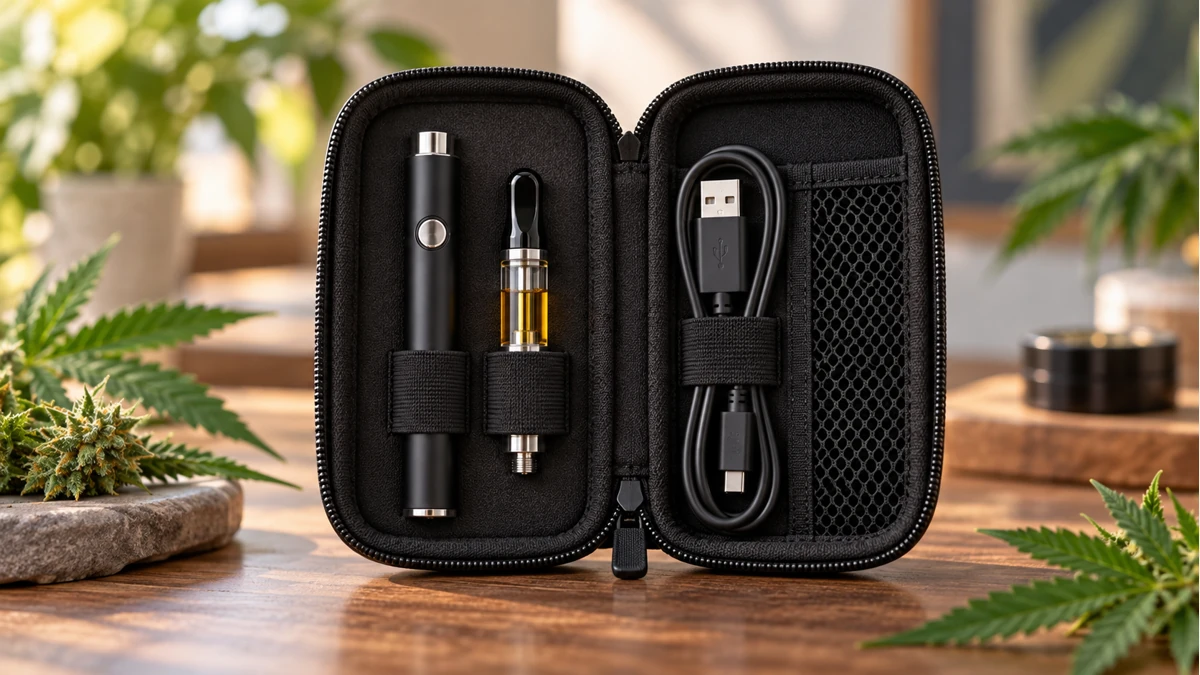
Cases are not one-size-fits-all, because 510 hardware itself varies. Batteries range from slim, pen-style bodies to shorter box-style units, and cartridges vary in overall length and barrel diameter depending on the brand and glass style. A case that’s too loose lets components shift and knock against each other during transport; one that’s too tight can force a cartridge or battery in at an angle, putting pressure on the threaded connection or the mouthpiece.
🔍 2.1 Sizing for Pen Length and Diameter
Rather than quoting exact millimeter figures, most case listings describe fit in relative terms — “standard pen battery,” “slim cartridge,” or “wide-barrel cartridge.” When comparing cases, it helps to measure your own hardware’s length and the widest point of its barrel, then compare that against the compartment depth and width described by the case, rather than assuming a single case format works for every pen on the market.
🛠️ 2.2 Cartridge Depth vs Battery Depth
Many cases use two different compartment depths in the same product, since cartridges and batteries are often not the same length. A shallow compartment does not necessarily mean the item is oversized for the case — it may simply be sized for a shorter component. Checking whether a case lists separate depths for each compartment type is a useful way to judge whether it was designed around 510 hardware specifically, rather than repurposed from a generic organizer.
🔍 3. Keeping Cartridges Upright
One of the most common questions people ask about storage cases is whether orientation actually matters once a cartridge isn’t in use. Oil inside a cartridge can shift with gravity, and a cartridge left resting on its side or mouthpiece-down for extended periods gives oil more opportunity to migrate toward the mouthpiece opening or around the base threading than it would sitting upright.
🛠️ 3.1 Orientation and Oil Movement
Cases built with vertical slots hold cartridges base-down, mouthpiece-up, matching the orientation the cartridge is designed to sit in. This isn’t about performance — it’s simply keeping the internal reservoir in the position it was manufactured to rest in, which reduces the chance of oil pooling against the mouthpiece seal or the connection threads while stored.
Some cases use individual cutout slots sized for one cartridge each, while others use a single open tray that holds several cartridges loosely together. Individual slots prevent cartridges from touching or rolling against one another, which matters if a cartridge has a glass viewing window that could chip on contact with another hard surface. A shared tray is more flexible in what it holds but offers less protection against cartridges shifting during movement.
🛠️ 4. Protecting the Mouthpiece and Threaded Base
The two most exposed points on a cartridge are the mouthpiece opening and the threaded base that screws into the battery. Both are small, and both are where residue, dust, or physical impact can cause the most disruption to a clean connection.
📦 4.1 Mouthpiece Caps and Covers
A cap over the mouthpiece keeps lint, dust, and pocket debris out of the airpath opening when the cartridge isn’t attached to a battery. Some cases include a molded recess that holds the cartridge’s own cap in place, while others rely on a soft silicone sleeve that covers the whole top of the cartridge. Either approach is meant to solve the same problem: an open mouthpiece is the easiest place for outside material to get in.
🔗 4.2 Threaded Connection Guards
The threaded base is more fragile than it looks — cross-threading or knocking the threads against a hard surface can bend the metal connector or strip the threading itself, which affects how securely the cartridge seats onto a battery going forward. Cases that cushion the base end of the slot, rather than leaving it resting directly against a hard plastic or metal interior, reduce the chance of that kind of impact damage during transport.
📦 5. Separating Batteries from Cartridges
Storing a battery and a cartridge in the same open compartment means they can knock against each other, and it also means any residue from the cartridge threading has a direct path to the battery’s connector. Cases designed specifically for 510 pens usually build in a hard divider or use entirely separate compartments for batteries and cartridges, rather than one shared space.
This separation also matters for the battery’s exposed connector pin and threading. A battery’s 510 connector is a small piece of metal that, left loose against other hardware, can pick up scratches or debris that affect the contact point when it’s screwed back onto a cartridge. Keeping the battery in its own padded slot, away from cartridges and any external objects like keys or coins that might also end up in a bag, reduces that kind of contact wear.
🔗 6. Elastic Loops and Soft Retention
Beyond rigid slots, many cases use elastic loops, straps, or foam cutouts to hold hardware in place once it’s inserted. A loop stretched over a battery or cartridge keeps it from sliding out of its compartment if the case is turned upside down, dropped, or jostled in a bag alongside other items.

Elastic retention is particularly useful for cases that are carried in pockets or bags without a rigid outer shell, since the loop does the work a hard-sided compartment would otherwise handle. Over time, elastic can lose tension, so it’s worth checking whether a case’s loops still hold hardware snugly or whether they’ve stretched out to the point where components can slide free.
⚙️ 7. Hard Shells vs Soft Sleeves
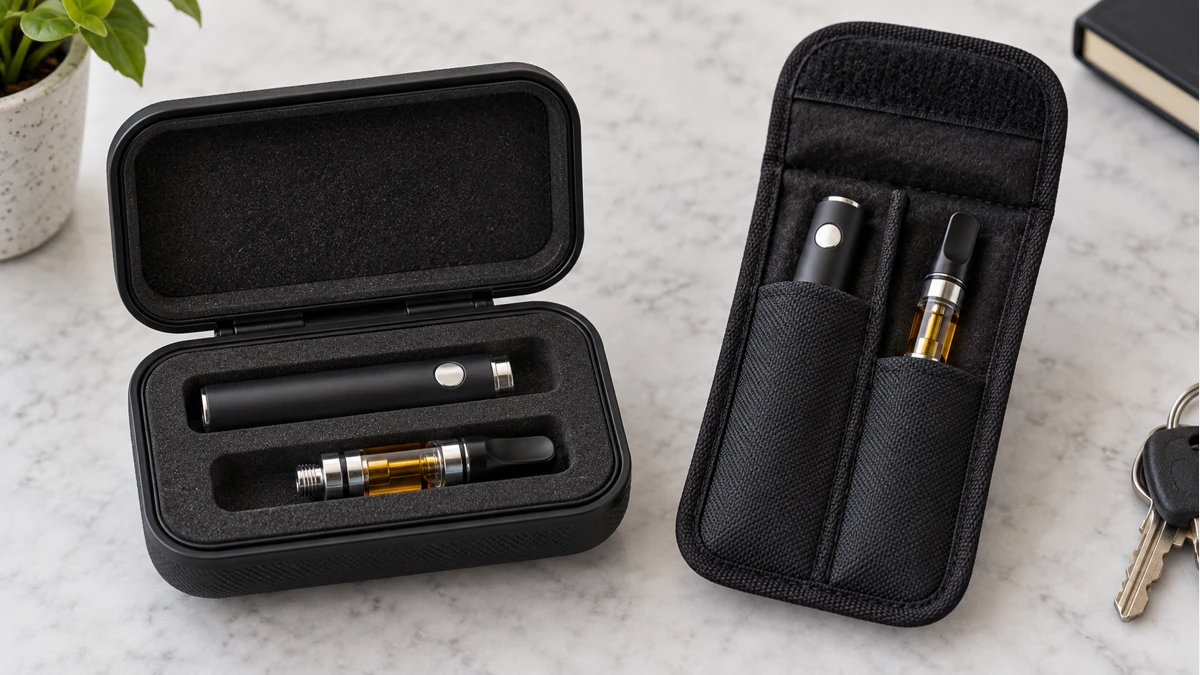
Cases generally fall into two broad categories: rigid hard-shell cases and flexible soft sleeves or pouches.
🧼 7.1 Hard-Shell Cases
Hard shells, often built from molded plastic or aluminum, offer the most protection against crushing impact — useful if the case is going to be tossed into a bag with heavier items like books, tools, or water bottles. The tradeoff is bulk; a hard shell takes up more space than a flat sleeve and is less likely to fit into a tight pocket.
📏 7.2 Soft Sleeves and Pouches
Soft sleeves, usually made from neoprene, nylon, or padded fabric, are more compact and flexible, making them easier to slide into a pocket or a smaller bag compartment. They offer less resistance to a direct hard impact but still provide a barrier against scratches, dust, and minor bumps. Some soft cases include a semi-rigid insert or foam lining to add a degree of impact resistance without the bulk of a full hard shell.
🧼 8. Residue Liners and Leak Containment
Cartridges can occasionally develop small amounts of residue around the mouthpiece or base threading, even when they’re not damaged. A case without any kind of liner means that residue transfers directly onto the case’s interior surface, which is harder to clean out of foam or fabric than off a smooth liner.
📏 8.1 Wipeable Liner Materials
Silicone inserts, rubberized trays, and smooth plastic liners are easier to wipe down than raw foam or fabric, since residue sits on the surface rather than soaking in. Cases built around a removable silicone tray make it possible to take the liner out entirely for a more thorough wipe-down without needing to clean the outer shell at the same time.
🧩 8.2 Containing Minor Leaks
A raised lip around each compartment, or a slightly recessed tray floor, gives any residue somewhere to sit rather than spreading across the whole interior or into a neighboring compartment. This is less about preventing leaks — cartridge construction determines that — and more about limiting how far any residue travels once it appears.
📏 9. Temperature Exposure Considerations
Cases are frequently carried in bags, glove compartments, or pockets, all of which can reach a wide range of temperatures depending on the season and location. Oil viscosity changes with temperature, and battery components, including any onboard electronics, generally perform best within a moderate temperature range rather than extreme heat or cold.
A case on its own does not meaningfully insulate hardware from an extended stay in a hot car or a freezing bag pocket, but a case with some padding does slow down rapid temperature changes compared to bare hardware sitting directly against a hot surface. For anyone storing a case in a vehicle, it’s worth treating it the way you’d treat any small electronic device — avoiding prolonged exposure to direct sunlight or very low temperatures where possible.
🧩 10. Labeling Compartments
For anyone carrying more than one cartridge at a time, labeling can be a practical way to keep track of which cartridge is which without needing to remove and inspect each one. Some cases include a small writable panel or slot for an insert card next to each compartment, while others rely on clear or translucent covers that let you see the cartridge without opening the case fully.
A simple system — writing a date or a short identifier on a piece of tape or an included card — can help keep track of how long a cartridge has been stored, particularly for anyone managing a case with multiple slots. This is a matter of personal organization rather than a feature built into the case’s function, but the physical space for a label is something worth checking for if it matters to you.
🔍 11. Cleaning and Maintenance
How easily a case can be cleaned often comes down to the same liner materials discussed earlier. Hard shells with smooth plastic or silicone interiors can typically be wiped out with a cloth and mild soap and water, then left to air dry fully before hardware goes back in. Soft fabric sleeves are harder to clean thoroughly, since residue can work into stitching or padding rather than sitting on a flat surface.
Removable trays or liners, where available, make cleaning simpler because they can be taken out and cleaned separately from the outer shell, and dried without worrying about moisture sitting inside a closed foam-lined case. Letting any cleaned component fully dry before closing the case back up helps avoid trapping moisture against battery contacts or cartridge threading.
🛠️ 12. Test the Closed Case Without the Cartridge Attached
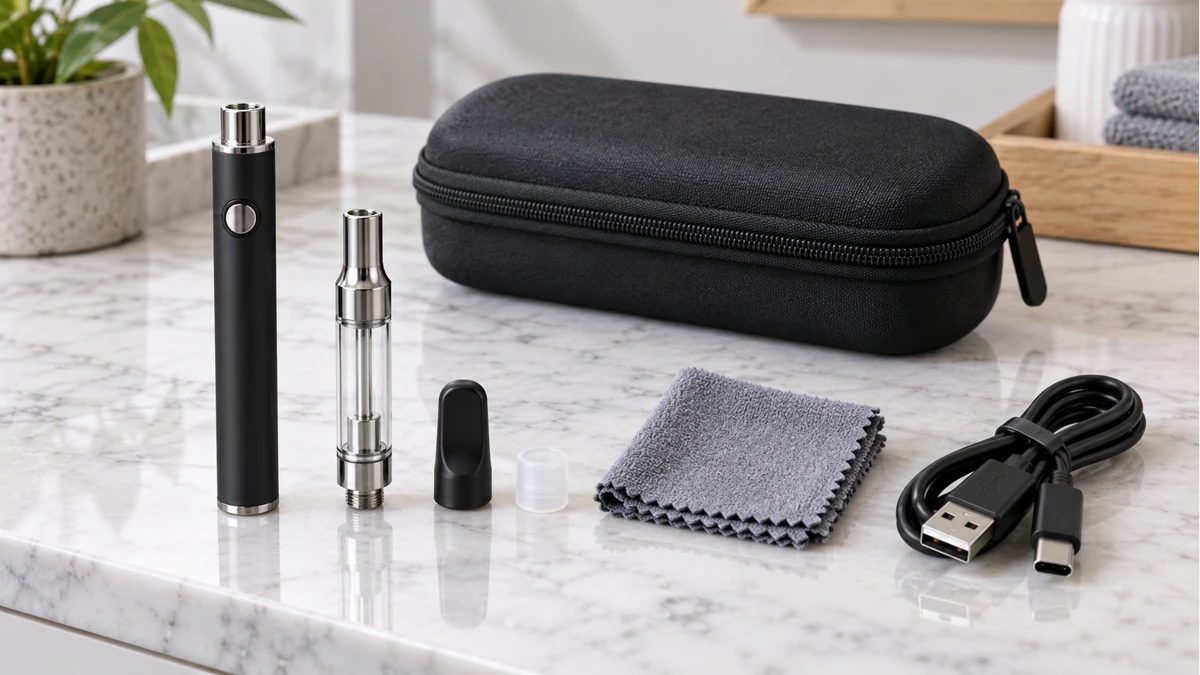
Place the battery and cartridge in separate supports, close the empty case, and check for contact marks or pressure at the mouthpiece and threaded base. The zipper path and lid padding should clear both parts. A case that fits an assembled pen may still place leverage on the cartridge if the lid compresses it from the side.
📦 12.1 Keep Charging Hardware in Its Own Zone
Cables and threaded adapters should not share a loose pocket with glass cartridges. Separate storage prevents metal ends from striking glass and makes it easier to verify that the charger belongs to the battery system in the case.
📦 13. Matching a Case to Your Setup
The right case depends less on brand and more on fit: does it hold your specific battery and cartridge shapes securely, does it keep them apart, does it protect the mouthpiece and threading specifically, and can you actually clean it when residue shows up. A case that checks those points — regardless of whether it’s a compact soft sleeve or a padded hard shell — is doing the core job a 510 pen case is meant to do.
For more on the batteries these cases are built to hold, see related AOVAPE hardware guide. If you’re comparing cartridge styles and how their dimensions affect fit, related AOVAPE hardware guide covers that in more detail. And for guidance on caring for the connector and threading itself, related AOVAPE hardware guide walks through the basics.