Somewhere between the third and fourth session of the day, a nectar collector slips off a table edge and lands on tile. The reflex is always the same: wince, pick it up, and check the tip first, because that’s the part everyone assumes is glass and therefore doomed. What often gets missed is that the body did most of the work. On a silicone nectar collector, the outer sleeve flexes, absorbs the impact, and keeps the whole unit from shattering into three pieces on the kitchen floor — but that flex only protects what’s actually made of silicone. The hot tip, the air path, and the joint where they meet the housing are usually something else entirely, and that distinction is where most buying confusion starts.
🔍 1. What “Silicone” Actually Covers on These Devices
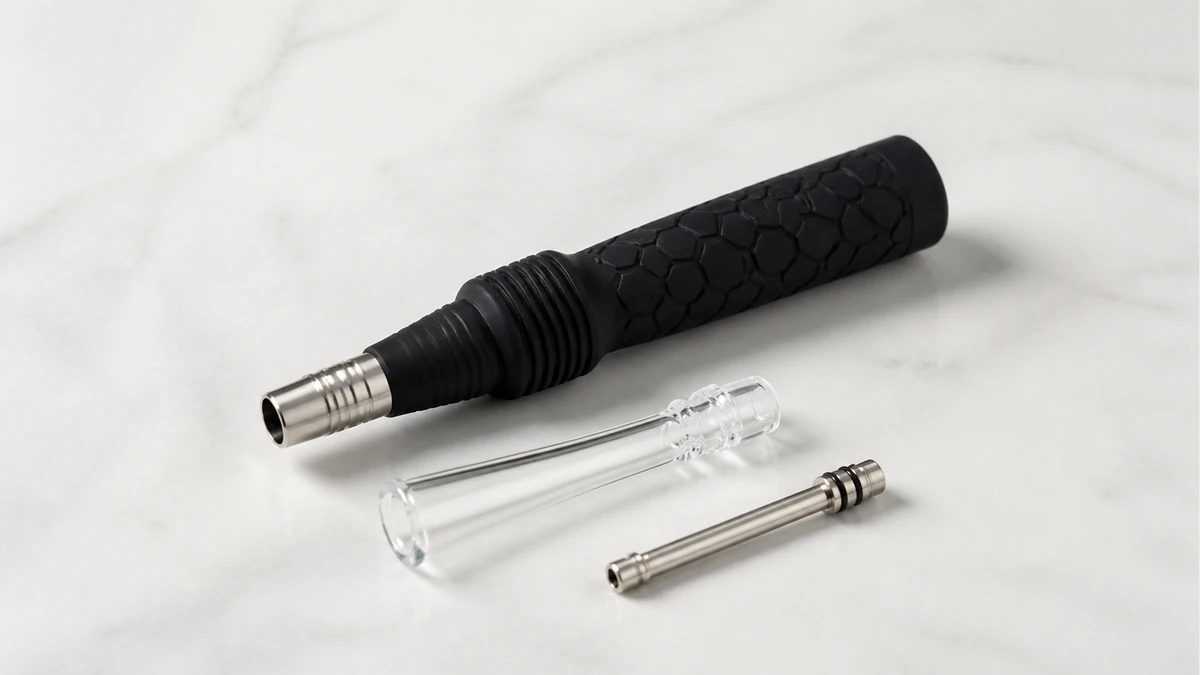
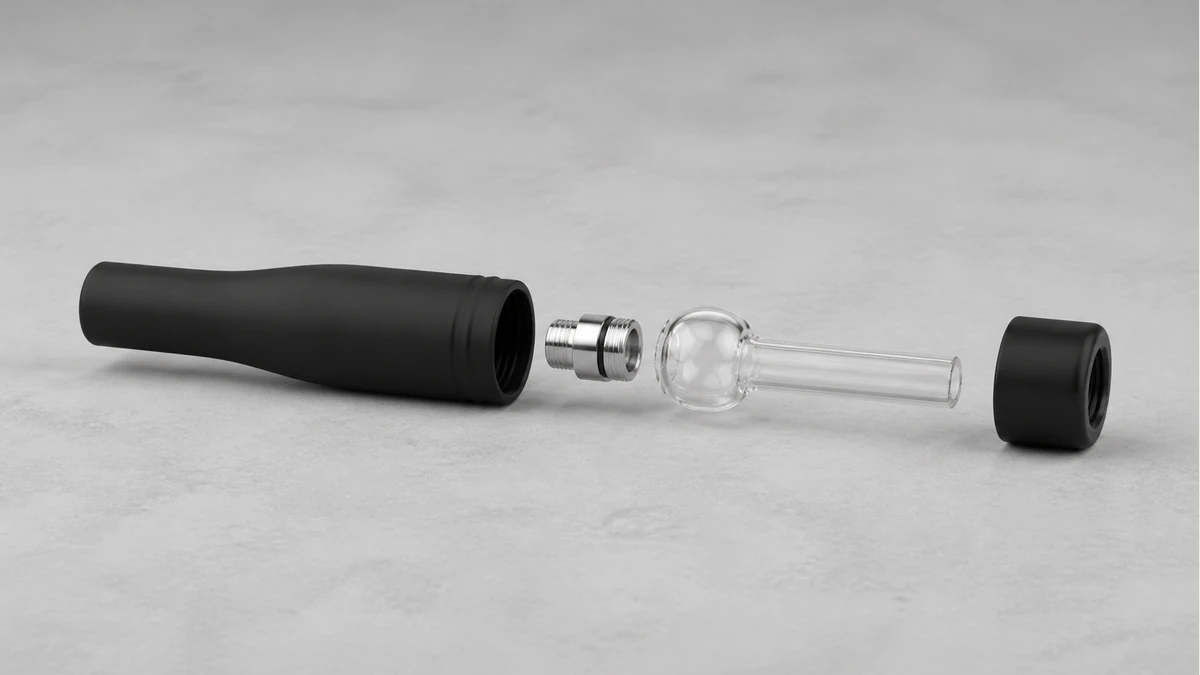
A silicone nectar collector is almost never silicone from tip to mouthpiece. The name describes the outer body — the sleeve or shell you hold, sometimes the base, and often a protective sheath around the lower tube. That part is genuinely silicone: soft, matte or slightly tacky to the touch, and flexible enough to bend without cracking.
The working end is a different story. The tip that actually touches concentrate and reaches working temperature is almost always quartz or titanium, because silicone cannot hold up to direct flame or a heated coil without degrading. Between the tip and the mouthpiece, many designs run a short glass or borosilicate inner tube to preserve some visibility and airflow quality, even though the exterior looks and feels entirely rubberized.
This layered construction is the whole point of the category. Silicone doesn’t replace glass; it wraps around the parts of the device that don’t need to get hot, while the parts that do get hot stay in whatever material actually tolerates heat. Buyers who assume “silicone” means silicone all the way through are usually the ones surprised later when a tip chips despite the body looking untouched.
🧭 2. What Survives a Drop, and What Doesn’t
The honest answer is that the body almost always survives, and the tip’s odds depend entirely on its material and how it lands. A flexible outer sleeve genuinely changes drop outcomes compared to an all-glass dab straw. It absorbs shock, prevents the spiderweb fracture that can end an all-glass piece in one hit, and generally means a table-height drop onto a hard floor won’t destroy the housing. That’s a real, physical difference, not marketing language.
What the silicone body can’t do is protect the rigid components riding inside or beneath it. A quartz tip can still chip on a hard corner. A titanium tip is more forgiving of a straight drop but can still bend or work loose at the joint if the impact lands at an angle instead of flat. An inner glass tube, where the design includes one, can still crack even though the outer shell looks completely fine. The flex absorbs and redistributes energy — it doesn’t erase it, and whatever part in the assembly is rigid still carries whatever the sleeve didn’t catch.
Anyone weighing this against an all-glass setup should read the comparison in AOVAPE’s glass dab straw guide before assuming silicone is simply the safer choice in every scenario. For pure heat-path clarity and flavor consistency, an all-glass straw still has real advantages that a hybrid design can’t fully match, and a buyer’s priorities should decide which tradeoff makes more sense.
⚙️ 3. Heat Isolation: Where Silicone Genuinely Helps
The area where the silicone body earns its keep during actual use, not just in a drop, is heat isolation. On a glass nectar collector, heat can travel up the tube fast enough that the mouthpiece end gets uncomfortably warm during back-to-back sessions. A silicone sleeve around the lower section acts as an insulating buffer, keeping the exterior more comfortable to hold even while the tip itself is doing the work.
🧩 3.1 Where Heat Isolation Has Limits
That said, insulation is a comfort feature, not a change to the tip’s actual temperature. The sleeve manages surface heat at the point where a hand makes contact; it doesn’t cool the working end faster, and it doesn’t make the piece safe to handle carelessly near the tip. Manufacturers deliberately leave the heating zone uncovered, since wrapping it would trap heat against the tip and slow cooling further. That leaves a visible transition point, usually a few centimeters below the tip, where silicone ends and bare quartz or titanium begins — and that transition zone is exactly where fingers shouldn’t linger during or right after a session, regardless of how cool the rest of the body feels.
🧩 4. Cleaning: Where Silicone and Glass Genuinely Diverge
Cleaning is where the two materials behave almost oppositely, and it changes maintenance habits more than most buyers expect going in. Glass is nonporous; residue sits on the surface and comes off with isopropyl alcohol and a rinse, and a properly cleaned piece looks and smells like new. Silicone has a microscopically textured, slightly porous surface, and repeated exposure to isopropyl alcohol can soften or cloud it over time rather than simply cleaning it.
Practically, that means a silicone nectar collector needs a gentler routine than habit might dictate:
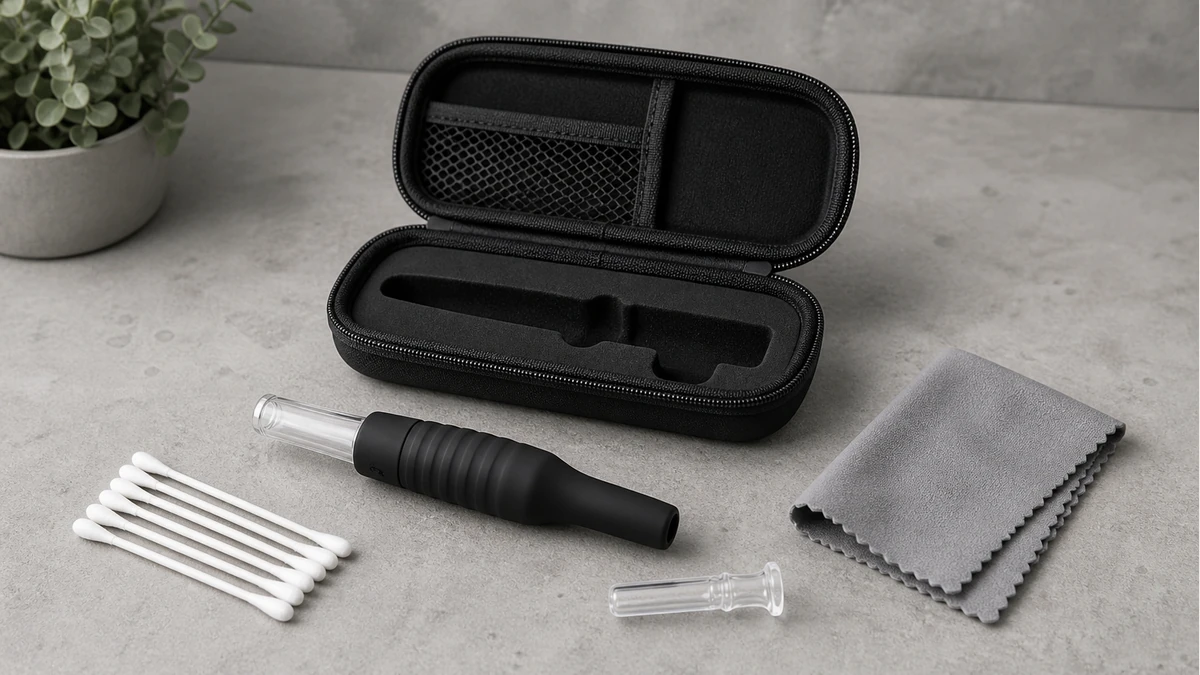
- Remove or set aside any glass or quartz inner components before cleaning the silicone body separately, since the two materials have different tolerances.
- Clean the silicone housing with warm water and mild dish soap rather than alcohol, using a soft brush to reach texture and seams.
- Clean the quartz or titanium tip and any inner glass tube with isopropyl alcohol as usual, since those materials handle it without issue.
- Let both sections air-dry fully before reassembly, since trapped moisture in silicone crevices is where odor retention actually starts.
Dunking the whole unit in alcohol out of habit from an all-glass piece is the single most common way people shorten the lifespan of the silicone body itself.
🧩 4.1 Odor and Lint: The Tradeoffs Nobody Mentions Upfront
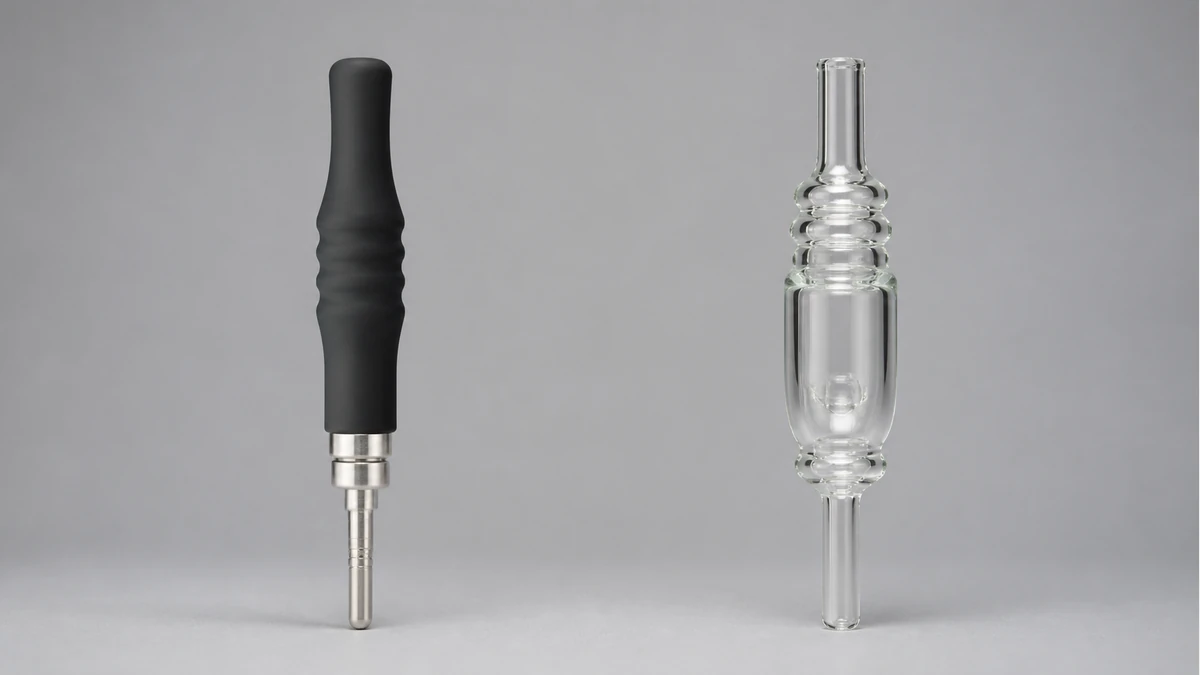
Silicone’s texture, the same one that makes it grippy and shock-absorbing, is also what makes it hold onto odor and attract lint more than glass does. It’s less a flaw than a tradeoff that comes bundled with the material. Glass surfaces release smell almost entirely with a basic clean; silicone can retain a faint residual smell even after washing, especially on a piece that’s seen heavy use without a deep clean in between.
Lint and pocket debris are the more visible version of the same issue. A silicone body pulls in fibers from pockets, bags, and carrying cases in a way smooth glass simply doesn’t, and it’s more noticeable on darker silicone than on lighter shades. Neither issue is dangerous, but both are part of the honest maintenance picture, and buyers who mainly want a completely neutral, residue-free feel after cleaning should weigh that against the durability gains before deciding silicone is the better fit for their habits.
🛠️ 5. Where to Actually Look at Material Transitions and Joints
Because a silicone nectar collector is a hybrid of two or three materials, most of the things that go wrong happen at the seams between them, not within a single material itself. A few spots are worth a closer look before and after purchase.
🧩 5.1 The Tip-to-Body Joint
This is where the rigid heating tip meets the flexible housing, and it’s the highest-stress point on the entire device, because it’s constantly flexing against something that doesn’t. Check that the tip sits snug with no wobble, and that there’s no visible gap or looseness where debris or moisture could collect. A joint that already feels slightly loose out of the box tends to get looser, not tighter, with use.
🧩 5.2 The Inner Tube Seat
On designs that include an inner glass or borosilicate tube inside the silicone sleeve, check where that tube seats against the silicone. It should sit centered and stable, not shifting when the body is flexed gently. A tube that rattles slightly inside its silicone housing is more likely to crack under an off-angle impact than one held snugly in place.
🧩 5.3 Mouthpiece Attachment
Whether the mouthpiece is a separate silicone cap or an integrated part of the tube, check that it doesn’t pull loose under normal handling. A mouthpiece that detaches too easily during use is more of an annoyance than a safety issue, but it’s often the first sign of a joint that was assembled loosely to begin with.
None of these checks require special tools — a visual inspection and a gentle flex test at the joint area catch the overwhelming majority of build issues before they become a mid-session problem.
📐 6. Common Questions Before Buying
🧩 6.1 Is a silicone nectar collector actually more durable than glass?
It’s more resistant to one specific kind of failure — the total shatter from a drop — but not more durable in every sense. The rigid tip and any inner glass tube still carry the same breakage risk they would on an all-glass piece; the silicone body just protects the parts around them.
🧩 6.2 Can the silicone body itself get damaged from heat?
The silicone sections are positioned away from the direct heating zone specifically because sustained direct heat would degrade the material over time. As long as the housing stays clear of the actual tip during use, heat exposure to the silicone itself stays minimal.
🧩 6.3 Does the silicone body affect flavor?
The vapor path typically runs through the quartz or titanium tip and any inner glass tube, not through the silicone housing, so the exterior material generally isn’t part of the flavor path. Buyers who want to compare flavor and vapor-path differences across formats in more depth may find it useful to look at how nectar collectors stack up against electric options in AOVAPE’s electric nectar collector vs. wax pen comparison.
🧩 6.4 How do I know if a joint is defective versus just new and stiff?
A new joint may feel slightly firm before it’s been flexed a few times, but it shouldn’t wobble, gap, or show visible daylight between the tip and housing. If a joint feels loose rather than stiff right out of the packaging, that’s the sign worth taking seriously, and it’s unlikely to correct itself with use.
🧼 7. The Bottom Line
A silicone nectar collector isn’t a softer, safer version of a glass one — it’s a different distribution of risk. The body takes on impact absorption and heat isolation duties that glass can’t match, while the tip and inner air path keep the material properties that actually need to survive heat and hold flavor. Buyers who understand that split know exactly what a drop will and won’t forgive, clean the two materials differently instead of treating the whole piece like glass, and check the joints where those materials meet before assuming the flexible shell means the whole device is bulletproof. For a broader look at how these builds compare across styles and price points, AOVAPE’s full nectar collectors lineup is a reasonable next stop.